The Grass Cutting Habits That Make Ohio Lawns More Vulnerable to Japanese Beetles
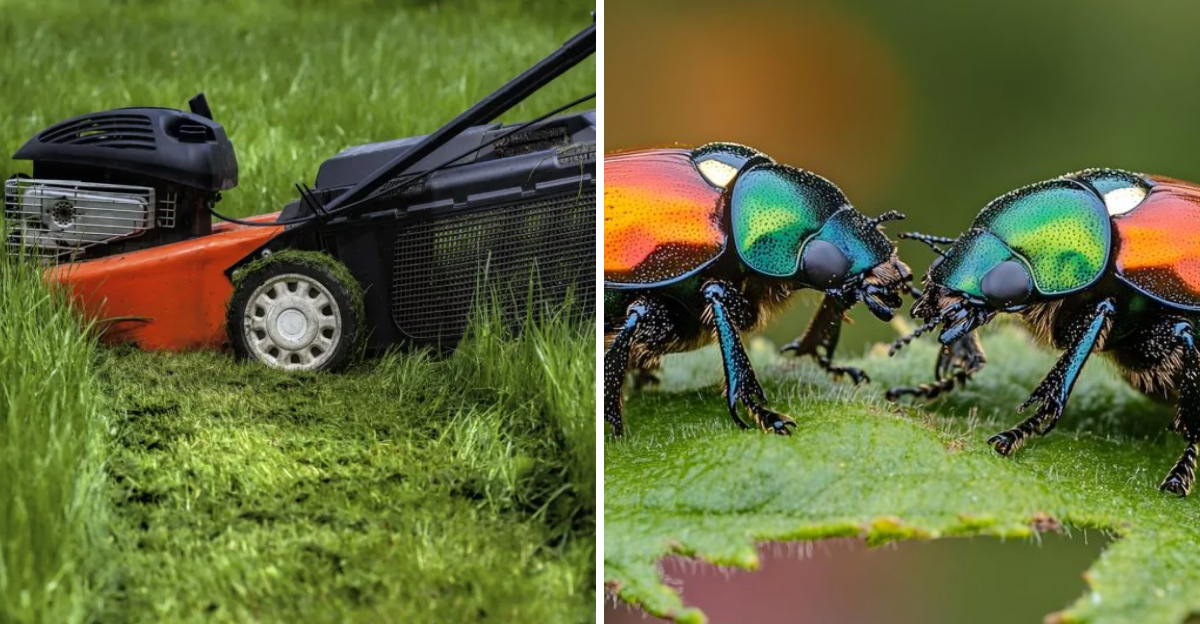
Japanese beetles do not show up randomly. They follow conditions.
Certain grass cutting habits create exactly what pulls them in and keeps them coming back season after season. The lawn is not just a victim of Japanese beetle damage.
In some yards it is actively contributing to the problem. Grubs develop in turf.
Adults emerge from turf. Cutting habits determine thatch buildup, soil moisture, and bare ground after a cut.
All of it factors into how attractive a lawn becomes to a beetle looking for somewhere to lay eggs. A mowing routine that seems reasonable can tip the balance in the wrong direction.
Nobody connects the cutting habits to the beetle pressure showing up on the roses and fruit trees nearby. The lawn and the beetle problem are more connected than most Ohio yards ever examine.
1. Scalping Turf Before Beetle Eggs Hit Soil
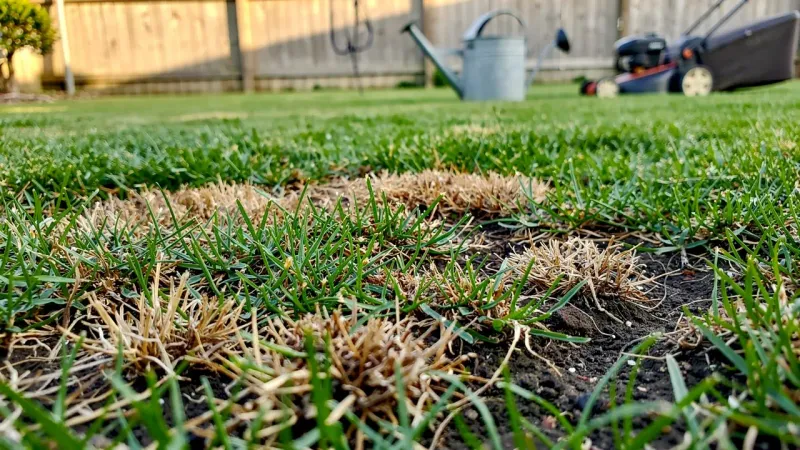
A low-cut strip along the driveway might look clean at first glance, but cutting grass too short can cause real problems when summer heat arrives. Scalping turf does not directly attract adult Japanese beetles.
Adult beetles are drawn to host plants like roses, grapes, and linden trees, not to short grass. But scalped turf is weaker turf, and that matters during beetle season.
When grass is cut too short, the leaf blade cannot support healthy root growth as effectively. OSU Extension turfgrass guidance explains that mowing height directly affects root depth, and shorter grass often develops shallower roots.
Shallow roots are more vulnerable to any stress, including grub feeding below the surface. Bare soil patches can also dry out faster, which adds heat stress on top of any existing root damage.
Turfgrass specialists generally recommend keeping cool-season grasses like tall fescue or Kentucky bluegrass at three to four inches during summer. Raising the mower deck before the hottest weeks helps the lawn stay dense and retain moisture better.
Avoiding bare patches keeps the turf canopy intact so roots have more support. Scalping does not guarantee more beetle eggs will be laid nearby.
But it does leave the lawn in a weaker position heading into the season when grubs may be active underground. Keeping turf taller is one of the simplest and most effective steps an Ohio homeowner can take.
2. Mowing Short Where Grubs Chew Roots
A brown patch that peels back like a loose piece of carpet is one of the more unsettling things an Ohio homeowner can find in the backyard. That symptom can point to grub feeding, but it can also come from drought, disease, compaction, or mower stress.
Before blaming grubs, it helps to actually check.
Japanese beetle grubs feed on turf roots when they are present, typically in late summer and early fall. Lawns that are already mowed short and stressed may show that damage more quickly than healthy, dense turf.
University extension turfgrass guidance notes that well-rooted grass can tolerate some root feeding without falling apart. Thin or repeatedly low-cut turf has less reserve to draw on when roots are compromised.
Your Ohio Garden Changes Every Week. Your Plan Should Too.
Gardening in Ohio changes quickly throughout the season. Every Friday you’ll receive a simple weekly plan showing exactly what to plant, prune, fertilize, harvest, and protect so you never miss the right timing.
Avoiding repeated low cuts during summer gives grass a better chance of maintaining root mass. Mowing higher, even by just half an inch, can make a meaningful difference in root depth over the season.
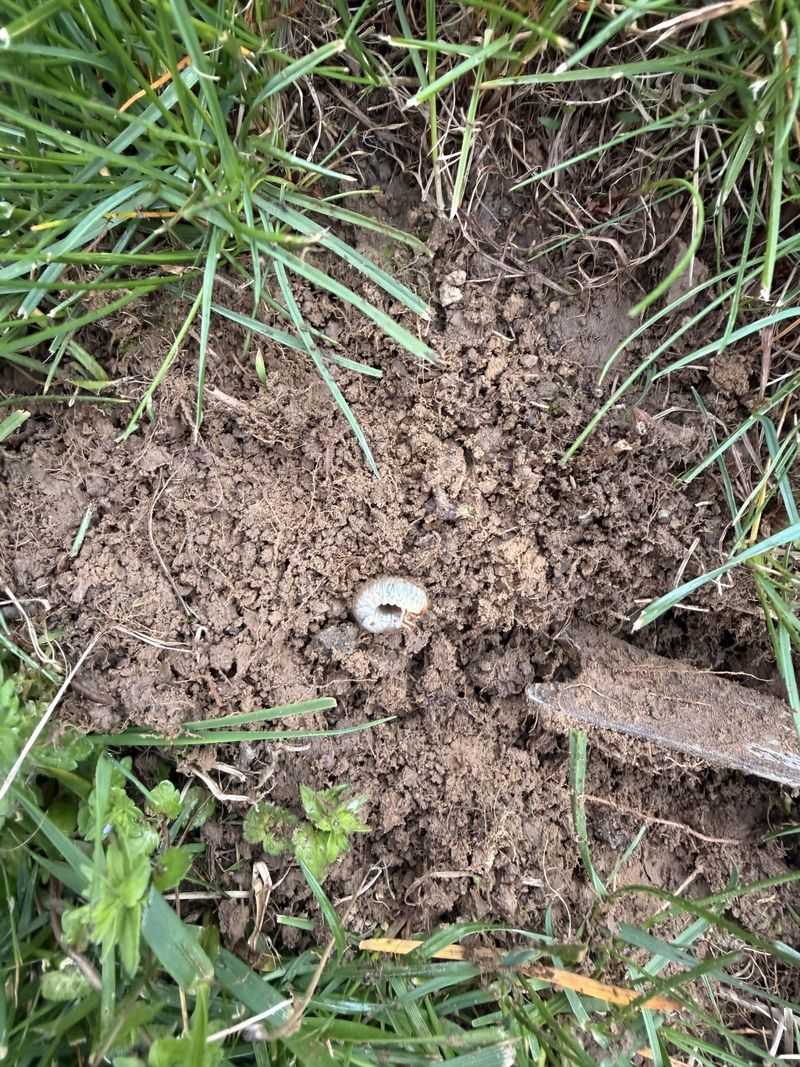
If brown patches appear, try pulling the turf gently. If it lifts easily and you find white, C-shaped larvae in the top few inches of soil, grubs may be the cause.
If the turf holds firm or the soil is bone dry, drought or another stressor is more likely responsible. Diagnosing correctly before taking action saves time, money, and unnecessary lawn treatments.
Extension pest guidance can help confirm grub presence and thresholds before any treatment decision is made.
3. Watering Shallow After Every Hot Mow
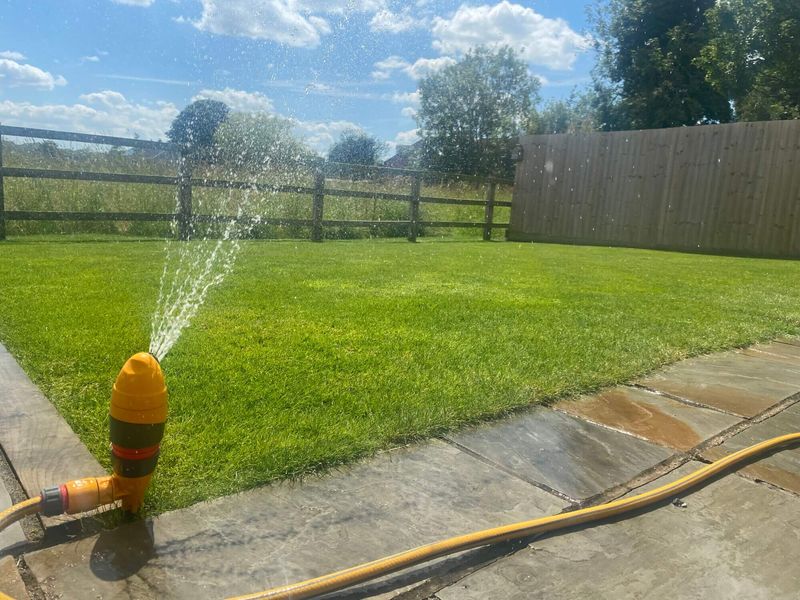
Running the sprinkler for ten minutes after every mow feels like good lawn care, but light and frequent watering can actually work against you during beetle season. Shallow watering keeps the top inch or two of soil consistently moist without encouraging roots to grow deeper.
That near-surface moisture matters more than many Ohio homeowners realize.
Some university extension sources note that moist, well-irrigated soil can be more favorable for egg survival and young grub development than dry, hard soil. Female Japanese beetles prefer to lay eggs in turf areas where soil conditions allow.
Constantly moist surface soil from light daily sprinkling may create conditions that support early grub survival better than deep, infrequent watering does. Deep watering encourages roots to follow moisture downward, which builds stronger root systems overall.
Turfgrass specialists generally recommend watering deeply and less frequently. This means applying about one inch of water per week during the growing season, either from rain or irrigation.
Checking soil moisture before watering helps avoid over-irrigating. A screwdriver pushed six inches into the soil should slide in easily if moisture is adequate.
Letting the surface dry slightly between watering cycles does not harm a healthy lawn, and it avoids keeping the top layer perpetually wet. The goal is not to drought-stress the lawn on purpose.
Deep, occasional watering builds the kind of root system that helps grass recover from both summer heat and any root feeding that may occur below the surface.
4. Ignoring Thin Grass Near Beetle Favorite Plants
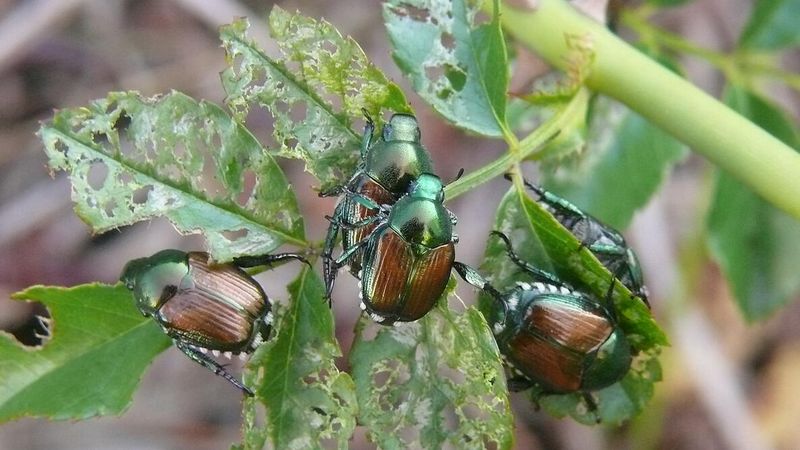
Picture a rose bush in full bloom at the edge of a lawn, its leaves laced with feeding damage and a cluster of shiny beetles working through the petals. Now look down at the grass nearby.
If it is thin, patchy, and struggling, that combination deserves attention.
Adult Japanese beetles are known to feed on a wide range of landscape plants. USDA guidance and university extension resources list roses, grapes, linden, apple, crabapple, and several other species as preferred hosts.
Adult feeding on these plants does not automatically mean grubs are present in the lawn underneath, but thin turf near high-traffic beetle areas is worth monitoring. Female beetles may lay eggs in nearby turf when soil conditions are suitable.
Thin grass with poor root density can show grub damage more easily than a thick, healthy stand.
Checking thin grass areas near known host plants is a practical habit. Look for irregular brown patches, easy-to-lift turf, or visible larvae in the top few inches of soil during late summer.
Thickening those thin spots through overseeding at the right time of year improves turf density and root strength before the next season. Removing every host plant from the yard is not necessary or realistic.
Most landscapes include at least a few beetle-favored species. The better response is to keep nearby turf as healthy and dense as possible so it is more capable of tolerating any pressure that develops.
Thin grass near host plants is a spot worth watching, not a reason to remove the plants.
5. Cutting Stressed Lawns Before Roots Recover
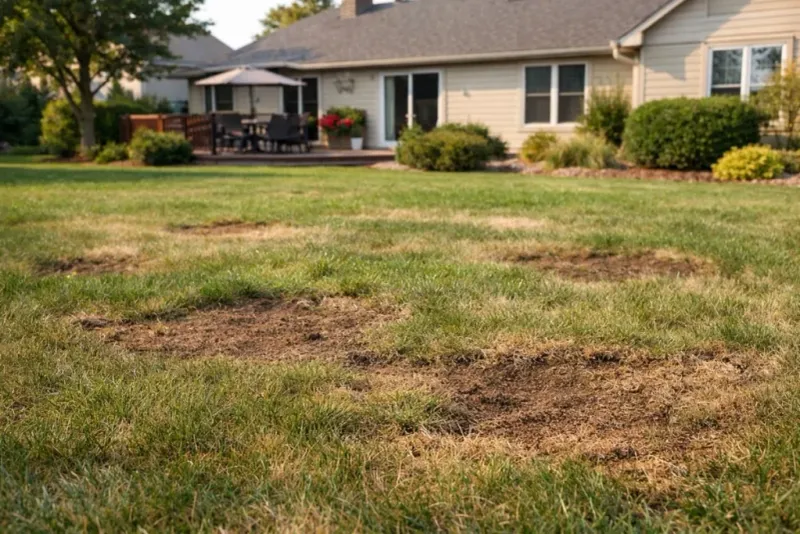
Crispy, curling grass blades are a signal worth heeding. When turf goes dormant or shows clear signs of heat and drought stress, running the mower over it anyway can add injury at the worst possible time.
Stressed grass is already working hard just to survive, and mowing removes leaf tissue the plant needs to recover.
Penn State Extension turfgrass guidance notes that mowing during active stress can slow recovery and worsen thinning. Grass that is not actively growing does not need to be cut for appearance.
Waiting until moisture returns and temperatures ease allows the plant to resume normal growth before facing the added strain of mowing. Limiting foot traffic and mower passes on crispy, dry areas also reduces compaction and physical damage to weakened root zones.
Heat-stressed turf that has also experienced root feeding from grubs is in double trouble. Cutting it short during a dry stretch removes the limited photosynthetic area it has left and makes recovery even slower.
Practical steps include delaying mowing when grass stops growing and raising the deck height when you do mow. Watering deeply before resuming regular cuts is also key if the lawn has been dry.
Stressed turf needs recovery conditions, not a shorter cut. Once cooler temperatures and adequate moisture return, the lawn can bounce back more quickly if it was not repeatedly mowed during the worst of the stress period.
Patience during heat events pays off when fall growing season arrives.
6. Bagging Clippings While Turf Needs Strength
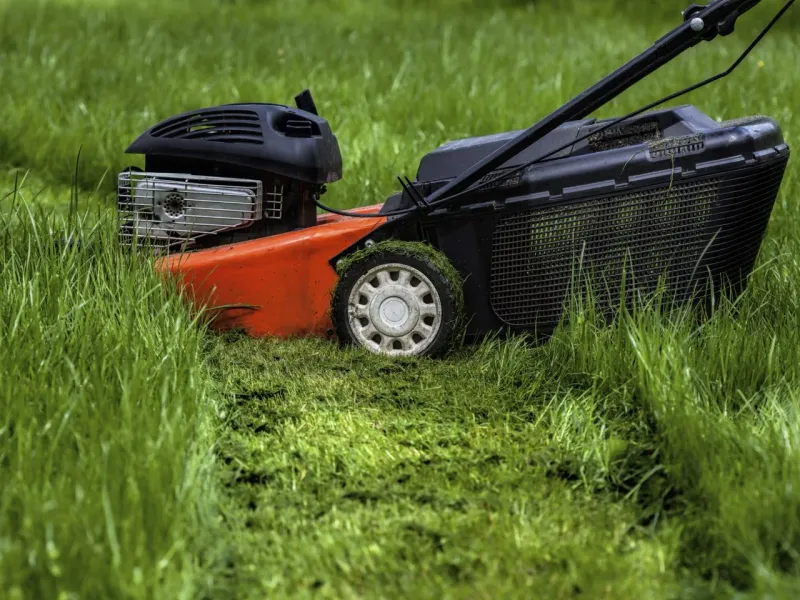
Clippings scattered behind the mower after a clean cut might look messy to some Ohio homeowners, but those small trimmings carry real value.
Returning fine grass clippings to the lawn recycles nitrogen and other nutrients back into the soil, which supports turf health without any extra fertilizer cost.
That added nutrition matters most when the lawn is under summer stress.
University extension turfgrass guidance consistently notes that grass clippings do not cause thatch when mowing is done correctly and clippings are small. Thatch is made up of stems, roots, and other slow-to-decompose material, not leaf blades.
Fine clippings break down quickly and feed the soil rather than building up on the surface. The key is mowing before the grass gets too tall and never removing more than one-third of the blade at a single cut.
Thick clumps of wet or overly long clippings are a different situation. Those can mat down, block light, and potentially smother grass if left in heavy piles.
Those should be raked or removed. But for a regularly maintained lawn, leaving clippings in place is the smarter choice.
Clippings do not attract or repel Japanese beetles directly. Their benefit is turf health, and a healthier lawn is simply better equipped to handle whatever stress the season brings, including grub feeding.
Bagging every cut and hauling away those nutrients is one of the quieter ways Ohio homeowners accidentally weaken the very lawn they are trying to protect.
7. Treating Adult Beetles Like A Mowing Problem
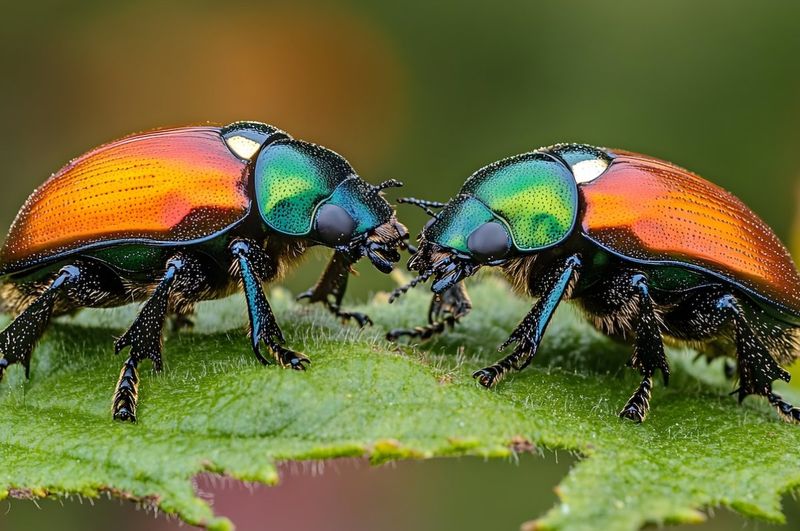
Spotting a beetle skeletonizing the leaves of a linden tree or grape vine is a jarring sight. But that aboveground feeding is a completely separate issue from what may or may not be happening in the soil below.
Adult Japanese beetles and the grubs they eventually produce are different life stages that require different responses. Treating both problems as a single mowing issue leads to confusion and wasted effort.
Adult beetles emerge in summer, feed on preferred host plants, and females periodically leave to lay eggs in nearby turf. The aboveground feeding damage on flowers, shrubs, and trees is visible and often alarming.
But the presence of adult beetles on plants does not confirm that grubs are currently damaging the lawn. Extension entomology guidance cautions against assuming grub problems exist based on adult beetle sightings alone.
Proper grub diagnosis involves checking the soil in late summer for larvae.
OSU Extension and other university resources also note that Japanese beetle traps, while widely sold, can attract more beetles from the surrounding area than they catch. Placement near valued plants or the lawn may increase beetle activity in those spots.
Following extension guidance before setting traps or applying any treatment is the recommended approach. Mowing height adjustments do not control adult beetles.
Recognizing the difference between aboveground feeding and belowground grub damage helps Ohio homeowners respond appropriately to each problem. It keeps them from conflating the two.
Clear diagnosis always leads to a better outcome than reactive treatment based on what is visible on the surface.
8. Build Thicker Grass Before Next Beetle Season
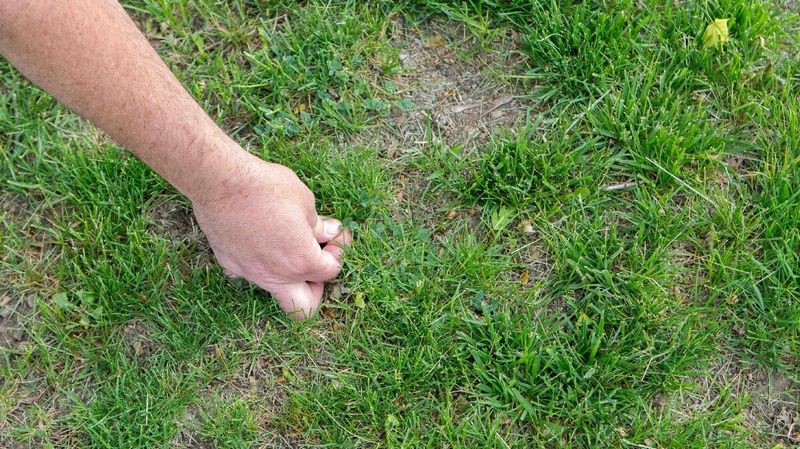
The most practical response to a rough beetle season is not a new spray schedule or a different trap placement.
Building a thicker, deeper-rooted lawn before next summer arrives gives the grass a fighting chance when grubs are present and heat puts everything under pressure.
Turf density and root strength are the real defenses.
Following the one-third rule is a reliable starting point. Never remove more than one-third of the grass blade in a single mow.
This keeps the plant from losing too much leaf area at once and supports consistent root development. Mowing at the higher end of the recommended range for your grass type helps roots grow deeper.
For cool-season turf, that’s typically three to four inches, and it keeps the canopy fuller. Turfgrass specialists consistently point to mowing height as one of the most controllable factors in overall lawn health.
Overseeding thin spots in late summer or early fall gives cool-season grasses time to establish before winter. Watering deeply but infrequently during the growing season encourages roots to follow moisture downward rather than staying near the surface.
Improving soil health through aeration and appropriate fertilization builds the foundation the lawn needs. If grub damage is suspected, diagnosing with a soil check before treating is always the right call.
Extension pest guidance can confirm whether populations are high enough to warrant action. Mowing does not call beetles in, but stronger, thicker grass gives your lawn a genuinely better chance when grubs do show up next season.