The Invasive Flowers You’ll Regret Planting In Texas Yards
Some plants make a great first impression. They’re beautiful, they grow fast, and they seem like exactly what your Texas yard needs.
So you plant them, they take off, and for a season or two everything looks great. Then the problems start.
They spread further than you expected, show up where you didn’t plant them, and start crowding out everything around them. That is the invasive plant experience in a nutshell.
Texas has a particularly serious problem with invasive ornamental plants because the climate here is so favorable to aggressive growers.
Warm temperatures, long growing seasons, and minimal winter give invasive species every advantage they need to spread widely and establish deeply before most homeowners realize what’s happening.
The frustrating part is that many of these plants are still being sold at garden centers right now, with no warning about what they’re capable of in the Texas landscape.
1. Bigleaf Periwinkle
Shady spots in Texas yards can be tricky to fill. Grass struggles under dense tree canopies, and bare soil invites weeds.
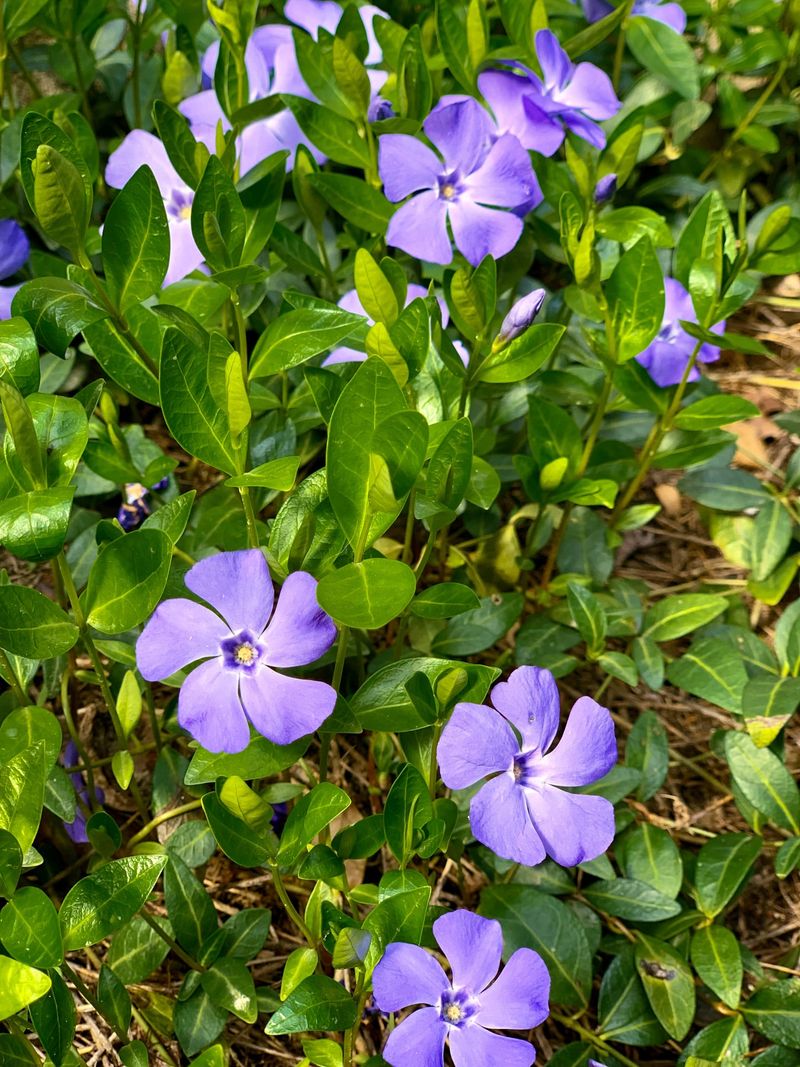
Bigleaf Periwinkle, with its glossy leaves and pretty violet-blue flowers, seems like the perfect fix. It covers ground quickly, stays green year-round, and asks for very little care. That convenience, though, comes with a real cost to your local environment.
Bigleaf Periwinkle, also called Vinca major, spreads through long trailing stems that root wherever they touch the ground. It does not need seeds to expand.
A single plant can creep outward several feet in one season, forming a thick, dense mat that covers everything beneath it. Native groundcovers, wildflower seedlings, and young tree and shrub sprouts simply cannot push through that mat to survive.
In Texas, this plant has escaped from yards into natural areas along creek banks, wooded slopes, and park edges. Once it takes hold in a natural space, it shades out the native understory plants that provide food and shelter for insects, birds, and small mammals.
The loss of native plant diversity has a ripple effect through the whole local ecosystem. Removing Bigleaf Periwinkle is doable but requires patience. Pulling up the long stems by hand and digging out the roots takes several sessions over time.
Replanting cleared areas quickly with native species helps keep it from returning. Native groundcovers like Frogfruit, Inland Sea Oats, or native Sedges work beautifully in shady Texas spots.
They fill in bare ground, support local wildlife, and blend naturally into the surrounding landscape without threatening the plants and animals that call Texas home.
2. Mexican Petunia
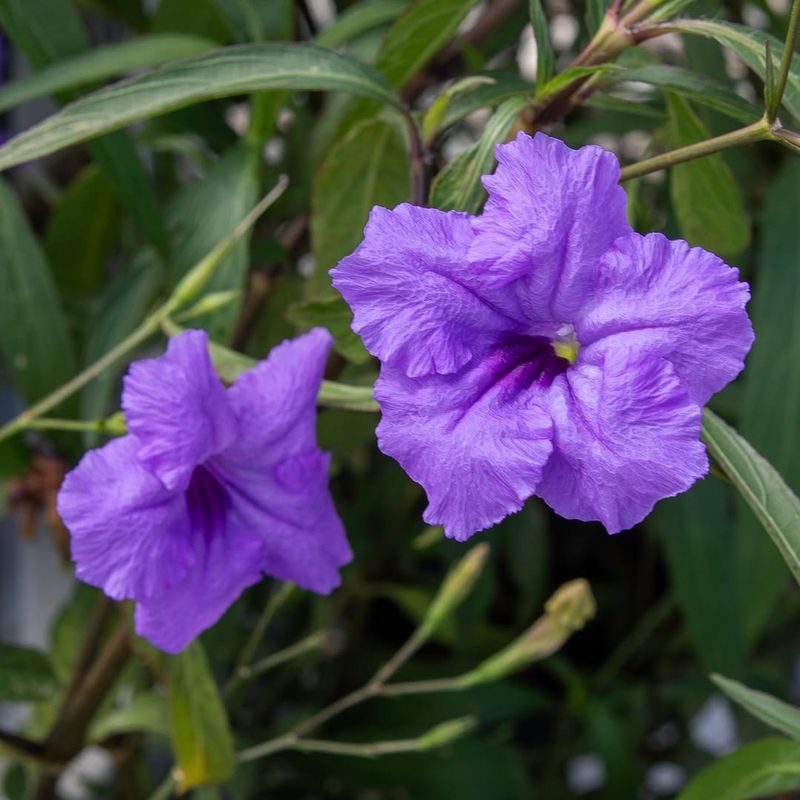
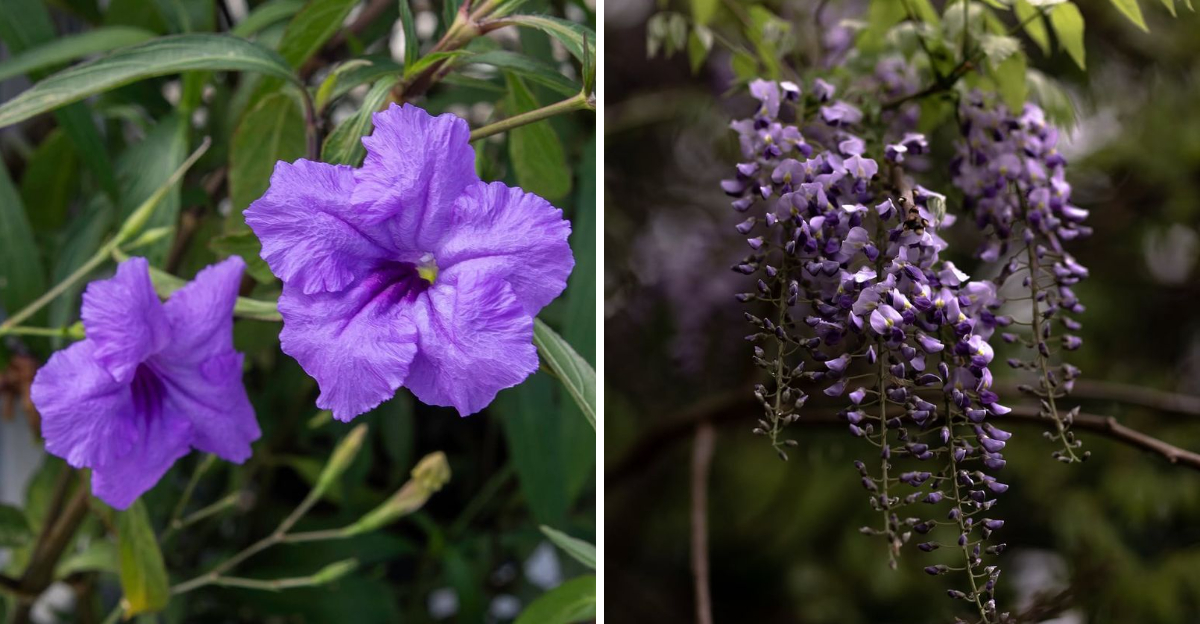
Walk through almost any Texas neighborhood in summer and you will likely spot the bright purple blooms of Mexican Petunia popping up along fences and sidewalks.
It looks cheerful and low-maintenance, which is exactly why so many gardeners have planted it over the years. The problem is that this plant does not know when to stop.
Mexican Petunia, also known as Ruellia simplex, spreads in two sneaky ways. First, it shoots seeds out of its pods with surprising force, sending them several feet away from the parent plant.
Your Texas Garden Changes Every Week. Your Plan Should Too.
Gardening in Texas changes quickly throughout the season. Every Friday you’ll receive a simple weekly plan showing exactly what to plant, prune, fertilize, harvest, and protect so you never miss the right timing.
Second, it grows underground roots called rhizomes that creep outward and sprout new plants. Before long, one small clump can turn into a massive, dense patch that crowds out everything around it.
In Texas, this plant is considered invasive because it outcompetes native wildflowers and grasses. It thrives in heat and drought, which makes it nearly impossible to slow down in the Texas climate.
Once it gets into a natural area or drainage ditch, it can spread far beyond your yard. Removing it takes serious effort. You have to dig out every piece of root, because even a small fragment left in the soil will regrow.
Regular pulling and monitoring over several seasons is usually necessary to fully clear it. If you love the look of Mexican Petunia, try planting native alternatives like Salvia or Spiderwort instead.
These plants offer similar color and charm without the aggressive spreading habit. Your yard and your neighbors will thank you for making the smarter choice.
3. Purple Loosestrife
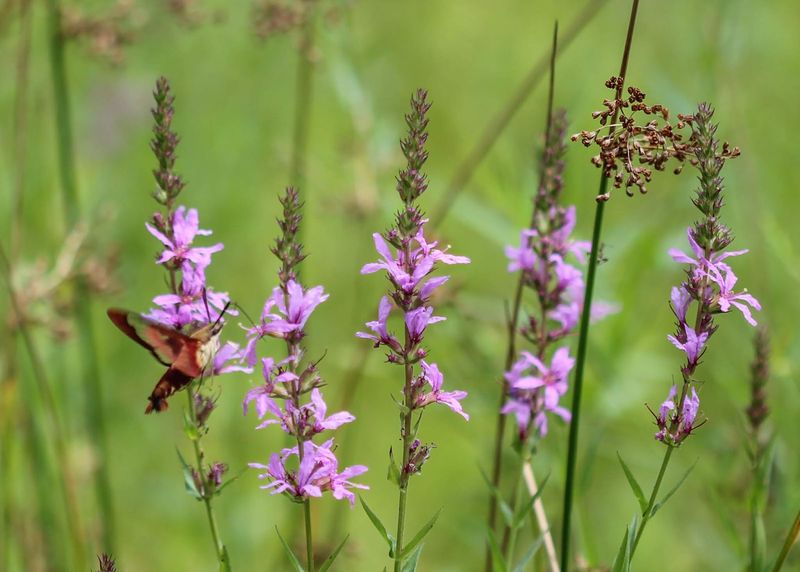
At first glance, Purple Loosestrife looks like something straight out of a fairy tale. Its tall, magenta-purple flower spikes rise dramatically above wet ground, creating a scene that feels almost too pretty to be a problem.
But behind that beauty is one of the most aggressive wetland invaders in North America. A single Purple Loosestrife plant can produce up to two million seeds in one growing season.
Those seeds travel easily by wind and water, which means a plant growing near a pond or drainage area can spread across large stretches of land in just a few years.
Once it takes hold, it forms thick, impenetrable stands that native plants simply cannot survive in.
In Texas, wetland ecosystems are already under pressure from development and drought. Native grasses, sedges, cattails, and flowering plants that wildlife depend on for food and shelter get pushed out when Purple Loosestrife moves in.
Birds, fish, and insects that rely on native wetland plants lose their habitat quickly. This plant is regulated or banned in many U.S. states because of how destructive it can be.
Texas gardeners should avoid it completely, especially if their property is near any wet area, creek, or low-lying drainage spot.
If you want tall, colorful blooms near water features, consider native options like Blue Iris, Cardinal Flower, or native Blazing Star. These plants support local pollinators and wildlife without threatening the surrounding ecosystem.
Making native plant choices is one of the best things you can do for Texas land and water health.
4. Yellow Flag Iris
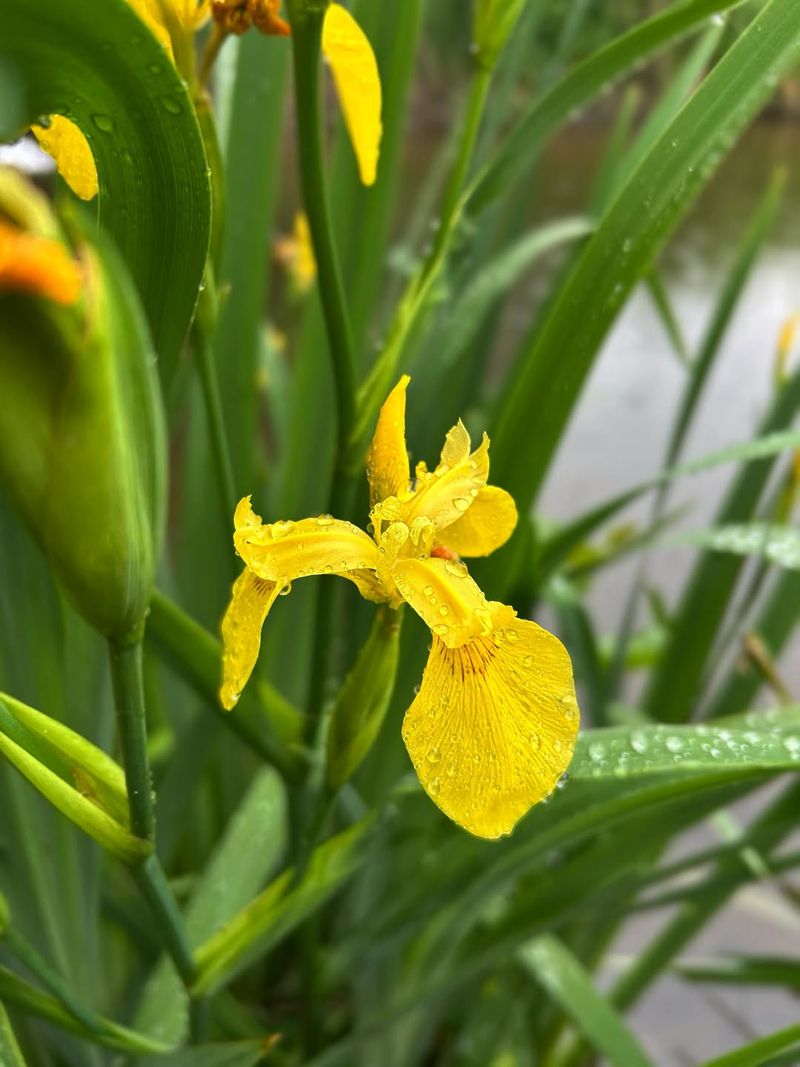
Few flowers are as eye-catching as the Yellow Flag Iris. Those bold, golden blooms look stunning near garden ponds, water features, and low-lying spots where other plants struggle to grow.
Many gardeners have planted it thinking they found the perfect solution for a soggy corner of the yard. Unfortunately, this plant comes with a long list of problems.
Yellow Flag Iris spreads through two methods that make it hard to contain. It produces seeds that float on water, traveling downstream or across a pond to start new colonies.
It also spreads through thick underground stems called rhizomes, which grow outward steadily each year. Over time, it forms dense mats that block sunlight and crowd out native aquatic and wetland plants.
One detail that surprises many people is that every part of this plant is poisonous. The leaves, roots, and flowers all contain toxic compounds that can irritate skin and cause serious illness if eaten.
This makes it dangerous around children and pets who might brush against it or accidentally chew on a leaf near a water feature.
In Texas, Yellow Flag Iris has escaped from gardens and established itself in natural waterways, drainage ditches, and wetland areas.
Removing it requires digging out the entire root system, which is labor-intensive and must be done carefully to avoid spreading fragments downstream.
Native Texas alternatives like Yellow Canna Lily or native Iris species offer similar golden color near water without the invasive spread or toxicity concerns.
Choosing wisely now saves a lot of frustration later, especially if you have water features connected to natural drainage.
5. Chinese Wisteria
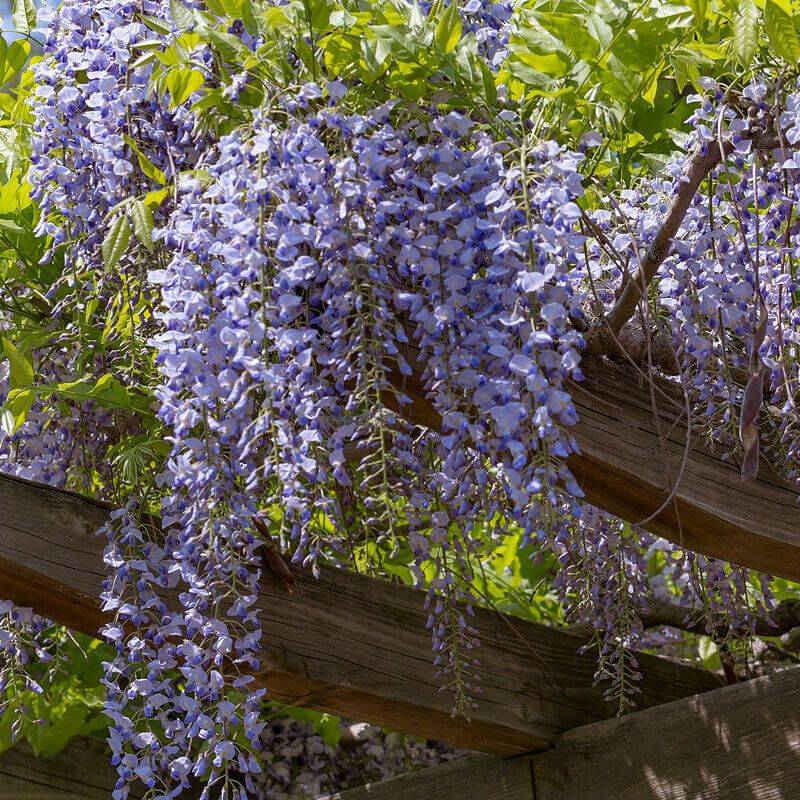
There is something undeniably magical about a wisteria in full bloom. The long, drooping clusters of lavender-purple flowers smell incredible and create a romantic, almost dreamlike atmosphere.
It is easy to understand why so many Texas homeowners have planted Chinese Wisteria along fences, pergolas, and arbors. The regret usually comes a few years later.
Chinese Wisteria grows fast and strong. Its woody vines can reach lengths of over 30 feet, wrapping tightly around anything they touch.
Trees, shrubs, fences, gutters, and even structural supports are all fair game. The vines tighten as they grow, eventually cutting off the flow of water and nutrients to the trees and large shrubs they climb.
Many mature trees have been severely damaged or completely smothered by this vine over time.
Getting rid of established Chinese Wisteria is one of the hardest gardening jobs you will ever face. The root system grows deep and wide, and any piece of root left behind will sprout again.
Even cutting the vine back repeatedly for several seasons may not fully eliminate it. Some homeowners end up hiring professional help just to manage it.
In natural areas and along roadsides, Chinese Wisteria has spread beyond gardens and taken over forest edges. It shades out native understory plants and prevents forest regeneration in affected areas across the Southeast and parts of Texas.
If you want that cascading flower look, consider native Texas Wisteria, also called American Wisteria. It offers similar beauty with a much more manageable growth habit and actually supports native pollinators like bees and butterflies throughout the season.
6. Japanese Wisteria
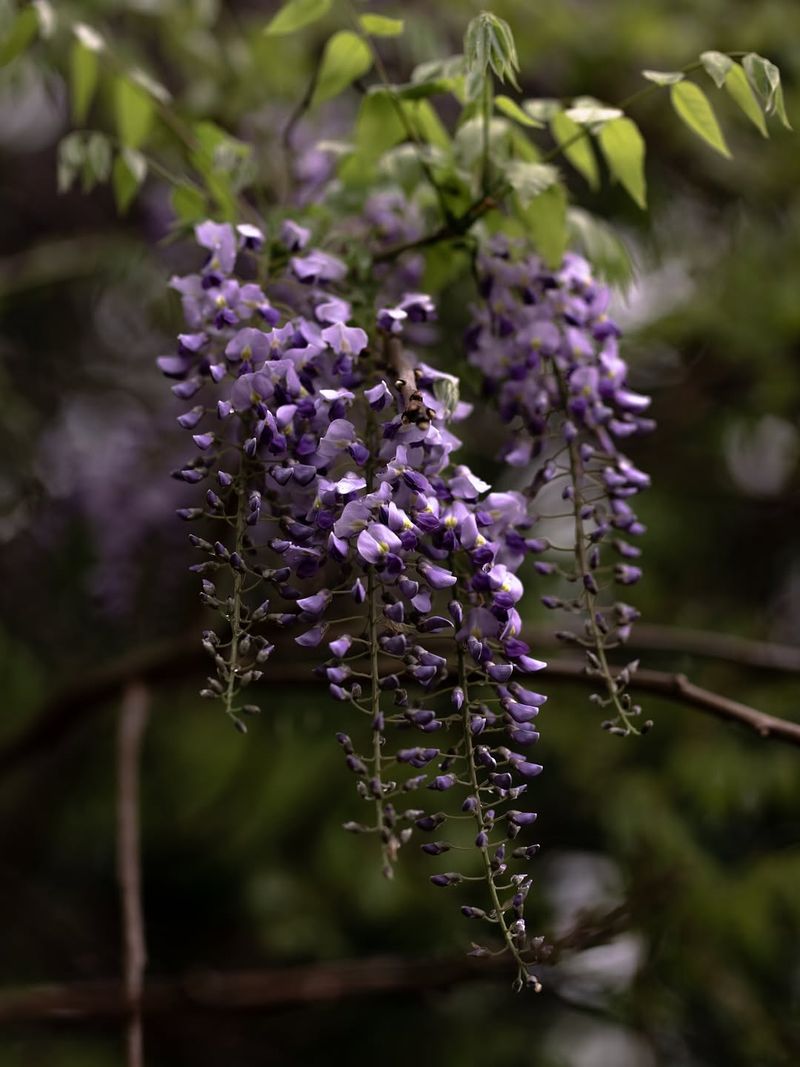
If Chinese Wisteria sounds bad, Japanese Wisteria gives it a run for its money. Brought to the United States in the 1800s as an ornamental plant, it quickly became one of the most problematic vines in American landscapes.
Gardeners fell in love with its long, fragrant flower clusters, which can hang up to two feet in length. What they did not count on was how aggressively it would spread.
Japanese Wisteria can grow up to ten feet in a single season under the right conditions. It twines around trees, shrubs, and structures with powerful grip, and its weight alone can bring down small trees or damage wooden structures over time.
Unlike its American cousin, this vine does not play nicely with the surrounding environment and has very little benefit for native wildlife.
Once Japanese Wisteria establishes itself in a yard, it spreads through underground runners and reseeds freely.
It can move into nearby natural areas, woodland edges, and even stream banks where it forms dense thickets that block sunlight and prevent native plants from growing.
Wildlife that depends on native plant diversity finds little value in these monoculture patches.
Controlling it requires persistent effort over multiple growing seasons. Cutting back the vine without removing the roots will only result in vigorous regrowth.
A combination of digging, cutting, and repeated monitoring is usually required to make real progress.
American Wisteria and Kentucky Wisteria are both beautiful, fragrant, and far less aggressive alternatives. They bloom reliably in Texas and provide nectar for native bees without threatening the trees, shrubs, and wild spaces around your home.
7. Japanese Honeysuckle
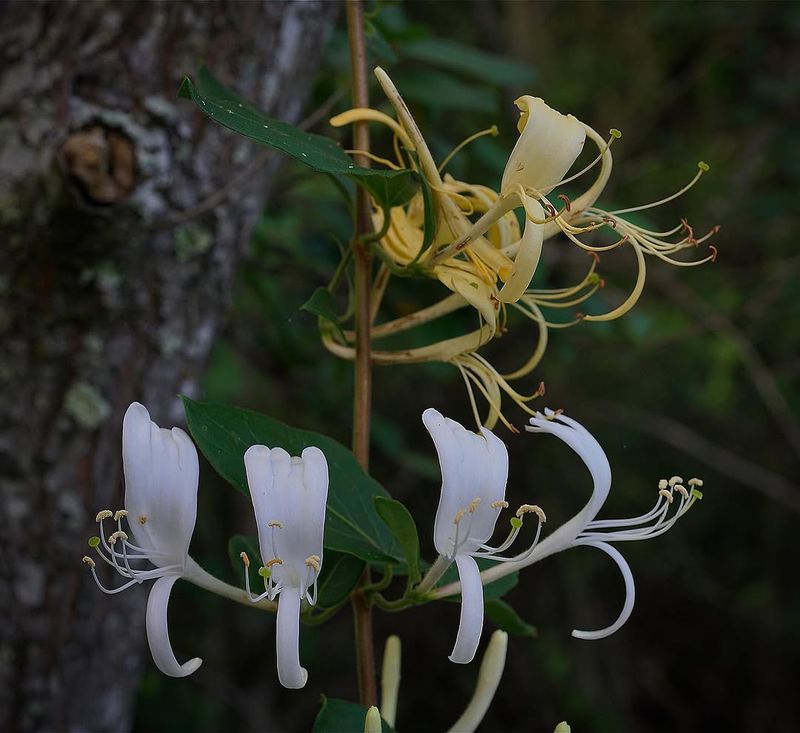
Sweet, creamy, and unmistakably fragrant, Japanese Honeysuckle is the kind of plant that tricks you completely. Many people grew up pulling the tiny flowers apart to taste the drop of nectar inside, and that childhood memory makes it feel harmless and even nostalgic.
But this vine has caused serious ecological damage across the American South, including large parts of Texas.
Japanese Honeysuckle is a semi-evergreen vine that keeps its leaves through mild Texas winters. That means it gets a head start in spring while native plants are still waking up.
It climbs fast, spreading over fences, into shrubs, and up into the lower branches of trees. Its stems can reach 30 feet or more, and wherever a stem touches the ground, it can root and start a new plant.
In woodland edges and natural areas, this vine forms thick mats that smother native wildflowers, ferns, and young tree seedlings. Birds eat the berries and spread seeds widely, which is why you often find it popping up far from where it was originally planted.
Fence lines, creek banks, and neglected corners of yards are common starting points for new infestations.
Removing it takes consistent work. Cutting back the vine regularly weakens it over time, but full removal requires digging out the root system from the soil. Replanting the cleared area with native groundcovers helps prevent it from returning.
Coral Honeysuckle is a beautiful native alternative that produces red tubular flowers loved by hummingbirds. It offers the climbing habit and charm of Japanese Honeysuckle without the aggressive spread or ecological damage that comes with the invasive species.