The Native Ohio Plant That Blooms Purple Well Past Summer
While every summer bloomer in your Ohio garden fades out by August, one native plant is just getting started. Most perennials peak in June and July, then spend late summer looking tired, faded, and done for the season.
A tall, purple-flowered native ignores that entire schedule completely, holding its color deep into fall when almost nothing else in the yard has anything left to offer pollinators. Height alone makes it impossible to miss.
This plant towers well above typical garden perennials, turning a back border into a wall of color right when everything around it starts fading. Late-season pollinators depend on exactly this kind of holdout.
Your garden’s last real burst of color before frost might already be growing wild along Ohio roadsides, waiting for a spot in your own backyard.
1. Plant Tall Ironweed For Late Purple Color
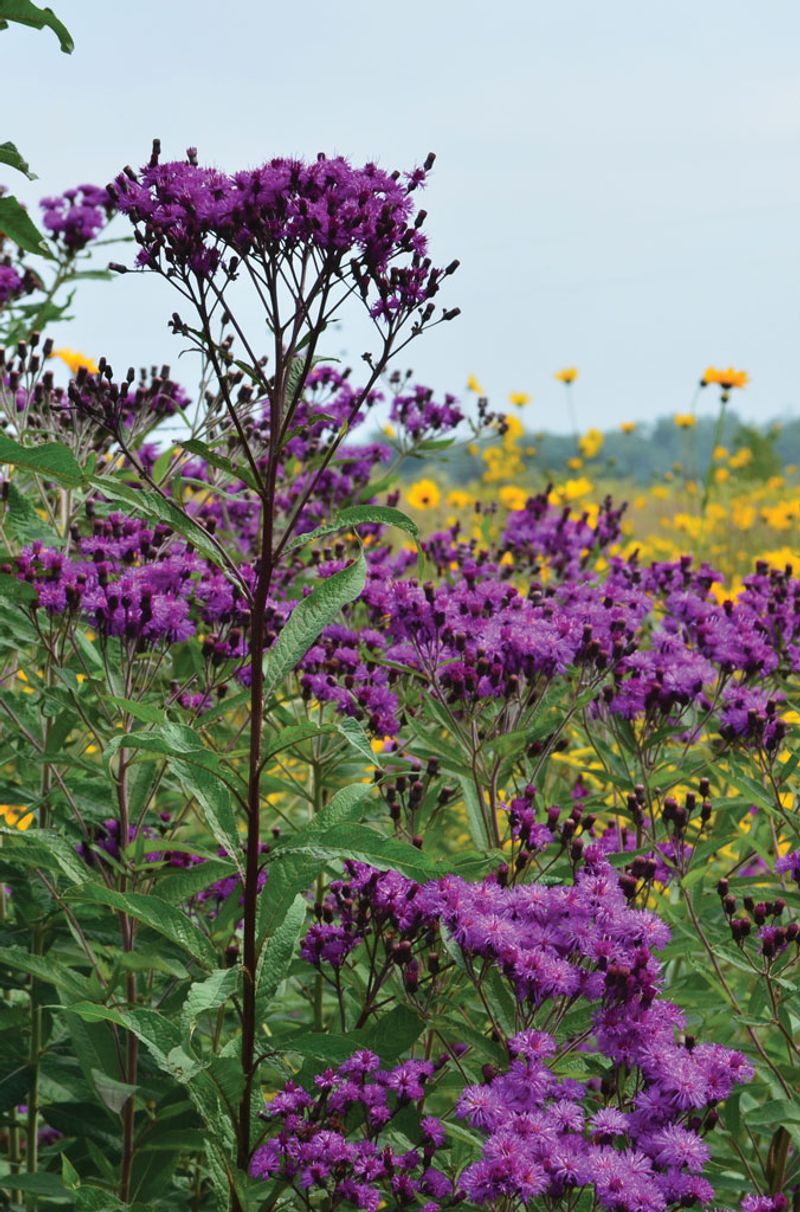
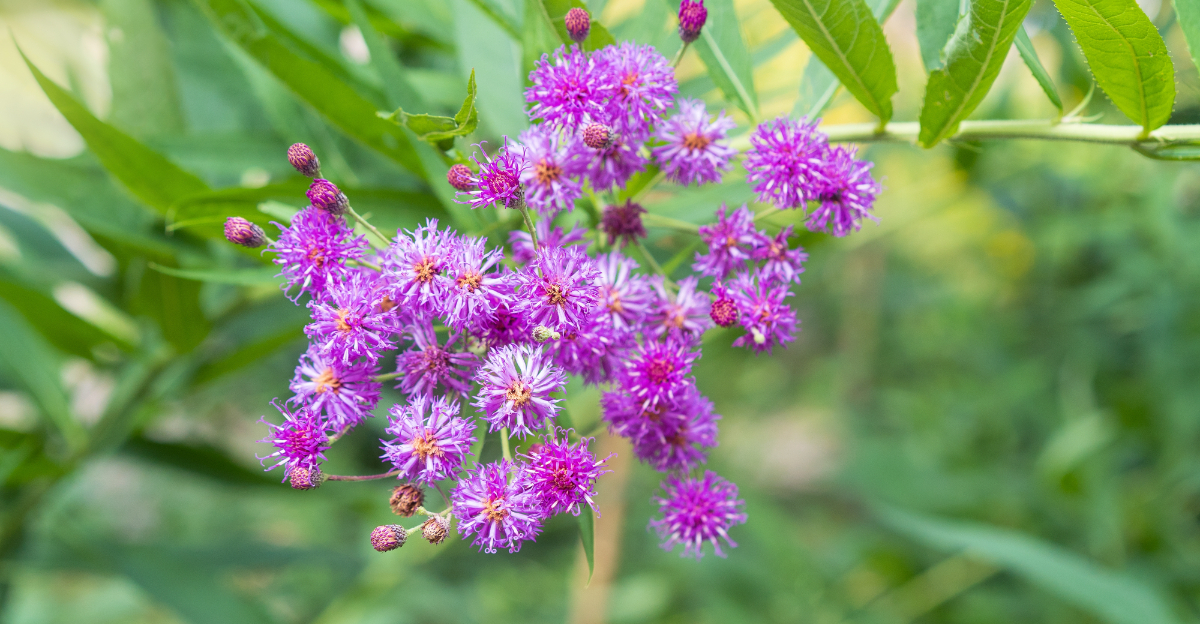
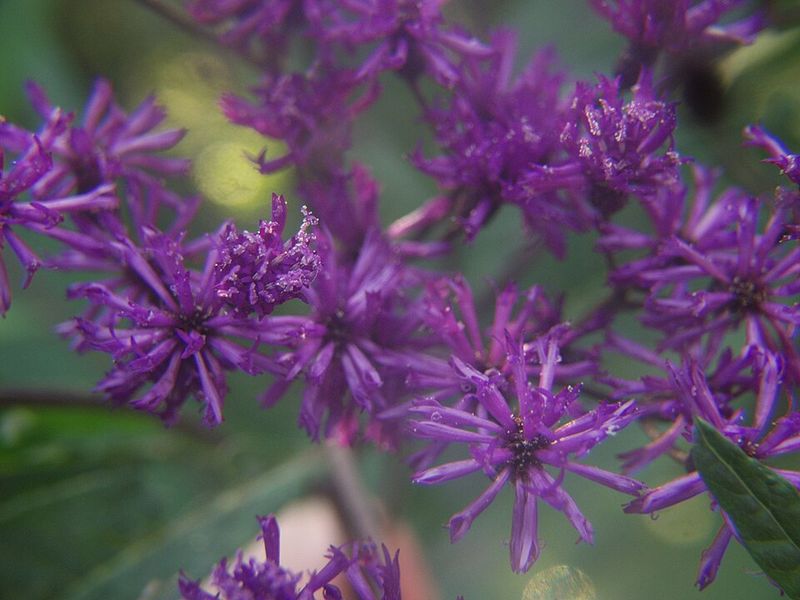
By the time many summer perennials are fading, Vernonia gigantea is just hitting its stride. The flowers appear in loose, branching clusters at the tops of tall stems, and the color lands somewhere between vivid purple and deep red-purple.
That combination is striking in a landscape that has started to mellow into late-season greens and golds.
Ohio State sources confirm that Tall Ironweed is native to North America and occurs throughout the state. The Ohio Weedguide documents flowering from roughly July into October.
An OSU Master Gardener resource gives July through September as the typical bloom window. Bloom timing can shift depending on weather, location, and how a particular plant is growing.
The safest expectation is that this perennial delivers strong color from late summer into fall, with some plants continuing longer under favorable conditions. As a perennial, Vernonia gigantea returns each year from the same root system.
Once established, it builds into a reliable late-season presence that many gardeners come to count on. Few native plants match its ability to carry real color into a season when the garden needs it most.
2. Give It Plenty Of Sunshine
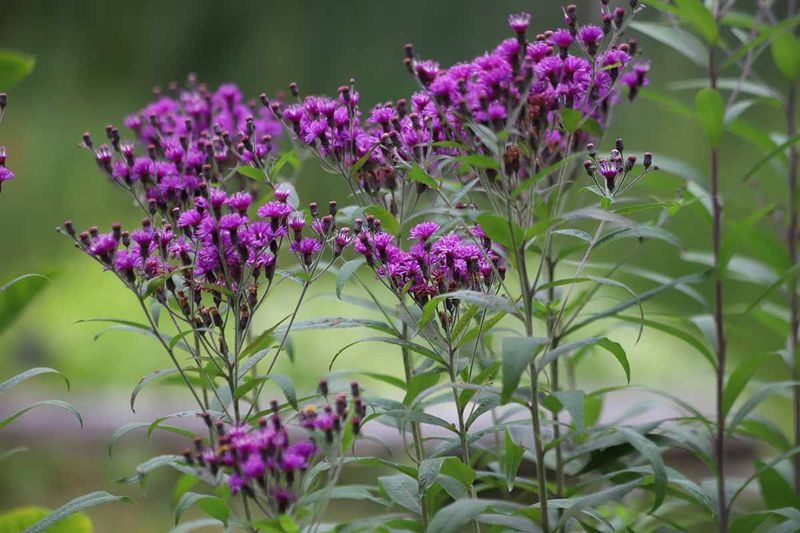
A sunny spot is where Vernonia gigantea performs best. OSU Master Gardener guidance indicates that ironweed does well in full sun and can tolerate partial sun.
Full sun generally means at least six hours of direct sunlight each day. An open bed or property edge without heavy shade from trees or structures is ideal.
Strong light supports the upright growth habit this plant is known for. In shadier conditions, stems may stretch toward available light, and flowering can be less robust.
That does not mean a slightly shaded location is always wrong, but a truly shaded spot is unlikely to bring out the best in this plant.
Placement matters especially because of mature height. A very tall perennial growing in partial shade near shorter plants can create an uneven, leaning effect that looks unintentional rather than designed.
Open meadow-style plantings, rain garden edges, naturalized borders, and sunny property lines all tend to suit ironweed well. Choosing a location with reliable sun before planting saves the effort of relocating an established plant later.
Your Ohio Garden Changes Every Week. Your Plan Should Too.
Gardening in Ohio changes quickly throughout the season. Every Friday you’ll receive a simple weekly plan showing exactly what to plant, prune, fertilize, harvest, and protect so you never miss the right timing.
Think of full sun not just as a preference but as the growing condition that lets Vernonia gigantea reach its natural potential.
3. Put Moist Soil To Good Use
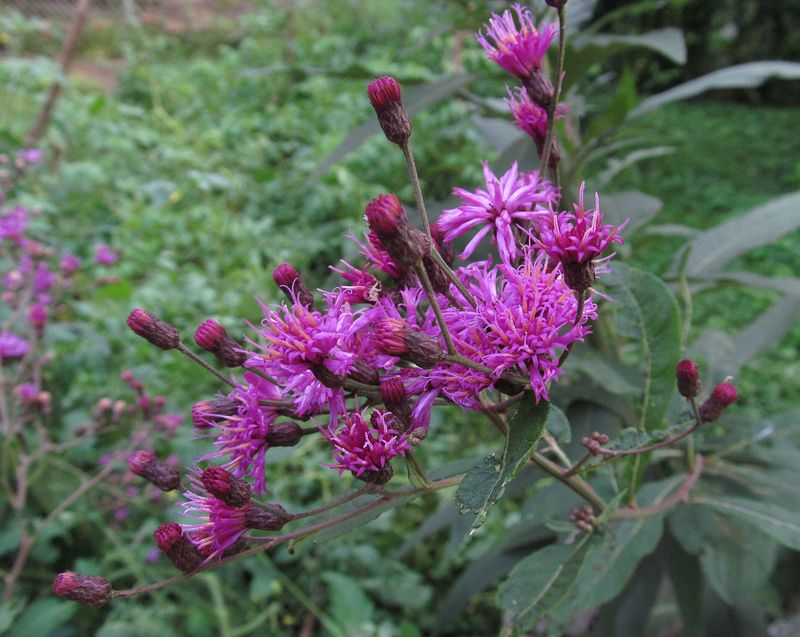
Many Ohio yards have a low spot, a slow-draining corner, or a stretch along a downspout that stays noticeably damp after rain. Those areas can be frustrating to plant because so many common perennials prefer drier ground.
Vernonia gigantea is well suited to exactly those conditions.
OSU Master Gardener guidance describes ironweed as useful for moist areas, stream edges, and rain gardens. Ohio State information also shows that the plant naturally favors moderately damp, fertile sites.
That background in naturally moist habitats means it can handle soil conditions that would stress plants adapted to drier ground.
Moist soil is not the same as standing water or permanently saturated ground. The distinction matters.
Ironweed appreciates consistent moisture and soils with good organic content, but it is not an aquatic plant. A rain garden that drains within a day or two after a storm, a moist naturalized border, or a low meadow-style bed are all reasonable placements.
Established plants in these spots tend to grow vigorously without extra irrigation during normal summers. Using a naturally damp part of the property for Vernonia gigantea can solve a common landscaping challenge.
It also creates an opportunity for late-season color and wildlife habitat.
4. Let Those Strong Stems Stand Tall
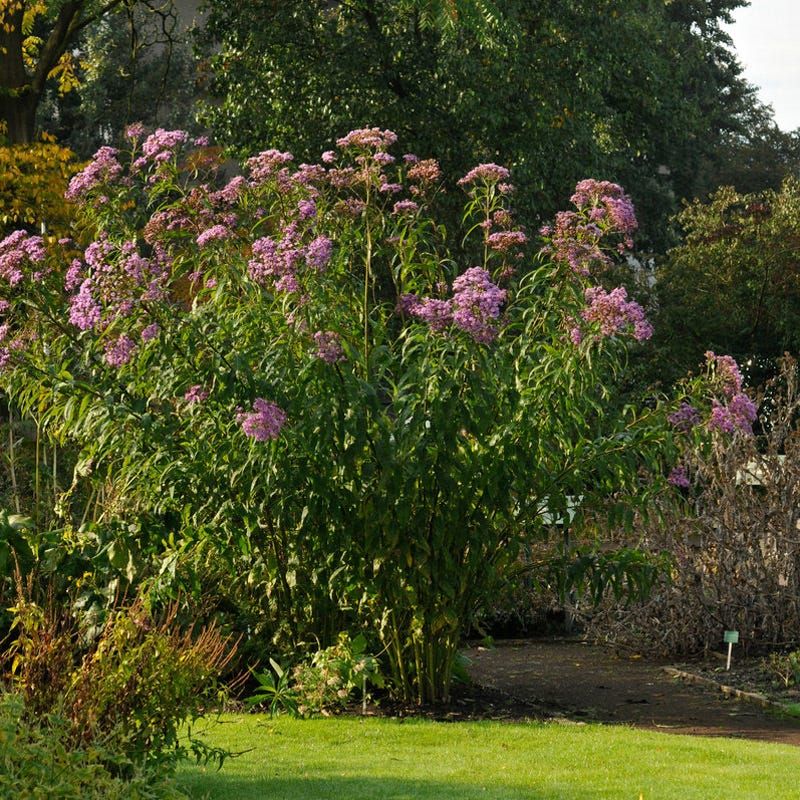
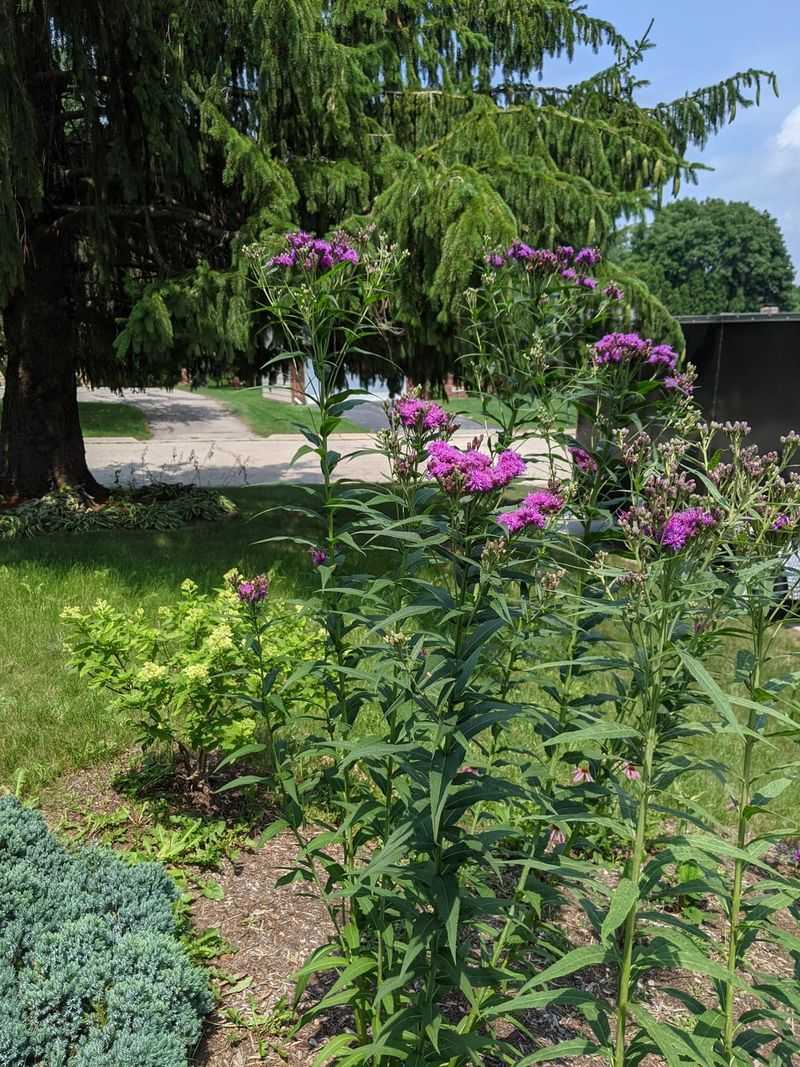
Picture a cluster of stems rising well above everything else in a late-summer border, topped with branching sprays of purple. That is what mature Vernonia gigantea looks like in a generous planting space.
The Ohio Weedguide reports stems reaching roughly six to ten feet, while OSU Master Gardener material describes ironweed commonly reaching about five to eight feet. Mature size varies with soil richness, moisture, sunlight, and individual plant vigor.
OSU Master Gardener information notes that the stems are sturdy and often able to stand without staking. That said, plants growing in very rich, moist soil may reach the taller end of the range, and exposed sites with strong winds could present challenges.
Promising that staking will never be necessary goes beyond what the evidence supports.
Height affects every placement decision. A plant in this size range belongs toward the back of a mixed border, where it provides a vertical backdrop rather than blocking shorter companions.
Naturalized plantings, meadow gardens, and open rain garden edges give it room to reach full stature without overwhelming a small bed. Placing ironweed near a walkway or in a compact formal bed is likely to feel awkward once the plant matures.
Choosing the right spot from the start makes managing height a non-issue.
5. Cut It Back For A Shorter Show
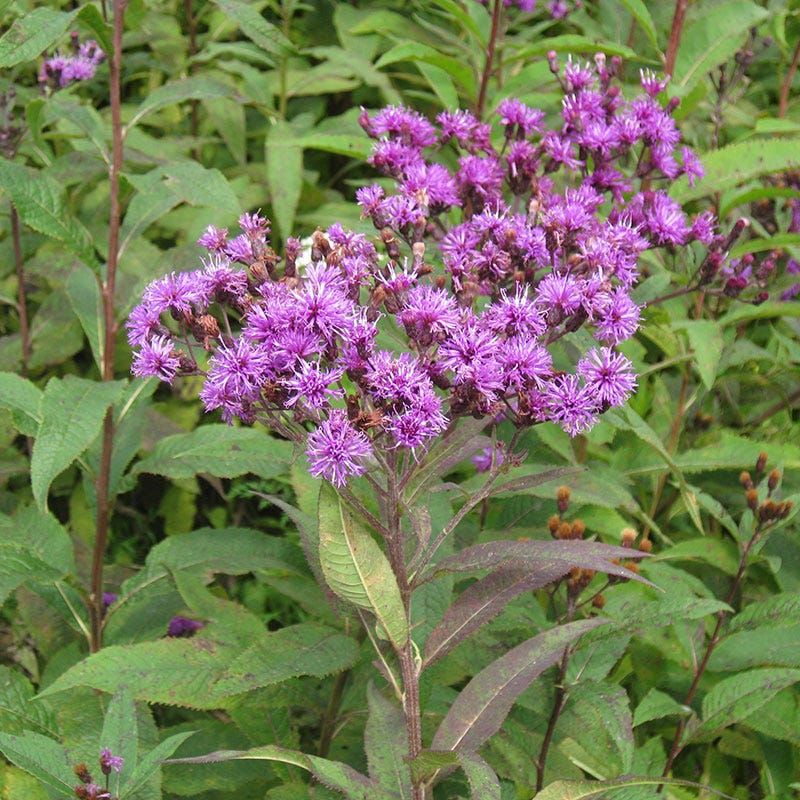
Not every garden has space for a plant that regularly reaches six feet or more. Gardeners who want Vernonia gigantea but need a more manageable height have a practical option available early in the season.
OSU Master Gardener guidance describes cutting plants back in June, including reducing them to around two feet, as a way to encourage shorter growth.
The purpose of this early-season cut is straightforward. Removing significant height in June allows the plant to regrow at a more compact scale before it sets flower buds.
The result is often a shorter, more layered plant that fits more easily into a mixed border without losing its late-season blooms. Gardeners who want the full dramatic height simply skip this step and allow natural growth to continue.
Timing is the part that requires attention. June cutting is about managing plant height before flowering begins.
Removing stems in late summer after buds have formed will reduce or eliminate the current flower display, which defeats the purpose. After flowering finishes in fall, removing spent flower heads is a separate decision related to seed spread rather than height control.
Weather, soil, and plant vigor all influence the final result after a June cut, so expecting a precise outcome is unrealistic. Treat this as a useful size-management option rather than a guaranteed formula.
6. Bring In Monarchs And Swallowtails
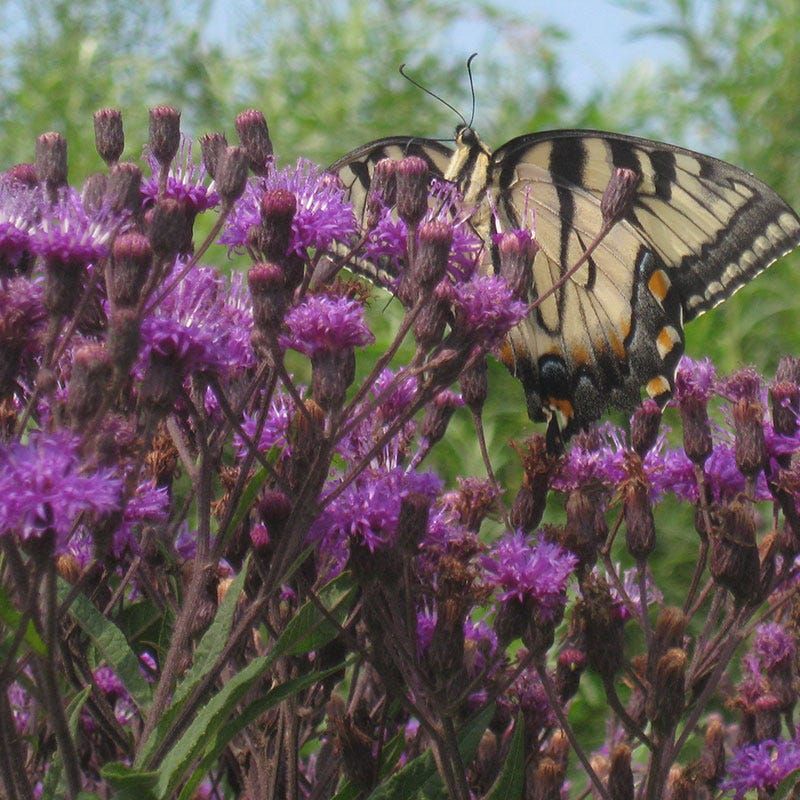
A monarch landing on a cluster of deep purple flowers is one of the more memorable sights in a late-summer Ohio garden. OSU Master Gardener observations specifically mention strong pollinator activity from monarchs and swallowtail butterflies on ironweed blooms.
OSU Extension also recognizes the plant’s value to visiting pollinators during the late season.
Understanding why this timing matters helps put the ecological value in context. By late summer, many earlier-blooming nectar sources have finished.
Ironweed flowers arrive precisely when migrating and resident pollinators are searching for reliable food. Serving as a late-season nectar source is a distinct and meaningful role in the landscape.
Nectar value and host-plant value are not the same thing. Vernonia gigantea provides nectar that adult butterflies feed on.
That is separate from a host plant, which is a species where females lay eggs and caterpillars feed. OSU Master Gardener information also mentions a native long-horned bee associated with ironweed blooms, adding another layer of ecological connection.
Planting one ironweed does not guarantee monarchs or swallowtails will appear. However, a sunny, open planting near other native plants can improve the odds considerably.
The late bloom window is what makes this plant particularly worth growing for wildlife-minded Oio gardeners.
7. Enjoy Its Natural Deer Resistance
Across much of the state, deer pressure is a real and ongoing frustration for gardeners. Planting something carefully and watching it get browsed before it blooms is discouraging enough to make some gardeners give up on certain species entirely.
Vernonia gigantea offers some reassurance on that front.
OSU Master Gardener guidance describes ironweed as deer resistant. That phrase deserves careful interpretation.
Deer resistant means that deer tend to leave the plant alone under normal circumstances, not that browsing is impossible under every condition. Food availability, local deer population density, drought stress, and seasonal pressure can all influence whether deer browse a plant they would typically pass by.
Absolute guarantees do not apply here. Calling any plant deer-proof overstates the evidence and sets up gardeners for disappointment.
What deer resistance does offer is a meaningful advantage in landscapes where browsing is a persistent problem. Many other desirable perennials require protection or repeated intervention to survive deer activity.
Ironweed tends to avoid that cycle, which makes it a lower-maintenance choice for properties with regular deer visits. Pairing it with other deer-resistant natives builds a planting that is less likely to need constant monitoring.
The relative resistance of Vernonia gigantea is one more reason it suits Ohio landscapes where wildlife pressure is part of everyday gardening life.
8. Keep Its Spread Under Control
Space is worth thinking about before Vernonia gigantea goes in the ground. The Ohio Weedguide notes that Tall Ironweed reproduces primarily by seed, and new shoots can also arise from the root crown.
The plant has fibrous roots and rhizomes, which means an established clump can gradually expand from the base over time.
In a meadow-style planting, a naturalized area, or a large pollinator garden, that spreading behavior is entirely welcome. Ironweed filling in a naturalized border is doing exactly what a vigorous native perennial should do.
The situation calls for more active management in smaller, more formal beds where unwanted seedlings would crowd other plants.
Removing spent flower heads before mature seed disperses is a reasonable way to reduce seedling spread in tighter spaces.
Pulling unwanted seedlings while they are small is straightforward because young plants have not yet developed the extensive root system of mature specimens.
Vernonia gigantea is a native species, not a nonnative invasive plant. Describing it as invasive would misrepresent its ecological role and its behavior.
A vigorous native that spreads predictably in good conditions is a very different situation from a nonnative plant disrupting a local ecosystem.
Choosing a planting site with enough room for natural spread, or committing to occasional seedling management, makes growing this plant straightforward and rewarding.