The Striking Red Flowers Rising From Alabama Soil Follow A Backwards Growth Cycle
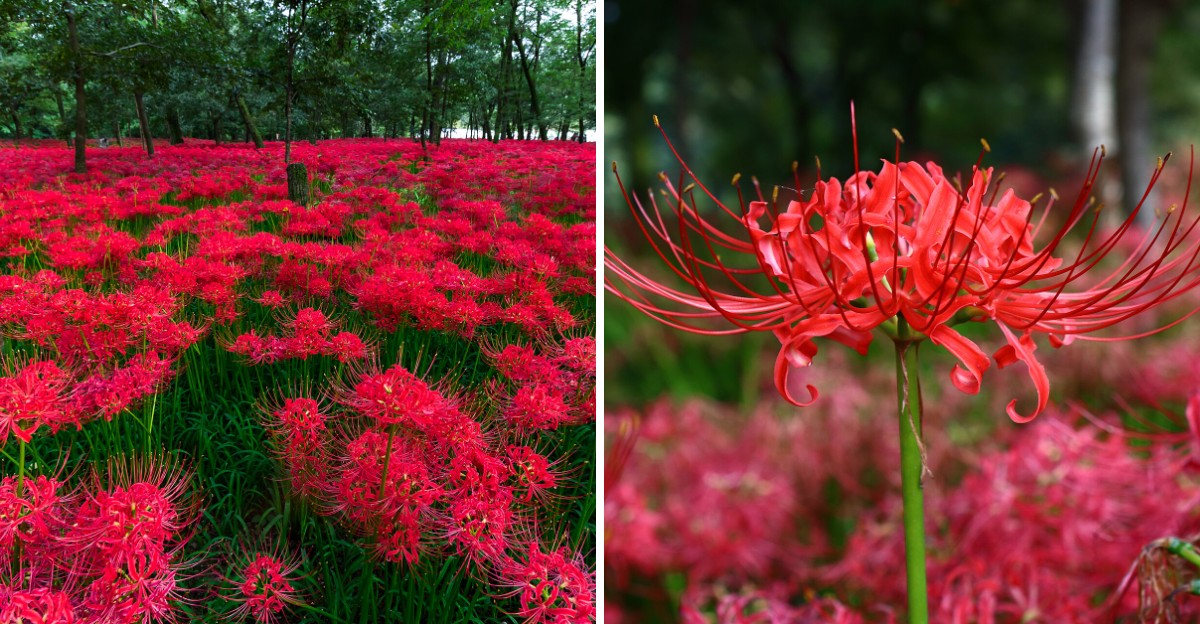
You walk past empty soil on Monday and meet glowing red petals by Thursday. Flowers open before the foliage appears, and you get the show in reverse.
Storms and cooling soil often flip the switch; you spot Alabama blooms after downpours. Legend credits a sea captain who carried bulbs from Asia, and you inherit his choice.
Southern bulbs cannot make seeds, so you may hold a clone lifted generations ago. Neighbors passed clumps over fences, so your patch may outdate your house.
Trim the skinny winter leaves and you shortchange next autumn’s color. Those blades feed the bulb underground, and your care shapes whether it thrives.
Alabama yards often hold living history. Learn the backwards calendar, and you can grow a crimson carpet that spreads over time. Swallowtails may visit on warm afternoons, and migrating hummingbirds may stop by too.
Red Spider Lilies Bloom Before Their Leaves Appear
Picture a plant that throws the party first and cleans the house later. That is the red spider lily, and its backwards schedule is the key to the show.
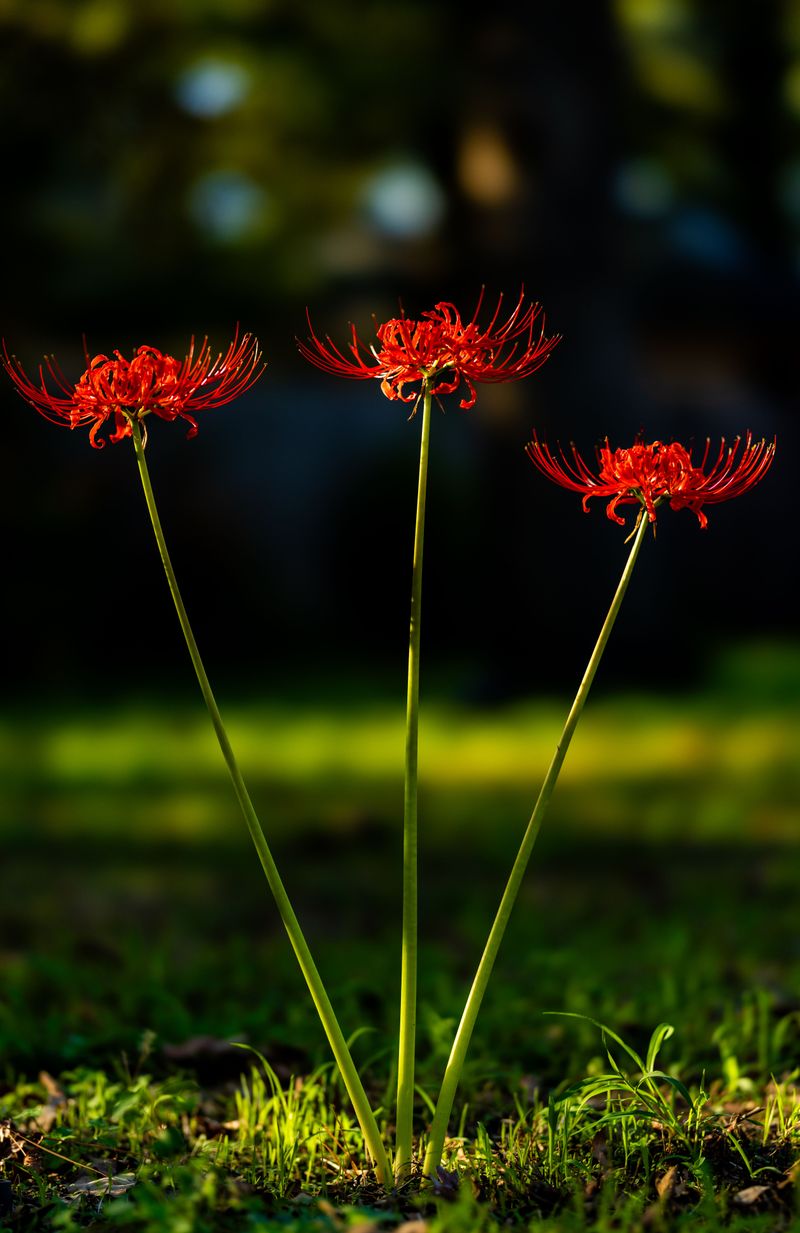
Each fall, a bare stalk shoots up and opens a ring of curly red petals. Long, thin stamens stick out like whiskers, which explains the spider part of the name.
Once the flowers fade, narrow green leaves finally appear with a pale silver stripe down the middle. Those leaves stay green through winter in the South, soaking up sunshine while other plants rest.
By late spring, the foliage turns yellow and slips out of sight for summer. Many folks forget the bulb is even there until the next September surprise.
Scientists call this plant Lycoris radiata, and it is native to China and long grown in Japan. Legend says a sea captain brought bulbs home to the Carolinas in the 1850s.
Those Southern bulbs cannot make seeds, so every new plant is a clone of the parent. Neighbors shared them over fences for generations, which is why old homesteads have so many.
So that patch in your yard may have a family tree older than your house. Somebody long ago dug a clump, wrapped it in newspaper, and passed it along.
Knowing about the backwards timing changes how you treat the plant all year. The skinny leaves you overlook in January are doing the real work for next fall’s show.
September Storms And Cooling Soil Start The Bloom Clock

Old-timers in Alabama call them hurricane lilies, and the nickname is pretty clever. The flowers tend to pop up right after a big late-summer rain.
Rain and cooling soil are widely credited with waking each sleeping bulb. The first is a good soaking, and the second is soil that finally starts to cool off.
Across most of Alabama, that combo lands between mid-September and early October. A dry spell can push blooms back a couple of weeks.
Stalks can grow several inches in a single day once they get going. You might spot a bare patch on Monday and a full red cluster by Thursday.
Your Alabama Garden Changes Every Week. Your Plan Should Too.
Gardening in Alabama changes quickly throughout the season. Every Friday you’ll receive a simple weekly plan showing exactly what to plant, prune, fertilize, harvest, and protect so you never miss the right timing.
Each bloom lasts about a week or two, depending on heat and wind. Shady spots usually keep the color fresh a few days longer than full sun.
Gardeners in north Alabama often see flowers a little earlier than folks near Mobile. Cooler nights arrive sooner up there, so the bulbs get their wake-up call first.
Want to enjoy them longer this fall? Plant a few clumps in sunny spots and a few in light shade to stagger the timing.
Keep a simple notebook or phone note of bloom dates each year. After a few seasons, you will spot patterns tied to rainfall and temperature in your own yard.
That little record turns a mystery into a calendar you can trust. It also makes for a pretty good bragging point at the next garden club meeting.
The Fall Mowing Mistake That Weakens Next Year’s Flowers
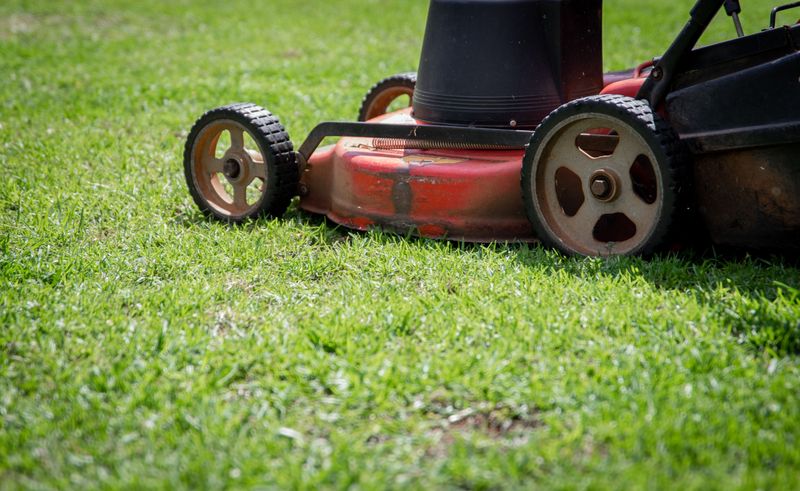
Many tidy homeowners make this mistake. They see those grassy leaves in November and run the mower right over them.
It feels harmless because the flowers are long gone by then. Those leaves are the bulb’s main source of energy.
Green foliage turns sunlight into food, and that food gets stored underground for next fall. Removing it forces the bulb to draw on stored reserves.
One mowing might not matter much to a healthy clump. Do it year after year, though, and the bulbs weaken and bloom less.
Another common slip is pulling the yellowing leaves in spring before they finish. Wait until they flop over and turn brown on their own, usually by May.
Some people also bury the bulbs too deep when they move them. The neck of the bulb should sit right at the soil surface.
Heavy fertilizer in summer is another misstep, since the bulb is resting then. Summer feeding mainly benefits the weeds growing around the bulbs.
Overwatering during the summer rest can also cause rot in clay soil. Red spider lilies like a dry nap and a wet wake-up, not a soggy bed.
If your patch looks thin this year, think back on last winter’s yard work. Mowing is one possible cause, along with crowding, shade, or recent transplanting. Learning this one habit can save a clump that has bloomed for decades.
A Hands-Off Year-Round Plan For The Leafy Clumps
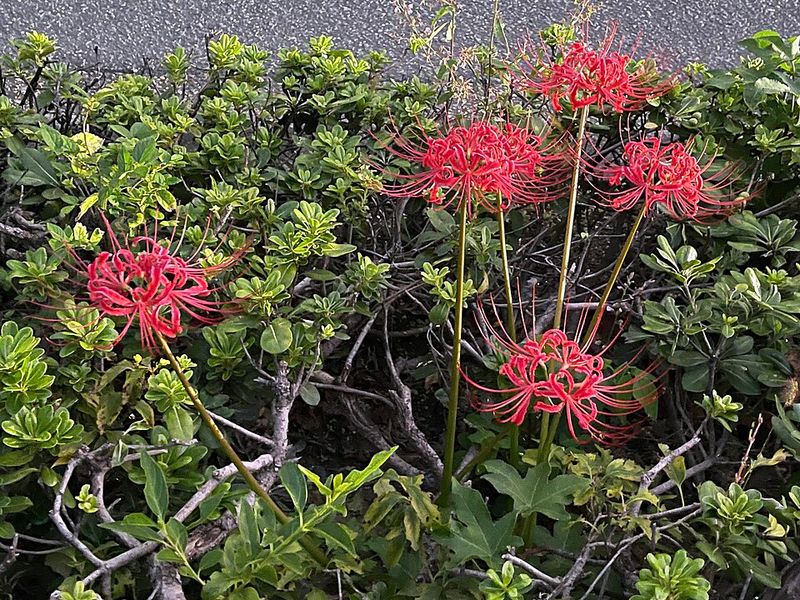
The best care for these lilies looks a lot like doing nothing at all. Busy gardeners and lazy ones can both cheer about that.
Start by marking each clump with a small stake or a decorative stone. That way, nobody mows over the leaves by accident once the flowers fade.
Mow around the patch all winter and leave a small circle of green. The grassy foliage actually looks neat if you trim the turf edges around it.
A thin layer of pine straw or shredded leaves keeps weeds down and soil moist. Keep it loose, about one or two inches deep, so new leaves can push through.
If you want to feed them, do it in early fall as the leaves emerge. A light sprinkle of bulb fertilizer or compost is plenty for the whole year.
Winter rain usually handles the watering in Alabama. During a long dry stretch, a deep drink every couple of weeks keeps the leaves happy.
Come spring, let the foliage yellow and fall over naturally. Once it pulls away with a gentle tug, you can clean it up.
Through summer, simply leave the spot alone and let the bulbs rest. Avoid planting thirsty annuals right on top, since daily watering can cause rot.
Ground covers like low sedum or ajuga make friendly neighbors for the patch. They hide the bare soil without stealing much water.
Think of it as a twelve-month relationship with very few chores. Your only real job is to stay out of the way and enjoy the show.
Thicker Clumps And More Blooms Year After Year
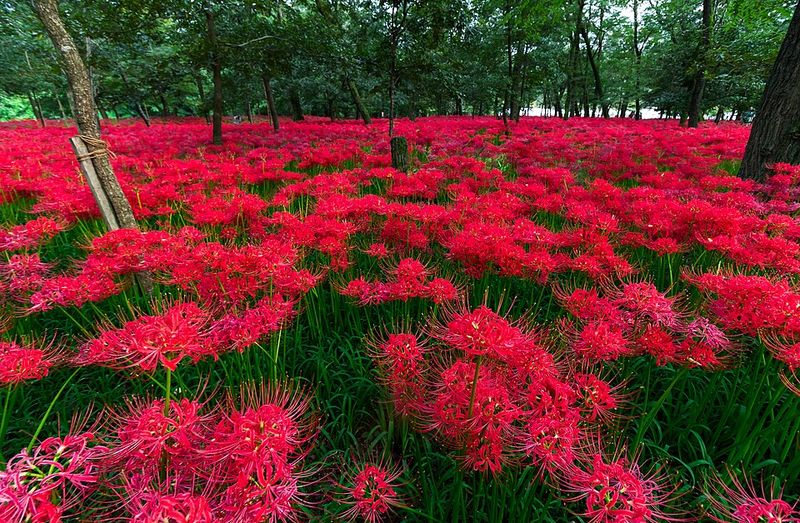
Give a clump of red spider lilies a few years of easy care, and the planting multiplies. One bulb becomes five, then ten, then a crowded red carpet.
The bulbs multiply by making small offsets around the mother bulb. Each little offset grows strong enough to flower in about two to four seasons.
Healthy patches can send up dozens of stalks at once in early fall. A single stem may hold five to seven blooms, so the color really piles up.
Pollinators notice too. Butterflies, especially big swallowtails, love to sip from these flowers on warm afternoons.
Hummingbirds heading south may occasionally stop for a quick snack as well. Your yard becomes a stopover for pollinators and migrating birds.
The plants also handle Alabama heat, drought, and humidity better than many fussy perennials. Deer and voles usually skip them, because the plant contains toxic alkaloids, especially in the bulb.
That toxic side is worth remembering if you have pets or small children. Keep curious pups from chewing the bulbs, and wash your hands after handling them.
In Japan, the flower is linked with autumn equinox festivals and remembering ancestors, though it is also associated with the afterlife and graveyards. Many families there see the blooms as a gentle sign that seasons are changing.
Here in the South, a thick patch often reminds folks of grandparents and old farmhouses. Few plants carry that much memory in a single burst of red. Let the clumps grow undisturbed, and the payoff gets bigger each autumn.
Smart Summer Division Keeps Crowded Clumps Blooming
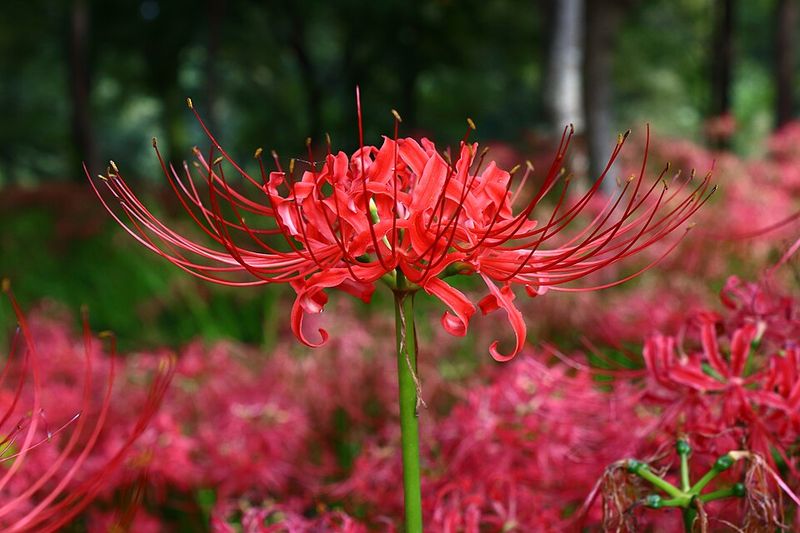
Too much of a good thing can happen, even with flowers. After many years, a packed clump may start producing more leaves and fewer blooms.
Crowded bulbs compete for food and water, so some skip flowering altogether. Dividing them every four or five years keeps the yearly show strong and bright.
Timing matters a lot here. The best window is early to mid-summer, while the bulbs sleep and the old leaves have faded away.
Dig gently around the clump with a garden fork, staying several inches away from the bulbs. Lift the whole mass and pull the bulbs apart with your fingers.
Replant them about six inches apart in soil that drains well. Set the neck of each bulb right at the soil surface for best results.
Choose a spot with morning sun and some afternoon shade if you can. Raised beds or slopes work nicely in heavy Alabama clay.
It is normal if moved bulbs skip blooming next fall. Red spider lilies often sulk for a year before settling into their new homes.
Extra bulbs make good gifts for friends, neighbors, and church plant swaps. Passing them along keeps an old Southern tradition alive and growing.
You can also order bulbs online during summer when they are dormant. Plant them right away, since dried-out bulbs lose strength fast.
Jot down where you planted each group, because the spots disappear by August. A quick map saves you from digging into a hidden bulb by mistake.