The Surprising Reason Opossums Wandering Your North Carolina Yard Are Quietly Working For You
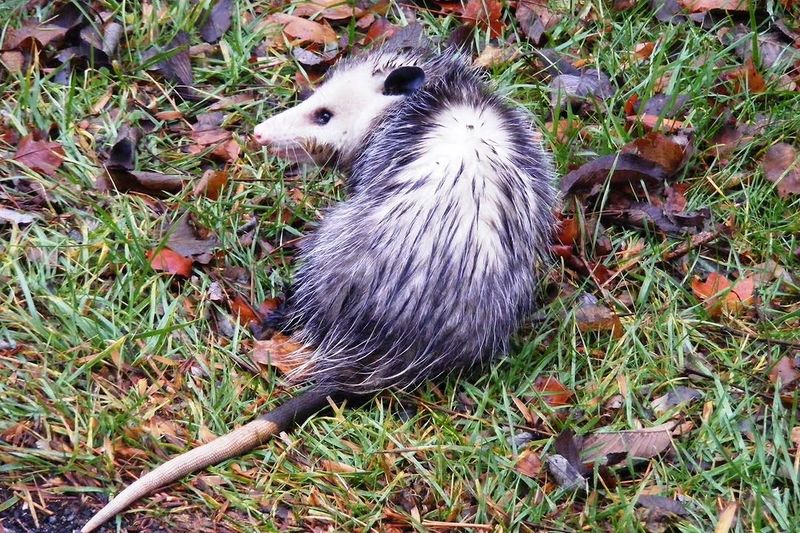
You flip on the porch light one evening and catch a pale, pointy-faced animal waddling across your yard, and your first instinct might be to shoo it away. But a story has been spreading online that this odd visitor is actually vacuuming up thousands of ticks and saving your family from Lyme disease. That claim is much shakier than it sounds, and North Carolina homeowners deserve a clearer picture. The Virginia opossum is a native, useful animal, but understanding what it actually does, and what it does not do, will help you make smarter choices about your yard, your fruit trees, and your tick protection.
A Native Night Visitor, Not A Backyard Employee
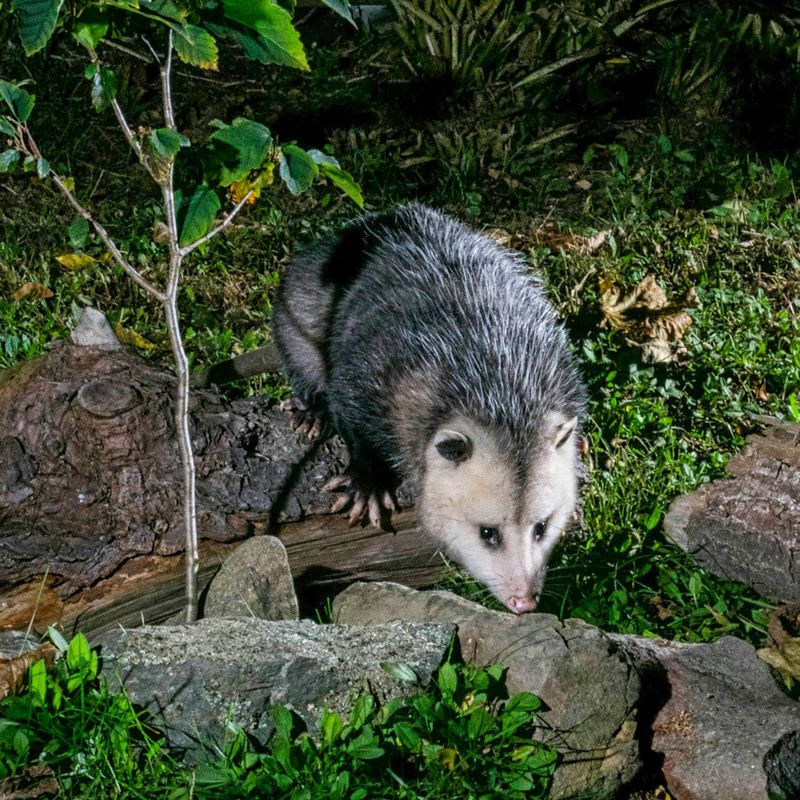
Waddling through the edges of yards from the Piedmont to the Coastal Plain, the Virginia opossum, known scientifically as Didelphis virginiana, is North America’s only native marsupial and a longtime resident of North Carolina. NC State Extension’s wildlife handbook describes the species as highly adaptable, comfortable in wooded edges, brush piles, suburban gardens, and other spaces shaped by human activity. As development reduces open habitat across the state, opossums move closer to homes, not because they are bold, but because the food and cover are there.
Opossums are nocturnal, so most homeowners never actually watch one work. They move quietly through the dark, nose to the ground, following scent trails toward whatever is available, fallen fruit, insects, earthworms, carrion, berries, nuts, or the occasional small animal. That broad appetite is a genuine part of their biology. It is also the source of some well-intentioned but overstated claims about what they do for a yard.
Calling an opossum a backyard employee sets expectations the animal cannot reliably meet. A visiting opossum is looking for a meal, not providing a service. It may eat some fallen persimmons under your tree tonight and be two neighborhoods away by Thursday.
NC State’s gardening resources frame opossums as possible, limited ecological presences rather than dependable helpers.That framing is honest, and it is where a useful conversation about this animal actually begins.
The Laboratory Study Behind The Tick Myth
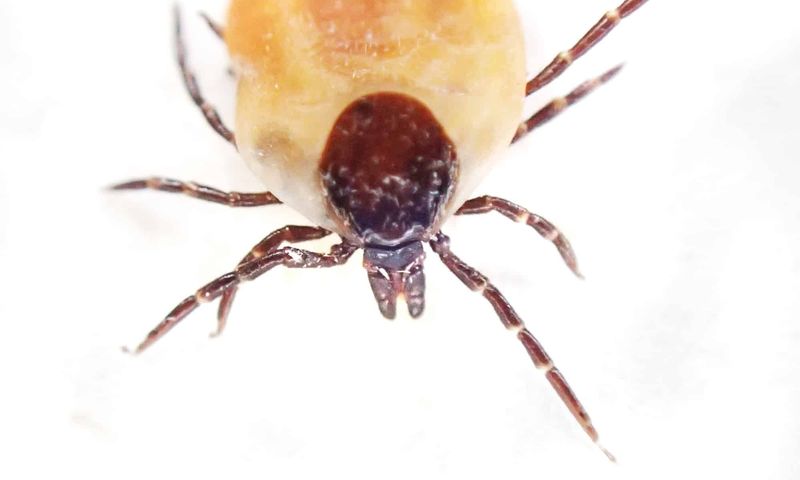
The story of opossums eating thousands of ticks traces back to a single 2009 experiment. Researchers placed larval blacklegged ticks, the species known to carry Lyme disease, directly onto captive opossums and then counted how many ticks were missing afterward. That published study reported that opossums killed or removed between 83% and 96% of the ticks attempting to feed on them, interpreting the missing ticks as evidence of grooming and consumption. It was a striking result, and it traveled fast.
Here is where it gets tricky. A controlled laboratory setting with ticks placed directly on an animal is a very different situation from a wild opossum wandering through a Piedmont backyard on a muggy July night. The study did not show that wild opossums actively seek out ticks, hunt them across a property, or reduce the number of ticks a person or pet might encounter. It showed what happened when ticks were given no alternative host in a confined space.
Your North Carolina Garden Changes Every Week. Your Plan Should Too.
Gardening in North Carolina changes quickly throughout the season. Every Friday you’ll receive a simple weekly plan showing exactly what to plant, prune, fertilize, harvest, and protect so you never miss the right timing.
The number that shows up in popular retellings grew in the retelling too. Some accounts say 5,000 ticks per year. Others say 5,500. Penn State Extension’s review of the research clarifies that the underlying estimate described roughly 5,500 larval ticks per week during a peak activity period, a figure extrapolated from a small captive study, not measured in the field.
Extrapolation from a captive experiment to a wild animal’s routine behavior is a large leap. The 2009 study is real science, but the version of it that circulates on social media is a much stronger claim than the study itself ever made.
Field Evidence Does Not Support A Tick Vacuum
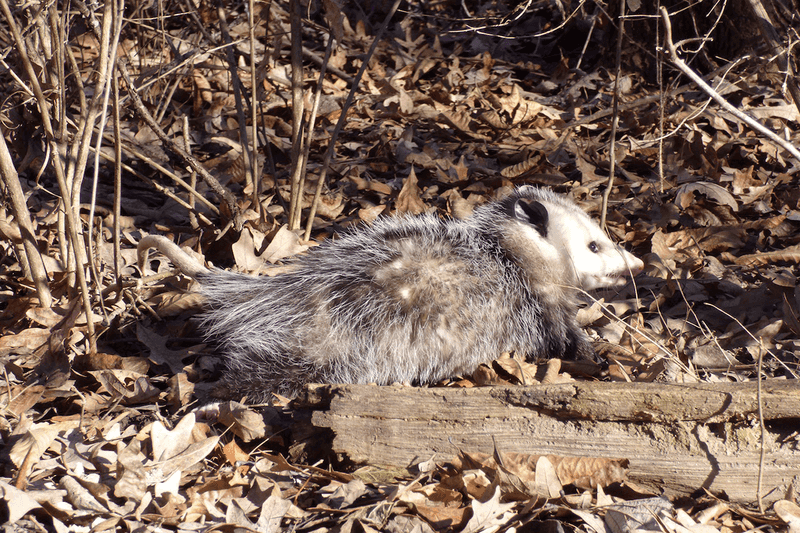
Laboratory results and real-world behavior do not always match, and with opossums and ticks, the gap turned out to be significant. A 2021 study took a more direct approach: researchers examined the actual stomach contents of 32 wild Virginia opossums collected in central Illinois and looked for ticks or tick parts. They found none. That field-grounded research also reviewed 23 previously published opossum diet studies and found no documented ticks in any of them.
That is a meaningful pattern. Across 32 animals examined directly and 23 studies reviewed, ticks did not appear as a food source. The researchers cautioned specifically against using the 2009 captive findings as evidence of normal wild opossum behavior, because what an animal does when ticks are placed on it in a controlled setting may have very little to do with what it chooses to eat when it has the whole world to forage in.
It is fair to be careful about overclaiming in the other direction too. The 2021 study covered one region, and 32 animals is a limited sample. Saying that no opossum anywhere has ever consumed a tick would overreach the evidence. The honest, defensible conclusion is that ticks have not been shown to be a meaningful or preferred part of the Virginia opossum’s diet.
Ticks killed during grooming are also not the same thing as ticks eaten, ticks removed from your property, or a measurable drop in tick abundance around your home. Penn State Extension makes this distinction clearly: a single animal’s grooming behavior cannot substitute for a property-wide tick management program. One opossum passing through your yard is not a biological control plan.
Fallen Fruit Is A More Defensible Benefit
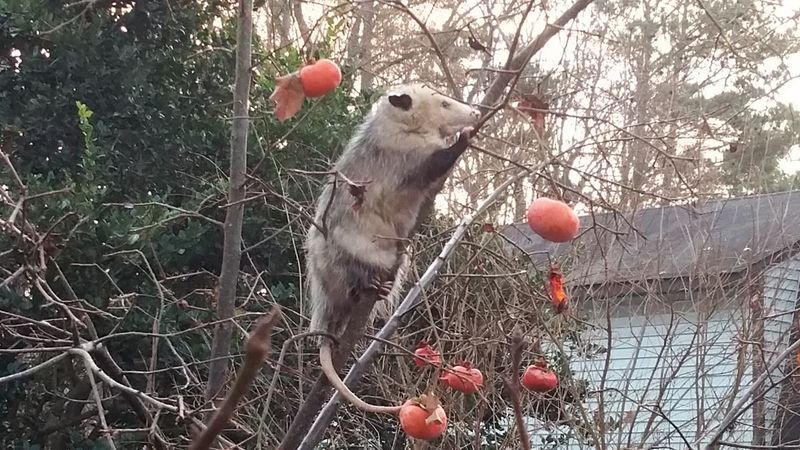
Strip away the tick-vacuum story and a quieter, more honest benefit remains. Opossums are genuine omnivores, and their diet genuinely does include fruit. Persimmons are a particular favorite, and in North Carolina, where native persimmon trees (Diospyros virginiana) drop fruit from September through November, an opossum nosing around beneath the branches is doing something real. Apples, grapes, figs, and other backyard fruit also land in the category of things an opossum will eat when it finds them on the ground.
That is actually useful. Fallen and overripe fruit left on the ground can attract yellow jackets, fungal problems, and other pests. NC State’s gardening guidance notes that opossums may eat insects, earthworms, carrion, berries, nuts, and fruit, connecting their diet naturally to what accumulates under productive trees and vines in a suburban yard. If an opossum eats some of that fallen fruit, it is doing something a homeowner might otherwise need to do by hand.
The limits of this benefit deserve equal airtime. An opossum visiting your fruit tree may eat some of what fell, but it may also leave droppings on your patio, knock additional fruit from low branches, root around in a compost bin, or raid a garden bed nearby. NC State Extension specifically lists fruit and garden damage among possible nuisance behaviors.
Occasional scavenging is not dependable yard cleanup. An opossum that visits three nights in a row may not return for two weeks. Thinking of it as a possible, welcome guest that sometimes helps with fallen produce is accurate. Counting on it as a yard maintenance system is not.
Manage Food Instead Of Inviting Wildlife
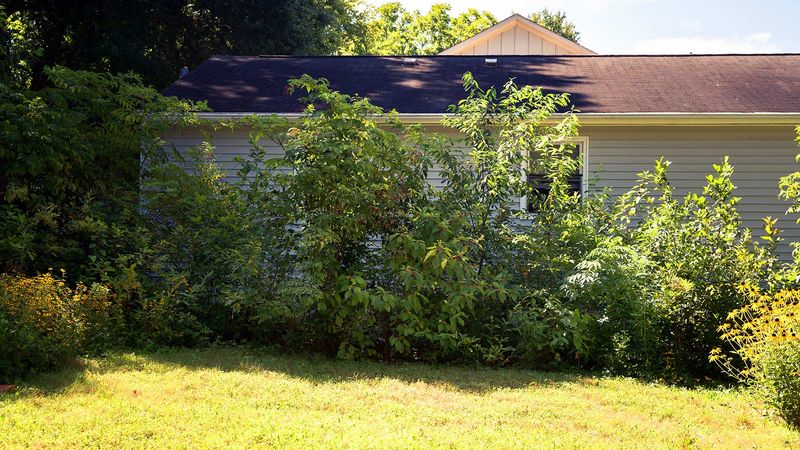
If you would rather not share your yard with a regular opossum visitor, the most effective thing you can do is manage what is drawing it in. Harvest ripe fruit before it falls. Pick up any fruit already on the ground, especially beneath persimmon, apple, fig, and grape plants, which are common in yards across the Piedmont and mountains. Secure garbage cans with tight-fitting lids, keep compost bins closed, and bring pet food bowls inside before dark.
These steps reduce the food signals that bring nocturnal wildlife to your door.
Do not feed or bait an opossum intentionally. NC State gardening resources recommend food removal and habitat modification as first responses to wildlife conflicts, not supplemental feeding.
There is also a broader reason to keep food sources controlled. Research from NC State on North Carolina backyards found that human-provided food, particularly bird-feeder food, was associated with higher backyard mammal activity overall. That study was observational, so it does not prove that every feeder causes every wildlife visit, but the pattern is strong enough that wildlife-conflict guidance consistently points to food management as the first line of response.
Feeding one animal often means feeding several. Leaving food out for an opossum can encourage raccoons, rodents, feral cats, and other animals to move through the same space more frequently. None of those animals help with your tick situation, and some can create new problems. Managing attractants is genuinely the practical starting point, not an afterthought.
Use Proven Layers For Tick Protection
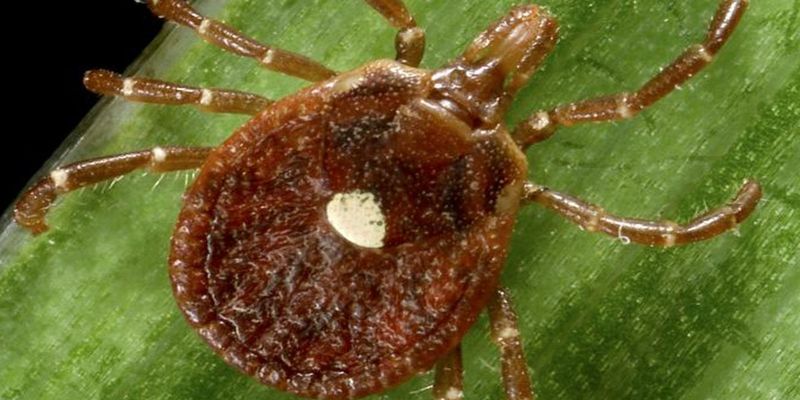
Appreciating a native animal and protecting your family from ticks are two separate jobs, and only one of them can be delegated to wildlife. Tick management in a North Carolina yard, where humid summers and abundant deer and rodent populations keep blacklegged tick pressure high, requires layered, active steps from you.
Start with the yard itself. CDC guidance on preventing Lyme disease recommends mowing grass regularly, removing leaf litter from areas where people spend time, clearing tall grass and brush close to the house, and trimming vegetation back to let more sunlight reach the ground. Ticks survive best in cool, moist, shaded spots, so reducing those conditions in high-use areas cuts your exposure where it matters most. Placing a 3-foot-wide barrier of wood chips or gravel between your lawn and any wooded edges creates a zone that ticks are less likely to cross.
These habitat steps reduce tick encounters in defined areas but do not eliminate ticks from a property. Combine them with personal protection every time you or your children go into tick habitat. Use an EPA-registered repellent according to label directions. Clothing treated with permethrin adds another layer, particularly for anyone spending extended time in the Sandhills or mountain forests where tick activity can be intense from April through October.
After any outdoor activity, check clothing before coming inside, shower within 2 hours, and do a full body check, paying attention to the scalp, behind the knees, and underarms. Remove any attached tick promptly with fine-tipped tweezers, pulling steadily upward without twisting.
The CDC Tick Management Handbook covers these steps in detail and is worth keeping bookmarked.For pets, ask your veterinarian about tick prevention products before tick season ramps up, and note that cats are sensitive to certain chemicals that are safe for dogs. Veterinary guidance is especially worth seeking before the first warm stretch of the year, when ticks become active well ahead of what many people expect.
Respond Safely To Opossums And Bites
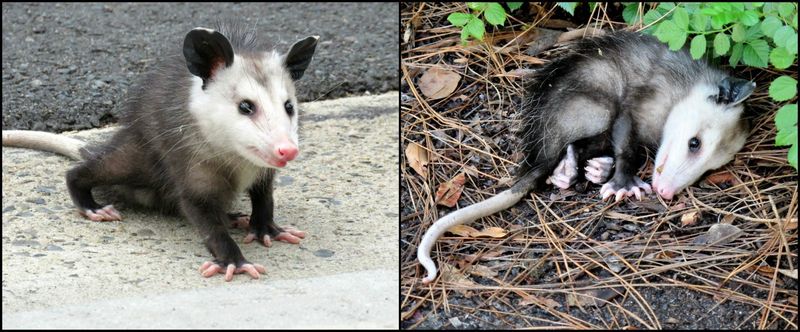
Most opossum encounters in a North Carolina yard end with the animal shuffling away on its own. Opossums are not aggressive by nature, and their famous open-mouthed hiss is mostly bluff. But a cornered, injured, or frightened animal may bite or scratch, and that changes the calculus for how you respond.
Keep children and pets away from any wild opossum you encounter. Do not attempt to corner, handle, trap, relocate, or transport the animal yourself. Trapping and relocation of wildlife is regulated in North Carolina, and moving an animal without knowing the rules or using safe equipment can harm both you and the opossum. If an animal appears injured, is behaving abnormally, or is trapped somewhere it cannot escape, contact a licensed wildlife rehabilitator or your local animal-control authority.
NC State Extension’s wildlife guidance recommends checking current local rules before any intervention with wild animals.
A young opossum found alone outdoors is not automatically an orphan in need of rescue. If the animal’s body, not counting the tail, measures at least 9 inches long, it is generally old enough to be on its own. Animals smaller than that, or any animal that appears sick, injured, or unusually slow, should be referred to a rehabilitator rather than handled by a homeowner.
On the question of rabies, opossums have a comparatively low risk compared with raccoons, bats, and foxes, which are the primary wildlife reservoirs in North Carolina. But low risk is not the same as no risk. CDC information on rabies is clear that any mammal can potentially contract the virus. If an opossum bites or scratches you, wash the wound thoroughly with soap and water for at least 15 minutes, then contact a healthcare provider or your local health department for guidance on next steps.
Do not wait to see if symptoms develop.
Let The Opossum Pass Without Making It A Plan
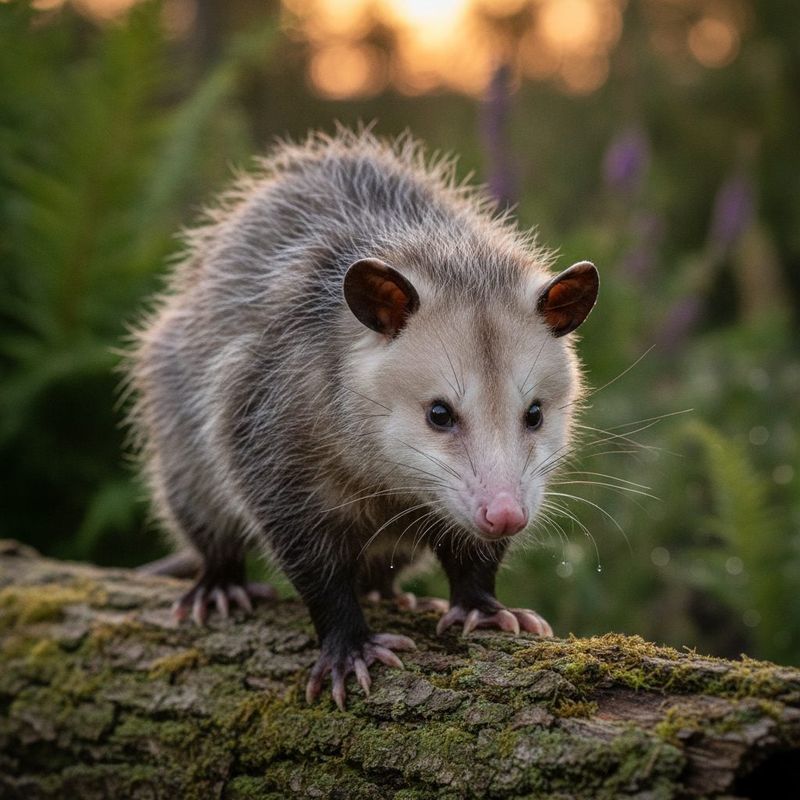
Somewhere between “pest” and “miracle worker” is where the Virginia opossum actually lives, and that middle ground is honestly pretty interesting. This animal has been moving through North Carolina woodlands and yards for a long time, eating what it finds, avoiding what it can, and asking very little from the people whose properties it crosses at night.
The honest takeaway from the research is this: an opossum passing through your yard may eat some fallen fruit, some insects, and some earthworms. It is not going to eliminate your ticks, clean your yard, or protect your family from Lyme disease. NC State’s gardening resources frame it well as a native omnivore with a broad and opportunistic diet, not a pest-control service.
Your job is to manage the yard, not the opossum. Pick up fallen fruit. Secure food sources. Keep pet food inside after dark.
Mow the edges of high-use areas, reduce leaf litter near the patio, and use repellents and tick checks consistently through the warm months. Layered tick prevention is what actually protects your family, and none of those layers involve hoping a nocturnal marsupial shows up on schedule.
Do not feed the opossum to encourage more visits. As the NC State backyard research suggests, human-provided food is associated with increased wildlife activity, and that activity includes animals you did not intend to invite. Leave a healthy opossum alone, and it will almost certainly leave you alone too.
There is something worth holding onto here. A native animal moving quietly through your yard on a warm Carolina night is a small sign that the local ecosystem still has some working parts. You can appreciate that without turning it into a wildlife management strategy.