The Texas Native Shrub That Creates Dense Wildlife Habitat Without Spreading
Finding a shrub that creates genuinely dense wildlife habitat is easy enough. Finding one that does it without eventually taking over more space than you intended is considerably harder.
A lot of the most ecologically productive shrubs are also the most aggressive spreaders, and for Texas homeowners with limited yard space or carefully maintained landscape designs, that trade off is a real obstacle.
This native Texas shrub solves that problem. It grows with enough density to provide meaningful shelter, nesting sites, and food sources for a wide range of Texas wildlife, including birds, pollinators, and beneficial insects.
But it does so within a manageable footprint that stays where you put it without requiring constant intervention to keep it in bounds.
That combination of ecological generosity and well behaved growth habit is rarer than most gardeners realize, and it makes this shrub genuinely valuable in residential landscapes that want to support wildlife without sacrificing control over the yard.
Here’s the native Texas shrub worth knowing about and why it belongs in more yards than it’s currently in.
Meet Agarita (Mahonia Trifoliolata)
Picture a shrub that minds its own business, stays exactly where you planted it, and still manages to be one of the most valuable wildlife plants in Texas. That is agarita in a nutshell.
Officially called Mahonia trifoliolata, this evergreen native grows as a tight, rounded clump that holds its shape year after year without any help from you.
Agarita is slow-growing, which is actually a good thing. Slow growth means the plant builds a dense, sturdy structure over time rather than shooting out long, floppy branches that need constant trimming.
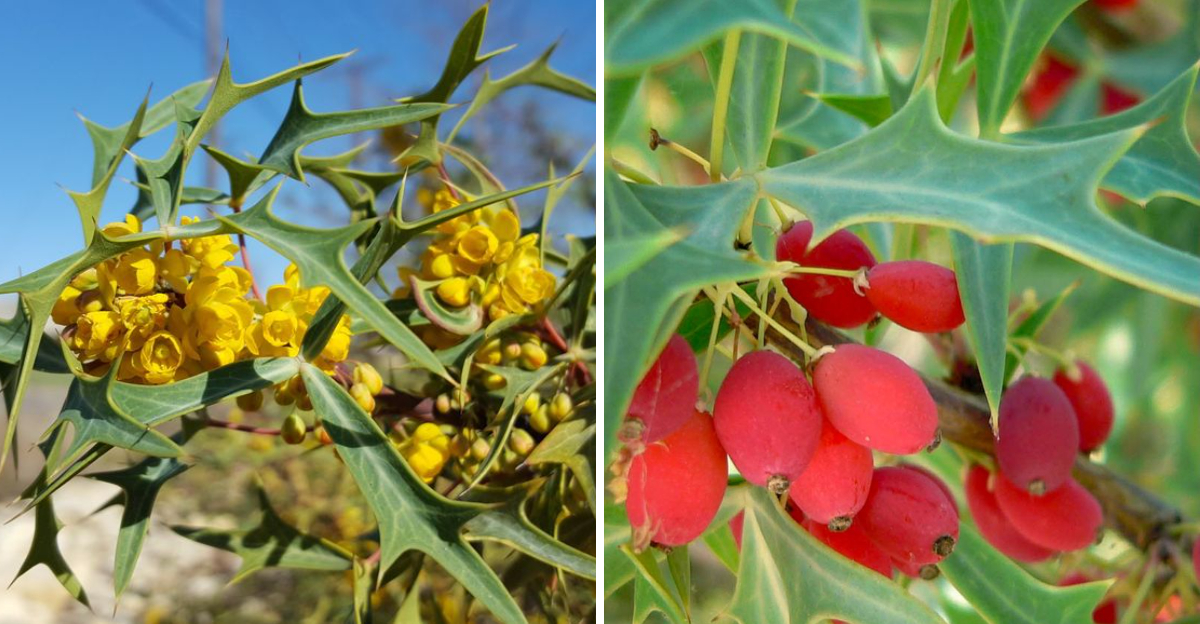
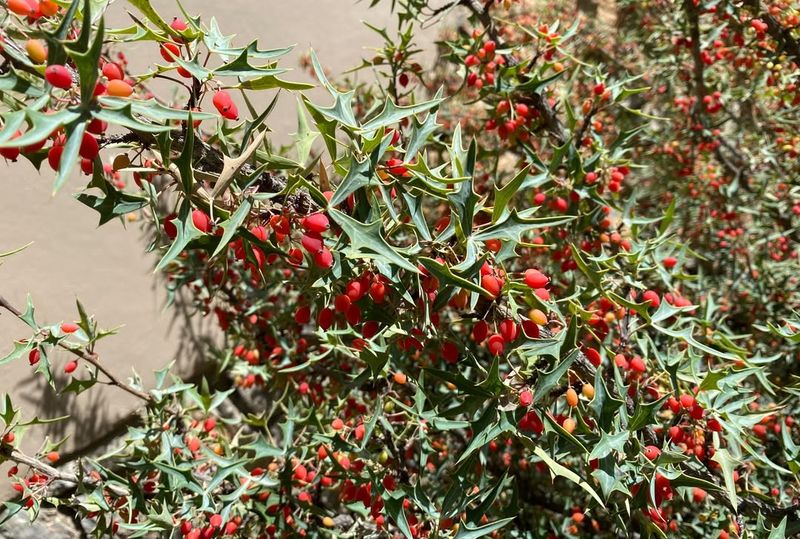
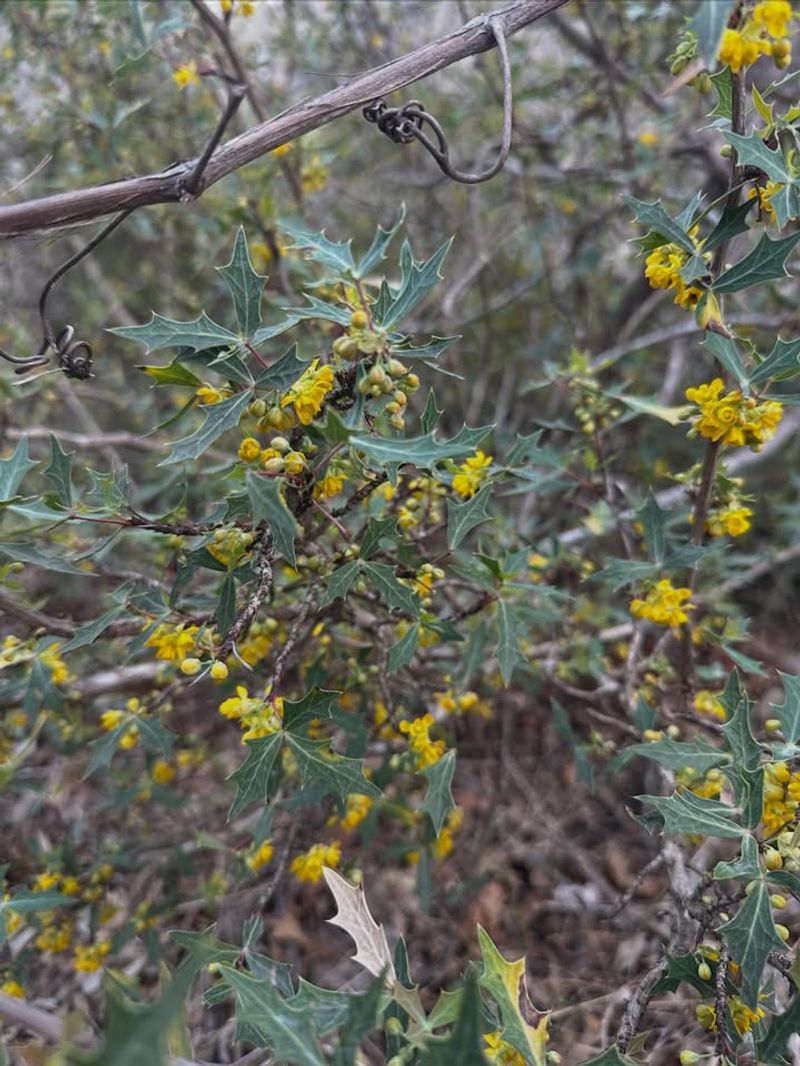
The leaves are gray-green, stiff, and edged with spiny points that look a lot like holly. That spiny texture is not just for show – it plays a huge role in making the shrub useful to wildlife.
Found naturally across the Texas Hill Country, the Edwards Plateau, and into parts of West Texas, agarita has been thriving in this region long before anyone started talking about native plant gardening.
Indigenous communities even used its roots and berries for food and medicine. The plant grows naturally in rocky limestone soils under full sun or partial shade, which tells you a lot about how tough it really is.
What makes agarita stand out from other wildlife shrubs is that it never becomes a problem. You plant it once, and it grows into a reliable, self-contained habitat feature.
No containment strategies needed, no aggressive pruning required, and no worrying about it creeping into spaces where it does not belong. For Texas gardeners who want wildlife value without the headache, agarita is a genuinely smart choice.
Why Agarita Stays Put While Other Wildlife Shrubs Spread Everywhere
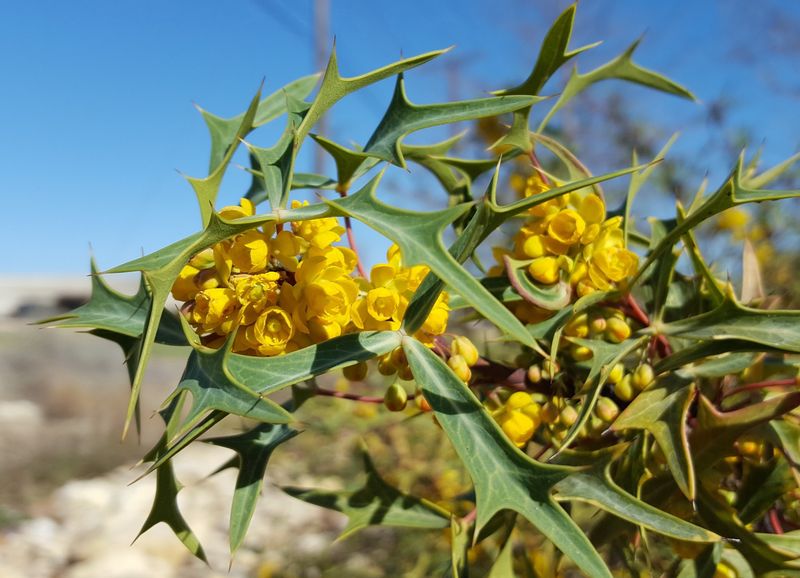
Some native shrubs are wonderful for wildlife but terrible for gardeners who want control. Fragrant sumac, for example, roots wherever its branches touch the ground.
Suckering shrubs send up new shoots across a wide area of soil. Before long, a single plant becomes a colony, and suddenly you are spending weekends pulling up unwanted growth. Agarita does none of that.
Your Texas Garden Changes Every Week. Your Plan Should Too.
Gardening in Texas changes quickly throughout the season. Every Friday you’ll receive a simple weekly plan showing exactly what to plant, prune, fertilize, harvest, and protect so you never miss the right timing.
Agarita grows from a central root system and stays there. It does not spread by runners, it does not layer itself when branches touch the soil, and it does not sucker outward into surrounding areas.
The plant simply grows upward and outward in a slow, controlled, rounded form. Over many years it might reach five to eight feet tall and equally wide, but it does so gradually and predictably.
This non-spreading habit makes agarita perfect for smaller yards, garden borders, and spaces near walkways or fences where you need a plant to stay in its lane.
You can plant it next to a fence line and trust that it will not creep under the fence or push into neighboring property. That kind of predictability is genuinely rare among shrubs that offer serious wildlife value.
Gardeners who have struggled with aggressive natives often discover agarita as a relief. You get all the habitat benefits – shelter, food, and pollinator support – without the spreading concerns that make other wildlife shrubs a chore to manage.
Once established, agarita basically takes care of itself while staying exactly where you want it. For busy gardeners or anyone working with limited space, that combination is hard to beat.
The Spiny, Dense Structure That Gives Wildlife Real Protection
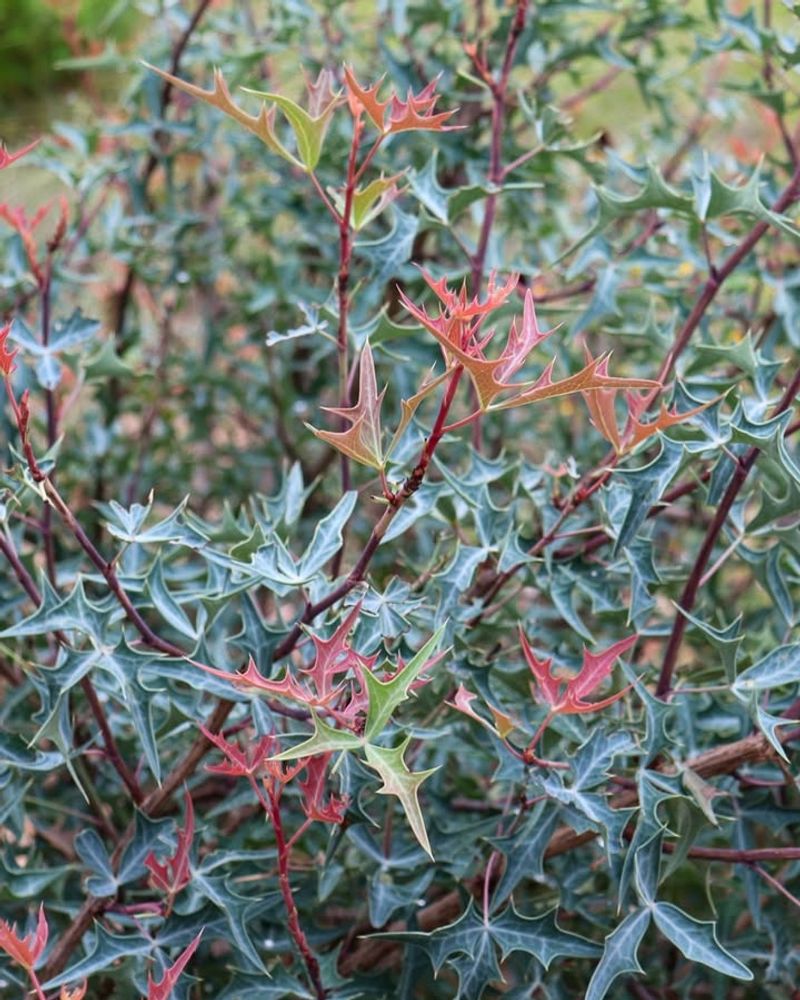
Walk up to an agarita shrub and try to reach your hand into the center of it. Chances are you will pull back pretty quickly.
Those stiff, spiny leaves are not exactly welcoming to human hands, and that is exactly the point. For small birds and other wildlife, that same spiny density is what makes the shrub feel like a safe haven.
Agarita’s leaves grow in tight clusters along branches that layer over each other as the shrub matures. The result is a dense interior that is genuinely difficult for predators to penetrate.
Hawks, cats, and other hunters have a hard time reaching birds that have tucked themselves into the middle of an agarita. The spines act as a natural barrier, and the layered branches block clear sightlines from outside the shrub.
Small songbirds like wrens, sparrows, and mockingbirds are known to nest inside agarita shrubs. The protected interior gives them a secure spot to raise young.
During cold weather, birds also roost in agarita for warmth and wind protection, since the dense evergreen foliage holds heat and blocks cold winds better than a deciduous shrub that has dropped its leaves.
Unlike shrubs that offer open, airy structure, agarita creates what wildlife biologists sometimes call thicket habitat. That means the interior of the plant is layered and complex enough to function almost like a small, self-contained refuge.
For a yard that wants to genuinely support wildlife rather than just attract it briefly, having at least one dense, spiny evergreen shrub like agarita makes a real and measurable difference throughout the entire year.
Bright Red Berries That Feed Birds And Small Mammals Each Spring
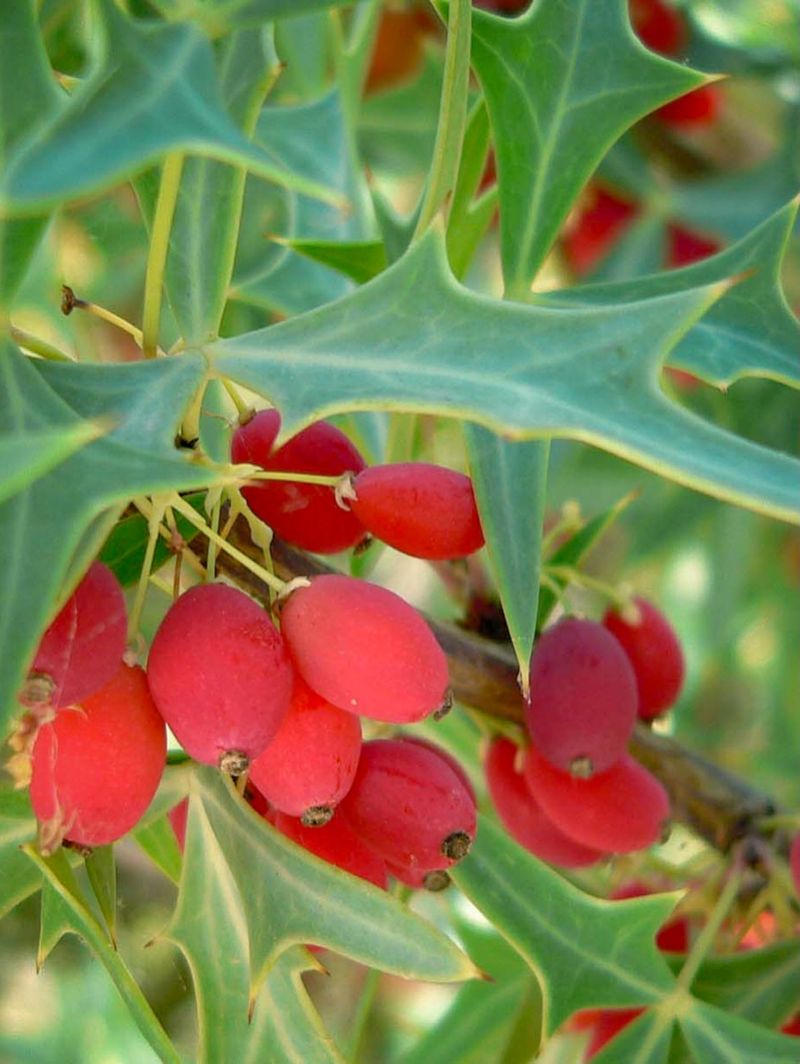
Every spring, agarita puts on a show that wildlife absolutely loves. After the yellow flowers fade, the shrub produces clusters of small, bright red berries that ripen by late spring and early summer.
These berries are edible and genuinely nutritious, making agarita one of the few native shrubs that offers both shelter and a real food source in the same plant.
Birds are usually the first to find the berries. Mockingbirds, robins, cedar waxwings, and thrashers are among the species commonly spotted feeding on agarita fruit in Texas.
Small mammals like foxes, coyotes, and white-tailed deer also eat the berries when they find them. The fruit does not last long once it ripens, which tells you something about how popular it is with local wildlife.
People can eat agarita berries too, and many Texans have fond memories of gathering them for jelly. The berries are tart and bright, with a flavor sometimes compared to a sour cranberry.
Making agarita jelly is a traditional Texas Hill Country activity that goes back generations. Harvesting the berries is a bit of a challenge because of those spiny leaves, but a sheet spread under the shrub and a gentle shake can do the trick.
From a habitat standpoint, the berry crop gives agarita a second season of wildlife value after its flowers have finished. Most shrubs offer food or shelter but rarely both with this much consistency.
Having a plant that feeds wildlife in spring while sheltering them all year long is a genuinely efficient use of garden space, especially in smaller yards where every plant needs to earn its spot.
Late Winter Yellow Flowers That Pollinators Desperately Need
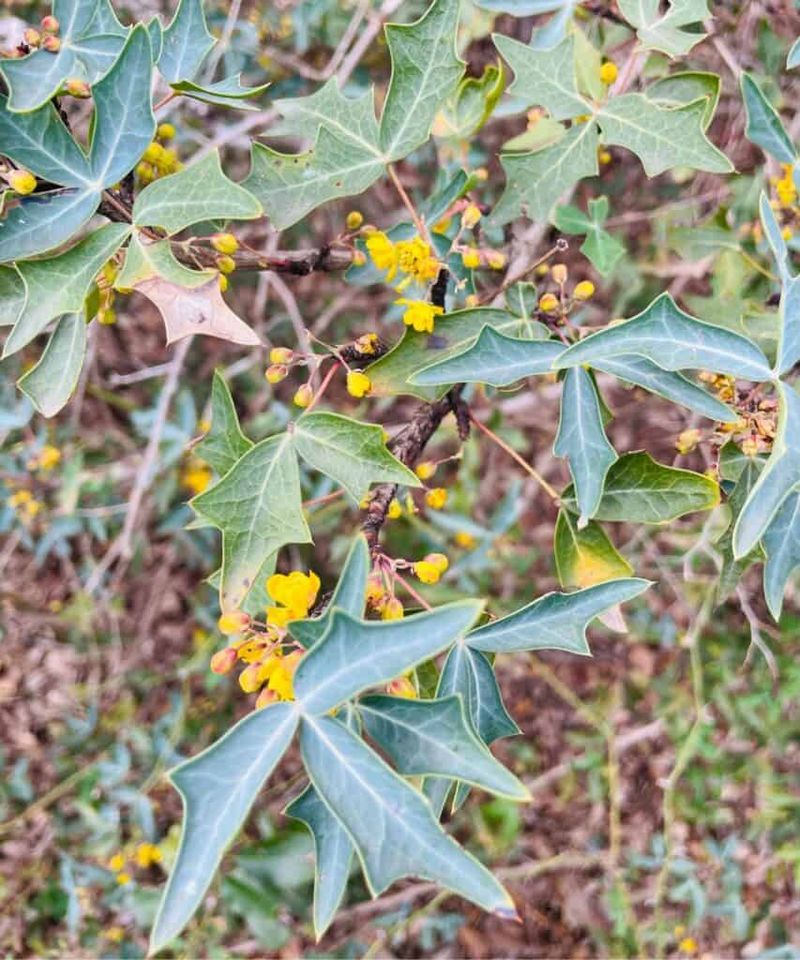
Here is something that surprises a lot of people: agarita blooms in late winter, sometimes as early as February in central Texas.
When most of the garden is still bare and cold, agarita is already covered in clusters of small, bright yellow flowers that smell sweet and carry a lot of nectar. For pollinators that have been waiting out the winter, this is a genuinely big deal.
Native bees, honeybees, and other early-season pollinators are often struggling to find food in late winter and early spring.
Many flowering plants have not yet woken up, and the gap between winter and the main spring bloom can be a tough stretch for pollinator populations. Agarita fills that gap with reliable, accessible nectar right when it is needed most.
The flowers are small but numerous, covering the shrub in a warm yellow haze that is easy to spot from a distance. Up close, the fragrance is noticeable and pleasant, sometimes described as a light honey scent.
Butterflies that emerge early in the season, like certain hairstreaks and skippers, also visit the blooms when temperatures are warm enough.
Planting agarita in a garden that already has mid-spring and summer bloomers creates a more complete seasonal calendar for pollinators. Instead of a garden that only feeds insects during peak bloom season, you get one that starts feeding them weeks earlier.
That extended support helps pollinator populations stay stronger throughout the year. For anyone who wants to make their yard genuinely pollinator-friendly rather than just seasonally attractive, agarita’s early bloom timing is one of its most practical and underappreciated qualities.
Why Agarita Thrives In Texas With Almost No Maintenance
Rocky, poor, dry soil is not a problem for agarita – it is basically home. This shrub evolved on the limestone hills and thin soils of central and west Texas, which means it is perfectly adapted to the conditions that frustrate most garden plants.
Where other shrubs struggle without regular watering or soil amendments, agarita just keeps growing at its own steady pace.
Drought tolerance is one of agarita’s most practical qualities for Texas gardeners. Once the shrub is established, which usually takes one to two growing seasons, it can survive on rainfall alone in most parts of Texas.
You might water it occasionally during extreme dry spells, especially in its first summer, but after that the plant is largely on its own. That kind of low water demand is a real advantage in a state where summer heat and drought are regular visitors.
Agarita also does not need fertilizer, rich soil, or regular pruning to stay healthy and attractive. Its natural growth habit keeps it tidy without intervention.
The slow growth rate means it fills its space gradually rather than getting out of hand quickly. You are not going to walk outside one summer and find it has doubled in size and swallowed your garden path.
Pests and diseases are rarely a concern with agarita. Its tough, spiny leaves are not appealing to most browsing insects, and the plant’s natural resilience means it bounces back easily from heat stress or occasional neglect.
For Texas gardeners who want a plant that genuinely works with the local environment rather than against it, agarita checks every box without demanding anything extra in return.