What A Toad Living Under Your North Carolina Steps Is Really Telling You About Your Yard
Flip over a clay pot in your garden or peer under the front steps on a humid North Carolina evening, and you might find a small, warty visitor staring back at you. That toad did not end up there by accident. It found something it needed, and understanding what that something is can actually tell you a useful thing or two about your yard. Not everything, but enough to be worth knowing.
The Toad Has Found a Useful Refuge
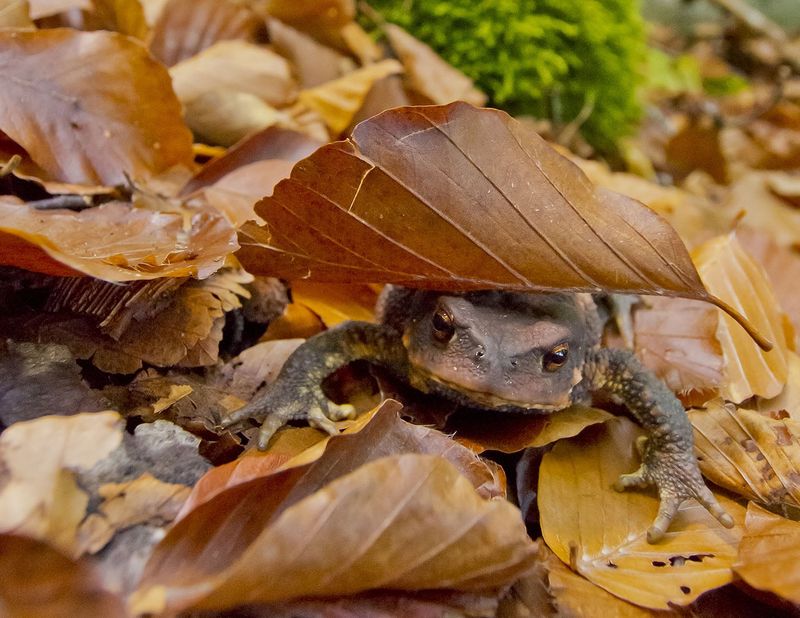
Spotted a toad tucked under your steps? Good news: that animal is not lost, confused, or in trouble. It chose that spot on purpose, and the reason is simpler than most people expect. The space under a set of steps can offer shade from the afternoon sun, cooler and damper soil, shelter from predators, and access to the insects and other small invertebrates that make up a toad’s meals.
That is a short checklist, and your steps happened to check every box.
According to NC State Extension guidance on reptiles and amphibians in your backyard, terrestrial amphibians depend on damp cover such as leaf litter, logs, rocks, loose soil, and vegetation to avoid drying out, overheating, and predation. Your steps may be providing several of those things at once, especially if there is any mulch, accumulated leaves, or moist soil nearby.
What the sighting does not do is hand you a full report on your yard. One toad in one spot is evidence of one localized habitat pocket that happened to work for one animal. That is a genuinely positive wildlife signal, the kind that tells you a native amphibian found your property livable enough to rest in. But it is one clue, not a diagnosis.
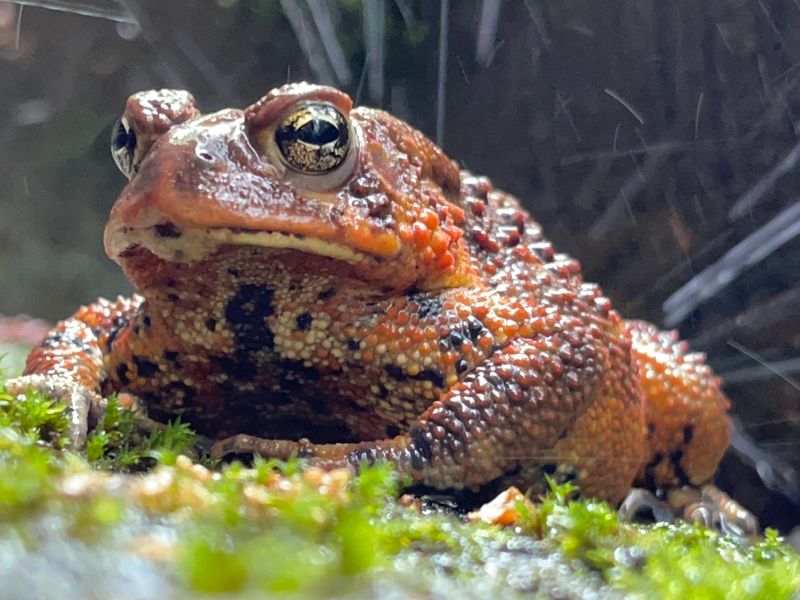
Pinning down the exact species from a quick look can be tricky. North Carolina hosts multiple toad species, and
NC Wildlife notes that Fowler’s toads are common across much of the state, though a casual sighting does not always allow for confident identification. Enjoy the visitor for what it is: a small, useful neighbor that found a corner of your yard worth calling home.Why Steps Can Make Good Amphibian Habitat
Concrete and wood steps might not look like prime wildlife real estate, but from a toad’s point of view, they can be surprisingly well-designed. The solid mass of steps blocks direct sunlight and holds cooler temperatures underneath, even on days when the rest of the yard bakes in North Carolina’s summer heat. That thermal buffer alone can make the difference between a livable spot and one that is simply too hot and dry.
Add in the moisture that tends to collect near foundations after rain or irrigation, and you have something close to ideal. NC State Extension explains that terrestrial amphibians actively seek damp cover, including leaf litter, untreated logs, rocks, loose soil, taller plants, and brush piles, to regulate body moisture and avoid overheating. Steps sitting on or near soil with any of those features nearby can easily function as an amphibian microhabitat.
Your North Carolina Garden Changes Every Week. Your Plan Should Too.
Gardening in North Carolina changes quickly throughout the season. Every Friday you’ll receive a simple weekly plan showing exactly what to plant, prune, fertilize, harvest, and protect so you never miss the right timing.
Recent rain, a nearby irrigation head, mulched beds, or even a porch light that attracts moths and beetles at night can all make that corner of your yard more appealing to a foraging toad. These are plausible reasons the animal showed up in that particular spot, not proven causes in every case, but worth considering when you look at what is actually around your steps.
The key word is microhabitat. The toad may be using a zone roughly the size of a welcome mat, not your entire half-acre. The rest of your yard could be dry, sunny, or heavily trafficked and the toad would not necessarily care, as long as that one shaded, damp pocket held what it needed. That narrow focus is worth keeping in mind before you draw any large conclusions about your property.
A Toad Is Not a Soil Test
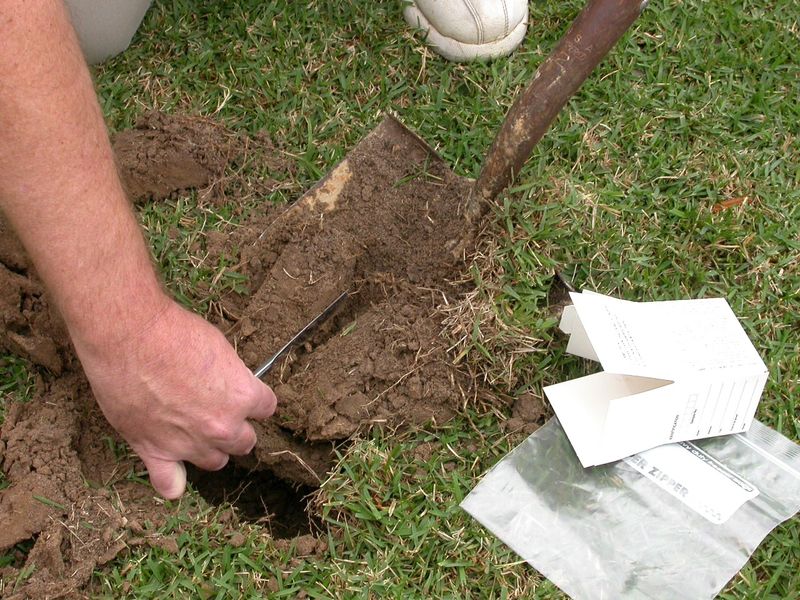
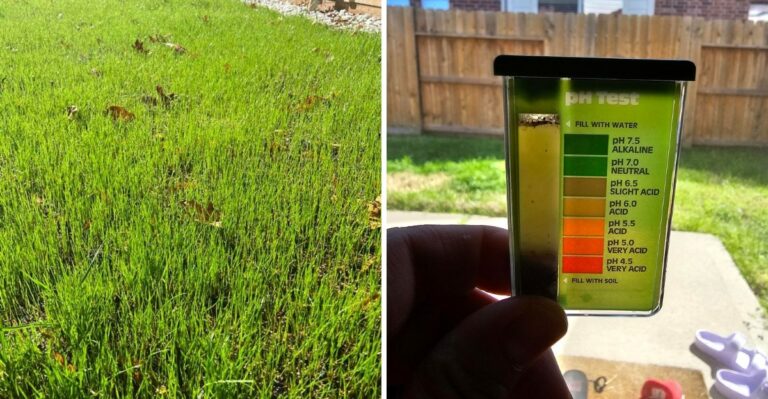
Here is where it gets tricky. A toad under your steps is a pleasant discovery, and it is tempting to read it as proof that your soil is rich, healthy, and teeming with life. Resist that interpretation. One animal in one sheltered corner cannot tell you anything reliable about your soil’s organic matter, pH, compaction, drainage, or biological balance.
Those questions need a soil test, not a wildlife sighting.
NC State Extension describes reptiles and amphibians broadly as environmental indicators, but that framing applies most meaningfully to healthy, diverse communities of wildlife observed over time, not to a single animal. A persistent group of different amphibian species showing up across multiple seasons in multiple spots on your property would carry more interpretive weight. One toad under the steps is a good sign for that microhabitat and a limited signal for anything beyond it.
Different wildlife species also reflect different conditions at different scales. A toad responding to a damp, shaded pocket under steps is not the same kind of indicator as a community of wildlife using a larger, more varied landscape. Comparing one small animal’s presence to a full ecological assessment stretches the evidence further than it can reach.
If you genuinely want to understand your soil, your county’s NC State Extension office can walk you through a formal soil test. You mail in a small sample, and the lab returns results on pH, nutrient levels, and amendment recommendations. Plant performance, drainage patterns after rain, and how easily a shovel moves through the ground are also practical, observable clues. The toad can stay right where it is while you gather that information separately, because its presence simply cannot substitute for any of it.
What the Toad May Contribute to Pest Pressure
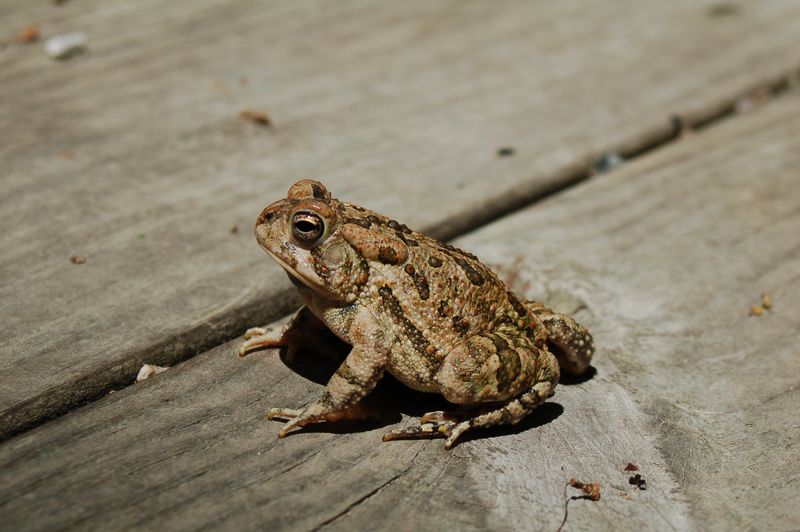
Toads eat. That part is straightforward. North Carolina toads, including Fowler’s toads where they are present, are primarily nocturnal hunters that consume a wide variety of insects and other small terrestrial invertebrates. Beetles, ants, caterpillars, slugs, and other soft-bodied creatures that cross a toad’s path at night are all fair game.
Having one active and comfortable near your garden is a quiet, low-effort contribution to natural pest pressure in that area.
What it is not is a guarantee. NC Wildlife’s profile of Fowler’s toads confirms a broad invertebrate diet, but no source establishes that one resident toad will reliably control Japanese beetles, brown marmorated stink bugs, ticks, mosquitoes, or any other specific pest at a measurable rate. The toad may consume some of those insects when they cross its path, and that is a real contribution, but it is one layer of a yard’s ecology, not a pest management plan on its own.
The practical move is to treat the toad’s presence as a reason to pause before reaching for a spray bottle, not as a reason to stop monitoring your plants. NC State Extension’s integrated pest management guidance recommends identifying the actual pest, tracking whether the damage is getting worse, and using cultural or mechanical controls first. That approach works well alongside a toad in the yard, because it keeps you from disrupting a beneficial animal while also keeping pest populations from getting ahead of you.
Think of the toad as one small but genuine ally, not the whole team.
Protect the Refuge You Already Have
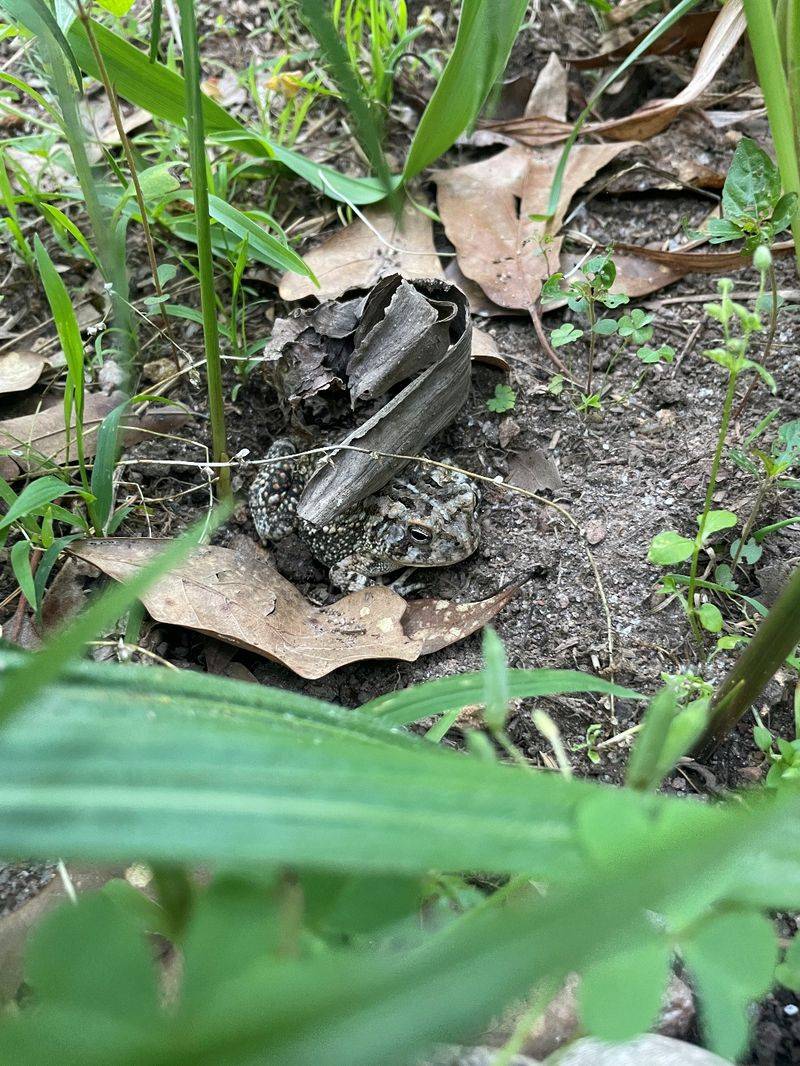
You do not need to do much to keep a toad happy, and that is honestly one of the best things about hosting one. The refuge already exists under your steps. Your job is mostly to avoid wrecking it. That means leaving some leaf litter near the base of the steps, not blowing or raking it completely bare, and keeping any natural cover like rocks, untreated wood, or low-growing plants in place nearby.
NC State Extension recommends preserving features like leaf litter, untreated logs, rocks, loose soil, taller plants, and brush piles as terrestrial amphibian habitat. If you want to add a little extra shelter in another part of the yard, an upside-down clay pot with part of the rim chipped or propped up to create an entrance works well. A shallow, shady depression covered with untreated plywood and supported by small rocks is another option the extension describes. Neither requires much effort or money.
If you want to offer water, a shallow container like a plant saucer filled with clean water and placed at ground level can help, as long as the toad can climb in and out easily. Keep it clean and change the water regularly to prevent mosquito breeding. A full pond is optional, and NC State Extension’s guidance on pools for amphibians is clear that any pond intended to support amphibians should be fishless, because fish prey on amphibian eggs, larvae, and adults.
One thing to skip entirely: do not try to capture the toad and move it to a better spot or a new garden bed. NC State advises creating suitable habitat and letting amphibians arrive and settle on their own, which may take several months. The toad already found your steps. Let it stay.
Use Pest Control Without Exposing the Toad
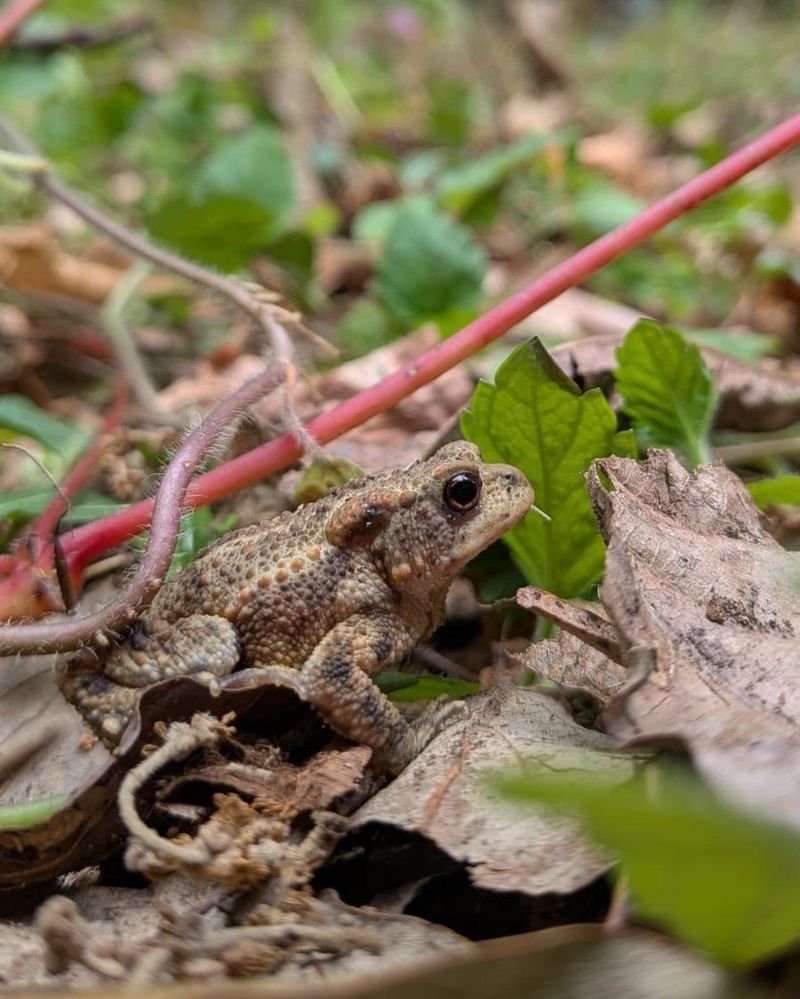
Finding a toad under your steps is a good reason to reconsider how you handle pest control in that corner of your yard. Not because you have to stop treating pests, but because amphibians absorb chemicals through their skin in ways that other animals simply do not. Spraying an insecticide around the foundation or along the steps can expose the toad directly, even if you never see it happen.
The smarter starting point is integrated pest management, as NC State Extension outlines it: identify the actual pest causing the problem, monitor whether the damage is at a level that actually warrants treatment, try cultural and mechanical controls first, and protect beneficial organisms throughout the process. Handpicking, row covers, traps, and removing pest habitat are all options that carry no chemical risk to your toad or the soil around it.
When a pesticide is genuinely necessary, the label is the law. The EPA states that pesticide labels are legally enforceable and that using a product inconsistently with its label violates federal law. Use only a product registered for your specific pest and application site, at the rate and timing the label specifies. Do not assume that a product marketed as natural, organic, or reduced-risk is automatically safe for amphibians.
Risk depends on the active ingredient, the dose, and how the toad might contact it.
EPA guidance on reducing pesticide impacts on wildlife recommends treating only the area that actually needs it, avoiding applications before rain, and protecting any ponds, drains, gutters, and runoff paths from chemical drift or wash. EPA research on how pesticides affect frogs and toads confirms that amphibians can take up certain chemicals through skin contact with treated soil, not just through direct spray. Keeping that in mind makes targeted, minimal treatment the right call every time.
Let the Toad Stay Wild and Unbothered
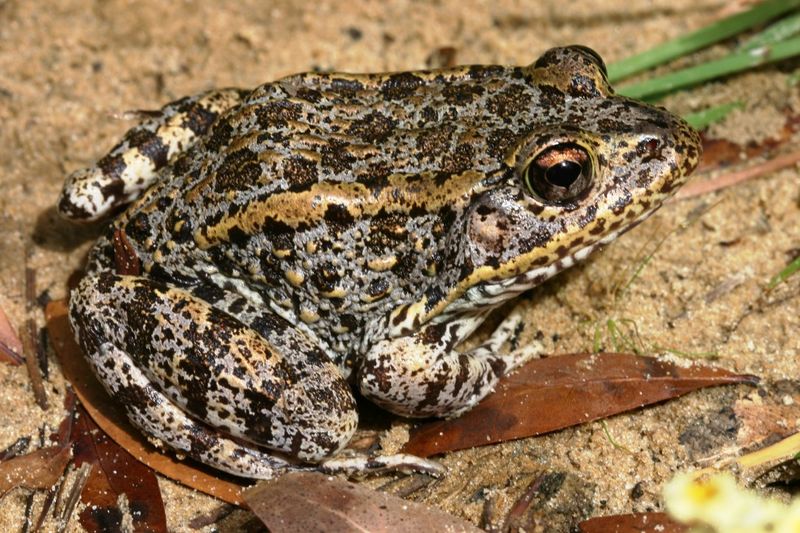
The strongest instinct when you find a toad is to pick it up. Try to resist it. Toads have permeable skin that absorbs what touches it, and human hands carry soap residue, sunscreen, insect repellent, and lotion that can pass directly into the animal’s body. NC State Extension specifically warns that amphibians can absorb chemicals through their skin, including residues from everyday products on human hands.
A quick look from a respectful distance is genuinely the better move.
You may have heard that touching a toad gives you warts. That is not true. Penn State Extension notes that toad skin secretions do not cause warts in humans. Those secretions can, however, irritate the eyes, mouth, and other mucous membranes, so washing your hands after any accidental contact is a reasonable precaution.
Pets are a different concern. Dogs and cats that mouth or carry a toad can experience irritation or excessive drooling from the skin secretions. Keep an eye on curious pets around the steps, especially at dusk and dawn when the toad is more likely to be moving around. A dog that learns to leave it alone is doing everyone a favor.
As for adding a pond, it is a genuinely nice option if you want to support amphibians more broadly, but it is not required. If you do add water, NC State Extension’s pools for amphibians guidance suggests a fishless pool placed within about a half mile of another water source when possible, with both sunny and shaded areas. For ponds in colder parts of the state, water 30 inches or deeper may help prevent complete winter freezing. But your toad under the steps does not need a pond to stay.
It needs the same three things that brought it there: shade, moisture, and something to eat.
Treat the Sighting as One Good Clue
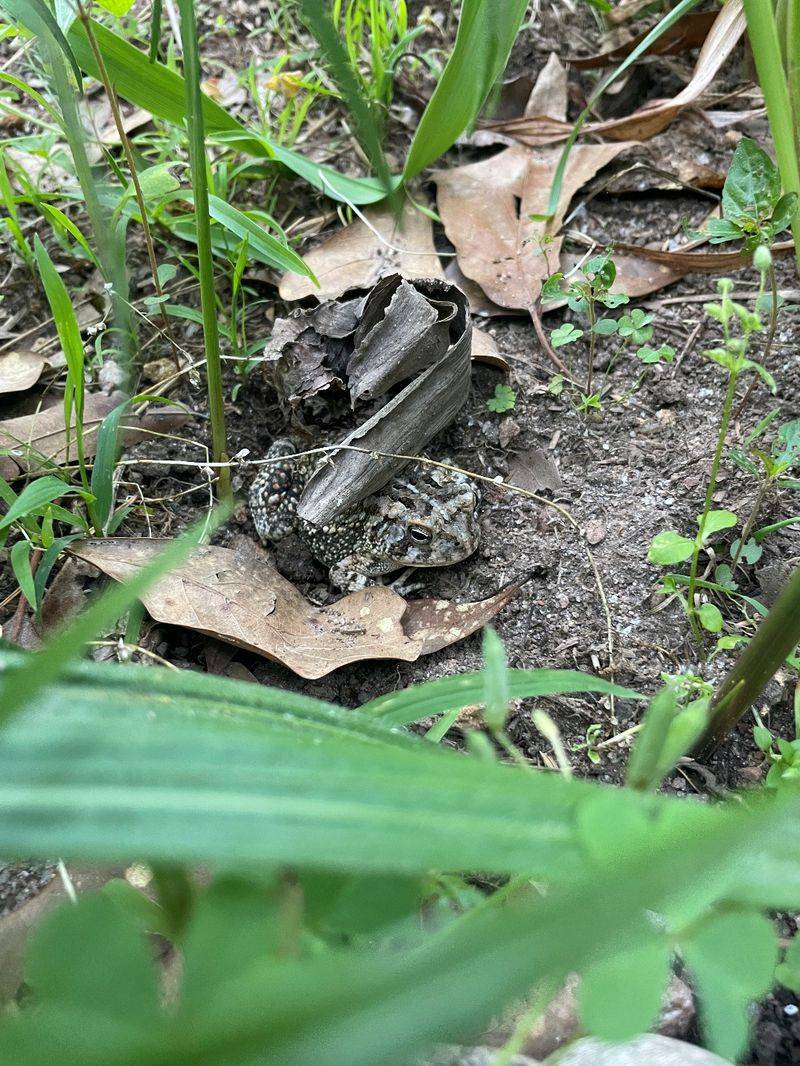
Step back to the moment you first noticed the toad. What you actually found was evidence that a small corner of your yard offers usable moisture, cover, shelter from the heat, and enough insect activity to make a native amphibian feel at home. That is a real and positive thing. It is also a limited thing, and keeping those two facts together is the most honest way to think about it.
The sighting does not confirm that your entire yard is ecologically balanced, your soil is fertile, or your pest problem is handled. NC State Extension’s broader guidance on reptiles and amphibians frames healthy, diverse wildlife communities as environmental indicators, not individual animals in a single spot. One toad is a starting point for observation, not a conclusion.
Absence is also harder to interpret than presence. If you stop seeing the toad, that does not mean your yard has failed. Toads are nocturnal, camouflaged, and sometimes dormant during dry spells or cold snaps. They may shift to another part of the property without any obvious reason.
Presence tells you something useful; absence mostly tells you to keep watching.
The action plan from here is simple. Observe the spot. Preserve whatever cover is already there. Avoid unnecessary disturbance near the steps.
Monitor any pest problems separately and treat them only when the evidence actually calls for it. A yard that can support even one small amphibian in one shaded corner is a yard doing something right, and that corner is worth protecting.