The Weekly Watering Number Indiana Orchid Owners Keep Chasing Does Not Exist
Somewhere in Indiana, a sticky note on the fridge says Water Sunday, and a lonely houseplant quietly disagrees. Calendars feel safe and tidy, but roots tucked in chunky bark rarely care what day the sticky note announces.
Many plant lovers hunt online for one magic number, like seven days or ten, that settles the question. The search feels a bit like chasing a rainbow across a cornfield, bright and hopeful but hard to reach.
Real thirst depends on light, air, pot size, and the dry whisper of heated rooms as fall settles in. Early October brings cooler nights, shorter afternoons, and furnaces clicking on for the first time in months.
Those shifts change how fast a pot dries, so last month’s routine may suddenly feel wrong by mid-autumn. Learning to read the plant itself turns watering from a stressful guess into a calm, confident little habit.
A Fixed Weekly Schedule Rarely Matches What The Plant Needs
Picture a phalaenopsis sitting on a sunny Indianapolis windowsill, getting the same cup of water every Saturday morning. For a while it seems happy, but slowly the leaves go limp and the roots turn soft and brown.
That routine felt responsible, yet it ignored what was actually happening inside the pot from one week to the next. Cloudy days and cooler rooms slow drying, while bright sun and warm air speed it up.
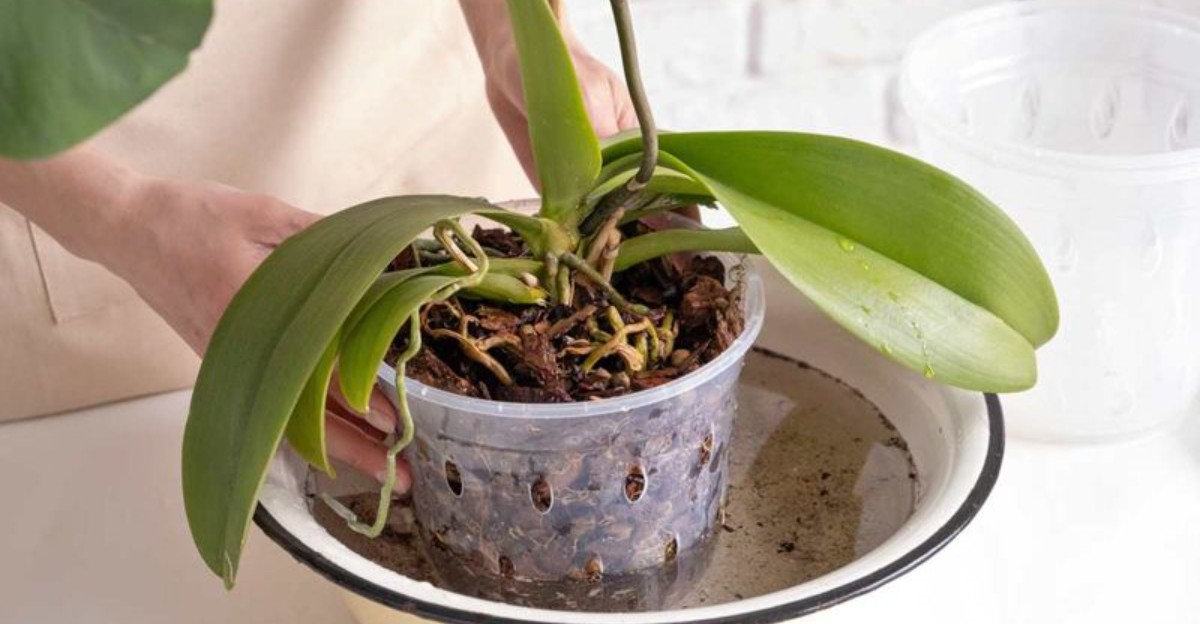
Most orchids sold in stores are epiphytes, meaning they grow on tree branches in the wild instead of soil. Their roots expect a quick soak from tropical rain, followed by breezy hours where everything dries out again.
A rigid calendar can easily keep those roots wet for too long, especially during the cooler weeks of October. Soggy bark squeezes out air, and roots that cannot breathe often start to rot without much warning.
On the flip side, a plant in a tiny clay pot near a heater may need water sooner. Waiting for the official day can leave it parched, with wrinkled leaves and silvery roots begging for a drink.
A better approach treats the calendar as a reminder to check, not a command to pour water every time. Set a weekly alert if you like, then let the plant’s signals decide whether watering actually happens that day.
Some weeks the answer will be yes, and other weeks the bark will still feel cool and damp inside. Skipping a turn is perfectly fine, and your orchid will likely thank you with firm leaves and fresh roots.
Root Color Tells The Story Beneath The Pot
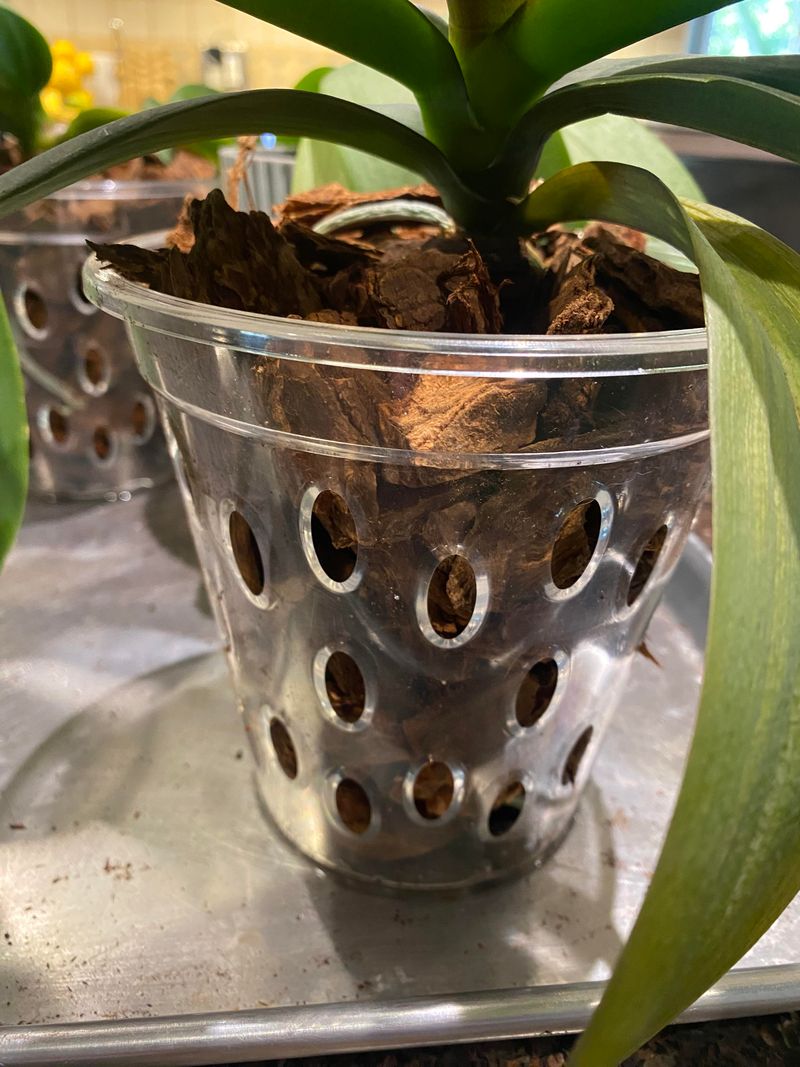
Think of orchid roots as tiny mood rings, quietly changing color to show how they feel inside the pot. Many phalaenopsis growers keep their plants in clear plastic pots, which makes reading those colors easy and fun.
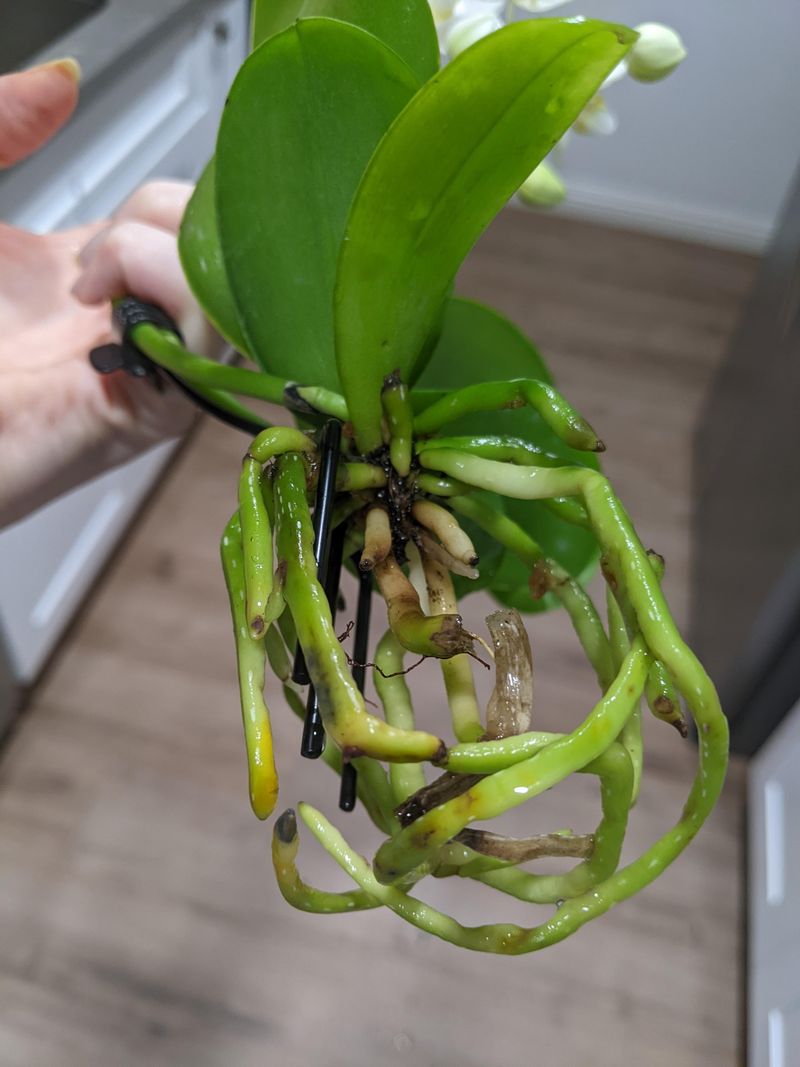
Healthy roots that are freshly watered look bright green, plump, and a little shiny, almost like fresh green beans. Their outer layer, called velamen, soaks up water like a sponge and turns green when it is full.
Your Indiana Garden Changes Every Week. Your Plan Should Too.
Gardening in Indiana changes quickly throughout the season. Every Friday you’ll receive a simple weekly plan showing exactly what to plant, prune, fertilize, harvest, and protect so you never miss the right timing.
As the days pass, that sponge slowly dries and the roots fade to a soft silvery gray or white. Silver roots are normal, since they mean the plant is ready for another drink.
Brown, mushy, or black roots tell a different story, usually one about water sitting around far too long. Gently squeeze a suspicious root, and if it feels hollow or slimy, trim it away with clean scissors.
Crispy, papery roots that crumble between your fingers point the other way, toward a plant that stays too dry. Those roots may need longer soaks, or the pot may need a spot farther from a drafty heater vent.
Fun fact: roots tucked deep in the middle of the pot often stay green much longer than outer ones. Peek at several spots before deciding, because the center of the bark mix usually holds moisture the longest.
If your orchid lives in a solid ceramic pot, slide it out gently once a month for a check. A healthy mix of plump green roots and silvery ones is a sign that your watering rhythm is on track.
Leaf Texture Shows Thirst Faster Than Any Calendar
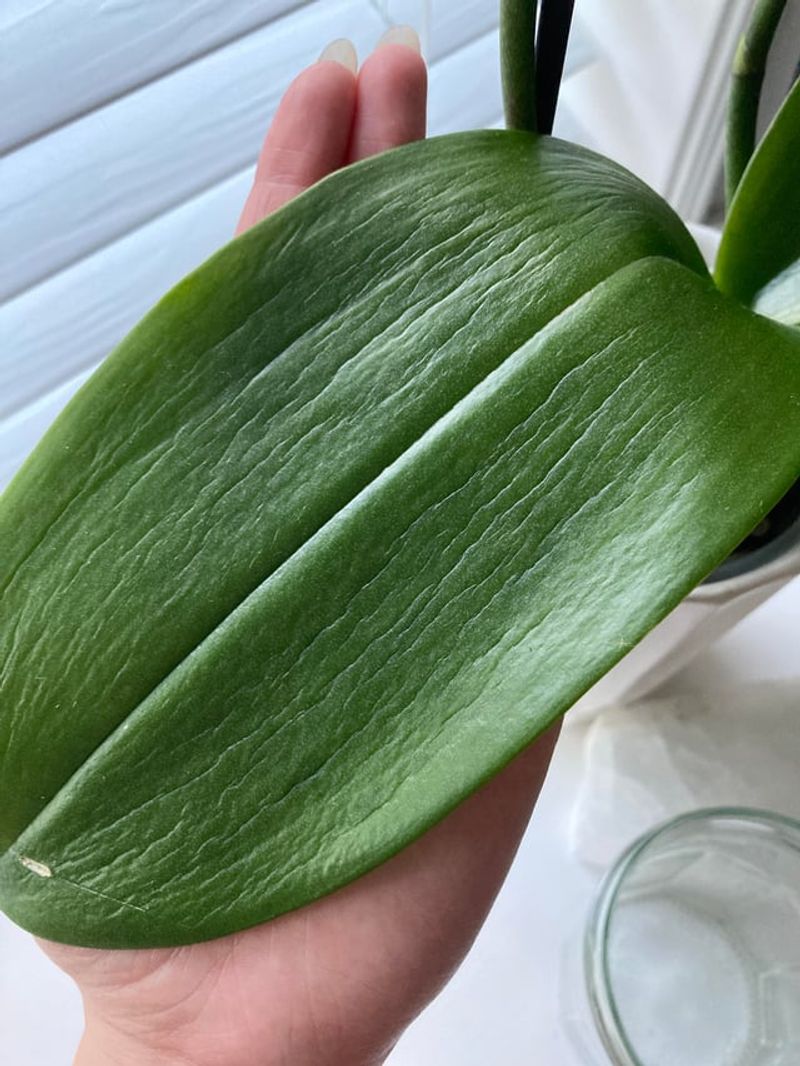
Gently touch a few leaves, and your orchid will tell you a surprising amount about its current thirst level. A well-watered phalaenopsis leaf feels thick, firm, and slightly waxy, a bit like a fresh leather wallet.
Those leaves work as little water tanks, storing moisture so the plant can handle short dry spells in nature. When the tanks run low, the leaves start to soften and bend more easily under a gentle touch.
Light wrinkles running along the length of a leaf are an early hint that the roots need a soak. Catching that hint quickly helps the plant bounce back within a few days instead of struggling for weeks.
Now for the tricky part, because floppy leaves can also appear when roots are rotting from too much water. Damaged roots cannot carry moisture upward, so the leaves look thirsty even while the bark stays soggy below.
That is why leaf texture works best as a first clue, paired with a quick look at the roots. Wrinkled leaves plus silvery, crisp roots mean water, while wrinkled leaves plus mushy roots mean a repotting project.
Older bottom leaves sometimes turn yellow and soft naturally, even when the care is spot on. One yellow leaf at the base is usually normal, but several at once deserve a closer look and some patience.
Try running a finger along each leaf every few days while you sip your morning cocoa near the window. Before long, you will feel the difference between plump and limp without thinking about it.
Pot Weight Gives A Quick Check Before Each Watering
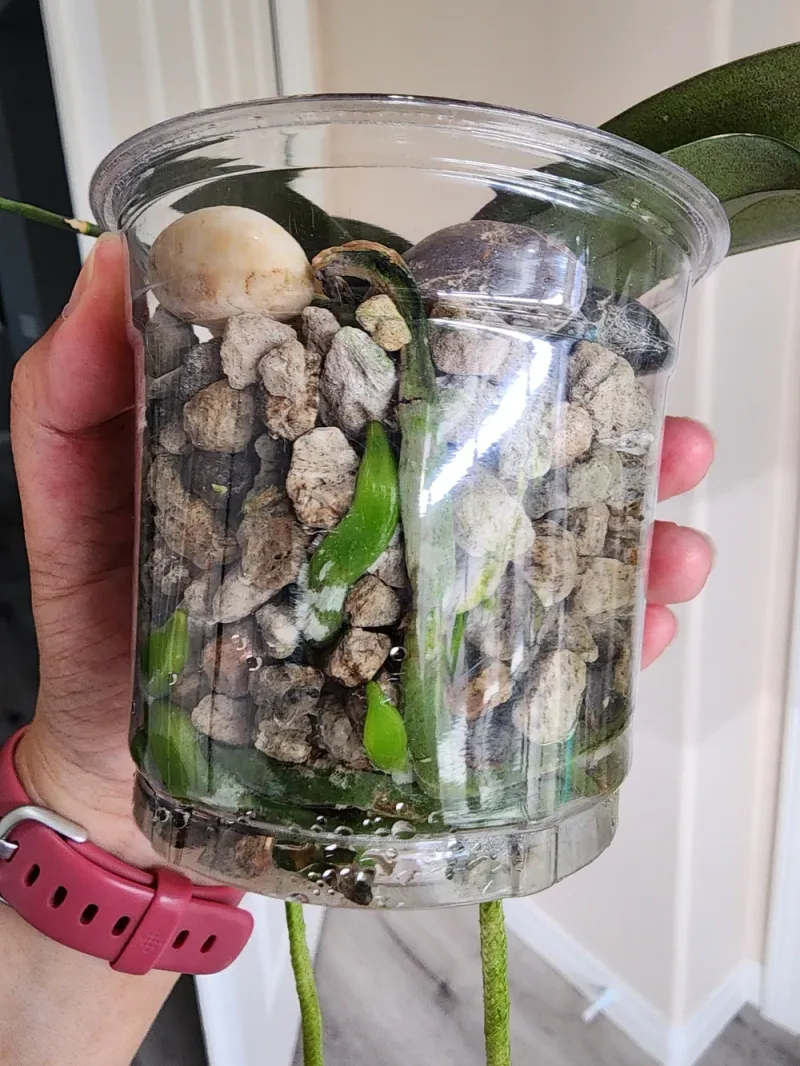
Grocery shoppers squeeze melons, and orchid growers can borrow the same trick by simply lifting their pots each day. A freshly watered pot feels noticeably heavy, while a dry one feels light and almost hollow in your hand.
Start by picking up your orchid right after a thorough watering, once all the extra water has drained away. Notice that heft, then lift it again every day or two so your hands learn the slow change.
Over the next several days, the pot will feel lighter, and that feeling becomes your personal watering signal. Many growers find this method faster than poking bark, especially when they care for several plants at once.
For a more exact approach, set a cheap kitchen scale on the counter and weigh the pot in grams. Write down the wet weight and the dry weight, then water when the number drifts close to dry.
Pot material matters too, since clay breathes and dries faster than plastic, which holds moisture for extra days. Bark mixes also shift over time, breaking down and staying wetter as they age past a year or two.
If an older pot stays heavy for many days, the bark may be crumbling and ready for a fresh refill. The best time for that job is usually after the plant finishes blooming, when new roots start to grow.
Lifting takes about two seconds, and it saves you from guessing based on what the calendar happens to say. Kids enjoy this test too, so let younger family members help decide when the orchid gets its drink.
Indiana Winter Heating Changes The Pace Of Drying
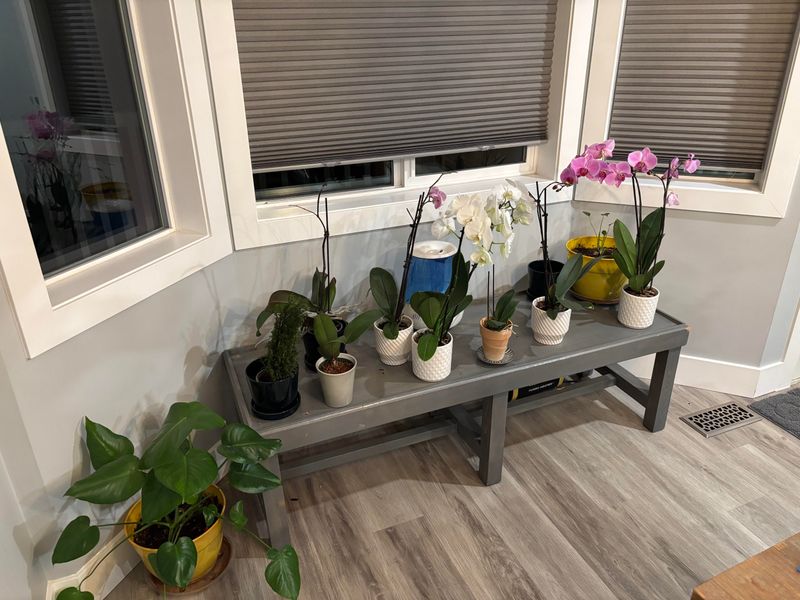
That first chilly October morning, when the furnace rumbles awake, quietly changes the rules for your orchids. Forced air heating pulls moisture from the room, and indoor humidity across Indiana can sink below thirty percent by winter.
Orchids prefer humidity closer to fifty or sixty percent, so that dry air speeds up how fast pots dry. A plant that stayed damp for ten days in September may soon need water several days sooner.
Location inside the house matters a lot once the heat kicks on for the long season ahead of us. Pots sitting right above a vent or beside a radiator can dry out much faster than those across the room.
Windowsills create the opposite problem, because cold glass on frosty nights can chill roots and slow drying considerably. Try keeping leaves a few inches away from the glass, and move plants back a bit on freezing evenings.
Shorter days matter too, since orchids use less water when the sun sets before dinner in late fall. Heat dries the bark faster, while weaker light slows the plant’s drinking, so the two effects can partly offset each other.
A humidity tray filled with pebbles and water slightly raises moisture around the leaves without soaking the roots below. Grouping several plants together also helps, since they share moisture like friends huddled close at a fall bonfire.
An inexpensive digital hygrometer shows exactly how dry your living room has become. Checking it each week through fall helps you adjust watering before your orchid starts showing signs of stress.
Small Adjustments Work Better Than Strict Routines
Orchid growers across Indiana, from Fort Wayne to Evansville, often learn the same lesson: orchids reward attention far more than strict rules. Think of watering like steering a bike, where tiny corrections keep you balanced instead of one big swerve.
If roots look silver and leaves feel slightly soft, water a day or two sooner during the next cycle. If the bark still feels damp and heavy on your usual day, simply wait and check again tomorrow morning.
Keeping a simple notebook beside your plants makes those changes easier to spot over the passing fall weeks. Jot down the date, how the roots looked, and whether the pot felt light or heavy that day.
After a month, patterns appear, and you may notice your orchid drinks faster during sunny stretches than cloudy ones. Those notes turn guessing into a real understanding of your own plant, your own house, and your own habits.
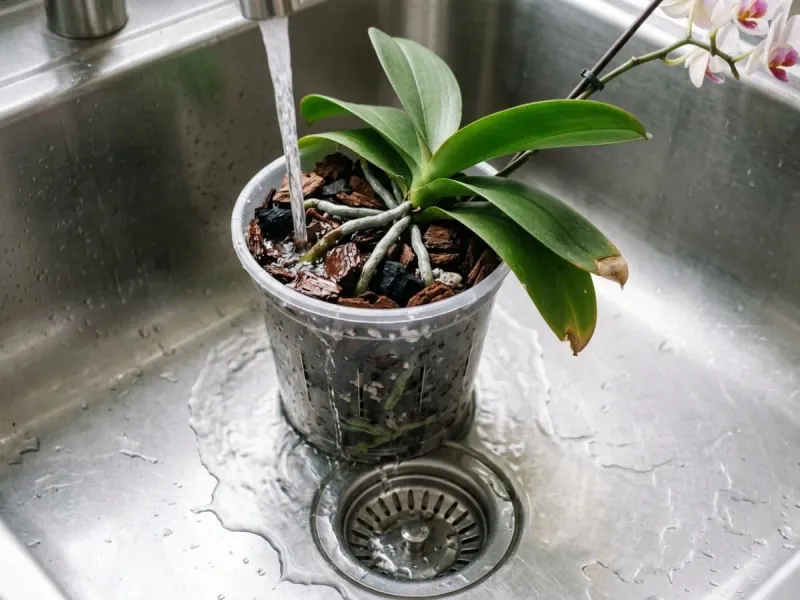
Watering technique counts as much as timing, so run lukewarm water through the pot for about thirty seconds. Let every drop drain away fully, because water pooling in a decorative cover pot can quietly harm the roots.
Skip the ice cube trick, since cold water is a poor match for warm-loving tropical roots, and a full soak wets the whole root mass more evenly. A steady soak followed by a full drain mimics the rain showers these plants know from their native forests.
Mistakes will happen, and one late or early watering rarely causes lasting trouble for a healthy, well-rooted orchid. With patience and small tweaks, your plant may reward you with a fresh flower spike by late winter or spring.