These Desert Plants Make Your Agaves And Cactus Look Twice As Good Together
Agaves and cactus look tough and bold, but on their own they can make a yard feel a little empty. The right desert neighbors add color, soft texture, and shade that make those spiky plants really stand out.
Many of these companions also bring in hummingbirds and bees, use very little water, and handle Phoenix and Tucson heat without complaint. Here are ten low-desert plants that help your succulents shine and make your yard work harder for you.
1. Desert Marigold
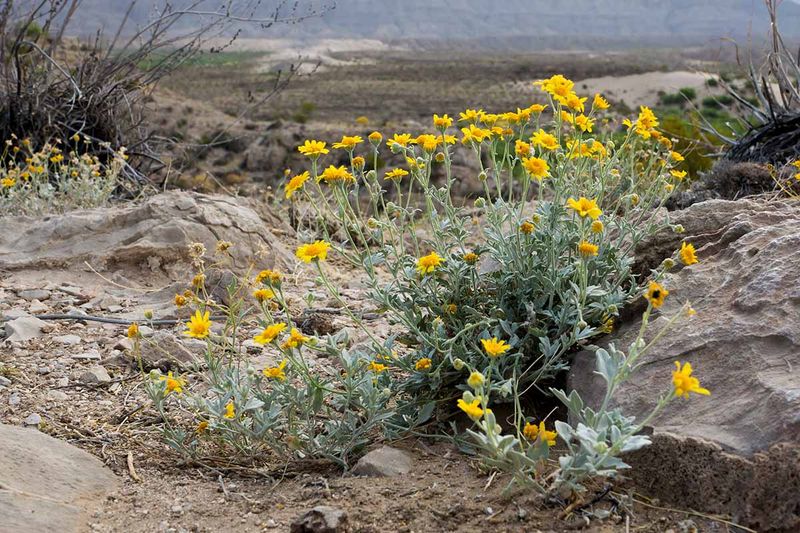
Picture a puddle of sunshine sitting at the feet of a big blue agave. Desert marigold brings exactly that effect, with fuzzy silver leaves and button-bright yellow flowers that show up from spring well into fall.
The soft gray foliage echoes the cool tones of many agaves, so the two look like they were planned together. Meanwhile, the daisy-like blooms give your eye a cheerful break from all those sharp points.
Bees and butterflies visit constantly, turning a quiet gravel bed into a busy little pollinator stop.
Care could hardly be easier. Plant it in fall or early spring in lean, well-drained soil, and skip the rich compost, since too much pampering makes it floppy.
Once roots settle in, occasional deep watering during the hottest months is usually enough.
Desert marigold also reseeds on its own, filling gaps between cactus with new seedlings each year. Some gardeners find marigold scents may help make patios a bit less inviting to mosquitoes, though results vary.
Either way, you get months of color for almost no effort.
Fun fact: the plant’s hairy leaves act like a sunscreen, reflecting light and helping it hold onto moisture in 110-degree heat.
2. Parry’s Penstemon
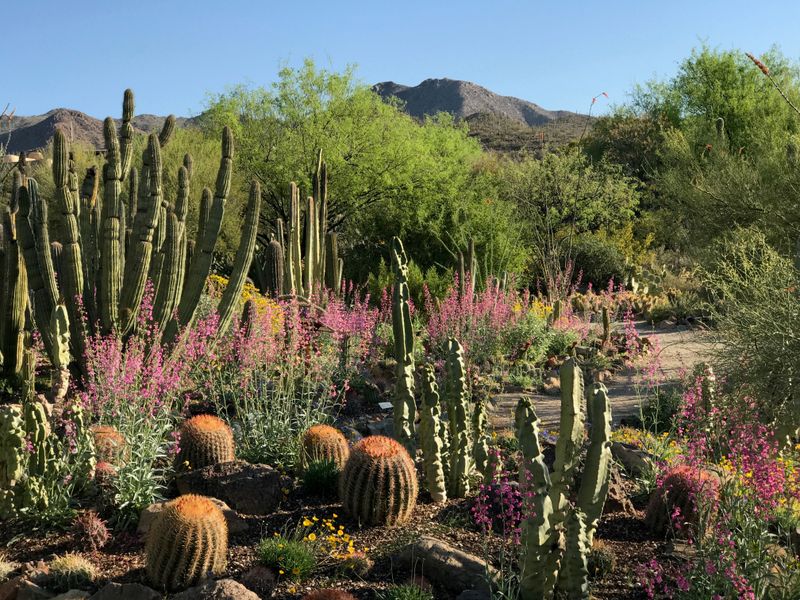
Every February, Tucson yards seem to sprout pink fireworks overnight. Those tall, rosy spikes belong to Parry’s penstemon, a native wildflower that turns a plain row of barrel cactus into a real showpiece.
Height is the secret here. Most cactus and agaves sit low and wide, so the slender flower stalks add a vertical layer that fills empty air above them.
The contrast between round, prickly barrels and airy pink blossoms is hard to beat.
Hummingbirds treat the tubular flowers like a snack bar. If you enjoy watching wildlife from your window, tuck a few plants where you can see them from inside.
Native bees stop by too.
Plant seeds or small transplants in fall so winter rains help roots grow. After the bloom fades, you can leave some stalks to drop seed, and new plants will often pop up nearby.
Water sparingly once established, because soggy soil is about the only thing that troubles this tough perennial.
Plants are fairly short-lived, usually a few seasons, but their habit of reseeding means the show keeps going. Think of it as a self-renewing spring display that asks for nothing more than sun and good drainage.
3. Red Yucca
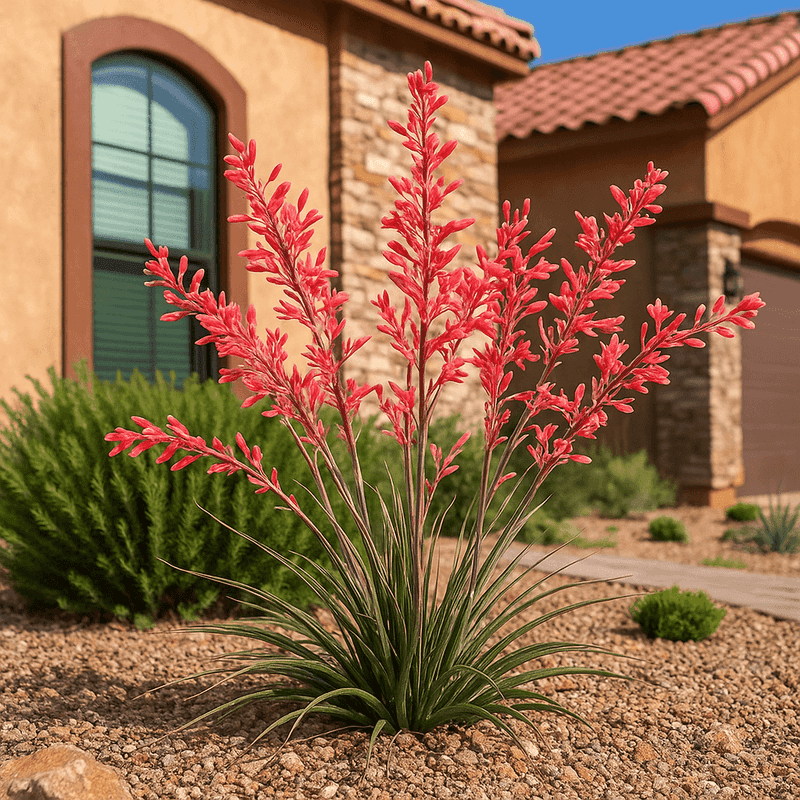
Honestly, if agaves had a best friend, it would probably be red yucca. Both plants love blazing sun, lean soil, and very little water, so they share an irrigation zone without any fuss.
Your Arizona Garden Changes Every Week. Your Plan Should Too.
Gardening in Arizona changes quickly throughout the season. Every Friday you’ll receive a simple weekly plan showing exactly what to plant, prune, fertilize, harvest, and protect so you never miss the right timing.
Red yucca is not a true yucca, and it has no sharp tips. Its grassy, arching leaves form loose clumps that soften the stiff rosettes of agave.
From spring through summer, long stalks shoot up with coral-red bell flowers that hummingbirds chase all day long.
Placement matters for the best look. Try grouping three red yuccas around a single large agave, or line them along a walkway where their fountain shape can sway in the breeze.
They also handle reflected heat from walls and driveways, which scorches many other plants.
Because it stays low-water and tidy, red yucca fits well in a yard designed to be less inviting to scorpions. Pair it with rock mulch instead of wood, keep it a few feet from the foundation, and you avoid creating damp hiding spots.
Maintenance is close to zero. Simply snip off spent flower stalks in late fall.
Otherwise, let it be, and it will reward you for years with color and graceful movement.
4. Baja Fairy Duster
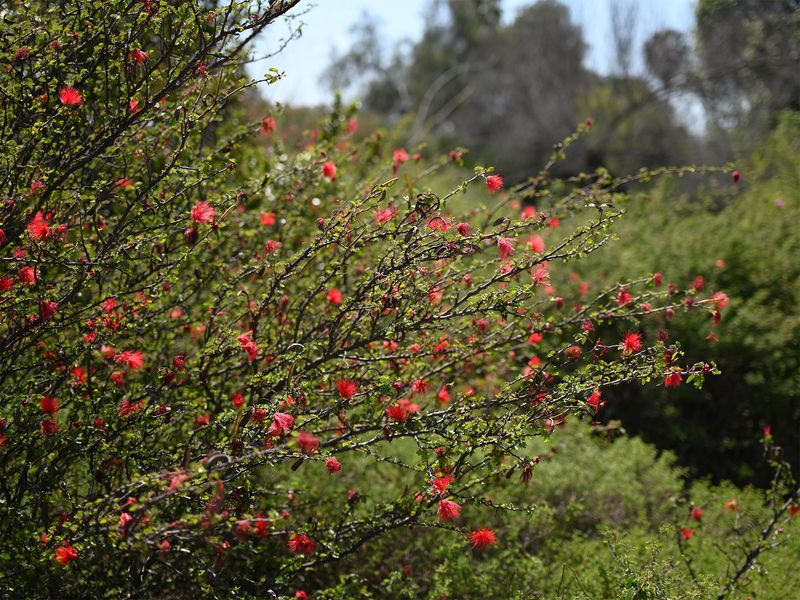
Red pompoms that look like tiny party decorations? That is the charm of Baja fairy duster, and hummingbirds can spot them from across the block.
Shrubs like this solve a common problem in cactus gardens. Prickly pear and agave can feel heavy and spiky, while the fairy duster offers fine, feathery leaves and a rounded shape.
Put the two side by side, and each one looks more interesting because of the other.
Few flowering shrubs handle a west-facing wall in July. Baja fairy duster does, shrugging off full sun and reflected heat that would fry gentler plants.
It blooms on and off for much of the year, with a big flush in spring and another as fall cools down.
Give it deep water every week or two during summer once established, and less in winter. A light shaping after the heaviest bloom keeps it full.
Hard freezes in colder pockets can nip the tips, but it usually bounces back fast.
For a native option, look for its cousin Calliandra eriophylla, a lower-growing pink fairy duster. Its seeds feed quail and other birds, adding even more wildlife value to your desert planting.
5. Globe Mallow
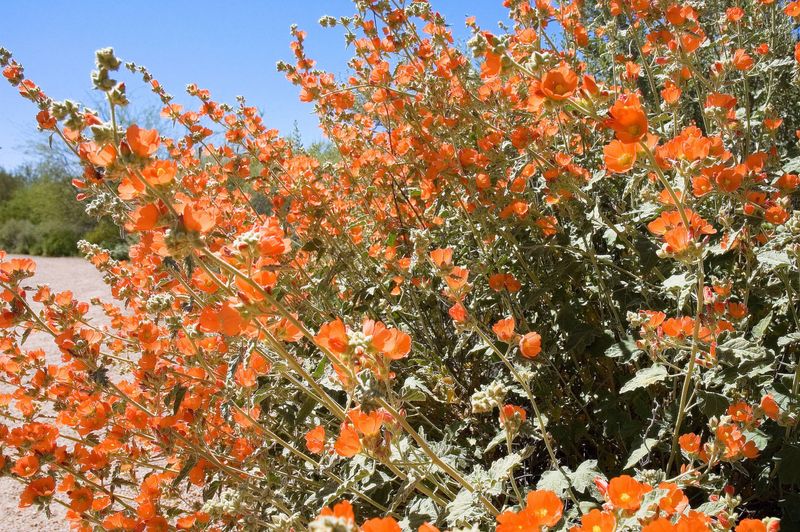
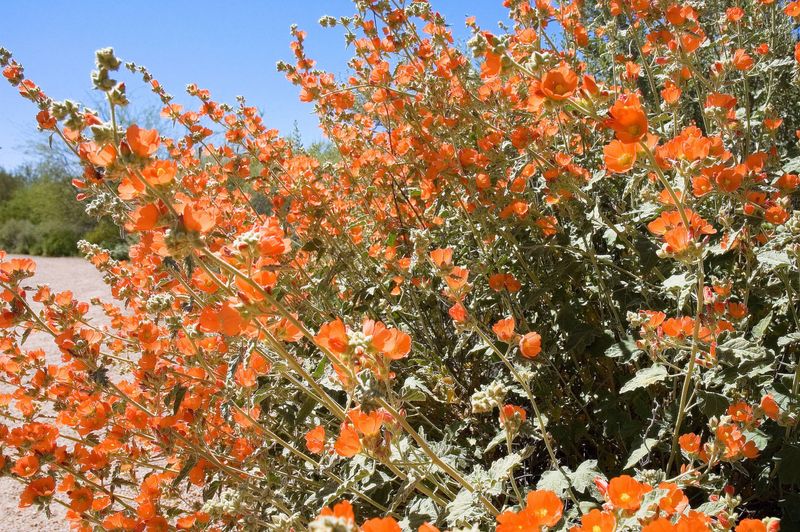
Walk any desert trail in March and you will likely see small orange cups glowing among the rocks. Globe mallow grows wild across Arizona, so it instantly makes a cactus garden feel like a natural slice of the Sonoran Desert.
Its color is what sells it. Apricot and orange flowers pop against green agave leaves, and you can also find pink, lavender, and red forms if you want a different mood.
The soft, gray-green leaves add gentle texture that balances spines and sharp edges.
Native bees adore this plant. In fact, several bee species specialize in mallow flowers, so planting a few clumps can support pollinators that keep your whole yard productive.
Toughness is another big plus. Globe mallow tolerates caliche, alkaline soil, and long dry spells.
Plant in fall, water to establish, and then cut back to occasional summer drinks. After spring bloom, a hard trim keeps it compact and may encourage more flowers.
One small warning: the leaves have tiny hairs that can irritate skin, so wear gloves while pruning. Beyond that, globe mallow is about as easygoing as desert plants come, and it reseeds gently to fill bare spots.
6. Brittlebush
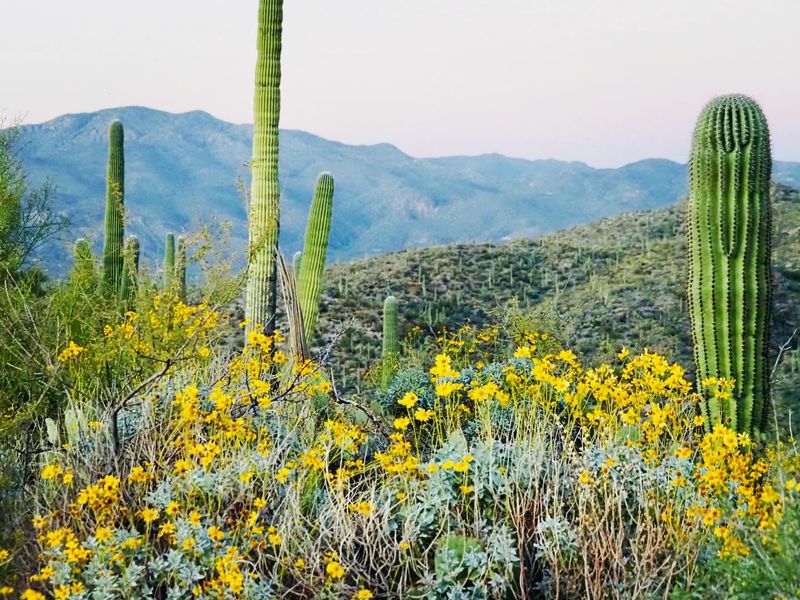
Silver leaves, yellow flowers, and roots that laugh at drought. Brittlebush checks a lot of boxes for anyone building a desert garden around cactus.
Its pale, almost white foliage works like a spotlight. Dark green saguaros, cholla, and agaves look bolder when framed by those frosty mounds.
In late winter and spring, the plant covers itself in tall stems of golden daisies, creating a wave of color that pollinators flock to.
History adds some fun here. Early desert peoples used the sap of brittlebush as a glue and a varnish, and some even chewed it like gum.
Today it serves a simpler purpose: filling space quickly with almost no water.
Planting in fall gives it the best start. After the first year, many established plants live on rainfall alone, with only a deep soak during extended summer heat.
Overwatering actually shortens its life, so restraint helps.
Once flowers fade, trim the stems back by about a third to keep plants neat. Birds like finches may visit for the seeds if you leave a few heads standing.
For a low-cost way to make a cactus bed look full and finished, brittlebush is a smart pick.
7. Texas Sage
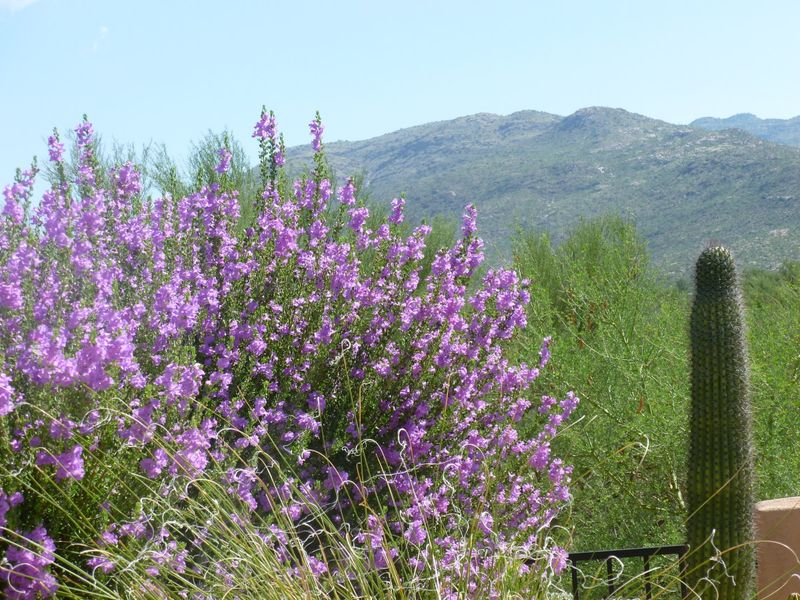
Ever notice how some shrubs explode with purple right after a summer storm? Texas sage is famous for that trick, earning it the nickname barometer bush because it often blooms when humidity rises during monsoon.
Behind an agave, it creates a soft backdrop. The silvery or green leaves stay evergreen, so your cactus garden never looks bare, even in winter.
Then the surprise purple flowers arrive and the whole bed lights up.
The biggest mistake people make is shearing it into tight boxes or balls. Left in its natural shape, Texas sage looks fuller and blooms much more.
If you need to control size, prune selectively in late winter instead.
Spacing helps with pest control too. Keep shrubs a few feet away from walls and the house foundation so they do not create shady, cluttered spots near entry points.
Combined with gravel mulch, that layout tends to be less inviting to scorpions.
Water deeply but rarely once established. Many varieties are available, from compact forms like Compact Texas Ranger to larger types that work as an informal screen.
Bees visit the blooms, and small birds often shelter among the branches during hot afternoons.
8. Rosemary
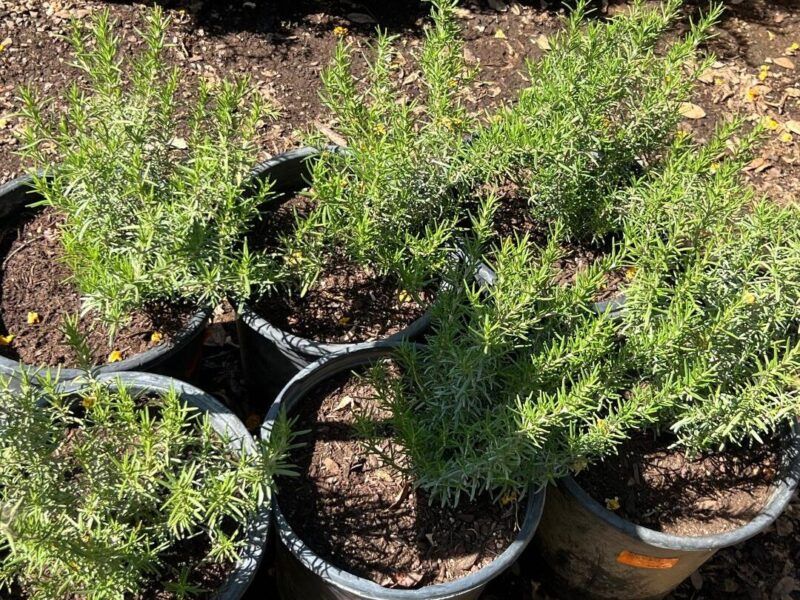
Brush past rosemary on a warm evening and the air fills with a piney scent. That fragrance is more than pleasant, because many gardeners plant it near patios hoping it may help deter mosquitoes, flies, and ticks.
Visually, rosemary fills a role cactus cannot. Its needle-like leaves are soft to the touch and form dense green mounds or trailing mats.
Let a trailing type spill over a low wall in front of golden barrel cactus, and you get a layered look that feels lush without wasting water.
Bees also love the small blue flowers, which appear mostly in winter and spring when few other plants are blooming. That timing makes rosemary a handy food source for early-season pollinators.
Plant it in fall in full sun and fast-draining soil. Raised or mounded beds help, especially over caliche.
Water every week or two in summer once settled, and less in cooler months.
To release the oils that may keep bugs away, crush a few sprigs before sitting outside. As a bonus, you can snip some for dinner.
Few plants in a desert garden pull double duty in the kitchen this easily.
9. Desert Museum Palo Verde
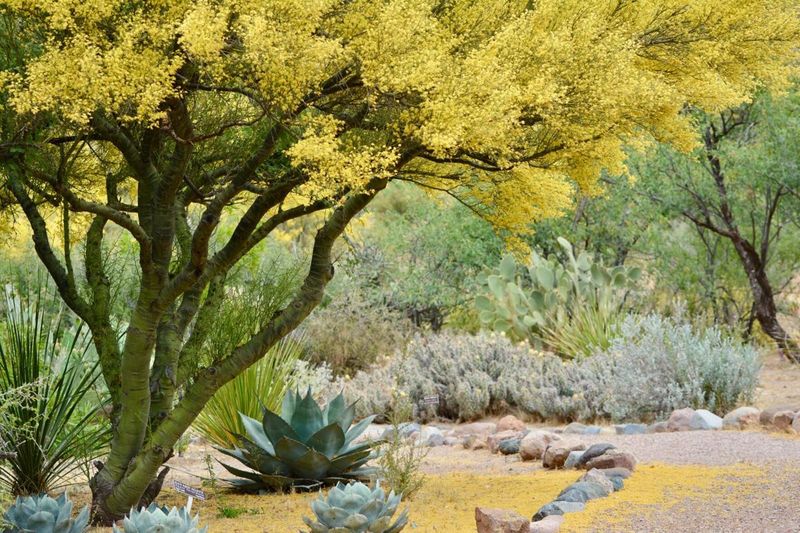
Green bark, yellow blossoms, and shade in just a few years. The Desert Museum palo verde was developed in Tucson, and it has become one of the most loved trees across the Valley.
Here is why it pairs so well with agaves and cactus. Its light, lacy canopy gives filtered shade, not deep darkness.
Many agaves and young cactus actually appreciate a little afternoon relief from 110-degree sun, and the dappled light under a palo verde can help prevent sunburn on their leaves.
The trunk and branches are bright green because they carry out photosynthesis, even when leaves drop during drought. That color looks stunning next to blue agaves.
Each spring, the tree covers itself in yellow flowers that feed native bees. Birds perch and nest in the branches, and the falling petals create a golden carpet over gravel.
Plant in fall or early spring and water deeply and slowly to encourage roots to grow down. Avoid frequent shallow watering, which can lead to weak roots.
Also, leave room around your succulents, since the tree will reach roughly 20 to 25 feet tall and wide in time.
10. Ironwood
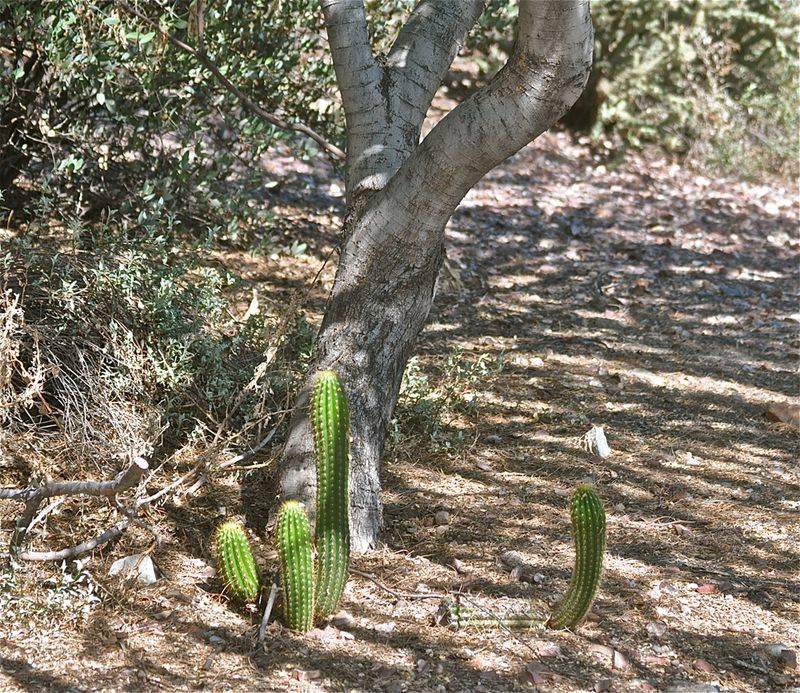
Some desert ironwood trees have been standing for hundreds of years. Found naturally only in the Sonoran Desert, this slow-growing native is often called a nurse tree because young saguaros and other cactus sprout safely in its shade.
That nursing habit makes it a natural partner for your succulents. Plant small cactus and agaves near its edge, and they benefit from protection against harsh sun and occasional frost, just as they would in the wild.
In late spring, ironwood blooms with soft lavender flowers that bees cannot resist. Later, seed pods appear, and doves, quail, and other birds come to feed.
Insects in the canopy draw even more birds, so the tree becomes a busy wildlife hub.
Patience is required. Growth is slow at first, but the wood is so dense it sinks in water, and the tree handles heat and drought like few others.
Water to establish for the first couple of years, then cut back to occasional deep soaks in summer.
Prune lightly and only to shape. If you want a yard that feels truly rooted in Arizona, ironwood is a legacy tree that ties the whole cactus garden together.