These Texas Patio Plants Survive Next To Outdoor Grills And Fire Pits Through Summer Heat
Outdoor grills and fire pits are central to Texas backyard life through most of the year, and the heat they generate creates a growing zone that most plants simply cannot handle on top of everything Texas summer is already throwing at them.
Patio plants positioned near a grill or fire pit face a combination of intense ambient heat, occasional bursts of direct heat and smoke, dry air, and full sun exposure that eliminates the typical container plant options quickly and without much warning.
Finding plants that genuinely hold up in this specific zone is a different exercise than finding heat-tolerant plants in general, because the conditions are more extreme and more variable than a standard hot patio.
The right choices stay full, hold their color, and keep the outdoor entertaining area looking like something that was designed rather than just placed, even through the most heavily used stretch of a Texas summer.
1. Texas Sage
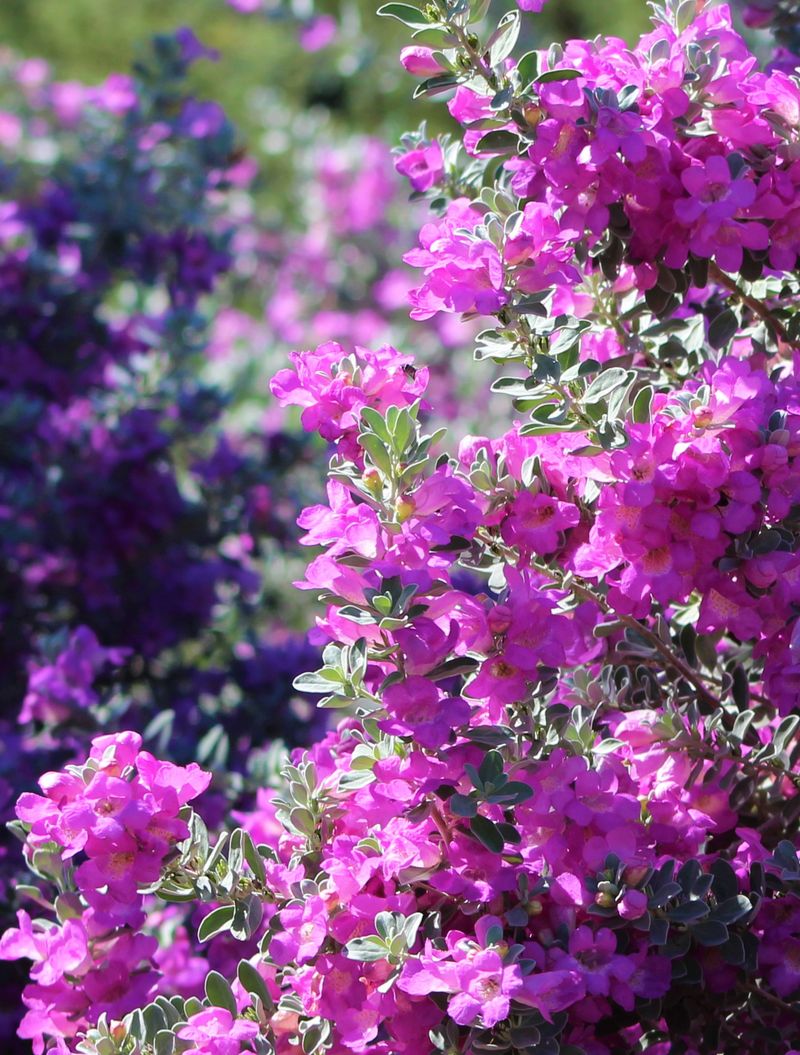
Walk past a Texas Sage during a humid August afternoon and you might catch it bursting into purple blooms almost overnight. Locals call it the “barometer bush” because it flowers right after a good rain or when humidity spikes.
That quirky habit makes it one of the most exciting plants you can have on a Texas patio. Texas Sage is a tough evergreen shrub that grows with silvery-gray leaves that reflect sunlight beautifully. That silver color is not just for looks.
It actually helps the plant stay cool by bouncing back some of that intense Texas sun. Planted near a grill or fire pit, it holds up without complaint even when temperatures soar past 100 degrees.
One of the best things about Texas Sage is how little attention it needs. Water it sparingly and skip the heavy fertilizer.
Too much pampering actually makes it grow loose and floppy. Plant it in well-drained soil and let the Texas sun do the rest.
It grows into a rounded shrub that can reach three to eight feet tall depending on the variety. Smaller compact varieties like “Green Cloud” or “White Cloud” work perfectly in containers or tight patio spaces.
Pruning once or twice a year keeps it tidy and encourages fresh growth. Texas Sage is also deer-resistant, which is a huge bonus if you live near open land. Birds and butterflies love the purple blooms too.
You get color, texture, low maintenance, and serious heat tolerance all in one reliable plant that truly belongs on every Texas patio.
2. Flame Acanthus
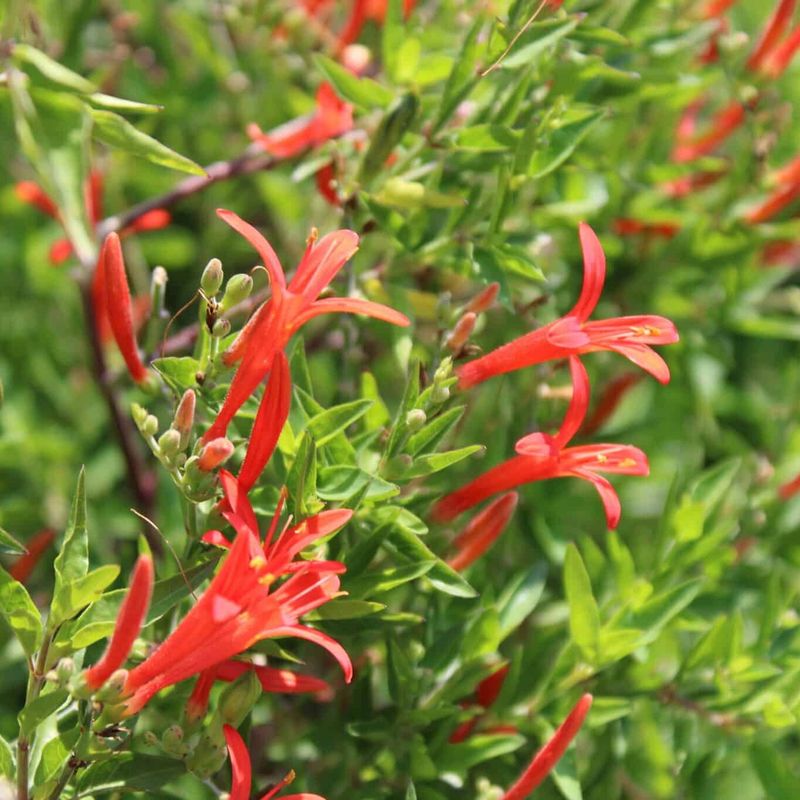
Imagine a plant that practically glows in the Texas summer sun, covered in fiery orange-red tubular flowers that look like tiny torches. That is exactly what Flame Acanthus brings to your patio.
It earned its name honestly, and it fits perfectly next to a grill or fire pit where bold, warm colors already set the mood. Hummingbirds absolutely go crazy for this plant. Butterflies flock to it too.
If you have ever wanted to turn your patio into a lively outdoor scene with wings fluttering all around, planting Flame Acanthus is one of the easiest ways to make that happen. Blooms start showing up in midsummer and keep going strong right into fall.
Your Texas Garden Changes Every Week. Your Plan Should Too.
Gardening in Texas changes quickly throughout the season. Every Friday you’ll receive a simple weekly plan showing exactly what to plant, prune, fertilize, harvest, and protect so you never miss the right timing.
What makes this plant special for hot patio spots is its love of full sun and reflected heat. Most plants shrink away from heat radiating off concrete or brick, but Flame Acanthus leans into it.
It actually performs better in those tough microclimates where other plants give up. It grows three to five feet tall and wide, making it a nice mid-sized shrub for borders or container planting.
In winter, the stems die back to the ground in colder areas, but roots stay strong and new growth returns vigorously each spring. That kind of resilience is exactly what Texas gardeners need.
Plant it in well-drained soil and water it occasionally once it gets established. After that, it is mostly hands-off.
Flame Acanthus is a native Texas plant, so it is naturally adapted to the state’s extreme summer conditions and does not need a lot of extra help to look stunning all season long.
3. Mealy Blue Sage
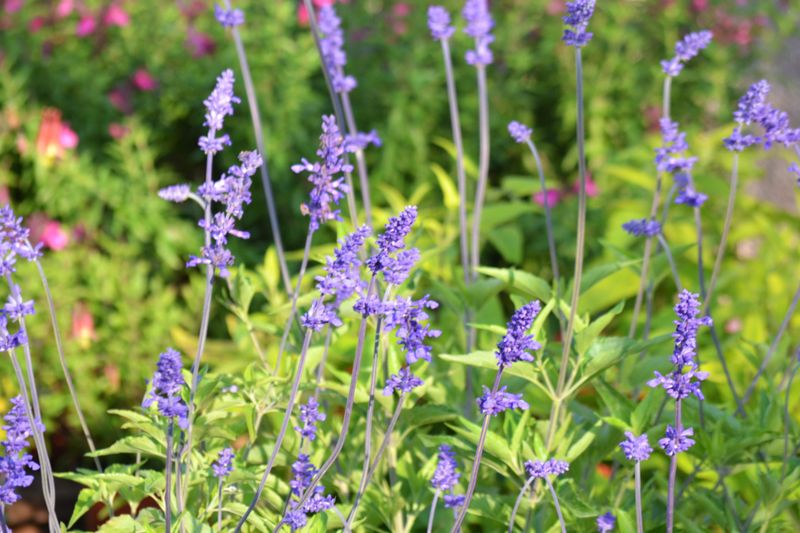
Cool blue flower spikes rising up through a sea of summer heat sounds almost impossible in Texas, but Mealy Blue Sage pulls it off with style. This native salvia is one of those plants that looks delicate but behaves like a tank.
It blooms continuously from spring all the way through the hottest months without asking for much in return.
Mealy Blue Sage gets its name from the powdery or “mealy” texture on its stems and flower bracts. The blooms range from soft lavender to deep violet-blue, and they rise on tall spikes that sway gently in a breeze.
Near a grill or fire pit, those cool blue tones create a beautiful contrast against the warm glow of flames.
Full sun is where this plant shines brightest. It actually handles reflected heat from concrete patios, stone walls, and metal surfaces without any fuss.
That makes it a smart choice for those tricky hot microclimates that tend to cook other plants before midsummer even arrives.
Pollinators love Mealy Blue Sage. Bees, butterflies, and hummingbirds visit the blooms regularly, making your patio feel like a busy, beautiful ecosystem.
Deadheading spent flower spikes encourages even more blooms throughout the season, though the plant will rebloom on its own without much prompting.
It grows about two to three feet tall and works well in garden beds, containers, or as a border plant along patio edges. Water it moderately until established, then cut back to occasional deep watering.
Mealy Blue Sage is also drought-tolerant once rooted, making it one of the most low-maintenance color plants available for Texas summers.
4. Coral Honeysuckle
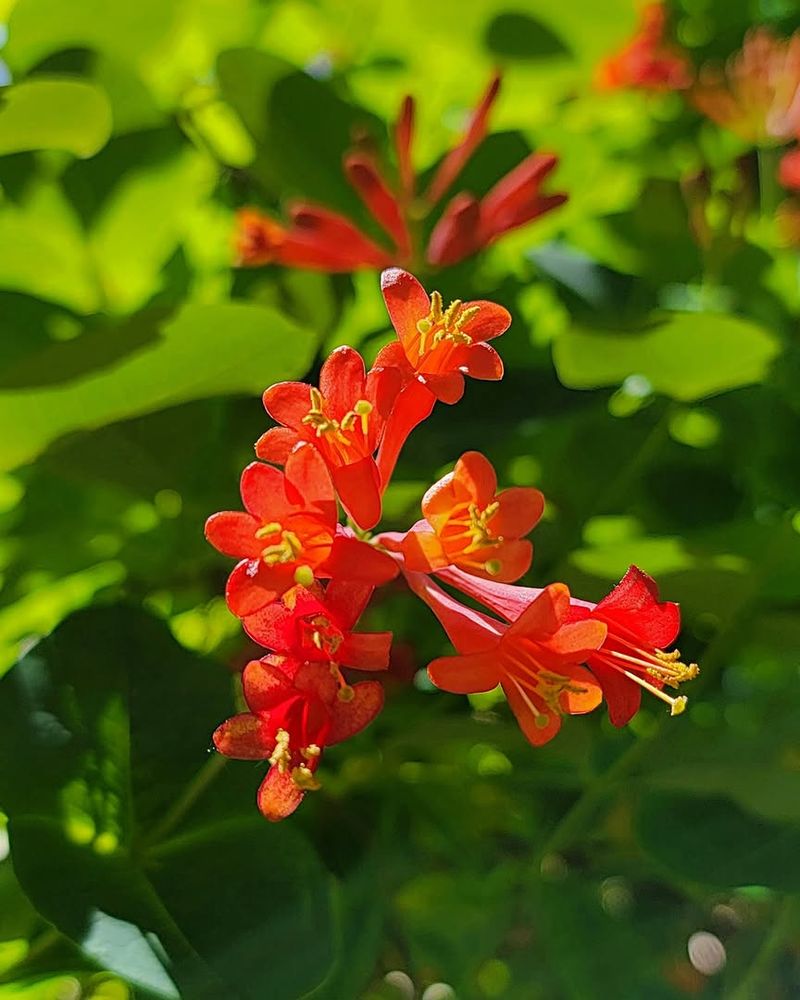
Few plants transform a plain patio pergola or trellis quite like Coral Honeysuckle. This climbing vine drapes itself gracefully over structures and rewards you with clusters of bright red tubular flowers that practically pop against green foliage.
It is one of those plants that makes a patio look professionally designed without much effort at all.
Unlike the invasive Japanese Honeysuckle, Coral Honeysuckle is a well-behaved native vine that stays where you put it. It climbs trellises, pergolas, and fences with ease using twining stems, and it never takes over the whole yard.
That controlled growth makes it a reliable choice for smaller patio spaces where you want vertical interest without chaos.
Heat tolerance is one of its strongest qualities. Coral Honeysuckle handles full sun and the kind of reflected heat that bounces off metal grills and stone patios without skipping a beat.
It blooms heavily in spring and then continues producing flowers on and off all the way through summer and into fall, especially with some occasional watering.
Hummingbirds are absolutely drawn to those long red tubular flowers. Plant this vine near your seating area and you might find yourself sharing your morning coffee with a few hovering, jewel-colored visitors.
That kind of wildlife interaction adds a whole new layer of enjoyment to outdoor living. Coral Honeysuckle grows in average to well-drained soil and tolerates dry spells once established. Prune it lightly after the main bloom flush to encourage fresh growth.
It is semi-evergreen in most Texas climates, meaning it holds its leaves through mild winters and comes back strong every spring with minimal care required from you.
5. Blackfoot Daisy
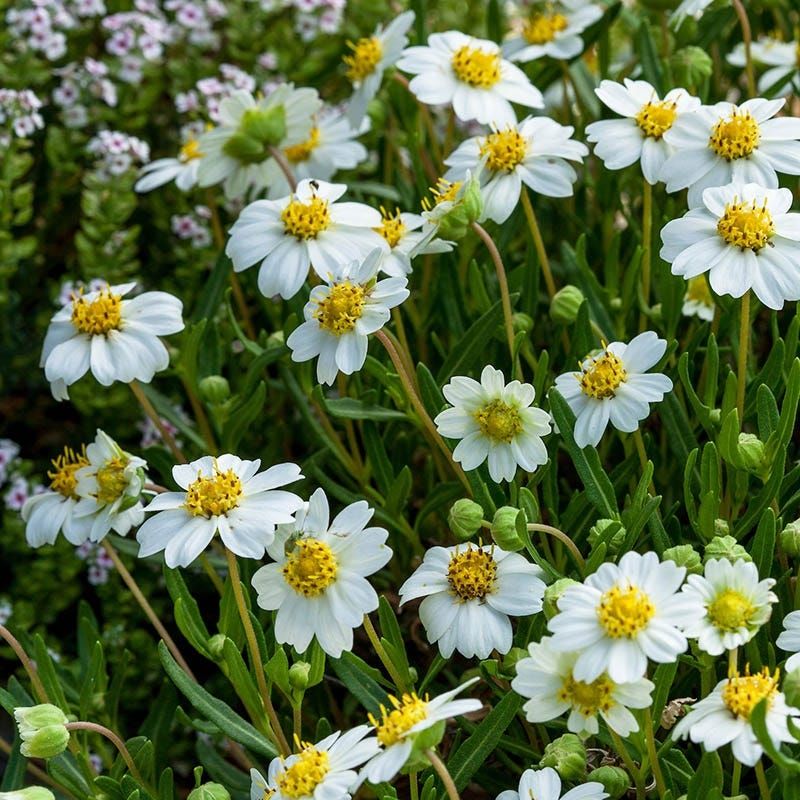
There is something cheerful and almost carefree about a Blackfoot Daisy. Those bright white petals surrounding a sunny yellow center look like they belong in a wildflower meadow, yet this tough little plant thrives just as happily in a hot patio bed next to your grill.
It is one of Texas’s best-kept gardening secrets for summer color.
Blackfoot Daisy is a low-growing perennial that spreads naturally and forms soft mounding clumps about one foot tall and two feet wide. It is perfectly sized for patio borders, rock gardens, or the edges of raised beds.
Planted in groups, it creates a soft, flowing carpet of white flowers that blooms from spring through late fall.
The heat tolerance on this plant is genuinely impressive. It grows natively in rocky, dry limestone soils across the Texas Hill Country and thrives in the kind of intense reflected heat that comes off concrete patios or stone fire pit surrounds.
It actually prefers lean, well-drained soil, so skip the heavy mulch and rich compost around its base.
Watering needs are minimal once established. Blackfoot Daisy is drought-tolerant by nature and tends to bloom more freely when it is slightly stressed by dry conditions.
Overwatering is a more common problem than underwatering with this plant, so hold back and let it do its thing.
Bees and butterflies regularly visit the blooms, adding lively movement to your patio space. Deadheading is optional since the plant reblooms without much prompting.
For the easiest summer color with almost zero fuss, Blackfoot Daisy deserves a permanent spot on every Texas patio, especially in those hot, sun-drenched corners near the grill.
6. Desert Willow
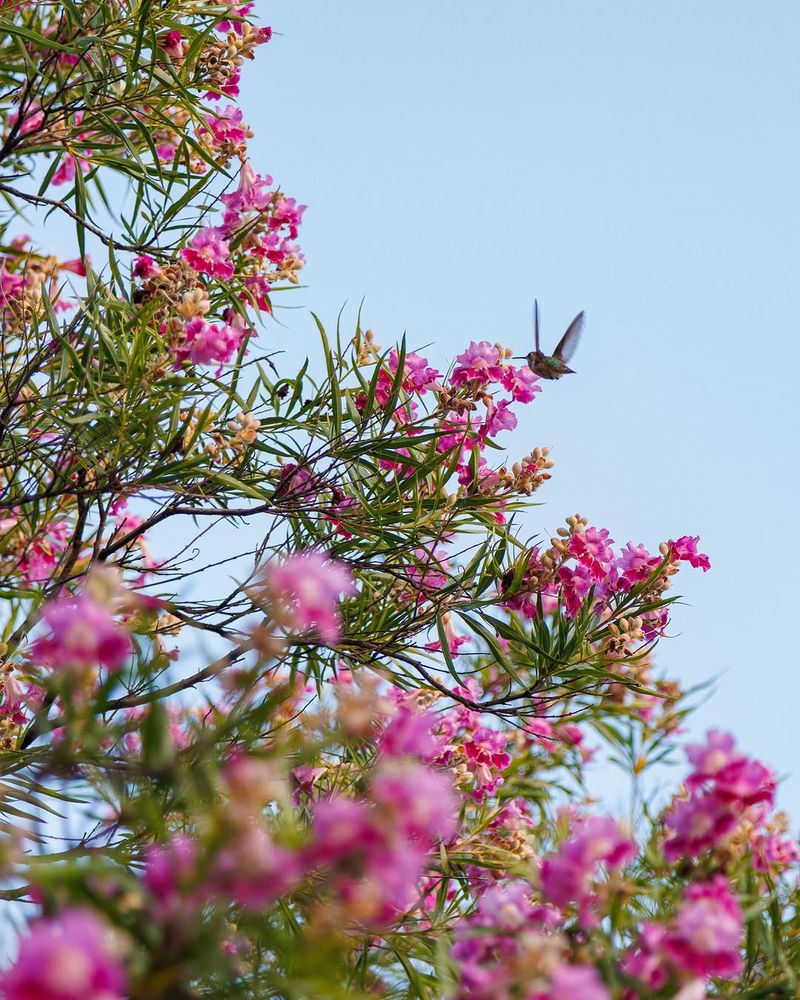
Desert Willow sounds like it belongs in the middle of the Chihuahuan Desert, and in many ways it does.
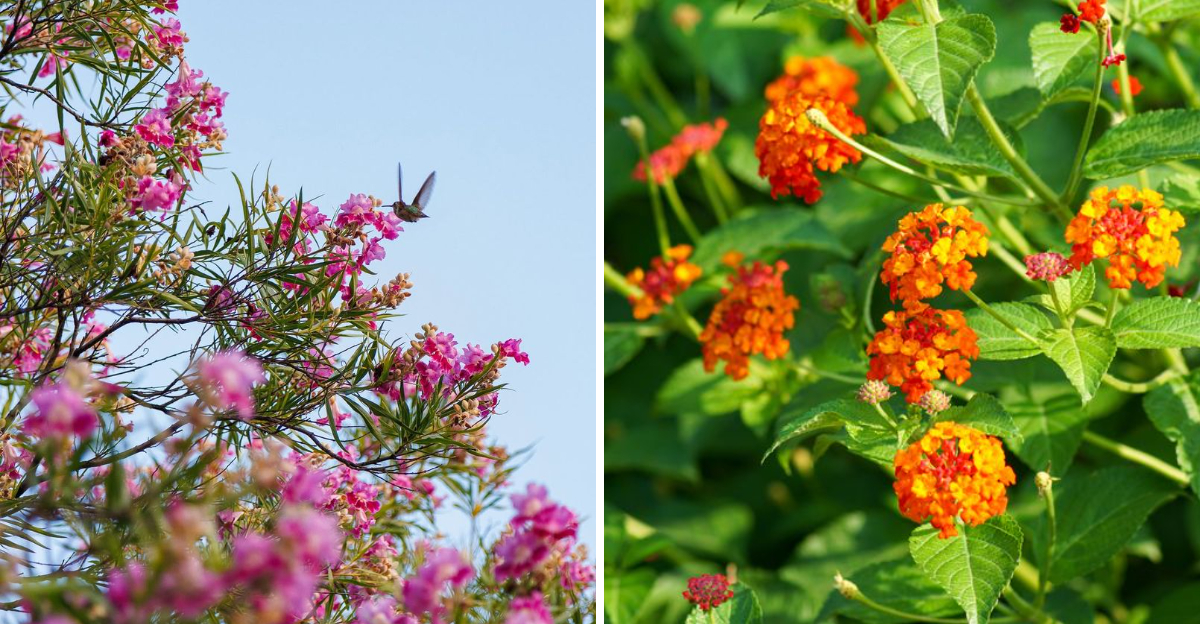
But this stunning small tree also fits beautifully on a Texas patio, where its long, willowy leaves and showy trumpet-shaped flowers create a dramatic focal point that stops people in their tracks. It is the kind of plant that makes neighbors ask questions.
The flowers are the real showstoppers. They range from soft pink to deep lavender and sometimes bicolor, with ruffled edges and a sweet fragrance that drifts pleasantly through warm evening air.
Blooms appear in late spring and continue through summer, with the heaviest flushes often happening after a good rain. Hummingbirds and bees are frequent visitors.
Intense sun and reflected heat from concrete or stone do not bother Desert Willow at all. It evolved in some of the hottest, driest landscapes in North America, so a Texas patio in July is practically a vacation for it.
Plant it near a fire pit or grill where heat radiates from multiple directions and it will still look fresh and full of blooms.
Desert Willow grows quickly, reaching fifteen to twenty-five feet at maturity, but it responds well to pruning and can easily be kept smaller for tighter patio spaces.
It thrives in well-drained, rocky, or sandy soil and handles dry spells without any drama once its roots are established.
In winter, it drops its leaves and goes dormant, then returns vigorously each spring. That seasonal rhythm is completely normal and expected.
Regular deep watering during the first growing season helps roots establish quickly, after which Desert Willow becomes a largely self-sufficient and breathtakingly beautiful part of your outdoor space.
7. Texas Lantana
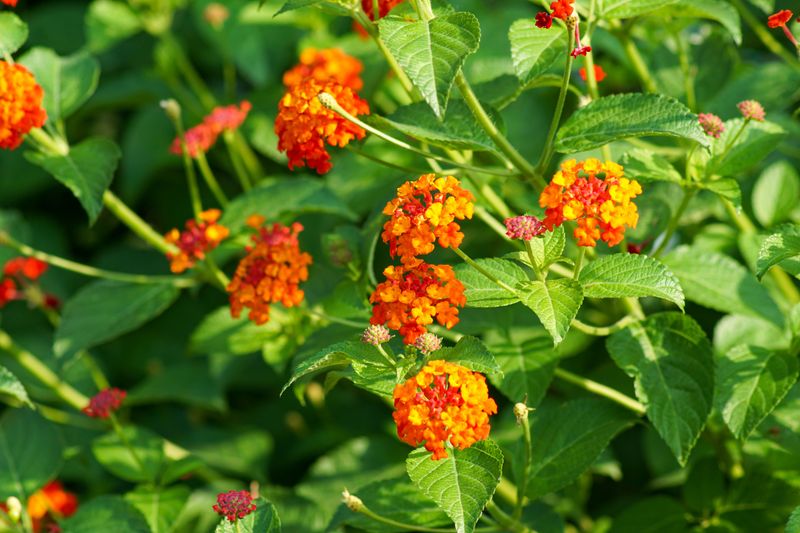
Bold, buzzing with butterflies, and blazing with color through the worst of the Texas summer, Texas Lantana is a patio performer that never disappoints.
The flowers shift from bright yellow to orange to red as they age, creating a multicolored display that looks like a living sunset.
It is genuinely one of the most visually exciting plants you can grow in a container or border near a fire pit.
Texas Lantana is the native cousin of the more commonly sold tropical lantana varieties, and it is significantly better adapted to Texas conditions. It handles heat, drought, and humidity with equal ease.
Near a grill or fire pit where temperatures get extra intense, it keeps blooming without missing a single flower cycle throughout the summer months.
Butterflies are obsessed with this plant. Swallowtails, monarchs, and skippers all flock to the nectar-rich blooms on a regular basis.
Planting Texas Lantana near your outdoor seating area practically guarantees a parade of colorful wings floating through your patio space on any given afternoon from June through October.
It grows as a sprawling, trailing shrub that reaches two to four feet tall and spreads three to five feet wide. That spreading habit makes it excellent for spilling over container edges or filling in wide patio border areas.
It also works well as ground cover in hot, sunny spots where other plants refuse to grow. Water it sparingly once established and plant it in well-drained soil. Texas Lantana actually blooms more vigorously when grown on the lean side without excessive water or fertilizer.
Trim it back occasionally to encourage fresh growth and even more of those stunning multicolored flower clusters all season long.