This Is The Hardy Native Shrub Ohio Gardeners Are Planting Instead Of Forsythia
Forsythia had a good run. Almost every Ohio yard had one. Every spring, same yellow burst, same two weeks, then nothing for the rest of the year.
Then something shifted.
Ohio gardeners started asking a different question. Not just what blooms first, but what actually earns its place in the yard. What feeds something, hosts something, does something useful beyond a brief splash of color in March.
There is a native shrub that has been growing wild in Ohio for centuries.
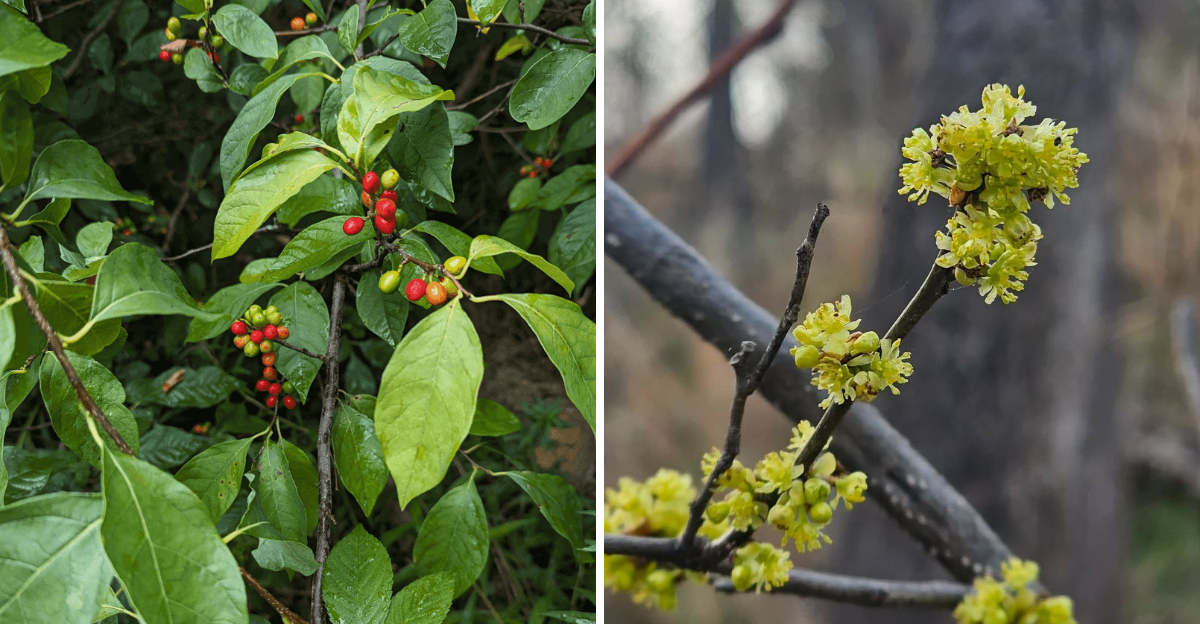
It blooms just as early. It has berries that birds compete over in September. It hosts a butterfly so striking that people stop mid-walk to stare. It thrives in the shady corner where forsythia refused to perform.
Many Ohio gardeners have walked right past it without knowing what it was.
Sound curious? You should be. One shrub swap could be the most interesting thing you do in your yard this year. Keep reading.
Plant Spicebush For Native Spring Color
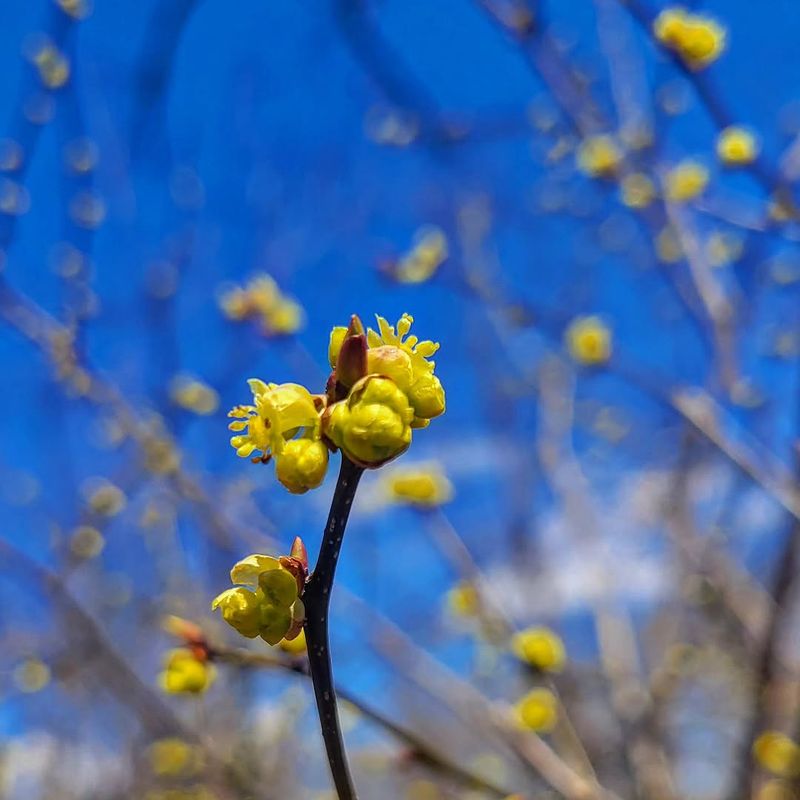
Late March in Ohio. Everything is still brown, the ground is cold, and most shrubs look like they forgot spring was coming. Then you walk past a spicebush and stop.
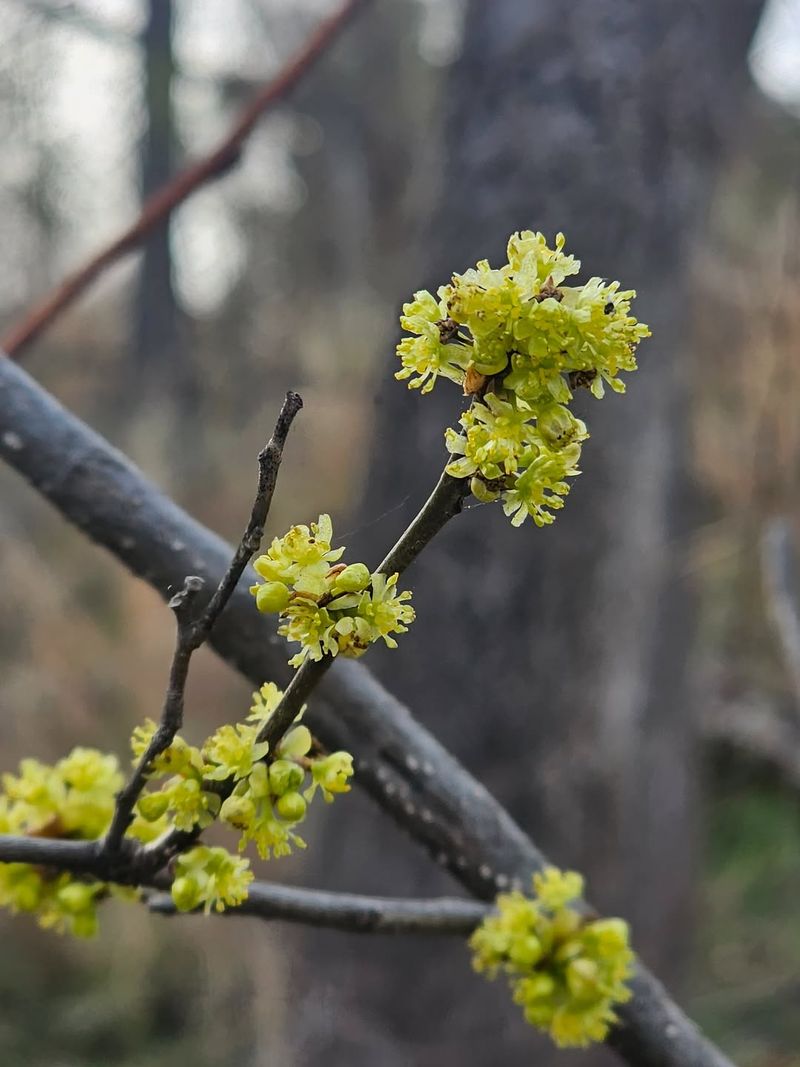
Tiny clusters of bright yellow flowers coat every bare branch before a single leaf appears. The whole shrub glows. It is not a subtle effect.
It is genuinely striking, and it happens reliably, year after year, with zero special treatment from you.
Lindera benzoin is native to Ohio and much of the eastern United States. Unlike forsythia, which arrived from Asia, spicebush evolved right alongside Ohio’s soils, insects, and wildlife.
That shared history is not just a fun fact. It is the reason the plant contributes so much more to your yard than an imported ornamental ever could.
Spicebush typically grows between six and twelve feet tall and wide. That makes it a solid mid-size shrub for borders, naturalized areas, or woodland garden edges.
It handles Ohio winters without complaint. No winter protection, no special coddling, no anxious hovering in April hoping it survived.
Crush a leaf or a twig between your fingers and you get a spicy, aromatic scent that is instantly recognizable. It is one of those small sensory details that makes gardeners fall completely in love with this plant.
Choosing spicebush over a non-native ornamental is one of the simplest ways to make your yard more ecologically meaningful. You still get the early spring color. You just get a whole lot more than that on top of it.
Enjoy Yellow Blooms Before Leaves
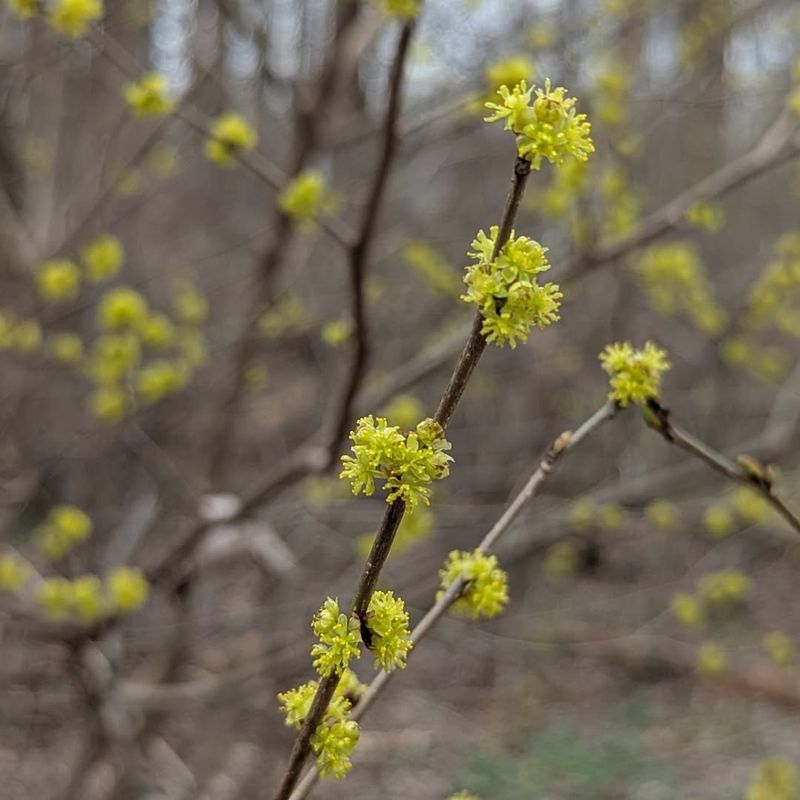
There is a brief window in late winter when the Ohio garden looks like it completely gave up. No color, no foliage, just bare branches and gray sky. Spicebush has a very strong opinion about that window.
It blooms from late February through early April, often beating forsythia by a week or more depending on the season.
The flowers are small individually, but they appear in dense clusters along every stem. From a distance, the whole shrub looks dusted in pale yellow light.
Your Ohio Garden Changes Every Week. Your Plan Should Too.
Gardening in Ohio changes quickly throughout the season. Every Friday you’ll receive a simple weekly plan showing exactly what to plant, prune, fertilize, harvest, and protect so you never miss the right timing.
Up close, each tiny flower has a delicate quality that rewards a slow walk through the garden on a cold March morning.
Because the blooms appear before any leaves unfurl, the color is completely unobstructed. Just branches, blue sky, and gold.
That visual clarity is exactly what makes early-season flowering shrubs so satisfying in a spot where you can actually see them from the house.
Those early blooms are also feeding native bees that emerge hungry after a long Ohio winter.
Forsythia offers some nectar too, but spicebush and native pollinators have a much longer shared history that makes the relationship genuinely beneficial for both.
The bloom period lasts several weeks. Once the leaves fill in, the shrub shifts into a lush, full, green backdrop for summer.
Two seasons of strong presence from one plant. Forsythia peaks in March and then basically retires for the year. Spicebush is just getting started.
Add Male And Female Plants For Berries
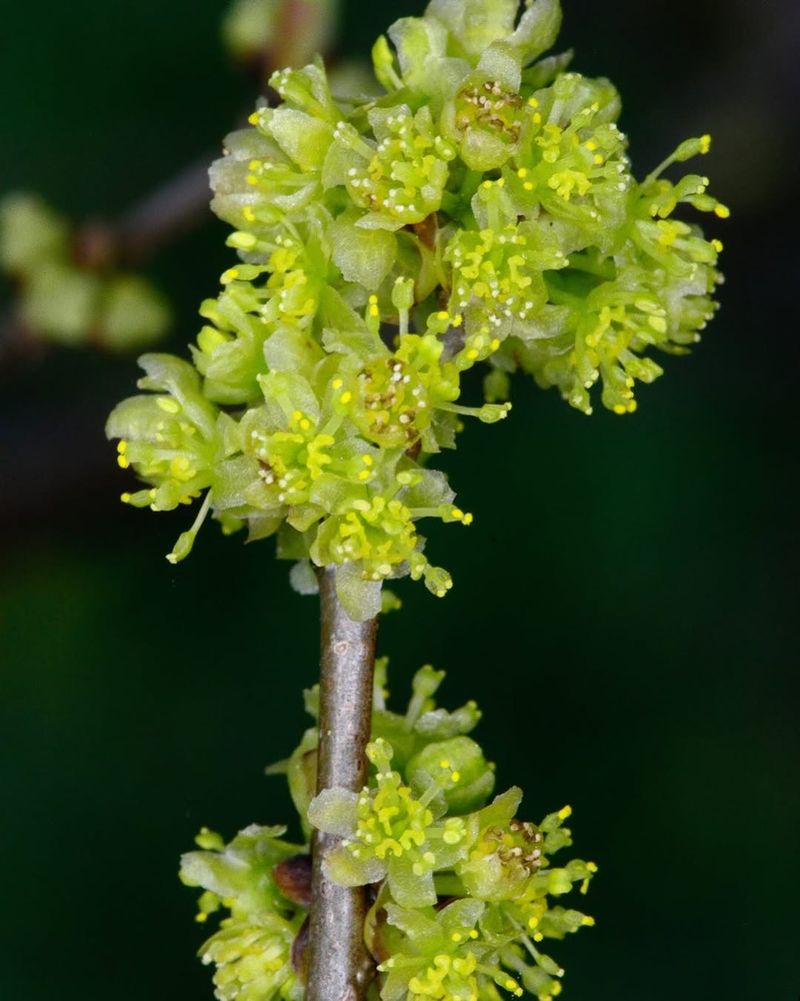
First-time spicebush growers often have a great first season and then spend their second fall wondering why there are no berries.
The plant looks healthy. It bloomed well. Something is clearly missing. Here is the part that trips people up.
Spicebush is dioecious, meaning individual plants are either male or female. To get berries, you need at least one of each planted within a reasonable distance of each other.
The male provides pollen during the spring bloom. Without it, the female flowers, looks great, and then produces nothing. One male can typically serve several female plants, so you do not need an exact one-to-one ratio.
Many nurseries sell spicebush without labeling the gender of the plant. Buying multiple plants from different sources and grouping them together gives you the best odds of having both genders represented.
Once a productive male-female pairing is established, the berry display can be genuinely impressive.
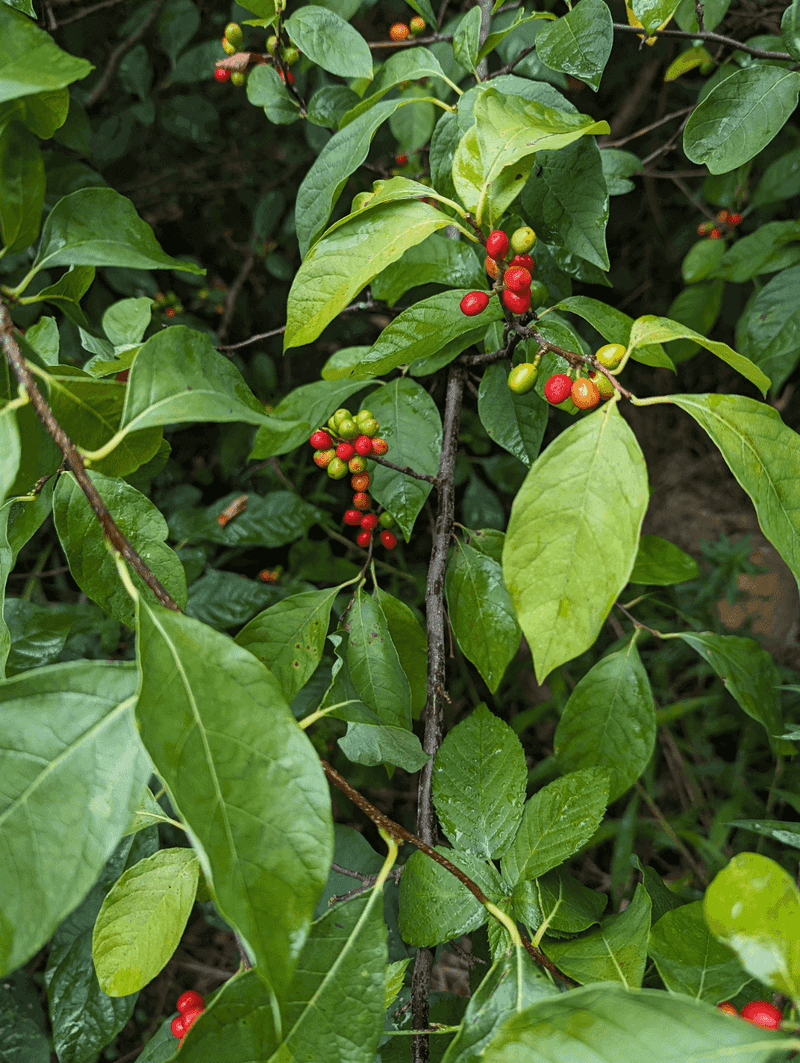
Clusters of glossy red oval berries ripen in September and October, right as the leaves shift to warm yellow. Red fruit and golden foliage together is a combination that stops people mid-walk.
Plan for both genders from the start and you will avoid years of waiting and wondering. A little foresight at planting time pays off every single fall.
And honestly, getting the right mix of plants is a lot easier than explaining to your garden why it is not fruiting.
Feed Birds With Bright Red Fruit
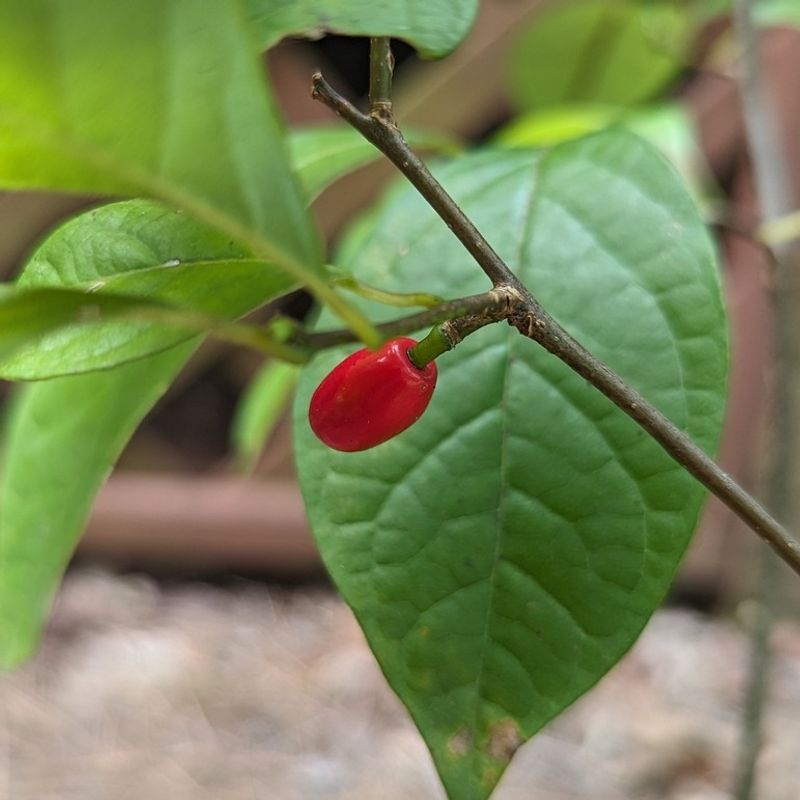
September arrives and the spicebush completely changes its role. The quiet green summer shrub turns into one of the most active spots in the entire yard.
Birds find the berries fast, and once word spreads through the neighborhood flock, the action is non-stop.
Wood thrushes, veeries, and hermit thrushes are among the most enthusiastic visitors. These are migrating birds moving through Ohio on their way south, and they are actively searching for high-energy food.
Spicebush berries are exceptionally high in fat compared to many other native fruits, which makes them a premium fuel source for birds building up energy reserves for long journeys.
Forsythia offers nothing comparable in fall. Once the spring bloom fades, the plant contributes essentially nothing to local wildlife for the rest of the year.
Spicebush keeps working long after its flowers are gone, which is a major reason native plant gardeners tend to feel so strongly about making the swap.
Planting spicebush near a window or a patio seating area gives you a front-row seat to the fall bird show.
Watching a wood thrush work through a cluster of ripe berries on a crisp October morning is the kind of backyard moment that genuinely stays with you.
The berries usually disappear fast once the birds discover them. That quick turnover is a sign your yard is doing real ecological work.
Multiple shrubs extend the feeding window if you want to keep the action going longer into autumn. Honestly, the birds will not complain about the extra seating.
Support Spicebush Swallowtail Caterpillars
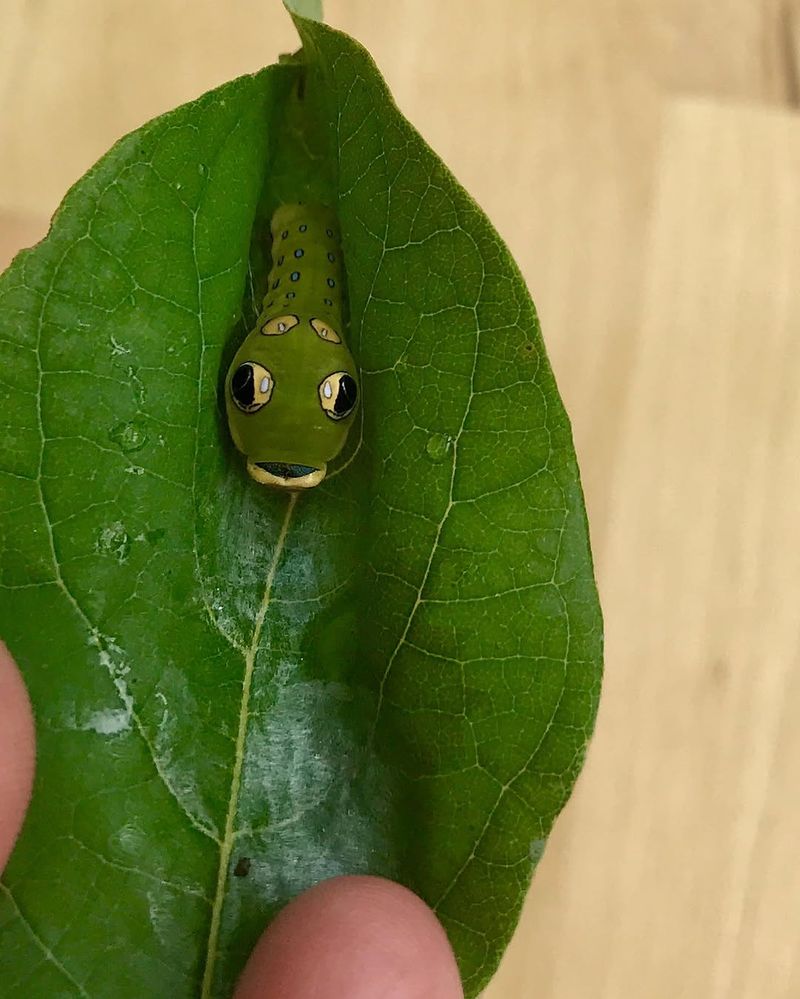
You are walking through the garden in July and you spot a spicebush leaf that has been rolled into a neat little tube and secured with silk. Before you do anything, take a closer look. Something very interesting is living in there.
Spicebush swallowtail caterpillars use spicebush leaves as both food and shelter throughout the summer months.
The caterpillars are bold and chunky, with dramatic false eyespots that make them look far more intimidating than they are.
They are genuinely one of the most charismatic insects in the Ohio garden, and your spicebush is their essential home.
Spicebush is the primary host plant for the spicebush swallowtail butterfly. The female lays her eggs on the foliage, and the caterpillars feed through summer before pupating.
Without spicebush in the landscape, this butterfly cannot complete its life cycle in most Ohio yards. Forsythia hosts essentially no native caterpillars at all.
The adult butterfly is deep blue-black with pale spots along the wing edges and a wash of iridescent blue on the hindwings.
Watching one nectar in a garden where its host plant is also growing is a genuinely full-circle moment that native plant gardeners talk about for years.
A healthy, established spicebush handles the leaf feeding easily and keeps growing strong through the season.
Hosting caterpillars is not damage. It is the whole point. Your yard gets a butterfly that looks like it belongs in a tropical forest, and all you had to do was plant the right shrub.
Use It In Part Shade
Forsythia in shade is a sad sight. It stretches awkwardly toward any available light, blooms poorly, and fills in unevenly.
For the huge portion of Ohio yards shaded by mature oaks, maples, and beeches, forsythia is simply not a realistic option. That shaded border stays empty, or it gets filled with something that just survives rather than thrives.
Spicebush was built for exactly those conditions. In the wild, it grows naturally as an understory shrub beneath Ohio’s forest canopy.
Part shade to full shade is its native setting, not a compromise it tolerates but the environment it genuinely prefers. That distinction matters when you are choosing a shrub for a challenging spot.
A north-facing foundation bed, a shaded border along the back fence, a corner beneath a large shade tree: all excellent locations for spicebush.
It fills in naturally, grows at a moderate pace, and requires almost no intervention once established in a site with appropriate moisture.
Spicebush handles a wide range of light conditions, from full shade to part sun, which gives real flexibility when planning around existing trees and structures. That adaptability is rare in a shrub with this much wildlife value.
That shaded corner that has resisted every planting attempt for years is not a problem. It is just waiting for the right shrub.
Spicebush reframes the whole situation. Shade stops being a limitation and becomes an opportunity, which is a much more fun way to look at a spot that used to make you groan every spring.
Give It Moist Well Drained Soil
Walk into any Ohio woodland and look for spicebush growing naturally.
You will usually find it near a stream, along a floodplain edge, or in a low area where moisture stays around after rain. That tells you everything you need to know about what this shrub likes.
Moist, well-drained soil is the sweet spot. Spicebush tolerates periods of wet feet better than many shrubs, which makes it a smart choice for low spots in the yard, rain garden borders, or areas near downspout drainage zones.
It is not going to struggle in a spot that occasionally holds water after a heavy rain. That kind of resilience is genuinely useful in Ohio yards with variable drainage.
Average garden soil with consistent moisture also works well. Amending the planting hole with compost helps in drier or compacted spots.
A layer of organic mulch around the base conserves moisture, moderates soil temperature, and feeds the soil as it breaks down.
The most critical period is the first full season after planting. Regular watering during that establishment window sets the plant up for long-term resilience.
After that first year or two, spicebush builds a deep enough root system to handle dry stretches on its own.
Dry, sandy, or gravelly soils with poor water retention are the one situation to avoid. Those conditions slow growth significantly and reduce the plant’s ability to fruit and support wildlife.
Basically, give spicebush a spot it can actually drink from, and it will repay you for decades. That is a pretty fair trade.