This Is The Invasive Vine Choking Pennsylvania Trees At An Alarming Rate
Pennsylvania trees are facing a quiet but serious threat, and it’s climbing them from the ground up.
An invasive vine has been spreading through the state’s woodlands, residential yards, and natural areas at a pace that has conservation experts and arborists increasingly concerned.
It moves fast, it climbs high, and by the time most homeowners notice what’s happening to a tree on their property, the vine has already established a grip that takes real effort to break. This vine is not subtle once it gets going.
It spirals up trunks, spreads across canopies, and blocks the sunlight that trees need to sustain themselves. The added weight it puts on branches increases the risk of storm damage significantly.
And in the natural areas bordering residential properties, it spreads aggressively into native plant communities, crowding out the vegetation that Pennsylvania wildlife depends on.
It’s showing up in more Pennsylvania yards every season, often arriving from neighboring properties or nearby natural areas before homeowners even realize it’s there.
Here’s what this invasive vine is, how to identify it, and what to do about it before it causes serious damage.
The Invasive Vine Choking Pennsylvania Trees
Meet one of Pennsylvania’s most unwanted plants. Oriental bittersweet, known scientifically as Celastrus orbiculatus, goes by several names including Asian bittersweet and round-leaved bittersweet.
It arrived in the United States from eastern Asia in the 1860s, originally planted as an ornamental. Nobody guessed it would one day become such a serious problem for native forests.
Unlike many vines that simply climb, Oriental bittersweet actively wraps and twists around whatever it touches. It is a nonnative, perennial woody vine that can climb nearly 60 feet into the canopy of a full-grown tree.
That is roughly the height of a six-story building. Once it reaches the top, it spreads outward through the branches and smothers everything beneath it.
You can find it just about everywhere in Pennsylvania. It commonly invades woodland edges, roadsides, old home sites, open fields, and neglected corners of yards.
Gardeners sometimes spot it creeping under fences or climbing shrubs near the house. Because it grows so aggressively, it can take over a small yard surprisingly fast.
Pennsylvania officially classifies Oriental bittersweet as an invasive Class B noxious weed. That classification means the state recognizes it as a serious threat to agriculture, natural areas, and native plant communities.
It cannot legally be sold, transported, planted, or propagated anywhere in the state. Despite that legal protection, it continues to spread because seeds already in the soil keep producing new plants year after year.
Knowing its name and background is the starting point for stopping it.
How To Recognize It Before It Reaches The Canopy
Catching this vine early makes a huge difference. Once Oriental bittersweet climbs deep into a tree’s canopy, removing it safely becomes much harder.
Learning to spot it at eye level, while it is still young and close to the ground, gives you a real head start on controlling it before serious harm is done.
Your Pennsylvania Garden Changes Every Week. Your Plan Should Too.
Gardening in Pennsylvania changes quickly throughout the season. Every Friday you’ll receive a simple weekly plan showing exactly what to plant, prune, fertilize, harvest, and protect so you never miss the right timing.
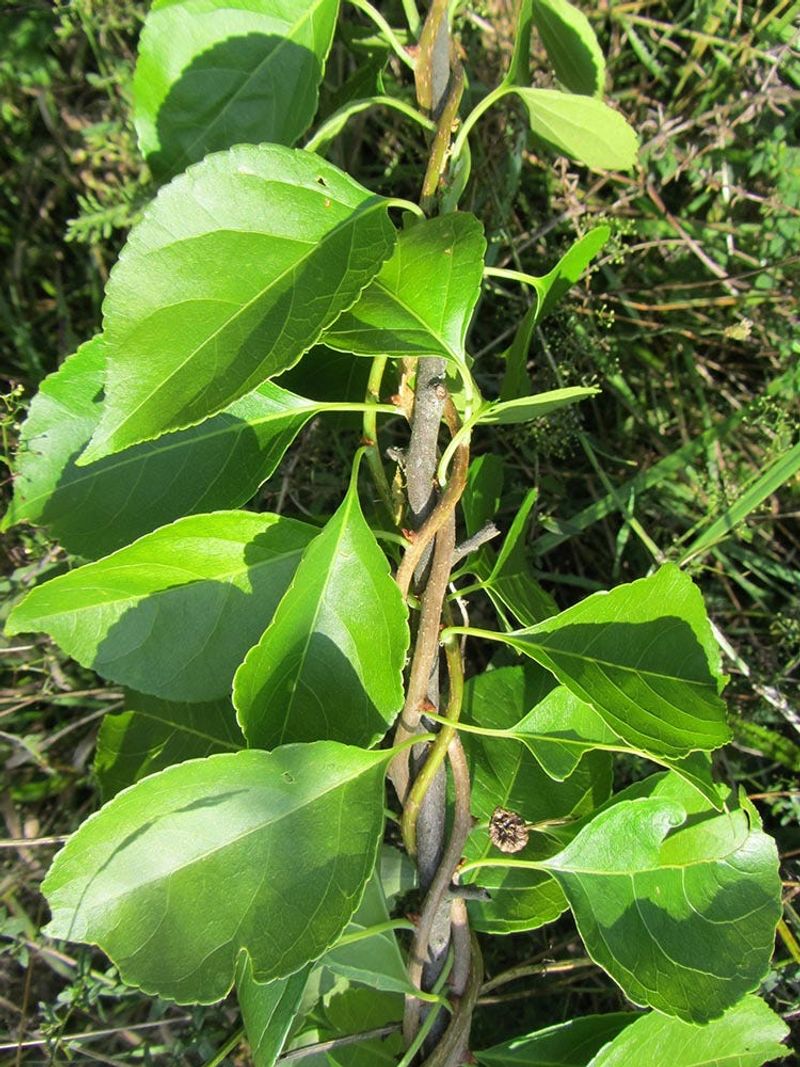
Start by looking for woody vines that spiral tightly around tree trunks and branches. The spiraling pattern is one of the most recognizable features.
Younger vines may look thin and flexible, but older ones become thick, rough, and deeply embedded into the bark. The vine’s bark tends to be grayish-brown with small raised dots called lenticels scattered across the surface.
The leaves are alternate along the stem, meaning they grow one at a time in a staggered pattern rather than in pairs. They are finely toothed around the edges and range in shape from rounded to elliptical.
In summer, the foliage is a bright, healthy-looking green that blends easily into surrounding vegetation, which is part of what makes the vine so easy to overlook.
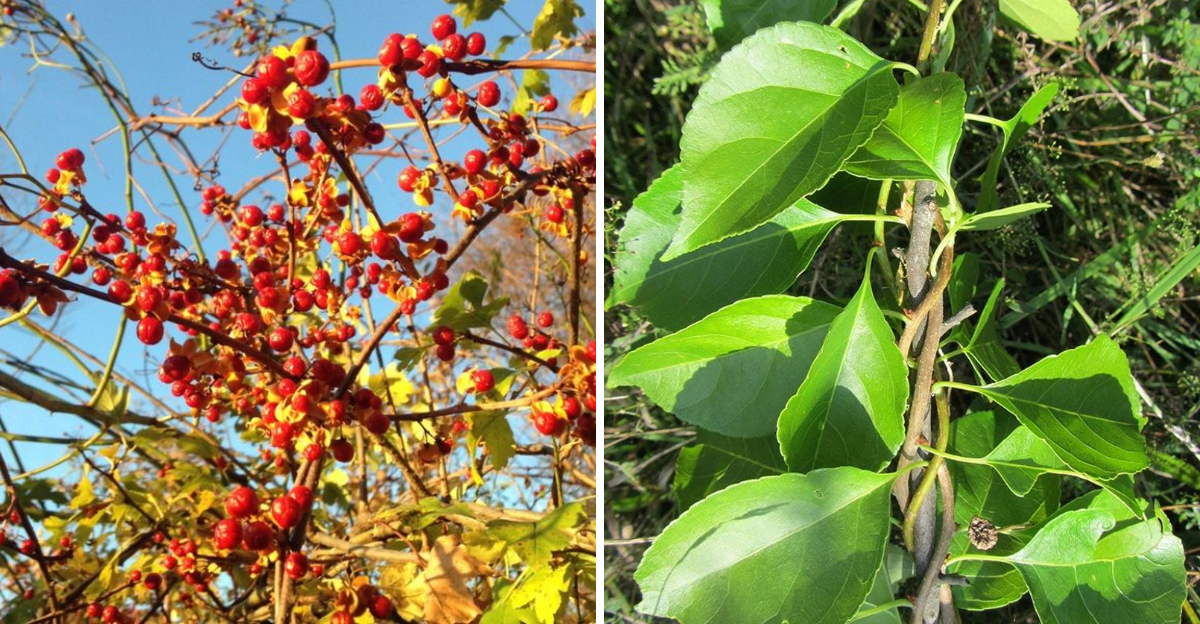
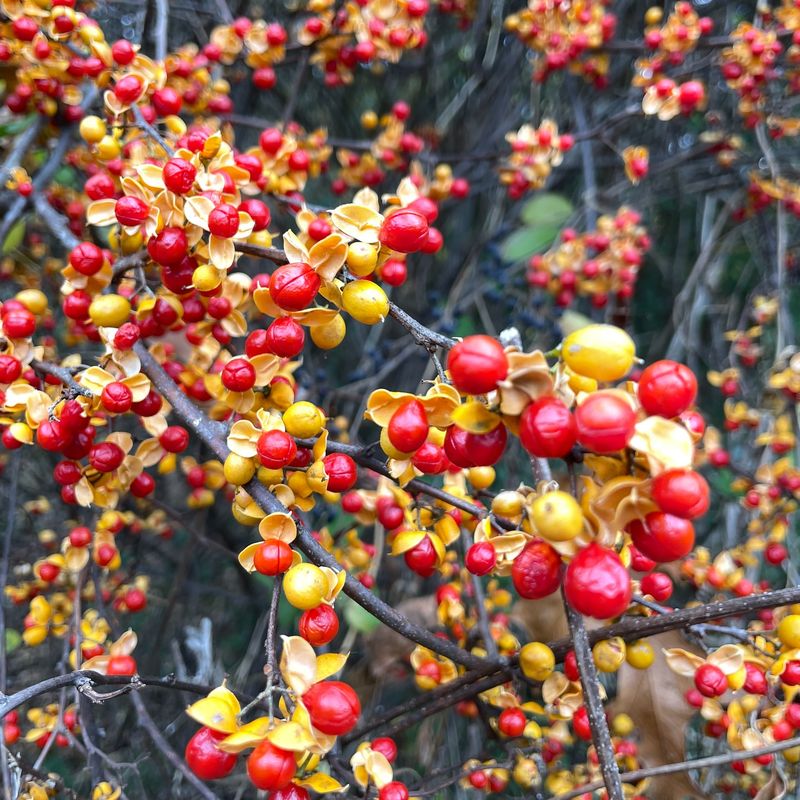
Fall is the best time to spot it. Female vines produce small yellow capsules that crack open to reveal vivid red centers.
Those colorful berries are eye-catching and often used in holiday wreaths, which unfortunately helps spread the plant even further. One important identification tip involves comparing it to native American bittersweet.
The native species bears its flowers and fruit only at the tips of branches, while Oriental bittersweet produces berries all along the stem near the leaf axils. That single difference is the clearest way to tell them apart.
How The Vine Damages Pennsylvania Trees
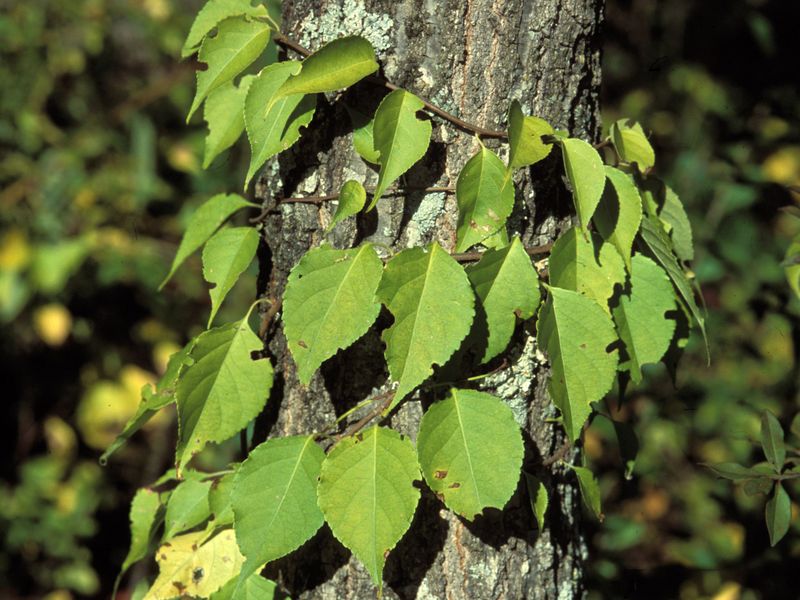
Few people realize how much damage a vine can cause until they see a tree that has been wrapped for years. Oriental bittersweet does not just borrow space on a tree.
It actively works against the tree’s ability to grow, breathe, and stay structurally sound. The damage builds slowly but steadily, and by the time most homeowners notice, the vine has already been at work for a long time.
As the vine thickens over the years, it begins to girdle the trunk and branches it wraps around. Girdling means the vine squeezes the outer layers of the tree so tightly that it restricts the normal movement of water and nutrients through the bark.
Think of it like a rubber band wrapped around a garden hose. Over time, the flow gets cut off, and the tree above the constriction begins to struggle.
The vine’s foliage creates another serious problem once it spreads through the upper canopy. Masses of bittersweet leaves block sunlight from reaching the host tree’s own leaves and from reaching plants growing on the ground below.
Without enough light, the tree cannot produce the energy it needs to stay healthy and strong.
Heavy vine growth also adds enormous physical weight to branches. Branches loaded with thick, tangled vines become much more likely to snap during ice storms, heavy snowfall, or strong winds.
Weakened trees become more vulnerable to pests and disease as well. A tree that once stood for decades can become a storm hazard in far less time once Oriental bittersweet takes hold.
Protecting trees early is always far easier than dealing with the damage later.
Why It Spreads So Quickly
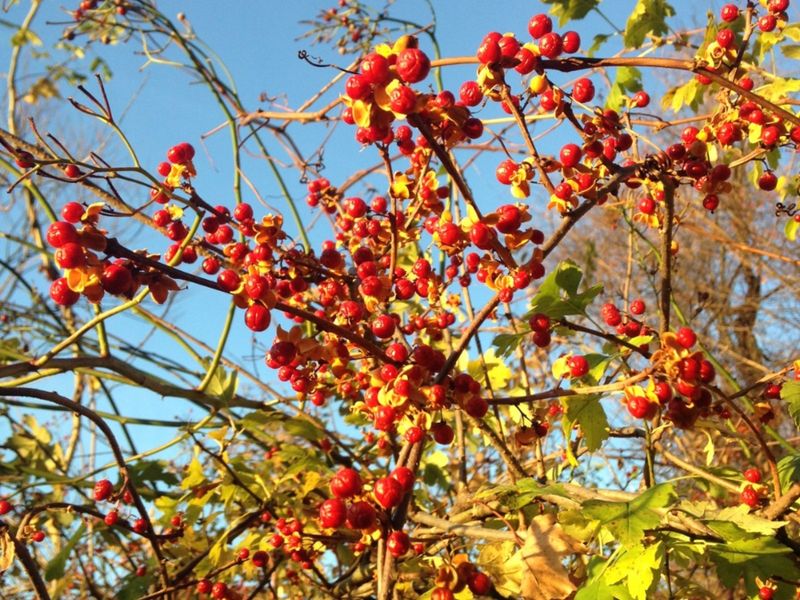
Oriental bittersweet did not spread across Pennsylvania by accident. Several natural and human-driven factors work together to carry it into new areas every single year.
Understanding those pathways helps explain why this vine shows up in places far from where anyone planted it, and why stopping its spread requires more than just removing the plants you can already see.
Birds are the biggest culprits. Robins, starlings, cedar waxwings, and many other bird species love the bright red berries.
They eat them eagerly in fall and winter, then fly off and deposit the seeds in their droppings far from the original vine. A single bird can carry seeds miles away in a single day.
Other animals, including deer and small mammals, also consume the fruit and help scatter seeds across the landscape.
People unintentionally play a major role too. Berry-covered bittersweet stems are popular in fall wreaths and seasonal decorations because of their vivid colors.
When those wreaths are tossed into a yard or compost pile, viable seeds can sprout and start new infestations. It is a surprisingly common way the plant moves into new neighborhoods and garden spaces.
Established plants do not rely only on seeds to expand. They also spread through underground rhizomes and root suckers, sending up new shoots from the root system even after the above-ground vine is cut.
To make things even more challenging, seeds that fall to the ground can stay viable in the soil for several years. That means new seedlings can keep appearing long after the original vines are removed, which is exactly why follow-up monitoring matters so much.
What Homeowners Should Do When It Is Climbing A Tree
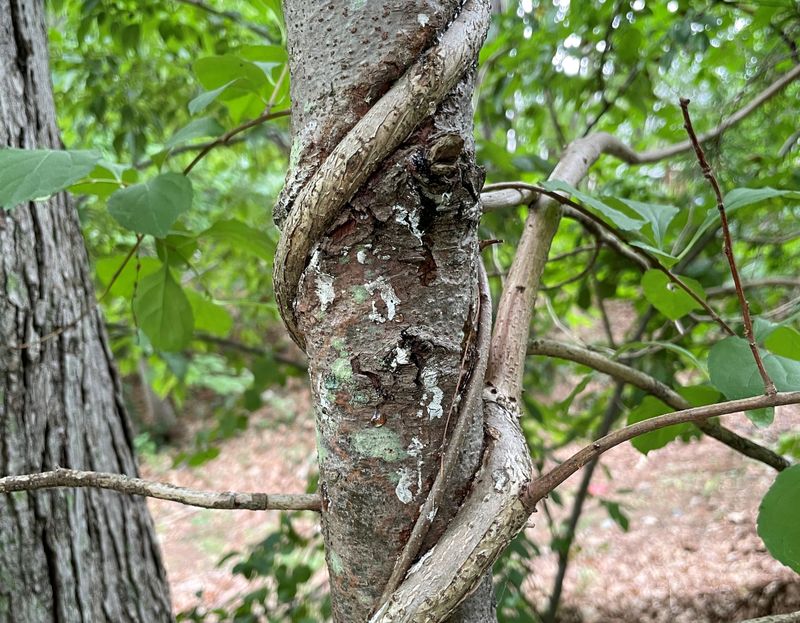
Spotting Oriental bittersweet climbing one of your trees can feel overwhelming, especially when the vine has already made it partway up the trunk.
The good news is that homeowners can take meaningful action right away, even without special equipment or professional training.
The key is approaching the removal carefully and in the right order so you do not accidentally cause more harm than good.
Before cutting anything, confirm your identification. Pennsylvania is also home to native American bittersweet, which is actually a plant worth protecting.
Removing the wrong vine would be a shame, especially since native bittersweet is far less common than it used to be. Check whether the berries grow along the entire stem or only at the branch tips, and use that detail to make your call before reaching for the loppers.
Once you are confident you have the right vine, cut it close to the ground. Then cut it again several feet higher up the trunk.
That gap prevents the vine from reconnecting and makes it clear where you have already worked. Leave the upper portion of the vine in the tree.
Do not try to pull hanging sections out of the canopy. Yanking vines down can snap branches, bring heavy debris crashing down, and put you at real risk of injury.
Any stems that carry berries need to be bagged and placed in the trash, not left on the ground or tossed into a compost pile. Even detached berries can sprout if they end up in a suitable spot.
Wearing gloves throughout the process is a smart habit since some people develop mild skin irritation from handling the plant repeatedly.
Why Removal Usually Requires Several Years
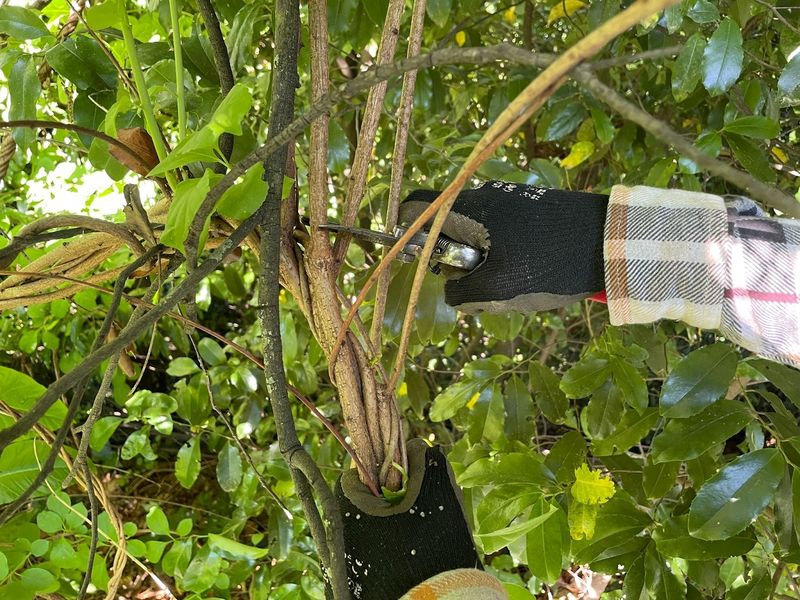
Anyone hoping for a one-and-done solution to Oriental bittersweet is going to be disappointed. This vine is remarkably persistent, and a single removal effort almost never finishes the job.
Planning for multiple years of follow-up work is not pessimism. It is just the reality of dealing with a plant that has evolved to bounce back from almost every setback.
Young plants that have not yet produced fruit can sometimes be pulled or dug out by hand, provided you get the roots out along with the stems. Leaving root fragments behind almost always leads to resprouting.
A hand trowel or a hori-hori garden knife can help loosen the soil around small root systems without leaving too much behind. Early spring or late fall, when the soil is moist, tends to make hand removal easier.
Cutting established vines without treating the roots is usually just a temporary fix. The root system stores enough energy to send up fresh sprouts within weeks of being cut.
For larger, well-established plants, applying a labeled systemic herbicide directly to a freshly cut stump gives much better results. The herbicide travels down into the root system and reduces the plant’s ability to resprout.
Always read and follow every direction on the product label carefully, and apply it only as directed.
After any removal effort, check the site regularly throughout the growing season. New seedlings from soil-stored seeds and sprouts from surviving root fragments will appear, sometimes in surprising numbers.
Catching them small makes each follow-up session much quicker and less physically demanding. When vines have climbed into large or structurally compromised trees, bringing in a certified arborist is the safest and smartest choice.