This Native Florida Tree Is Quietly Replacing Weeping Willows In Yards
Weeping willows have dominated a certain look in Florida yards for decades. That’s starting to change, one yard at a time.
Willows demand constant water, drop brittle branches in every storm, and rarely last more than a couple decades before decline sets in.
Florida homeowners chasing that same graceful, cascading look are increasingly turning somewhere else instead, a native tree built for exactly this climate rather than one imported from wetter regions entirely.
This tree pulls off a similar weeping silhouette without the constant mess or water demands. It shrugs off drought, tolerates poor soil, and handles storms that would splinter a willow’s brittle limbs without much complaint.
Homeowners making the switch aren’t chasing a trend. They’re choosing a tree that gives them the look they wanted in the first place, minus everything about a willow that made it exhausting to maintain.
1. Weeping Yaupon Holly Brings The Same Cascading Look
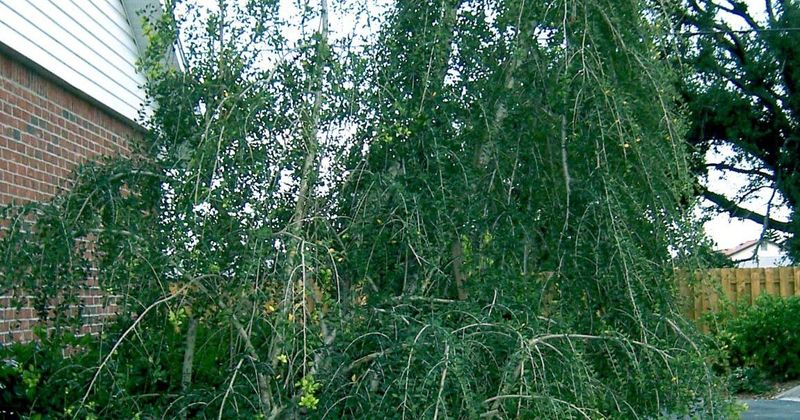
Cascading branches have a way of drawing the eye downward in the most satisfying manner. Weeping yaupon holly, Ilex vomitoria ‘Pendula’, delivers exactly that visual pull with slender stems that arch outward and drape toward the ground.
The effect is graceful, soft, and full of movement even on calm days.
‘Pendula’ is a cultivated weeping selection of yaupon holly, a species that grows naturally across Florida and the wider Southeast. The weeping habit does not occur in every wild plant.
It was selected and propagated specifically for the pendulous form that makes it so appealing in designed landscapes.
Comparing it to a weeping willow is mostly a matter of landscape form rather than botanical kinship. The two trees are not related, and they do not look identical up close.
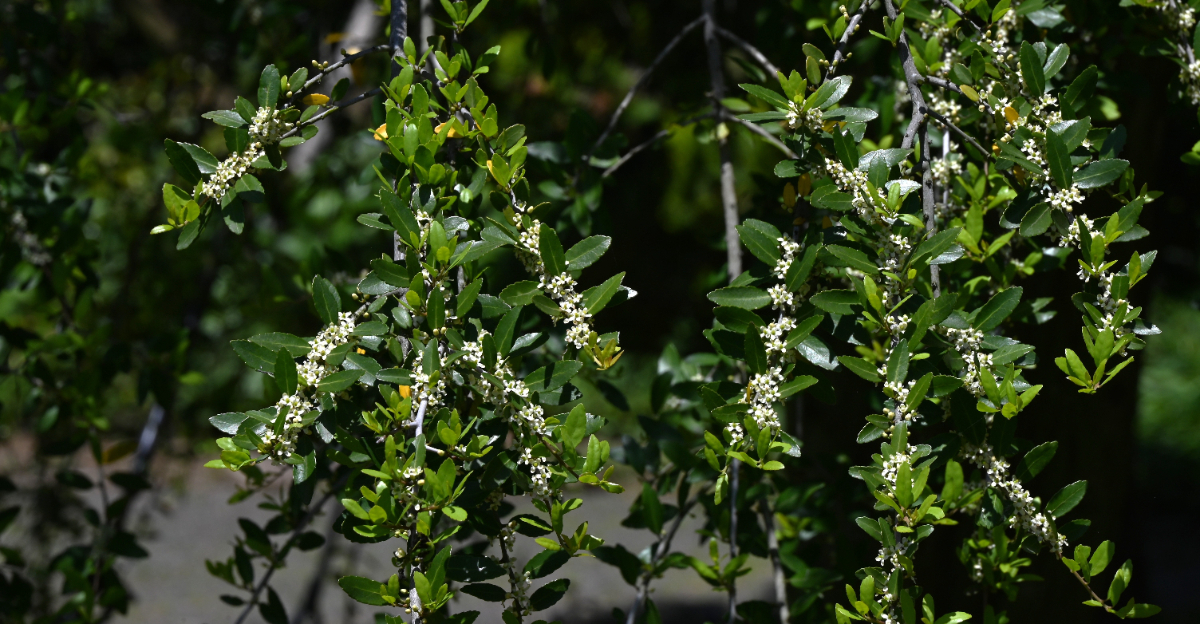
Yaupon has small, oval, dark green leaves with slightly toothed edges, while willow leaves are long and narrow.
Still, from across a yard, both trees project that same sense of flowing, downward movement that many homeowners find irresistible. Yaupon achieves this look with a much more compact profile.
Gardeners who have always wanted that weeping silhouette but struggled to find the right spot now have a more manageable option worth serious consideration.
2. It Fits Yards A Weeping Willow Can Quickly Overwhelm
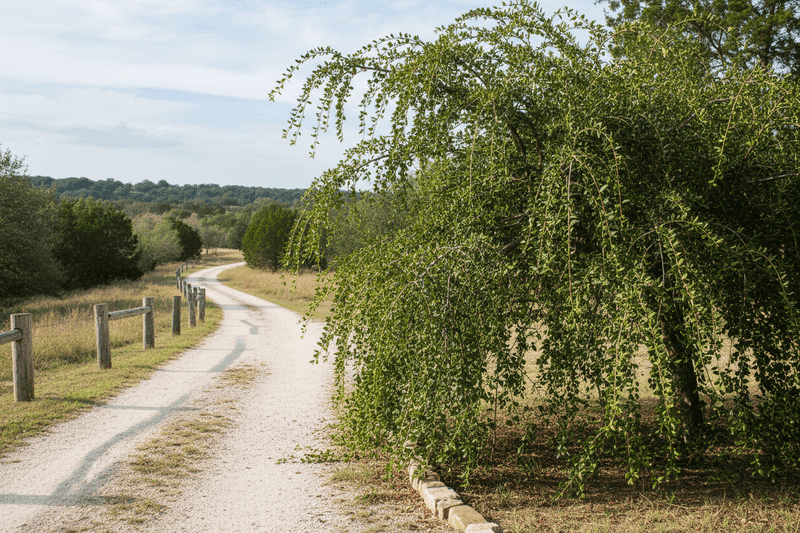
Space is one of the first things a homeowner runs out of when planting a weeping willow. According to UF/IFAS resources, weeping willows can reach 30 to 40 feet tall with a spread that matches or exceeds that height.
Placing one near a house, driveway, or fence line often becomes a regret within a decade.
Weeping yaupon holly operates on a much more residential scale. UF/IFAS lists mature specimens of Ilex vomitoria ‘Pendula’ typically reaching around 15 to 20 feet in height with a spread of roughly 6 to 10 feet.
That narrower footprint opens up planting spots that a willow would simply consume.
Smaller scale does not mean the tree disappears into the landscape. A mature weeping yaupon still commands attention as a specimen plant, especially when positioned where its arching form can be seen from a patio or window.
Your Florida Garden Changes Every Week. Your Plan Should Too.
Gardening in Florida changes quickly throughout the season. Every Friday you’ll receive a simple weekly plan showing exactly what to plant, prune, fertilize, harvest, and protect so you never miss the right timing.
Homeowners should plan carefully around the tree’s eventual width rather than judging placement by the young nursery container. A two-gallon plant looks modest, but the canopy will spread over time.
Give the tree adequate room from the start to prevent crowding later. That space also lets its natural pendulous shape develop without interference from nearby structures or plants.
3. Those Roots Come With Fewer Willow-Sized Worries
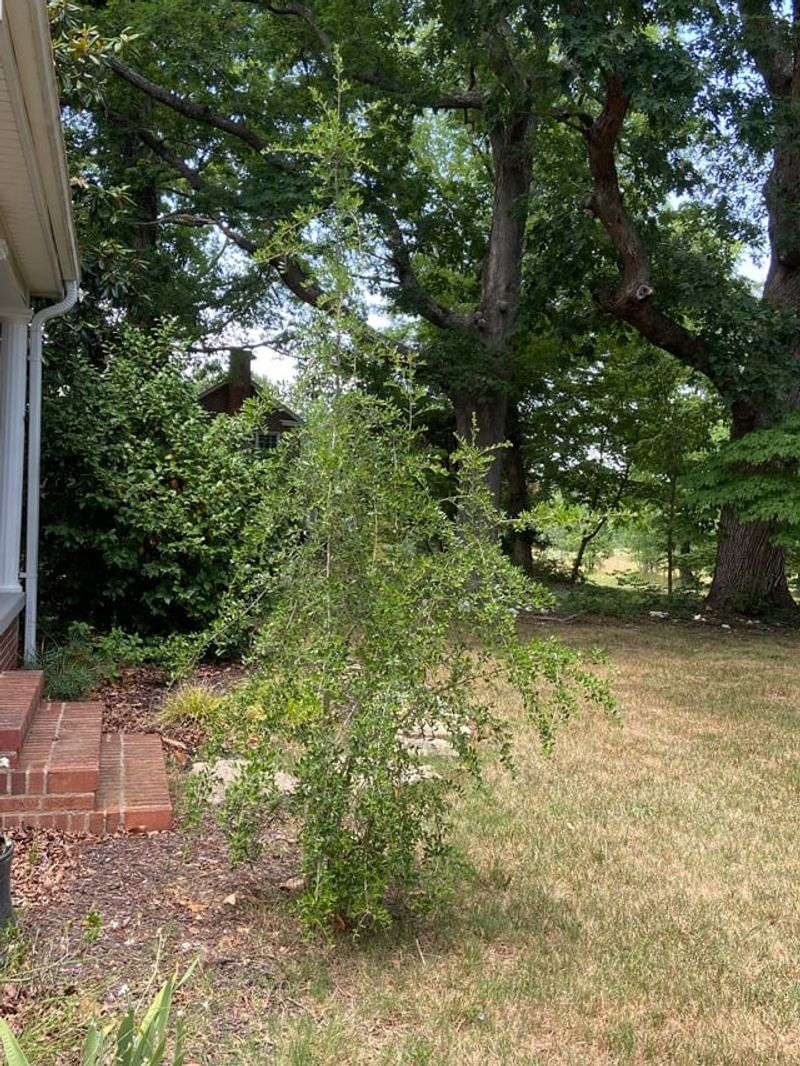
Roots are where the weeping willow’s reputation gets complicated fast. UF/IFAS extension resources note that willows produce aggressive, wide-spreading root systems that actively seek moisture.
Those roots can crack sidewalks, invade drainage lines, and push into water and sewer pipes with surprising force.
Yaupon holly does not carry that same documented reputation for large, aggressive surface roots. Its root system is generally considered better behaved in residential settings.
That is one reason landscape professionals may recommend it where willow-scale root damage would be a concern.
That said, no tree should be planted with the assumption that its roots will never cause any issues. Roots follow water and soil conditions, and even well-behaved species can eventually reach pavement or structures if planted too close.
The comparison here is relative, not absolute.
Choosing a planting location with adequate clearance from sidewalks, driveways, underground utilities, and foundations remains sound practice regardless of species.
The practical advantage of yaupon in this conversation is that homeowners are not starting with a tree already known for infrastructure conflicts.
That lower baseline risk makes siting decisions a little less stressful for most residential lots.
4. Evergreen Branches Keep The Yard From Going Bare
Bare branches have their own quiet beauty, but not every homeowner wants a specimen tree that disappears visually for months at a time. Weeping willow is deciduous, meaning it drops its leaves in fall and stands without foliage through winter.
In cooler parts of Florida and across the wider South, that bare period can stretch longer than expected.
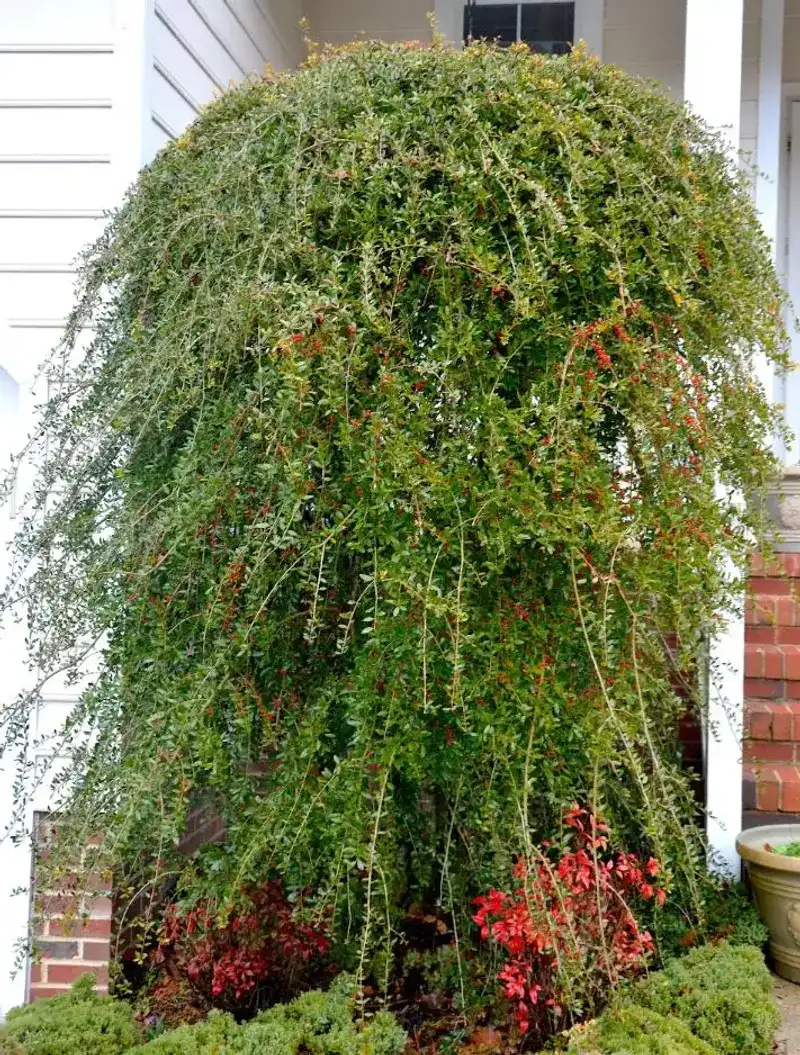
Yaupon holly holds its small, glossy leaves year-round. That evergreen habit changes how the tree functions in the landscape during the cooler months.
Rather than becoming a skeleton in the garden, it continues to provide structure, privacy screening, and visual weight throughout the year.
Evergreen does not mean perfectly static. Yaupon holly can shed older leaves and show some seasonal variation in foliage density.
New growth flushes in spring with a lighter color before maturing to the familiar deep green. The tree does not look precisely the same in January as it does in July, but it never goes bare.
For homeowners who use specimen trees as focal points in a yard, that consistent presence matters. A weeping form that keeps its draping silhouette through winter creates a very different landscape effect.
It does not reveal only bare twigs by Thanksgiving. Yaupon gives you the cascading shape in every season.
5. Female Trees Add Red Berries To The Winter Show
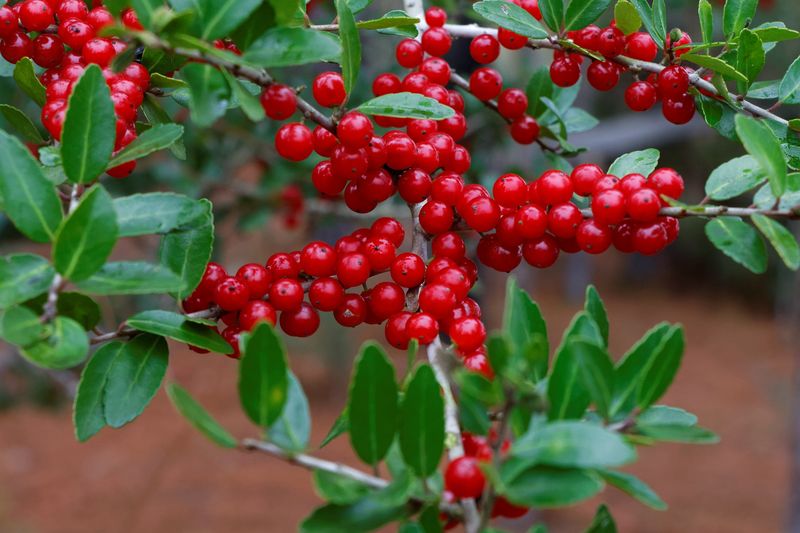
Red berries clustered along drooping branches turn a beautiful tree into something genuinely striking in winter. Female yaupon hollies can produce small, round, bright red to orange-red berries that ripen in fall and often persist well into the colder months.
The contrast against dark green foliage is hard to ignore from across a yard.
Yaupon holly is dioecious, meaning male and female flowers are carried on separate plants. Only female plants produce fruit, and they require a male plant nearby for adequate pollination.
Without a compatible male within reasonable distance, a female tree may produce little to no fruit in a given season.
Not every specimen sold at a nursery is labeled clearly for sex, so asking before purchasing matters if berry production is a priority.
A single male plant can typically pollinate multiple female plants in the surrounding area, so one male is usually enough to support several fruiting trees.
Beyond ornamental appeal, those berries provide a food source for birds and other wildlife during a season when natural food supplies can be limited. Cedar waxwings, mockingbirds, and other species feed on yaupon berries with enthusiasm.
Adding a female plant to the yard can quietly turn a landscape tree into a small but reliable wildlife resource without any extra effort from the gardener.
6. Established Trees Ask For Less Water Than A Willow
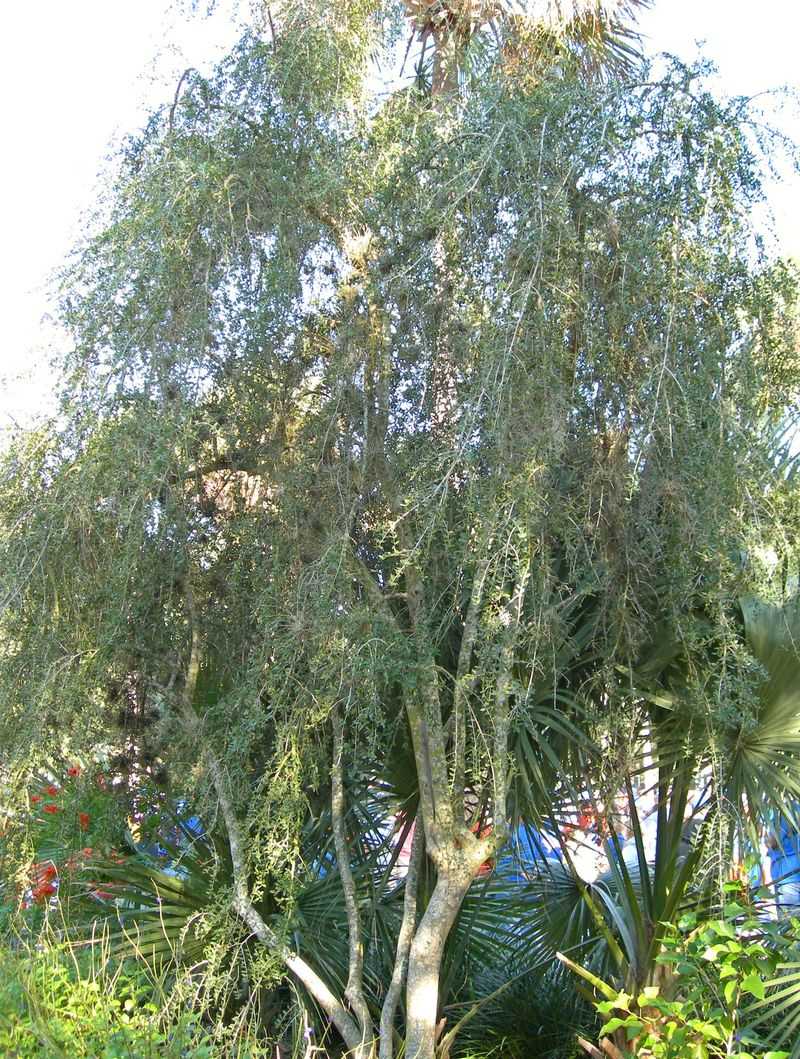
Dry spells reveal a lot about a tree’s true character in the landscape. Weeping willows have a strong association with moist, wet sites.
They naturally grow along stream banks, pond edges, and low-lying areas where soil moisture stays consistently high. Transplanting that preference into a typical suburban yard often means extra irrigation just to keep the tree looking good through dry stretches.
Established yaupon holly handles drought considerably better. UF/IFAS extension notes that yaupon holly is adaptable to a range of soil conditions and demonstrates solid drought tolerance once it has settled into the landscape.
That resilience makes it easier to maintain through Florida’s dry season without running up irrigation costs.
Established is the key word in that statement. A newly planted yaupon needs regular watering during its first year or two to develop a strong root system.
Skipping establishment irrigation to test the tree’s drought tolerance early on is a shortcut that tends to backfire.
Once roots have spread and anchored properly, the tree can handle periods of limited rainfall far more comfortably than a willow would in the same spot. Yaupon offers lower long-term water demands without sacrificing the look of a graceful specimen tree.
Its drought tolerance after establishment is especially useful in a warm, seasonally dry climate.
7. The Weeping Shape Still Needs A Little Training
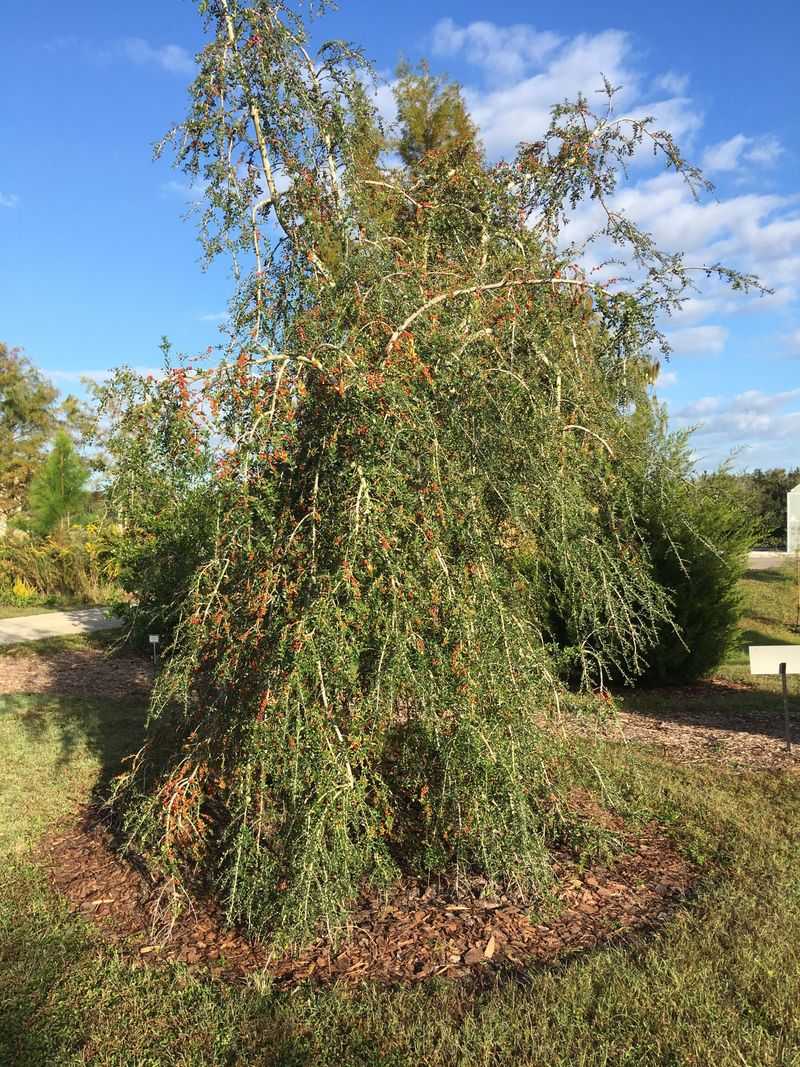
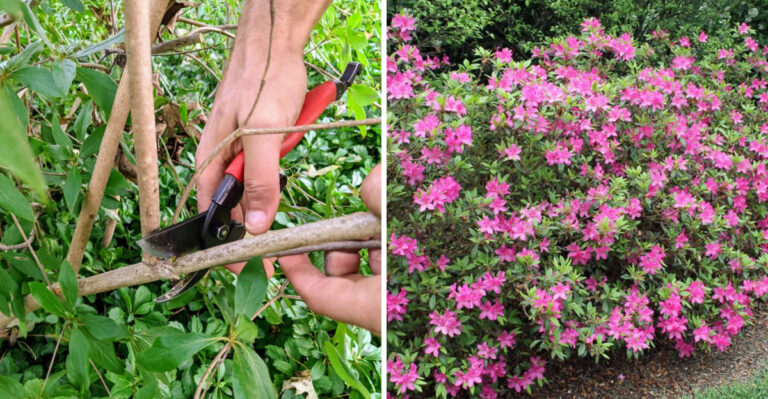
Pruning shears and a clear plan make a real difference with a young weeping yaupon. Left completely on its own, the tree can develop a low, sprawling form with branches that sweep the ground before the plant has built a strong central trunk.
A little early guidance helps it grow into the upright, cascading shape that makes it so visually appealing.
Selective pruning to establish a clear leader and gradually raise lower branches gives the tree better structure over time. This is not about shearing the canopy into a tidy ball or forcing the tree into an unnatural silhouette.
The goal is to support the natural pendulous habit while giving it enough height to drape gracefully rather than crawl.
Weeping willow requires its own structural attention, and on a much larger scale. Willows can develop heavy, wide-spreading limbs that need periodic management to stay safe over structures and pathways.
Yaupon’s smaller mature size makes pruning sessions less physically demanding and easier to handle without professional equipment.
Yaupon holly is not maintenance-free, and presenting it that way would be inaccurate. Occasional selective cuts, removal of crossing branches, and attention to the trunk during the first few years all contribute to a healthier, better-shaped specimen.
A little consistent attention early on pays off in a more attractive tree for many years to come.
8. This Native Alternative Makes More Sense In Many Yards
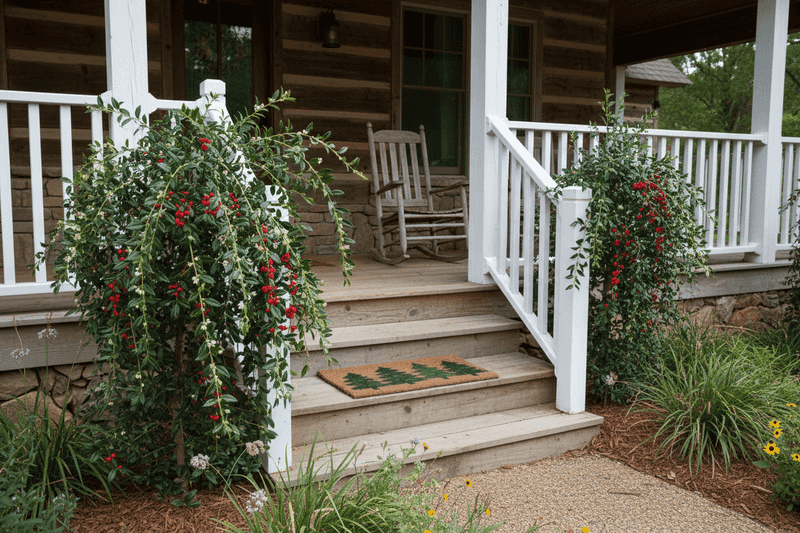
Pull all the details together and a clear picture forms. Weeping yaupon holly offers a graceful, drooping silhouette that satisfies much of the visual appeal people seek in a weeping willow.
It does this at a fraction of the mature size, which opens it up to planting spots that a willow would outgrow within a few years.
Its evergreen foliage keeps the yard from losing that cascading focal point in winter. Female plants add bright red berries that extend the tree’s ornamental value and attract birds during a season when other food sources are scarce.
The root system does not carry the aggressive reputation that makes willow placement so complicated near pavement and utilities.
Long-term water demands stay lower once the tree establishes, which matters in Florida’s warm, seasonally dry climate. The tree is native to the region in its straight species form, and ‘Pendula’ is a cultivated selection of that native species.
Supporting native-origin plants tends to benefit local ecosystems in small but meaningful ways.
A weeping willow offers dramatic scale and a sweeping presence that is genuinely hard to match. But for most residential lots, that drama comes with trade-offs in size, roots, and water that prove difficult to manage over time.
Weeping yaupon provides the graceful movement many homeowners are really after, in a form that fits comfortably within the boundaries of an actual yard.