This One Native Vine Can Turn An Ohio Fence Into A Pollinator Highway All Summer
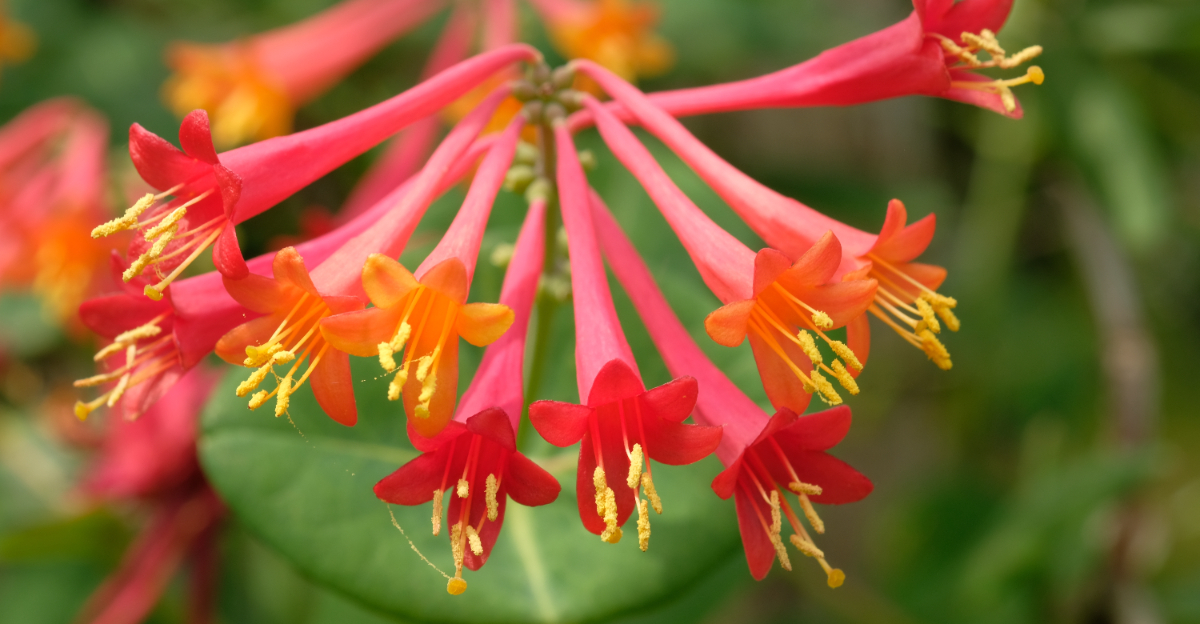
A fence is just a boundary until something grows on it. Most Ohio yards have at least one fence line sitting there doing nothing beyond marking a property edge.
That’s a missed opportunity. A single well-chosen native vine changes what a fence does entirely.
It becomes a corridor. A feeding station.
A place where hummingbirds work their way down the length of your yard and butterflies linger longer than they would anywhere else in the garden. Coral honeysuckle is the vine that makes that happen in Ohio.
Not an aggressive takeover like some climbers, just a steady, purposeful presence that produces tubular blooms from spring into summer. It keeps pollinators moving through your yard in numbers that a bare fence line never could.
Plant it alongside other natives and that boundary stops being wasted space altogether.
1. Meet Coral Honeysuckle, The Native Vine For Sunny Fences
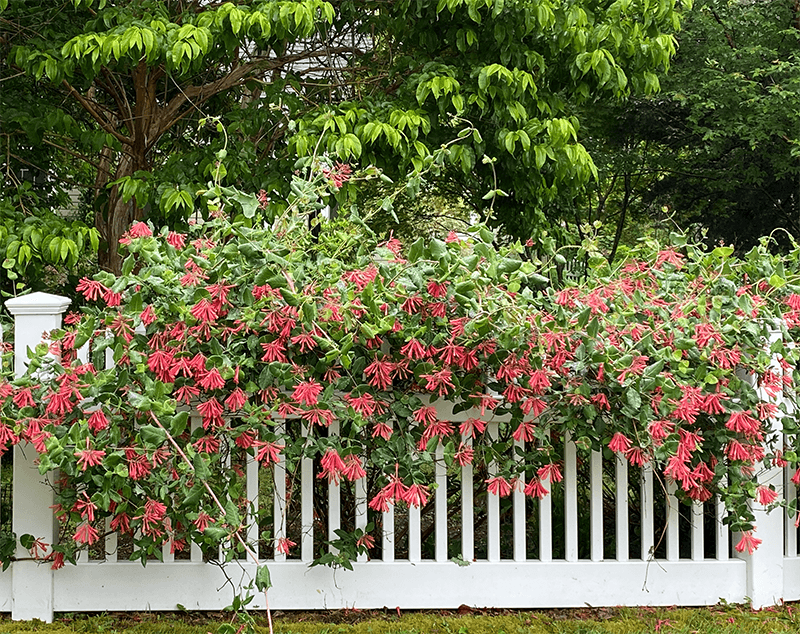
Not every vine with the word honeysuckle in its name is a friend to your garden. Coral honeysuckle, Lonicera sempervirens, is the one worth planting.
It is a true native to the eastern United States. It grows naturally in woodland edges, thickets, and open areas across much of the region, including many parts of this state.
You may also hear it called trumpet honeysuckle, which makes sense once you see the long, narrow blooms. What it is not, and this matters, is Japanese honeysuckle.
That species, Lonicera japonica, is invasive in Ohio and across much of the country. It spreads aggressively, smothers native plants, and should not be planted or encouraged anywhere in your yard.
Coral honeysuckle is a completely different story. It climbs, yes, but it does not strangle trees or bulldoze through a garden bed the way some vines can.
It still needs some attention and the right spot to perform well. Think of it as a native vine with good manners rather than a plant that takes care of itself completely without any guidance from you.
2. Its Trumpet-Shaped Flowers Bring In Hummingbirds First
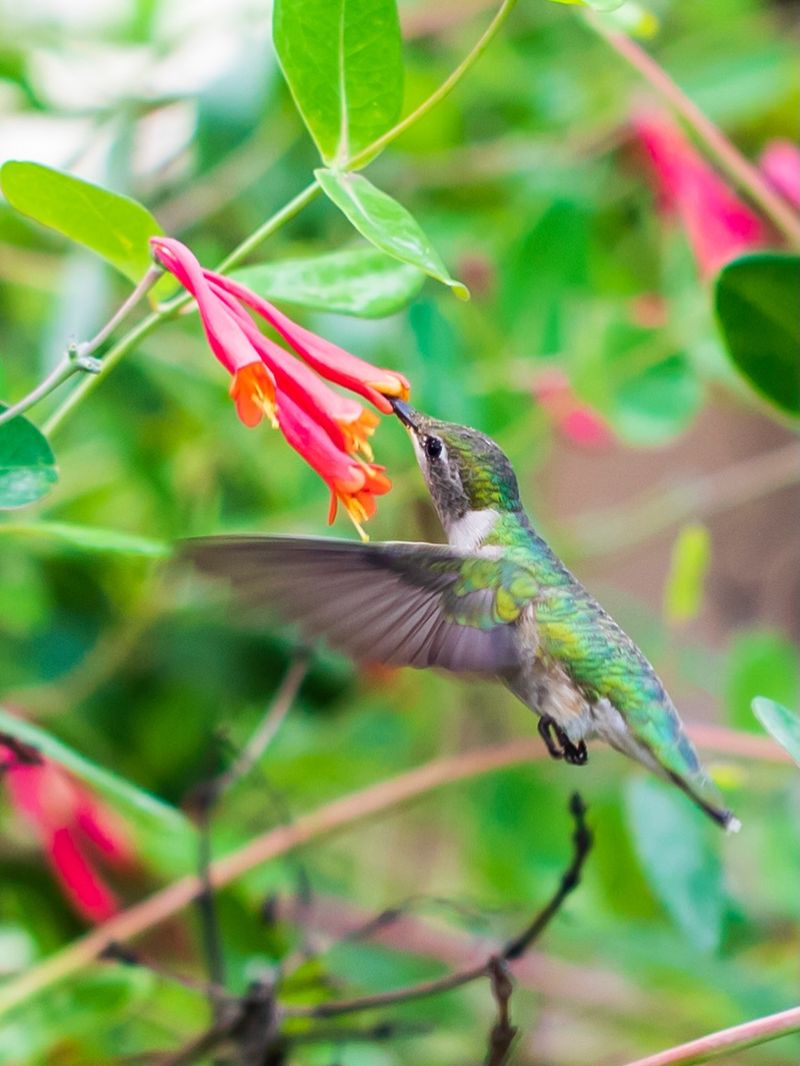
Hummingbirds and long tubular flowers are practically made for each other. The red, coral, and orange blooms of Lonicera sempervirens have exactly the kind of shape that ruby-throated hummingbirds prefer: narrow, deep, and rich with nectar.
A fence covered in these blooms during late spring can become a reliable feeding stop along a hummingbird’s daily route through your neighborhood.
Bloom timing typically begins in spring and can continue in smaller waves into summer, especially when conditions stay warm and reasonably moist. Do not expect a wall of flowers every single week from May through September.
Bloom flushes tend to be strongest early in the season, with lighter repeat blooming following if the vine is healthy and well-sited.
Ruby-throated hummingbirds are the species most likely to visit gardens across this region during the warm season. They are attracted by the flower color and shape before they even check the nectar level.
Planting coral honeysuckle near a window or porch gives you a front-row seat to those fast, hovering visits. Pairing it with other tubular natives like bee balm can extend hummingbird activity on your fence line well past the vine’s strongest bloom flush.
Your Ohio Garden Changes Every Week. Your Plan Should Too.
Gardening in Ohio changes quickly throughout the season. Every Friday you’ll receive a simple weekly plan showing exactly what to plant, prune, fertilize, harvest, and protect so you never miss the right timing.
3. Bees And Butterflies Use The Blooms Through Warm Weather
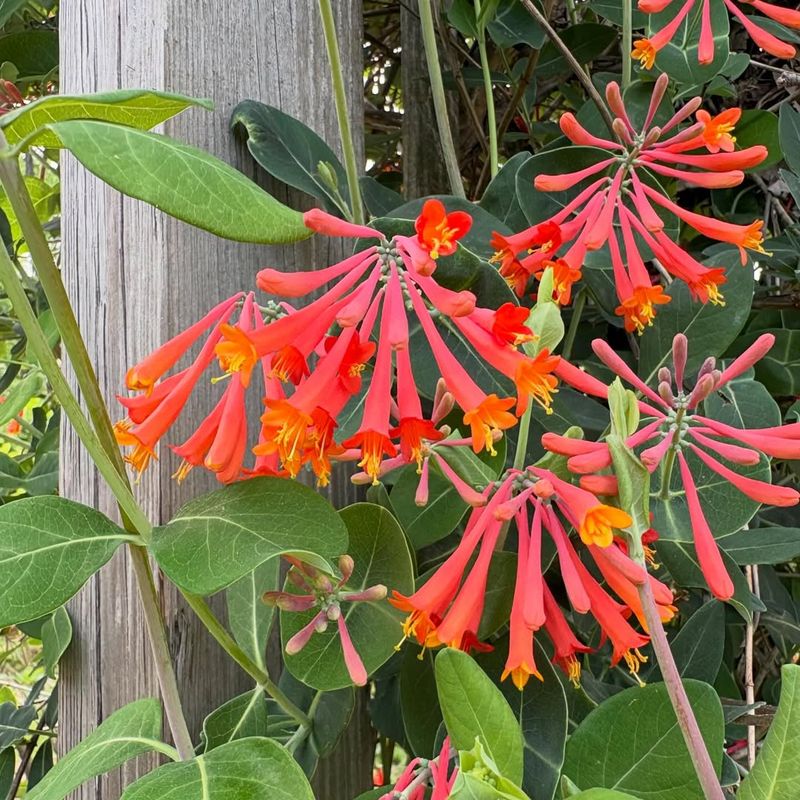
Hummingbirds get most of the attention, but they are not the only visitors showing up when coral honeysuckle is in bloom. Bees and butterflies are drawn to the flowers as well, especially during the warmer parts of the day when nectar production is strongest.
A fence lined with these blooms can act like a useful travel corridor for pollinators moving through a sunny yard.
Bumblebees and other long-tongued bees can reach the nectar in the tubular flowers more easily than short-tongued species. Swallowtail butterflies are among the butterflies most commonly seen working the blooms.
Smaller pollinators may land on the flowers without always reaching the nectar, but the activity around a blooming vine can be lively on a warm afternoon.
Here is the honest part: coral honeysuckle alone will not support every pollinator from spring through frost. Different pollinators need different flower shapes, bloom times, and plant types.
A fence vine is a great start, but it works best as one piece of a wider native planting. Pair it with flat-topped flowers like coneflower or mountain mint nearby.
That gives a much broader range of bees and butterflies something useful throughout the season.
4. A Sunny Fence Helps The Vine Flower More Heavily
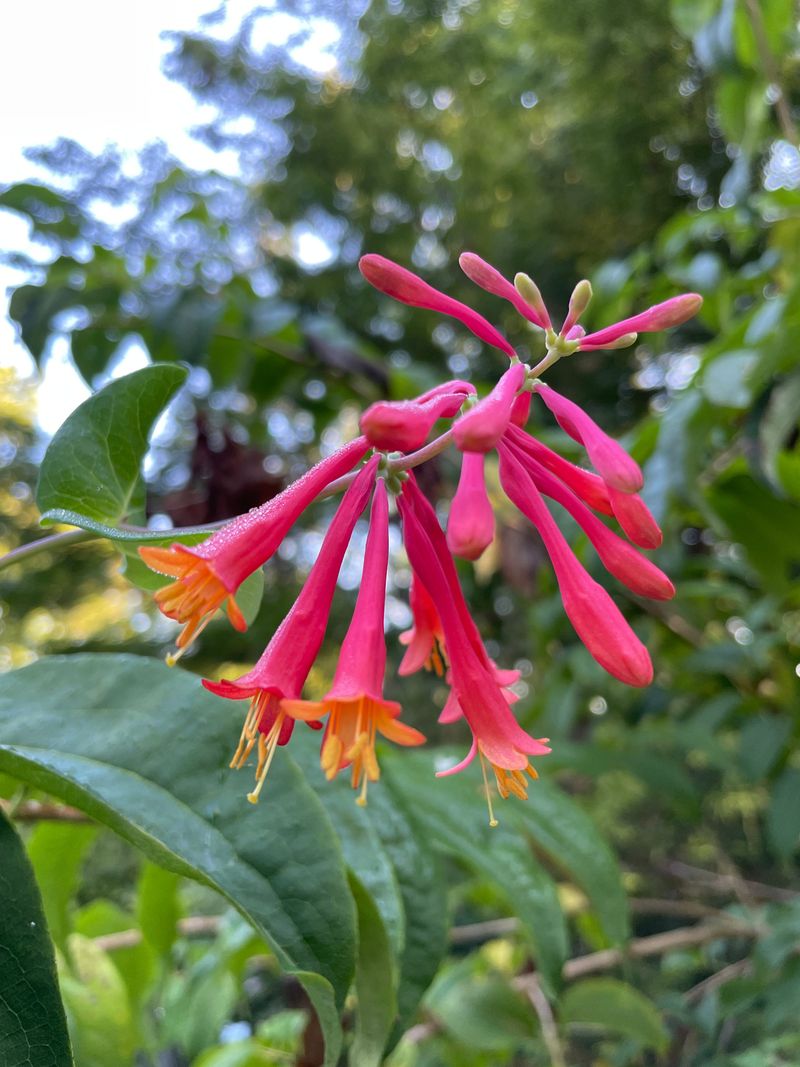
Sun matters more than almost any other factor when it comes to how well coral honeysuckle flowers. Full sun to partial sun is the sweet spot.
A fence that gets at least six hours of direct light most days will give the vine the energy it needs to push out strong bloom flushes. Shadier spots may still support the plant, but expect fewer flowers and a less dramatic display.
South-facing and west-facing fence lines tend to perform best in most home gardens. East-facing spots can also work well, especially in areas with hot summers, since morning sun with afternoon shade can actually prevent stress in drier years.
North-facing fences in shaded yards are the hardest sell for this vine and usually not worth the effort if good flowering is the goal.
Soil matters too. Coral honeysuckle does best in average, well-drained soil.
It does not want to sit in soggy ground through wet springs or after heavy rain. Slightly lean soil is often better than heavily amended, rich garden beds that push leafy growth over flowers.
If your fence line has clay-heavy soil, work in some coarse material at planting and make sure water can drain away from the root zone reasonably well.
5. Twining Stems Need A Trellis, Fence Wire, Or Support
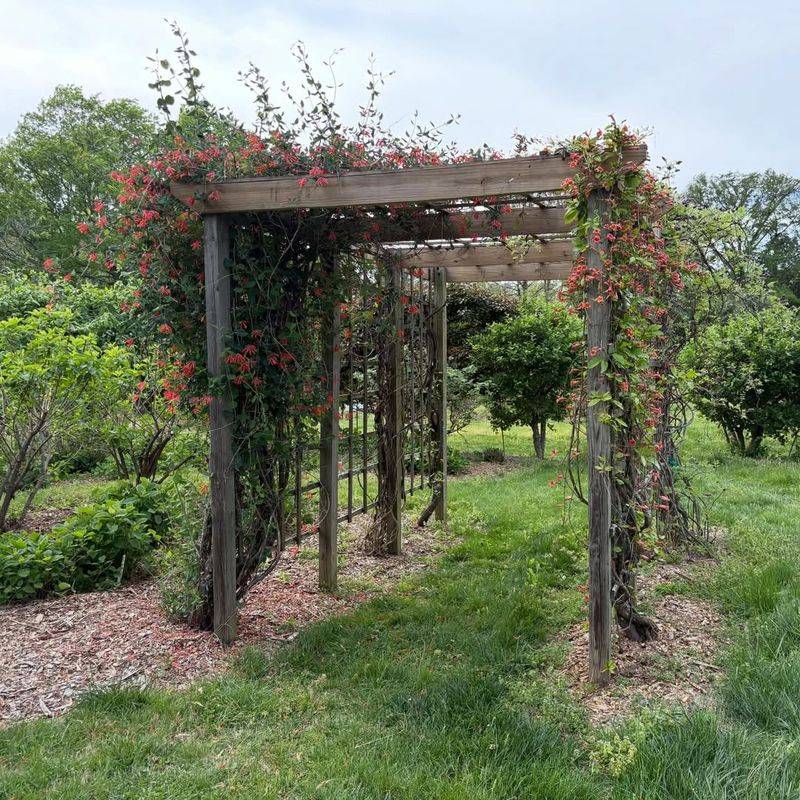
Coral honeysuckle climbs by twining its stems around whatever it can reach. That means it needs something it can actually wrap around: fence wire, trellis slats, a wooden arbor, or a sturdy post.
It will not grip a flat surface like ivy does, so planting it flat against a smooth wall or wood siding and expecting it to stick is going to lead to disappointment.
Chain-link fences work well because the vine can weave through and around the links naturally. Wire stretched between posts, wood lattice, and metal trellises are all solid options.
The key is giving the young stems something close enough to grab onto in the first season. A vine that cannot find support early may sprawl on the ground instead of climbing upward where you want it.
Keep coral honeysuckle away from gutters, wooden trim, and your home’s exterior. Stems growing behind siding could trap moisture or make maintenance difficult.
A freestanding fence or garden trellis set a few inches out from a structure gives the vine room to climb without causing problems down the line.
Training the young stems toward your support at planting makes the whole process much easier than trying to redirect a well-established vine later.
6. Red Berries Add Late-Season Value For Birds
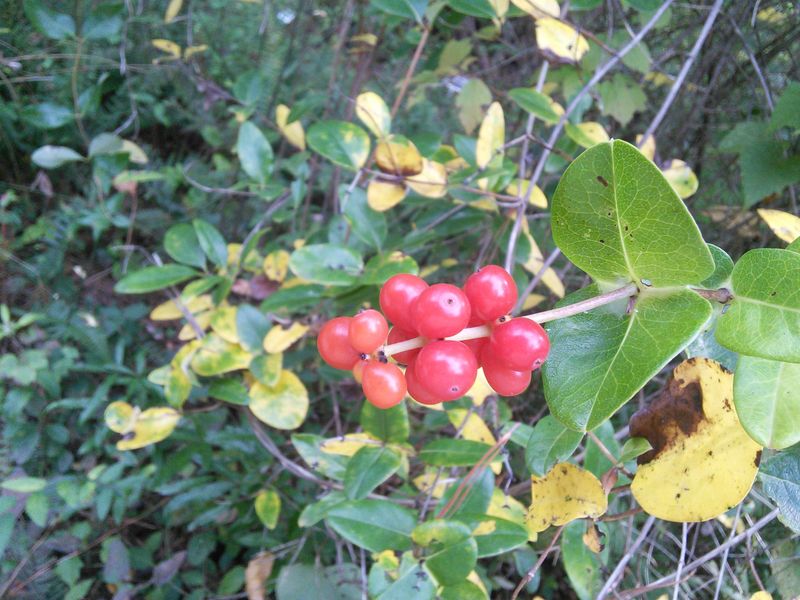
After the flowers fade, coral honeysuckle does not just disappear into the background. The vine can produce clusters of small, bright red berries that ripen in late summer and into fall.
These berries are a food source for birds, including species that move through gardens during fall migration. That adds another layer of wildlife value to an already useful plant.
American robins, thrushes, and other berry-eating birds may visit the vine once the fruit ripens. This late-season food source is one of the reasons native plant gardeners value coral honeysuckle beyond its bloom period.
A vine that supports hummingbirds in spring and migrating birds in fall earns its spot on a fence line twice over.
One firm caution: these berries are for wildlife, not for people. The berries of honeysuckle species can cause stomach upset if eaten, and sources vary on the level of concern.
Keep children and pets away from the berries to be safe. Do not treat them as edible fruit just because they look bright and appealing.
Mark the vine clearly if you garden with young children nearby, and treat the berry clusters as a wildlife feature rather than a harvest. The birds will appreciate having them left alone anyway.
7. Pruning Keeps The Vine Tidy Without Making It Aggressive
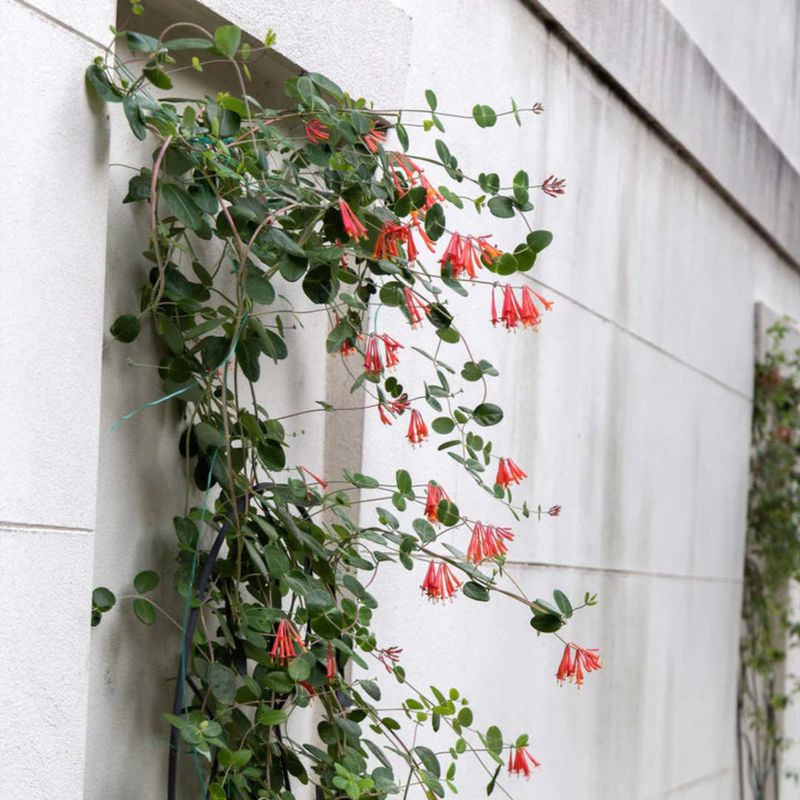
One of the selling points of coral honeysuckle over trumpet vine is that it tends to stay within reasonable bounds. It is not going to send runners under your patio or sprout from every crack in the sidewalk the way Campsis radicans can.
That said, it is still a vine, and a vine left completely unpruned for several seasons will eventually become a tangled, less productive version of itself.
Light annual pruning goes a long way. After the main spring bloom flush slows down, trim back any stems that have grown out of bounds or are heading somewhere you do not want them.
Thin out crowded interior growth to improve air circulation, which helps reduce fungal issues in humid summers. Remove any stems that are crossing awkwardly or pulling away from the support structure.
Avoid shearing the whole vine hard every year if your goal is flowers and berries. Heavy shearing removes the stems that would have bloomed and reduces berry production.
Think of pruning as gentle shaping rather than aggressive cutting. A once-over with hand pruners after the spring bloom and a light tidy-up in late summer is usually enough.
It keeps coral honeysuckle looking neat, flowering reasonably well, and behaving like the well-mannered native vine it is meant to be.
8. Pair It With Native Flowers To Keep The Highway Busy
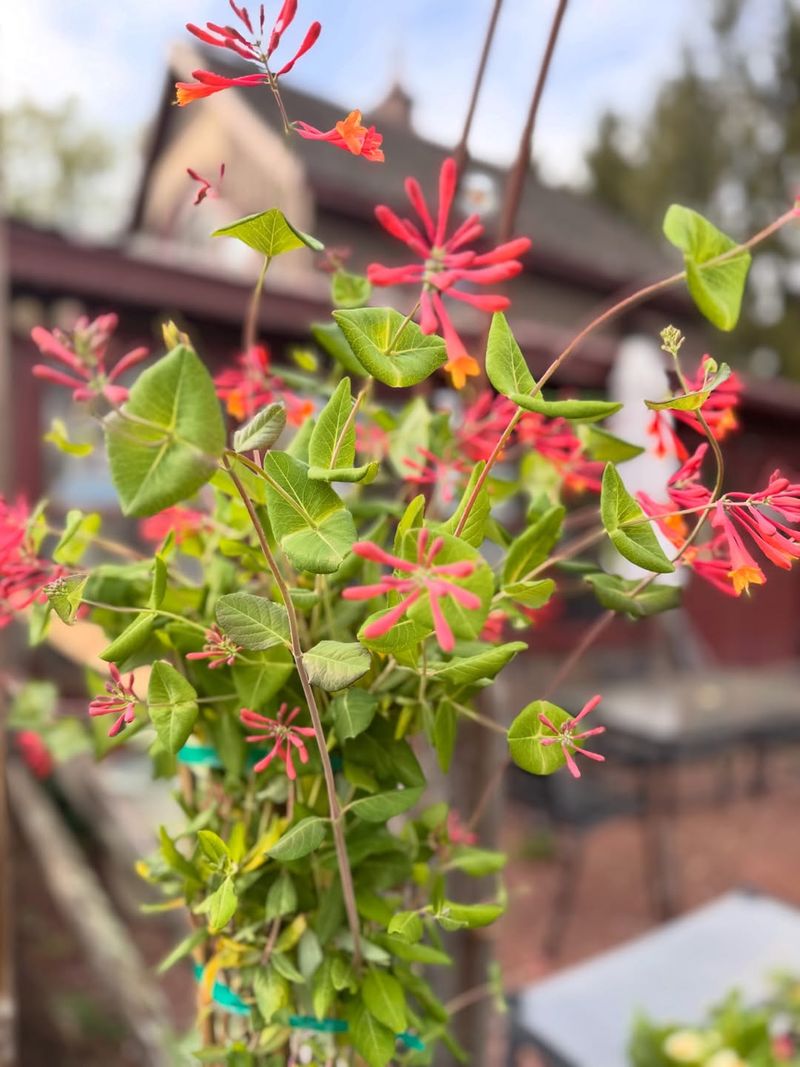
A single vine, no matter how good it is, cannot carry an entire pollinator garden on its own. Coral honeysuckle is most valuable when it anchors one end of a border that includes native flowers blooming at different points through the season.
That way, pollinators always have somewhere to stop, even during the weeks when the vine is between flushes.
Spring bloomers like native columbine can bridge the gap before the vine hits its stride. Bee balm and coreopsis overlap nicely with the vine’s peak bloom in early summer.
Coneflower and black-eyed Susan carry the mid-summer stretch. Blazing star, mountain mint, and Joe-Pye weed keep bees active through the hottest weeks.
Goldenrod and asters take over in fall when migrating insects need fuel most.
This kind of layered planting is what actually creates a pollinator highway along a fence line. The coral honeysuckle provides the vertical element, the hummingbird magnet, and the late-season berries.
The companion plants fill in the gaps, support a wider range of species, and keep the border interesting from the last frost all the way to the first hard freeze.
Together, they make a fence line that does real work for local wildlife through every part of the warm season.