This Oregon Garden Vine Looks Beautiful Near Front Doors But Has Been Quietly Spreading Into Wild Areas
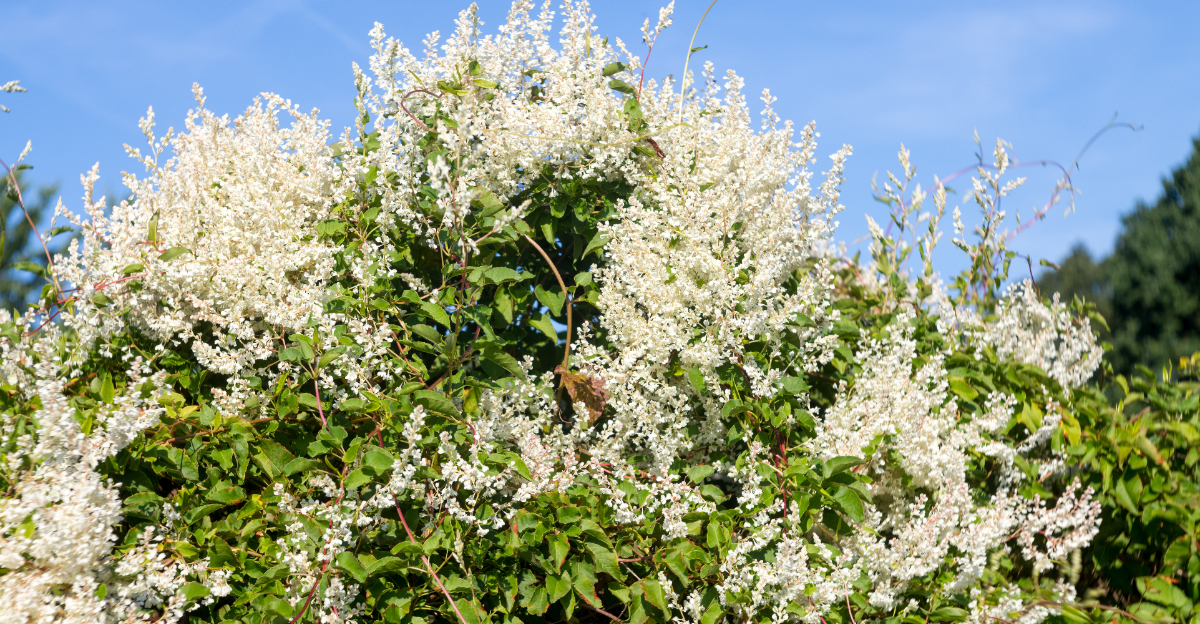
A curtain of white flowers around a front door can feel charming, especially when the vine grows quickly and softens a bare wall or fence. The trouble begins when that same enthusiasm carries beyond the property line.
Seeds and wandering stems can reach roadsides, streambanks, vacant lots, and woodland edges, where the plant may climb over shrubs and crowd out native growth.
Because it looks ornamental and behaves politely at first, many homeowners never realize it has escaped until dense tangles appear nearby.
Its rapid spread also makes cleanup harder than simply cutting back what is visible. Pieces left behind can keep the problem going, while mature growth may smother the plants beneath it.
That beautiful entryway display may be connected to a much larger ecological headache. Understanding how this vine travels, why wild areas struggle to contain it, and what to plant instead can help stop the spread.
1. The Pretty White Vine That Never Knows When To Stop
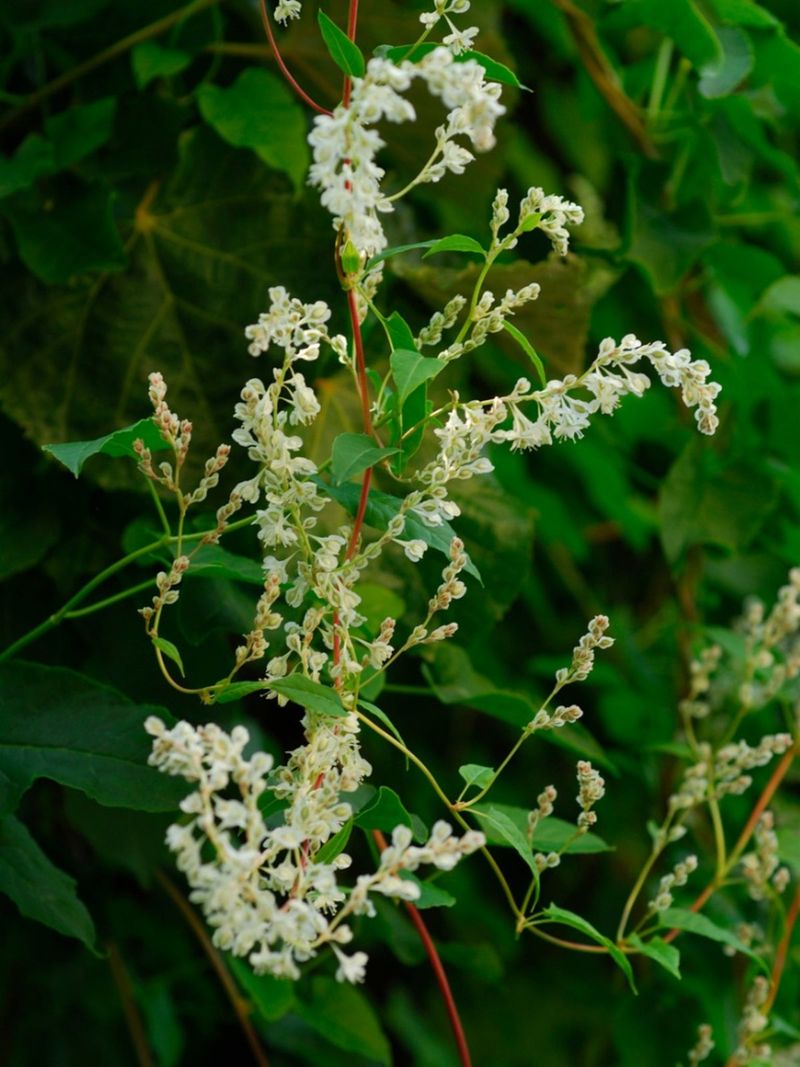
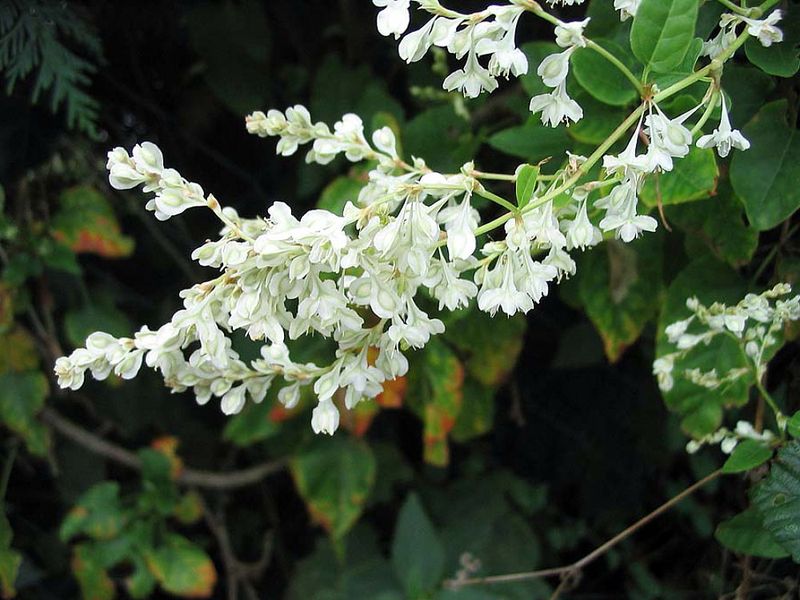
Few plants can match the sheer drama of silver lace vine in full bloom. When late Oregon summer rolls around, this vine transforms into a waterfall of tiny, frothy white flowers that cover every inch of its stems.
From a distance, it almost looks like fresh snow settled gently over your fence or trellis.
What makes it so eye-catching is the sheer volume of flowers it produces. Each cluster is small on its own, but the vine produces thousands of them at once.
The effect is striking, almost theatrical, and it is easy to understand why so many gardeners fall in love with it at first sight.
But here is the part that does not make it into the garden catalog descriptions. Silver lace vine does not stop growing once it looks good.
It keeps pushing outward, upward, and sideways without any real pause. It can swallow a small shrub in a single season if left unchecked.
Native to central Asia, this vine was brought to the United States as an ornamental plant. Gardeners loved how quickly it could cover an ugly wall or bare fence.
That same rapid growth is exactly what makes it so difficult to manage once it gets comfortable in your yard.
2. Why Silver Lace Vine Loves A Front Door Trellis
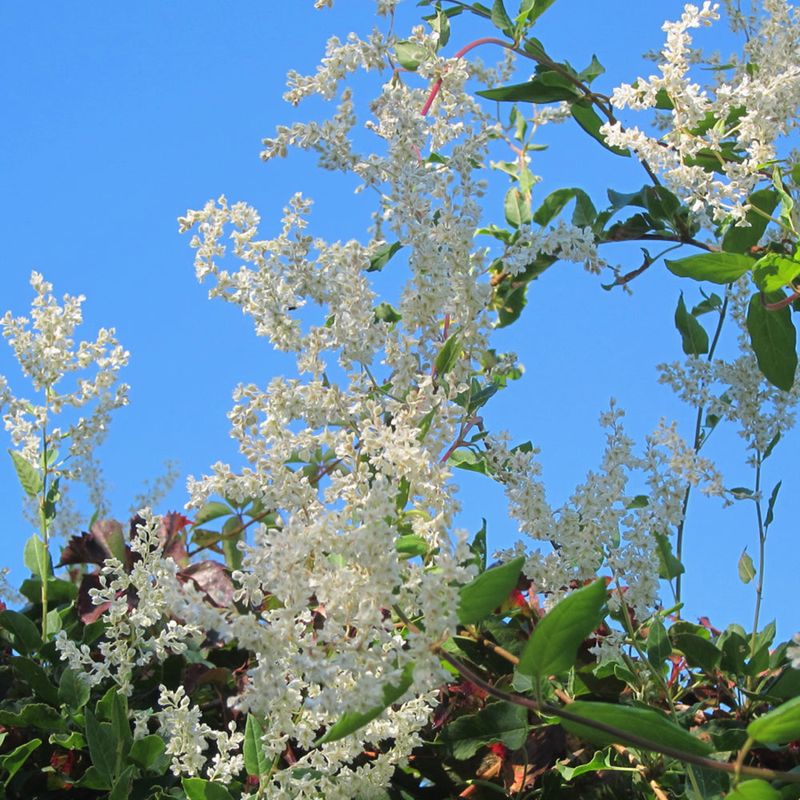
There is something undeniably welcoming about a vine-covered trellis next to a front door. It gives a home a cozy, cottage-like charm that is hard to replicate with any other plant.
Silver lace vine delivers that look faster than almost anything else you can buy at a nursery.
The vine clings and climbs with impressive determination. Give it a trellis, and it will fill every gap within weeks.
By midsummer, the structure disappears entirely beneath a thick curtain of green leaves and, eventually, those signature white flower clusters that make neighbors stop and stare.
Oregon homeowners often choose it because of how well it handles the rainy winters and warm summers here. It is tough, adaptable, and not particularly fussy about soil quality.
Your Oregon Garden Changes Every Week. Your Plan Should Too.
Gardening in Oregon changes quickly throughout the season. Every Friday you’ll receive a simple weekly plan showing exactly what to plant, prune, fertilize, harvest, and protect so you never miss the right timing.
Those traits make it feel like a low-maintenance dream for busy households.
The tricky part is that trellises near front doors are rarely far from natural areas, sidewalk edges, or neighboring yards. Once the vine reaches the edge of its trellis, it starts looking for the next surface to grab onto.
That wandering habit is what begins the slow process of it spreading beyond where it was ever intended to grow.
3. Fast Growth Turning Charming Into Chaotic
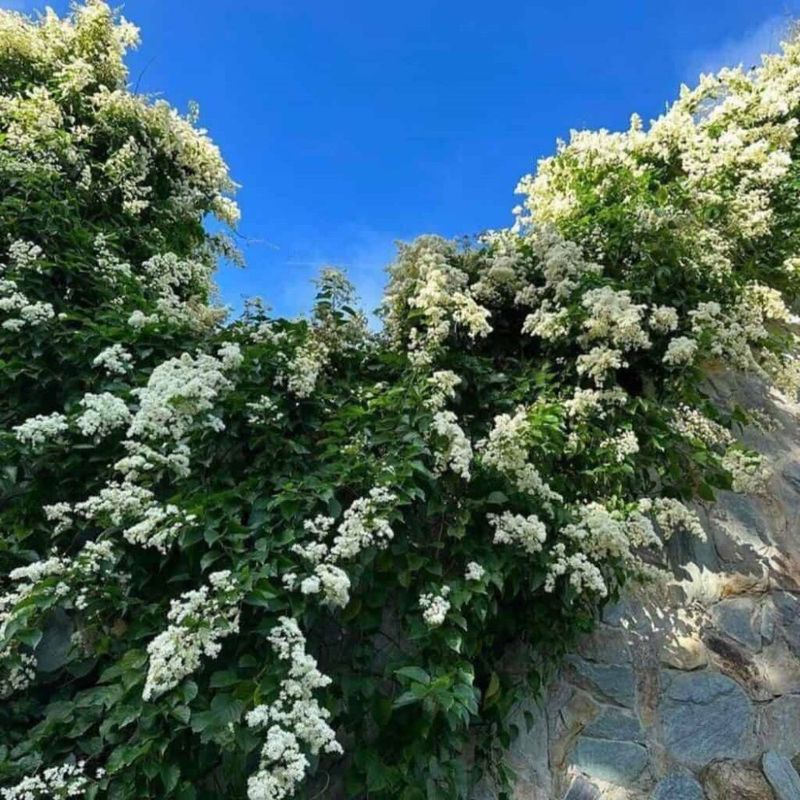
Silver lace vine can grow up to 15 feet in a single growing season. Read that again, because it is not a typo.
Fifteen feet in one year is an extraordinary rate, even among fast-growing vines. Most gardeners who plant it have no idea what they are signing up for until the second summer arrives.
At first, the speed feels like a bonus. You get quick coverage, instant privacy, and those gorgeous flowers without waiting years for results.
But fast growth comes with a catch. The vine does not slow down once it reaches the top of your trellis or fence.
It keeps going, reaching for anything nearby.
Gutters, window frames, roof edges, and nearby trees all become fair targets. Homeowners have reported finding the vine growing into their attic vents or wrapping tightly around downspouts.
What started as a charming garden feature can become a structural headache in just a couple of seasons.
Managing this kind of growth requires serious commitment. You need to trim it back regularly, not just once a year.
Without consistent attention, the vine quickly shifts from a decorative accent to a chaotic tangle that takes over more space than you ever planned to give it.
4. Fences And Arbors Becoming Its Personal Playground
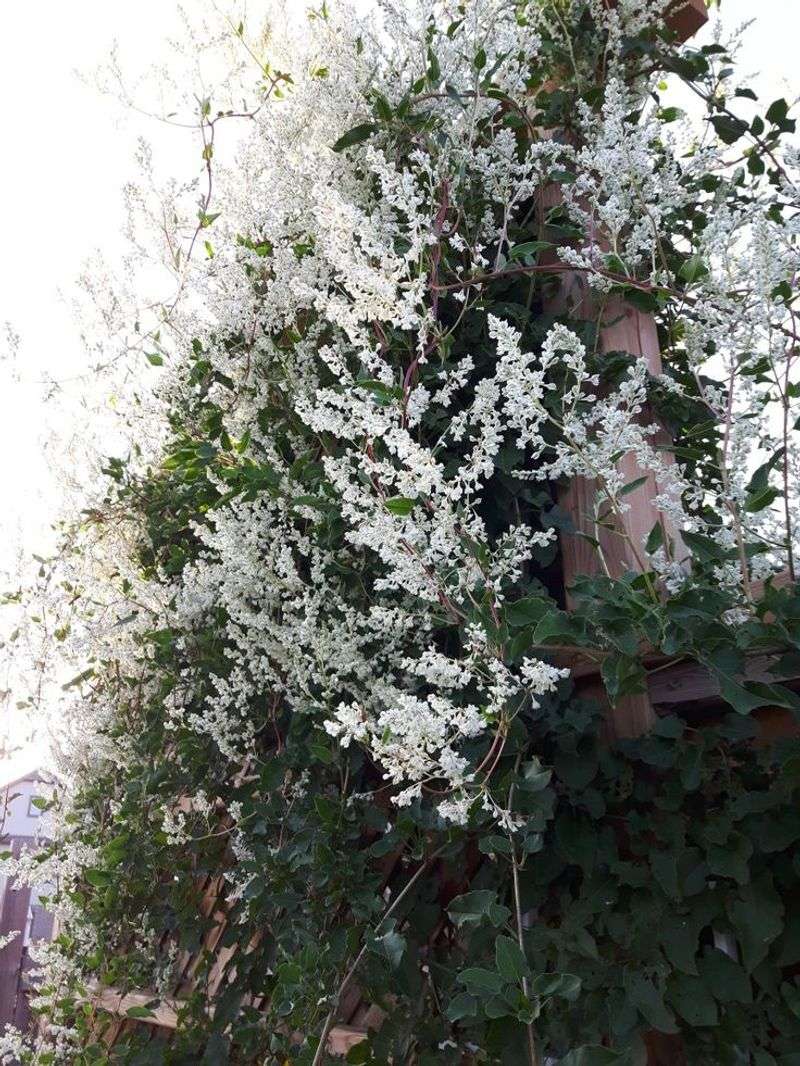
Ask any gardener who has grown silver lace vine for a few years, and they will probably tell you the same thing. The vine does not just use a fence or arbor as support.
It treats the structure like its own personal kingdom, and it rules with enthusiasm.
Fences are especially vulnerable. The vine sends out long, flexible stems that weave through gaps, wrap around posts, and layer themselves so thickly that the fence itself becomes invisible.
Over time, the added weight can put real strain on older wooden structures, causing them to lean or warp under the pressure.
Arbors and garden archways face a similar fate. What starts as a pretty vine-draped arch can become a dense, heavy tunnel of growth that blocks light and airflow.
Plants growing nearby start to suffer because the vine shades them out and competes aggressively for water and nutrients in the soil.
The vine is also surprisingly strong. Its woody stems thicken over time, and older plants can be genuinely difficult to remove.
The root system goes deep, and even after cutting the stems back, new growth often sprouts from the base within weeks. Fences and arbors that hosted this vine for several years may need repairs once the plant is finally removed.
5. Tiny Flowers Hiding One Seriously Pushy Vine
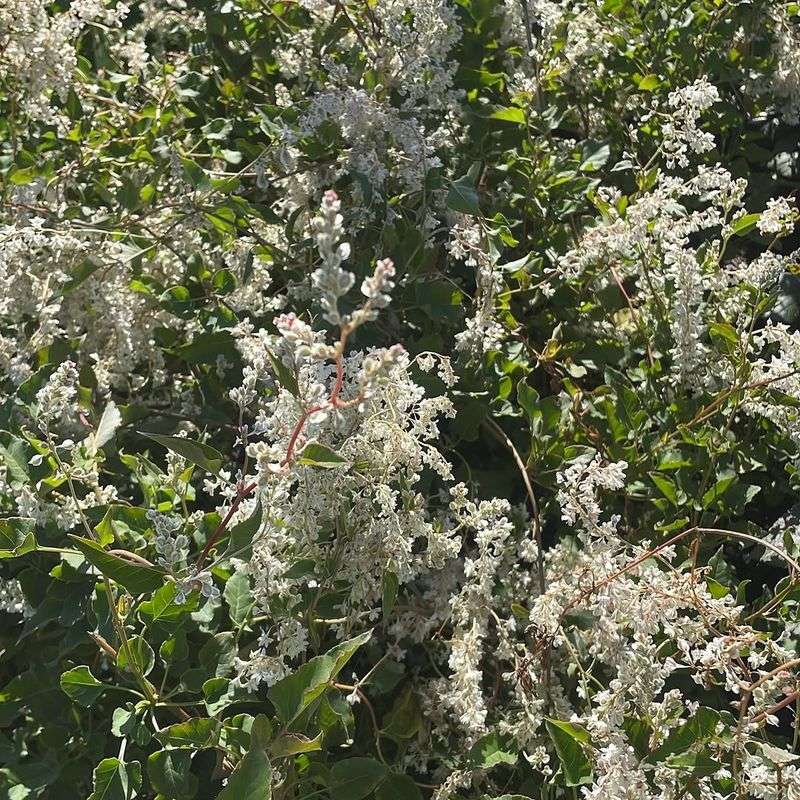
At first glance, the flowers of silver lace vine seem almost delicate. They are tiny, creamy white, and arranged in soft, frothy clusters that flutter in the breeze.
Bees and butterflies visit them regularly, which makes the vine seem like a helpful addition to any pollinator garden.
That gentle floral display is a little misleading, though. Behind those dainty blooms is one of the most aggressively growing vines you can plant in a residential yard.
The flowers are just the pretty face of a plant that is constantly working to expand its territory in every direction it can reach.
Each flower has the potential to become a seed. And silver lace vine produces an enormous number of seeds every single year.
The seeds are small and light, designed to travel easily on the wind. A single mature plant can release thousands of seeds in one season, scattering them across neighboring yards, roadsides, and natural areas nearby.
Wildlife also helps with seed dispersal. Birds eat the seeds and carry them far beyond the original garden.
What grows in your yard can end up sprouting along a creek bank or forest edge miles away.
The flowers that look so harmless are actually the starting point for a much larger spreading problem that extends well past your property line.
6. Garden Escapees Showing Up Beyond The Backyard
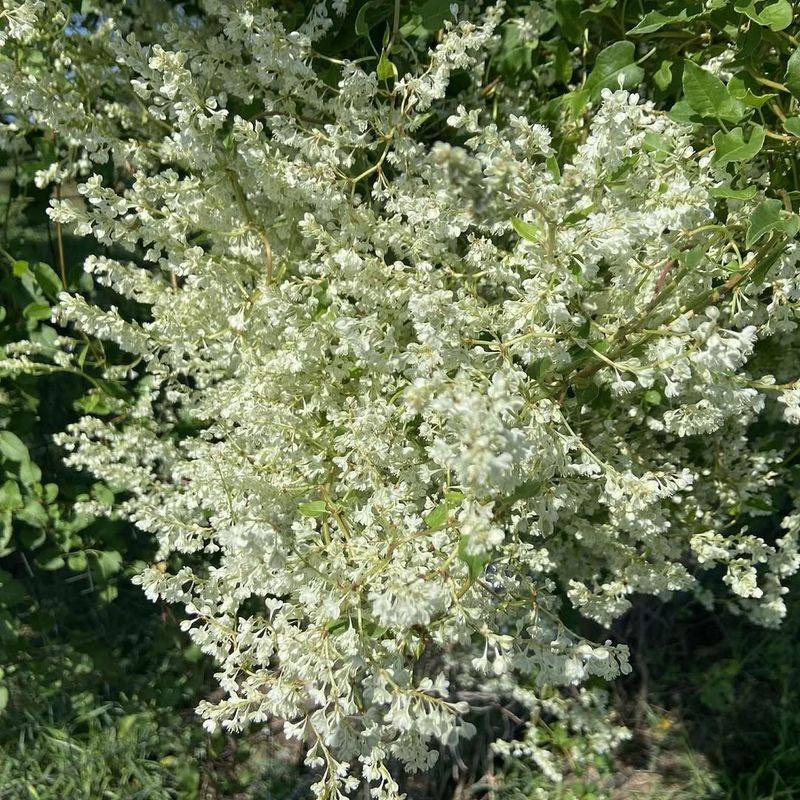
Ecologists in the Pacific Northwest have been keeping an eye on silver lace vine for years.
Reports of it showing up outside of garden settings have been increasing steadily, and that trend is raising real concern among conservationists who work to protect native plant communities.
The vine has been spotted growing along roadsides, creek banks, and the edges of natural areas throughout the region. These are not places where anyone planted it intentionally.
The seeds arrived on their own, carried by wind or wildlife, and found conditions that suited them just fine.
Once silver lace vine establishes itself in a wild area, it competes directly with native plants for space and sunlight. Native species that local wildlife depends on for food and shelter can get crowded out.
The ecological balance of a natural area can shift noticeably when an aggressive non-native vine moves in and starts spreading.
Oregon has a rich network of natural habitats that depend on native plants to function properly.
Meadows, riparian zones, and forest edges are particularly vulnerable to invasion by fast-growing, seed-prolific plants like this one.
Every garden that grows silver lace vine near open land becomes a potential launching point for the next wave of seeds heading into those protected spaces.
7. Nearby Shrubs Getting Buried Under All That Growth
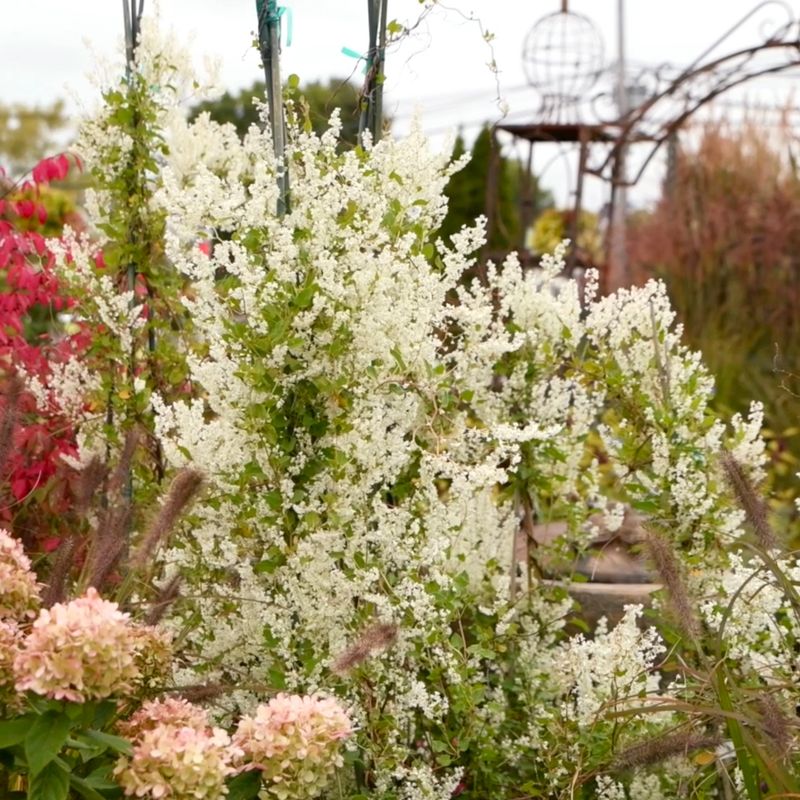
One of the most damaging things silver lace vine does in a garden setting is what happens to the plants growing around it.
Shrubs, small trees, and perennials that share the same bed often end up on the losing end of a very one-sided competition.
The vine grows so quickly and so thickly that it can cover a medium-sized shrub completely within a single growing season. Once a plant is buried under that dense canopy of leaves, it loses access to sunlight.
Without enough light, even healthy, established plants begin to weaken over time.
Gardeners sometimes do not notice the damage until it is too late. The vine looks lush and full, so the yard still appears healthy from a distance.
But underneath all that green growth, beloved shrubs may be struggling badly. By the time the problem becomes obvious, significant harm has already been done.
Removing the vine from around an affected shrub is also tricky. The stems weave tightly through branches, and pulling them free can break or damage the shrub further.
Patience and careful work are needed to untangle the mess without causing more harm. Prevention is genuinely easier than the cleanup, which is why catching the spread early makes such a big difference in protecting the rest of your garden.
8. Why Cutting It Back Barely Slows It Down
Grab your pruning shears and prepare for a workout. Silver lace vine responds to cutting the way some people respond to a challenge.
It comes back harder, faster, and often bushier than it was before. Trimming it once a year is not enough to keep it under real control.
The plant stores energy in its thick root system, which runs deep into the soil. Even after a major cutback, those roots have plenty of reserves to fuel rapid regrowth.
New shoots can appear at the base within days of a hard pruning, especially during warm weather when the vine is actively growing.
Older, more established plants are especially resilient. The woody crown at the base becomes tougher over time, and the root system spreads outward as the plant matures.
Gardeners who have been managing silver lace vine for several years often describe it as a full-time commitment rather than a seasonal chore.
Consistent trimming throughout the growing season is more effective than one big cutback in spring or fall. Keeping new growth short limits the vine’s ability to produce seeds and reduces the energy it can send back to the roots.
It takes real dedication, but staying on top of it regularly is the only way to keep this vine from completely running the show in your yard.
9. Seeds And Stems Helping It Travel Farther
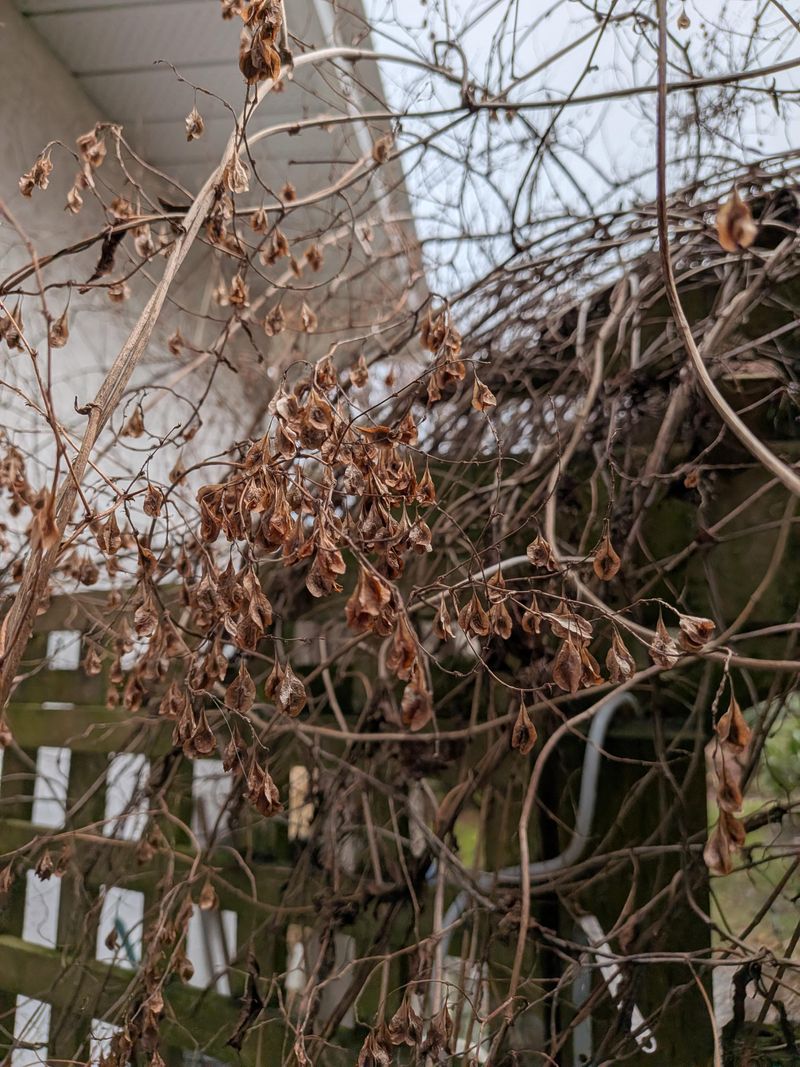
Silver lace vine has two very effective strategies for spreading, and it uses both of them at the same time. The first is through seeds, which are lightweight, winged, and perfectly designed to catch a breeze and travel long distances with ease.
The second strategy is vegetative spread. Stems that touch the ground can root at the nodes, creating new plants without any seeds involved at all.
A single stem draped over a fence and touching the soil on the other side can start a brand-new plant in a matter of weeks.
Together, these two methods make the vine remarkably good at expanding its range. Seeds handle the long-distance travel, landing in spots far from the original plant.
Stem rooting handles the short-range spread, quietly filling in gaps along fences, slopes, and garden edges without drawing much attention.
Waterways also play a role. Seeds that land near a stream or drainage ditch can be carried downstream and deposited in new locations.
This is one reason why silver lace vine has been found growing along creek banks and riparian zones in areas where no one ever planted it.
Knowing how far and how fast it can travel helps explain why gardeners in Oregon are being encouraged to consider native alternatives that offer beauty without the ecological baggage that comes with this particular vine.