What Experienced Arizona Gardeners Do In June So Monsoon Rains Actually Help Their Plants
Arizona gardeners who have been through a few monsoon seasons develop a specific look in June.
Not panic. Not urgency exactly. Something closer to focused calm. They are moving through their yards with a plan, making adjustments that will not make sense to anyone watching from the outside.
The neighbors with newer gardens are still watering on their May schedule. Still running the same drip timer. Still waiting for the rain to arrive before they start thinking about what the rain might do.
Do you know what the first monsoon storm actually reveals about a yard that was not prepared for it?
It reveals every problem at once. The basin that did not hold water. The emitter that was clogged for weeks. The young tree that had nothing to hold it when the wind arrived. The low spot that became a problem nobody predicted.
Experienced Arizona gardeners do not discover these things during the storm. They address them in June, quietly, before the sky changes.
The preparation window is shorter than it looks.
1. Check Drip Lines Before Storms Arrive
A clogged emitter in June is not a minor inconvenience. In Arizona’s pre-monsoon heat, a blocked drip line means a plant spending the most stressful weeks of the year without reliable water.
That is a problem worth finding before the storm season makes everything harder to fix.
Run your system during daylight and walk every line. Watch what actually happens rather than assuming the system is working.
Look for emitters that are not dripping, fittings that have separated from the tubing, or spots where water is pooling well away from the root zone.
Mineral buildup from Arizona’s hard water is one of the most common causes of blocked emitters. Many can be cleared with a thirty-minute soak in white vinegar.
If an emitter cannot be cleared, replace it. They cost very little and the swap takes about two minutes.
Check pressure while you are at it. Low pressure leaves plants underwatered. High pressure blows fittings off the line at the worst possible moment. Pressure regulators are inexpensive and straightforward to install.
UV exposure degrades drip tubing faster in Arizona than in nearly any other climate. Run your hand along exposed sections and feel for brittleness or visible cracking.
Replace those sections now, before monsoon humidity and soggy soil make repairs significantly messier.
A clean, fully functional drip system going into storm season means every rain event becomes a bonus on top of consistent hydration.
A clogged emitter discovered in August already did its damage in June. Check now.
2. Shape Basins To Catch Rain
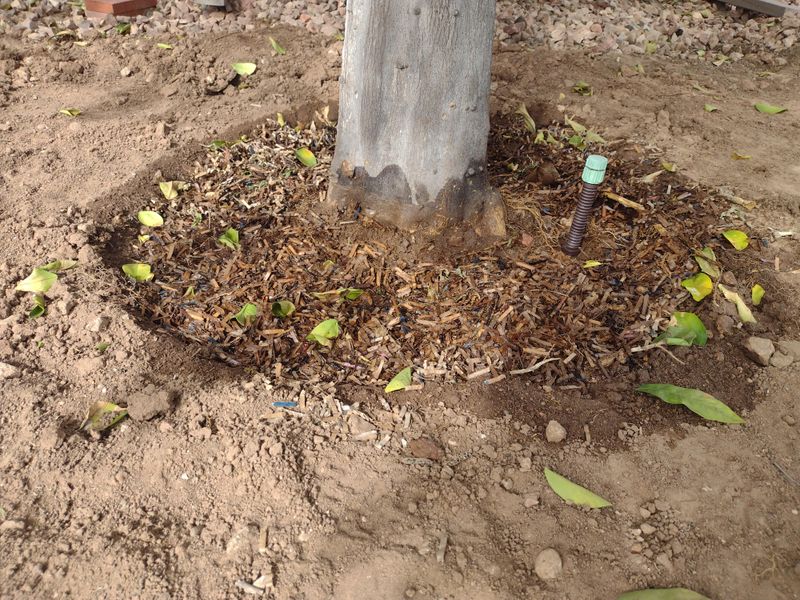
Arizona monsoon rain does not arrive gently. It comes fast, hits hard, and moves across the surface quickly when the soil is not shaped to hold it.
That is why June is the right time to build or refresh the basins around your trees, shrubs, and garden beds.
A watering basin is a low ring of soil built around a plant that creates a bowl. When rain falls, the bowl captures water and holds it long enough to soak down toward the roots rather than rushing straight across the yard.
Your Arizona Garden Changes Every Week. Your Plan Should Too.
Gardening in Arizona changes quickly throughout the season. Every Friday you’ll receive a simple weekly plan showing exactly what to plant, prune, fertilize, harvest, and protect so you never miss the right timing.
Without a basin, even a substantial monsoon storm can leave root zones surprisingly dry while water collects in entirely wrong places.
For established trees, the basin should extend out to the drip line, the outer edge of the canopy. That is where feeder roots are actively absorbing water. Building the basin close to the trunk looks tidy but misses the roots that actually matter.
Do not pile soil against the trunk. Moisture trapped against bark over a monsoon season creates problems that take much longer to address than an afternoon of shaping soil.
Loosening the soil lightly inside the basin before the rains arrive helps water move in faster when storms hit. Use a hand fork and work just a few inches down to avoid disturbing roots.
Shaped basins cost nothing and take twenty minutes. The first storm shows exactly how well they work.
Have you checked yours recently, or is it still the shape the hose left it in last October?
3. Mulch Before The Soil Bakes
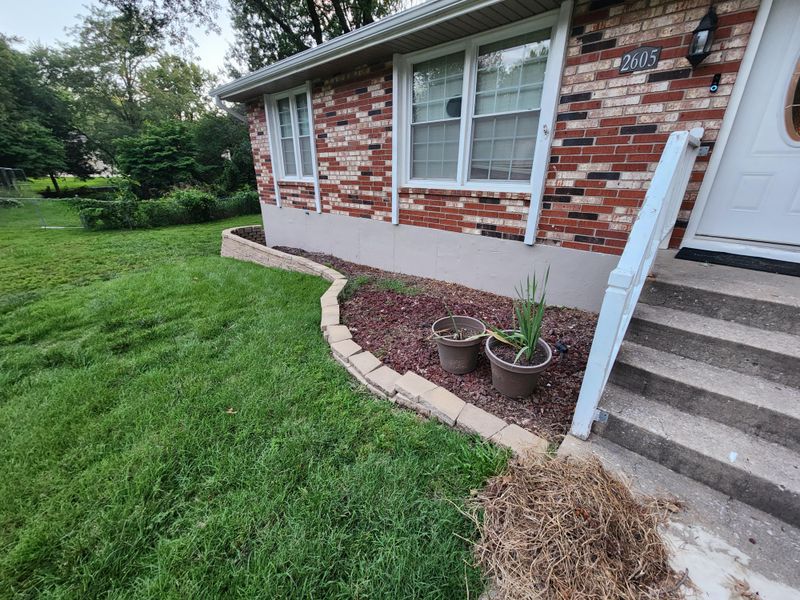
Soil surface temperatures in Phoenix and Tucson can exceed 150 degrees Fahrenheit in June. That number is not just remarkable.
It is actively working against your garden. Heat at that level slows root activity, reduces the soil’s ability to absorb water, and makes plants significantly harder to support through any kind of stress.
A three to four inch layer of organic mulch is the most practical response available to you right now. Wood chips or shredded bark applied over the root zone insulate the soil, keep temperatures measurably lower, and break down gradually to improve soil structure over time.
Apply it in early to mid-June before the worst heat arrives. Pull the mulch a few inches back from plant stems and tree trunks to maintain airflow.
Once monsoon humidity builds, moisture trapped against woody stems creates conditions you do not want to manage on top of everything else the season brings.
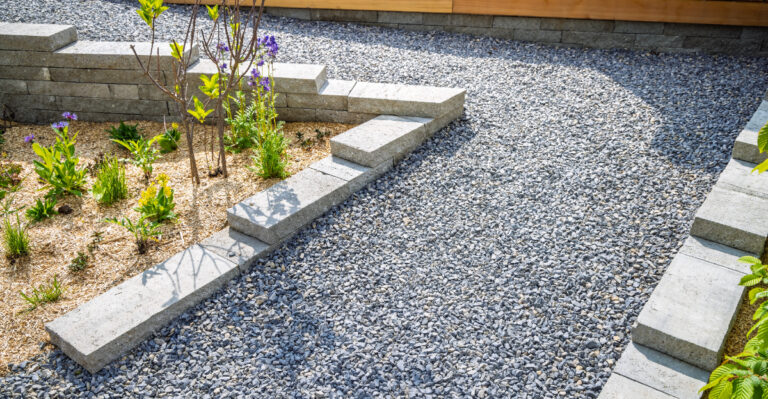
Gravel and rock mulch is common across Arizona landscapes. It also absorbs heat during the day and radiates it back upward overnight, making the soil hotter rather than cooler.
For beds with vegetables or flowering plants, organic mulch is the more effective choice.
Organic mulch also supports soil microbes that become more active once monsoon moisture arrives. The soil is better prepared to use that rain when the biology underneath is already healthy.
Mulch down in June, and the monsoon becomes something the soil is ready for rather than something it is trying to survive.
4. Adjust Watering When Humidity Rises
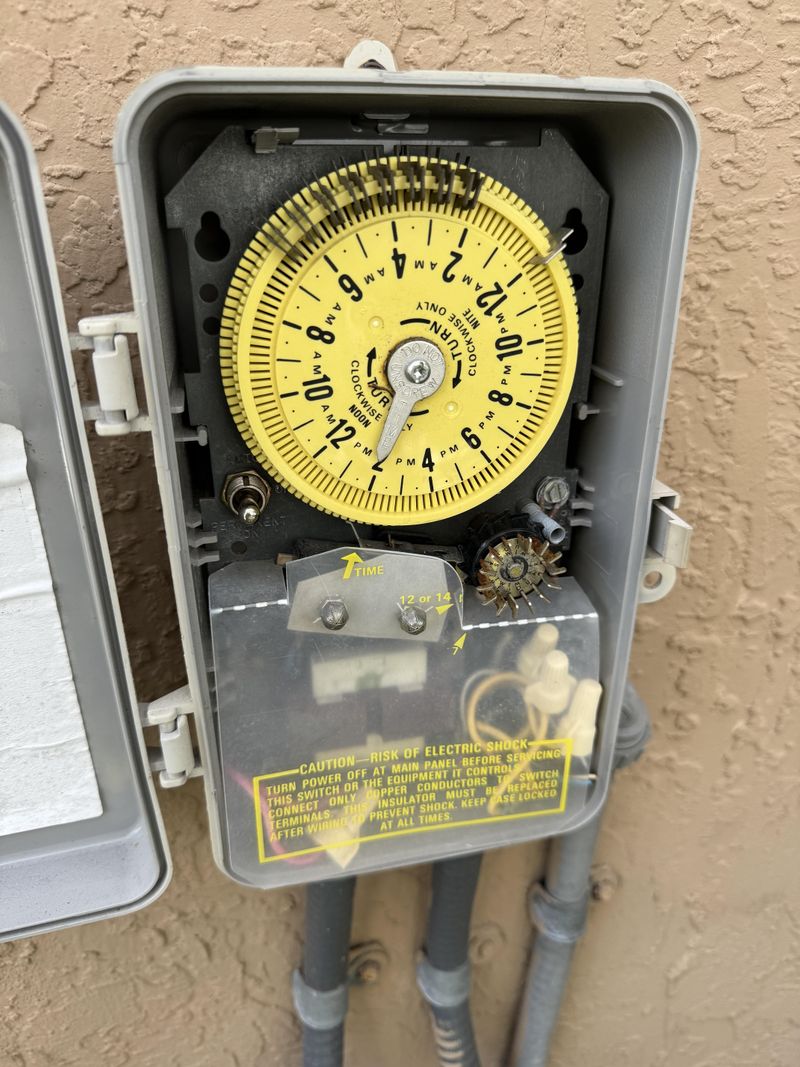
Running the same irrigation schedule from May straight through July is one of the most common ways Arizona gardeners accidentally stress their plants during monsoon season.
The calendar does not know what the weather is doing. Your timer does not either.
Humidity changes how much water plants actually lose. In dry conditions, transpiration runs high and plants need frequent supplemental irrigation to stay ahead of the deficit.
Once relative humidity climbs above fifty percent, which happens regularly as monsoon season builds, that water loss slows considerably. Adding the same volume of water the plant needed in dry conditions means you are now adding too much.
Overwatering during monsoon season invites root rot, particularly in desert-adapted plants like agave, palo verde, and mesquite that are built specifically for dry cycles.
Watch for yellowing leaves or soft, mushy tissue near the base of stems. Those are signs the soil is staying wet longer than the roots can manage.
Evapotranspiration-based irrigation controllers adjust run times based on actual weather conditions rather than a fixed schedule.
They reduce automatically when humidity rises or after a rain event. If you have a basic timer, the manual version of this is checking it after every significant storm and reducing run time accordingly.
Your plants do not need the same drink in July that they needed in May. Paying attention to that difference costs nothing and protects a lot.
The irrigation timer is not smart. In monsoon season, you have to be.
5. Watch Flow Paths During First Storms
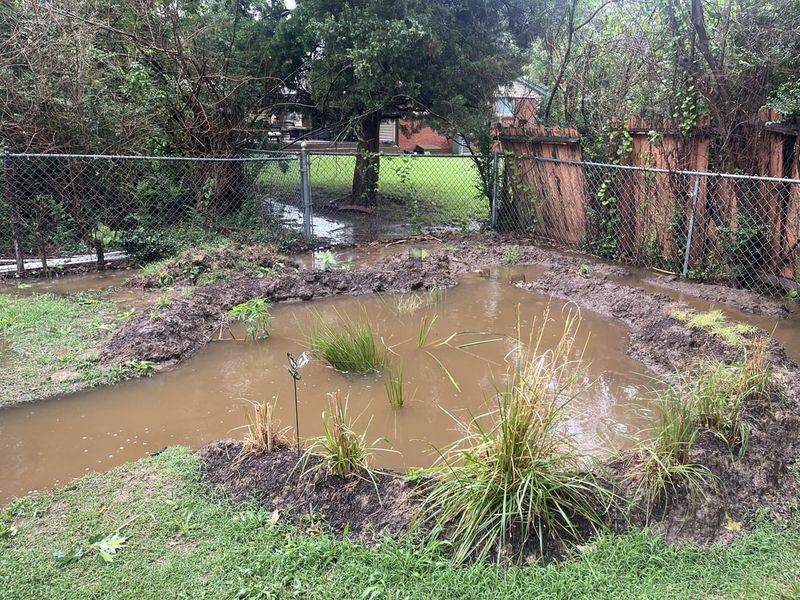
Almost every experienced Arizona gardener has been surprised by the first monsoon storm of the season. Not by the rain itself. By what the rain reveals.
Water does not always behave the way a dry garden looks like it should.
Flat areas turn out to have subtle slopes. Basins that seemed well-shaped send water in unexpected directions. A drainage path that worked fine last year developed a new obstacle over winter.
The only way to know what your yard actually does with fast-moving water is to watch it happen.
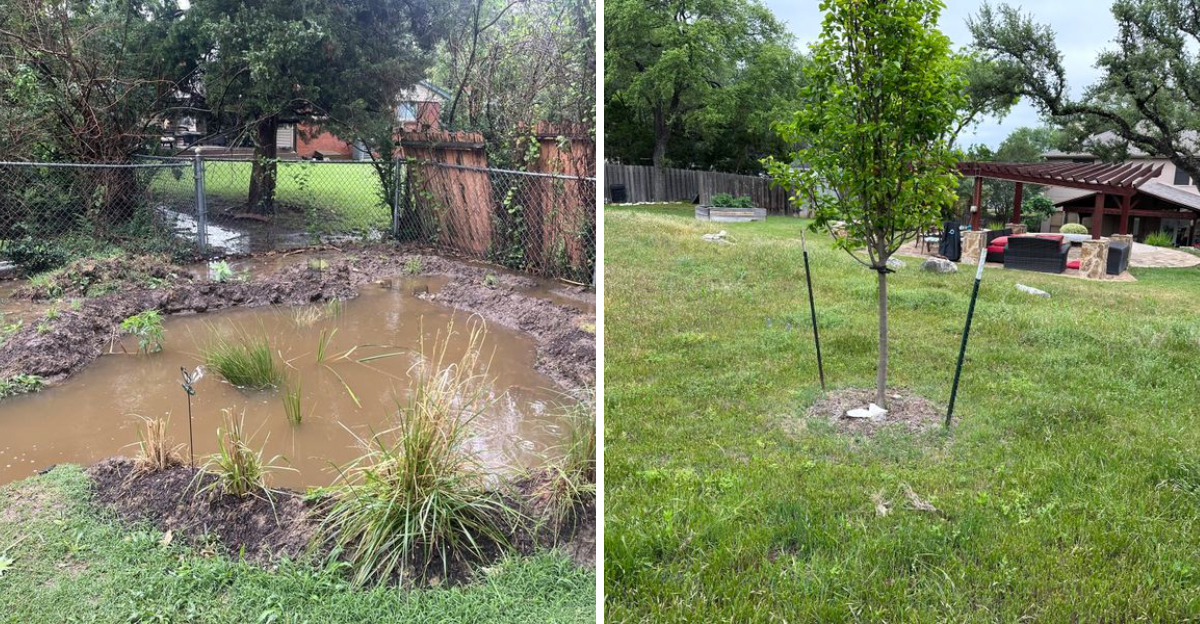
Go outside during a moderate rain event. Wear shoes you do not mind getting wet and walk the property. Watch where water collects, where it moves quickly, where it cuts through a bed and takes soil with it, and where it pools against a foundation or fence base. Note it all.
After the storm, take photos. Mark the problem areas while the information is fresh. Use those observations to reshape basins, add a small berm, or redirect a downspout before the next and larger event arrives.
Early monsoon storms are typically lighter than peak July and August storms. They are the low-stakes diagnostic opportunity you get every year before the weather becomes genuinely intense.
What you learn in those first few storms is some of the most valuable information your garden will give you all season.
The storm is not the problem. Missing what it shows you is.
6. Stake Young Plants Before Wind Hits
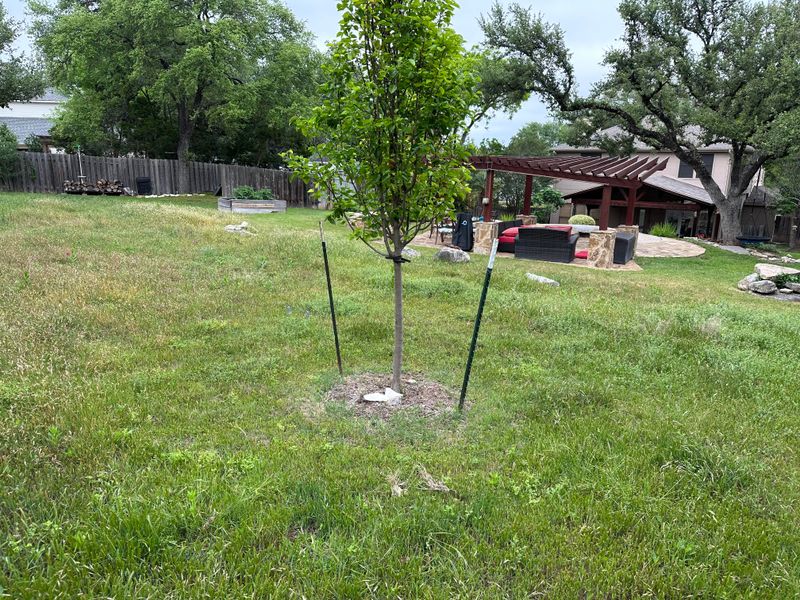
Arizona monsoon storms do not arrive quietly. Haboobs and dust storms can carry wind gusts over fifty miles per hour.
A young plant that has not yet developed a strong root anchor can be uprooted or severely damaged in minutes. June is the last comfortable window to get stakes in place before that becomes a real risk.
Plants established in the last six to twelve months have root systems that are still building the lateral spread needed to hold them steady in significant wind.
A well-placed stake provides backup support during that critical period. It does not replace root development. It protects against failure while roots finish the job.
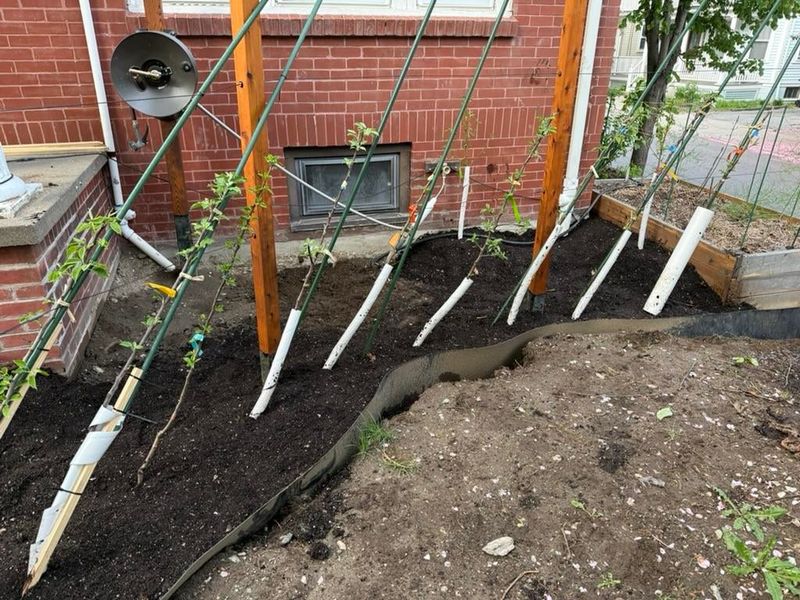
Two stakes positioned on opposite sides of the plant provide better stability than a single stake. Attach with soft, flexible ties such as tree strapping, foam, or strips of old cloth.
Avoid wire or rigid ties that cut into bark as the plant moves in the wind. Leave slight slack in the tie so the trunk can flex. That movement encourages stronger trunk development rather than preventing it.
Remove stakes after one growing season. A plant that depends on a stake longer than that may not develop the trunk strength it needs to stand on its own.
Check ties monthly and adjust as the plant grows. Getting stakes in now means the first significant wind event of the season is a manageable test rather than a genuine emergency.
June is the preparation window. July is when you find out whether you used it.
7. Give Roots A Deep Soak Before July
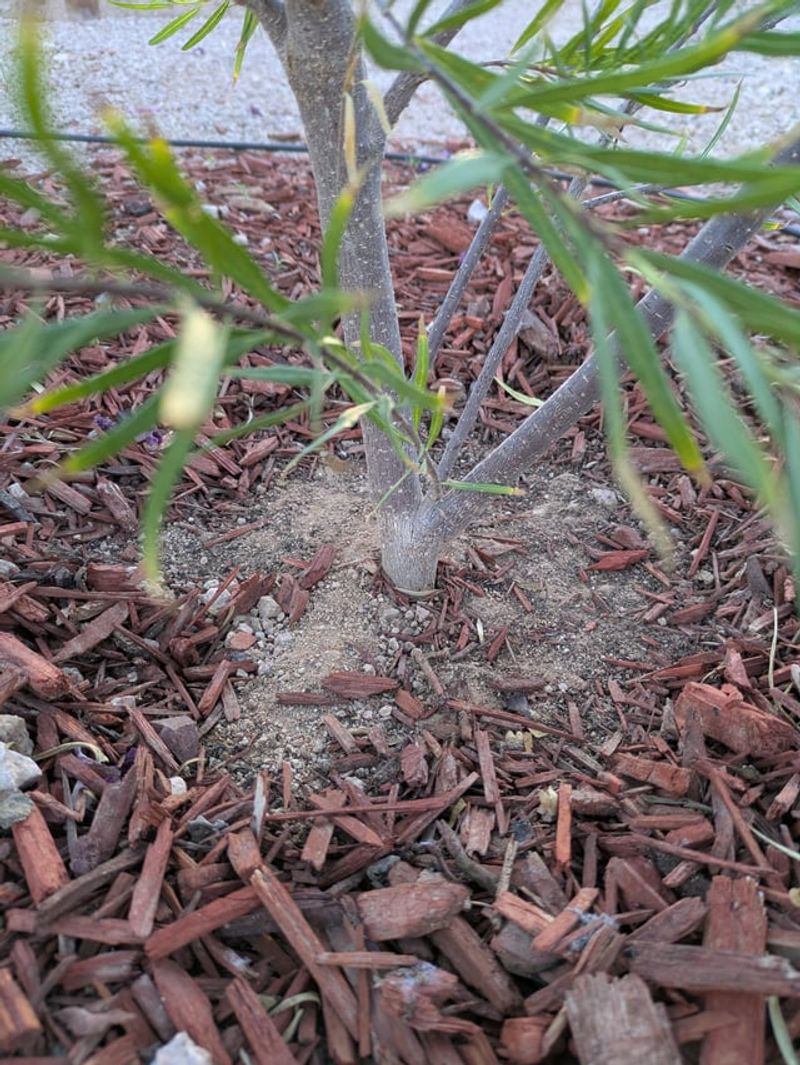
One of the most effective things you can do in late June costs almost nothing and requires very little active effort. It is a single, long, deep soak for your trees and large shrubs before the first storm arrives.
This is not about compensating for dry conditions. It is about positioning roots to take full advantage of the moisture that monsoon rains will deliver.
Shallow roots develop where water has been consistently available near the surface. Surface moisture in Arizona evaporates quickly even after a substantial rain event.
Plants with roots deeper in the soil profile can access water that has moved further down, where it lingers longer and stays cooler. A pre-monsoon deep soak gives roots a reason to move downward before the storms begin.
To execute it properly, run your drip system for two to three times its normal duration, or place a hose near the drip line of the plant and let it trickle slowly for several hours.
The goal is pushing moisture down eighteen to twenty-four inches into the soil. In compacted or caliche-heavy soils this takes more time, but the effort is concentrated into one session rather than spread across multiple days.
Deep-rooted plants are also more stable in wind, more resilient to surface heat, and better positioned to respond to monsoon rain rather than just receiving it passively.
Roots follow water. Send the water down in June and the roots go with it. That is a head start the monsoon season cannot give them on its own.