What It Means When Your Georgia Lawn Has Small Cone-Shaped Holes
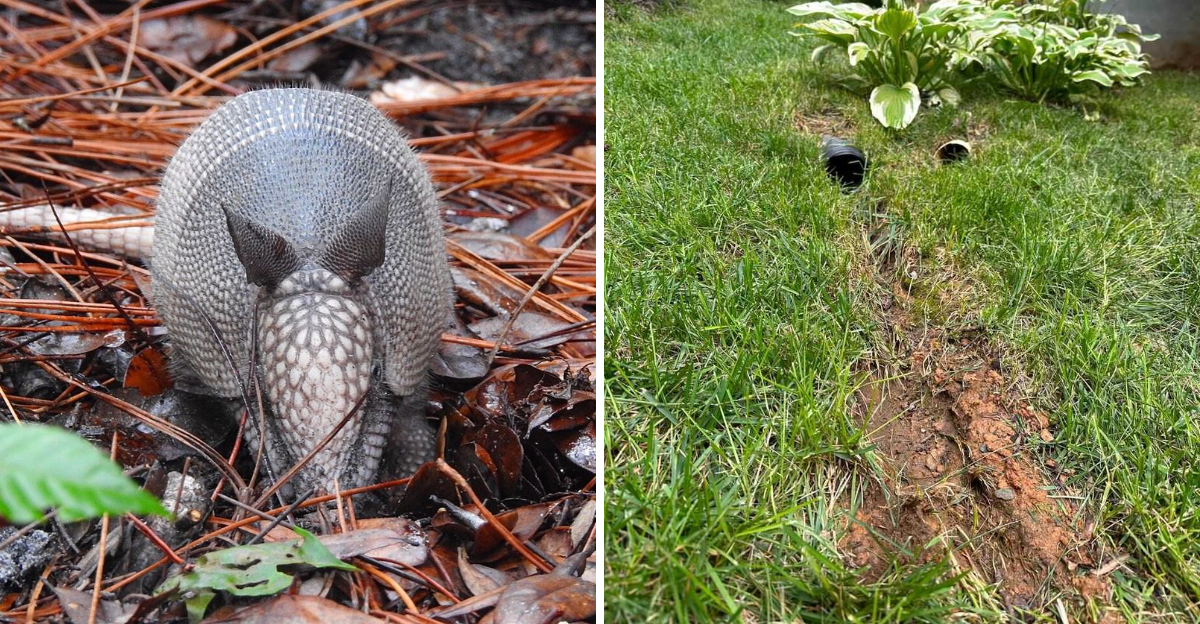
Small cone-shaped holes scattered across your lawn can look like damage at first, especially when they seem to appear overnight. Take a closer look before assuming something is tearing up the grass.
Their unusual shape can offer an important clue about what has been moving through the soil.
In Georgia, these openings may come from creatures working beneath or around the turf. What looks messy on the surface can actually reflect useful activity happening below.
That makes identifying the source more important than simply filling every hole you find.
Pay attention to the size, shape, and surrounding soil before deciding whether your lawn needs any action. Those details can separate a harmless visitor from something worth addressing.
Once you recognize the pattern, those strange cones become much easier to understand.
1. Those Small Holes May Point To A Nighttime Visitor
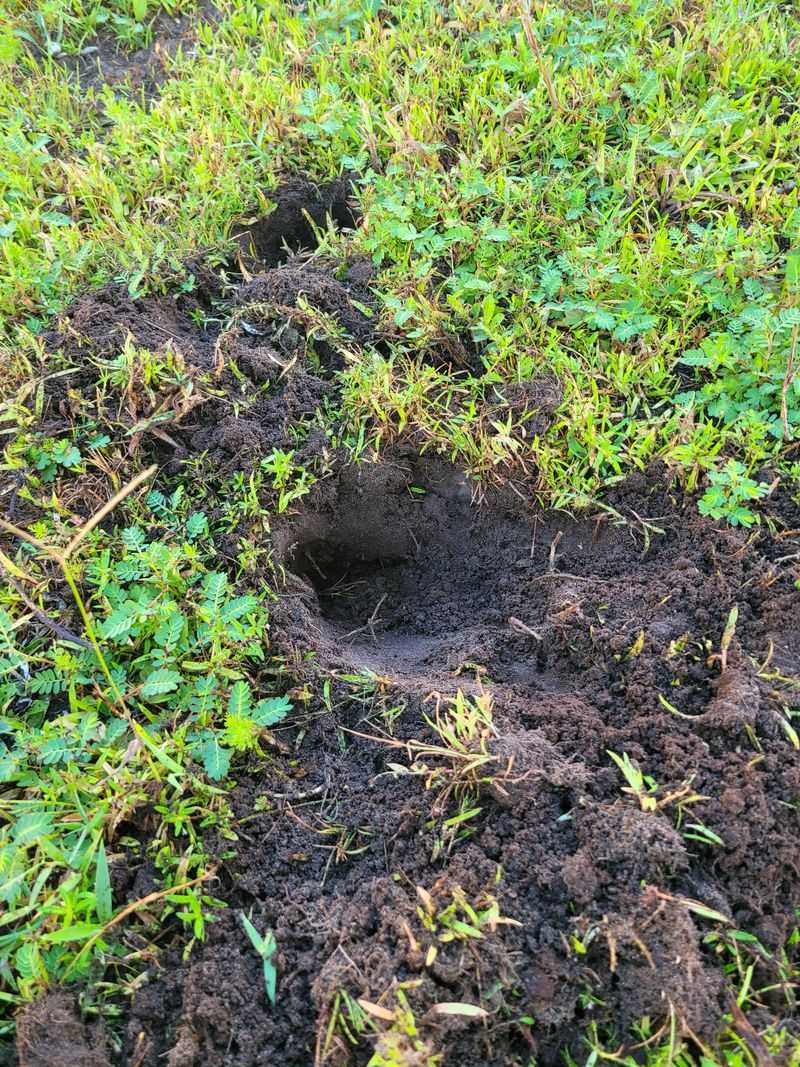
Nothing dug those holes at noon. Cone-shaped divots in the lawn almost always show up between dusk and dawn.
That timing matters. Most yard diggers in Georgia feed at night, so you see the results but never the animal.
Check the holes early, before you water or mow.
Fresh soil looks damp and crumbly around the edges. Older holes go dry, flatten out, and start collecting clippings.
Depth gives you another clue.
Cone holes are usually one to three inches deep and about as wide as a golf ball or a bit larger. They taper down to a point, like something pushed a snout straight into the dirt.
Nothing gets pushed up in a mound.
That is the big difference between a feeding hole and a tunneling animal. Feeding holes leave loose dirt scattered on the surface, not piled into hills.
Try a simple test if you want proof.
Smooth over a few holes with your foot in the evening. If new ones appear by breakfast, the visitor is still coming around.
A cheap trail camera helps too.
Set it low, maybe a foot off the ground, aimed at the worst spot. Most people are surprised by what shows up on the footage.
Knowing the culprit saves money.
Guessing leads to treatments that do nothing, while the digging keeps going night after night.
2. Armadillos Dig Through Lawns Looking For Food
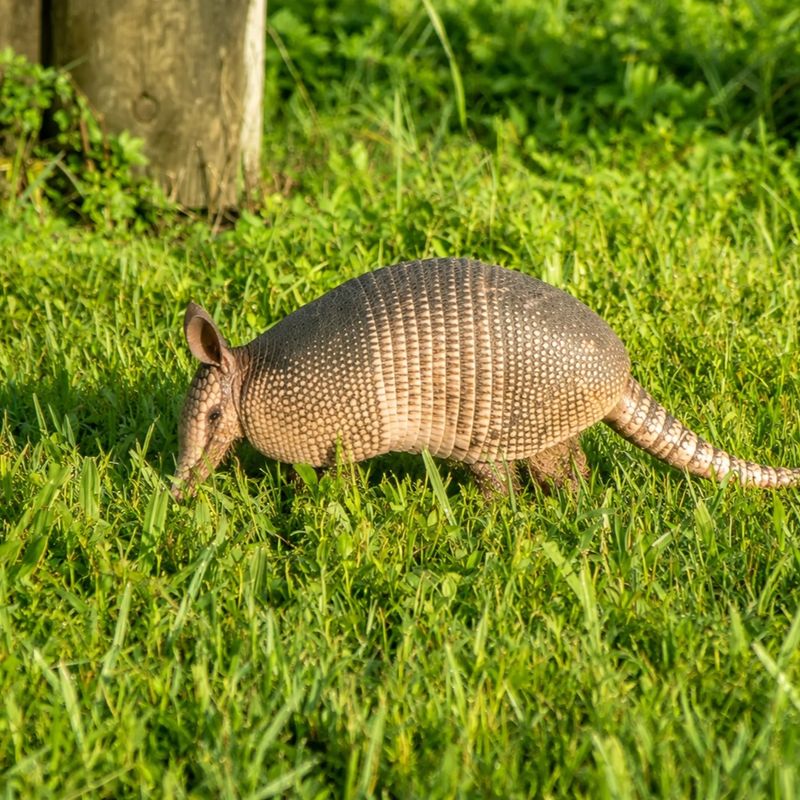
Nine-banded armadillos have spread across most of Georgia, and lawns are easy hunting for them. They are not after your grass at all.
Grubs, worms, beetles, and ants are the prize.
An armadillo has a strong nose and weak eyes. It walks slowly, sniffs the ground, then jabs its snout down where it smells something moving.
That jab creates the cone.
Front claws widen the hole while the snout digs deeper. What you end up with is a small funnel with loose dirt flicked out to one side.
They cover ground fast.
One animal can leave dozens of holes in a single night, spread over a wide area rather than clustered in one corner.
Grub-heavy soil attracts more attention.
Lawns with heavy thatch or a real grub problem tend to get hit harder, though armadillos will still probe healthy turf for earthworms.
Your Georgia Garden Changes Every Week. Your Plan Should Too.
Gardening in Georgia changes quickly throughout the season. Every Friday you’ll receive a simple weekly plan showing exactly what to plant, prune, fertilize, harvest, and protect so you never miss the right timing.
Removing grubs may reduce the digging, but it rarely stops it.
Worms live in almost every yard, and armadillos are happy to settle for those. Treating for grubs alone often disappoints people who expected an instant fix.
They also like cover.
Brush piles, dense shrubs, and crawl space openings give them daytime shelter close to the buffet. Cleaning up those spots makes your property less convenient.
Check local rules before trapping, since regulations vary by county and season.
3. Their Digging Leaves A Clear Pattern Behind
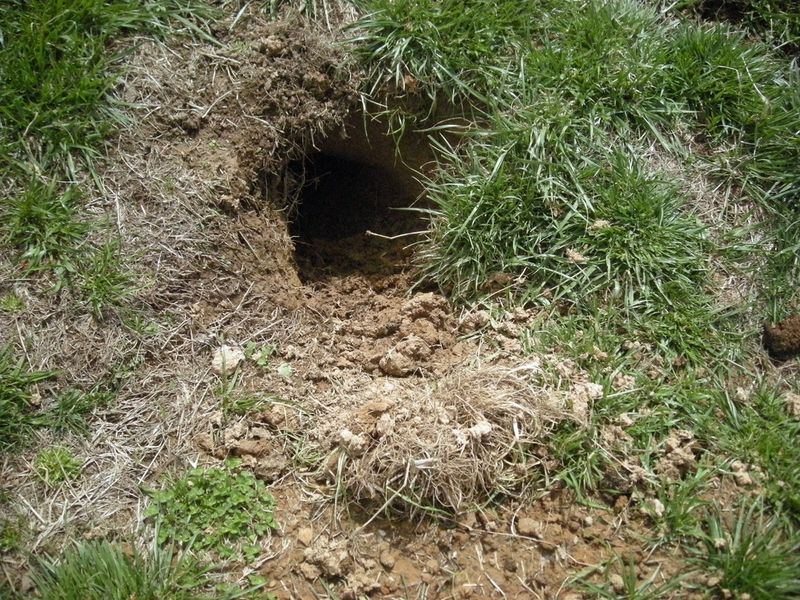
Patterns tell the story better than any single hole. Step back and look at how the damage spreads across the yard.
Armadillo work wanders.
You will see holes trailing along a fence line, then curving toward a flower bed, then jumping to the middle of the lawn. It follows a nose, not a plan.
Spacing looks random.
Some holes sit inches apart, others several feet. That uneven scatter is a strong sign of surface feeding rather than tunneling.
Look at the edges of each hole.
Soil gets thrown outward and left sitting on top of the grass. Nothing is neatly mounded, and nothing plugs the opening.
Mulch beds take a beating too.
Pine straw and bark get flipped and shoved aside, since loose material is easier to dig than compacted turf. Homeowners in metro Atlanta often notice bed damage before lawn damage.
Uprooted plants are common.
Shallow-rooted annuals sometimes end up lying on the mulch, pulled loose while the animal chased something underneath.
Pay attention to repeat spots.
If the same six-foot patch gets hit three nights running, there is likely a good food supply right there. That is the area worth protecting first.
Take photos over a week.
Comparing images helps you see whether the activity is growing, shifting, or fading on its own.
4. Soft Ground Makes It Easier For Them To Dig
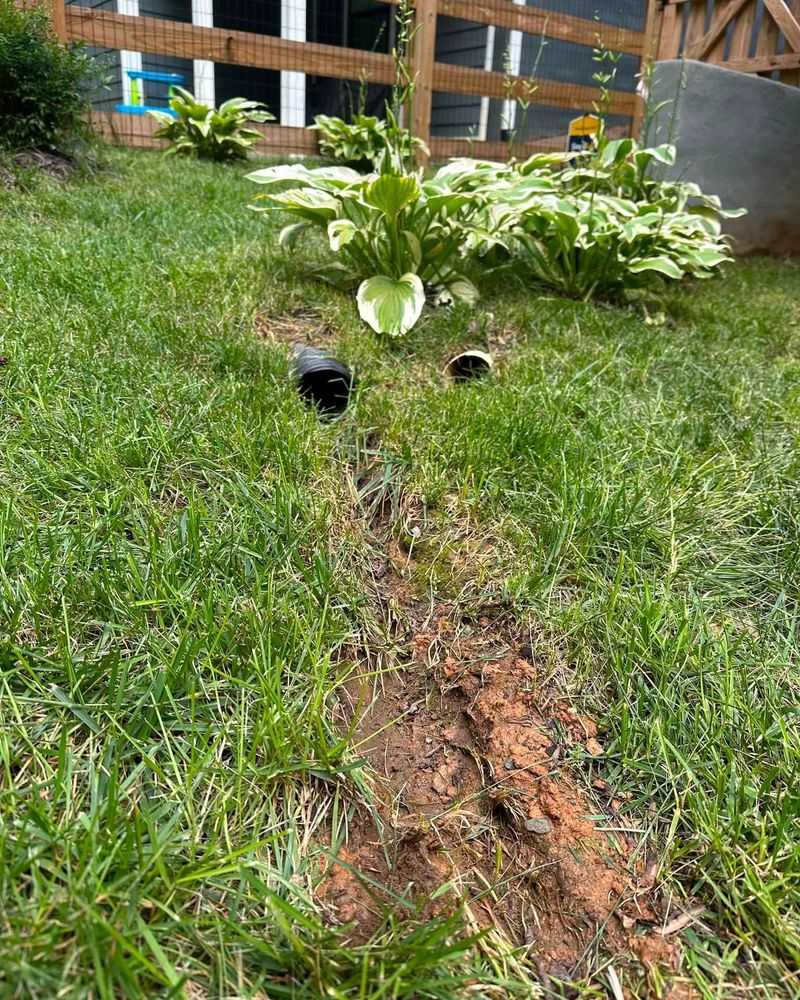
Rain changes everything. After a soaking, soft soil lets a snout push through with almost no effort.
Damage tends to spike the night after storms.
Georgia clay bakes hard in midsummer, then turns workable once it soaks up water. Spring and fall usually bring the heaviest digging because moisture sticks around longer.
Irrigation does the same thing.
Yards watered daily stay soft near the surface, which makes them more inviting than a dry neighbor’s lawn.
Try watering deeper and less often.
Two longer sessions a week beat short daily sprinkles. Grass roots grow deeper, and the top inch firms up between waterings.
Soft ground also holds more food.
Earthworms move closer to the surface in damp soil, so the buffet sits right where digging is easiest. Both factors line up at once.
Shady, low spots get hit first.
Areas under trees or near downspouts hold moisture the longest, and that is often where the first holes appear.
Fixing drainage helps more than people expect.
Redirecting a downspout or filling a low swale reduces the soggy zones that attract feeding. Results vary with your soil type and slope.
Do not overcorrect, though.
Letting a lawn go bone dry to discourage digging just stresses the grass. Balance matters more than extremes.
5. Moles And Voles Leave Different Signs In Your Yard
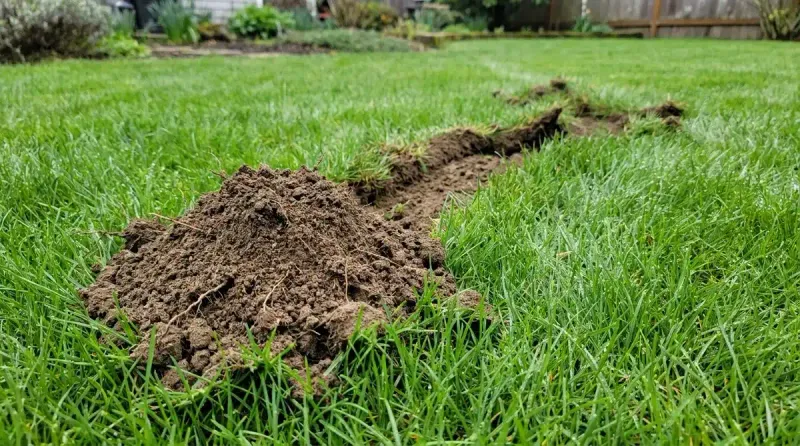
Not every hole comes from an armadillo. Moles and voles leave marks that look nothing alike once you know what to check.
Moles push soil up.
You get raised ridges snaking across the lawn, plus loose volcano-shaped mounds. The grass often feels spongy when you walk on the tunnels.
Voles work at ground level.
They chew narrow runways through the turf, about the width of a finger, with small round openings at the ends. Nothing is coned or funneled.
Squirrels dig too.
Their holes are shallow, dime-sized, and usually cluster near oaks or bird feeders where nuts get buried. Fall is their busy season.
Skunks leave small pits as well.
Those tend to be shallower than armadillo holes and often show a rolled-back flap of sod. Grub-rich lawns attract both animals.
Yellow jacket nests are another possibility.
A single hole with steady insect traffic in late summer means something very different, and it needs a careful approach rather than a shovel.
Matching the sign to the animal saves effort.
Mole traps do nothing for surface feeders, and grub control does nothing for tunneling moles that eat worms. Homeowners across north Georgia waste plenty of weekends on the wrong fix.
Take a close photo if you are unsure.
Your county extension office can usually identify the damage from a decent picture.
6. Repeated Digging Can Tear Up Healthy Grass
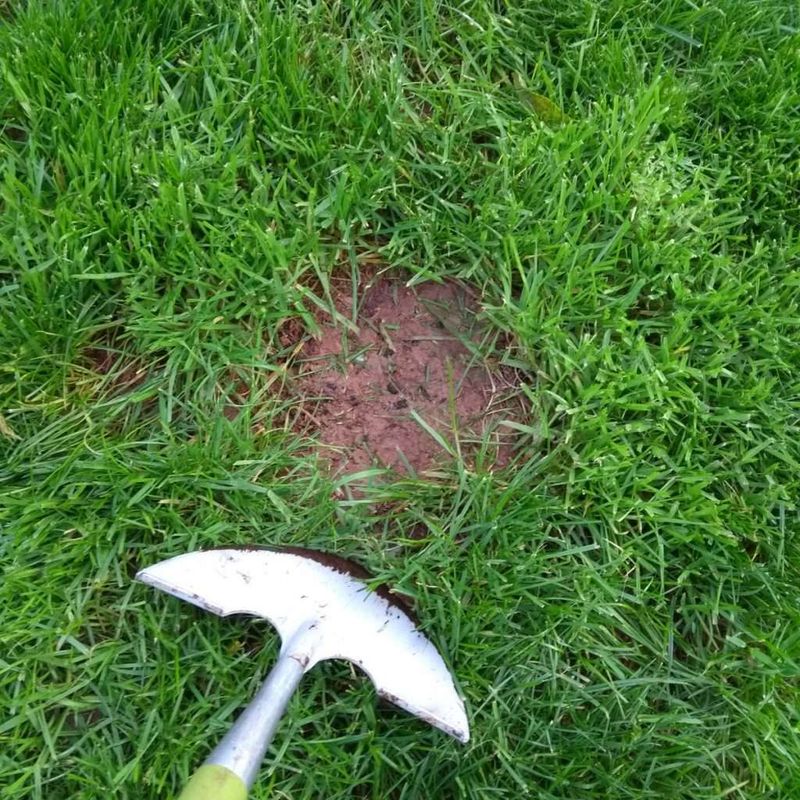
One night of digging is cosmetic. Three weeks of it starts pulling your lawn apart.
Roots take the hit.
Each hole breaks a small patch of root system, and repeated probing in the same area loosens the sod until it lifts by hand.
Bermuda and zoysia recover reasonably well.
Warm-season grasses spread by runners, so they can fill small gaps during the growing season. Recovery slows down a lot once temperatures drop.
Fescue struggles more.
Cool-season lawns in the Georgia mountains do not spread sideways, which means bare spots stay bare until you reseed them.
Weeds move in quickly.
Open soil is an invitation for crabgrass and nutsedge, especially in summer. What starts as a pest issue turns into a weed issue.
Uneven ground becomes a tripping hazard.
Dozens of small holes across a play area or walkway path are worth filling for safety, not just looks.
Repairs are simple enough.
Tamp the soil back into each hole with your foot, top with a little screened topsoil, then water lightly. Level the surface before you mow again.
Timing helps.
Seed or sprig repairs during the active growing season for your grass type, since patches put down in cold weather rarely take hold.
Keep mower blades higher while the lawn recovers.
7. A Simple Barrier Can Help Protect Problem Areas
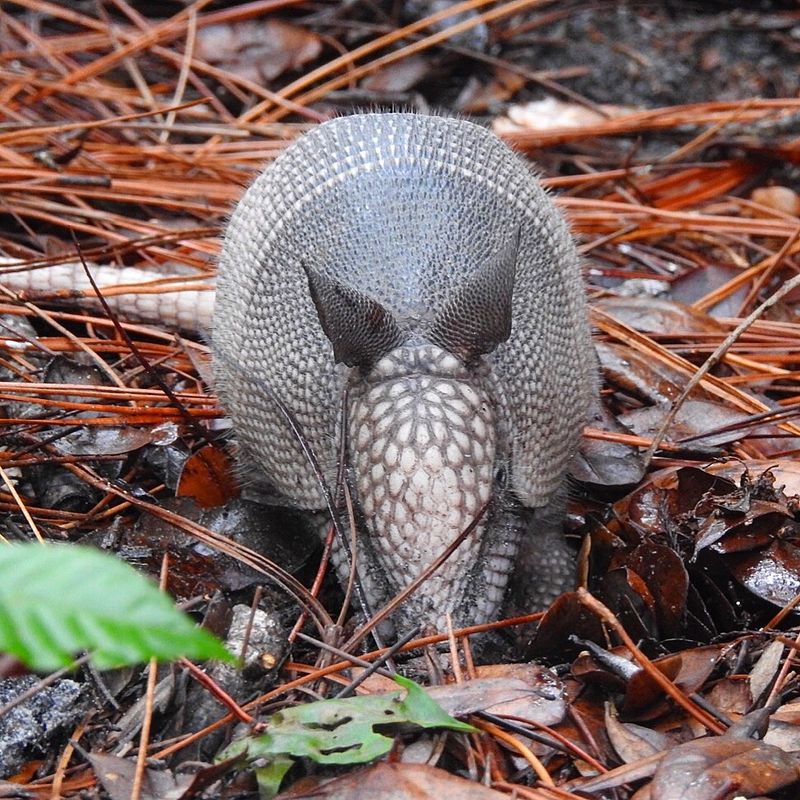
Fencing beats guessing. When digging keeps hitting the same beds, a low barrier is usually the most reliable answer.
Height is less important than depth.
Armadillos are strong diggers and can also climb, so a barrier needs enough height as well as a buried base.
Extend the mesh below ground and angle the lower portion outward to make it harder for them to dig underneath. Angle the buried portion outward.
A short flare at the bottom, pointed away from the bed, makes digging under it much harder.
Hardware cloth works well.
Half-inch galvanized mesh holds up in humid Southern weather better than plastic netting, which cracks after a couple of seasons.
Seal off crawl spaces and decks.
Open gaps under structures give animals a place to shelter, and blocking them removes the reason to stay nearby.
Clear the easy hiding spots too.
Brush piles, tall weeds along fences, and stacked firewood all offer daytime cover close to the food.
Repellents give mixed results.
Some people report success with castor oil products, but effects fade after rain and are far from consistent. Treat them as a supplement, not a solution.
Trapping is regulated.
Check current wildlife rules for your area of Georgia before setting anything, or hire a licensed wildlife control operator.
Expect patience.
Barriers protect what matters most, though a wandering animal may still probe open lawn areas now and then.