What North Carolina Homeowners Should Do The Moment They Spot The First Carpenter Bee
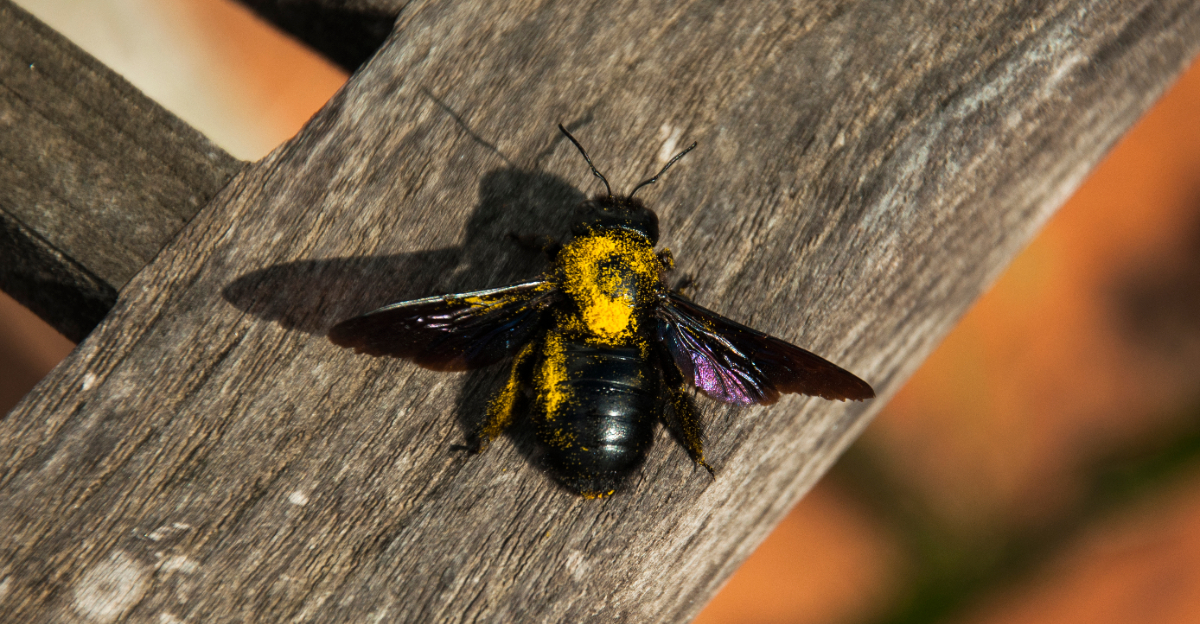
That first carpenter bee of spring in North Carolina tends to show up before most homeowners are even thinking about the yard.
One day it’s just there, hovering near the porch ceiling or buzzing around the wooden fence with a confidence that feels slightly confrontational.
What you do in that first window matters more than most people realize, because carpenter bee activity follows a predictable pattern, and the early part of that pattern is when intervention is actually effective.
Wait too long and the situation becomes harder to manage in any practical way.
React immediately with the wrong approach and you waste time and money on methods that don’t address what’s actually happening.
North Carolina’s warm springs get carpenter bees active earlier than homeowners expect, and knowing the right response from the very first sighting changes how the rest of the season goes for your wood structures.
1. Confirm It Is A Carpenter Bee
Not every big bee you see is a carpenter bee, and getting the identification right is the most important first step.
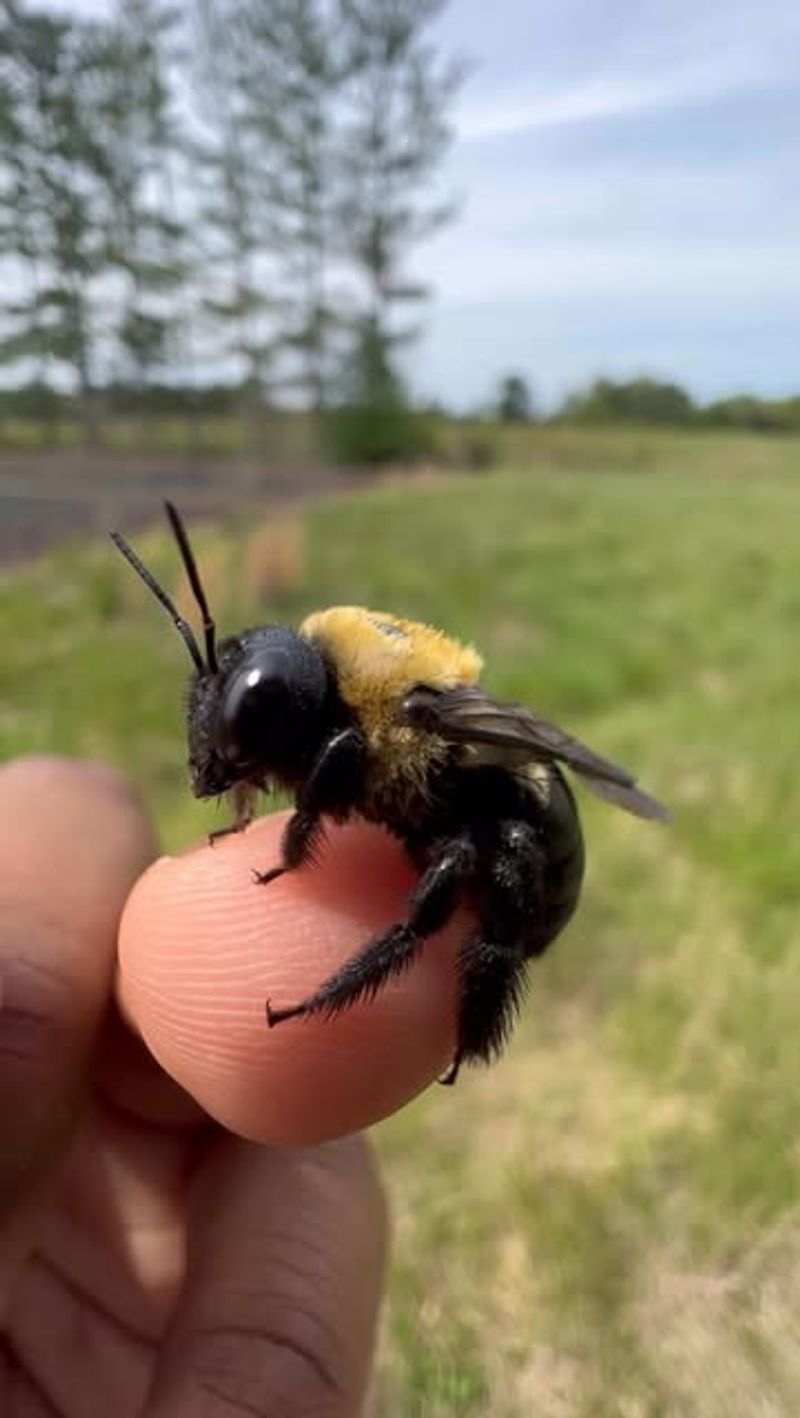
Carpenter bees, specifically Xylocopa virginica, are large and robust, but one key feature sets them apart from bumblebees: their abdomen is shiny and mostly black, while a bumblebee’s abdomen is fuzzy and yellow-striped.
That glossy, smooth belly is your biggest visual clue. Behavior also helps you figure out what you are dealing with. Carpenter bees tend to hover persistently near wooden structures, often flying in tight, repetitive circles.
Bumblebees, by contrast, move more freely and spend most of their time visiting flowers rather than inspecting wood. If you notice a bee aggressively patrolling your porch railing or deck, there is a good chance it is a male carpenter bee.
Here is something that surprises most people: male carpenter bees cannot sting at all. They may fly close to your face, but that bold behavior is purely territorial.
Female carpenter bees do have stingers but are remarkably calm and will only react if you physically handle them. Knowing this should ease your worry considerably.
Accurate identification helps you respond appropriately, avoiding unnecessary panic and making sure you target the right insect without harming other beneficial pollinators buzzing around your North Carolina garden.
2. Inspect Wooden Structures For Nesting Holes
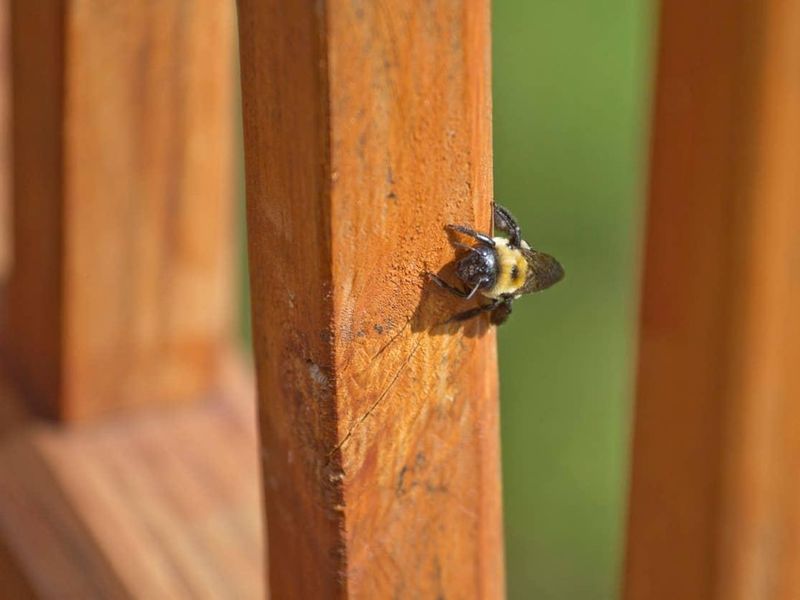
Once you confirm a carpenter bee is present, grab a flashlight and head outside for a thorough inspection.
Carpenter bees prefer soft, untreated wood, and they bore nearly perfect circular holes about half an inch in diameter.
Check your deck boards, railings, wooden fences, siding, fascia boards, and any outdoor furniture made of bare wood. These are the spots they love most.
One of the clearest signs of active nesting is a small pile of yellowish sawdust, called frass, sitting directly below an entrance hole. Fresh frass means a bee is currently working in that spot.
You might also notice yellow or brown staining around the hole entrance, which comes from the bee’s waste. Both signs point to active nesting and should prompt immediate attention.
Your North Carolina Garden Changes Every Week. Your Plan Should Too.
Gardening in North Carolina changes quickly throughout the season. Every Friday you’ll receive a simple weekly plan showing exactly what to plant, prune, fertilize, harvest, and protect so you never miss the right timing.
Early spring is the most critical window for inspection because that is when carpenter bees emerge from overwintering and begin searching for nesting sites.
Catching the activity early, before tunnels extend deeper into your wood, gives you the best chance to prevent serious structural damage.
Tunnels can reach six inches or longer and may branch off in multiple directions over several seasons of reuse.
A quick walk around your property every few days during March and April in North Carolina can make a significant difference in how much repair work you face later.
3. Remove Old Or Abandoned Nests
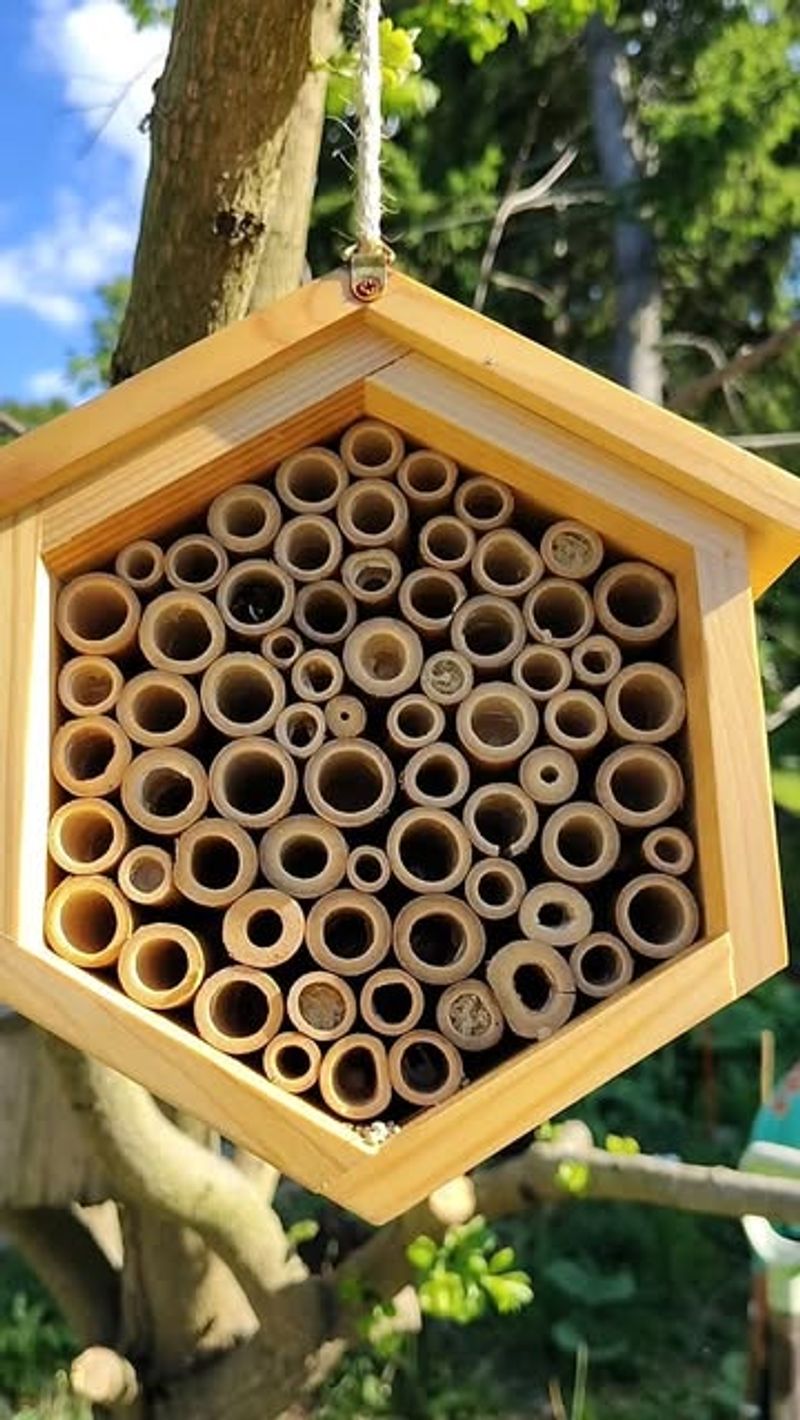
Old carpenter bee tunnels are like open invitations for new bees. Even if a nest was used last season and appears empty, female bees returning in spring will readily move back into pre-existing tunnels rather than boring new ones from scratch.
Removing those old galleries before activity picks up again is one of the most effective ways to discourage repeat nesting in the same spots.
Start by checking tunnels in late winter or very early spring, before bees become active. Use a thin wire or pipe cleaner to clear out any debris, old pollen stores, or remnants inside the tunnel.
Once the tunnel is empty, fill it completely with wood putty, steel wool, or a wooden dowel sealed with exterior caulk. Packing the hole tightly removes the easy-access entry point that returning bees are looking for.
Safety matters during this process. Wear gloves and eye protection, especially if you are working overhead or in tight spaces.
Female bees can still be resting inside tunnels in late winter, so work carefully and avoid pressing your face close to any opening. After filling, sand the area smooth and apply a fresh coat of paint or sealant over the repaired spot.
Addressing old nests proactively, rather than waiting for bees to show up first, puts you firmly in control of the situation before the busy spring season in North Carolina truly begins.
4. Apply Preventive Wood Treatments
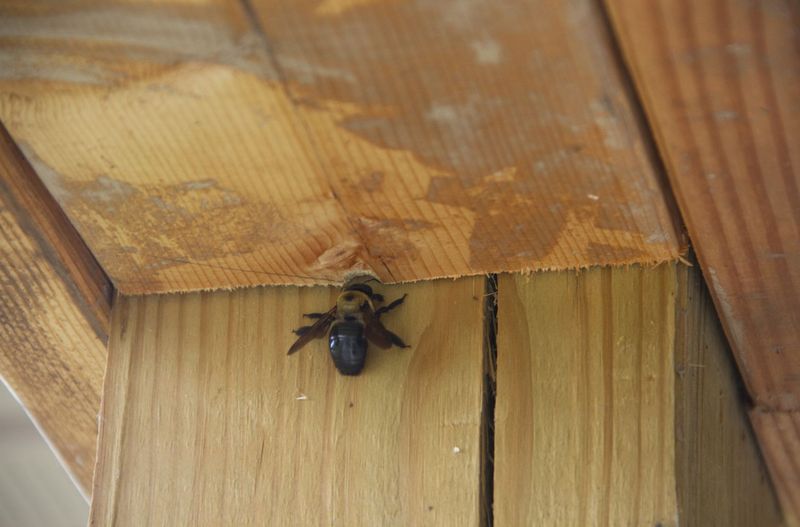
Carpenter bees have a strong preference for bare, weathered, or unfinished wood.
Painted, stained, or sealed surfaces are significantly less attractive to them because the coating makes the wood harder to bore into and masks the natural scent that draws bees in the first place.
Applying a protective finish to all exposed wood around your home is one of the simplest and most reliable preventive steps you can take.
Early spring, before bees become active, is the ideal time to treat wood surfaces. Exterior latex paint provides excellent protection and is one of the most effective deterrents available.
Oil-based stains and polyurethane sealants also work well, especially on decks and fences where paint might not be the preferred look.
The key is full coverage, making sure every surface, including undersides of railings and the edges of boards, gets treated.
For wood that cannot be painted or stained, such as decorative natural wood elements, consider applying a borate-based wood preservative.
Products containing disodium octaborate tetrahydrate penetrate the wood fibers and create a barrier that is unappealing to boring insects.
These treatments are widely available at hardware stores across North Carolina. Reapplying your chosen finish every two to three years keeps the protection strong.
Staying consistent with wood maintenance not only deters carpenter bees but also extends the life of your deck, fencing, and outdoor structures considerably.
5. Avoid Broad-Spectrum Insecticides
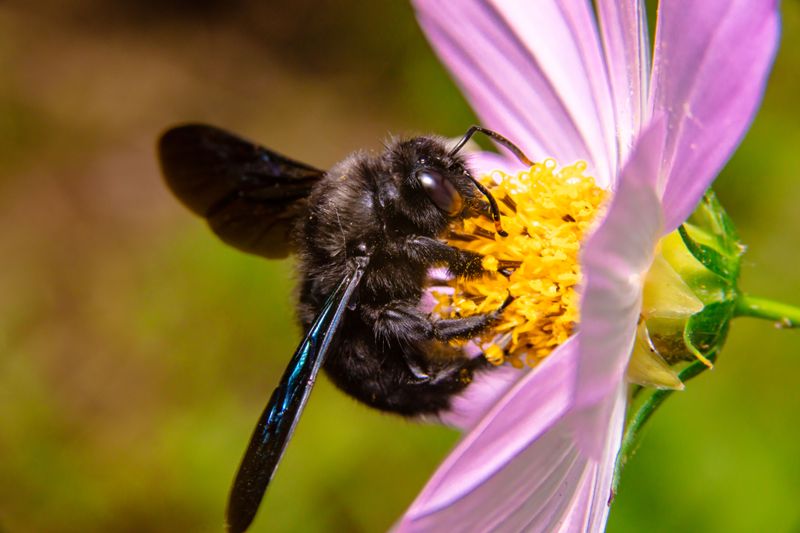
Reaching for a general-purpose insecticide spray might seem like the fastest solution, but it often creates more problems than it solves.
Broad-spectrum insecticides are designed to affect a wide range of insects, which means they can harm honeybees, bumblebees, butterflies, and other pollinators that your garden depends on.
North Carolina’s agricultural and natural ecosystems rely heavily on these beneficial insects, making their protection a real priority.
If treatment is necessary, targeted dust insecticides applied directly into active nest tunnels are a much smarter approach.
Products containing carbaryl or boric acid dust can be puffed into the entrance hole in the evening, when bees are less active and resting inside.
This method concentrates the treatment exactly where it is needed and dramatically reduces the risk of affecting non-target insects foraging nearby on flowers.
Timing matters enormously with any treatment approach. Applying dust at dusk or after dark gives the product time to work inside the tunnel before bees venture out again.
Seal the entrance hole a few days after treatment to prevent other insects from moving in. Always follow label instructions carefully and store any pest control products safely away from children and pets.
Being strategic about treatment choices shows respect for the broader garden ecosystem while still addressing the specific carpenter bee activity causing concern around your North Carolina home and property.
6. Encourage Natural Predators
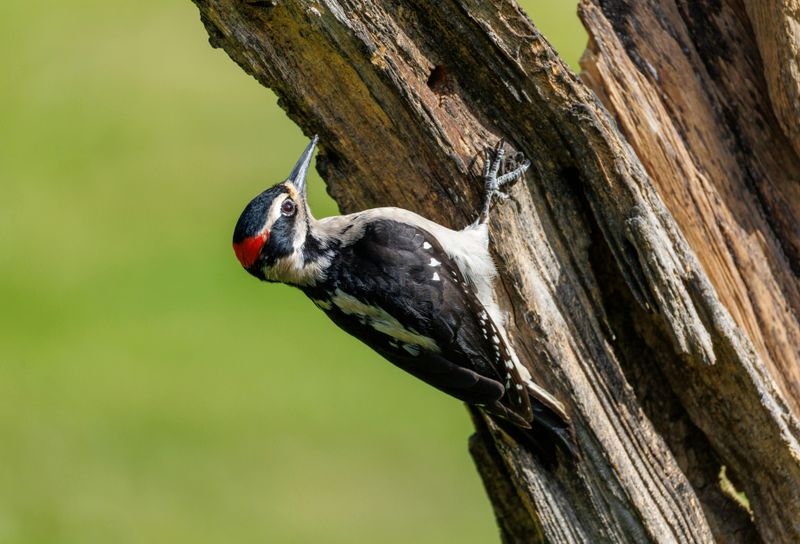
Nature already has a built-in system for managing carpenter bee populations, and working with that system is both effective and rewarding. Woodpeckers are among the most active natural predators of carpenter bees in North Carolina.
They can detect larvae inside wood tunnels using their sharp hearing and will hammer into the wood to reach them. While this can occasionally cause some wood damage of its own, attracting woodpeckers generally helps keep carpenter bee numbers in check.
Installing birdhouses sized for woodpeckers, Carolina wrens, or bluebirds encourages these helpful birds to take up residence near your home.
Position houses at the recommended height for each species and face them away from prevailing winds.
Native plantings like dogwood, serviceberry, and native oaks provide food sources and shelter that attract insect-eating birds throughout the spring and summer months when carpenter bees are most active.
Beyond birds, ground beetles and certain parasitic wasps also prey on carpenter bee larvae and adults. Reducing pesticide use across your yard creates a healthier environment where these natural allies can thrive.
Planting a diverse mix of native flowering plants not only supports predatory insects but also creates the kind of balanced garden ecosystem that keeps any single pest population from growing out of control.
Building habitat rather than relying on chemical intervention is a long-term strategy that pays off beautifully in a North Carolina yard year after year.
7. Provide Alternative Nesting Options
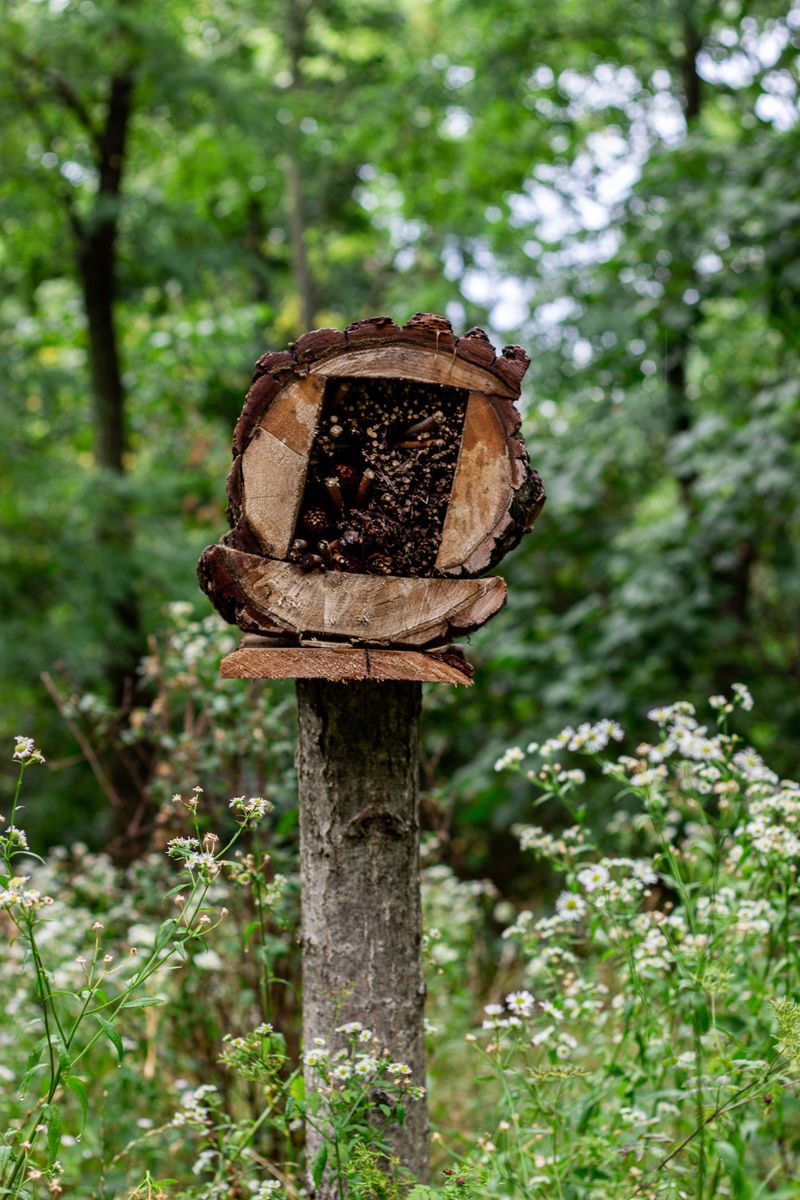
One of the most creative and genuinely helpful strategies for managing carpenter bees is giving them somewhere better to go. Carpenter bees are not trying to cause problems; they are simply looking for suitable wood to raise their young.
Offering them an appealing alternative can redirect their boring activity away from your home’s structural wood and toward something you do not mind them using. Untreated pine, cedar, or fir lumber works well for homemade nesting blocks.
Cut pieces into six-to-eight-inch sections and drill holes slightly smaller than half an inch in diameter into the ends of the wood, angling them slightly upward to mimic natural nesting conditions.
Mount these blocks on a fence post or garden structure at least four feet off the ground, ideally in a sunny, south-facing location that carpenter bees naturally prefer.
Place the nesting blocks away from your deck, porch, and siding, positioning them closer to your garden or a wooded edge of your property. Check them periodically to see if bees are using them.
If activity builds up over a season or two, you can add more blocks to accommodate growing interest. This approach supports pollinator health while steering nesting behavior away from areas where it causes damage.
It is a practical, eco-friendly solution that many North Carolina homeowners find surprisingly satisfying to set up and maintain throughout the warmer months.
8. Monitor Continuously Throughout Spring
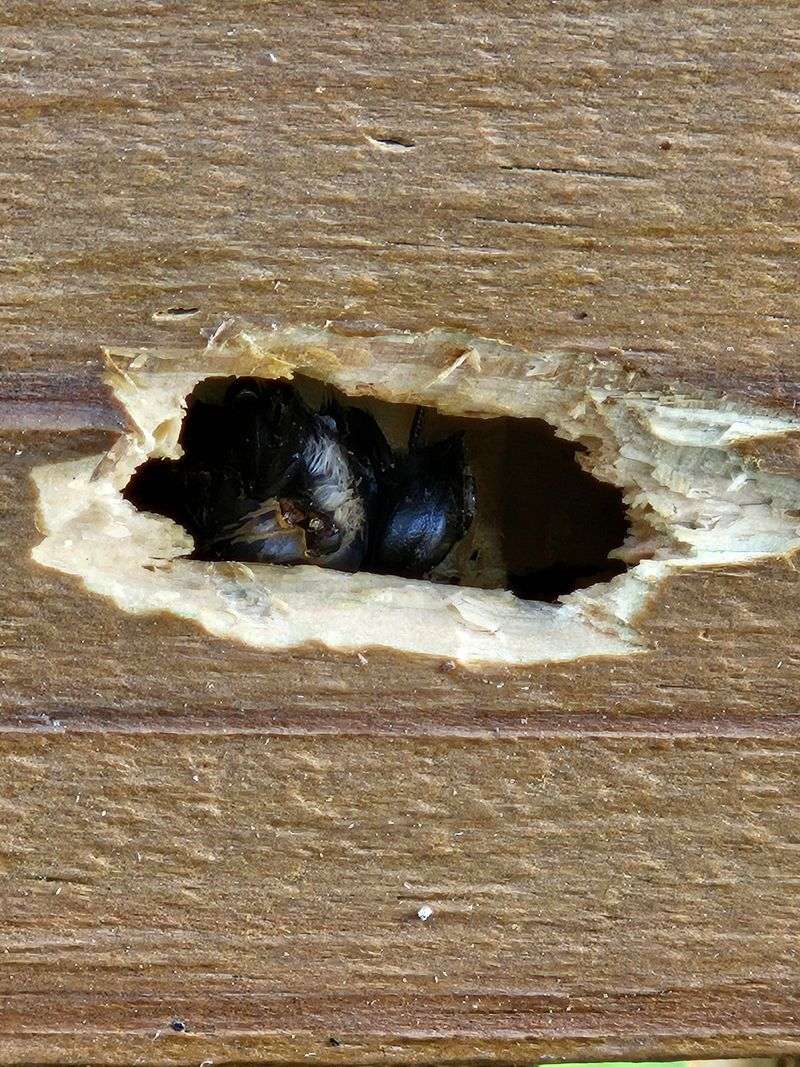
Spotting one carpenter bee is a signal, not a conclusion. A single sighting in early spring often means more bees are on the way, since carpenter bees are emerging from their overwintering sites and actively scouting for nesting locations.
Making regular monitoring a habit through March, April, and May dramatically improves your ability to catch new activity before it escalates into a bigger issue.
Set a simple schedule for yourself, such as a quick walk around the exterior of your home every week. Focus on areas where you have seen activity before, but also check new spots like garage door frames, wooden window sills, pergolas, and the underside of deck boards.
Fresh sawdust is the fastest indicator that boring activity is happening right now, so train your eye to look for it every time you do your rounds.
Keep a simple log of where you spot holes or bees, noting the date and location each time. This running record helps you see patterns, like which areas attract the most attention or whether a treated section stays clear over time.
Monitoring also helps you evaluate whether your prevention efforts are working or whether you need to adjust your approach.
Staying observant throughout the entire spring season, rather than checking once and forgetting about it, gives you the best chance of keeping carpenter bee damage to a manageable minimum on your North Carolina property.
9. Educate Household Members About Safety
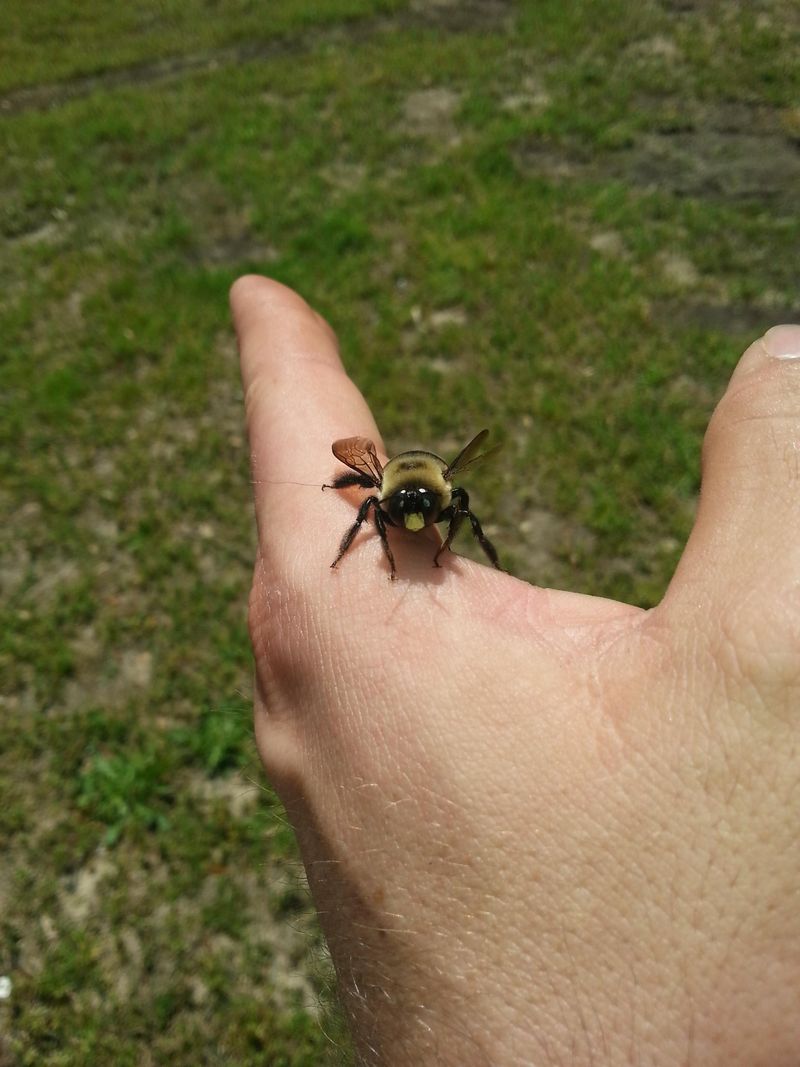
Fear is often the biggest driver of overreaction when it comes to carpenter bees, and most of that fear is based on misunderstanding.
Sharing accurate information with everyone in your household, including kids and frequent visitors, goes a long way toward creating a calm and informed response whenever a carpenter bee shows up in the yard.
Knowledge genuinely changes how people feel and behave around these insects. Start with the basics. Male carpenter bees, which are the ones most likely to hover boldly near people, have no stinger at all.
Their aggressive-looking hovering is purely a bluff. Female carpenter bees do have stingers but are not aggressive and will only react defensively if grabbed or pinched.
Simply walking away, staying calm, and avoiding swatting at them eliminates nearly all risk of a sting.
Children especially benefit from understanding this, since their instinct might be to swat or run, which can startle bees and increase the chance of a reaction.
Talk to your kids in age-appropriate language about what carpenter bees do, why they matter as pollinators, and how to behave around them safely.
Neighbors can also be valuable allies; sharing what you know helps your whole community make smarter decisions.
A well-informed household is a calmer, safer, and more bee-friendly household, which is exactly the kind of environment that supports both your family and the broader North Carolina pollinator community.