What Seeing A Red-Bellied Woodpecker In Your Missouri Yard Really Means
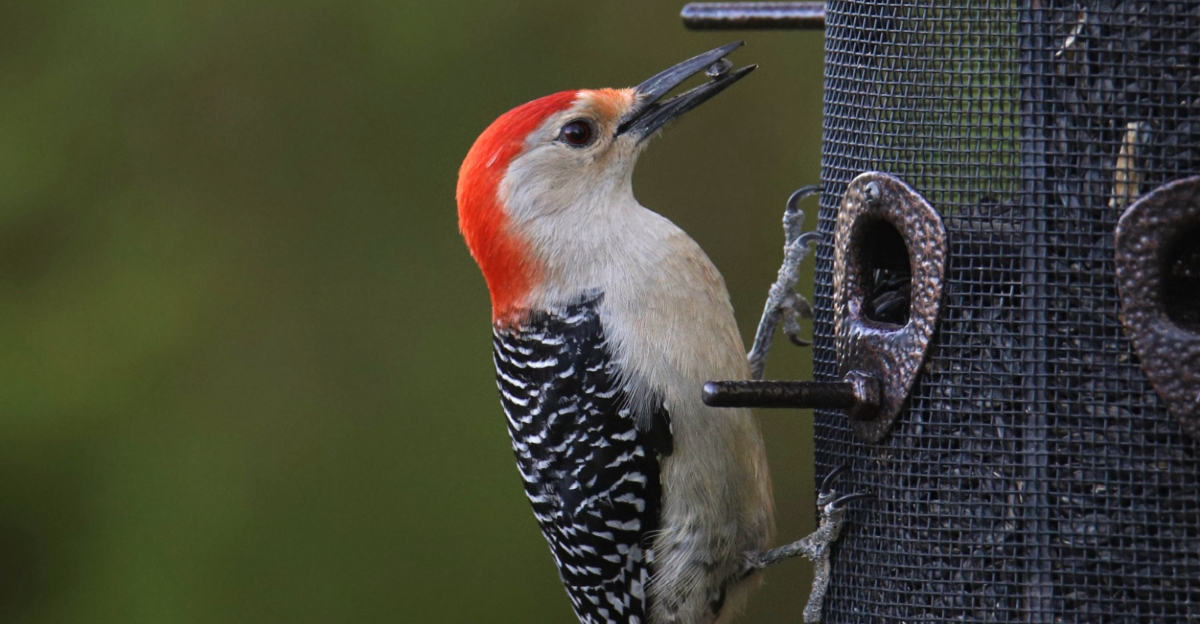
That churring call stops you mid-step instantly. Something red and black just claimed your oak tree.
Missouri rarely lets a visitor like this into your yard. Red-bellied woodpeckers stay in Missouri, and you see them constantly.
They never wander aimlessly past yards like your own. Picky explains how these birds choose your yard.
Yours got picked for a very specific reason. Nothing about that landing outside your window is random.
Habitat quality whispers through every wingbeat you witness. Feeding habits reveal secrets you might never notice.
Bark, insects, sap, and seed all shape your story. Bold color hides a creature more complex than you expect.
Bird behavior like this rewards you for paying attention. Your yard may be meeting several key conditions these birds look for.
Curiosity should be pulling at you right now. Watching closely will change how you see your backyard. Everything that follows will make sure you keep noticing.
Understanding The Reason Behind This Backyard Visitor
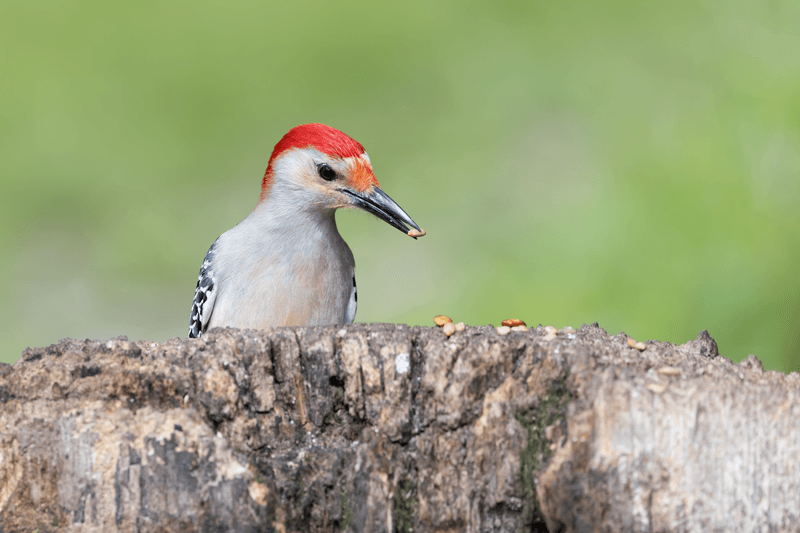
That red cap catches your eye instantly. A red-bellied woodpecker in your yard reflects instinctive behavior shaped by resource availability, not random chance.
These birds scout territories carefully before settling in. Your yard offered something worth stopping for, whether food, shelter, or a solid perch.
Red-bellied woodpeckers are drawn to mature trees with rough bark. Insects and larvae hiding under that bark provide a reliable food source.
They use their long, sticky tongues to pull grubs from deep inside wood. That tongue can extend roughly two inches past the tip of the beak, depending on the individual bird.
Seeing a red-bellied woodpecker also signals that your yard has structural diversity. A mix of old trees, shrubs, and open space is exactly what these birds prefer.
They are not shy about exploring feeders either. Suet blocks and sunflower seeds are two of their favorite backyard snacks.
The bird you spotted likely maintains a home range that can vary from several acres to a wider territory. Your yard sits inside that range, making you part of its daily routine.
Territorial by nature, these woodpeckers often return to the same spots daily. Once they find a reliable food source, they come back consistently.
Spotting one red-bellied woodpecker often means others are close by. Pairs often stay within the same general area throughout the year, which may make your yard part of their regular range.
Why Missouri Yards Attract Red-Bellied Woodpeckers
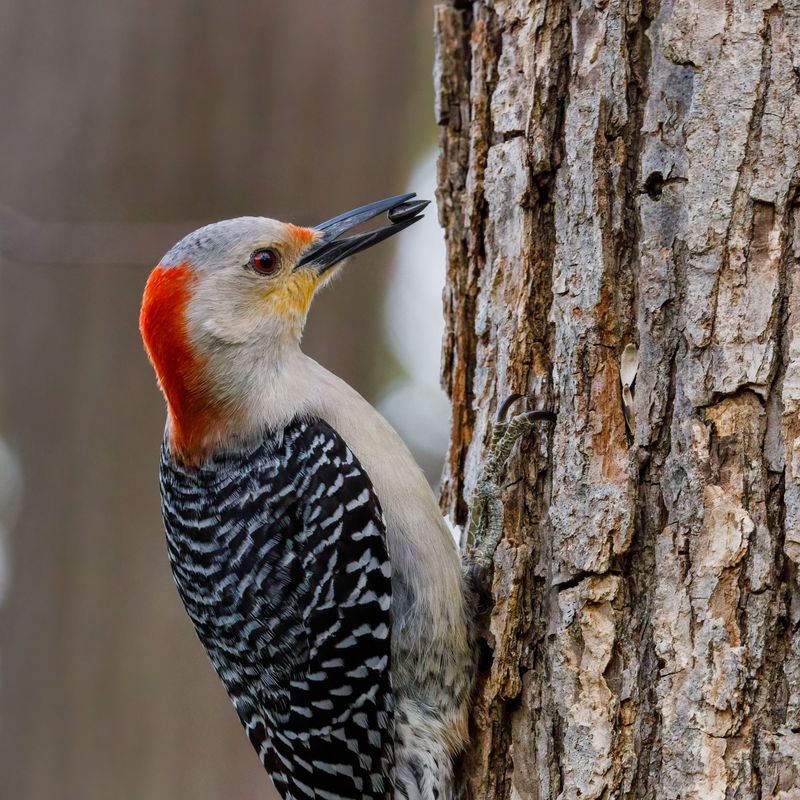
Missouri is prime territory for this species. The state’s mix of hardwood forests, river corridors, and suburban greenery creates an ideal patchwork of habitats.
Red-bellied woodpeckers thrive in areas with large, mature deciduous trees. Missouri’s oaks, hickories, and maples offer exactly the kind of bark-heavy canopy they love.
Suburban yards that back up to wooded areas are especially attractive. Those edge zones between forest and lawn are productive foraging areas for birds.
Neighborhoods with older trees tend to see more woodpecker activity. Younger landscapes with thin, smooth-barked trees simply do not offer enough food or nesting potential.
Your Missouri Garden Changes Every Week. Your Plan Should Too.
Gardening in Missouri changes quickly throughout the season. Every Friday you’ll receive a simple weekly plan showing exactly what to plant, prune, fertilize, harvest, and protect so you never miss the right timing.
Water sources also pull these birds in. A birdbath or shallow pond gives them a place to drink and bathe, which keeps them coming back reliably.
Missouri’s mild winters compared to northern states mean food stays accessible longer. Insects remain active deeper into fall, extending the foraging season significantly.
Native berry-producing shrubs like dogwood and elderberry add another draw. Red-bellied woodpeckers eat fruit regularly, especially when insect populations drop in colder months.
Your yard’s position in the landscape matters too. Yards near parks, greenbelts, or wooded creek banks tend to attract more consistent woodpecker traffic.
If you live in central or southern Missouri, sightings tend to increase in late summer. Juveniles from spring nests begin exploring new territories, and a red-bellied woodpecker in your yard could be a young bird finding its own path forward.
Behavior And Habits Of This Common Backyard Bird
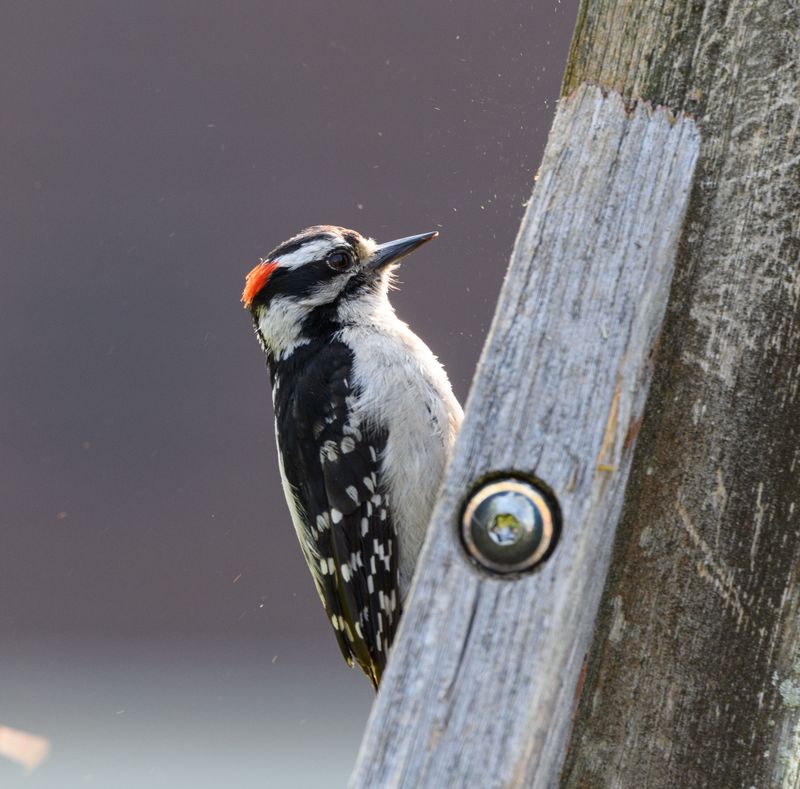
Vocal, assertive, and behaviorally adaptable, that describes this bird’s typical behavior. Red-bellied woodpeckers are among the most behaviorally complex birds you can attract to a backyard.
They cache food, which means they store it for later. You might notice one tucking seeds or insects into bark crevices for a future meal.
Their drumming is not just noise. Rapid pecking communicates territory boundaries and attracts mates during breeding season.
Males tend to drum louder and more frequently than females. If you hear intense hammering on a bare branch, there is a good chance a male is announcing his presence.
These birds are opportunistic feeders. Their diet shifts with the seasons, moving from insects in summer to nuts and berries in fall and winter.
They are surprisingly dominant at feeders. Despite their medium size, they will hold their ground against larger birds without hesitation.
Red-bellied woodpeckers also investigate unusual surfaces. Metal gutters, wooden siding, and even plastic pipe can attract their attention when they are searching for food or testing acoustics.
Pairs work together during nesting season. Both the male and female excavate the nest cavity, taking turns chipping away at soft or decaying wood.
Watching their movement patterns over a few days reveals a lot. They follow consistent foraging routes, and tracking those routes helps you understand how your yard fits into a red-bellied woodpecker’s larger daily world.
Seasonal Patterns Behind Woodpecker Sightings
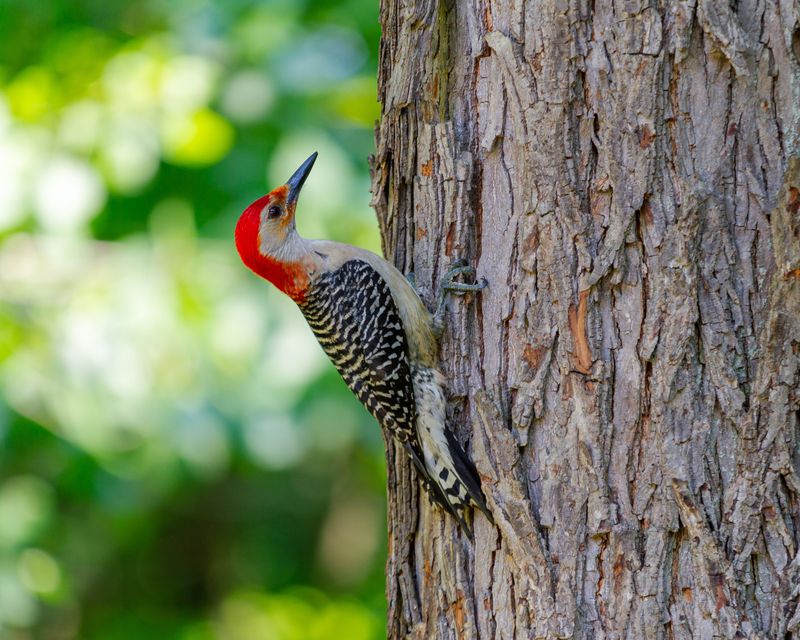
Winter sightings are especially notable. When most birds have migrated south, red-bellied woodpeckers stay put, making them one of the most reliable year-round backyard birds in Missouri.
Cold months push them toward feeders more aggressively. Natural food sources thin out, and suet or sunflower seeds become critical parts of their winter feeding strategy.
Spring brings a noticeable shift in behavior. Drumming increases sharply as males establish territories and attract mates starting as early as late February.
Nest excavation typically begins in spring, often between April and June depending on region. Pairs select soft or partially decayed wood, often choosing bare tree limbs or utility poles in suburban settings.
Summer sightings include juveniles. Young birds typically leave the nest sometime in early summer.
Parent birds continue feeding young even after they fledge. Watching an adult pass food to a perched juvenile is one of the most charming backyard moments you can witness.
Fall triggers a different kind of movement. Red-bellied woodpeckers begin caching food heavily, preparing for months when foraging becomes more difficult.
Acorn season in October and November is peak activity time. These birds compete fiercely with squirrels and blue jays for the best nut storage spots in bark and crevices.
Year-round presence is one of the most appealing traits of this species. A red-bellied woodpecker spotted in any season tells you that your yard offers something genuinely worth returning to, no matter the weather.
How To Attract More Red-Bellied Woodpeckers To Your Yard
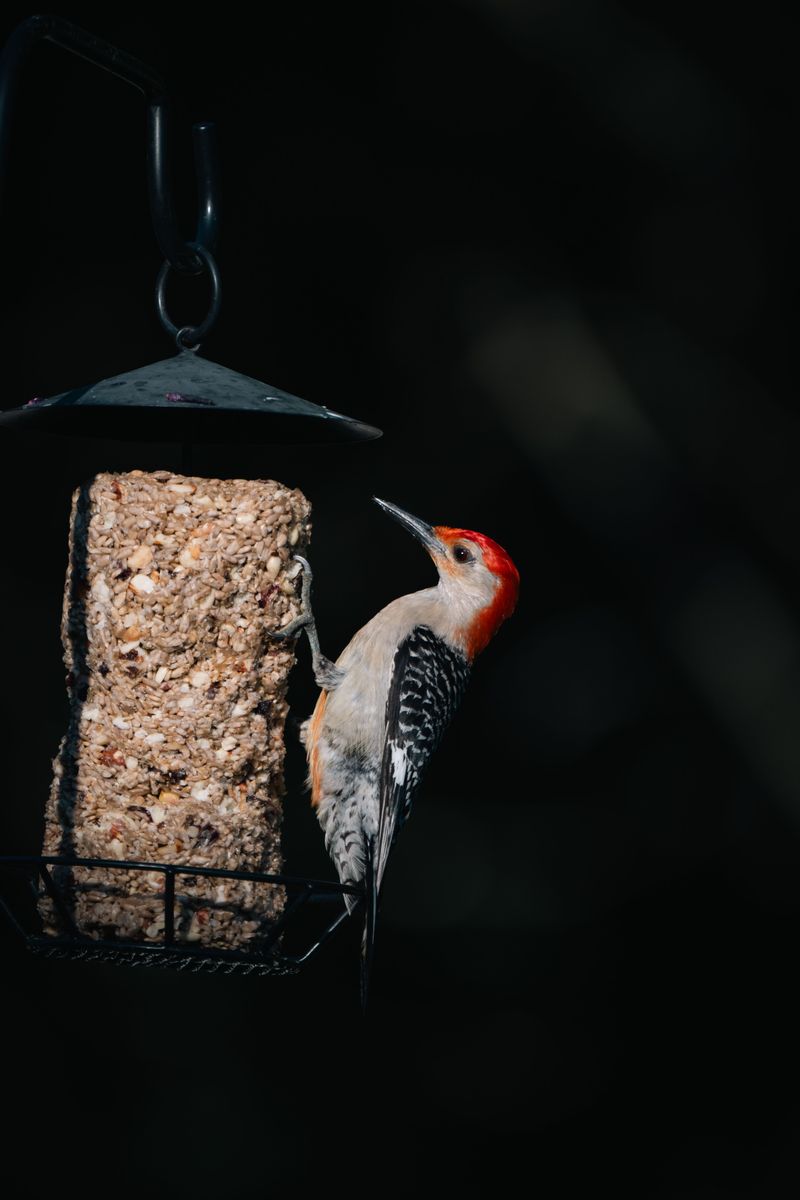
You want more of these birds around? Good news, attracting them is straightforward once you know what they need. Start with the right food and the right setup.
Suet feeders are the single most effective tool. High-fat suet cakes give woodpeckers the energy they need, especially during cold Missouri winters.
Mount feeders on or near trees when possible. Red-bellied woodpeckers feel safer feeding close to cover rather than on open pole setups in the middle of a lawn.
Offer sunflower seeds in a hopper or platform feeder. These birds prefer to grip and peck rather than perch at tube feeders, so wider surfaces work better.
Leave bare trees standing when it is safe to do so. Snags, as these standing bare trees are called, provide both food and potential nesting spots.
Native plantings can make a difference. Fruit-producing native shrubs, such as serviceberry, pokeweed, and Virginia creeper, may supplement a woodpecker’s diet through fall and early winter.
A shallow water feature boosts your yard’s appeal significantly. Moving water, like a small dripper or fountain, attracts attention from birds flying overhead.
Reduce pesticide use as much as possible. Insecticides wipe out the grub and beetle populations that make your trees such valuable foraging ground.
Patience is part of the process. Once a red-bellied woodpecker discovers your setup, it will spread the word through its own territorial patterns, and soon your yard becomes a consistent stop on its daily route.
Signs Of A Healthy Yard Ecosystem For Woodpeckers
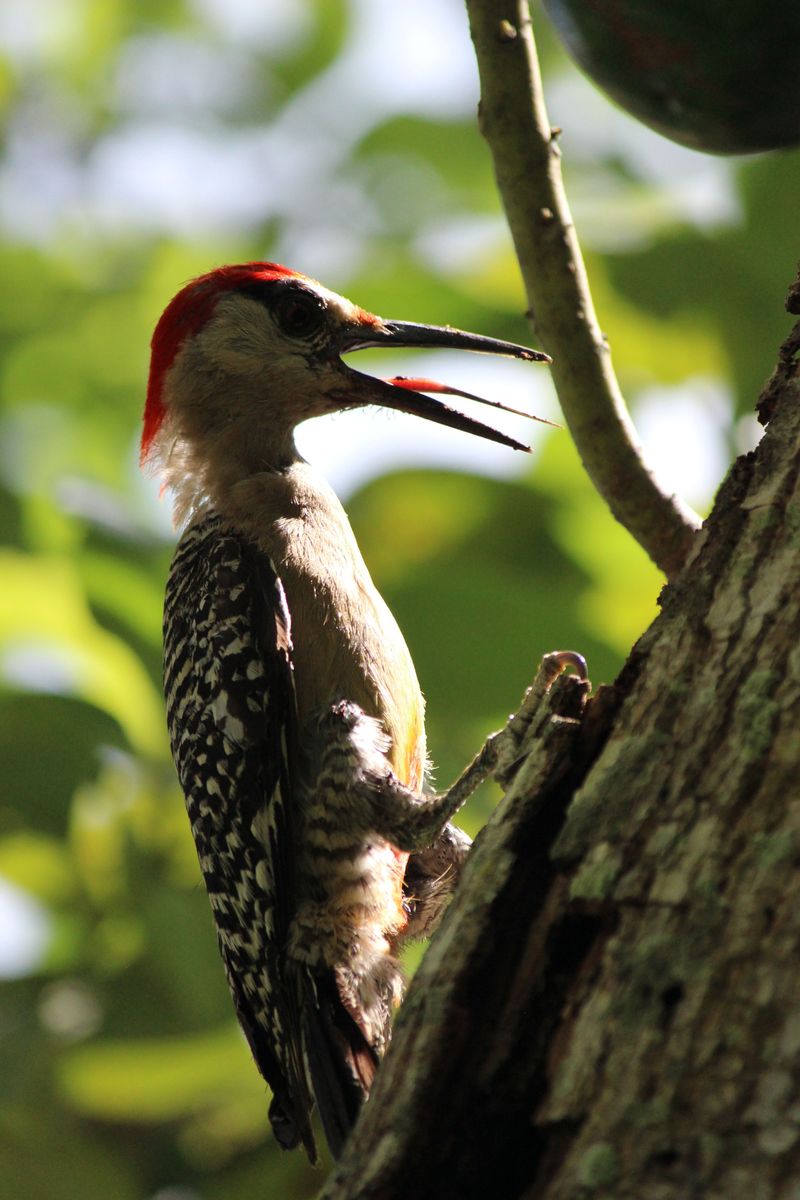
A woodpecker’s presence in your yard can be one indicator of certain habitat qualities. It tells you that your outdoor space supports the kind of biodiversity these birds need to thrive.
Healthy bark beetle populations are a key indicator. If woodpeckers forage actively on your trees, those trees likely host a rich community of insects beneath the surface.
Mature trees with thick, furrowed bark are foundational. Smooth young trees simply cannot support the insect load that makes woodpecker foraging worthwhile.
Leaf litter on the ground matters more than most homeowners realize. Decomposing leaves harbor beetles, ants, and other invertebrates that round out a woodpecker’s diet.
A yard with multiple tree species signals ecological balance. Monoculture plantings tend to support fewer insect species, which directly limits food availability for birds like this one.
Native ground cover and shrubs add another layer of complexity. The more plant diversity you have, the more insect diversity you support, and the more attractive your yard becomes.
Absence of chemical lawn treatments is a strong positive signal. Yards free from broad-spectrum pesticides maintain the insect base that keeps woodpeckers well-fed and returning regularly.
Nesting cavities or nest boxes designed for medium-sized birds can seal the deal. Providing a safe place to raise young makes your yard a complete habitat rather than just a feeding stop.
Spotting a red-bellied woodpecker may indicate your yard supports local wildlife, which is worth maintaining through thoughtful yard care.