Why a Gopher Snake Sighting Near an Arizona Home in Late Summer or Early Fall Is Plausible
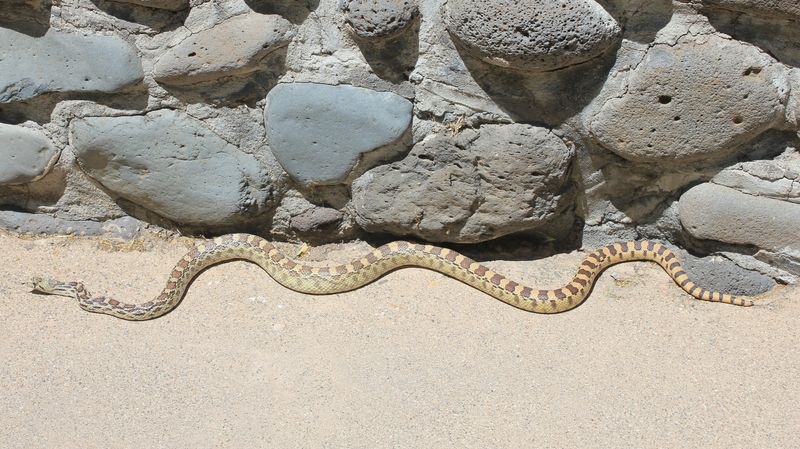
A snake hisses, flattens its head, and buzzes its tail in the dry leaves by your patio. Your heart jumps, and the word rattlesnake pops into your head.
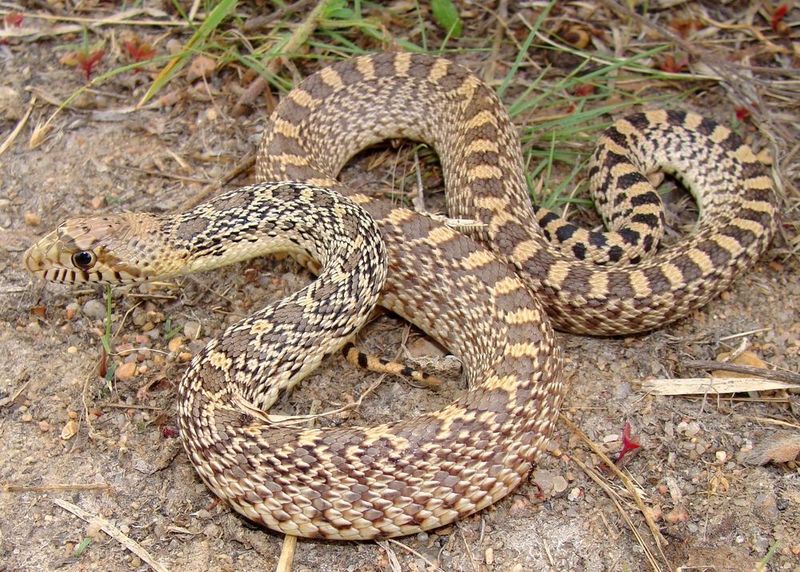
In Arizona, though, it could be a Sonoran gopher snake, a nonvenomous animal that puts on a very convincing act. Here is why seeing one in late summer or early fall makes sense, what it may mean for rodents, and how to stay safe.
A late-season sighting is plausible, but a statewide increase is unproven
Arizona’s warm weather keeps reptiles moving for much of the year. Arizona Poison and Drug Information Center guidance says reptiles are generally most active in the warmer months, from April through October, and may be seen during the day in spring and fall.
That general rule is not specific to gopher snakes, but it helps explain why a late-season encounter is not a strange event.
For gopher snakes in particular, a Tucson-area naturalist’s account reports many local encounters in August and early September, mostly hatchlings. The same writer describes a peak in late April and May, and says he has seen foraging gopher snakes in every month.
Keep the limits in mind. This is one local observer’s record, not a statewide monitoring program.
Nothing here shows that sightings near homes are rising across Arizona, and nothing shows a gopher snake peak that lasts through all of fall. What it does show is that a sighting in August or September is a reasonable thing to happen.
A sighting near a house does not explain why the snake is there
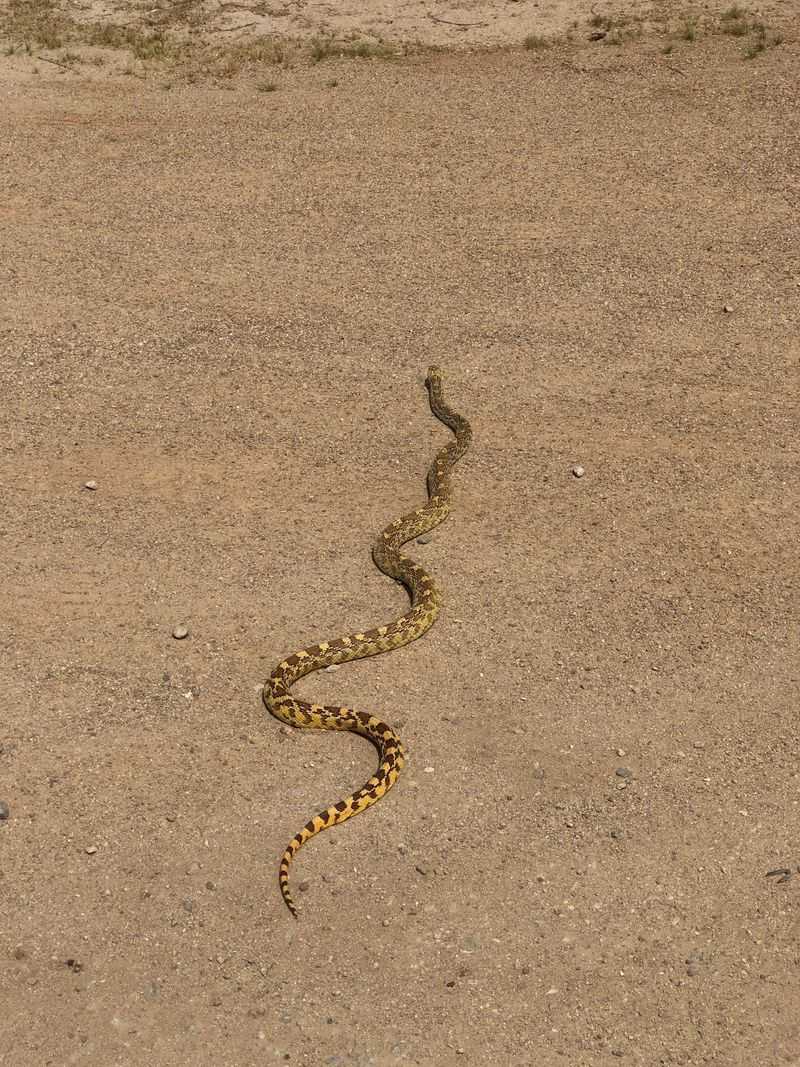
Spotting a snake close to your home naturally makes you ask why it showed up. The honest answer is that nobody can tell from a single sighting.
The Tucson naturalist’s notes describe when people ran into gopher snakes, not what drew a snake to any particular property. That account does not say these snakes seek out houses, and it does not link sightings to a certain kind of yard.
So avoid jumping to conclusions. A snake by your garage does not prove you have a rodent problem, and it does not mean the animal has moved in.
It may simply be passing through on its way somewhere else, since a snake crossing open ground cannot tell us its reasons.
Treat it as a single sighting with an unknown cause. Note where you saw it, keep kids and pets inside or well back, and let the snake continue on its way.
A rattling impression does not identify the snake
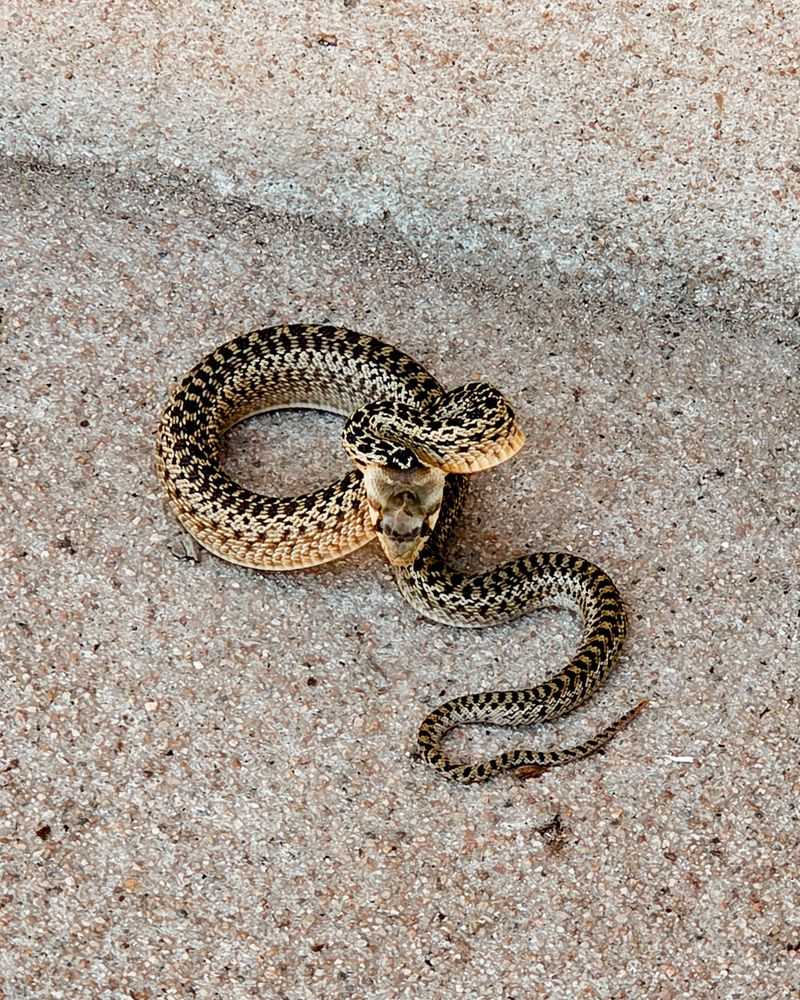
Gopher snakes have a clever defense. According to the Phoenix Zoo, a threatened one may hiss loudly, flatten its head, and shake its tail.
In dry leaves or grass, the shaking tail can make a buzzing noise that sounds like a rattle, even though the snake has no rattle at all.
The performance works because it looks and sounds like a rattlesnake. That is the point of it, and it can fool people standing nearby.
Your Arizona Garden Changes Every Week. Your Plan Should Too.
Gardening in Arizona changes quickly throughout the season. Every Friday you’ll receive a simple weekly plan showing exactly what to plant, prune, fertilize, harvest, and protect so you never miss the right timing.
It also means a sound, a head shape, or a quick glance is a poor way to decide what you are looking at. Someone who hears a buzz and says it is only a gopher snake could be wrong, and the cost of that mistake is a venomous bite.
If you are not sure, treat the snake as one you should not go near. Back away slowly, keep pets and children behind you, and give it room to leave.
Rodents are useful prey, but not the whole menu
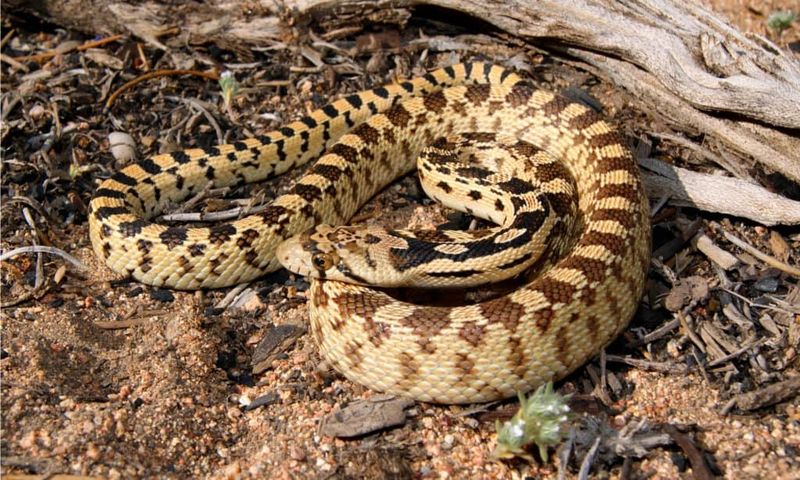
Here is the reassuring part. The Sonoran gopher snake is a nonvenomous constrictor, and the Phoenix Zoo says it eats small mammals, birds, eggs, and lizards.
Mice and other rodents are part of that menu, so these snakes can play a useful role as native predators.
The menu is wide, though. A peer-reviewed study of gopher snake feeding documents a varied diet, with prey that differs from region to region.
Calling the snake a rodent hunter is fair, but it is only part of the story.
That is why a gopher snake should not be counted on as pest control. Nothing in these sources measures how much it reduces rodents in a residential yard.
One snake passing through will not clear out a rodent problem, and it cannot make a yard pest-free. Think of it as a possible bonus from the local wildlife, not a service you can rely on.
Give any snake space and call for help when needed
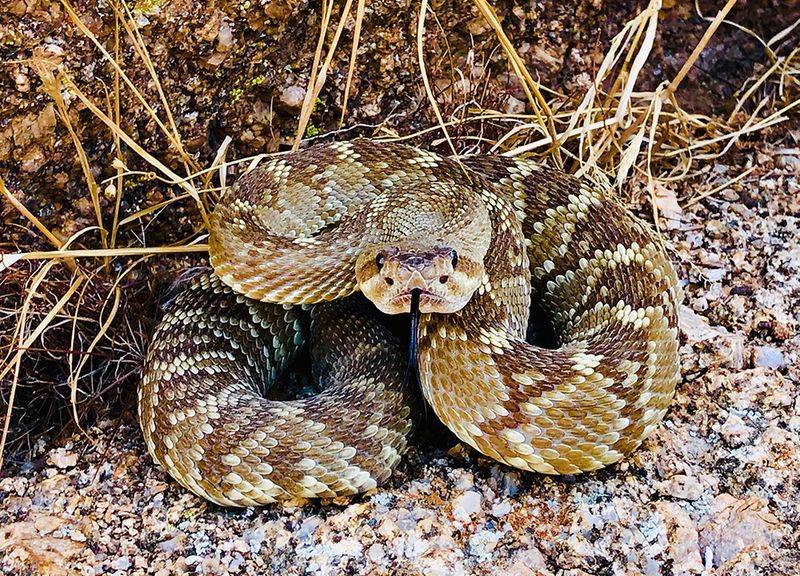
Good snake safety does not depend on knowing what kind of snake it is. Keep people and pets away, leave the snake alone, and let it move on by itself.
Do not try to pick it up, trap it, or move it yourself.
The City of Scottsdale advises observing a snake from at least six feet away and leaving it alone when it and people or pets are not in danger. Six feet is a minimum distance for watching, not a sign that approaching or handling is safe.
If the snake needs to be removed, call a qualified local remover. A gopher snake can bite if it feels threatened, so nonvenomous does not mean safe to handle.
If someone is bitten, get medical help right away. Arizona Poison Center guidance says not to delay care to catch or identify the snake, and it warns against handling even a dead venomous snake.
Potentially helpful does not mean a pest-control promise
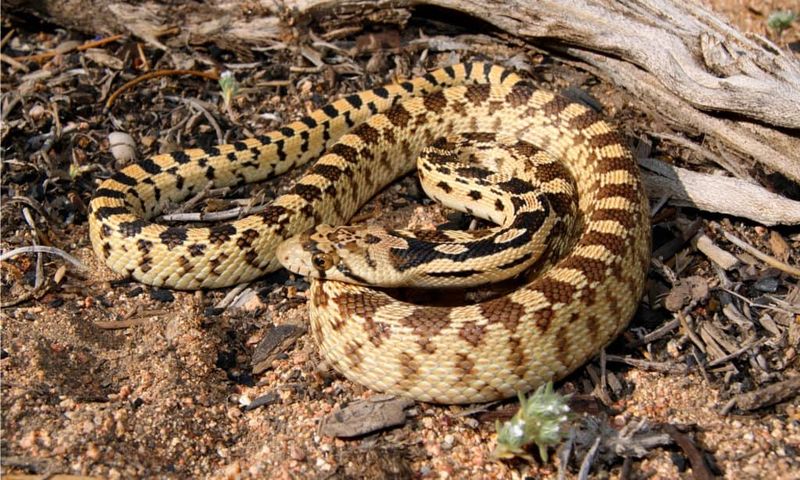
Two ideas fit together here. A gopher snake sighting in late summer or early fall is plausible, since local observers report many encounters in August and early September.
Still, nobody has shown a statewide rise near homes.
The snake may also eat rodents, as the Phoenix Zoo notes among its prey, but its visit cannot promise a pest-free yard. It eats many other things, and one snake cannot be counted on to change what lives around your house.
The practical path is simple. Appreciate what the animal may offer from a distance, and follow the kind of local safety advice cities give: leave it alone and call a qualified remover if it must go.
A desert yard works best when the wildlife is respected, not handled. The snake by your patio is just doing its job, and your job is to stay back.