Why Eastern Screech Owls Choose Some Florida Yards For Nesting
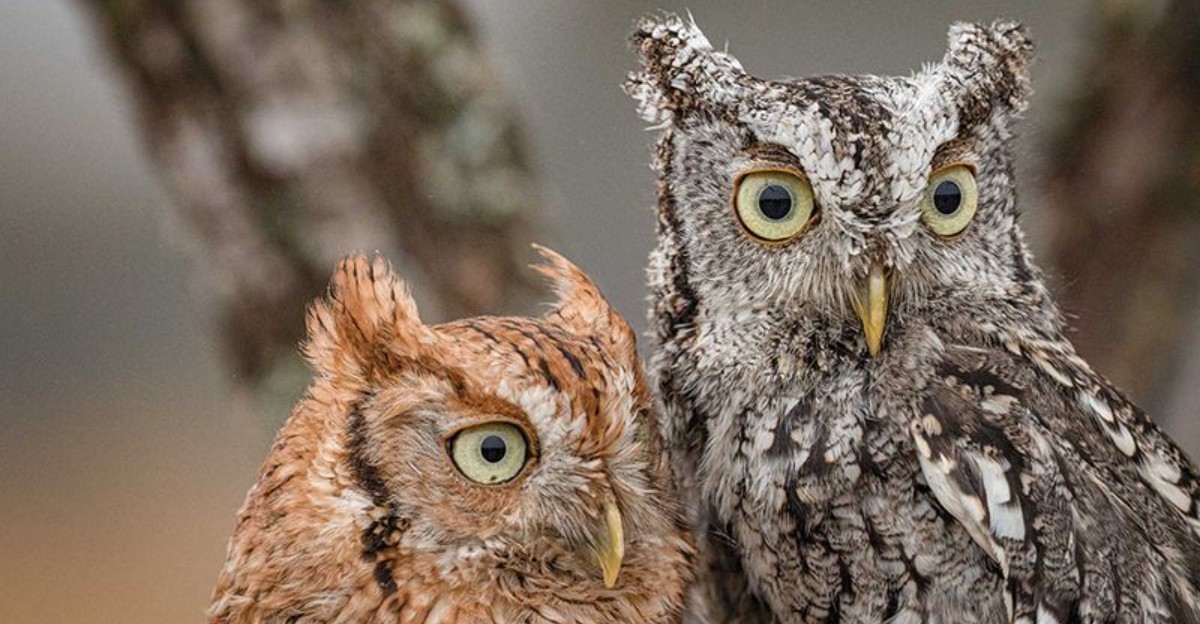
A small owl might already be scoping out your Florida yard, and most homeowners have no idea what it’s actually looking for.
You’d assume any patch of trees would do, but screech owls are far pickier than that. They skip yards that look perfectly fine to you and settle into others without hesitation, and the difference comes down to a short list of details most people overlook completely.
One overlooked feature in your yard could be the deciding factor, and it has nothing to do with how manicured or wild your landscaping looks.
Take a walk through your yard with fresh eyes this week. What a screech owl notices might surprise you.
1. Old Trees Give Screech-Owls The Nest Cavities They Need
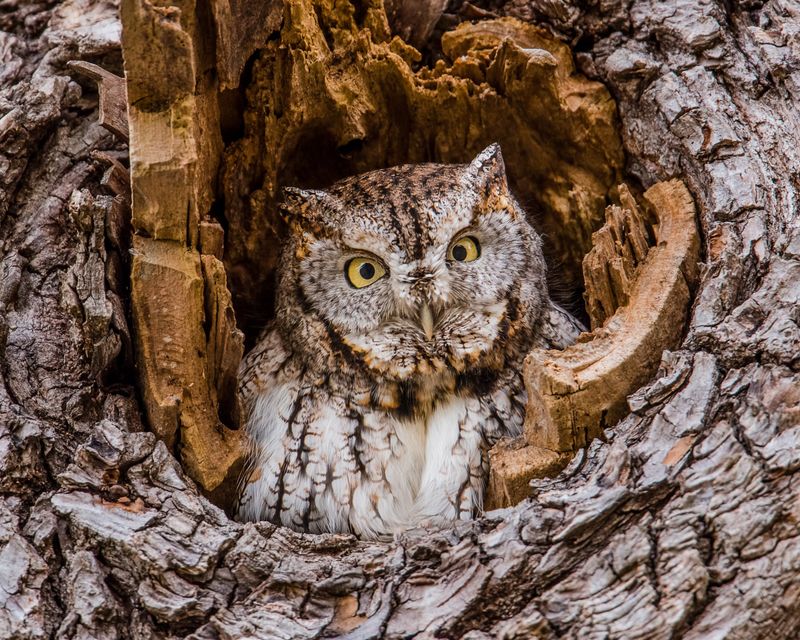
Here is the quirk that shapes everything else: Eastern Screech Owls cannot carve their own homes. They are cavity nesters, which means they borrow holes that something else made or that time and weather hollowed out on their own.
Woodpeckers do much of the heavy work. A pileated or red-bellied woodpecker chisels out a nest chamber, uses it for a season, then moves on.
Squirrels leave behind openings too, and so do broken limbs that rot inward over the years.
That is why yards with older trees tend to host owls while newly landscaped lots stay empty. A young laurel oak simply has not had enough decades to develop the soft, hollowed pockets these birds look for.
Live oaks, cabbage palms with old boots, and aging pines all tend to earn their keep. Even a leaning trunk with a knothole the size of a grapefruit can become prime real estate.
Across much of Florida, the shortage of suitable nest cavities can limit where screech owls are able to breed. Habitat researchers call that a limiting factor.
If you already have a mature tree with a hole in it, you are further ahead than most. Resist the urge to patch it, fill it, or seal it up with foam.
2. A Nest Box Can Turn An Ordinary Yard Into Owl Territory
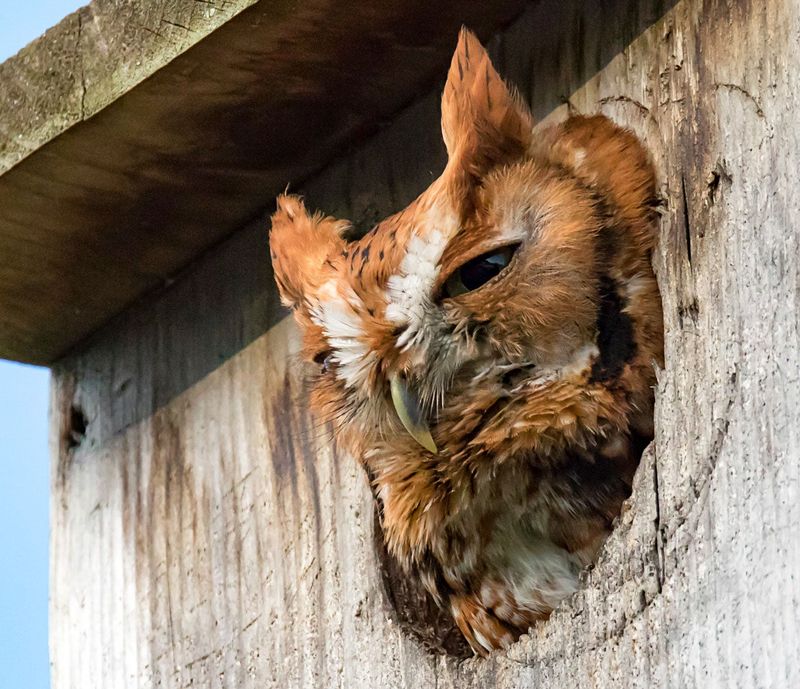
Missing the ancient oak? A plywood box can close the gap surprisingly fast.
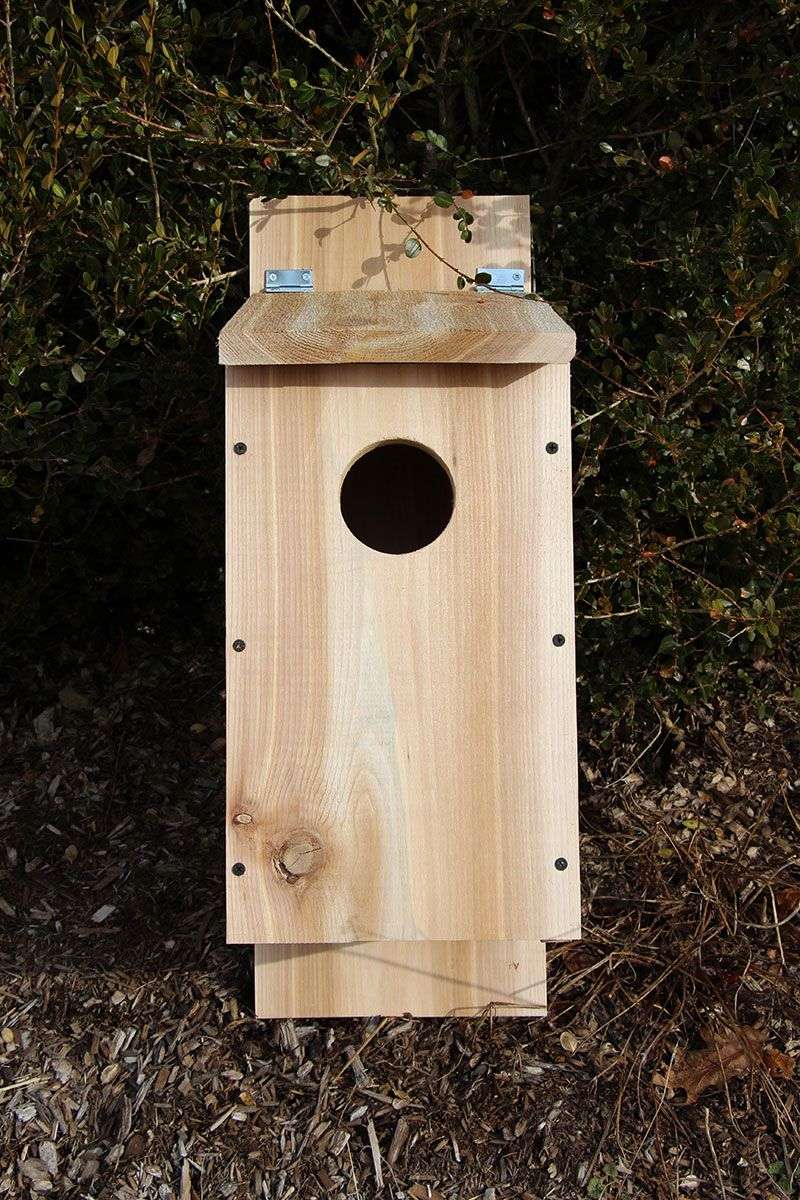
Screech owls can readily use human-built nest boxes, making them a practical option when natural cavities are scarce.
Mounting height matters. Roughly ten feet off the ground on a sturdy trunk, post, or even a building wall hits the sweet spot for these birds.
Shade is the second piece of the puzzle. Boxes tucked along a woodland edge, in sparse woods, or under the canopy of a big yard tree get noticed far more often than ones baking in open sun.
Point the entrance hole away from whatever direction your worst weather comes from. East or south usually works well in Florida, since it keeps driving rain and wind out of the chamber.
Toss two or three inches of wood chips or dry leaves into the bottom. Owls add no nesting material themselves, so that loose layer stands in for the natural debris found in a real tree hollow.
Your Florida Garden Changes Every Week. Your Plan Should Too.
Gardening in Florida changes quickly throughout the season. Every Friday you’ll receive a simple weekly plan showing exactly what to plant, prune, fertilize, harvest, and protect so you never miss the right timing.
A branch within a few feet of the hole gives fledglings somewhere to scramble. It also gives the male a daytime perch while his mate sits on eggs.
Put it up in autumn. Pairs often scout boxes months before the late-winter nesting season begins.
3. Dense Vegetation Gives Owls Cover After Dark
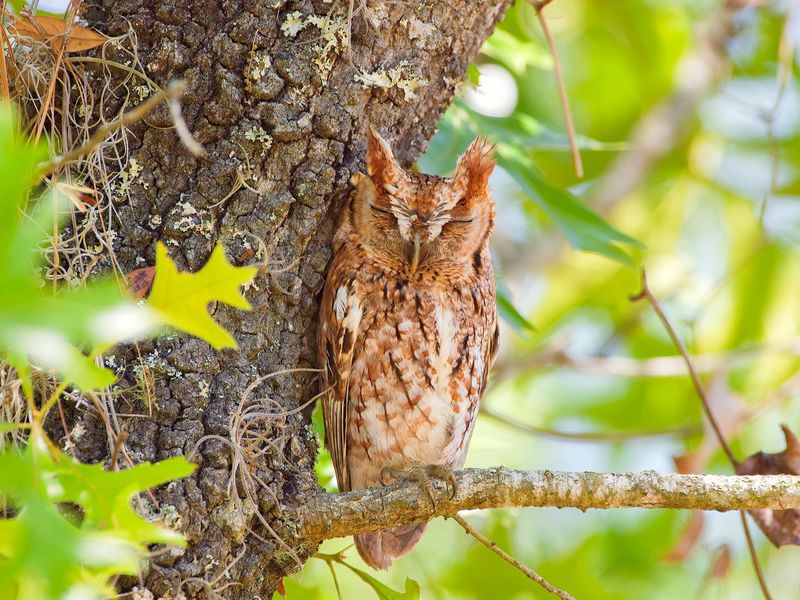
Camouflage is this owl’s superpower, and it only works if there is something to hide against. Their bark-patterned feathers, gray in some birds and rusty red in others, turn them into knots on a branch.
Daylight hours get spent roosting, usually inside a cavity or pressed against a trunk behind a screen of leaves. A yard stripped down to grass and a few skinny palms offers nowhere to disappear.
Layered planting solves that. Think tall canopy trees over medium shrubs like wax myrtle, viburnum, or beautyberry, with vines and palmettos filling the lower gaps.
Crows, hawks, and jays all harass screech owls when they spot one in the open. Thick greenery near the nest gives the birds a way to slip out of sight quickly.
During nesting season, the male usually roosts somewhere close to the box or cavity rather than inside it. Shady foliage within a short flight gives him that option.
Native plants pull double duty here, since they also feed the moths and beetles owls hunt. A hedge along the fence line does more good than a row of clipped ornamentals.
Leaving one corner of the yard a little shaggy is not laziness. To an owl, it reads as shelter.
4. Insects And Lizards Can Make One Yard Worth Returning To
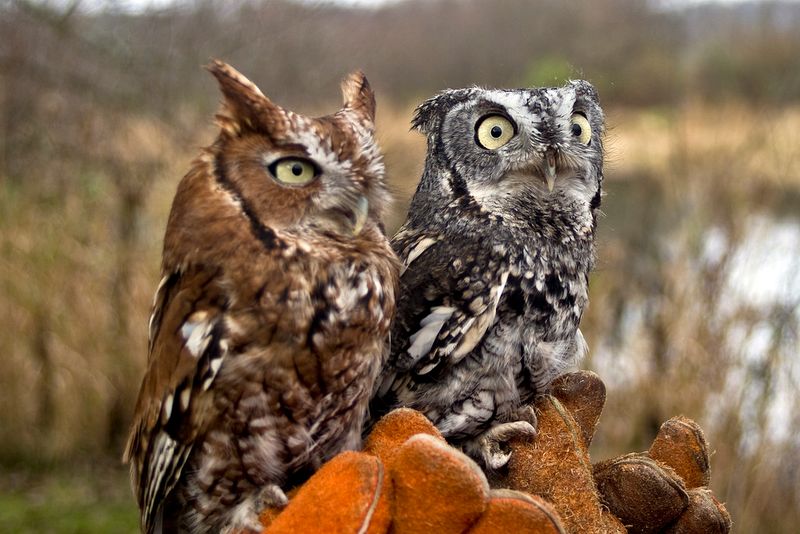
Picture a menu that includes moths, crickets, beetles, earthworms, anoles, tree frogs, crayfish, mice, shrews, small bats, and the occasional songbird. That is one bird’s grocery list, and it explains a lot about which yards get chosen.
Florida screech owls lean heavily on invertebrates and small reptiles, especially during the warm months. Brown anoles scampering along a fence are basically snack food.
Yards drenched in broad-spectrum insecticide come up short. Fewer beetles and moths means fewer meals, and the owls quietly shift their hunting somewhere more productive.
A leaf litter layer under shrubs supports worms, roaches, and crickets. Native flowering plants bring in night-flying moths, which rank among the favorites.
Rodent bait is a different concern altogether. Poisoned mice can pass those chemicals along to whatever eats them, so snap traps or simple exclusion work better around owl-friendly property.
Water helps too. A shallow birdbath or a small pond draws frogs and insects, stacking the odds in your favor.
Owls remember productive territory and tend to stay put year-round rather than migrating. Feed the bottom of the food web, and the top of it moves in.
A resident pair can consume a wide variety of insects and other small prey while hunting around a suburban yard.
5. Dark Nights Give These Small Owls A Better Hunting Ground
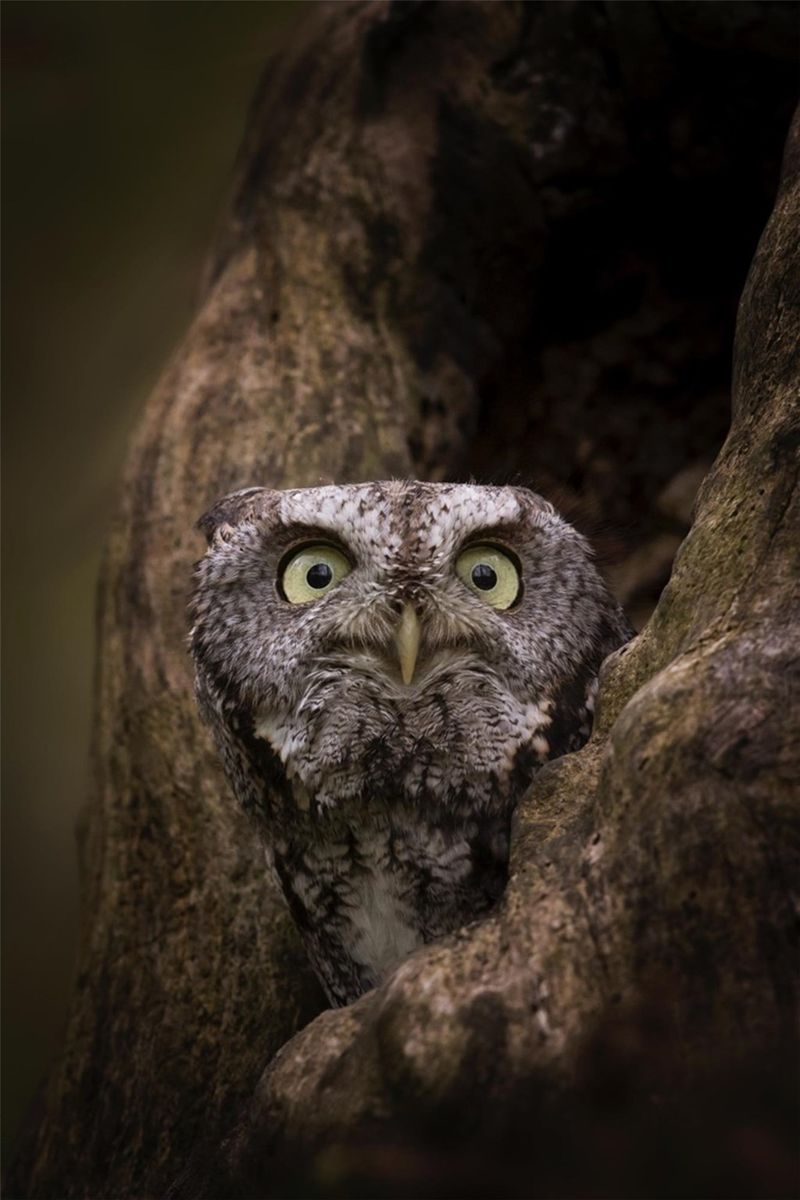
Floodlights feel safe to us and look like a wall of glare to an owl. Screech owls hunt by sight and by hearing, dropping from a perch onto whatever moves below.
Bright artificial light scrambles that system. Many prey animals avoid lit ground entirely, so a well-lit lawn becomes a no-no zone in terms of hunting value.
Nocturnal insects get disoriented by lamps as well, clustering around bulbs instead of moving through vegetation where owls can grab them. The food simply goes to the wrong place.
Research on light pollution shows it also stretches out the active day for some night birds, throwing off natural rhythms. Owls nesting near constant glare face a harder time.
Fixes are refreshingly cheap. Switch off decorative lighting once the evening winds down, and put motion sensors on anything you keep for security.
Where light is needed, aim for shielded fixtures that cast the beam downward. Warm, long-wavelength bulbs in amber or soft yellow disturb wildlife far less than cool white or blue-toned ones.
Closing blinds at night keeps indoor light from spilling across the yard. Small habit, real difference.
Dark patches under trees give owls the edge their eyes were built for, and your electric bill drops a little too.
6. Open Lawn Beside Trees Creates A Useful Hunting Zone
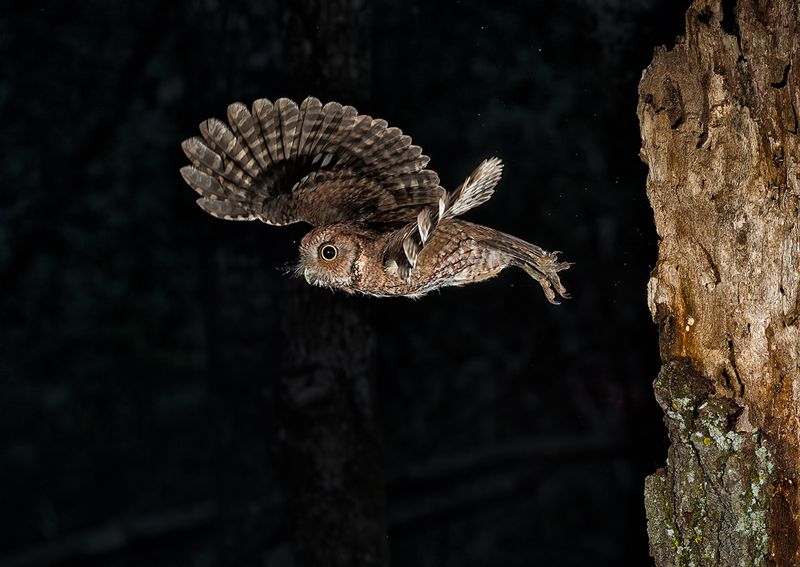
Screech owls are ambush hunters, not tireless searchers. They park on a low branch, watch, listen, and then drop onto something rustling below.
That style of hunting needs two ingredients sitting side by side: solid perches and ground they can actually see. All trees and no clearing makes the swoop difficult.
All lawn and no trees removes the perch entirely. The sweet spot is a mix, which happens to describe a huge number of Florida yards already.
An open understory helps as much as open lawn. Trimming out the tangled middle layer while keeping the canopy overhead gives owls clean flight lanes between perch and prey.
Edges are where the action happens. The border between mowed grass and a shrub line, or between lawn and a wooded lot, tends to be the busiest hunting strip.
Even a modest quarter-acre works if it includes both elements. Parks, golf course borders, and older neighborhoods with scattered shade trees all support these birds nicely.
Skip the impulse to fill every square foot with landscaping. A patch of plain grass has genuine value to a hunting owl.
Watch the edge of your yard around twilight. That low, silent glide across the grass is easy to miss once.
7. Declined Branches Can Matter More Than A Perfectly Pruned Tree
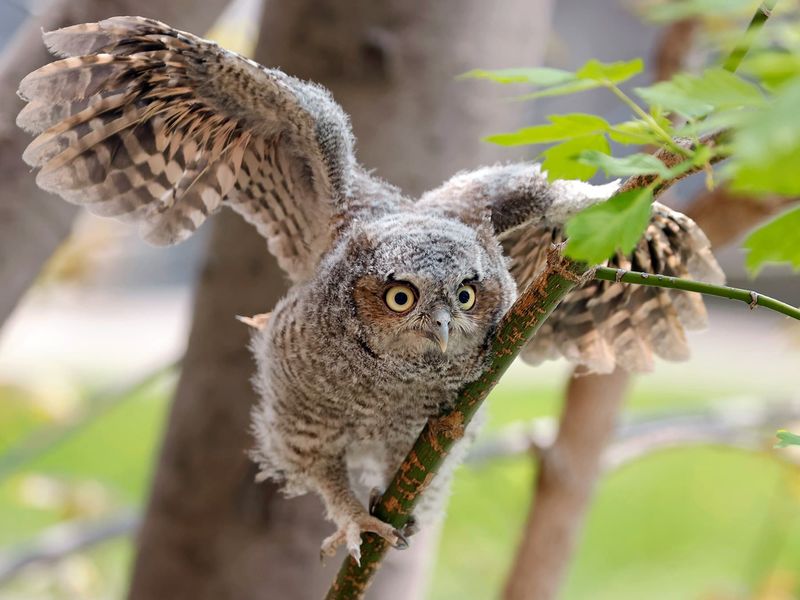
Tidy has a cost. Every bare limb that comes down takes with it a potential perch, a bug buffet, and a future nest hole.
Arborists call standing bare trees snags, and wildlife biologists treat them as treasure. Woodpeckers excavate them, insects colonize the softening wood, and secondary nesters like screech owls move in afterward.
Bare branches make excellent lookouts. With no leaves blocking the view, an owl gets a clear line of sight to the ground below and can launch without brushing foliage.
Safety still comes first, obviously. A leaning snag over the driveway or the kids’ trampoline needs to go, and nobody is arguing otherwise.
Out along a back fence line, though, a weathered trunk can stand for years with no risk to anyone. Consider having an arborist shorten it rather than remove it entirely.
Partial pruning works too. Leaving a few sturdy bare limbs on an otherwise healthy tree gives owls perches without changing much about your yard’s appearance.
Hurricane season complicates things in Florida, so check questionable trees before storms arrive. A shortened snag handles wind far better than a tall one.
Fun detail: those same snags host bluebirds, chickadees, and flying squirrels. Owls are just the headline tenant.
8. Leave Natural Cavities Alone When An Owl Is Using One
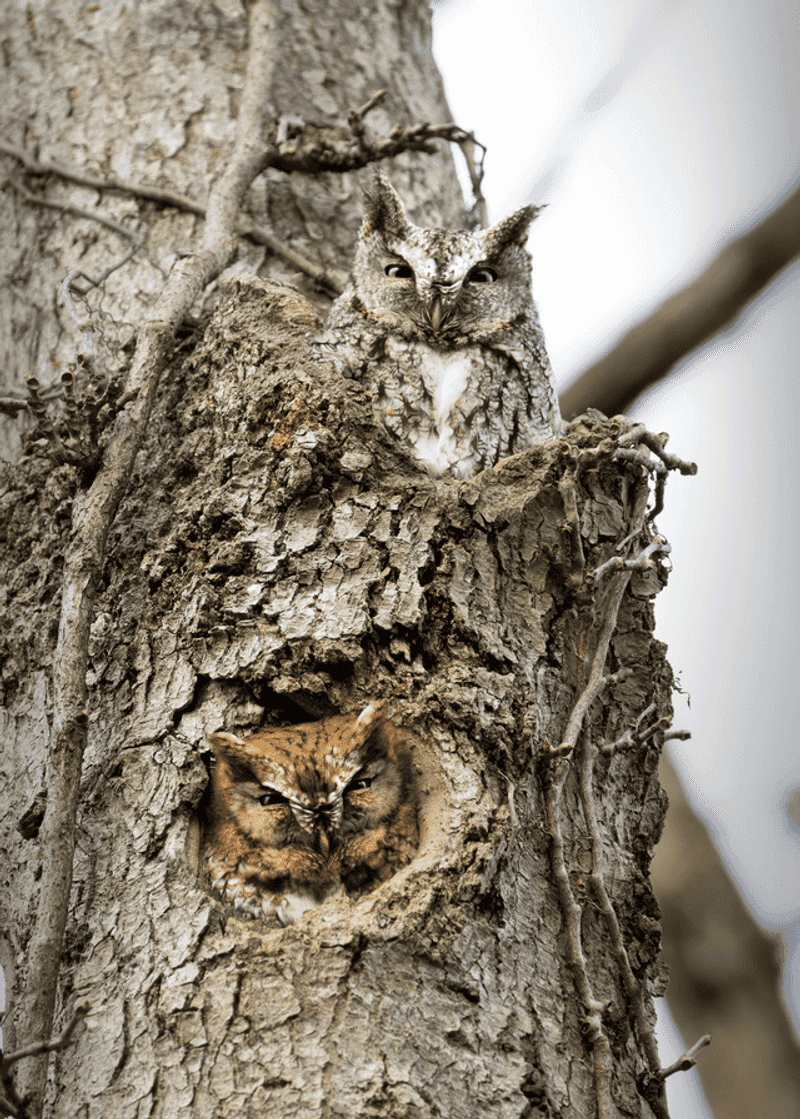
Curiosity is understandable, but a nesting owl needs space more than attention. Once a pair settles into a hollow, the best thing a homeowner can do is step back.
Eastern Screech Owls and their active nests are protected under federal migratory bird laws, so avoid disturbing a nesting pair and check the applicable requirements before tree work.
Tree work should wait. If a cavity tree needs pruning or a limb needs attention, schedule it outside the nesting window rather than during it.
Repeated visits stress the adults. A female flushed off eggs too often may abandon the attempt, and the season gets lost.
Keep ladders, cameras on poles, and flashlights away from the entrance. Watching from a window or across the yard with binoculars gives you the same show without the cost.
Nest boxes deserve similar restraint. Checking once at the start of the season is reasonable, then leave it be until the young have flown.
Branchers, the fuzzy fledglings that hop around before flying well, usually have parents watching close by. Unless a bird is injured or in a road, the right move is to walk away.
Patience pays off. Undisturbed pairs frequently return year after year.
9. Keep Pets Away From The Nesting Area After Owls Move In
Owls handle themselves well against most threats. Fledglings sitting on the ground, however, are another story entirely.
Young screech owls leave the nest before they can fly properly, spending a few clumsy days low in shrubs or on the grass. That window is when a roaming cat or an excited dog causes the most trouble.
Keeping cats indoors solves the biggest piece of it. Outdoor cats affect enormous numbers of birds nationwide, and a fledgling owl is an easy target.
Raccoons pose a separate problem. They climb well and can reach into box entrances, so a metal predator guard around the trunk is worth adding before nesting starts.
Leash walks near the nest tree for a couple of weeks in spring. Dogs rarely mean harm, but a curious nose in the wrong shrub scatters a family fast.
Placement helps prevent the issue in the first place. Boxes set in quieter corners, away from the patio and the dog run, see better success.
Skip mowing directly under the nest tree during those fledgling days. Noise and blades are a poor combination when young birds are on the ground.
Give them two or three weeks, and the whole family will be back up in the canopy.