Why Texas Crape Myrtles Get Powdery Mildew Every Summer And How To Stop It For Good
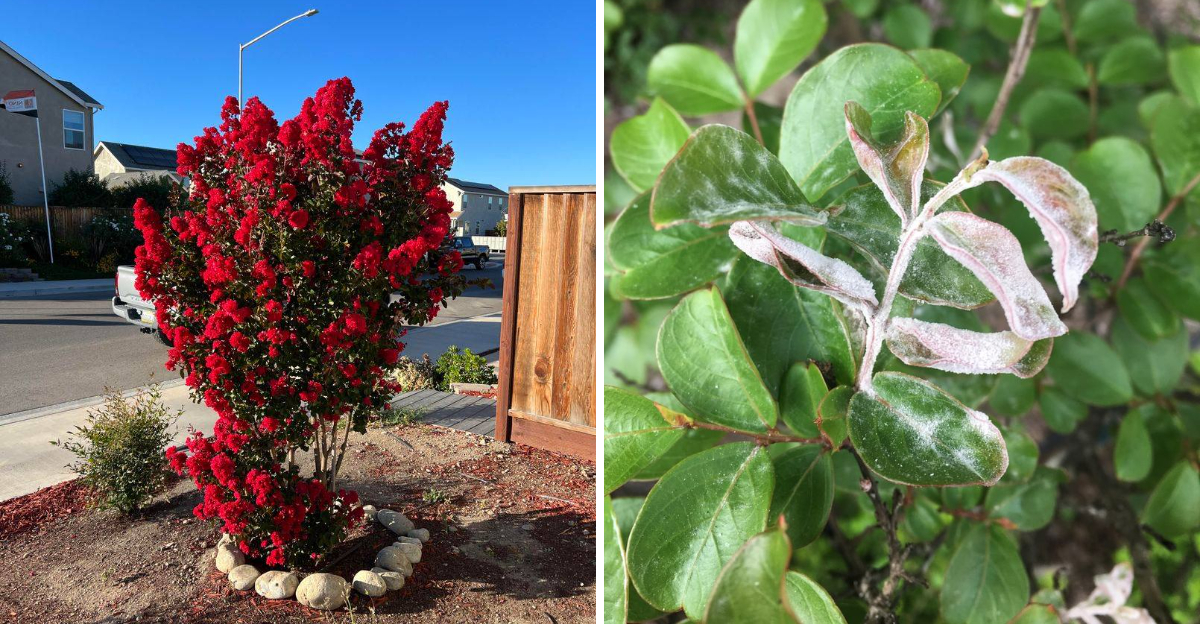
If your crape myrtles are rocking a fuzzy white coating on the leaves and new shoots right now, welcome to one of the most reliable and deeply annoying Texas gardening traditions.
Powdery mildew shows up year after year like it received a personal invitation, and even well-cared-for trees are not immune.
Frustrating? Absolutely.
But here’s the thing: once you understand why it keeps coming back, you’re already in a much stronger position to deal with it.
This isn’t one of those garden problems that just randomly appears out of nowhere. There are real reasons it keeps showing up in your landscape, and most of them are actually fixable.
Smarter plant choices, better placement, and paying attention at the right time can seriously reduce how often and how aggressively powdery mildew crashes your crape myrtle party.
1. Tender New Growth Is The First Target
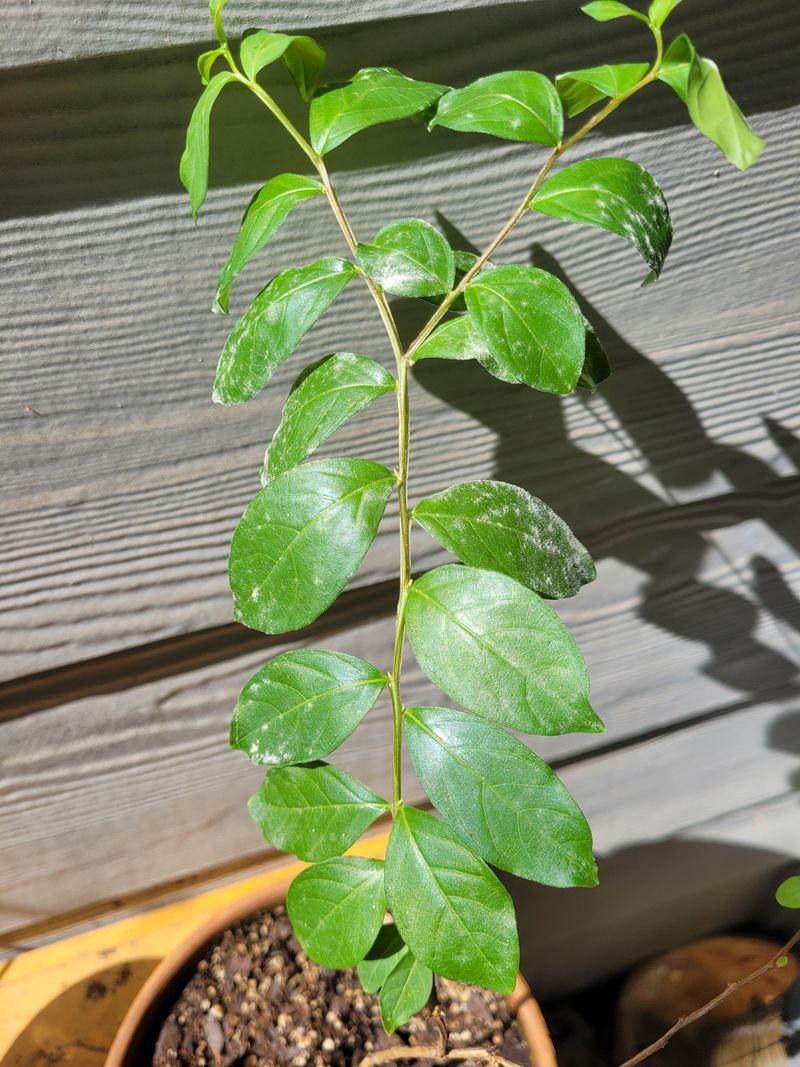
White powdery growth on a crape myrtle almost always shows up on the newest, most tender parts of the plant first.
Young shoots and freshly unfurled leaves have thin, soft cell walls that the powdery mildew fungus can penetrate far more easily than older, tougher foliage.
That is one reason why the disease seems to appear out of nowhere right when your crape myrtle looks its most fresh and promising.
The fungus that causes powdery mildew does not need wet leaf surfaces to get started the way many other plant diseases do. It actually thrives in warm, dry days paired with cool, humid nights, which Texas delivers regularly in spring and early fall.
Those conditions encourage spore production and spread without any rain at all.
Because new growth flushes repeatedly throughout the growing season, crape myrtles stay vulnerable for longer stretches than many other landscape plants.
Each time a tree pushes out a new round of shoots, fresh tissue becomes available for the fungus to colonize.
Keeping an eye on those new flushes, especially after pruning or heavy fertilizing, gives you the best chance to catch early signs before the coating spreads across whole branches. Spotting the problem early matters more than most gardeners realize.
2. Spring And Fall Weather Can Trigger Outbreaks
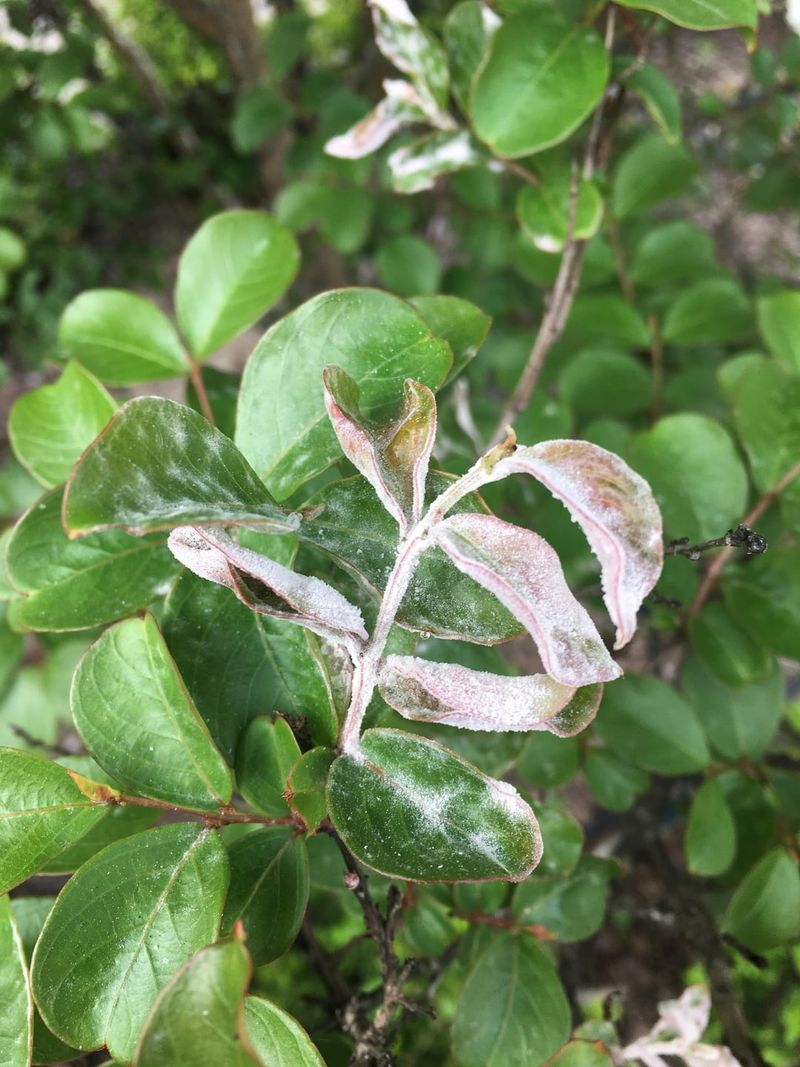
Many Texas gardeners assume powdery mildew is a summer problem because that is when they are spending the most time outside noticing their plants.
In reality, the disease tends to be most active during spring and fall, when temperatures are moderate and nights cool down enough to raise humidity around the foliage.
The heat of a true Texas summer can actually slow down mildew activity on its own.
Spring in Texas brings warm afternoons, cooler evenings, and occasional cloudy stretches that create ideal conditions for mildew spores to germinate and spread.
Fall brings similar patterns as temperatures drop back into a comfortable range after the intense heat of July and August.
Those two shoulder seasons are when crape myrtles often flush new growth while the weather is also most favorable for the fungus.
Understanding this seasonal pattern helps you time your attention better. Watching plants closely as spring growth begins and again as fall temperatures settle in gives you a real advantage.
Your Texas Garden Changes Every Week. Your Plan Should Too.
Gardening in Texas changes quickly throughout the season. Every Friday you’ll receive a simple weekly plan showing exactly what to plant, prune, fertilize, harvest, and protect so you never miss the right timing.
If you see the early dusty coating on a few leaves, acting quickly during those windows is far more effective than waiting until the problem covers entire branches.
Cooler, humid nights combined with mild daytime temperatures are your cue to start checking crape myrtles carefully in Texas landscapes of all sizes.
3. Crowded Branches Trap Humidity Around Leaves
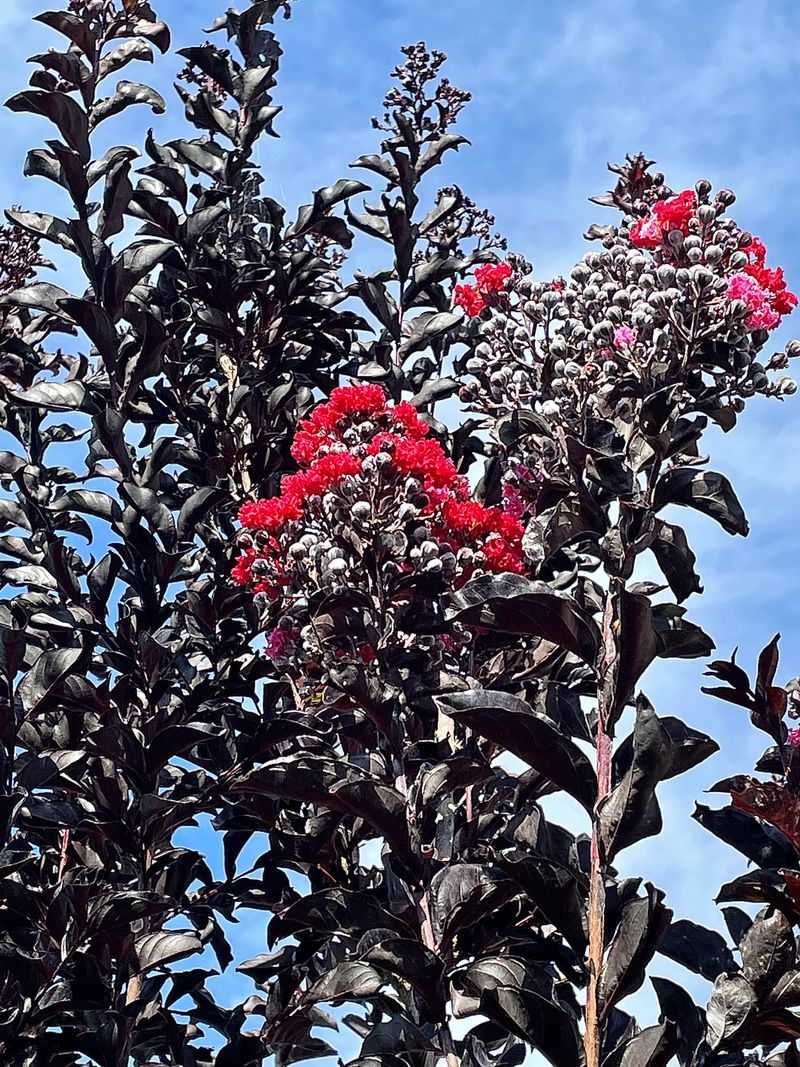
A dense canopy might look lush and full, but inside those tightly packed branches, air barely moves. Stagnant air around foliage allows moisture from humid Texas nights to linger on leaf surfaces far longer than it would on a well-spaced plant with open structure.
That lingering humidity gives powdery mildew spores the environment they need to take hold and spread.
Crape myrtles planted too close together or allowed to grow without any thoughtful shaping tend to develop this kind of internal crowding over time.
Foundation beds, streetscapes, and mixed borders in Texas neighborhoods are common places where crape myrtles end up competing for space in ways that reduce airflow through their canopies.
The result is a microclimate inside the tree that stays humid long after the sun rises.
Selective thinning of crossing, rubbing, or inward-growing branches can open up the canopy without dramatically changing the shape or size of the tree. The goal is not to strip the tree bare but to allow air to move through more freely.
Even modest improvements in airflow can reduce how long moisture stays trapped around the foliage.
In Texas landscapes where crape myrtles are planted in clusters or rows, giving each tree enough room to breathe from the start is one of the most practical long-term steps you can take.
4. Too Much Shade Makes Mildew More Likely
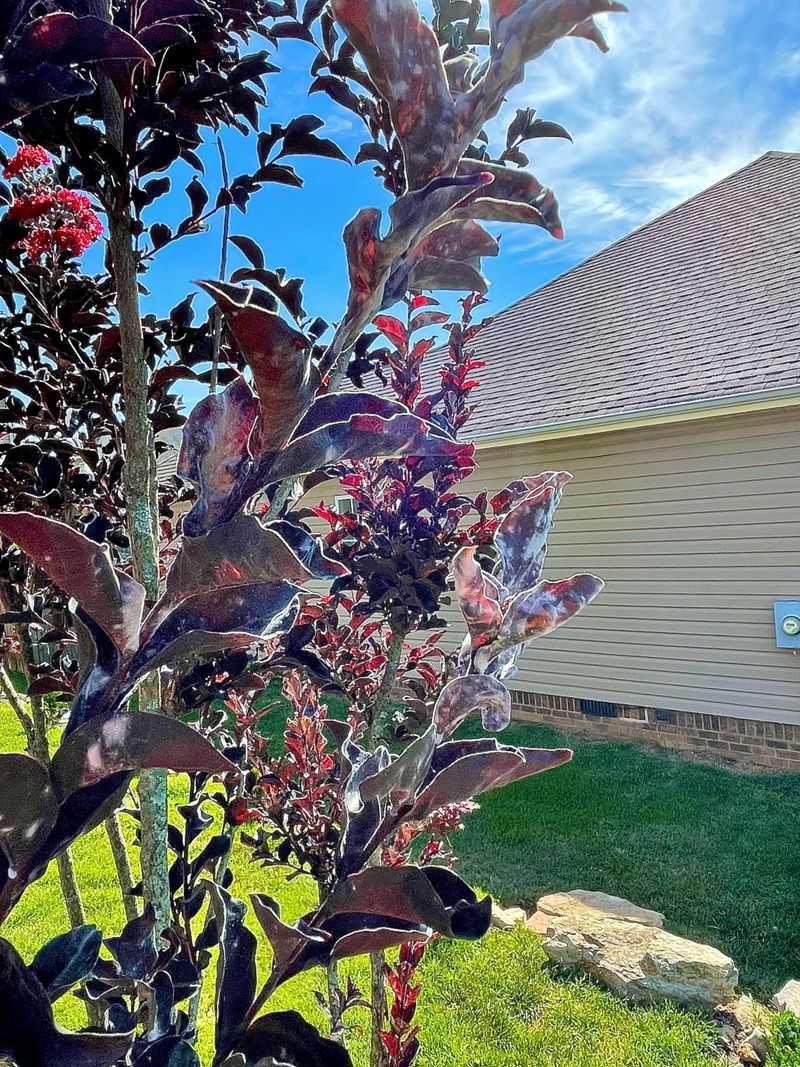
Shaded planting spots are one of the most overlooked reasons why certain crape myrtles seem to struggle with powdery mildew year after year while nearby plants stay relatively clean.
Sunlight dries leaf surfaces quickly, warms the foliage, and creates conditions that slow mildew development.
When a crape myrtle is tucked under a large oak or pushed into a corner where buildings block morning sun, those natural defenses disappear.
Crape myrtles are genuinely sun-loving plants. They grow best and look their healthiest when they receive at least six hours of direct sunlight daily, and more is generally better in a Texas landscape.
Trees planted along north-facing walls, under established shade trees, or in narrow side yards between structures often struggle because the light simply is not adequate for the plant to perform well.
Shade also keeps soil and mulch cooler and moister for longer periods, which contributes to a generally more humid environment around the base and lower canopy of the tree.
Over time, this creates a pattern where mildew returns every season regardless of what treatments are applied.
Relocating a young crape myrtle to a sunnier spot is sometimes the most effective solution available. For established trees that cannot be moved, thinning nearby vegetation to let in more light can make a meaningful difference in Texas yards with heavy tree cover.
5. Excess Fertilizer Can Push Vulnerable Growth
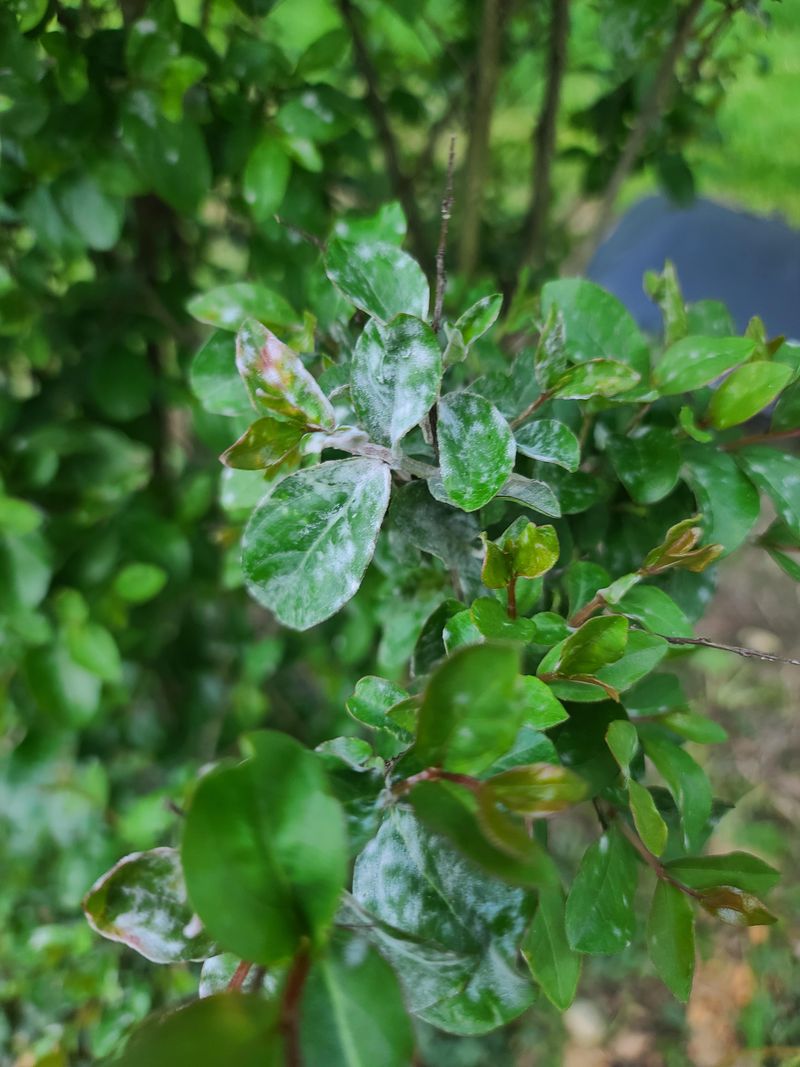
Fertilizer encourages growth, and that sounds like a good thing right up until you realize that soft, fast-growing shoots are exactly what powdery mildew targets most aggressively.
Heavy nitrogen applications push crape myrtles into producing large amounts of tender new tissue in a short period of time, and that flush of growth can be especially vulnerable during the cooler, more humid stretches of spring and fall in Texas.
Many Texas homeowners fertilize crape myrtles more than necessary, sometimes applying lawn fertilizers or high-nitrogen blends that were not really intended for ornamental trees.
The result is a plant that grows quickly but produces tissue that is structurally weaker and more susceptible to fungal issues.
Lush, dark green growth that appears almost overnight after a heavy feeding is worth watching closely.
Scaling back on nitrogen, especially during the periods when powdery mildew pressure is highest, is a simple adjustment that can reduce how much vulnerable tissue is available for the fungus to colonize.
A moderate, balanced fertilizer applied in early spring is generally enough for most established crape myrtles in Texas.
Young trees in poor soils may benefit from slightly more attention, but the general principle holds: feeding lightly and at the right time reduces the kind of rapid, soft growth that invites disease problems throughout the season.
6. Resistant Varieties Make The Biggest Difference
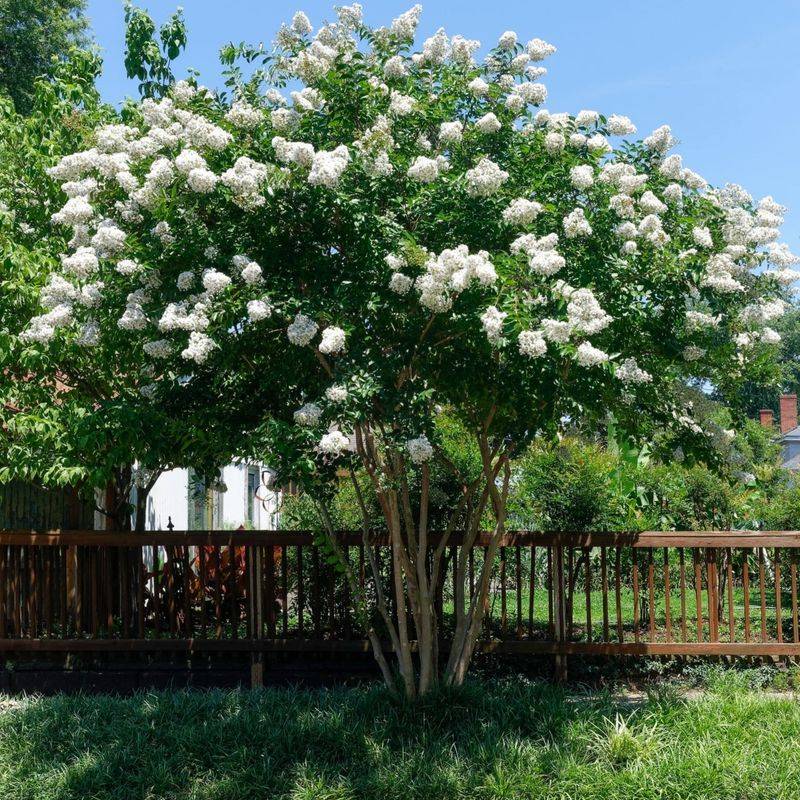
Plant breeders have spent decades developing crape myrtle varieties with built-in resistance to powdery mildew, and choosing one of those selections is probably the single most impactful decision a Texas gardener can make.
Resistant varieties do not eliminate the possibility of mildew entirely, but they show far less disease under the same conditions that would heavily affect older, more susceptible types.
Many of the most popular and widely available crape myrtles today carry Native American tribal names and were developed specifically with disease resistance in mind.
Varieties such as Natchez, Tuscarora, Acoma, Tonto, and Sioux are frequently recommended for Texas landscapes because they combine attractive flowering habits with lower susceptibility to powdery mildew.
Checking the disease resistance rating before purchasing is a step worth taking at any garden center.
Older varieties that were planted in Texas neighborhoods years ago, before resistance breeding became a priority, are often the ones that struggle most consistently.
If you have a crape myrtle that gets mildew heavily every single season despite good sunlight and proper care, the variety itself may simply be more susceptible than modern selections.
Replacing a struggling older tree with a resistant cultivar suited to your space and color preference is a long-term solution that reduces the need for repeated treatments and gives you a healthier, better-looking plant throughout the Texas growing season.
7. Full Sun And Airflow Help Lower Disease Pressure
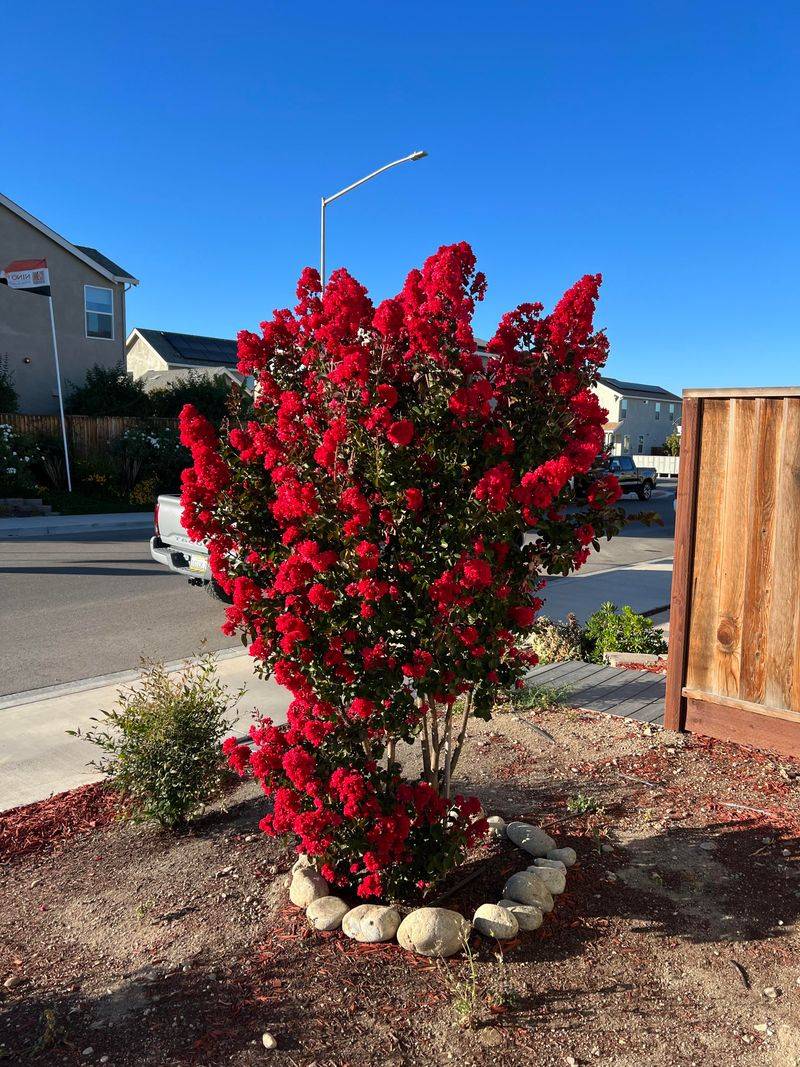
Open, sunny spots in a Texas landscape do more for crape myrtle health than almost any product you can buy at a garden center.
Full sun dries foliage quickly after humid nights, raises leaf surface temperatures, and creates an environment that is genuinely less hospitable to powdery mildew.
A crape myrtle growing in the middle of an open lawn with sunlight hitting it from multiple angles will almost always look cleaner than one wedged into a tight, shaded space.
Airflow works alongside sunlight to keep conditions around the foliage drier and more variable. Breezy conditions carry away the humid air that settles around leaves on still mornings and evenings in Texas.
Trees with open canopy structure and adequate spacing from walls, fences, and neighboring plants benefit from this natural air movement more than crowded or sheltered specimens.
When choosing where to plant a new crape myrtle, prioritizing a spot with at least six hours of direct sun and good exposure on multiple sides sets the tree up for long-term success.
For existing trees, removing nearby shrubs or structures that block prevailing breezes can improve conditions noticeably over time.
No placement is completely immune from occasional mildew pressure in Texas, but trees grown in genuinely open, sunny spots tend to show far less disease and recover more quickly when minor outbreaks do occur during cooler seasonal stretches.
8. Early Treatment Works Better Than Late Spraying
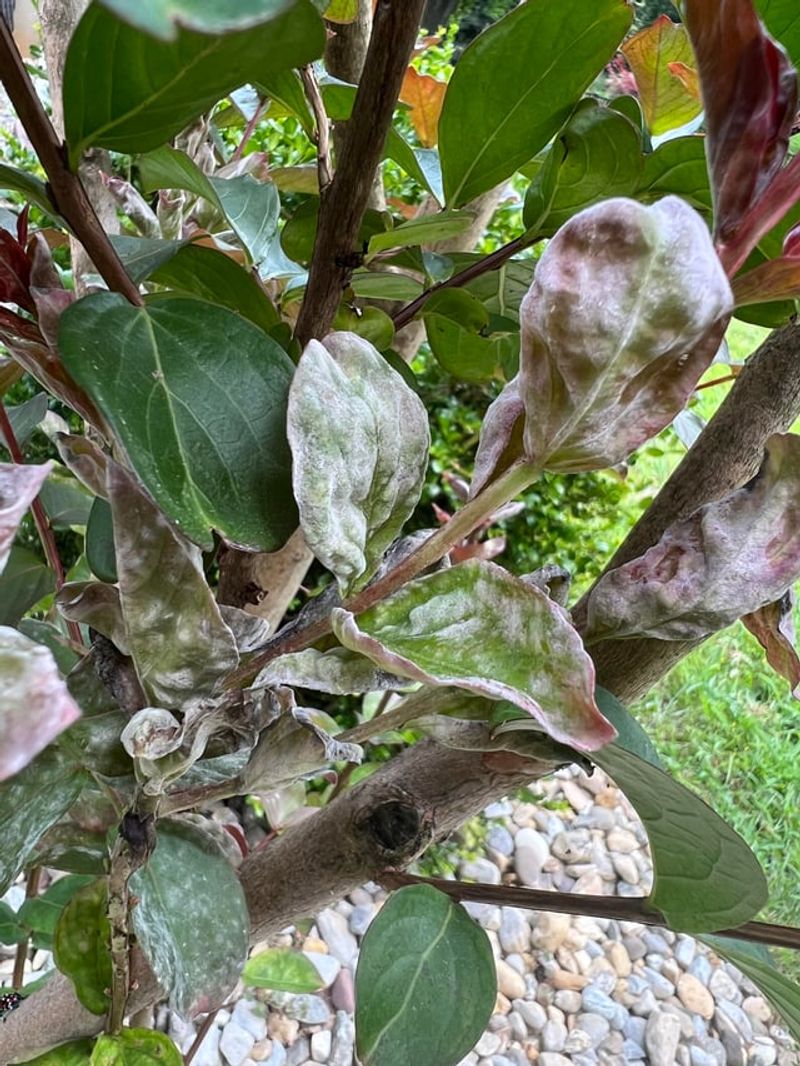
Catching powdery mildew when it first appears on a few leaves gives treatments a much better chance of being effective than waiting until entire branches are coated in white.
Fungicides and organic options such as neem oil, potassium bicarbonate, and horticultural oil work best as preventive or early-intervention tools rather than as cures for advanced infections.
Once the fungus has spread broadly across the canopy, even repeated spraying tends to produce disappointing results.
Timing your first inspection to coincide with the initial flush of spring growth is a practical habit worth building.
Walking past your crape myrtles every week or two during March and April in Texas, and again in September and October, keeps you ahead of the problem.
A quick look at the newest leaves and shoot tips is usually enough to catch early signs before they escalate.
When treatment is needed, covering both the upper and lower surfaces of leaves thoroughly gives the product the best chance of reaching the fungus.
Repeating applications according to label directions, especially during periods of continued cool nights and moderate temperatures, helps maintain protection through the most vulnerable stretches of the season.
No spray program removes the need for good cultural practices, but well-timed early treatment in a Texas yard can keep mildew from taking over a crape myrtle that might otherwise look rough for weeks at a time.