What To Do With Your Florida Plumeria In June Before The Heat Peaks
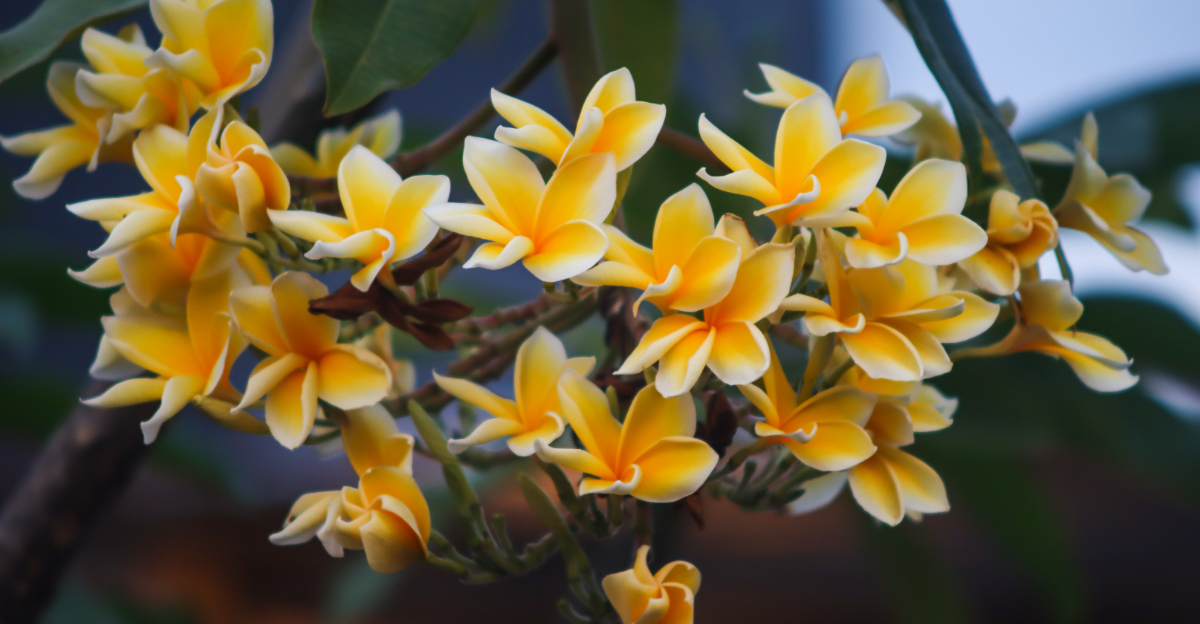
June is the quiet window most Florida gardeners sleep through. The heat hasn’t fully peaked yet, the rainy season is just warming up, and your plumeria is sitting at a crossroads it won’t hit again for another year.
What you do right now matters more than most people realize. Plumeria has a reputation for being easygoing, and for most of the year that reputation holds up.
But June is different. It’s the month where a little attention pays dividends all summer long, and neglect starts showing up in ways that are genuinely hard to reverse once peak heat sets in.
Feeding, positioning, watching for the early signs of trouble before they become actual trouble. None of it is complicated, but all of it is time-sensitive in a way that catches even experienced gardeners off guard.
Miss this window and your plumeria will probably survive. Catch it and the blooms tell a completely different story.
1. Check New Growth Before Changing Care
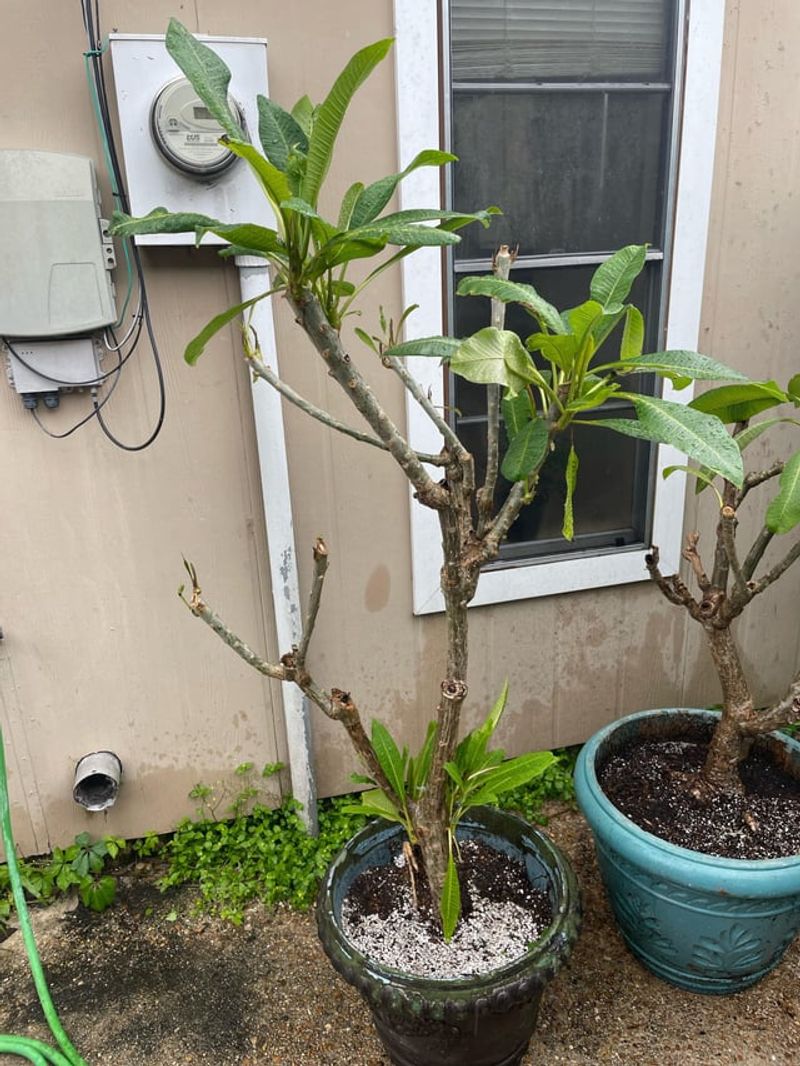
A quick plant check can prevent a lot of overreacting. June is the perfect time to slow down and look at what your Florida plumeria is doing before you change anything.
New leaves unfurling from the tips of firm, upright stems are a sign that the plant is moving through warm-season growth the way it should. That kind of active growth tells you the plant is responding well to the longer days and rising warmth.
Leaf color is one of the first things worth noticing. Rich green leaves on new growth usually suggest the plant has what it needs right now.
Yellowing on older, lower leaves can be normal as the plant pushes energy upward. But yellowing across new growth or at the tips of young leaves is worth watching more carefully.
Not every yellow leaf means something is wrong, but a pattern of yellowing is worth tracking over a few days before you react.
Stem firmness matters too. A healthy, actively growing plumeria stem feels solid when you gently press it.
Soft, mushy, or wrinkled sections near the base or along the stem can signal a problem that watering or feeding will not fix. If stems look and feel firm and the plant is pushing new leaves, that is a good sign you are on the right track.
Resist the urge to change everything at once just because June has arrived. Jumping into a new watering schedule, a new fertilizer, and repotting all in the same week can stress a plant that was doing fine.
Observe first. Make one adjustment at a time.
Active growth is a signal to support the plant steadily, not to overload it with sudden changes. A calm, observation-based approach in early June often leads to much better results by midsummer.
2. Water Deeply But Let The Soil Drain
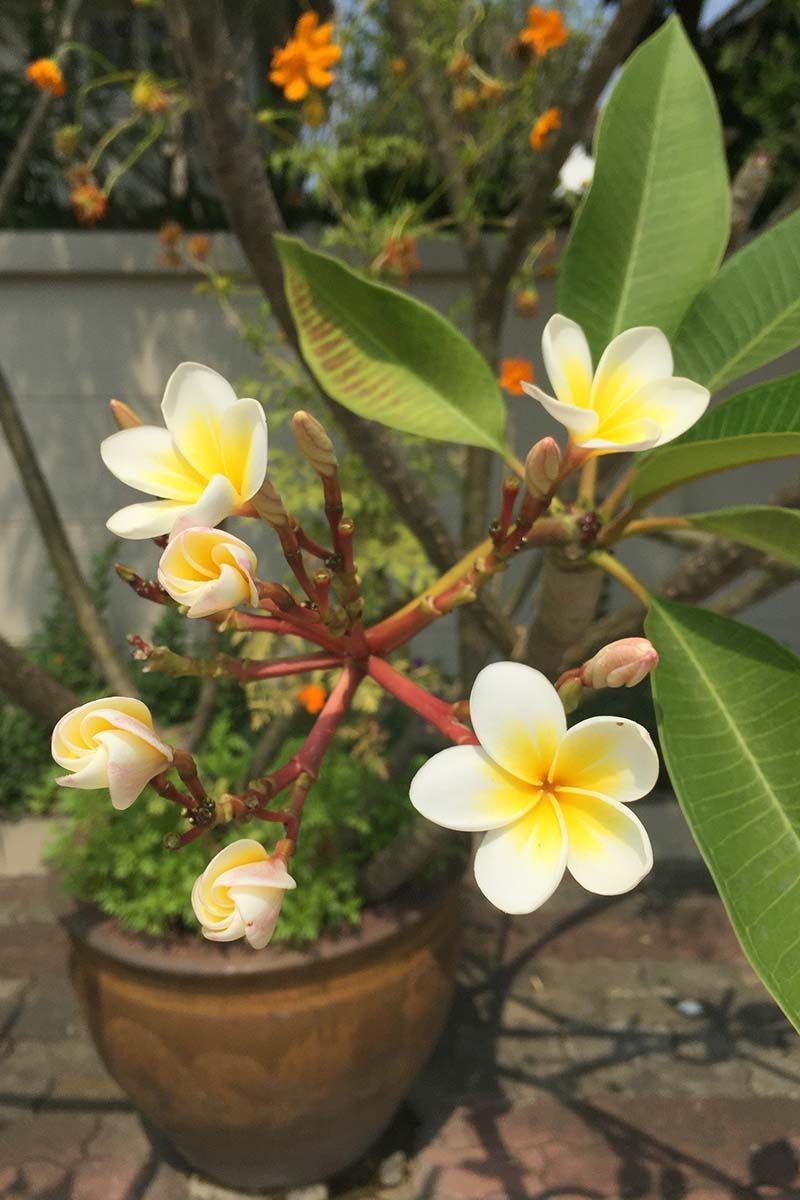
June watering is all about balance, and plumeria makes that balance clear pretty quickly when you get it wrong in either direction.
As temperatures climb and active growth continues, these plants do need more consistent moisture than they did during cooler months.
Your Florida Garden Changes Every Week. Your Plan Should Too.
Gardening in Florida changes quickly throughout the season. Every Friday you’ll receive a simple weekly plan showing exactly what to plant, prune, fertilize, harvest, and protect so you never miss the right timing.
But the one thing that has not changed is their absolute need for fast-draining soil. Soggy roots in warm weather can lead to serious problems that no amount of fertilizer or sunshine will undo.
For container plants, check the soil before you water rather than watering on a fixed schedule. Push a finger about two inches into the mix.
If it still feels damp, wait. If it feels dry at that depth, water thoroughly until water runs freely out of the drainage holes.
That deep, even soak encourages roots to grow downward and helps flush out any salt buildup from fertilizer. Shallow, frequent watering keeps moisture near the surface and does not serve the root zone well.
Saucers under pots are worth checking regularly in June. A saucer that collects water after every rain or every watering session can keep the bottom of the pot sitting in moisture for hours.
Even one or two drainage holes can become ineffective if they are partially blocked by roots, debris, or the surface the pot rests on. Lifting the pot slightly or removing the saucer during the rainy season can help drainage stay reliable.
In-ground plumeria planted in well-amended, fast-draining soil may need less attention during rainy stretches. But it still pays to watch for standing water after heavy storms.
Low spots in the yard can hold water longer than expected. If your plant is in a spot that stays wet for more than a day after rain, that is worth addressing before peak summer arrives.
Consistent drainage, not just consistent watering, is what keeps roots healthy through a long, humid season.
3. Feed Carefully While Growth Is Active
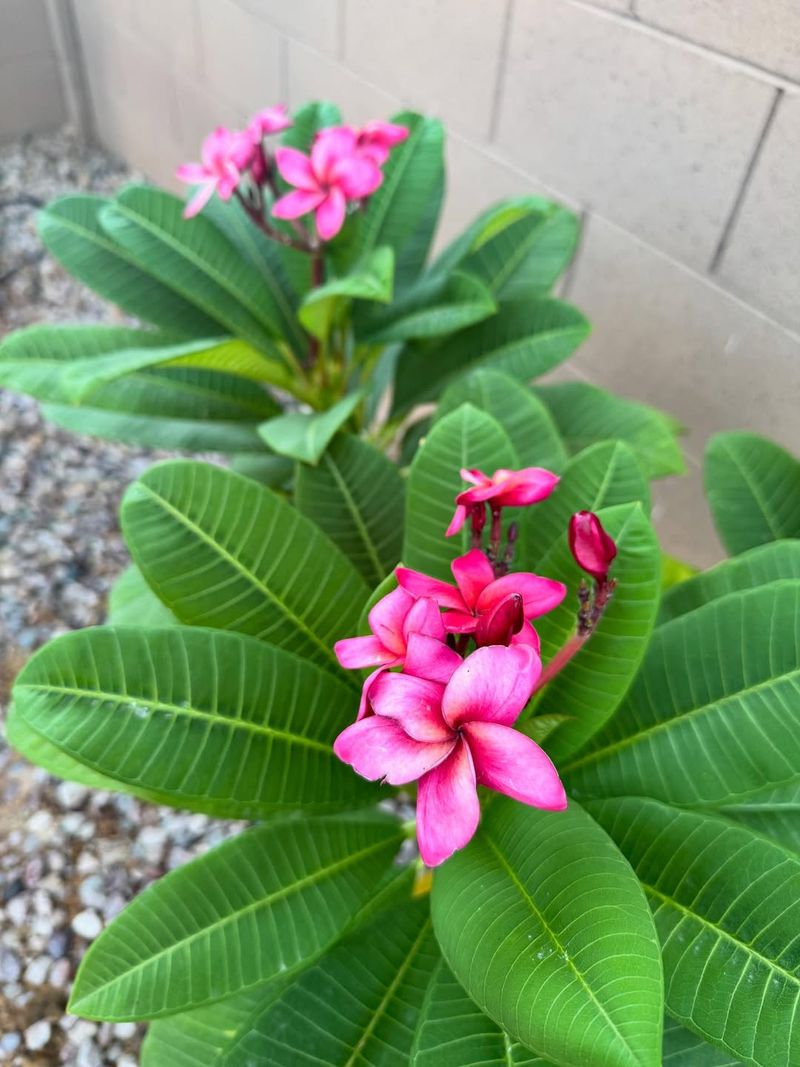
Active growth can use support, but not guesswork, and June is a month when that distinction really matters. When your plumeria is pushing new leaves and the stems look healthy, the plant is in a good position to use nutrients.
That does not mean more fertilizer equals faster or better growth. It means the plant can benefit from a steady, measured approach that matches what it is actually doing.
Many gardeners in warm regions use a fertilizer higher in phosphorus during the growing season to support blooming. It should still provide balanced nutrition for overall plant health.
Whatever product you choose, the label is your most reliable guide. Follow the directions for application rate and timing rather than estimating or doubling up to speed things along.
Overfertilizing in warm, humid conditions can stress roots, cause tip burn on leaves, and create other problems that look confusing at first glance.
One thing fertilizer cannot do is fix an underlying problem. If your plumeria has poor drainage, too little sun, or pest pressure on the leaves, adding more fertilizer will not help.
It will not correct any of those underlying issues. Address the root cause first.
A plant that is stressed from soggy soil or low light will not use nutrients efficiently, and pushing more fertilizer into an already-struggling plant rarely ends well.
Slow-release granular fertilizers can be a practical option for container plants because they deliver nutrients gradually over time rather than all at once. Liquid fertilizers work more quickly but may need more careful attention to frequency.
If you are unsure what product or schedule works best for your setup, your local UF/IFAS Extension office is a great place to get guidance. They can tailor advice to your region, soil, and growing conditions.
Keep feeding steady, not aggressive, and your plant will respond better through the season.
4. Move Containers Away From Storm Runoff
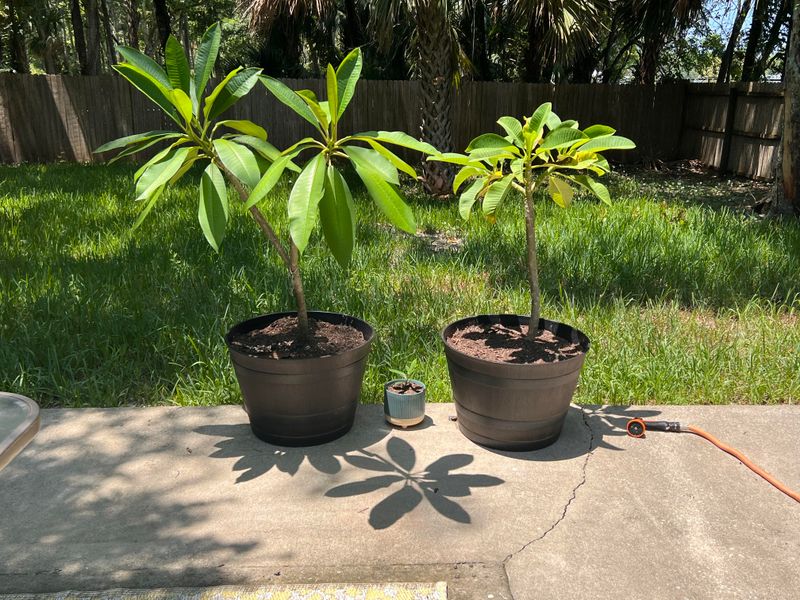
Storm runoff can change a pot overnight, and in June, that is not an exaggeration. As afternoon storms become more frequent across the state, container plumeria face a specific set of challenges that in-ground plants handle differently.
A pot sitting near a downspout, under a roof edge, or on a low section of pavement can collect far more water than it would from a normal watering session. That sudden, heavy saturation can overwhelm even a well-draining mix.
Walk around your patio or growing area and think about where water actually flows when it rains hard. Roof runoff can pour off an edge and flood a nearby pot in minutes.
Gutters that overflow during heavy storms send sheets of water across surfaces that may funnel directly toward your containers.
Moving pots even a few feet away from those runoff paths can make a noticeable difference in how much excess water they receive during a storm.
Drainage holes at the bottom of pots deserve a closer look this time of year. Roots grow throughout the season, and by June, they may be pressing against or partially blocking drainage holes from the inside.
Debris, algae, or the surface the pot rests on can also slow drainage from the outside. A pot that drains well in dry conditions may not drain fast enough during a heavy downpour.
Checking the holes and lifting the pot off a flat surface using pot feet or a small stand can help water escape more freely.
Saucers are another thing to reassess. During dry spells earlier in the year, a saucer helps retain a little moisture between waterings.
During the rainy season, that same saucer can hold water for hours and keep the bottom of the root zone wet longer than is healthy.
Removing saucers or emptying them promptly after rain is a simple habit that helps containers stay in better shape through the wet months ahead.
5. Inspect Leaves For Pests And Rust
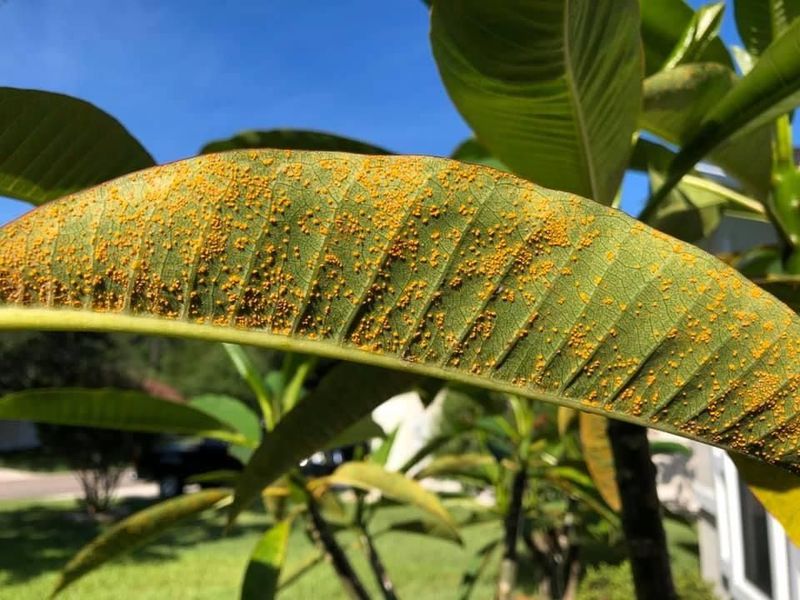
Leaf checks are easier before problems spread. Warm, humid weather creates conditions where small issues on plumeria foliage can become more noticeable quickly.
June is a good month to get into the habit of looking closely at your plants every week or so. Check them up close, including the undersides of leaves where many pests and early signs of disease tend to appear first.
Turn a few leaves over and look at the surface underneath. Spider mites, mealybugs, and other small insects often cluster in protected spots, especially near leaf veins or where new growth is still tender.
Sticky residue on leaves or surrounding surfaces can sometimes indicate pest activity even before you spot the insects themselves.
New growth that looks distorted, curled, or stunted is also worth examining more carefully rather than assuming it will straighten out on its own.
Plumeria rust is a fungal condition that affects many plants in warm, humid climates. It tends to show up as orange or yellowish powdery spots on the undersides of leaves.
The upper surface of affected leaves may show corresponding yellow or pale spots. Rust can spread under the right conditions, but not every spot or discoloration on a leaf is rust.
Seeing one or two unusual marks is not an emergency. The important step is identifying what you are actually looking at before reaching for any treatment product.
Before treating any leaf problem, take a clear photo and reach out to your local UF/IFAS Extension office or a master gardener program in your county.
Misidentifying a problem and applying the wrong treatment can sometimes cause more stress to the plant than the original issue.
Getting a proper identification first means any action you take is more likely to actually help. Early, informed attention is much more effective than a rushed response to something you are not sure about.
6. Adjust Care Before Peak Heat And Rain
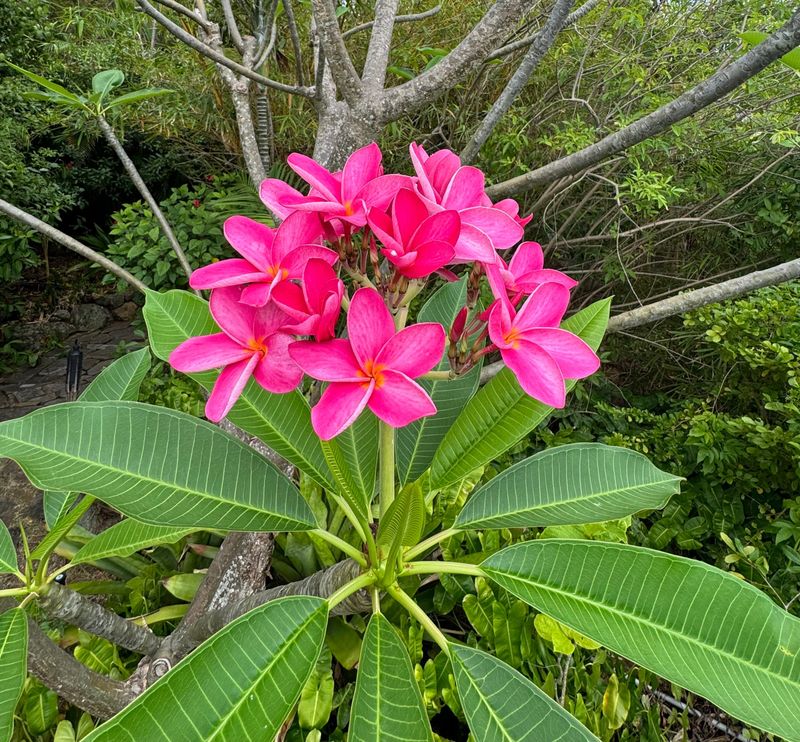
Summer care should shift before the worst heat arrives, and June is the month that gives you the best window to make those adjustments without scrambling.
Once July and August settle in with full force, you are mostly reacting to conditions rather than preparing for them.
Taking a few deliberate steps now means your plants are better positioned to handle what is coming rather than just surviving it.
Regional differences matter here. If you are growing plumeria in northern parts of the state, June may still feel like a warm-up period, with temperatures climbing steadily but not yet at peak intensity.
That gives you a little more flexibility in timing adjustments to watering, feeding, and container placement.
Central regions often see heat and afternoon rain patterns shifting quickly through June, so care routines may need to change more than once as the month progresses.
In southern areas of the state, the rainy season may already be well underway by early June. Stronger humidity, more frequent storms, and longer stretches of warm overnight temperatures create a different set of conditions.
Gardeners in the northern half of the state are managing something milder by comparison. Plants in these areas may need drainage adjustments, saucer removal, and more frequent pest checks sooner than plants growing further north.
For container plants anywhere in the state, June is a good time to think about afternoon shade. A spot that worked well in spring may become too intense as the sun angle changes and temperatures rise.
Moving a pot to a location with bright morning light and some relief from the harshest afternoon sun can help reduce heat stress. It still gives the plant the light it needs to stay healthy and bloom.
Small positional changes now can make a real difference in how well your plumeria handles the months ahead.
7. Know When To Hold Off On Big Changes
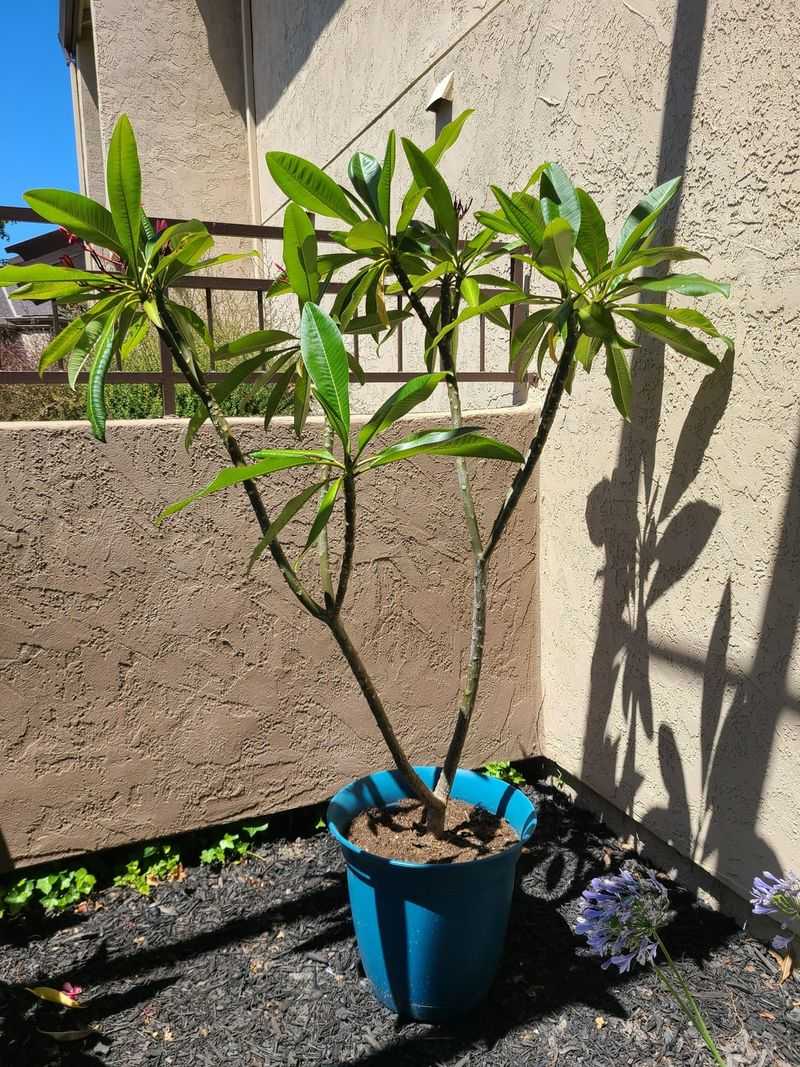
Not every June task needs to happen in the first week of the month, and one of the most useful things a plumeria grower can do is recognize when to wait rather than act.
Repotting, heavy pruning, major soil changes, and dramatic shifts in location can all add stress.
That is especially true for a plant already managing the transition into peak summer. If the plant looks healthy and is growing actively, that is often a sign to support what is working rather than change it.
Repotting is a good example. If a plant has been in its current container for several years, it may eventually need more space.
This is especially true if roots are pushing out of the drainage holes or circling the soil surface. But repotting during the hottest and wettest part of summer puts a plant through root disturbance at exactly the time when stable conditions matter most.
If repotting is on your list, early June can work if the plant is healthy and the new container is ready with fast-draining mix. Waiting until fall when temperatures ease is often the better call.
The same thinking applies to heavy pruning. Light cleanup of withered or damaged growth makes sense any time.
But taking off large sections of healthy stems in June removes foliage the plant is using to support its own energy during peak growing season.
Unless there is a specific reason that cannot wait, significant pruning is usually better timed for late winter or very early spring before new growth begins.
Patience is genuinely useful in the garden, especially with plumeria. These plants are resilient when given consistent, appropriate care.
A steady hand through June tends to produce better results than a rush of activity driven by calendar pressure alone. Make small adjustments based on what you actually observe.
Watch, adjust gently, and let the plant show you what it needs.