The One Thing Florida Plumeria Owners Skip In June That Ruins Blooms By August
Plumeria owners across Florida spend months looking forward to those blooms. The fragrance, the color, the tropical drama of a plant that feels like it belongs somewhere extraordinary.
Then August arrives and the flowers just never show up the way they should. Sparse blooms, weak color, buds that form and drop without opening.
Frustrating does not cover it. Most plumeria owners trace the problem back to the wrong things.
Too much water, not enough sun, the wrong soil. Those factors matter, but they rarely explain a bloom failure that hits consistently in late summer.
The real culprit is almost always something that got skipped back in June, a narrow window that most casual plumeria owners do not even know exists. Miss it and your plant coasts into bloom season without the reserves it needs to perform.
Catch it and August looks completely different. So what exactly gets skipped?
1. Check Leaf Undersides Before Rust Gets Ahead
Picture a gardener walking out to admire a plumeria covered in healthy green leaves, stopping to smell a half-open bloom, and never once flipping a single leaf over. That moment of missing what is underneath is exactly where June trouble starts.
The undersides of plumeria leaves are where rust symptoms often appear first, and most people simply never look there.
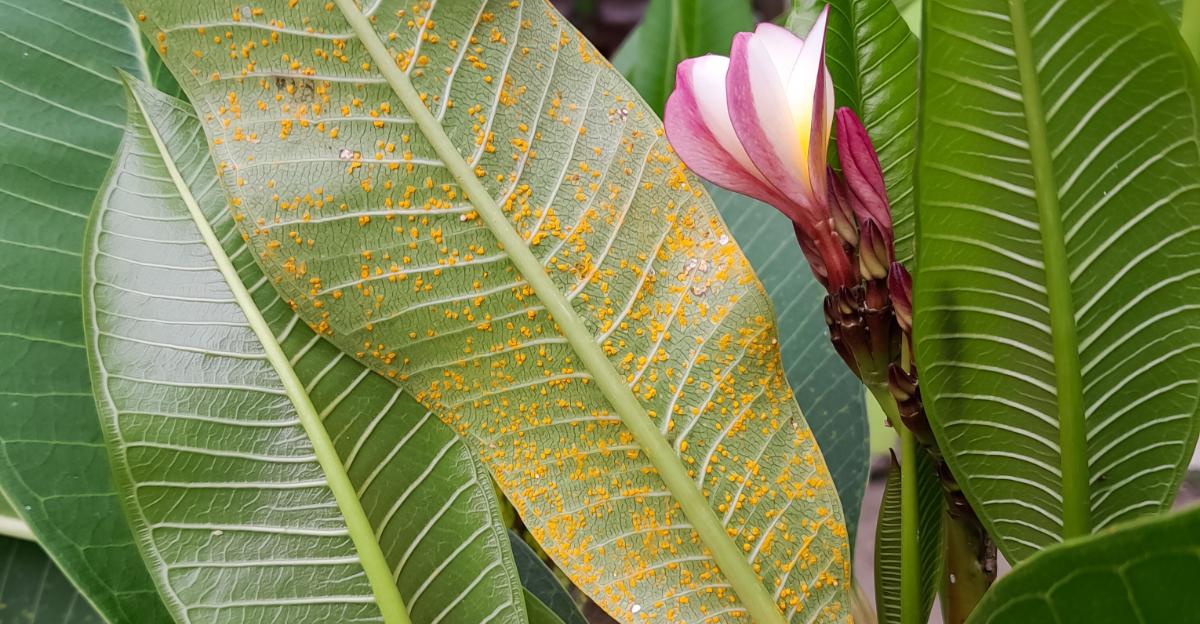
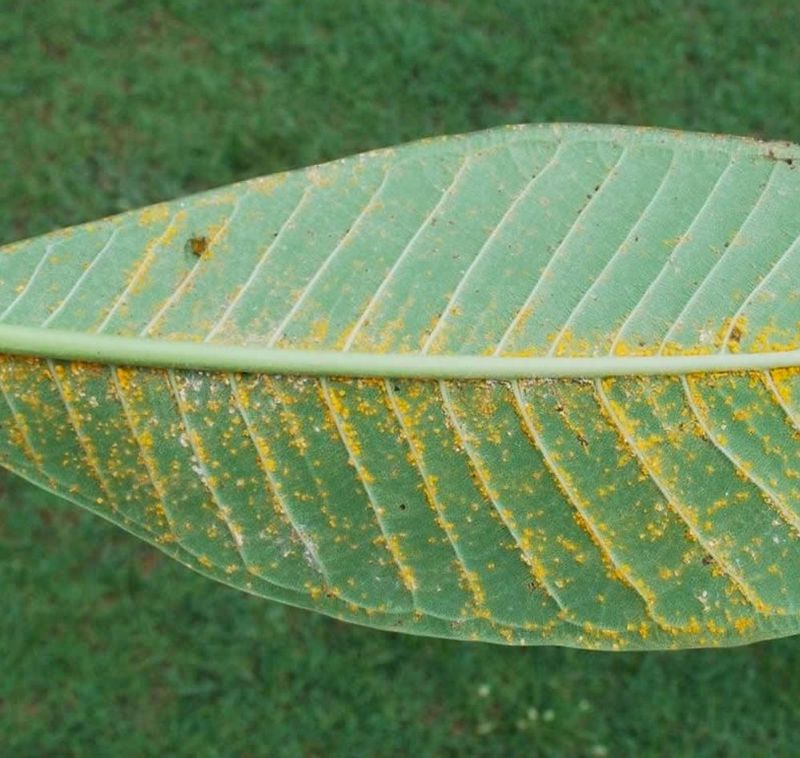
Plumeria rust, caused by the fungus Coleosporium plumeriae, shows up as yellow-orange or rusty pustules on the underside of leaves. The upper surface may show yellowing or pale spots that can be easy to miss or blame on sun stress.
According to UF/IFAS, this rust disease is common on plumeria in warm, humid conditions, which describes most of this state from June onward.
Healthy foliage matters more than many people realize during the blooming season. Leaves are doing the work of feeding the plant through photosynthesis.
When rust takes hold and leaves start dropping early, the plant loses some of that growing energy at exactly the time it needs it most to support flowers.
A weekly leaf check in June takes just a few minutes. Gently lift several leaves, especially those in the middle and lower canopy where airflow is lower and moisture lingers.
Look for powdery or dusty orange spots, not just on one or two leaves but across the plant. Catching rust early gives you a real head start before it spreads to more of the canopy and becomes harder to manage through the rest of summer.
2. Catch Orange Spots While Blooms Still Have Support
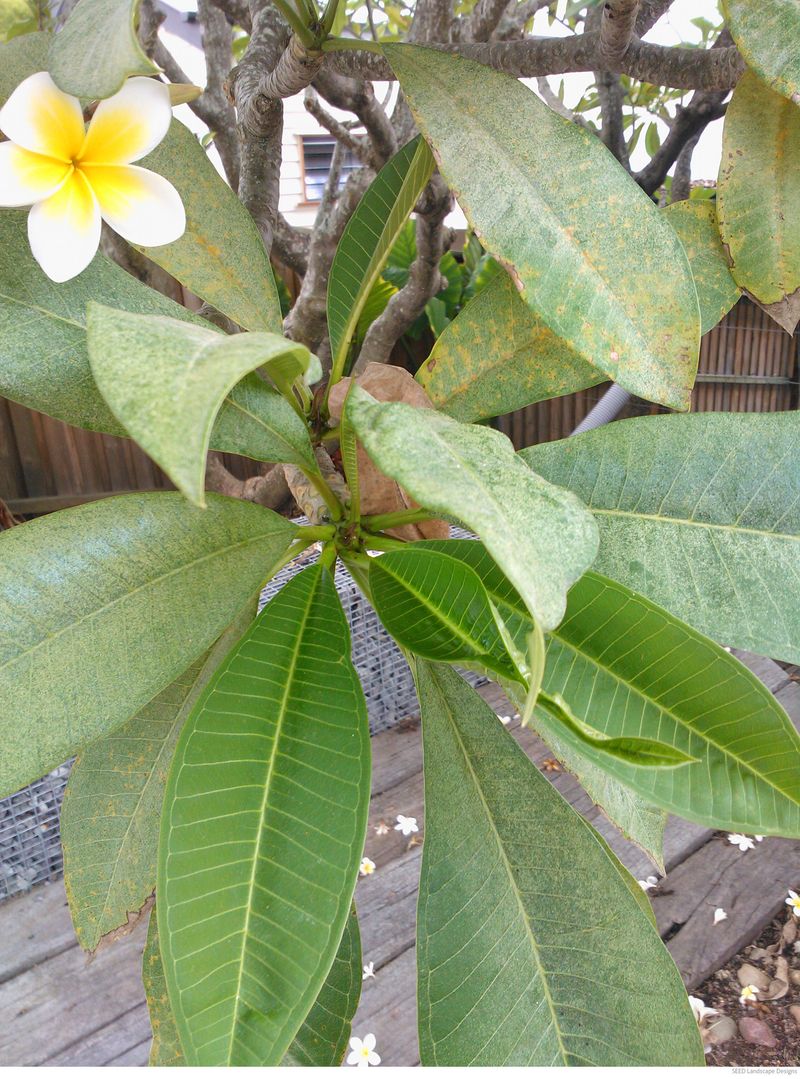
Timing is everything with plumeria rust, and June is the window that most homeowners accidentally leave open. Catching small rust signs early is so much easier than dealing with a plant that has already dropped half its leaves by mid-July.
A few orange spots on a handful of leaves in early June is a very different situation from widespread rust covering most of the canopy three weeks later.
Plumerias bloom during the warm months, and problems that chip away at foliage quality in early summer tend to show up as visibly weaker plants later in the season.
Your Florida Garden Changes Every Week. Your Plan Should Too.
Gardening in Florida changes quickly throughout the season. Every Friday you’ll receive a simple weekly plan showing exactly what to plant, prune, fertilize, harvest, and protect so you never miss the right timing.
The plant is not going to suddenly stop producing flowers, but a stressed plant with significant leaf loss is working harder just to stay stable.
That means less energy going toward the blooms you are hoping to see in August.
In southern and central regions, warm and humid conditions can arrive early and stay long. That makes weekly inspections especially useful starting in June.
Rainy weeks and high humidity create the kind of environment where rust can spread quickly from leaf to leaf, so checking more often during wet stretches makes sense.
You do not need any special tools for early detection. Just turn leaves over, look for orange or rusty powdery patches, and note which parts of the plant are affected.
Writing down what you see each week helps you track whether the problem is staying the same, shrinking, or spreading. Early action is always easier than late reaction.
3. Remove Badly Affected Leaves Without Stripping The Plant
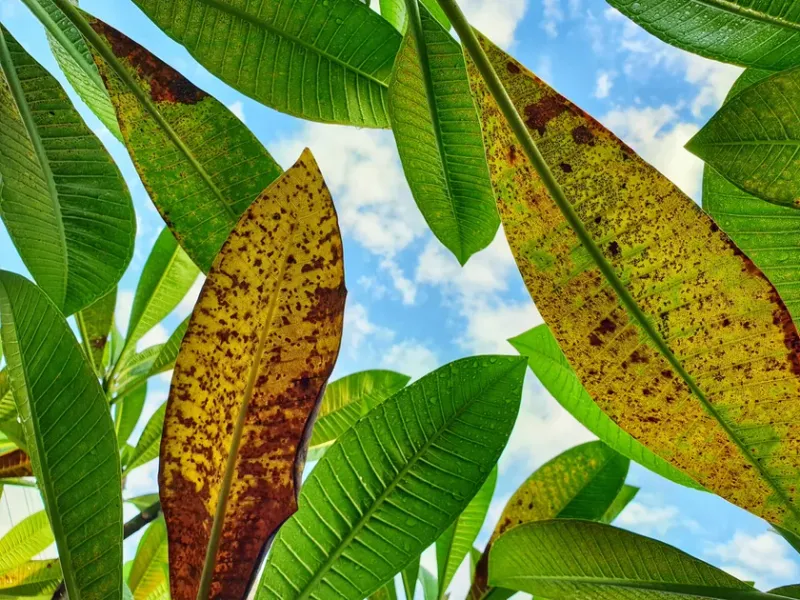
Sanitation is one of the most practical steps a plumeria owner can take in June, but there is a balance to it. Removing badly affected leaves is helpful.
Stripping the plant down to bare branches trying to get every imperfect leaf is going too far, and it can leave the plant more stressed than the rust itself.
Focus on leaves that show heavy rust coverage, significant yellowing, or that have already started to curl or detach on their own. Those are the ones worth removing by hand.
Leaves with just a few small spots can often stay on the plant while you keep monitoring. The goal is to reduce the amount of active rust material on the plant, not to achieve a perfect appearance.
Any leaves you remove should be bagged and discarded according to your local waste guidelines. Do not leave them on the ground under the plant, because rust spores can persist in fallen debris and continue to cause problems.
County Extension offices in this state often provide guidance on proper disposal of diseased plant material, so checking with your local office is a good idea.
Use clean hands or clean tools when removing leaves, and try to avoid working when the foliage is still wet from rain or irrigation. Wet conditions make it easier to spread spores from one part of the plant to another.
After any cleanup session, check the plant again a few days later to see how things look and whether more leaves need attention.
4. Give The Plant Airflow Before Humidity Takes Over
Sticky air, crowded pots pushed together on a back porch, and leaves staying damp for hours after rain create a risky setup. That combination helps leaf problems spread faster than they otherwise would.
Airflow around plumeria is easy to overlook because it feels like a minor detail. However, it genuinely matters in a state where summer humidity stays high for months.
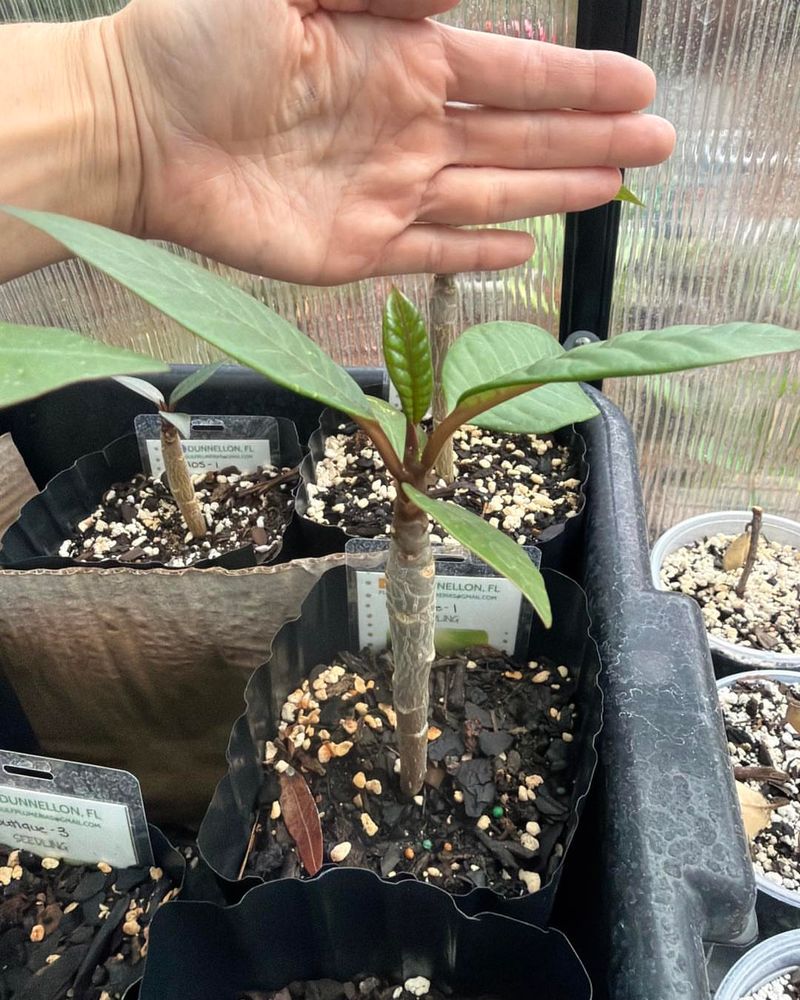
Potted plumerias have a real advantage here. You can shift them apart to create better spacing and improve air movement around the foliage.
Even moving a pot a foot or two away from a wall or fence can reduce how long leaves stay damp after rain. Good light exposure also helps leaves dry more quickly, which lowers the conditions rust and other leaf issues prefer.
For in-ground plants, light and careful pruning can sometimes help improve airflow through a dense canopy. However, this should only be done when it follows sound horticultural guidance and is appropriate for the time of year.
Heavy pruning in June is not generally recommended without a good reason and reliable guidance behind it. When in doubt, contact your county Extension office before making major cuts.
Coastal areas and Gulf-side patios often deal with extra humidity and still air in summer. If your plumeria is sitting in a spot where it rarely gets a breeze, that is worth factoring into your June inspections.
More frequent checks in those spots can make a noticeable difference. Gentle repositioning of pots can also help the plant handle the humid months ahead.
5. Keep Water Off Leaves When You Can
A lot of homeowners grab the hose in the evening and spray the whole plant from top to bottom. It looks thorough, and the plant looks refreshed for a moment.
But leaving foliage wet overnight, especially in summer, creates exactly the kind of damp surface that makes leaf diseases easier to spread. Changing that one habit in June can support healthier leaves through the rest of the season.
Watering near the soil line, rather than overhead, is the better approach for plumeria. The roots are what need the water, not the leaves.
Plumeria prefers well-drained soil and can struggle when roots sit in soggy conditions for too long. According to UF/IFAS, plumeria does best in soil that drains well and does not stay wet between waterings.
Regional conditions matter here. In southern regions, containers can dry out faster during hot stretches, so more frequent watering may be needed, but it should still go to the base of the plant.
In other areas, summer storms can keep soil wetter than expected for days at a time. Checking soil moisture before watering, rather than following a fixed schedule, helps you avoid both overwatering and underwatering.
If overhead irrigation is unavoidable, try to water in the morning so leaves have the full day to dry before evening. Avoid watering right before a forecasted storm, since the plant will get plenty of moisture from rain.
Small adjustments to when and how you water in June can have a real payoff in leaf quality and plant strength through August.
6. Watch Potted Plumerias More Closely In Northern Regions
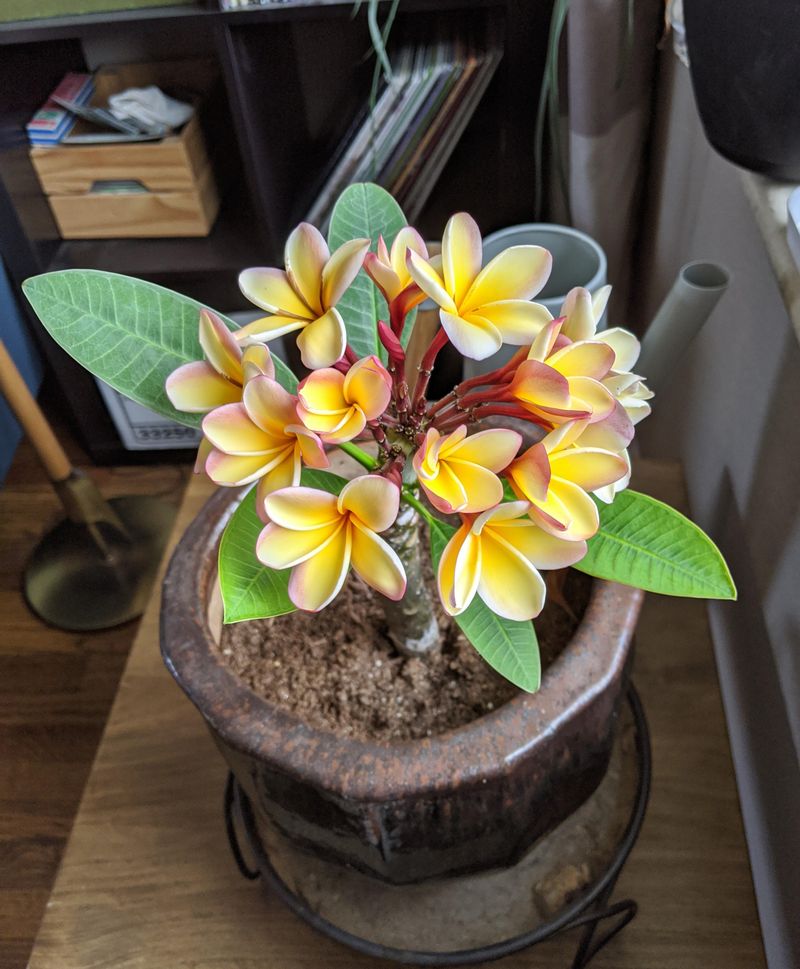
A patio pot in a cooler inland area and a large in-ground plumeria in a warm Florida coastal yard are two very different growing situations, and June care should reflect that.
In northern regions, plumerias are more commonly grown in containers so they can be moved inside or protected when cooler weather returns in late fall and winter.
That container habit actually gives those growers a real advantage in June.
Potted plants are easier to inspect, move, and clean than in-ground ones. You can pick up a pot, turn it to look at all sides, check every leaf level, and shift it to a better spot if needed.
That flexibility makes June leaf checks faster and more thorough for container growers than for those with large landscape plants.
Before moving any plumeria pot near other plants, check it carefully for rust or other leaf issues first. Moving a plant with active rust close to a healthy one is an easy way to spread the problem.
A quick check before repositioning takes about two minutes and can save a lot of trouble later in the season.
In southern regions, plumerias often stay in the ground year-round and grow into larger plants with more canopy to inspect. Those plants may need more time during each June walkthrough.
Whether your plant is in a six-inch pot on a porch or a well-established landscape specimen near the coast, the principle is the same. June leaf checks are easier than August problem-solving, and container growers in cooler areas have a built-in edge worth using.
7. Clean Up Fallen Leaves To Lower Future Rust Pressure
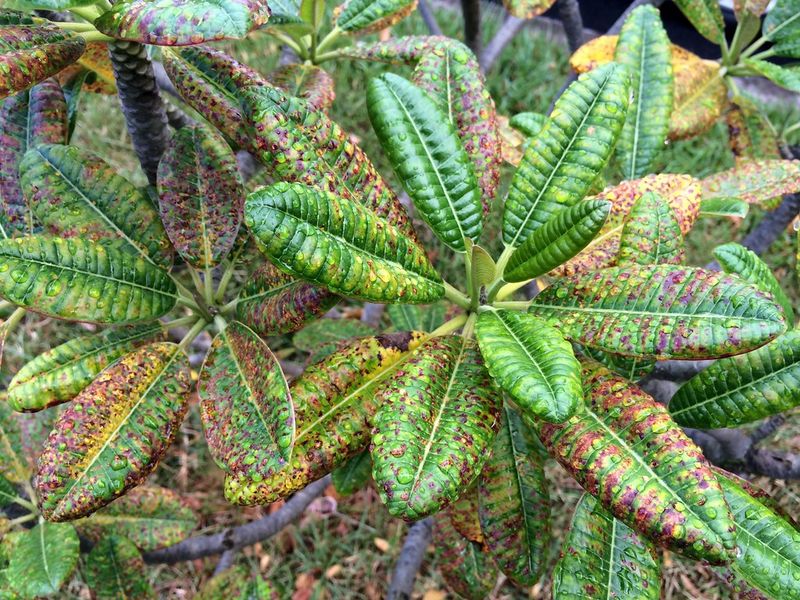
A few yellowed leaves tucked behind a pot or dropped foliage under mulch can be easy to miss. Those spots are where rust pressure can quietly build through summer.
Fallen leaves from a plant with rust on them still carry spores, and leaving that material around the plant just keeps the cycle going.
Cleaning up fallen plumeria leaves in June is not just about keeping the garden looking tidy. Removing that debris reduces the amount of disease material sitting near the plant as summer continues.
Less lingering rust material around the base means less opportunity for spores to splash back onto lower leaves during rain or irrigation.
Check under pots, behind nearby edging, and along the edges of mulched areas where leaves can blow and hide.
Plumeria leaves are large enough to trap underneath containers or get caught against a fence, and those spots are easy to skip during a quick cleanup.
A thorough sweep of the area around the plant takes just a few extra minutes but covers the spots that matter most.
Steady June care, including picking up fallen leaves regularly, helps the plant stay cleaner and stronger through the warm season. A plant that goes into July with less disease pressure around it has a better chance of holding its foliage and staying vigorous.
It is also more likely to produce the blooms you are hoping to see by August. The connection between June cleanup and August flowers is real, and it starts with habits as simple as picking up what falls.