This Michigan Native Fern Moves Into Shady Problem Spots And Solves Them Without Being Asked
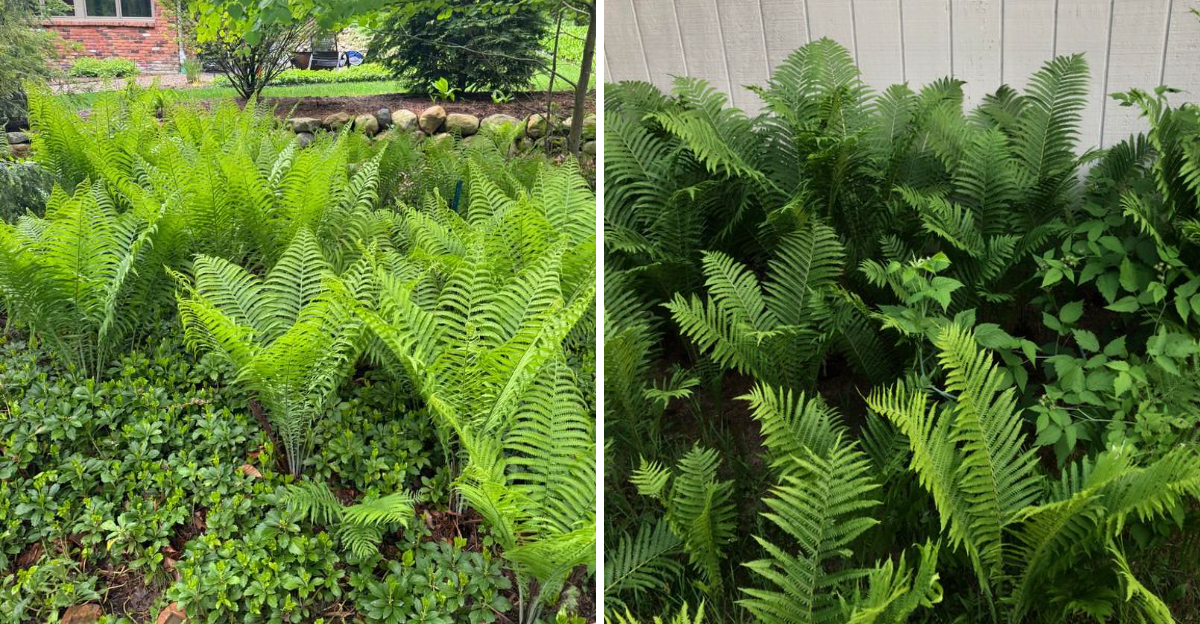
Almost every Michigan yard has at least one spot that refuses to cooperate.
The shady corner where grass gave up years ago and nothing planted since has lasted a full season.
The soggy edge near the downspout where good intentions go to be forgotten. The strip under the big maple that gets reseeded every spring and looks bare by July anyway.
Many gardeners spend years rotating through plants that almost work in these spots. Something that looks promising in May, struggles through July, and gets pulled out by September.
There is a Michigan native that handles these situations differently. It does not merely tolerate shady, damp, difficult conditions. It specifically seeks them out and performs better there than anywhere else in the garden.
Have you ever watched a plant spread into a problem area and genuinely solve it without any assistance?
That is not a rhetorical question. One fern in the right Michigan yard does exactly that, season after season, and many gardeners either do not know about it or have not given it the space it deserves.
1. Let Ostrich Fern Fill Moist Shade
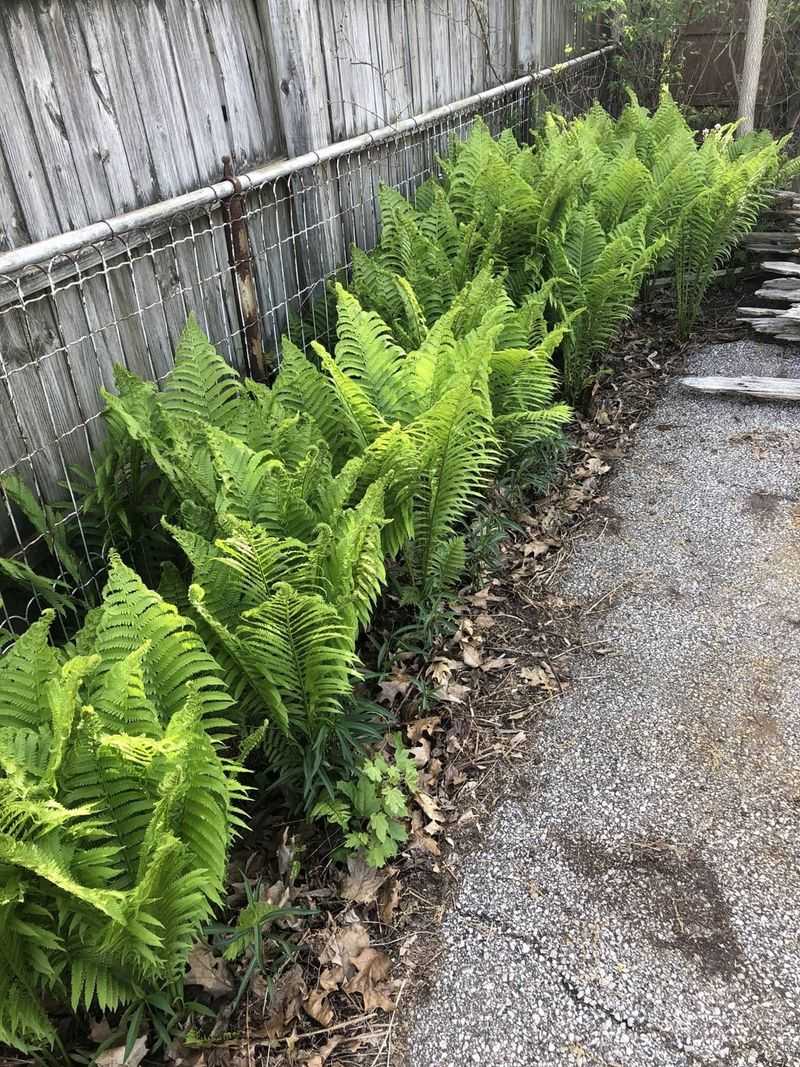
Most plants send polite distress signals when conditions turn damp and dark. The ostrich fern interprets those same conditions as an invitation.
Matteuccia struthiopteris is a Michigan native that evolved in exactly the spots other plants avoid.
Consistent moisture, deep shade, and rich woodland soil are not challenges this fern manages. They are the environment it was built for. The fronds fan outward like enormous feathers, reaching three to six feet tall in ideal conditions.
That scale creates a lush, dramatic display that looks considered and intentional even when the fern essentially planted itself into an overlooked corner.
Low spots near downspouts, the shaded north side of a house, the soggy edge of a woodland path, these are all prime real estate for ostrich fern. Drier, sunnier positions actually reduce its performance rather than improving it.
Have you been treating a damp, shaded corner as a problem to solve rather than a habitat waiting for the right plant?
The framing matters considerably. That corner is not broken. It just has specific requirements that most plant lists ignore entirely.
Gardeners often spend money and energy trying to change difficult spots. Ostrich fern simply moves in and handles them, turning a source of seasonal frustration into one of the most visually striking areas in the yard.
The fern does not ask for much. It mostly just asks to be put somewhere nobody else wanted to go.
2. Use It Where Lawn Refuses To Grow
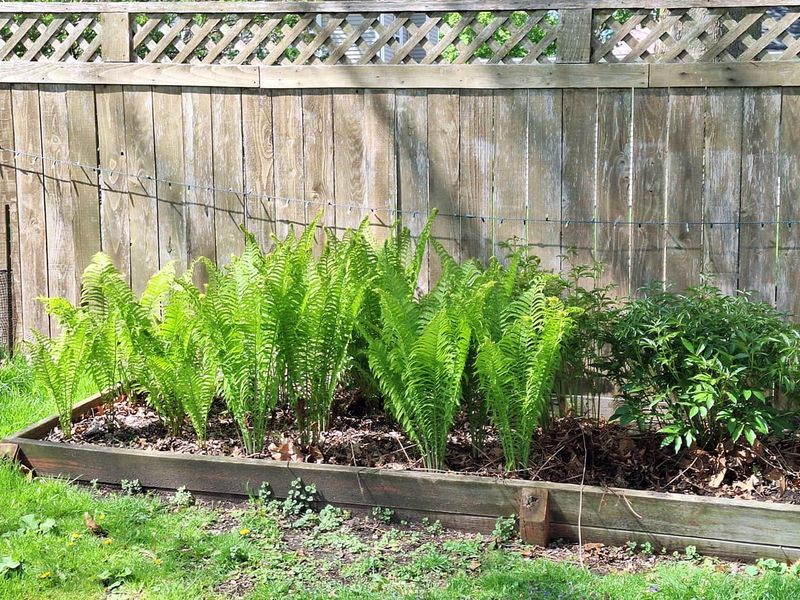
The bare patch under the maple gets reseeded every spring with sincere optimism and produces the same result by July.
Turfgrass needs direct sunlight to photosynthesize and sustain itself. Dense shade removes that requirement from the equation entirely, and no amount of premium seed changes the physics involved.
Ostrich fern offers the smarter path. Rather than continuing to force a sun-dependent plant into a fundamentally shaded situation, the alternative is a plant that genuinely expects low light and performs accordingly.
Your Michigan Garden Changes Every Week. Your Plan Should Too.
Gardening in Michigan changes quickly throughout the season. Every Friday you’ll receive a simple weekly plan showing exactly what to plant, prune, fertilize, harvest, and protect so you never miss the right timing.
Michigan woodlands grow ostrich fern naturally under dense tree canopies. That natural distribution tells you more about its light preferences than any plant tag. The fern does not merely survive shade. It anticipates it.
Replacing a failing lawn patch with ostrich fern also reduces ongoing maintenance in ways that become obvious within one full season. No more reseeding every spring. No more mowing awkward strips around surface roots.
Once established, the fern spreads through underground rhizomes and builds a thick, weed-suppressing ground layer that maintains itself.
The fronds emerge bright green in spring and hold their color well into summer before browning naturally in fall. That seasonal rhythm fits the character of a shaded yard considerably better than patchy, struggling turf.
Giving up on the sad grass patch under the maple is not failure. It is the most sensible decision that corner has been offered in years.
3. Give Rhizomes Room To Roam
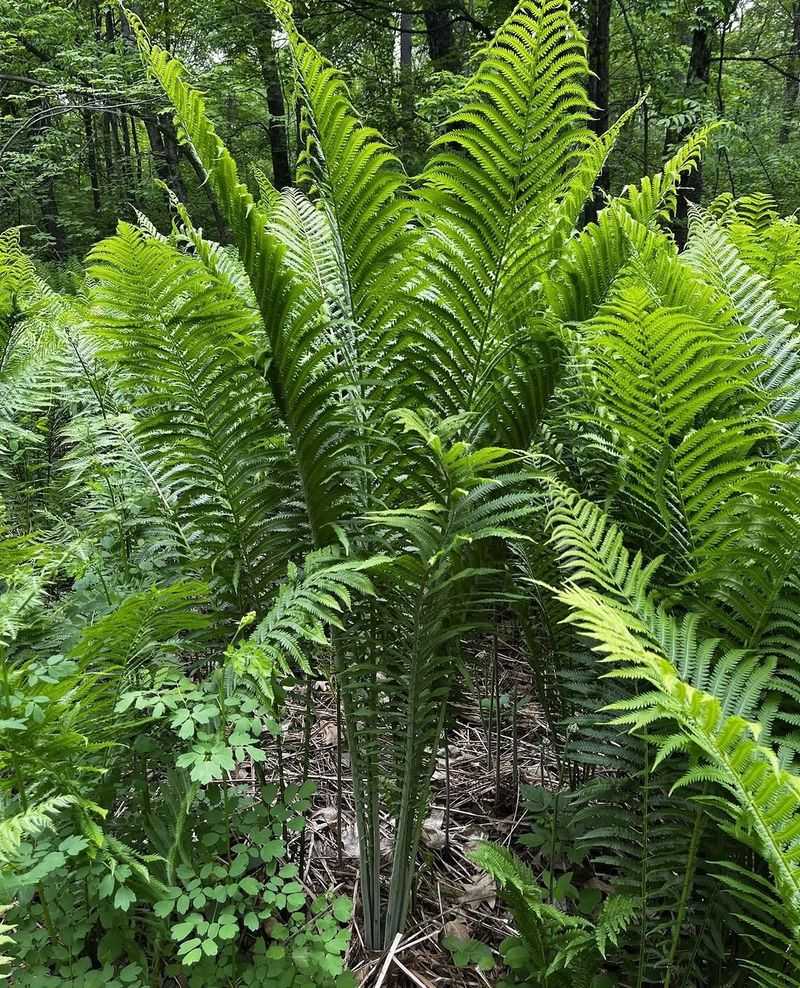
First-time fern growers often get a surprise in year two. Ostrich fern is not a polite, contained specimen plant.
It spreads through underground rhizomes, sending up new crowns as it travels, and it approaches a bare shaded area with the systematic confidence of something that knows exactly what it is doing.
A single plant can expand into a colony several feet wide within a few growing seasons. In the right location, that spreading behavior is one of the fern’s greatest practical advantages.
Large bare slopes, awkward wet areas, the entire north-facing side of a structure, all of these fill in gradually without any additional planting or intervention required.
The relevant consideration is placement relative to plants worth keeping. Ostrich fern planted too close to delicate perennials or small shrubs can gradually overwhelm them as the colony expands across seasons.
A natural barrier such as a path, a dry ridge, or a structural edge helps define where the fern’s territory ends.
Are you trying to cover a large problem area with minimal ongoing effort? The spreading habit is precisely the mechanism that accomplishes that.
Embrace it in open areas, manage the boundary near structured beds, and the fern handles everything inside its zone without asking for additional input.
The rhizomes work whether or not anyone is paying attention. That is either reassuring or slightly alarming depending on your relationship with control.
Many Michigan gardeners find it reassuring after the first summer.
4. Plant In Humus Rich Leafy Soil
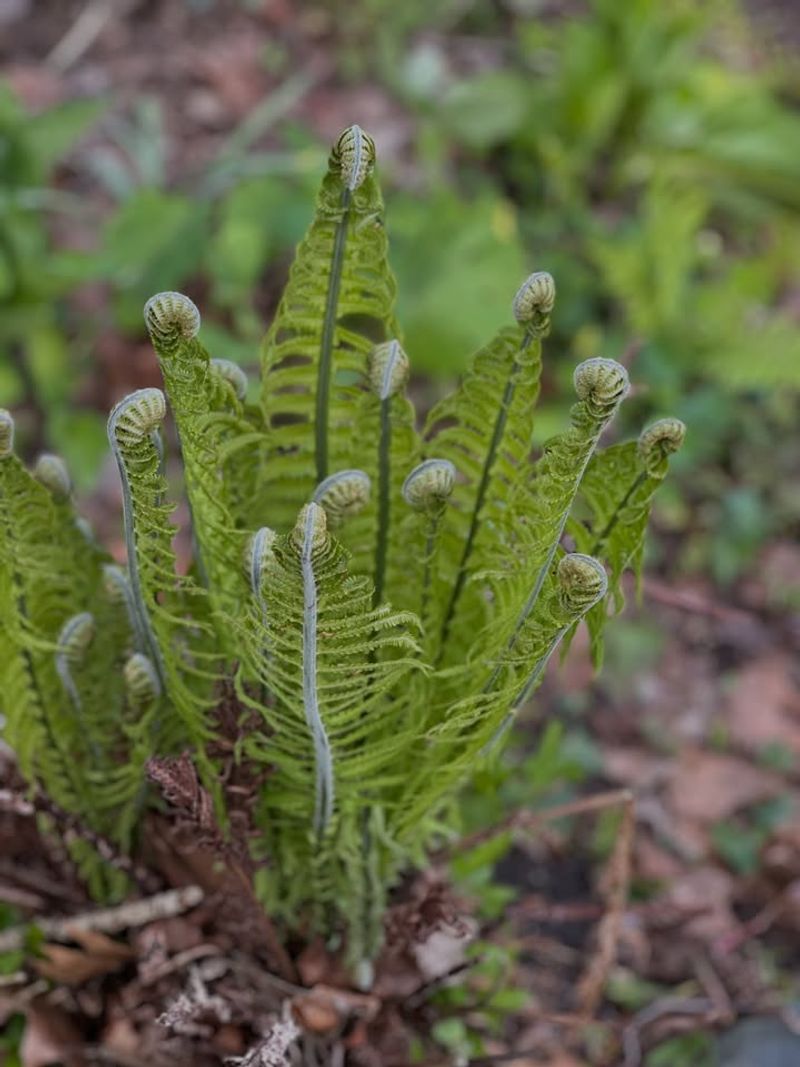
Walk into any Michigan hardwood forest and scoop up a handful of the ground. That dark, crumbly, organic-rich material is the soil environment ostrich fern evolved in.
Decomposed leaves, fungal networks, and decades of accumulated organic matter create a growing medium that bears very little resemblance to average garden soil.
Matching that profile does not require exotic amendments or expensive products.
Leaf mold, which is simply composted fallen leaves, is one of the most effective soil improvers available and costs nothing if autumn cleanup materials are collected rather than bagged.
If you have been disposing of fallen leaves for years, the fern would like a word.
Let leaves decompose in a pile at the back of the yard for one to two seasons. The resulting material mimics the forest floor closely and mixes well into existing soil before planting.
Finished compost accomplishes the same goal and improves structure, drainage, and moisture retention simultaneously.
Ostrich fern prefers soil that stays consistently moist without becoming waterlogged for extended periods. Clay soil benefits from compost addition to improve drainage.
Sandy soil needs organic matter to extend its moisture-holding capacity between waterings.
A two to three inch layer of shredded leaves or wood chips placed around newly planted crowns locks in moisture, moderates soil temperature, and feeds the soil gradually as it decomposes through the season.
The forest floor built this plant. Approximating it is the most respectful thing a garden can offer.
5. Keep It Damp During Establishment
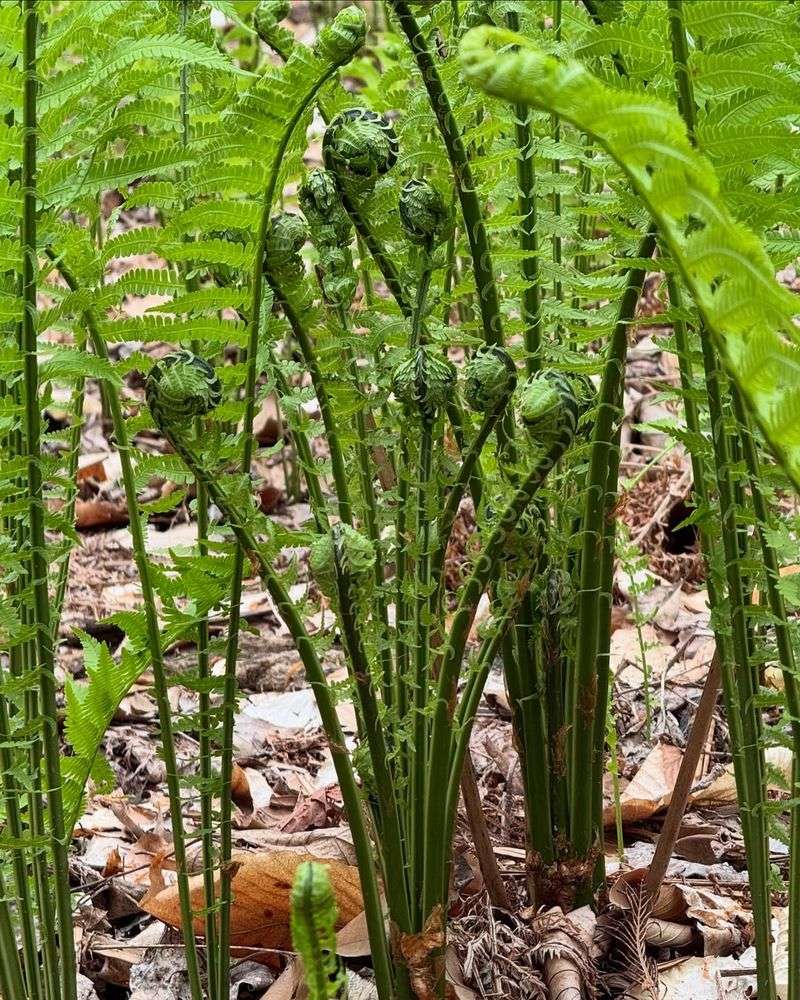
Newly planted ostrich ferns have one real vulnerability that shows up specifically in that first growing season.
Before rhizomes have spread and roots have anchored into surrounding soil, young plants are sensitive to drought. A week of dry conditions during a hot Michigan July can set back establishment significantly.
Consistent moisture during that first season is the single most important investment the gardener makes. After that, the fern largely takes care of itself.
Check soil around new plants every two to three days during the first growing season, particularly through dry stretches. The soil should feel moist a few inches below the surface.
Dry conditions at that depth mean water deeply and slowly so moisture reaches the root zone rather than running off the surface. A soaker hose laid along the planting bed simplifies this and keeps water off the fronds.
Once ostrich fern completes a full growing season in the ground, its moisture needs ease considerably. Established colonies in naturally damp spots often sustain themselves for weeks without supplemental watering once the root system is fully functional.
That first summer is about helping the plant build the underground infrastructure it needs to spread and perform for decades.
The time investment is relatively small in the context of what the fern produces across the seasons that follow.
One attentive summer. Decades of self-sufficient performance. That is a negotiation almost entirely in the gardener’s favor.
6. Pair It With Woodland Natives
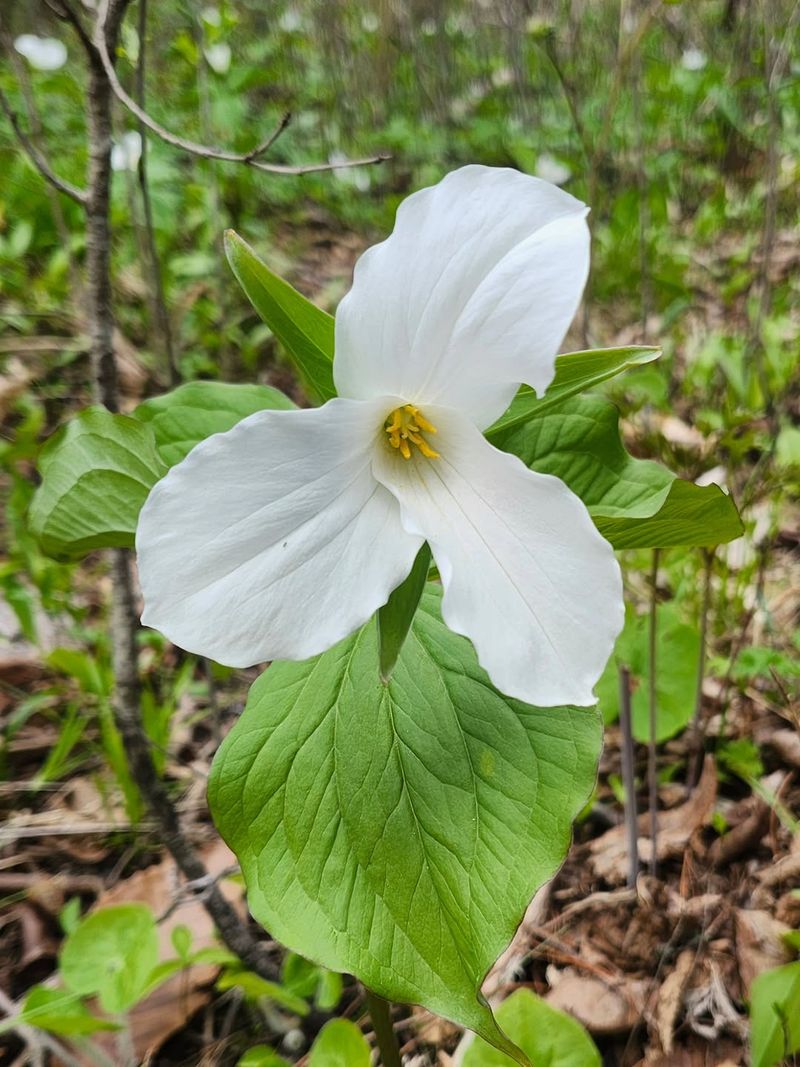
Ostrich fern rarely grows alone in nature. Wander through a Michigan woodland and it appears nestled among wild ginger, Solomon’s seal, trillium, and mayapple.
Those plant communities evolved together across thousands of years, sharing the same soil conditions, light levels, and moisture requirements.
Recreating that community in the garden produces a planting that reads as genuinely natural rather than assembled.
Wild ginger carpets the ground in front of taller fern fronds and shares the same preference for moist, shaded soil.
The contrast between the fern’s bold vertical fronds and ginger’s low, spreading foliage creates visual depth that neither plant achieves independently.
Solomon’s seal arches gracefully alongside ostrich fern, its white bell-shaped flowers appearing in spring before giving way to blue-black berries in fall.
Trillium adds early spring color before fern fronds fully unfurl, using the available light before the canopy closes above.
Pairing native plants also supports local wildlife in ways that ornamental plantings cannot replicate. Native bees, ground beetles, salamanders, and woodland birds all benefit from the layered habitat a well-designed native shade garden provides.
From a purely visual standpoint, the contrast between ostrich fern’s feathery fronds and the finer textures of its companions creates a dynamic planting that holds interest from late spring through the first hard frost.
A planting that looks like it grew there on its own is one of the harder design outcomes to achieve intentionally.
Native plants have been doing it without the effort for considerably longer.
7. Use It Behind Shorter Shade Plants
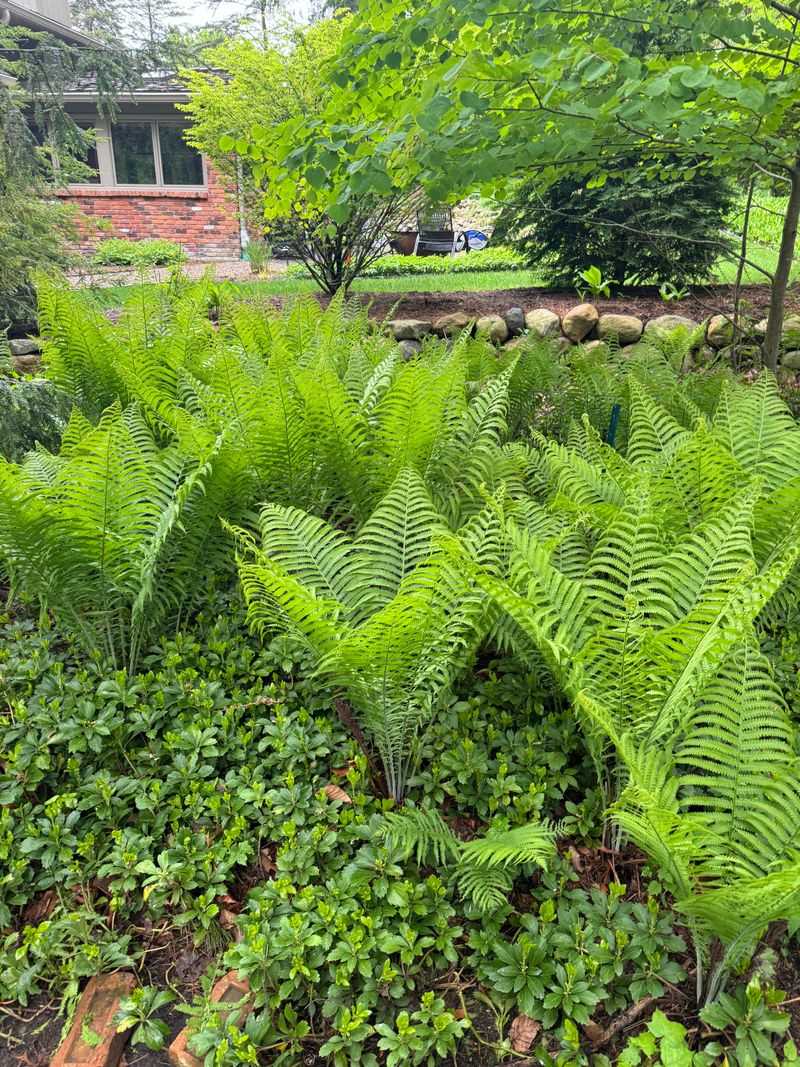
Background plants in shade gardens tend to be an afterthought. Most of the design attention goes to focal plants and ground covers while the rear of the bed remains underdeveloped.
Ostrich fern fills that back row with a presence that transforms the entire composition from flat to layered.
At three to six feet tall in good conditions, ostrich fern creates a dramatic green backdrop that makes shorter plants read more intentionally.
Hostas, astilbe, and native bleeding heart placed in front of an ostrich fern backdrop gain a visual context that grounds them and makes the whole bed look designed rather than assembled from separate impulse purchases.
The texture contrast is particularly effective. Ostrich fern fronds are finely divided and feathery, which plays directly against the bold, smooth leaves of hostas or the heart-shaped foliage of wild ginger.
Mixing textures is one of the oldest principles in garden design, and this fern brings serious textural drama to any shaded composition without requiring any design expertise to deploy correctly.
The fern also serves a practical function beyond aesthetics. It screens less attractive views behind the bed, including fences, foundations, and utility areas, without the formality of a hedge or the maintenance of a structural shrub.
Using ostrich fern as a background layer is simultaneously a design decision and a practical one.
The back row of your shade bed has been doing very little for a long time. The fern has opinions about that.
8. Let It Soften Bare Tree Edges
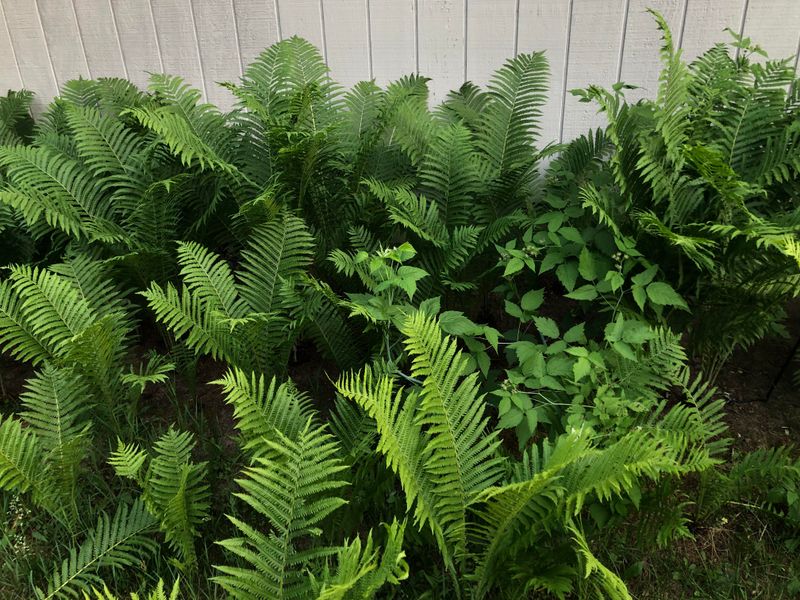
That transition zone where the lawn meets the tree line is one of the most universally frustrating spots in a Michigan yard.
The mower cannot get close enough without damaging roots. Grass struggles in the shade and leaves a patchy, bare edge for most of the season. The whole area looks unfinished regardless of how well the rest of the yard is maintained.
Ostrich fern softens that transition naturally by creating a gradual visual shift between open lawn and the denser shade beneath trees.
Instead of an abrupt line where grass stops and bare soil begins, arching green fronds blur the boundary in a way that looks like the woodland is gently expanding outward. Because it essentially is.
Tree edges accumulate leaf litter, which is exactly the organic material ostrich fern prefers. As fallen leaves decompose around the fern crowns each autumn, they feed the soil and improve growing conditions without any assistance from the gardener.
The fern and the trees create a self-sustaining system together once the initial establishment period passes.
Root competition from established trees can present a challenge in the first season. Amending soil well at planting time and watering consistently through that first summer helps the fern establish before tree roots become a significant factor.
Once settled into a tree edge, ostrich fern spreads steadily and creates one of the most naturalistic transitions available to a Michigan shade garden.
The awkward strip asked for something that belongs there. Ostrich fern was already on its way.