The Florida Plants Cardinals Need More Than Another Bird Feeder This Fall
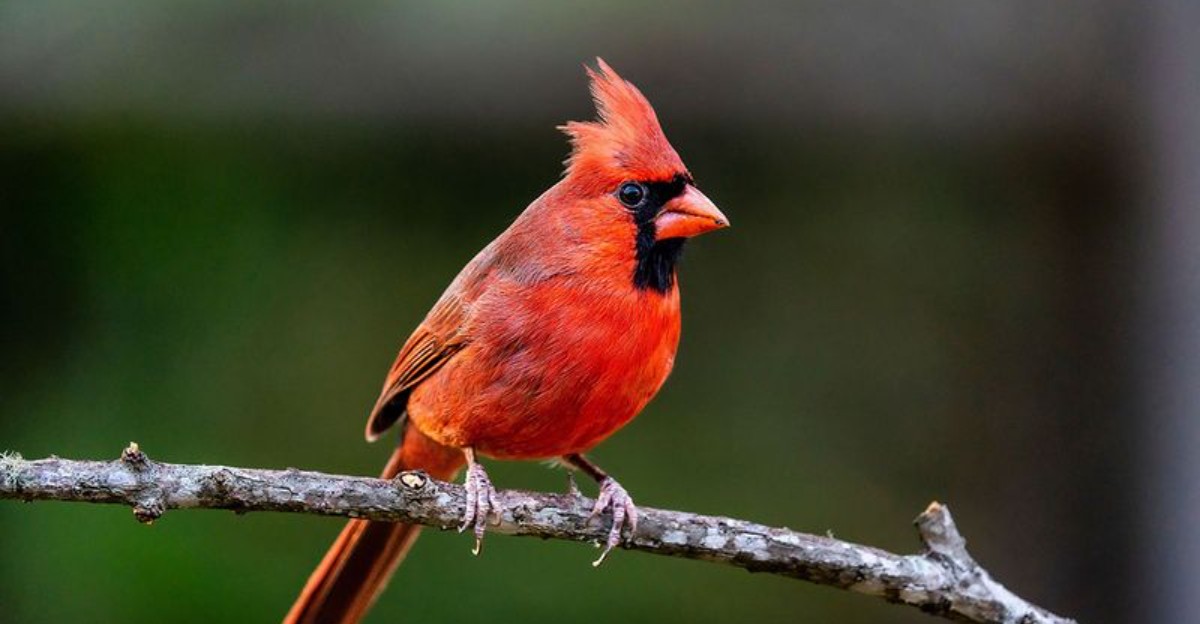
A cardinal does not need another pile of seed to make your yard its territory. Sometimes, it needs somewhere to disappear.
A dense Florida shrub can provide what a feeder cannot: cover from predators, protected places to rest, and the kind of structure birds can weave through when the yard feels too exposed.
That matters more once seasonal changes start reshaping the food and shelter available around your property.
You might fill a feeder every morning and still wonder why cardinals spend more time in the neighbor’s yard. The missing piece may not be food at all.
It may be the landscape surrounding it. Certain shrubs give cardinals a reason to stay close, especially when their branches create a sheltered pocket instead of another open patch of lawn.
If your goal is to see cardinals become regular visitors rather than quick drive-by guests, the plants around your yard deserve much more attention than the feeder itself.
1. Simpson’s Stopper
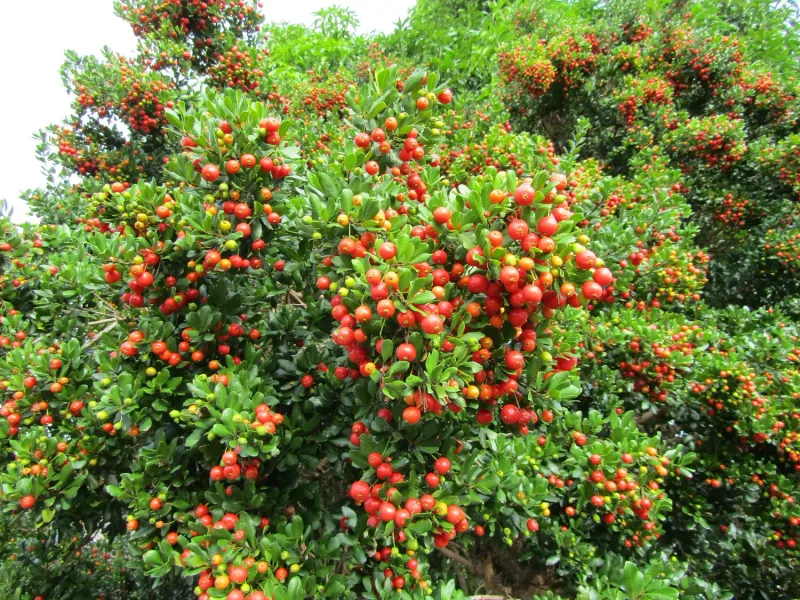
Meet the plant that works overtime for cardinals every single season. Simpson’s Stopper is an evergreen native that gives birds food, shade, and safety all year round.
Its fragrant white flowers open in spring, and by late summer they turn into bright orange to red berries. The orange fruits provide food for birds when they ripen, while the shrub’s dense evergreen growth offers valuable cover.
The thick, bushy canopy is one of the best parts. When a cardinal wants to feed without worrying about hawks or cats, this dense cover keeps it hidden and calm.
Gardeners love how easygoing this shrub is. It handles Florida heat, tolerates a range of soils, and does not need much fussing once it settles in.
You can grow it as a rounded shrub or trim it into a small tree, so it fits many yard sizes. Plant it near a window and you will get a front-row seat to cardinal visits.
Fun bit: the crushed leaves give off a lovely nutmeg-like scent, which is why some folks call it a sweet-smelling favorite.
If you want one plant that feeds and shelters cardinals through spring, summer, and fall, this is a smart pick to start with.
2. American Beautyberry
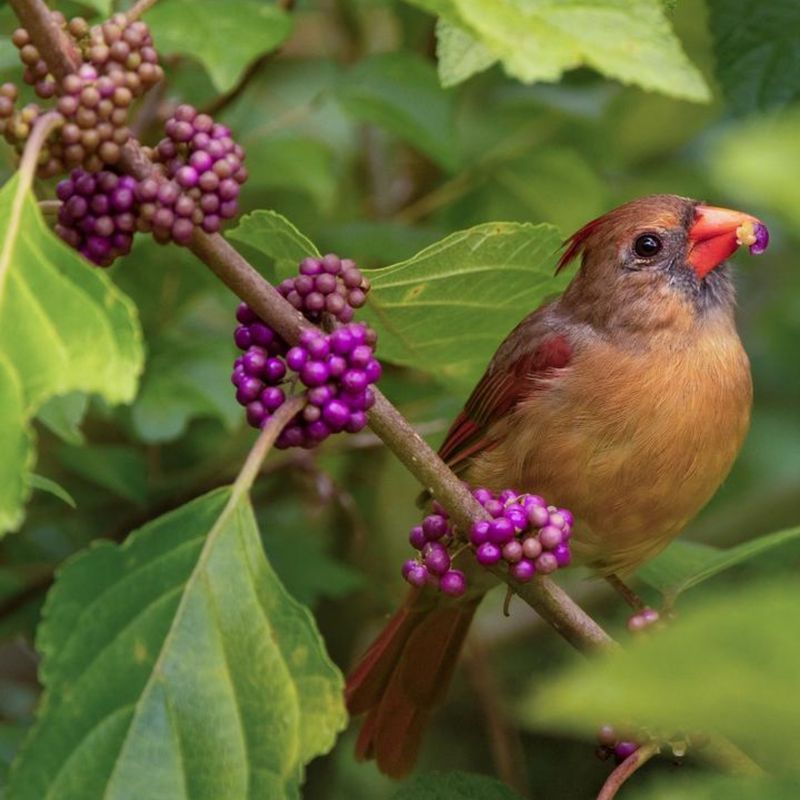
Few shrubs put on a show quite like this one. American Beautyberry explodes with clusters of glowing magenta-purple berries that wrap tightly around its stems each fall.
Those eye-catching berries are more than pretty decoration. When other food gets hard to find in cooler months, cardinals and many other songbirds rely on them to stay full and energized.
The berries often stick around into winter, which makes this plant a lifesaver during the leaner weeks. That reliable timing is why so many bird lovers plant it near patios and walkways.
This is a deciduous shrub, meaning it drops its leaves in winter, but it bounces back fast every spring. It grows quickly and forgives beginners who are still learning.
Part shade and average soil suit it just fine, and it does not demand constant watering once established. A light trim in late winter keeps it tidy and encourages fresh growth.
Your Florida Garden Changes Every Week. Your Plan Should Too.
Gardening in Florida changes quickly throughout the season. Every Friday you’ll receive a simple weekly plan showing exactly what to plant, prune, fertilize, harvest, and protect so you never miss the right timing.
Did you know? People have long used the crushed leaves as a natural bug repellent, rubbing them on their skin to keep mosquitoes away.
Plant a beautyberry and you get double the reward: a splash of unforgettable color for you and a dependable fall feast for the cardinals in your neighborhood.
3. Yaupon Holly
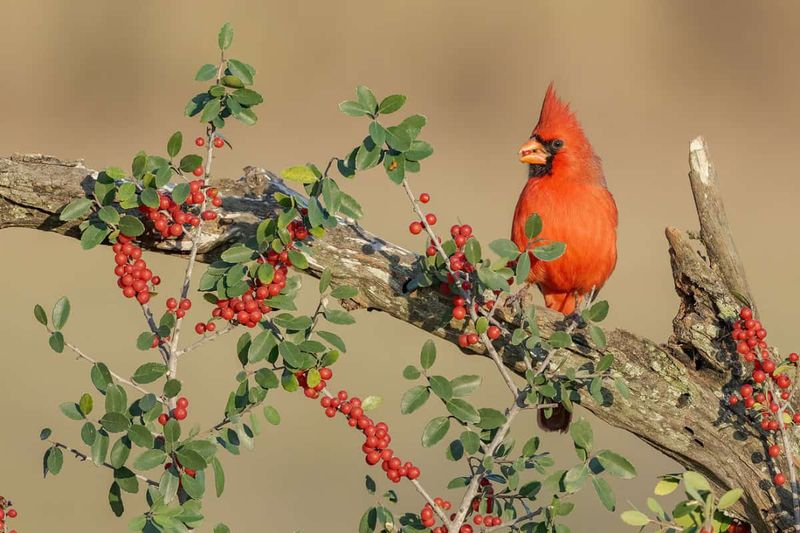
Tough as nails and generous with berries, Yaupon Holly earns its spot in any bird-friendly yard. This evergreen native can grow as a shrub or a small tree, and it barely asks for anything in return.
Only the female plants produce those famous bright red berries, so you will want to make sure you get a fruiting one. Those berries provide a useful fall and winter food source for cardinals, mourning doves, robins, and other birds.
What makes this plant a favorite is how little care it needs. It shrugs off drought, thrives in full sun, and does great even in sandy Florida soil.
Because it stays green all year, it also gives cardinals steady cover for resting and hiding. That combination of food plus shelter is exactly what birds need heading into fall and winter.
Here is a quirky tidbit: Yaupon Holly is the only plant native to North America that naturally contains caffeine, and people once brewed its leaves into a tea.
You can shape it into a hedge, a rounded bush, or leave it wild and natural. However you grow it, the cardinals will treat those red berries like a buffet when colder days roll in.
4. Firebush
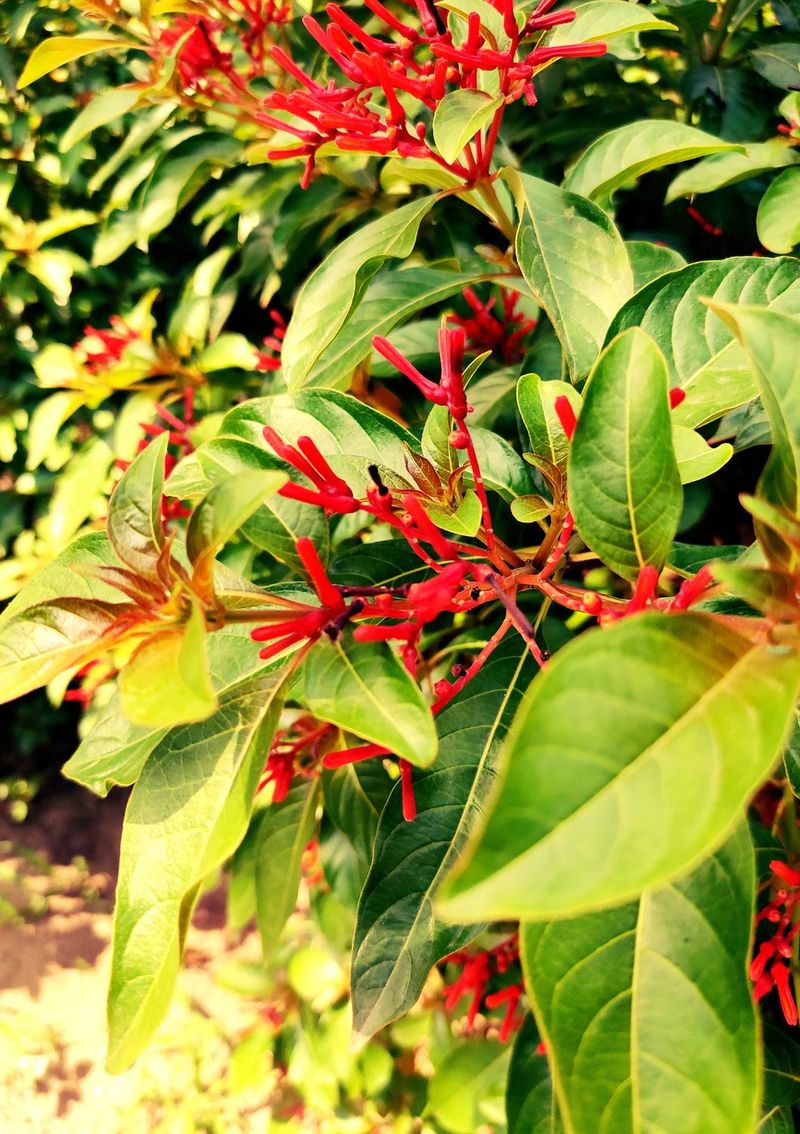
If you want a plant that buzzes with life, Firebush delivers. Its fiery orange to red tubular flowers pull in hummingbirds and butterflies like a magnet, turning any corner of the yard into a lively hangout.
Cardinals show up for a different treat. As the flowers fade, they form small dark berries that ripen from late summer through fall, giving cardinals, catbirds, and mockingbirds something tasty to eat.
Native to Florida, this shrub loves the heat and keeps blooming for months. That long flowering season means your yard stays colorful and full of movement well into autumn.
It grows fast and can get quite tall, so give it room to stretch. In warmer parts of the state it stays evergreen, while in cooler spots it may wither and regrow in spring.
Care is refreshingly simple. Plant it in full sun, water it while it gets established, and then step back and enjoy the parade of wildlife.
A word to the wise: look for the true native Firebush rather than a lookalike, since the native version supports local birds best.
With its flashy blooms and bird-friendly berries, Firebush proves that one plant can feed hummingbirds, butterflies, and cardinals all at the same time.
5. Wild Coffee
Shady spots in your yard do not have to be boring or birdless. Wild Coffee thrives in those darker corners and rewards you with a shrub that cardinals genuinely appreciate.
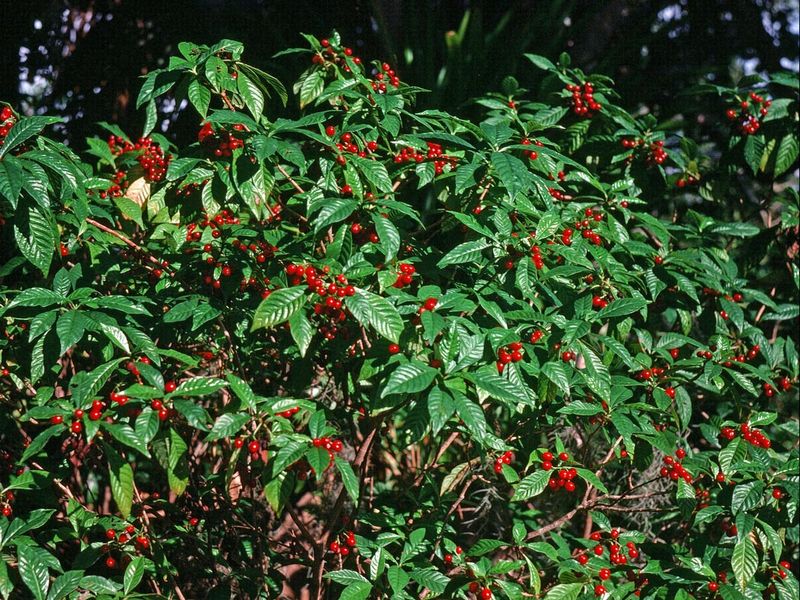
Its glossy, dark green leaves have deep, ridged veins that give it a rich, tropical look. Small greenish-white flowers appear in spring or summer, and sometimes throughout the year in warm areas.
After the flowers come dark red berries, and this is when the birds take notice. Cardinals and other songbirds happily eat the fruit, making this a quiet but valuable food stop.
The plant stays fairly compact and evergreen, so it holds its good looks and keeps offering cover no matter the season. That makes it a smart choice for filling in shady garden beds.
It prefers well-drained soil and does best in partial to full shade, which is perfect for spots where sun-loving plants struggle. Once settled, it needs very little attention.
Despite the name, you should not brew the berries for your morning cup. It belongs to the same plant family as true coffee, but these berries are meant for the birds, not your mug.
Add Wild Coffee where light is low, and you will turn a dull shady area into a berry-rich cardinal cafe.
6. Coral Honeysuckle
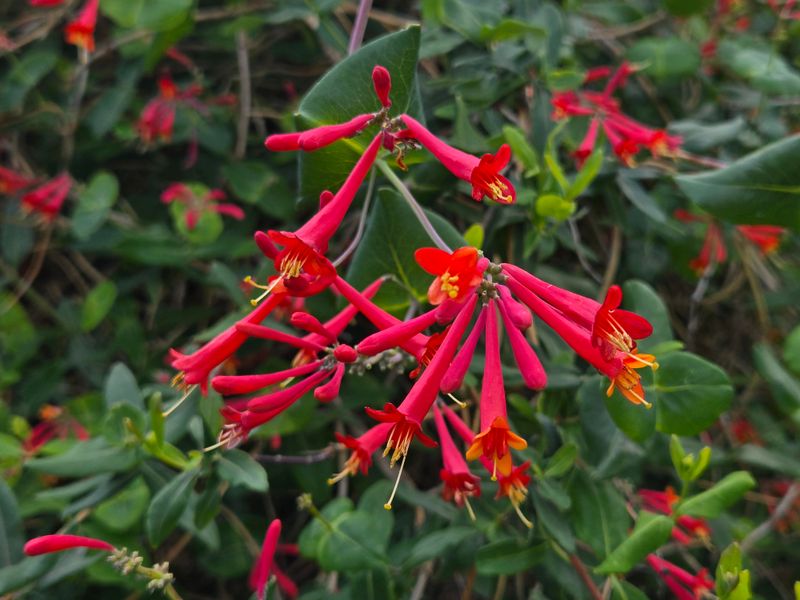
Technically a vine, Coral Honeysuckle is such a bird favorite that it deserves a place on this list. Train it up a fence or trellis and it becomes a living wall of flowers and food.
Bright red tubular blooms cover it for much of the year, offering sweet nectar to hummingbirds and pollinators. After the flowers, small red berries form, and cardinals swoop in to enjoy them.
Beyond the food, the tangled growth creates thick, protected cover. The tangled growth can provide the kind of dense cover cardinals use for nesting and shelter.
This native climber is well behaved compared to invasive honeysuckles, so it will not take over your whole yard. It stays manageable with an occasional trim.
Sun or partial shade both work, and it handles Florida conditions with ease once its roots take hold. A support structure is all it really needs to shine.
Here is something neat: because it blooms across many months, it acts like a steady snack bar for wildlife rather than a one-time feast.
If your yard is short on ground space, go vertical with Coral Honeysuckle. You will hand cardinals nectar, berries, and shelter, all from a single plant climbing gracefully overhead.
7. Elderberry
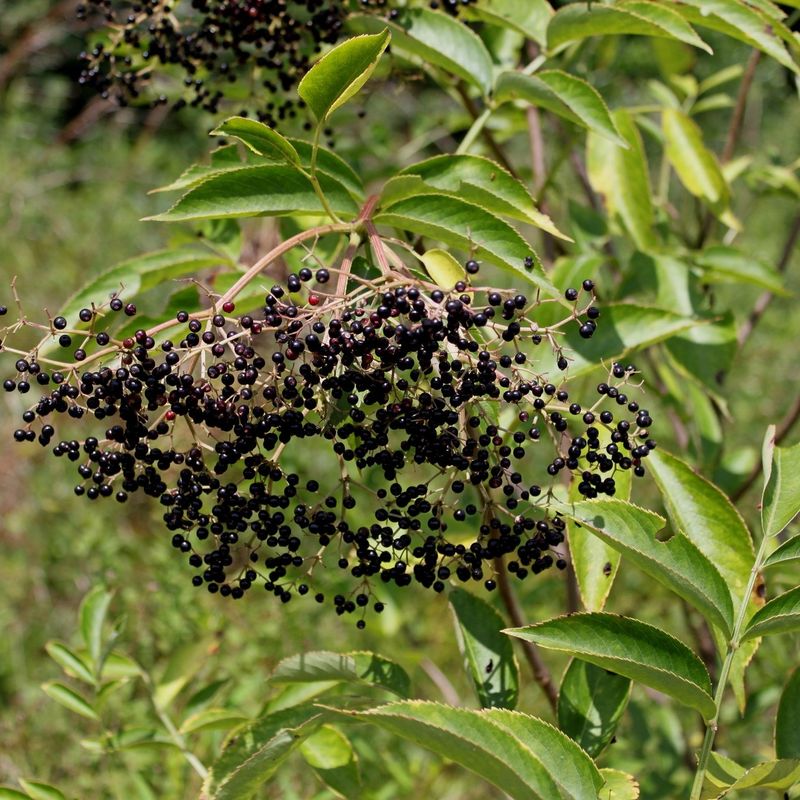
Big, bold, and bursting with berries, Elderberry is a songbird magnet you will not want to skip. In early summer it shows off wide, flat clusters of creamy white flowers that look like lacy plates.
By late summer those blooms transform into hanging bunches of deep purple berries. Cardinals, robins, thrushes, and gray catbirds line up for these fruits, making the shrub a busy feeding hub.
This plant grows fast and can get quite large, so plan for a roomy spot. It loves moist areas and often pops up naturally near ditches, ponds, and low ground.
Because it produces so heavily, one healthy Elderberry can feed a whole flock. That kind of generosity is exactly what birds need during migration and cooler weather.
The arching branches also create decent shelter, giving cardinals a place to perch between bites. It is a plant that pulls double duty for wildlife.
A friendly heads-up: raw elderberries are meant for the birds, not for snacking straight off the bush by people, since they must be cooked to be safe.
Give Elderberry a sunny, moist corner and it will pay you back with clouds of flowers, heaps of berries, and a yard full of happy, chattering cardinals every fall.
8. Flowering Dogwood
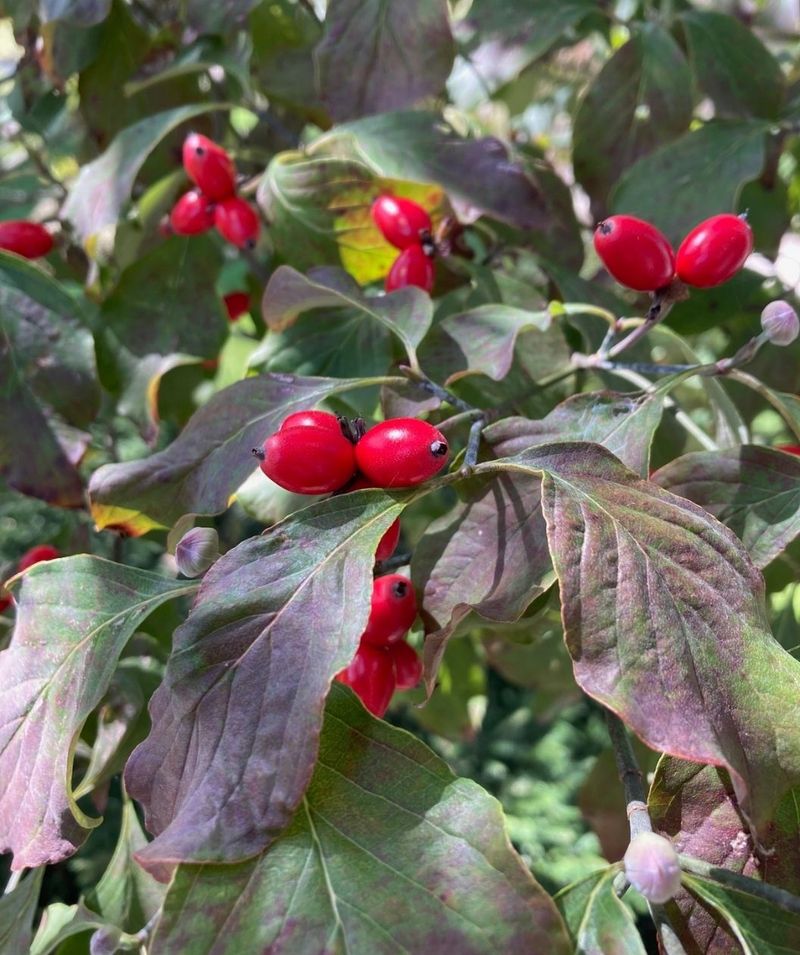
Elegant and full of nutrition, Flowering Dogwood rounds out our list with real staying power. Often grown as a small tree, it can also take a shrubbier shape and still deliver plenty of berries.
Come fall, it produces clusters of shiny red berries that birds adore. Come fall, it produces clusters of red fruits that provide food for birds and small mammals, including cardinals.
Because the berries are so nourishing, they are among the first foods birds and squirrels reach for. Birds and other wildlife may quickly make use of the fruits once they ripen.
Cardinals feeding on this plant get more than a snack. The rich nutrition supports their metabolism and keeps them strong through demanding seasons.
Beyond feeding wildlife, dogwood is simply beautiful. Its springtime blooms and colorful fall foliage make it a standout in any landscape.
It appreciates well-drained soil and a bit of shade, especially in Florida’s hotter regions where afternoon sun can be intense. Give it those conditions and it will settle in nicely.
Little-known fact: the same antioxidant pigments that make the berries so valuable for birds are also what give them that deep, glossy red color.
Plant a dogwood and you gift cardinals a high-energy meal while treating yourself to one of the prettiest shrubs around.