Plumeria Leaves Are Starting To Fall In Florida – Cold Weather May Soon Finish The Job
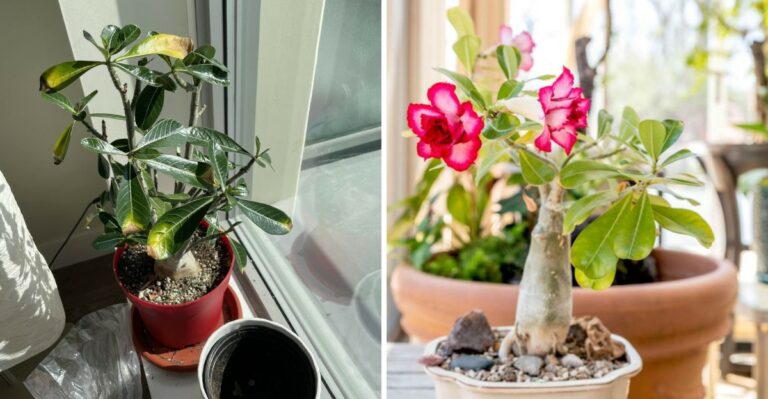
Yellowing plumeria leaves dropping onto the patio in late October can look like the start of something serious.
Much of the time, that shedding is simply the tree slowing down as days shorten and nights turn cooler.
Plumeria comes from tropical regions and naturally rests through the cooler months in many parts of Florida. Bare branches by midwinter are usually normal, even on healthy plants.
Real trouble tends to start when temperatures dip low enough to damage the soft, fleshy stems.
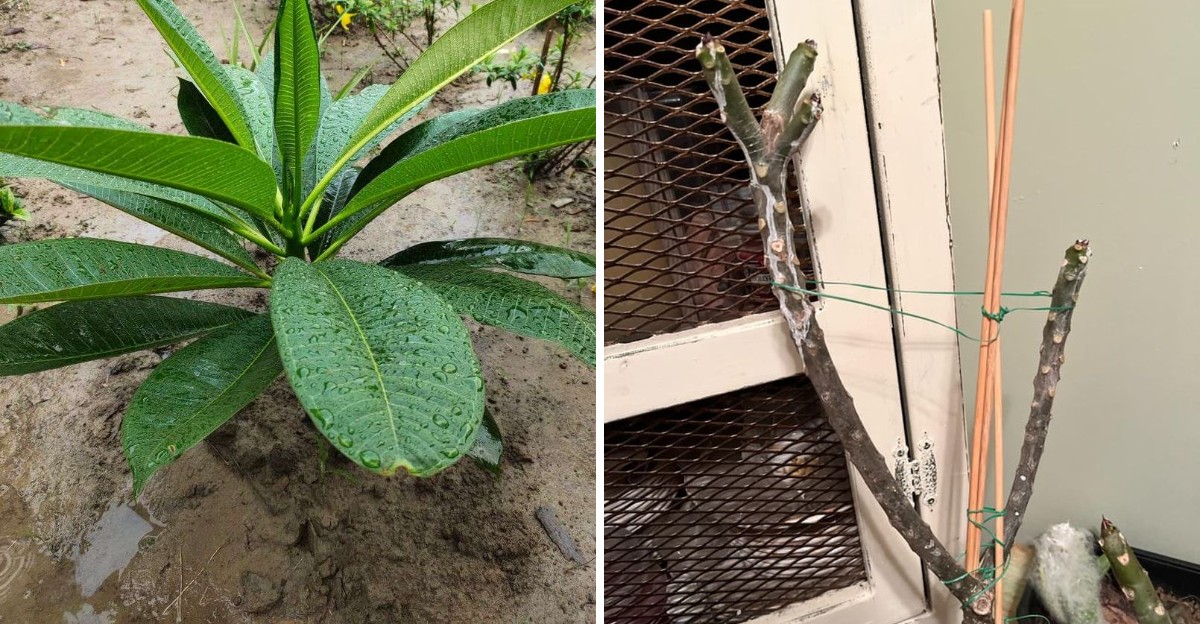
Branch tips hurt by cold can turn mushy and dark, sometimes weeks after the chilly night that caused it.
Keep an eye on the forecast, especially if your plant grows in a pot that can still be moved. Where you live in the state plays a large role in how much protection it will need.
1. Yellowing Leaves In Fall Are A Normal Sign Of Approaching Dormancy
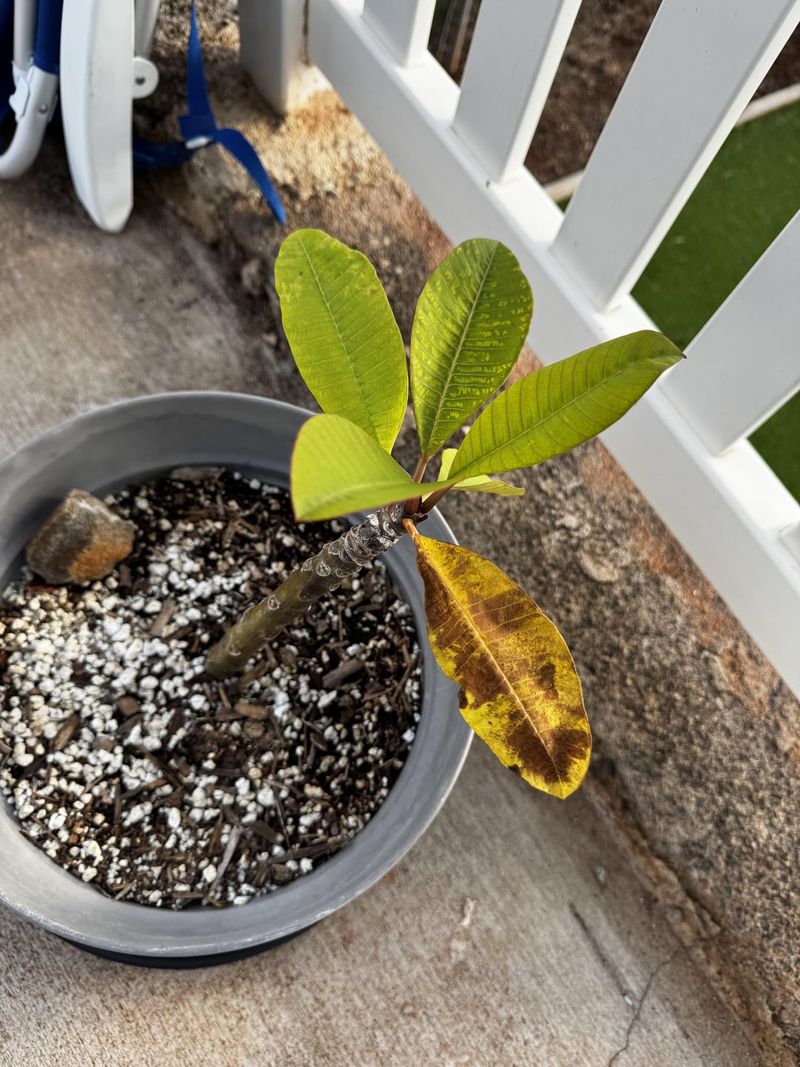
Yellow leaves on a plumeria in fall usually signal rest, not trouble. Gardeners who grow these trees for years learn to expect the shift as the season turns.
Older leaves near the bottom of each branch tend to fade first, while the newest ones at the tips may hang on longer.
Plumeria is a deciduous plant in many climates, which means shedding leaves is part of its natural cycle. When conditions cool, the plant pulls resources back into its thick stems and gets ready to wait out winter.
That said, not every yellow leaf points to dormancy.
Overwatering, poor drainage, root problems, and pests like spider mites can also cause yellowing at almost any time of year. If leaves show spots, sticky residue, fine webbing, or soft stems, take a closer look.
A good test is timing and pattern. Gradual yellowing across the plant in fall usually matches the seasonal slowdown, while sudden yellowing in midsummer deserves more attention.
Plumeria rust is another thing worth checking. It shows up as orange powdery spots on leaf undersides and is fairly common in Florida during warm, humid months.
Raking up fallen leaves is a simple habit that keeps things tidy and may reduce lingering fungal spores.
Beyond that, you can mostly let the plant do its thing and save your energy for spring growth.
2. Cooler Nights And Shorter Days Trigger The Seasonal Leaf Drop
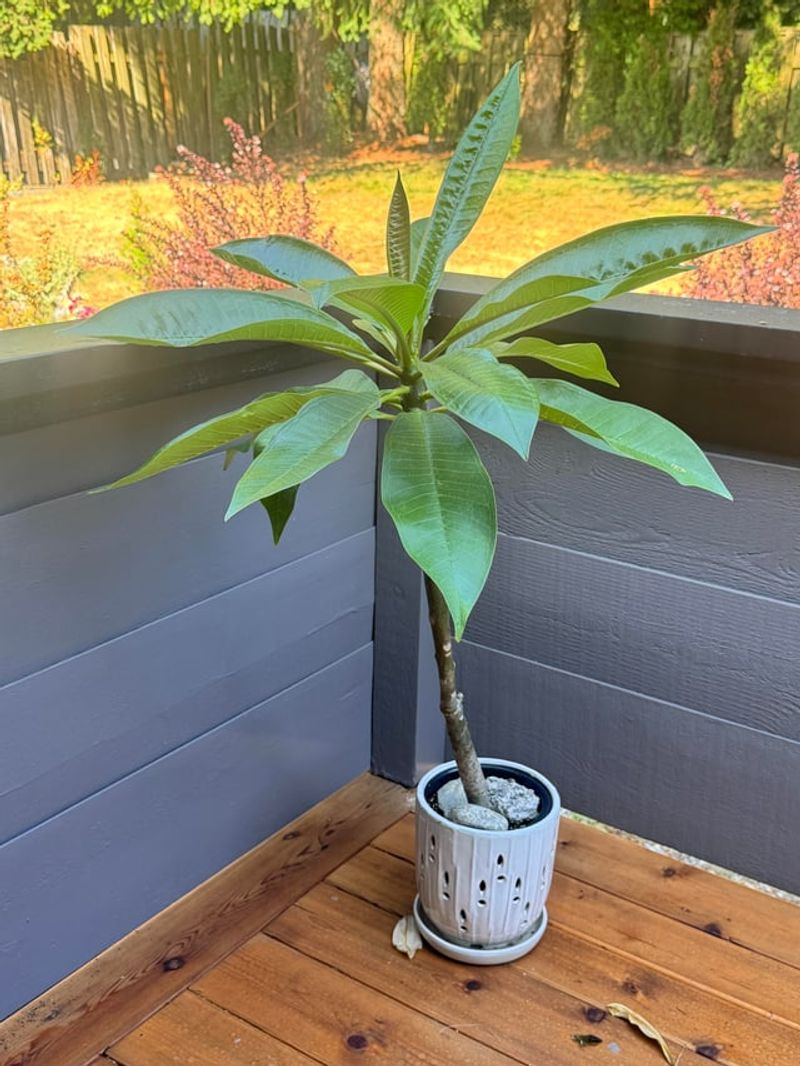
Shorter days do a lot of quiet work in the garden. As daylight shrinks in fall, plumeria growth slows even before the air feels cool.
Cooler nights add a second push, and together these changes nudge the plant toward dropping leaves.
Timing varies a great deal across the state. In North Florida, noticeable leaf drop may begin in fall, while plants in the warmest coastal areas of South Florida sometimes keep many leaves well into winter.
Weather from one year to the next also plays a role.
A mild winter may leave your plant half leafy, and a chilly stretch may strip it bare within a few weeks. Neither outcome is unusual, so try not to compare your tree too closely with a neighbor’s.
Your Florida Garden Changes Every Week. Your Plan Should Too.
Gardening in Florida changes quickly throughout the season. Every Friday you’ll receive a simple weekly plan showing exactly what to plant, prune, fertilize, harvest, and protect so you never miss the right timing.
Variety matters as well, since some plumeria types hold leaves longer than others under the same conditions.
Watching your own plant over a couple of seasons is often the best guide. Jot down roughly when leaves begin falling and when new growth returns in spring.
Those notes help you plan watering changes and know when to stop worrying.
If leaves drop but the branches stay firm and plump, the plant is generally handling the season well. Firm stems are a far better sign of health than how many leaves remain in December.
3. Cold Nights Can Damage Tender Plumeria Branches
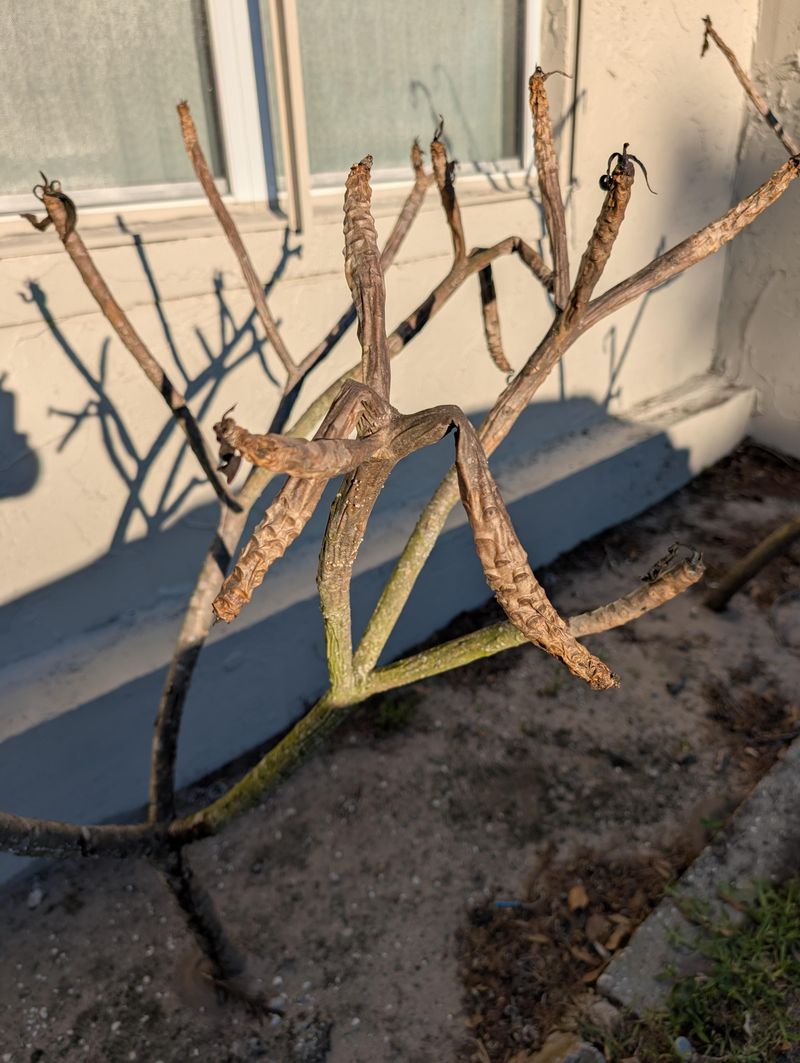
Leaf drop is one thing, but cold damage is another story. Plumeria is a tropical plant, and its fleshy branches can suffer when temperatures fall near freezing.
Frost and freezes can injure tender tips first, sometimes turning them dark, soft, or shriveled over the following days.
Damage is more likely in North Florida and parts of Central Florida, where freezes happen more often. Even in milder areas, an unusual cold snap can catch plants off guard.
Wet soil during cold weather may raise the risk of stem and root problems.
When a freeze is in the forecast, small in-ground plants can be covered with frost cloth or an old sheet reaching to the ground. Remove the cover once temperatures rise the next day so heat does not build up underneath.
Avoid plastic touching the branches, since it can transfer cold directly to the plant.
After a cold night, hold off on cutting anything right away. Damage may take days or weeks to fully show, and early pruning could remove healthy tissue by mistake.
Once the weather warms and you can clearly see which parts stayed firm, trim back soft or blackened areas to healthy wood with clean pruners.
Results depend on how cold it got, for how long, and the plant’s size and condition.
4. Potted Plants In Northern And Central Areas Are Safer Indoors
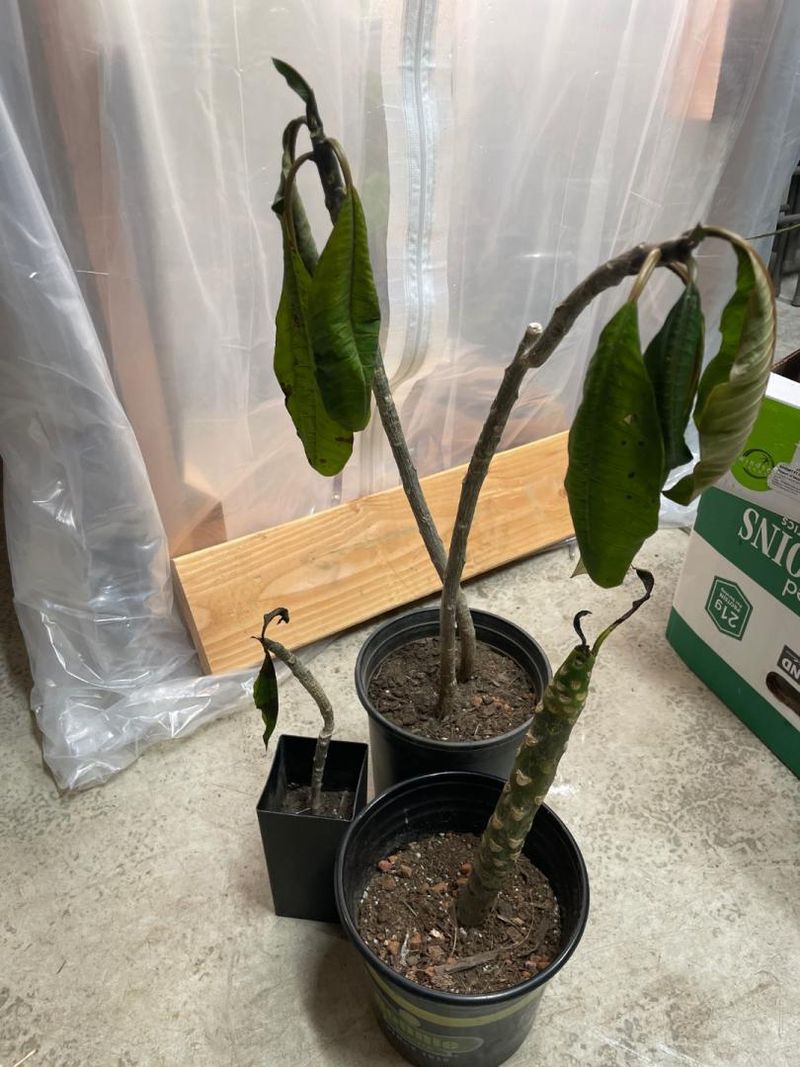
Containers give you one big advantage over in-ground plants. You can simply move them out of harm’s way when the forecast turns cold.
Gardeners in Jacksonville, Tallahassee, Gainesville, and Orlando-area suburbs often bring potted plumerias into a garage, shed, or sunroom on chilly nights.
Roots in pots are more exposed to cold than roots in the ground. Soil in a container can chill faster, so a sheltered spot can make a meaningful difference during a freeze.
A dormant plant without leaves does not need much light while it rests.
A garage that stays above freezing is usually fine for a bare plumeria during cold snaps. If the plant still has leaves, a bright window or sunroom may suit it better.
Keep the soil on the dry side while it sits indoors, and watch for mealybugs or spider mites hiding on stems.
Some Florida gardeners leave pots outside most of the winter and only move them during cold spells. That approach works well when you watch the forecast closely.
Heavy pots can be hard to move on short notice, so a plant dolly or wheeled caddy saves your back.
When nights warm up steadily in spring, ease the plant back outdoors and give it a few days in partial sun before full exposure.
5. Gardens In The Warmest Southern Areas Can Often Leave Plants Outside
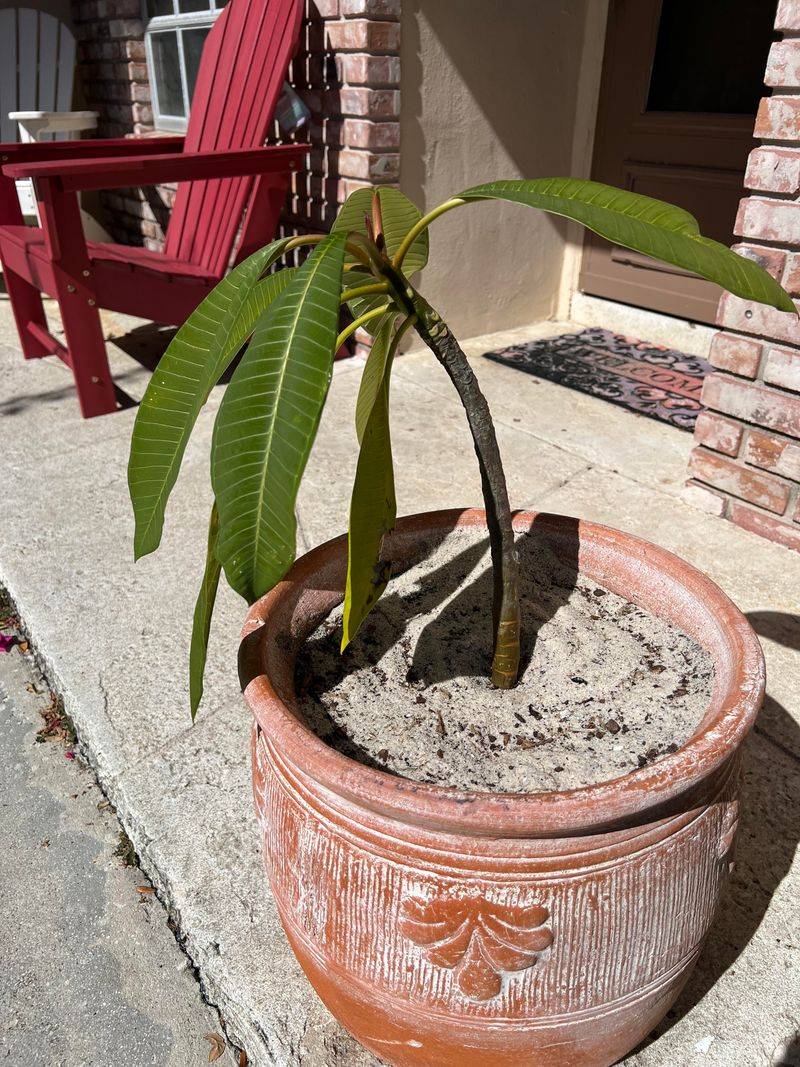
Down near Miami, Fort Lauderdale, and the Keys, winter looks very different. Freezes are rare in these coastal areas, so many plumerias stay in the ground year-round without special protection.
Large plumeria trees growing in South Florida neighborhoods are a common sight for exactly that reason.
Even so, rare does not mean impossible. Inland spots and low areas can run cooler than nearby coasts, and occasional cold fronts may bring chilly nights.
Keeping an eye on local forecasts during winter is still a smart habit.
Plants here may hold more leaves through the season or drop them later than plumerias farther north. Some may barely seem to rest at all during a mild year.
Young plants and fresh cuttings are more delicate than established trees, so they may deserve a little extra care on cool nights.
A light cover or a quick move closer to the house can help a small plant ride out an unusual dip. Walls and overhangs often hold a bit of warmth overnight.
Good drainage matters too, since cool, soggy soil can lead to rot even without frost.
If your area floods easily after winter rains, a raised bed or mound may help keep roots healthier. Overall, southern gardeners usually have the easiest time keeping plumeria happy through the cooler months.
6. Cutting Back On Water During Dormancy Helps Prevent Rot
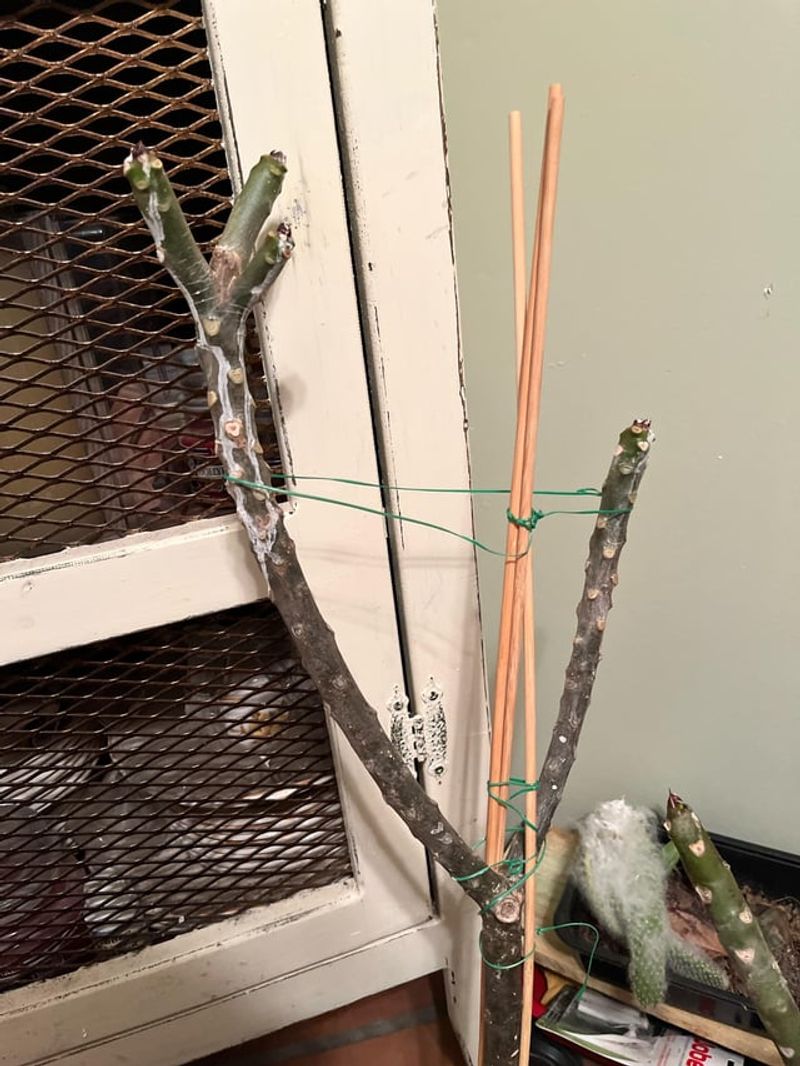
Too much water is one of the most common ways plumerias get into trouble in winter. Without leaves, the plant uses very little moisture, so wet soil can linger for days.
Soggy roots and cool weather together can set the stage for rot.
Before watering, push a finger a couple of inches into the soil. If it still feels damp, wait and check again later.
Bare, dormant plants in pots often need only occasional light watering, and some growers skip it entirely while plants sit in a cool garage.
In-ground plants may get enough from rainfall during the drier winter months in Florida. Still, a long dry spell in a warmer area could call for a modest drink.
Leafy plants still growing in mild spots need more water than bare ones, so adjust based on what you see.
Drainage makes a big difference. Pots should have open holes, and saucers that collect water are best emptied after watering or rain.
A soft, wrinkly, or mushy stem base can be a warning sign of rot.
Firm stems that shrivel slightly during dormancy can be normal, but mushy spots are not. If you notice rot, cutting back to clean, firm tissue and letting the cut dry may save the healthy part of the plant.
7. Fertilizer Can Wait Until New Leaves Appear In Spring
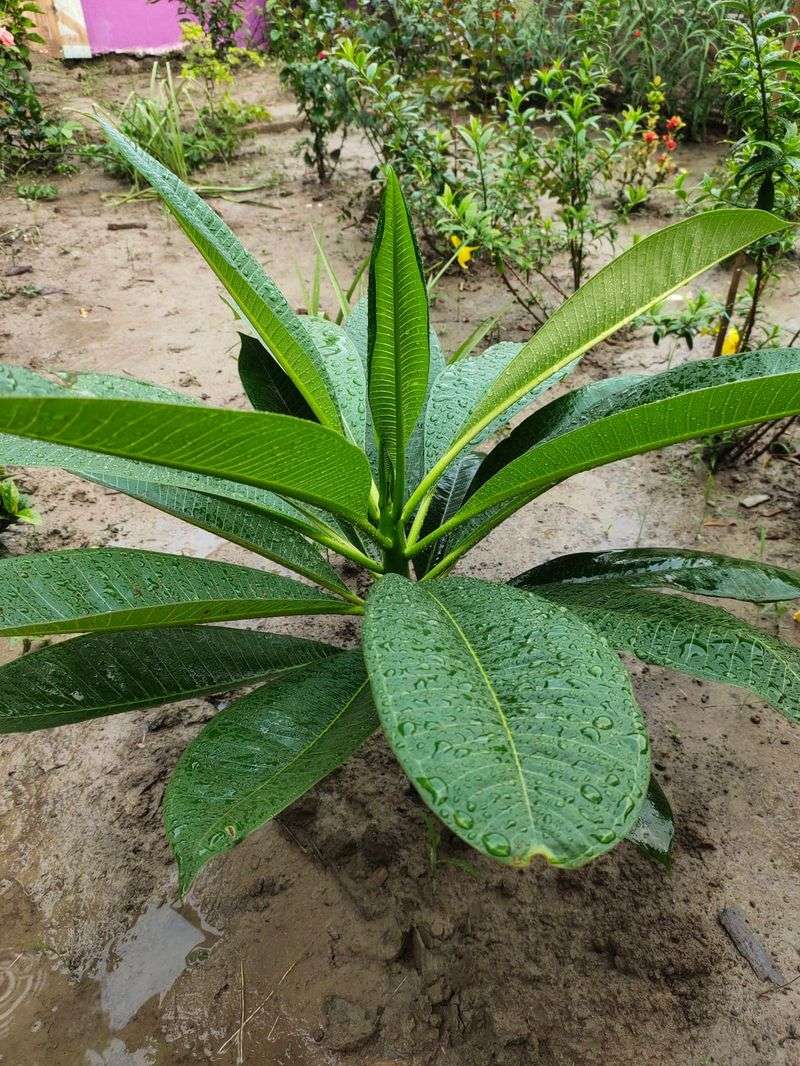
Feeding a sleeping plant does very little good. Plumerias resting through winter are not actively growing, so most of that fertilizer just sits in the soil.
Extra nutrients in cool, wet soil may even wash away with rain instead of helping your plant.
Patience pays off here. When warm weather returns and you spot fresh leaves pushing from the branch tips, the plant is ready to use nutrients again.
Spring timing varies across the state, with southern areas often waking up earlier than northern ones.
A balanced fertilizer or one labeled for flowering plants is a common choice once growth resumes. Follow the package directions closely rather than guessing amounts.
Overfeeding can burn roots or push lots of leafy growth, and it may harm local waterways when runoff carries extra nutrients.
Some Florida counties have rules limiting fertilizer use during the rainy summer months, so check your local ordinance before planning a feeding schedule. Those rules usually target nitrogen and phosphorus.
Watering the plant lightly before feeding helps protect the roots from burn.
Until spring, the best care is mostly hands off. Keep the plant protected from cold, water sparingly, and let it rest so it has the strength to leaf out and bloom when the season changes.