Georgia Gardeners May Find Small Brown Snakes Hiding Beneath Fallen Leaves This Fall
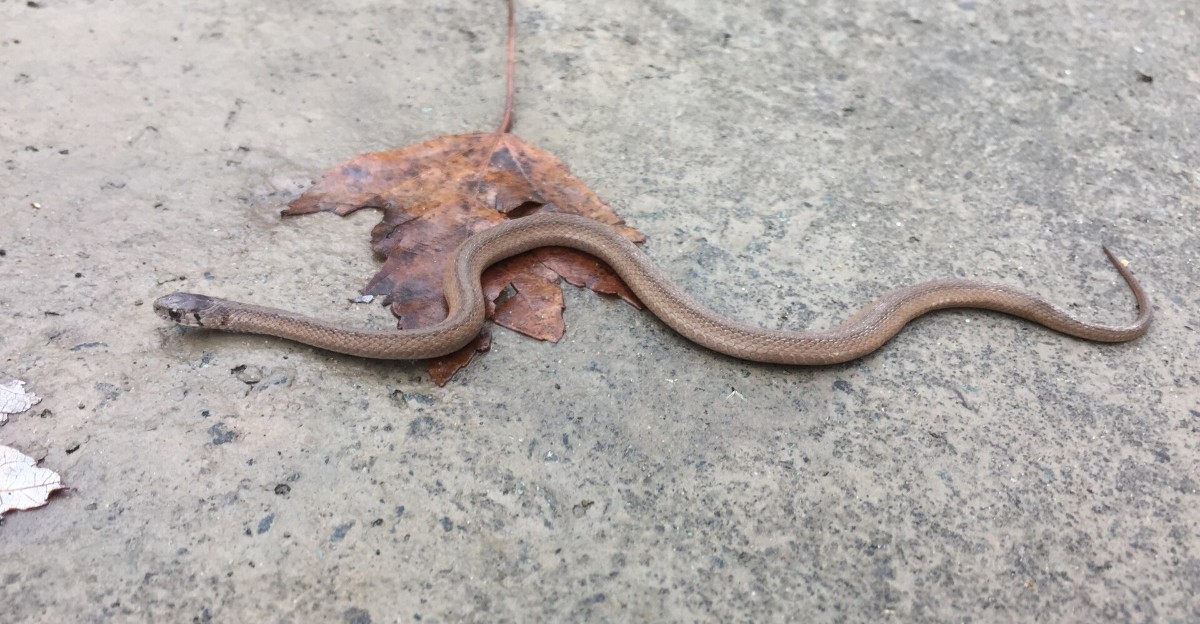
Lift a pile of damp oak leaves near the garden edge, and something small and brown may slither out. The surprise can make anyone jump, even when the snake is barely longer than a pencil.
Several small snake species live in Georgia yards, and many spend fall tucked into leaf litter and mulch.
Leaf piles hold moisture and shelter the slugs and worms these snakes eat.
Most are harmless to humans and pets, and some help by eating garden pests. Young copperheads can also hide in leaves, though, so a quick look before grabbing anything is a smart habit.
Wear gloves when you rake or move piles, especially near beds that stay damp.
Quiet corners with a few undisturbed leaf piles can give these visitors a safe place for winter.
1. Small Snakes Under Leaf Piles Are Often Harmless Garden Helpers
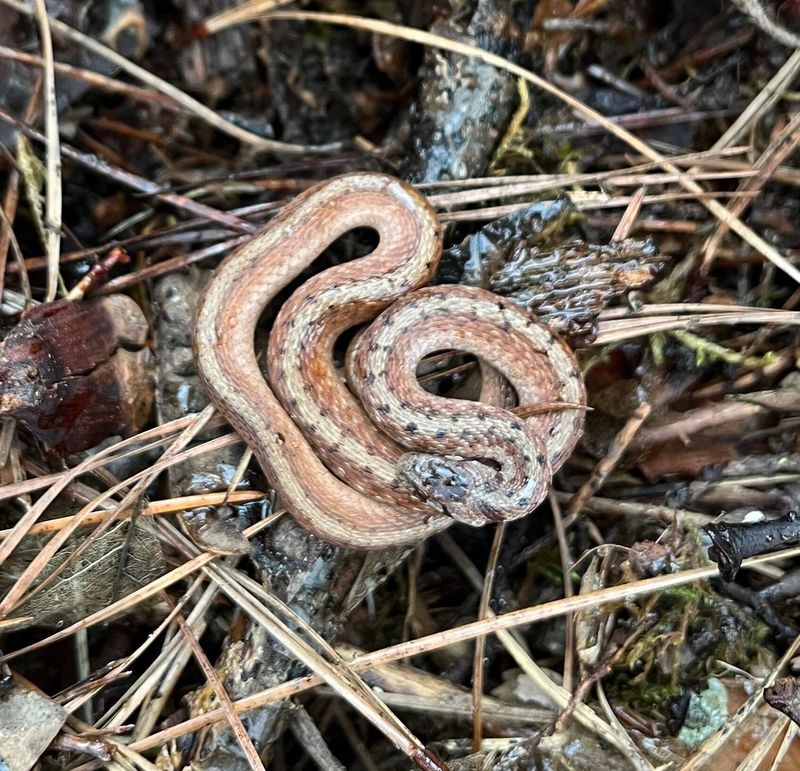
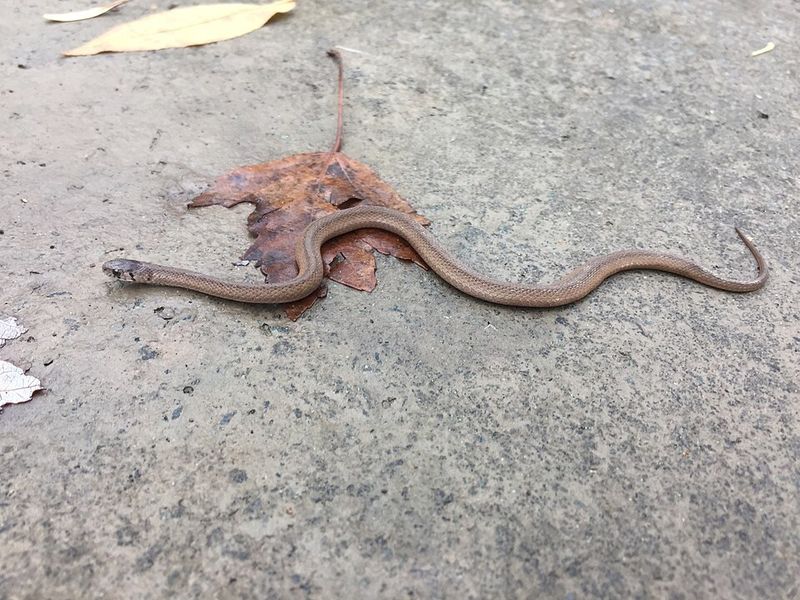
Not every snake in the leaf pile is a problem. In most Georgia yards, the small brown one you rake up turns out to be a DeKay’s brownsnake, a common and harmless species.
Adults usually stay around a foot long or less, so they are easy to mistake for a large earthworm at first glance.
Size tells you a lot about how little risk they pose. Brownsnakes have tiny mouths and no venom, and they rarely try to bite even when someone picks them up.
When cornered, one may flatten its body or release a smelly musk from the base of its tail.
That musk is unpleasant but not dangerous. Washing your hands with soap and water usually takes care of the odor.
Gardeners actually have good reason to welcome these snakes near vegetable and flower beds.
Brownsnakes feed on soft-bodied pests that chew holes in hostas, lettuce, and strawberries. A few of them living under your mulch can quietly help keep those pests in check.
If you uncover one while raking, the easiest move is to step back and let it slither off on its own.
You can also scoop it gently onto a rake or shovel and set it under a nearby shrub. Gloves are a smart habit during leaf cleanup anyway, since they guard against thorns, fire ants, and the occasional less friendly snake.
2. Slugs And Earthworms Make Up Much Of Their Food
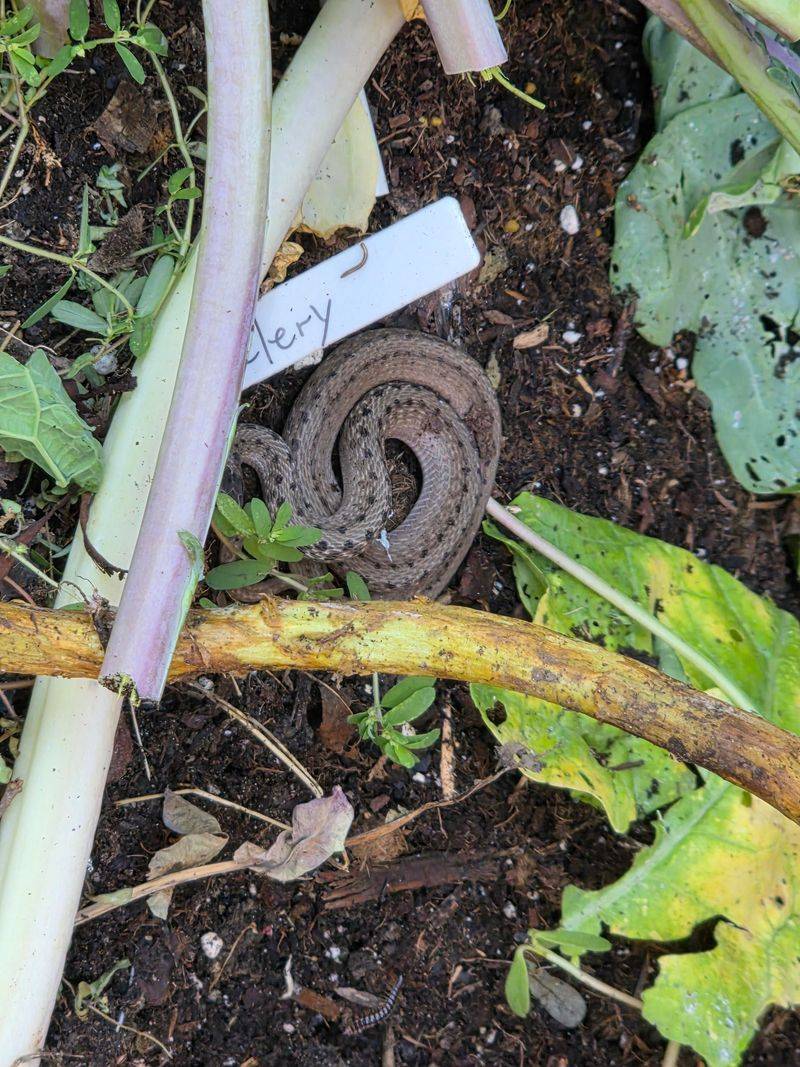
Slugs that shred your fall greens have a natural enemy hiding nearby. Brownsnakes eat slugs, snails, and earthworms, and these soft prey items make up most of what they swallow.
Their small heads and slender bodies suit this menu well, since they cannot handle mice or other bigger animals.
Snails take a little more effort. A brownsnake can pull a snail from its shell, which is a handy skill in damp Georgia gardens where snails are common.
Earthworms are part of the diet too, and that can worry some gardeners at first.
A few lost worms will not ruin healthy soil. Worm numbers depend far more on organic matter, moisture, and avoiding heavy chemical use than on a small snake’s appetite.
Your Georgia Garden Changes Every Week. Your Plan Should Too.
Gardening in Georgia changes quickly throughout the season. Every Friday you’ll receive a simple weekly plan showing exactly what to plant, prune, fertilize, harvest, and protect so you never miss the right timing.
Slug control is where the real benefit shows up. Lettuce, kale, collards, and young pansies are favorite targets for slugs during cool, wet fall weather.
Results will vary, of course, because a few snakes cannot solve a large slug outbreak alone.
Think of brownsnakes as one helper among several, along with toads, ground beetles, and birds.
Using fewer slug baits and pesticides can make your yard friendlier to all of them. If you do need bait, products based on iron phosphate are often suggested by Extension services as a lower-risk choice around wildlife.
3. Leaf Litter And Mulch Give Them Cover Near Their Prey
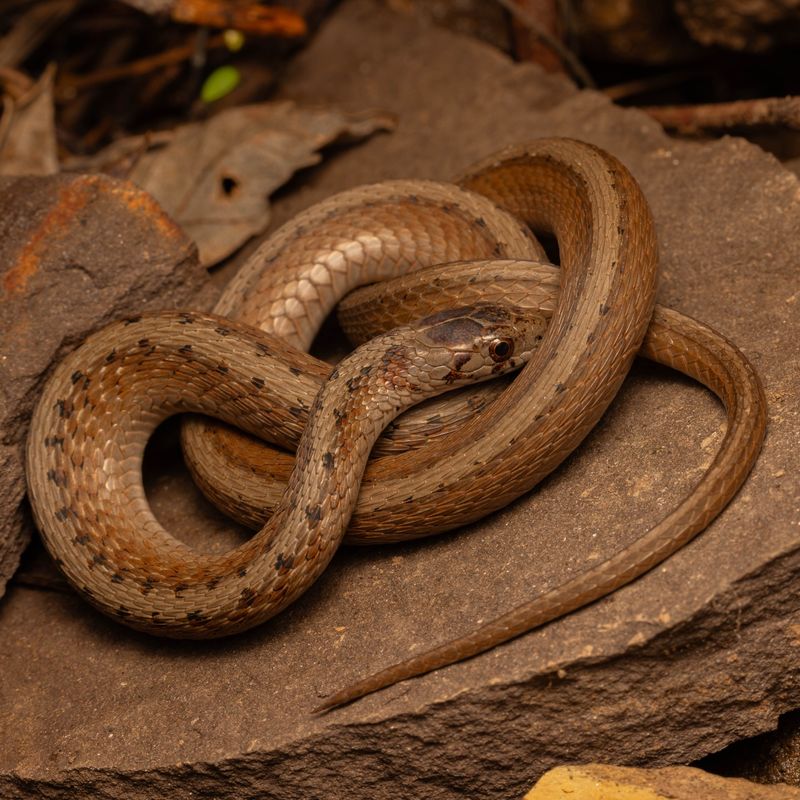
Lift a damp board in your garden and you will see why snakes like it there. Moist, shaded spots under leaves, pine straw, mulch, and old logs hold the slugs and worms brownsnakes hunt.
Cover also keeps a small snake hidden from hawks, cats, and other animals that would happily eat it.
Moisture matters just as much as shelter. A thin snake can lose water quickly, so cool layers of leaf litter help it stay comfortable on sunny afternoons.
Fall in Georgia brings fresh leaf drop at the same time young snakes are on the move, which puts more of them right under your rake.
As nights grow colder, brownsnakes look for places to spend the winter. They may use old root tunnels, ant mounds, rock walls, or loose soil, and several can sometimes share one spot.
Gardeners can work with this habit instead of against it.
Leaving a small leaf pile or brush corner at the edge of the yard gives snakes a place to settle away from the patio. Keeping mulch a bit thinner near doorways can lower the odds of surprise visits close to the house.
Using a rake or leaf blower, rather than bare hands, is the safest way to move thick litter.
Slow, steady raking also gives any hidden snake a chance to slip away before you reach it.
4. Late Summer Births Mean More Young Snakes Turn Up In Fall
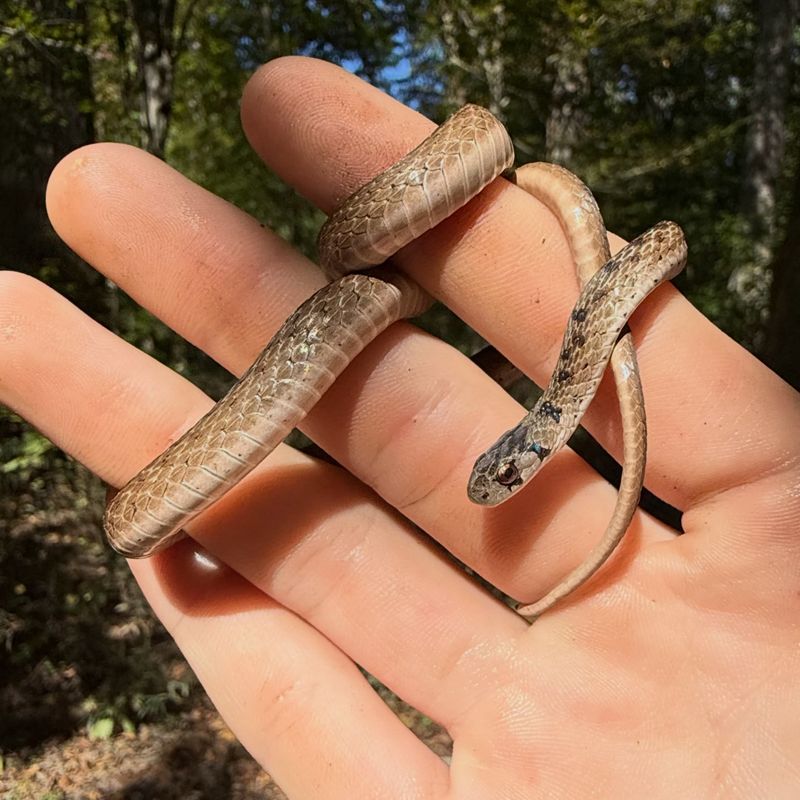
Eggs are not part of the story here. Brownsnakes give birth to live young, usually in mid to late summer across the Southeast.
Litter size can vary quite a bit, but a female often has around a dozen babies, sometimes fewer and sometimes more.
Newborns are tiny, often only a few inches long. They tend to be darker than adults and usually have a pale band across the back of the neck that looks like a little collar.
That collar leads some people to confuse babies with ring-necked snakes, which have a brighter yellow ring and an orange belly.
Young snakes spread out to find food soon after birth. By the time Georgia gardeners start their fall cleanup, these youngsters are scattered through beds, lawns, and leaf piles.
Seeing several in one season does not mean an infestation.
It simply reflects the timing of births and how often people are moving leaves and mulch during autumn. Weather plays a part too, since warm, damp stretches can keep snakes active later into the season.
Small size makes these babies easy to harm by accident with mowers, rakes, and string trimmers.
Walking a bed before mowing its edge can help. If you spot a little one, a gentle nudge with a leaf or stick toward cover is usually all it needs.
5. Rows Of Dark Spots Along A Brown Back Help Identify Them
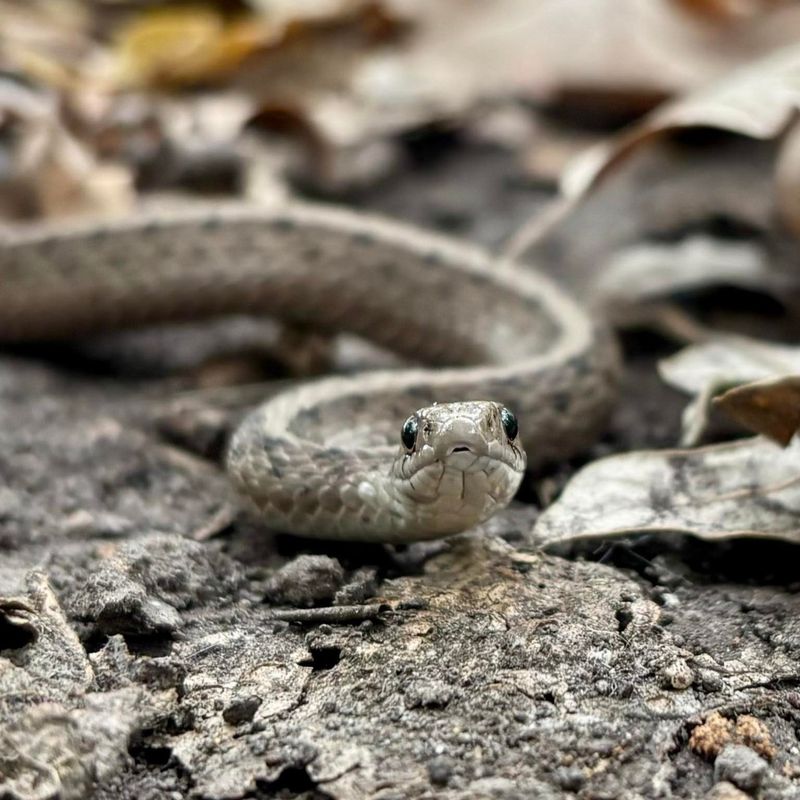
Look closely and a brownsnake’s back tells you who it is. Most have a brown or grayish body with a lighter stripe down the middle, bordered by two rows of small dark spots.
Sometimes those spots connect across the back and form faint little bars, so patterns can differ from snake to snake.
Belly color is another clue worth checking. Undersides are usually pale, ranging from cream to pinkish, often with tiny dark dots near the edges.
A dark mark below or behind the eye shows up on many individuals as well.
Their scales have small ridges called keels, which give the skin a dull, matte look instead of a glossy shine.
Some lookalikes live in Georgia too. Smooth earthsnakes and rough earthsnakes are also small and brown, but they lack the neat double row of spots.
Redbelly snakes are close cousins with a bright red or orange underside.
None of these small brown species are dangerous, so a mix-up between them is not a safety issue. Still, learning the spot pattern helps you feel more confident during yard work.
A phone photo taken from a respectful distance is the easiest way to check later.
Comparing it with a regional field guide or the Savannah River Ecology Lab snake pages from the University of Georgia can confirm what you found.
6. Young Copperheads Have Distinctive Hourglass Bands
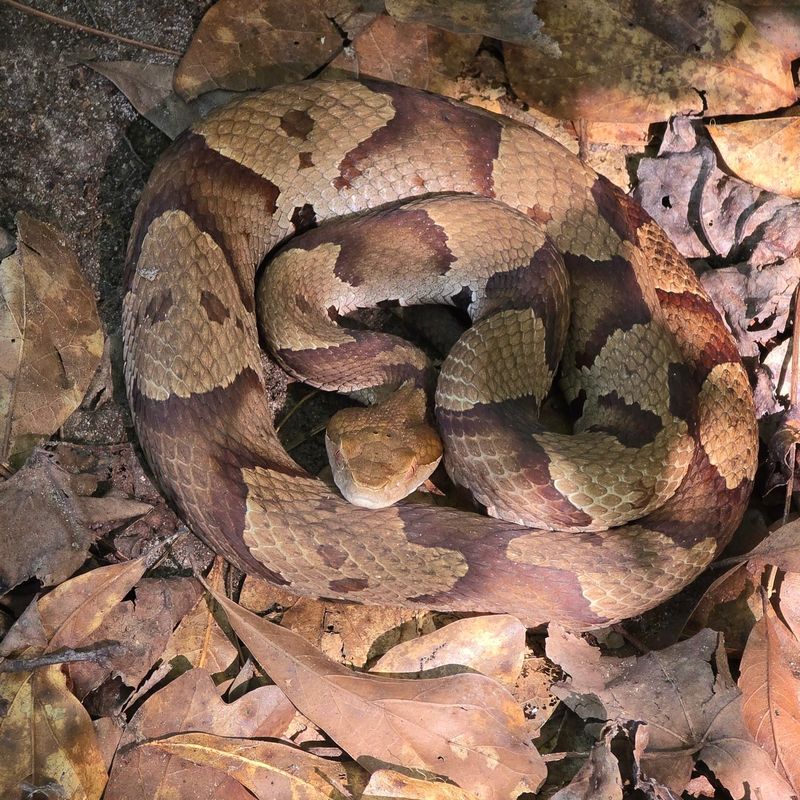
Here is where caution matters. Copperheads also live in leaf litter across Georgia, and their young are born from late summer into early fall.
Leaf-covered beds near wooded edges are exactly the kind of place a baby copperhead might rest.
Pattern is the best clue for most people. Copperheads have tan to pinkish bodies with darker crossbands shaped like an hourglass, wide on the sides and narrow along the spine.
Brownsnakes, by contrast, have small spots rather than bold bands.
Young copperheads usually have a bright yellow or greenish tail tip. They may wiggle it to lure frogs and lizards, and the color tends to fade as the snake grows.
Body shape can help, though it is not a perfect test. Copperheads look thicker for their length, while brownsnakes stay slender like a pencil.
Even a baby copperhead is venomous and should not be handled.
Bites are rarely life-threatening for healthy adults, but they can cause serious pain and swelling. Anyone bitten should get medical care right away rather than trying home remedies.
If you find one, keep kids and pets back and give it space.
Most copperheads will move off on their own, and a licensed wildlife removal service can help if one stays near a busy doorway.
7. State Law Protects Nonvenomous Snakes Like This One
Grabbing a shovel to get rid of a garden snake may break the law. Georgia protects its native nonvenomous snakes, and it is illegal to harm them or keep them without proper permission.
Brownsnakes fall under that protection, along with rat snakes, kingsnakes, garter snakes, and other harmless species.
Venomous snakes, such as copperheads and rattlesnakes, are treated differently under state rules.
Some nonvenomous species have additional protections, including the eastern indigo snake, which is federally listed as threatened. Fines can apply to people who break these rules, so a quick identification check is worth the effort.
Moving a brownsnake to another part of your own yard is generally the easiest choice.
Hauling snakes far from home is not usually recommended. Small snakes often do best near the place they already know, where food and winter shelter are familiar.
Questions about specific situations can go to the Wildlife Resources Division of the Department of Natural Resources.
Your county Extension office is another helpful contact for identification and practical yard advice. Staff there can often point you to local resources and reliable photo guides.
Living alongside a few harmless snakes is part of gardening in the South.
A calm reaction, a pair of gloves, and some basic knowledge go a long way. With those in place, a small brown snake under the leaves becomes a neighbor rather than a scare.