How to Prevent Root Rot in Florida Gardens After Heavy Rain
A plant can wilt like it is begging for water while its roots sit in a puddle. That sounds backward, but it happens in yards all over Florida after a big summer storm.
Here’s what caught my attention. Healthy roots actually breathe, pulling oxygen from tiny air pockets in the soil.
When rain fills every one of those pockets, roots start to suffocate, and certain water-loving molds move right in.
You might be surprised by how fast the trouble shows up. Leaves turn pale, stems droop, and many of us grab the hose, which only makes things worse.
I could be wrong, but I think most gardeners blame the heat first. The real story is hiding a few inches underground, and once you learn to read it, a soggy week stops feeling so scary.
So what is going on down there, and how do you stop it?
1. Those Wilting Leaves After a Downpour Are Sending a Mixed Signal
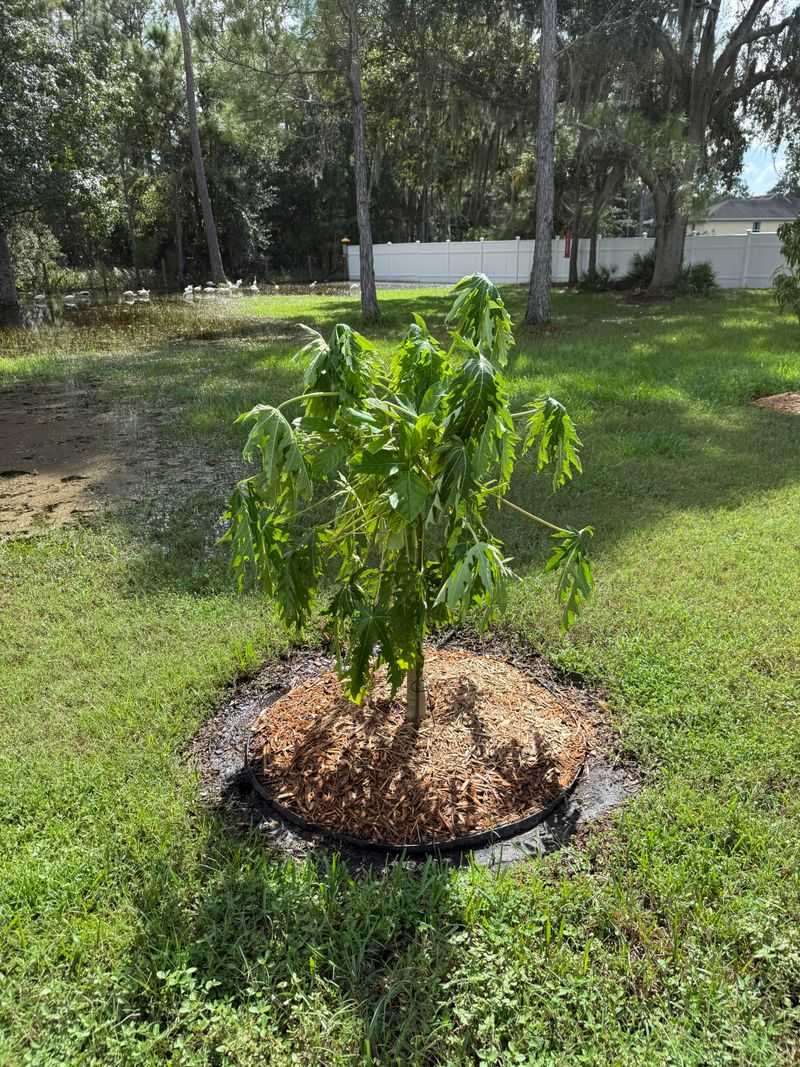
Droopy leaves on a soaked plant fooled me for years. I watered harder, and the plant only slumped lower.
The trick is that wilting does not always mean thirst.
Roots need oxygen to work. Soil normally holds small air spaces between its grains, and roots pull oxygen from those gaps.
After heavy rain, water fills the spaces and pushes the air out.
Without oxygen, roots stop taking in water and nutrients. That is why a flooded plant can look just like a plant in a drought.
The pipes are full, but the pump has quit.
Now the second problem kicks in. University of Florida plant experts point to water molds such as Pythium and Phytophthora as common root rot causes.
These organisms thrive in saturated soil and swim through water to reach weak roots.
Fungi like Rhizoctonia and Fusarium can join in too. Once they attack, roots turn soft and brown instead of firm and white.
The plant then struggles even more, even after the sun returns.
So the first step in prevention is simple. Before you water a wilting plant after a storm, push a finger two or three inches into the soil.
If it feels wet, put the hose down and let the ground breathe. Patience often helps more than any product.
2. Raised Garden Beds Keep Roots Above the Puddles
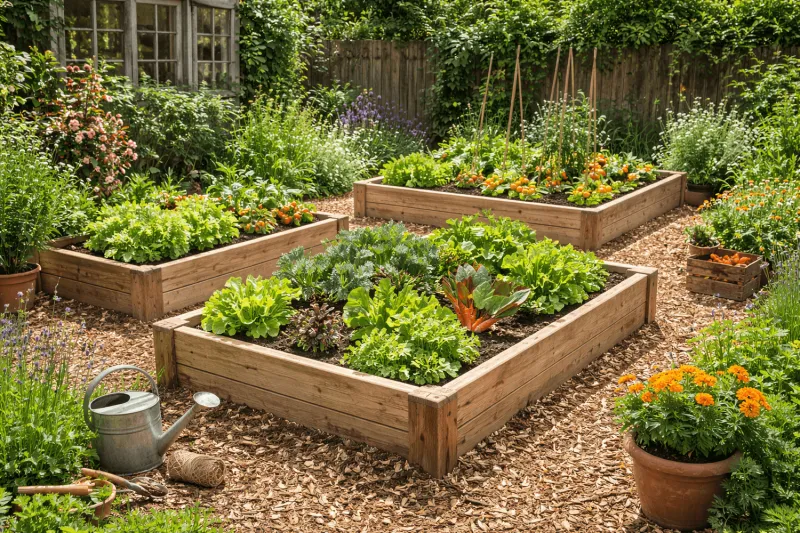
Height is a gardener’s secret weapon in a rainy climate. Lift the soil eight to twelve inches, and gravity starts working for you instead of against you.
Raised beds drain faster because extra water can run out the bottom and sides. Roots stay in looser, airier soil while the lawn around them stays soggy.
I have watched beds stay happy through a whole week of afternoon storms while the ground nearby turned to soup.
Building them does not need to be fancy. Untreated cedar, metal panels, or concrete blocks all work fine.
Aim for a height of at least ten inches if your yard tends to hold water.
Fill them with a blend of quality topsoil and compost. Skip heavy clay fill or pure bagged potting mix, which can pack down over time.
A loose, crumbly mix lets water pass through while still holding enough moisture for dry spells.
Mounded rows are a cheaper option. Simply pile soil into wide ridges a few inches tall and plant on top.
Farmers across the South have used this method for generations.
One more tip. Place beds where water does not collect, even after big storms.
Watch your yard during the next heavy rain and note where puddles linger. Those spots are the last places you want tender roots.
3. Compost Turns Sandy or Clay Soil Into a Better Sponge
Florida soil is a funny mix. Much of the state sits on fast-draining sand, yet pockets of clay, hardpan, and muck show up in many neighborhoods.
Both extremes can cause trouble. Clay holds water too long and squeezes out air.
Sand can sit on a hard layer underneath, so water drains down and then gets stuck.
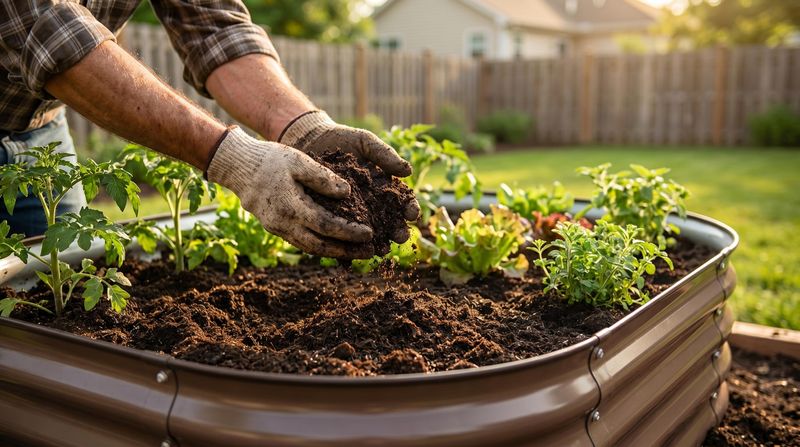
Organic matter is the fix gardeners swear by. Compost, shredded leaves, and aged manure create a crumbly structure with plenty of pore space.
Those pores let excess water move along while holding just enough for roots.
Try working two to three inches of compost into the top six to eight inches of soil. Repeat each year, because organic matter breaks down quickly in our warm, humid weather.
Your soil will gradually turn darker, softer, and easier to dig.
Fun fact for the curious. A healthy soil is roughly half solid material and half open space, split between air and water.
Compost helps you keep that balance.
Gypsum gets recommended for clay, but results vary on Florida soils, so a soil test from your county Extension office is a smart first move. It costs little and tells you what your ground really needs.
Guessing can lead to wasted money and frustrated plants.
4. Shut Off That Irrigation Timer When the Sky Does the Work
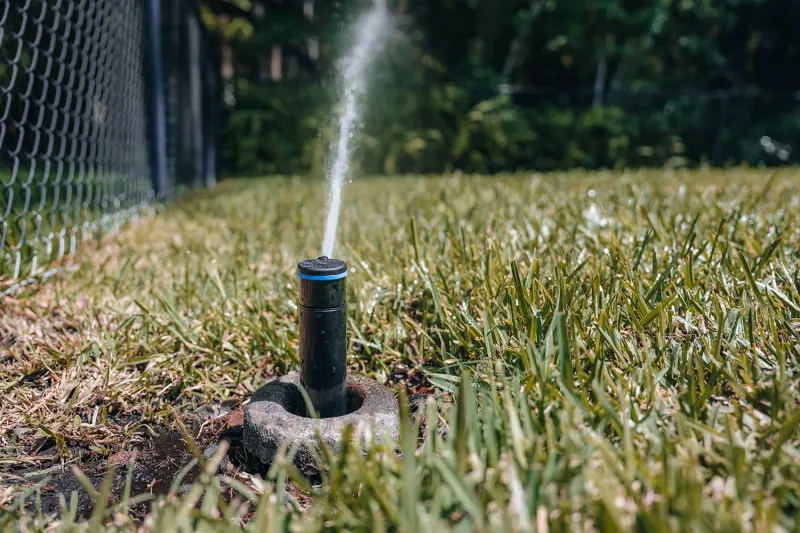
Few sights make me wince like sprinklers spraying a lawn during a thunderstorm. It happens on countless streets every summer, and the roots pay the price.
Automatic timers do not know it rained. If yours runs on schedule after two inches fell, you are piling water on soil that is already full.
That is an open invitation for root rot.
Florida law requires automatic sprinkler systems to have a working rain sensor or soil moisture sensor that skips watering after enough rain. Test yours by pressing the test button or checking that the cork discs inside are not stuck.
Many older sensors quietly stop working.
A manual habit helps too. After a big storm, turn the controller to off or rain mode for a few days.
Restart only when the top couple of inches of soil feel dry.
UF/IFAS turfgrass experts suggest watering only when grass shows signs of stress, like folded blades or footprints that linger. Garden beds follow a similar rule.
Check the soil, not the calendar.
Also look up your local watering restrictions, since many water management districts limit irrigation days. Following them saves money, protects the aquifer, and keeps your plants from soaking in more water than they can handle.
5. Potted Plants Need Clear Drainage Holes and a Little Lift
Container plants are sneaky victims of summer storms. A pot without a working drain hole is basically a bucket, and roots inside can sit in water for days.
Start by flipping each pot over and checking the holes. Soil, roots, or a saucer full of water can block them.
Poke them clear with a stick or pencil.
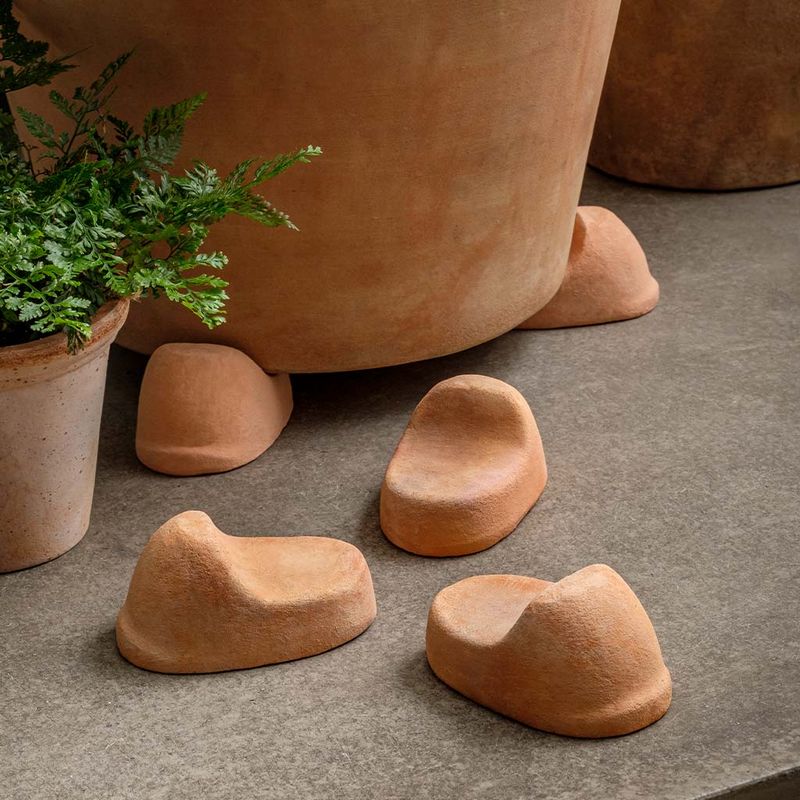
Next, get those pots off the ground. Pot feet, bricks, or a simple plant stand let water escape freely instead of pooling underneath.
Saucers look tidy, but empty them after every rain or remove them during the wet season.
Old advice told us to add gravel at the bottom of pots for drainage. Research shows that layer can actually raise the soggy zone higher into the soil.
A good, chunky potting mix does a better job.
For especially fussy plants like succulents or rosemary, mix in perlite or pine bark fines. Terracotta pots also breathe better than plastic, helping soil dry out faster.
When a long rainy stretch is coming, slide smaller pots under a covered porch or eave. A few minutes of shuffling can save weeks of recovery.
Your plants will appreciate the umbrella, and you will spend less time replacing them.
6. Mushy Brown Roots Tell You It’s Time to Act
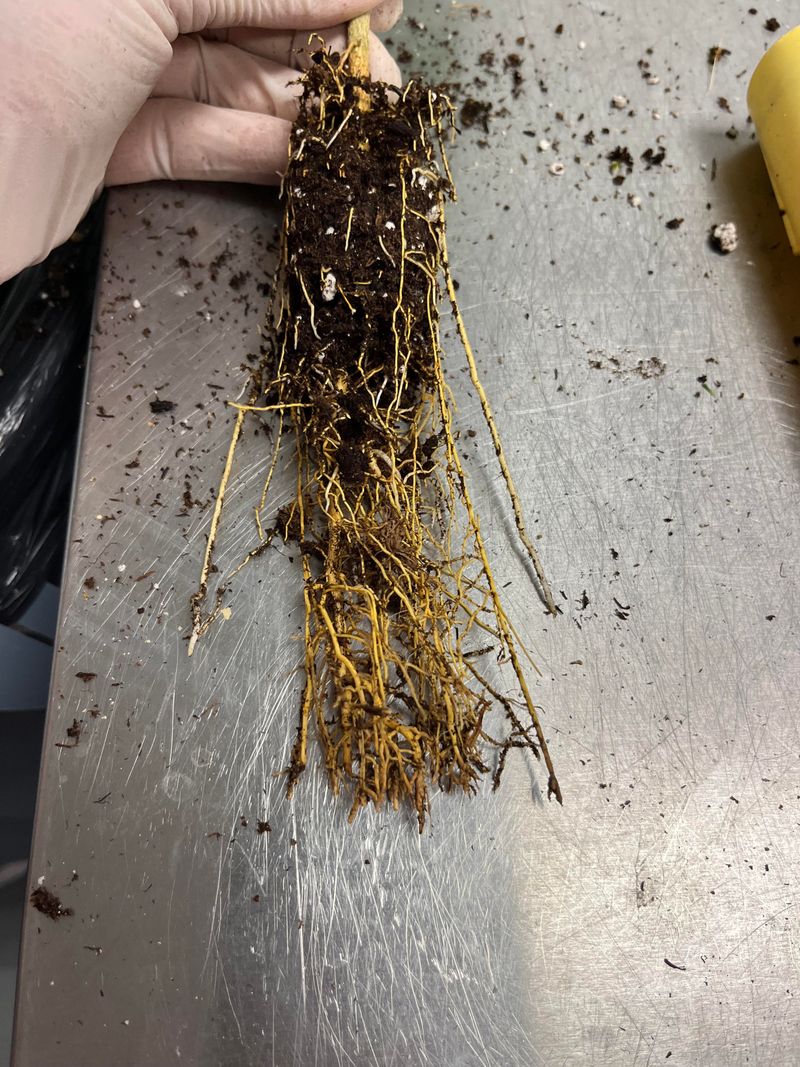
A quick root check feels a little like detective work, and I secretly love it. The clues are right there once you know what to look for.
Above ground, watch for yellow or pale leaves, wilting in wet soil, slow growth, and branches that thin out. Lower leaves often go first.
Stems near the soil line may darken or feel soft.
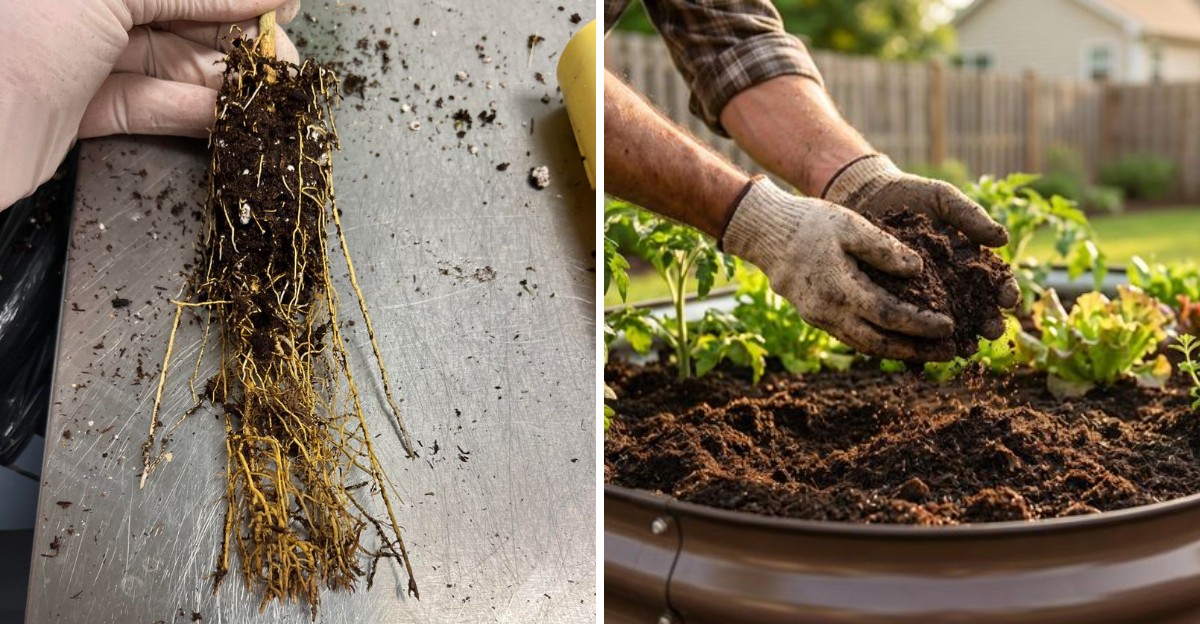
For smaller plants, gently ease the root ball out and take a look. Healthy roots are firm and usually white or light tan.
Rotting roots look brown or black, feel mushy, and the outer layer may slide off like a sleeve.
A sour or rotten-egg smell is another giveaway. That odor comes from microbes that thrive without oxygen.
If you catch the problem early, trim away soft roots with clean pruners. Wipe blades with rubbing alcohol between cuts to avoid spreading disease.
Replant in fresh, well-draining soil and hold off on watering until the top inch dries.
Badly affected plants may not bounce back, and that is okay. Bag and remove them rather than tossing them in the compost pile.
Pathogens can linger in plant material and soil, so avoid putting the same type of plant in that soggy spot right away.
7. Soggy Spots Can Become a Home for Blue Flag Iris and Other Wet-Loving Natives
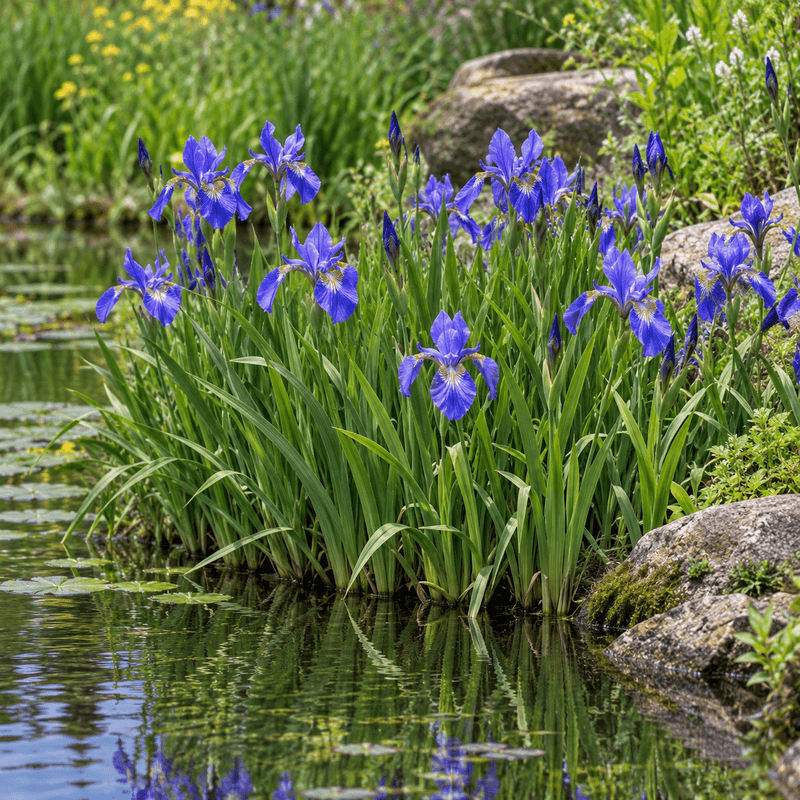
Some corners of a yard just refuse to dry out. Instead of fighting them every summer, why not plant something that loves wet feet?
Florida has wonderful natives built for soggy ground. Blue flag iris, swamp hibiscus, swamp milkweed, pickerelweed, and buttonbush handle standing water with ease.
Many also feed butterflies, bees, and birds.
A rain garden takes this idea further. It is a shallow, planted dip that catches runoff from roofs or driveways and lets it soak in slowly.
UF/IFAS offers free guides on building one, including plant lists for different regions of the state.
Matching plants to your spot matters, since north Florida gets cold snaps that south Florida rarely sees. Check your USDA zone, which ranges from about 8a in the Panhandle to 11 in the Keys.
The Florida Native Plant Society website lists natives by county.
On the flip side, rosemary, lavender, and many succulents hate wet soil. Keep them in raised beds or pots with fast drainage.
Please skip invasive options, even if they tolerate water well. Plants like wild taro and Mexican petunia spread aggressively into wetlands here.
Sticking with natives keeps your garden thriving and protects the waterways nearby.
8. Pull Back the Mulch and Stay Off Muddy Garden Beds
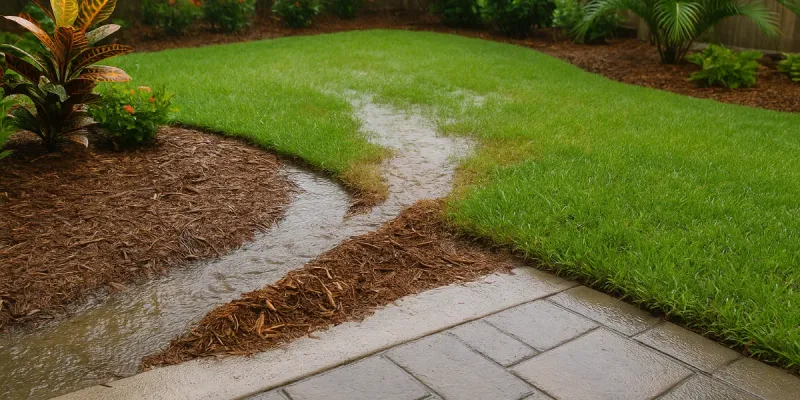
Mulch is a hero most of the year. After a week of nonstop rain, though, it can act like a wet blanket over already soaked soil.
Pull mulch back a few inches from stems and trunks after heavy storms. That small gap lets air reach the soil and helps the crown of the plant dry.
Keeping mulch away from trunks year round also reduces rot at the base.
Aim for a layer of about two to three inches once things dry out. Thicker piles hold moisture too long.
Pine straw and pine bark break down nicely and are easy to find in most Florida garden centers.
Here’s a habit worth breaking. Walking or kneeling on wet soil squeezes out air pockets and compacts the ground, which slows drainage for weeks.
Lay down boards or stepping stones if you must reach plants.
Hold off on fertilizer for a bit too. Stressed roots cannot use extra nutrients well, and much of it may wash away into lakes and springs.
Long term, think of prevention as a routine, not a rescue. Good drainage, yearly compost, smart watering, and the right plants work together.
Do those steady things, and the next big Florida downpour becomes just another rainy afternoon.