Water Your Florida Lawn This Way in November Instead of Running Sprinklers Twice a Week
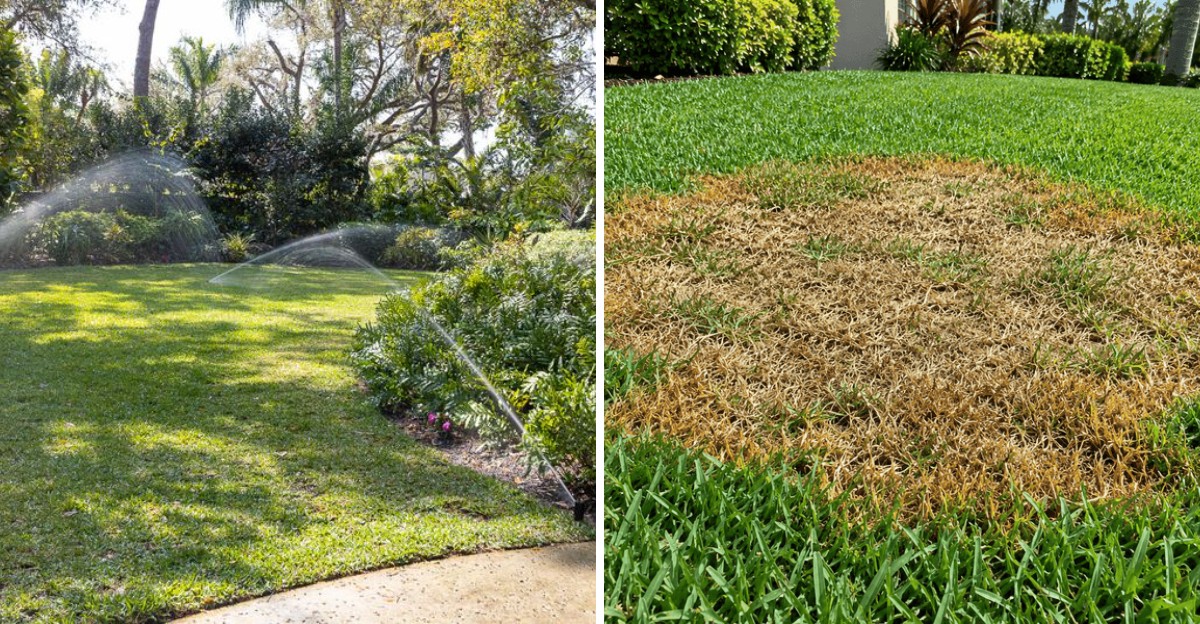
Grass can tell you it’s thirsty by turning a faint bluish-gray. I love that detail, because it means your yard has been dropping hints all along.
As the clocks fall back in November, many Florida communities switch their legal watering schedule. In plenty of areas, the old twice-a-week routine is no longer allowed until spring returns.
Cooler nights, shorter days, and slower growth change how much water turf really uses. I’ll take the blame for running my sprinklers well into November out of pure summer habit. You may be doing the same thing right now without a second thought.
That extra water rarely makes grass greener in late fall. It can invite fungus, shallow roots, and a bigger utility bill. You’re going to love how easy it gets to read those bluish-gray hints once you know what to look for.
Your Sprinkler Schedule Is Probably Stuck In Summer Mode
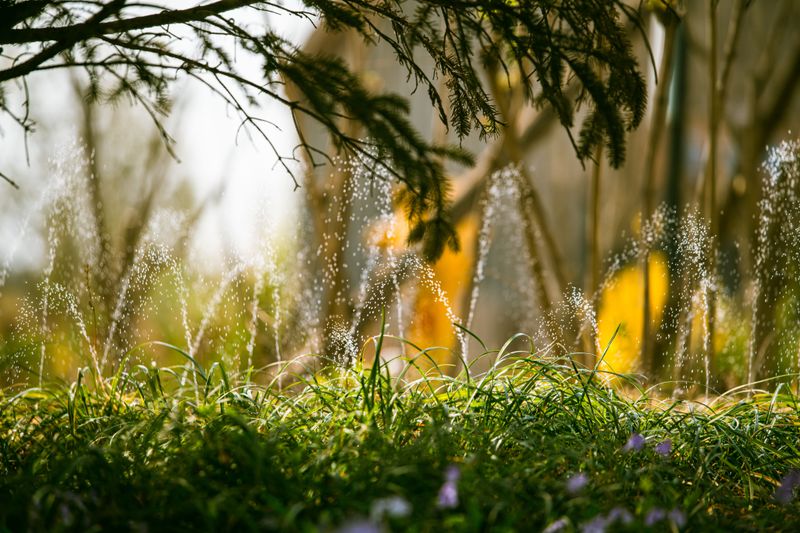
Summer in the Sunshine State trains us to water a lot. Grass grows fast in the heat, and afternoon storms come and go.
Once November arrives, though, that pattern flips quietly.
Days get shorter and temperatures drop. Warm-season grasses like St. Augustine, Bahia, Zoysia, and Centipede slow their growth as they head toward winter rest.
A slower lawn uses much less water than it did in July.
Evaporation also drops in cooler air. The moisture you apply stays in the soil longer, so the same sprinkler schedule now delivers far more water than the grass can use.
I like to compare it to serving a full holiday dinner to someone who just ate lunch.
University of Florida experts point out that fall and winter lawns often need watering only every 10 to 14 days in many parts of the state, sometimes even less. That’s a big change from twice a week.
Your controller doesn’t know the season changed unless you tell it. Many people set their timer once in spring and forget it.
A quick November check is one of the easiest yard chores you can do, and it often pays off right away on your water bill.
Water Only When The Grass Shows These Thirsty Signs
Here’s my favorite trick, and it costs nothing. Instead of watering by the calendar, you water when your lawn asks for it.
UF/IFAS calls this watering on demand, and it fits November perfectly.
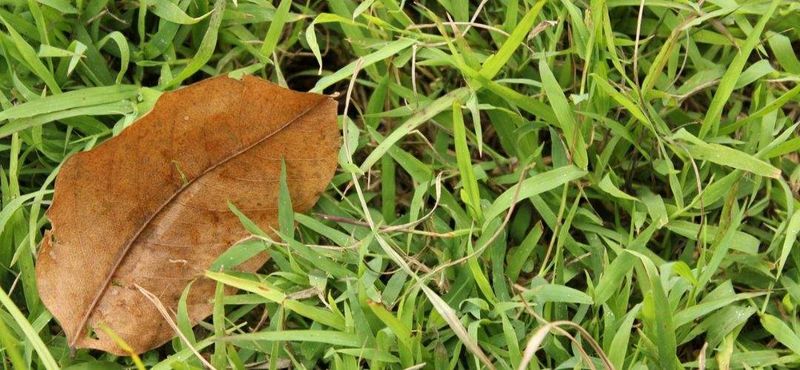
Watch for three clear signals. First, leaf blades fold in half lengthwise, like a tiny taco.
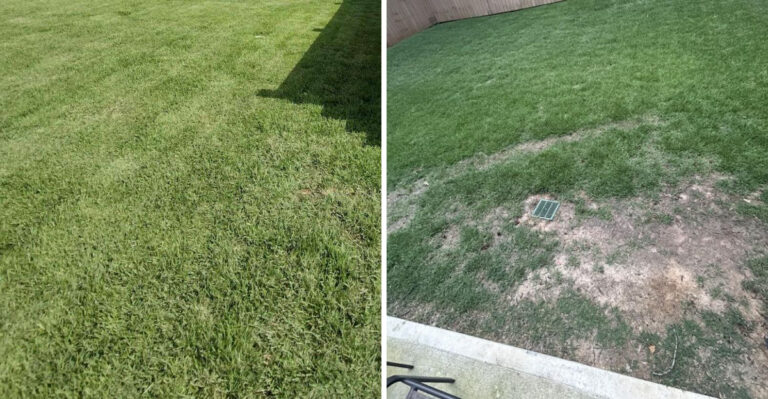
Second, the lawn turns a bluish-gray color instead of bright green.
Third, try the footprint test. Walk across the grass and look back.
If your footprints stay pressed down for a while, the blades lack the water to spring back up.
When roughly a third to half of your lawn shows these signs, it’s time to water. If only one small sunny strip wilts, hand water that spot instead of running every zone.
Sandy areas near driveways and sidewalks dry faster, so expect them to show signs first. Shady spots under oaks may stay damp for days.
Paying attention to these little differences helps you skip needless cycles.
After a week or two, you’ll start to recognize the look of a thirsty lawn from your kitchen window. It feels a bit like learning a new language, and your grass is a surprisingly clear speaker.
One Deep Soak Beats Two Quick Sprinkles
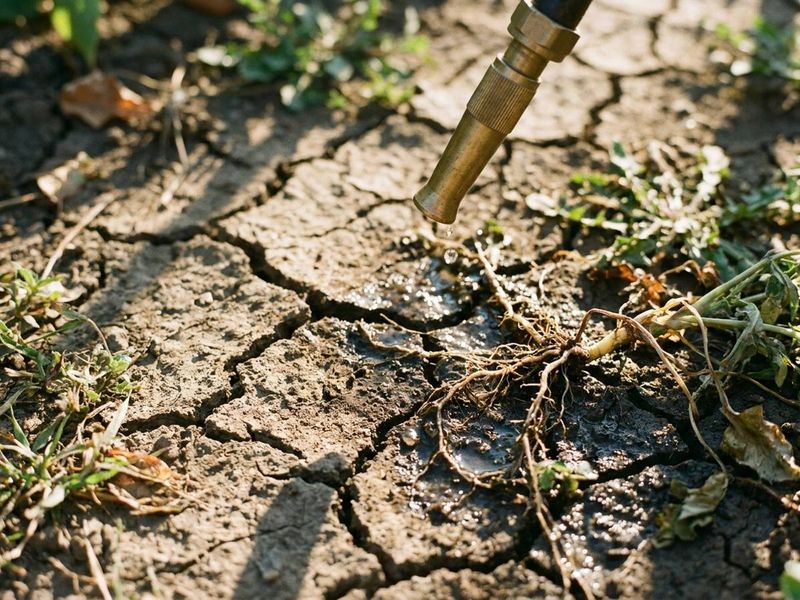
When your lawn finally shows thirst, give it a real drink. UF/IFAS recommends applying about one-half to three-quarters of an inch of water per session.
That amount wets the root zone without drowning it.
Deep, less frequent watering pushes roots downward as they follow the moisture. Deeper roots handle dry spells better and need less help from you later.
Short, frequent sprinkles do the opposite and keep roots lazy near the surface.
So how do you know when you’ve applied half an inch? Grab a few empty tuna or cat food cans.
Set them around one zone, run the sprinklers, and time how long it takes to fill them to the right depth.
You might be shocked by the results. Some spray heads put out water fast, while rotor heads can take much longer.
Every zone is different, so test each one.
Write the times down and tape the note inside your controller box. I did this once, and it changed how I water for good.
A little detective work on one Saturday morning can guide your watering for the entire cool season.
Florida Watering Days Often Shrink To Once A Week After The Time Change
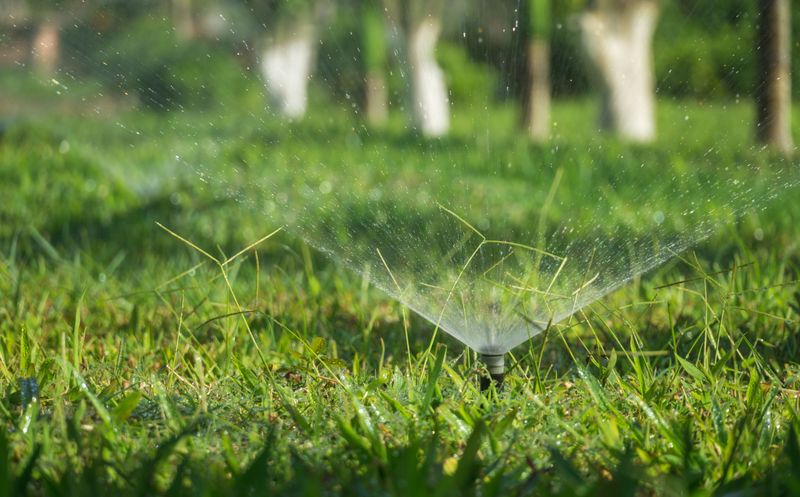
Daylight saving time ending does more than shift your clocks. In several water management districts, it also shifts your legal watering schedule.
The St. Johns River Water Management District, which covers much of northeast and central Florida, limits residential irrigation to one day per week during Eastern Standard Time. Your allowed day depends on whether your address ends in an odd or even number, or has no number.
Rules differ across the state. The South Florida Water Management District and the Southwest Florida Water Management District set their own schedules, and some counties and cities add stricter local rules.
Hillsborough, Orange, and other counties may have their own twists.
Most districts also ban irrigation during the hottest part of the day, usually between 10 a.m. and 4 p.m. Fines can apply for repeat violations in many places.
Before you reprogram your timer, visit your water management district or county website. Look up your exact days and hours.
It takes about five minutes, and it saves you from an awkward letter from code enforcement.
Following these rules also lines up nicely with what your grass needs right now. Sometimes the law and the lawn agree.
Soggy Turf Invites Brown Patch And Other Lawn Fungus
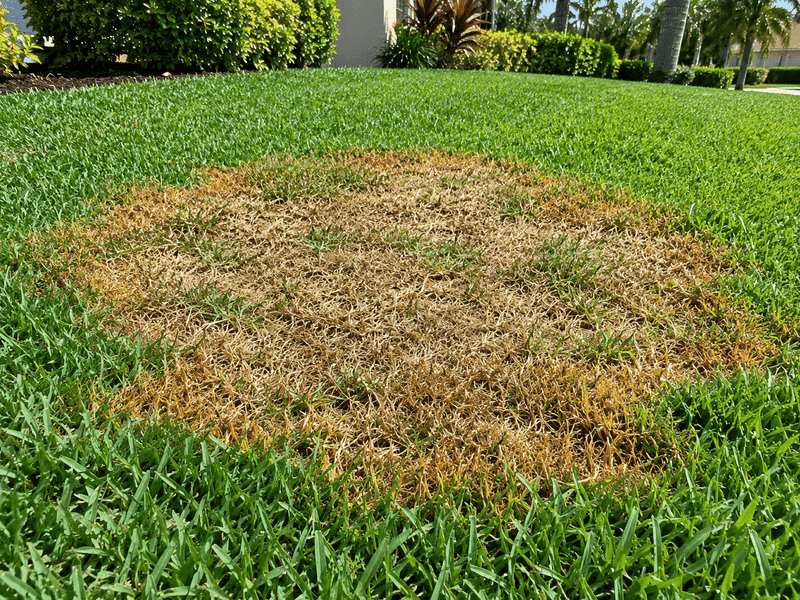
Nobody wants circles of tan, sad grass spreading across the yard. Yet that’s often what happens when cool weather meets too much water.
Brown patch, also called large patch, is a common fungal disease on St. Augustine and Zoysia grass. It loves the cooler, damp conditions of fall and spring.
You’ll often spot it as round or irregular yellow-brown rings, sometimes with a darker edge.
Long periods of wet leaves give the fungus its favorite playground. Extra watering, especially in the evening, keeps blades damp all night.
That moisture can help the disease take hold and spread.
Overwatering also leaves soil soggy, which reduces air for roots. Weak roots mean a weaker lawn, one that struggles against weeds and stress.
The simplest defense is cutting back on water. Let the grass dry between sessions and skip nighttime cycles.
Also go easy on nitrogen fertilizer this time of year, since UF/IFAS notes heavy fall feeding can make large patch worse.
If patches do appear, don’t panic. Reduce watering first.
A local extension office can help confirm the problem and suggest treatment if needed.
Early Morning Sprinklers Work Best In Cooler Weather
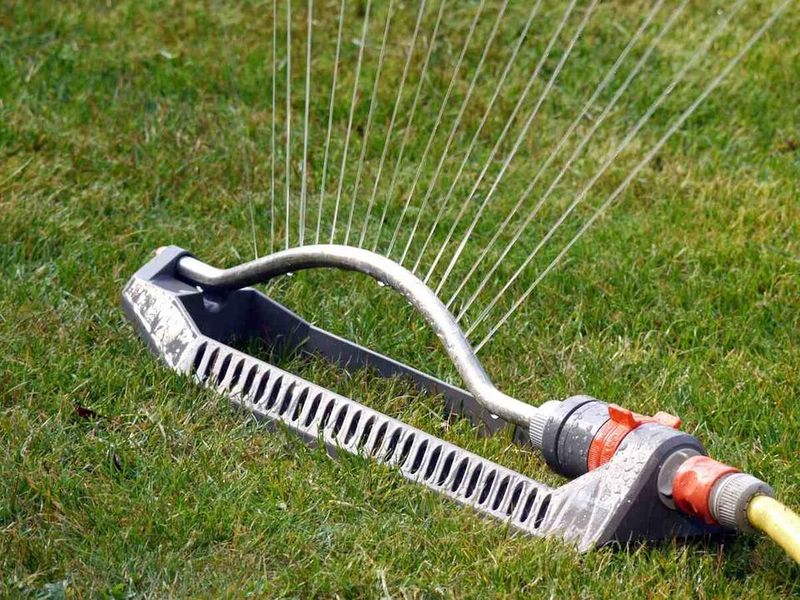
Dawn is the sweet spot for watering. Air is calm, temperatures are low, and less water floats away before it reaches the soil.
UF/IFAS suggests irrigating in the early morning, generally before 10 a.m. Many experts prefer the window between about 4 a.m. and 8 a.m.
Grass blades are often already wet with dew then, so watering doesn’t add much extra leaf wetness time.
Then the sun rises and dries things off. That shorter wet period helps reduce disease risk compared with evening watering.
Water left on blades overnight is like rolling out a welcome mat for fungus.
Wind matters too. Afternoon breezes can blow spray onto the driveway or the street.
Morning stillness keeps water where it belongs.
Set your controller to start well before sunrise. If you have several zones, check that the last one finishes before 10 a.m.
That way you stay inside local rules.
One more tip from my own yard: walk out once while it runs. You’ll catch broken heads, crooked nozzles, and spray hitting the house.
A quick fix can save plenty of gallons all winter.
A Rain Sensor Lets Your Sprinklers Skip Wet Days
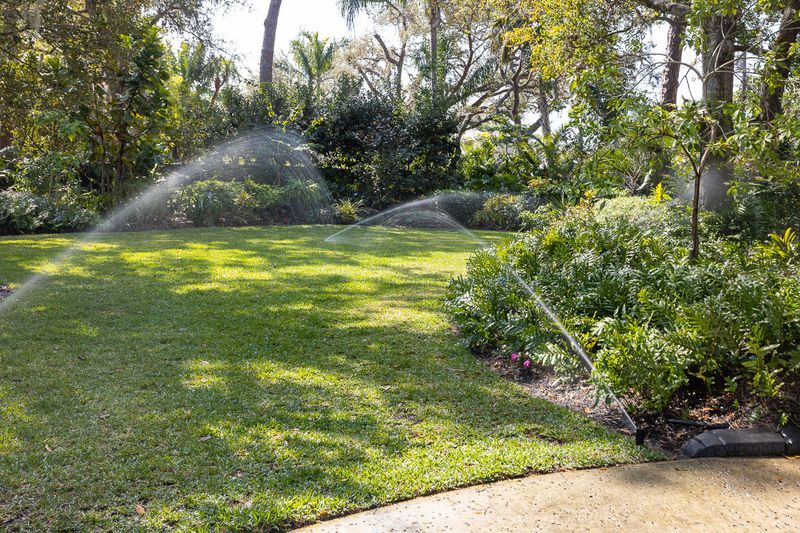
Few sights are sillier than sprinklers running in a downpour. Luckily, a small gadget can stop that from happening.
Florida law requires automatic irrigation systems to have a working rain sensor or similar shutoff device. Installed correctly, it pauses your system after enough rain falls.
Many units can be set to trip after about one-quarter to one-half inch.
These sensors wear out over time. Check yours by pressing the test button or wetting it, then running a zone.
If the sprinklers keep going, it may need a fix or replacement.
Want to go further? Soil moisture sensors measure water in the root zone and block irrigation when the ground is already damp.
Research from UF/IFAS has shown these devices can trim lawn water use a lot.
Smart controllers that use local weather data are another handy option. They adjust run times as conditions change, which is perfect for the cooler months.
Personally, I think a sensor is the best friend a busy gardener can have. It works quietly while you’re asleep, at work, or away for the holidays.
Your lawn gets water only when it truly needs it.