Who Is Responsible When A Neighbor’s Tree Falls Into Your Yard In Florida
A healthy oak can crush your fence during a hurricane, and your neighbor may owe you nothing at all. That surprised me the first time I heard it.
Courts call that kind of storm damage an act of God. In Florida, where tropical systems roll through most summers and falls, the rule shapes who pays for countless cleanups each year.
You probably assume the tree’s owner covers everything. I did too, until I learned how much depends on the tree’s health before it toppled.
A rotten trunk tells a different story than a sturdy one. Your own insurance policy, a simple letter to your neighbor, and even a few old photos can change the outcome in a big way.
Hear me out, because the check for those crushed azaleas could come from a wallet you’d never expect.
1. That Toppled Oak Across Your Fence Has A Surprising Legal Twist
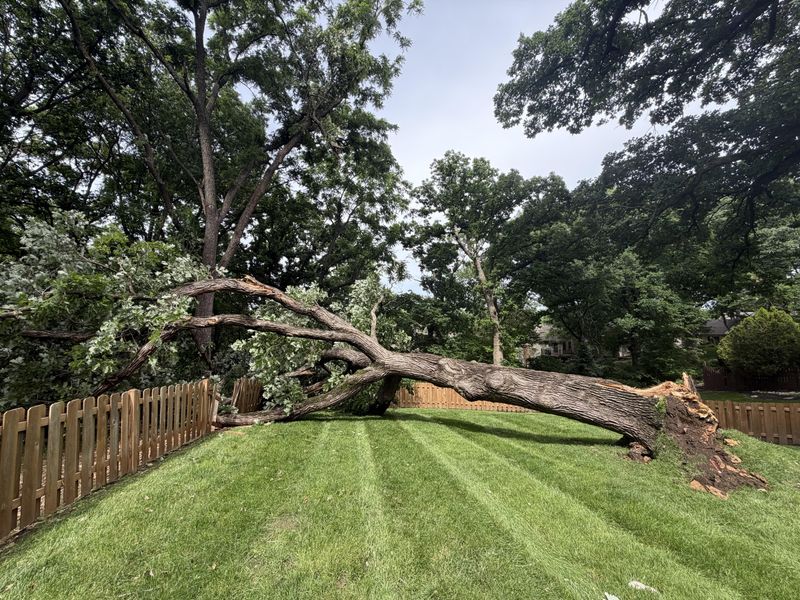
Most folks are shocked by this one. The tree’s location matters far less than the tree’s condition before it fell.
Florida courts generally follow a long-standing common law approach. A property owner is not automatically liable just because their tree landed on your side of the fence.
Liability usually comes down to one question, and that question is whether the owner was careless.
A sound, healthy tree that crashes down during a sudden storm is treated very differently from a hollow, leaning trunk that everyone on the street was worried about. The first is often seen as nobody’s fault.
The second may point straight at the owner.
I find this oddly comforting, honestly. It means good neighbors who care for their trees aren’t punished for weather they can’t control.
It also means careless owners can’t hide behind the property line.
For you, the practical takeaway is simple. Before you start pointing fingers or calling a lawyer, take a hard look at that fallen trunk.
Was the wood solid and green inside, or crumbly and dark?
Snap clear photos of the stump, broken limbs, and any visible rot right away. Those pictures could matter a lot later.
2. Hurricane Winds Usually Shift The Bill To Your Own Insurance
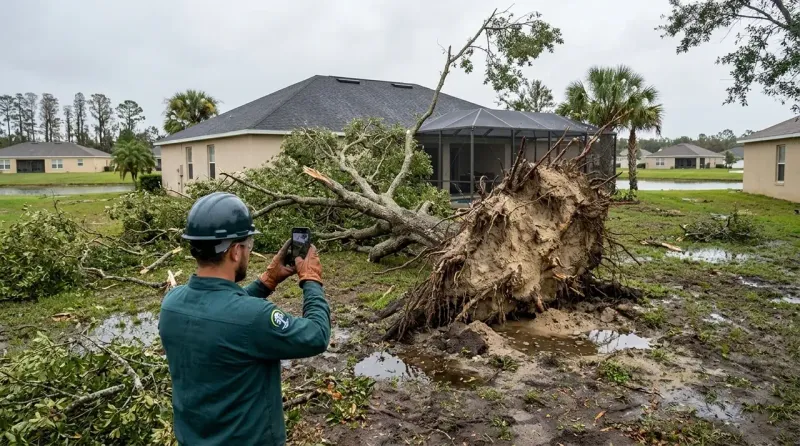
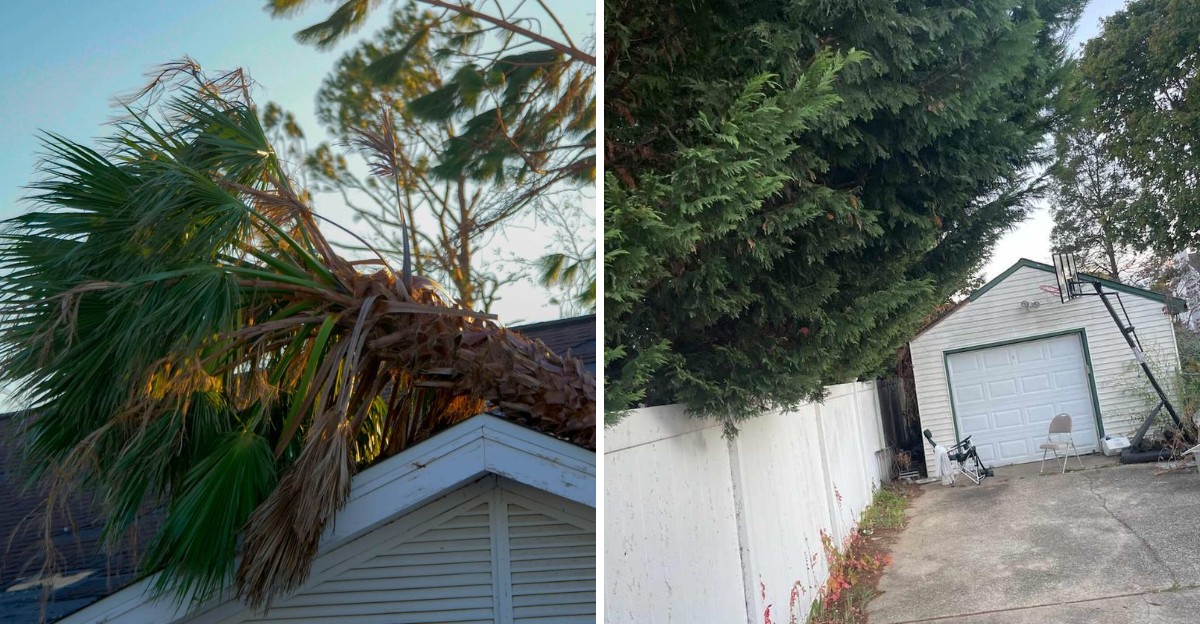
Storm season in the Sunshine State brings plenty of uprooted pines and snapped palms. When a healthy tree goes down in hurricane winds, lightning, or a fierce squall, courts often call it an act of God.
Under that idea, nobody could have reasonably prevented the damage. Your neighbor typically owes nothing, even if their tree flattened your shed.
So who pays? In most cases, your own homeowners insurance steps in first.
You file the claim, you pay your deductible, and your insurer handles the rest according to your policy.
Hurricane deductibles in Florida are often a percentage of your home’s insured value, commonly around 2 to 5 percent. That can add up to thousands of dollars, so check your declarations page now, before a storm shows up on the radar.
One more tip from experience. Call your insurer quickly after the storm passes, since claim lines get swamped after big hurricanes.
Keep receipts for any emergency tarps or repairs you make to prevent further damage. Most policies expect you to protect your property from getting worse, and those costs are often reimbursable.
3. A Rotting Trunk Can Put Your Neighbor On The Hook
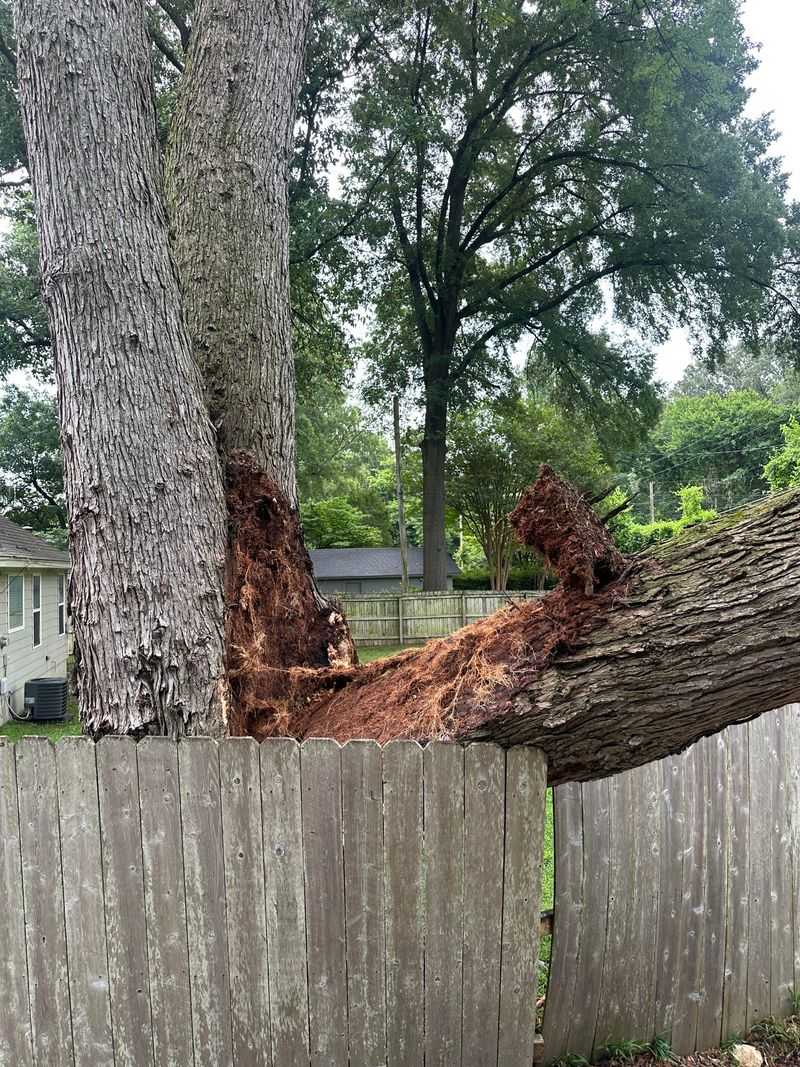
Mushrooms sprouting from the base of a trunk are a classic red flag. So are bare, leafless limbs, deep cracks, peeling bark, and a sudden lean.
When a tree with obvious problems like these falls, the act of God defense starts to wobble. Florida courts can apply ordinary negligence rules.
If the owner knew, or reasonably should have known, the tree was hazardous and did nothing, they may be responsible for your damage.
That phrase about should have known is important. An owner doesn’t get a free pass by ignoring a tree that clearly looked unhealthy from the sidewalk.
Proving it, though, takes evidence. Photos of the tree before it fell, comments from other neighbors, and an arborist’s written opinion can all help.
Certified arborists can often tell from the broken wood whether decay was present long before the storm. Their report carries real weight with insurers.
Even when your neighbor is liable, many people still start with their own insurance company. Your insurer may then pursue the neighbor or their insurer to recover the money.
That process, called subrogation, can sometimes get your deductible back too.
4. Your Homeowners Policy Covers More Than The Roof
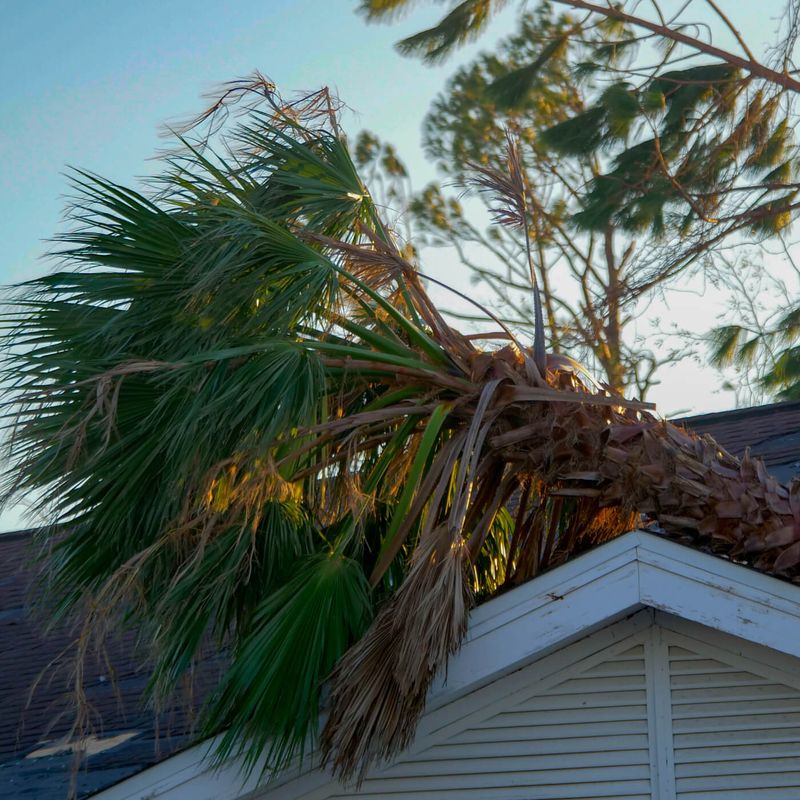
Plenty of people forget that a fallen tree can hit more than a house. Sheds, detached garages, fences, and pool screen enclosures often take the hardest blows.
Standard homeowners policies typically cover damage to your dwelling and other structures, no matter whose yard the tree started in. The key is that the tree damaged something insured.
Removal is where people get caught off guard. Many policies pay to haul away a tree only if it struck a covered structure or blocks a driveway or ramp.
Coverage limits are frequently modest, often around 500 to 1,000 dollars per tree.
A tree that simply fell across open lawn, touching nothing, may not be covered at all. That cleanup could land on your own wallet.
Landscaping is another tricky spot. Some policies offer limited coverage for shrubs and plants, but usually not for windstorm losses.
My advice? Pull out your policy on a quiet afternoon and read the sections on trees, debris removal, and other structures.
Then call your agent with questions. Ten minutes of reading beats a surprise denial letter after a storm.
5. A Written Note About That Leaning Pine Could Save You Thousands
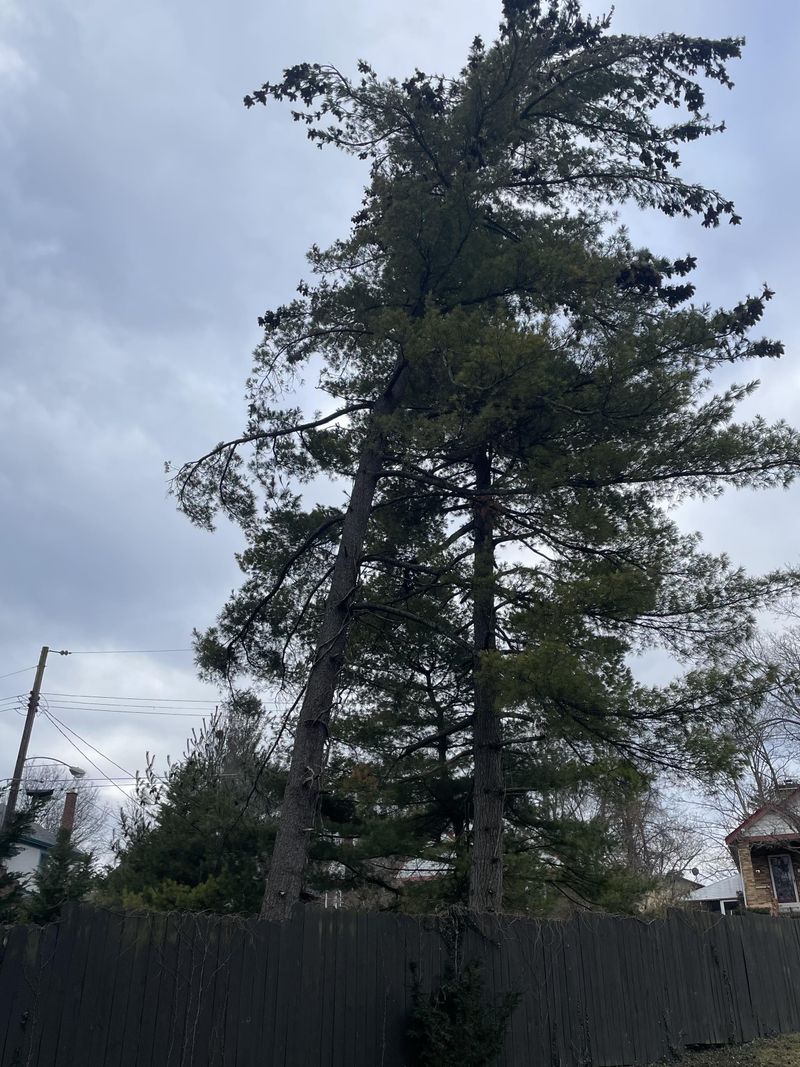
Paper trails matter. Few tools protect you better than a polite, dated letter about a sketchy tree next door.
Spot a neighbor’s pine leaning toward your house, or limbs that never leafed out this spring? Put your concern in writing.
Describe what you see, attach a couple of photos, and kindly ask them to have it checked by a certified arborist.
That written notice creates proof that your neighbor knew about the problem. If the tree later falls and damages your property, it can strengthen a negligence claim considerably.
Keep the tone friendly. Nobody wants a feud over a tree, and most neighbors genuinely appreciate the heads-up.
Email works, but a printed letter sent by certified mail gives you a stronger record. Save a copy for yourself either way.
Got an HOA? Copy the association too, since many community rules address hazardous trees.
If the tree is near power lines, call your electric utility as well. Utilities usually handle trimming around their lines, and you should never try that work yourself.
Staying clear of energized wires matters far more than any property dispute.
6. Trimming Overhanging Branches Is Your Right, With Limits
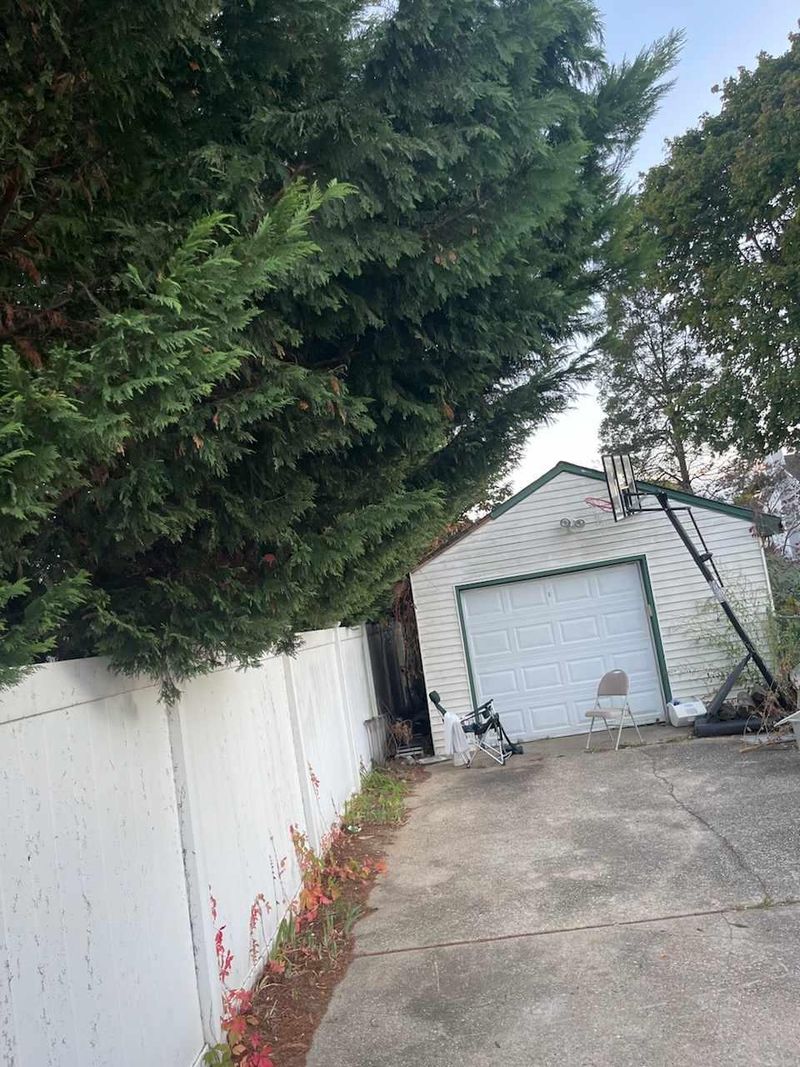
Overhanging limbs can drop leaves in your pool and acorns on your car. Florida law gives you a handy remedy called self-help.
You may trim branches and cut roots that cross onto your property, up to the property line. Permission from your neighbor generally isn’t required, although a friendly conversation first keeps the peace.
There are real limits, however. You can’t step onto their land without consent, and you shouldn’t harm the tree’s overall health.
Cutting so much that the tree declines or topples could make you liable for its value, which can be surprisingly high for mature oaks.
Local rules add another layer. Many Florida cities and counties have tree protection ordinances, and some species or large specimens may need a permit before major work.
A quick call to your city’s planning or code office clears this up.
Since 2019, a state law lets owners remove trees on residential property without a local permit if an arborist or landscape architect documents a danger. That law was amended in 2022, so check current rules.
For big cuts, hire an insured, certified arborist. Ladders, chainsaws, and heavy limbs are a risky mix.
7. Boundary Trees Straddling The Property Line Belong To You Both
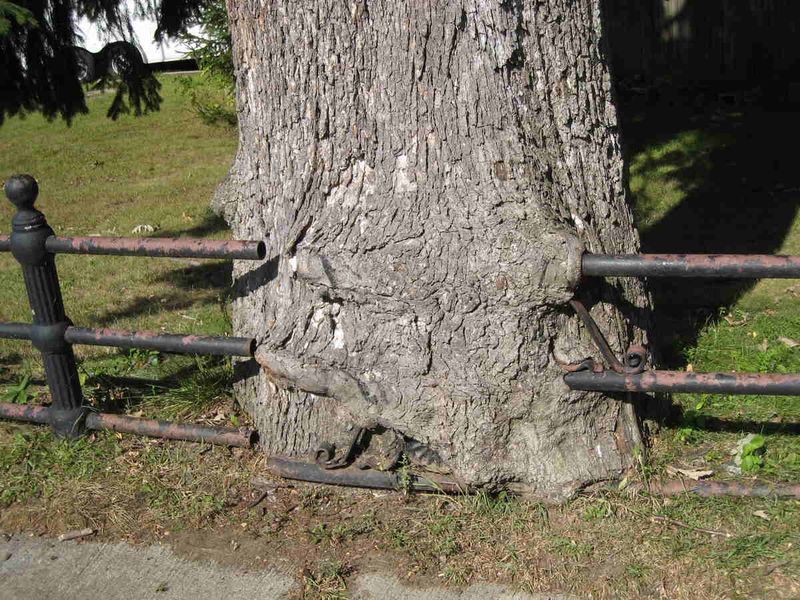
Some trees refuse to pick a side. When a trunk grows right across the property line, it’s often called a boundary tree.
In Florida and most states, a boundary tree is generally treated as jointly owned by both neighbors. Neither owner should remove it or do major cutting without the other’s agreement.
Shared ownership also means shared responsibility. If a jointly owned tree shows decay and falls, both owners might bear some liability, depending on the facts.
Not sure where the line runs? Your property survey is the best starting point.
It’s often tucked into your closing paperwork, or you can request one from a licensed surveyor.
I like the idea of treating a boundary tree like a shared garden bed. Split the cost of an arborist inspection, agree on a pruning schedule, and write it down.
Simple agreements like that prevent arguments later. They also keep a beautiful shade tree healthy for years.
If you and your neighbor disagree strongly about removal, a mediator or real estate attorney can help. Settling it calmly protects both the tree and the friendship over the fence.
8. Walk Your Yard And Snap Tree Photos Before Storm Season
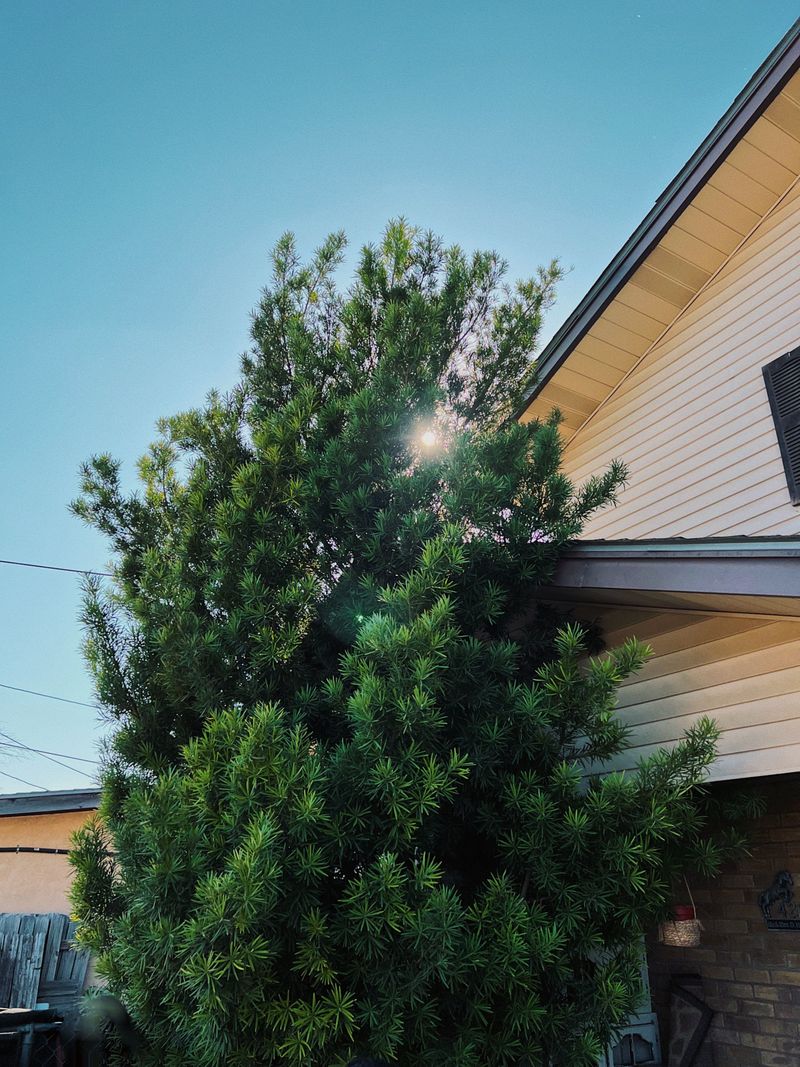
Hurricane season runs June 1 through November 30. Late spring is a smart window to check every tree near your home, including the ones next door.
Grab your phone and take a slow lap around the yard. Photograph trunks, limbs, and roots from several angles, and note the date.
Those images serve two purposes. They help prove a neighbor’s tree was clearly in rough shape, and they show your own trees were well cared for.
Look for cracks, cavities, mushrooms, lifting soil near the base, and branches hanging over your roof. UF/IFAS Extension recommends hiring a certified arborist for any tree that looks questionable.
Wind-resistant species help too. Extension research after Florida hurricanes found live oaks, sabal palms, and southern magnolias often hold up better than laurel oaks or sand pines.
Keep your insurance policy, survey, and any letters to neighbors in one folder or cloud file. When the wind howls, you’ll be ready.
A little preparation now beats a frantic scramble later. Healthy trees, clear records, and friendly neighbors are your strongest protection when a trunk crashes down.