The One Sign A Coyote Passed Through Your Maryland Yard Without You Noticing
Coyotes often leave their droppings right in the middle of a path, on purpose, like a note pinned to a bulletin board. I walked past one for weeks before it clicked.
Truth is, these wild canines now live in every Maryland county. First documented in the early 1970s, they have since spread all the way to the suburbs and the Eastern Shore. Most travel at night and avoid people, so one could share your yard unnoticed.
I used to blame the neighbor’s dog for anything odd near the fence. Then I learned what to look for, and my morning garden walks got a lot more interesting.
So what does a wild visitor actually leave behind? And how can you tell it apart from the family pet’s business before you grab the shovel?
That Pile On Your Garden Path Might Not Be From A Dog
Guilty as charged, I once scolded my own dog for a mess she did not make. The real culprit was a coyote, and the clue was sitting right in the center of my stone garden path.
Droppings, also called scat, are the sign most people miss. Coyotes are shy and mostly active from dusk to dawn, so you rarely see them. Their scat stays behind, though, often for days or even weeks.
Wildlife experts point out that coyotes use scat as a message. Leaving it in an open, easy-to-spot place tells other coyotes that this route is part of someone’s home range. That is why it shows up in such bold locations, while a wandering dog tends to go wherever it happens to be.
Here in the Mid-Atlantic, many yards sit near woods, stream valleys, or power line corridors. Those green strips work like highways for wildlife. If your property borders one, a coyote may simply be cutting through on its nightly loop.
Finding one pile does not mean a coyote moved in. It mostly means one passed by. Still, it is worth a closer look, because the shape, contents, and spot can tell you a surprising amount about your nighttime guest.
Coyote Scat Looks Like A Twisted Rope With Tapered Ends
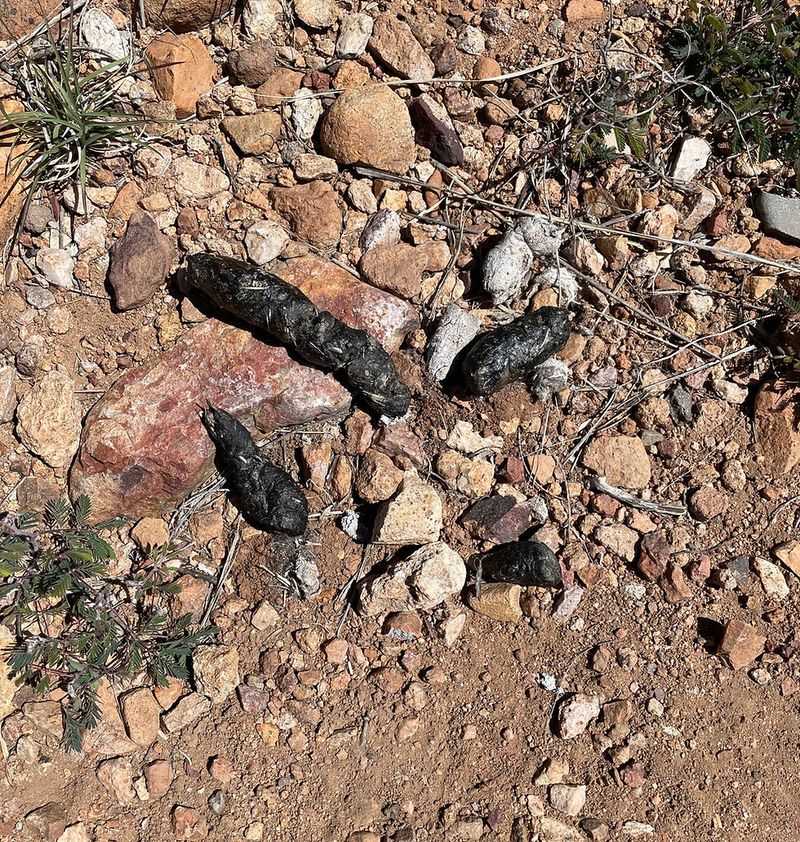
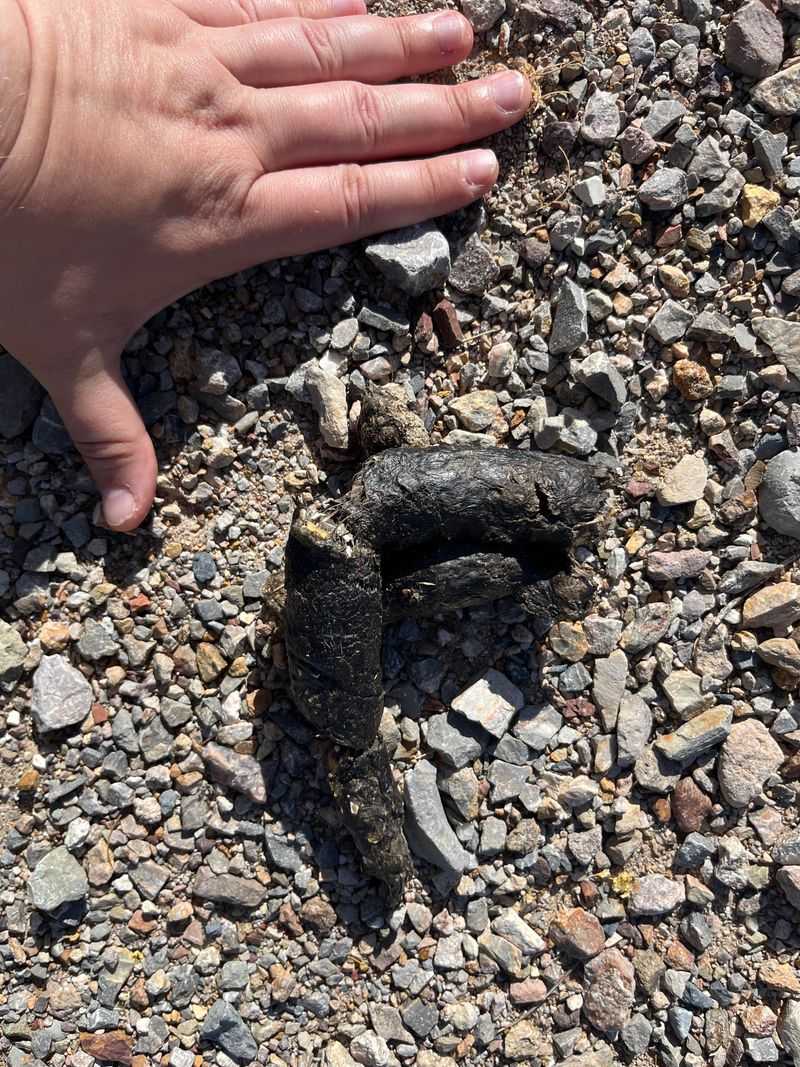
Once you know the shape, you will spot it fast. Coyote scat usually looks like a twisted, ropey cord, about three-quarters of an inch to an inch thick, and often three to five inches long.
The ends give it away. Coyote droppings commonly taper to a point at one or both ends, a bit like a twisted candle. Dog droppings from pets eating kibble tend to be smoother, more uniform, and blunt on the ends.
Texture matters too. Pet waste is usually soft and mushy because store-bought food digests evenly. Coyote scat is often firmer and lumpy, and it may look hairy or bumpy because of what the animal ate.
Fox scat looks similar but is noticeably smaller, often under half an inch wide. Since red and gray foxes also roam Maryland, size is one of the most helpful ways to tell them apart.
A quick tip from my own trial and error: snap a photo next to a coin or pen before you clean it up. That gives you a size reference later. Use a stick or gloves instead of bare hands, because wild animal droppings can carry parasites. Wash up afterward, even if you did not touch anything.
Coyotes Leave Droppings On Rocks, Fence Posts, And Trail Crossings
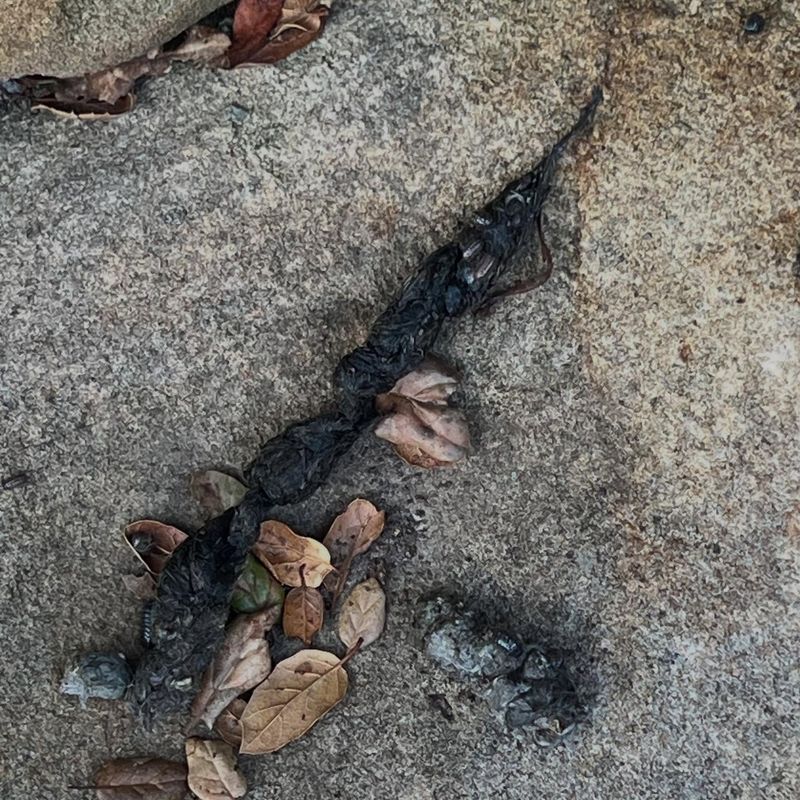
Location is the second half of the clue. A coyote does not hide its scat behind a bush. It often picks the most noticeable spot it can find.
Look for raised or central places. Flat rocks, the middle of a mowed path, the base of a fence post, a gap in a hedge, and spots where two trails meet are all popular choices. Wildlife trackers call these marking sites because coyotes return to them again and again.
That repeat use is a big hint. If you find old, faded scat and fresh scat in the same spot, an animal is probably using your yard as part of a regular route. A single random pile is less telling.
Dogs on a leash tend to go along the edges of lawns or wherever their owner walks them. Coyotes, on the other hand, follow travel lanes. Check where the woods meet your lawn, along creek banks, and near openings under fences.
I started walking my property line once a week with coffee in hand, and it turned into a fun habit. You learn which corners get the most traffic, and that knowledge helps you decide where to focus cleanup and fencing later.
Fur, Bones, And Berry Seeds Reveal A Coyote’s Menu
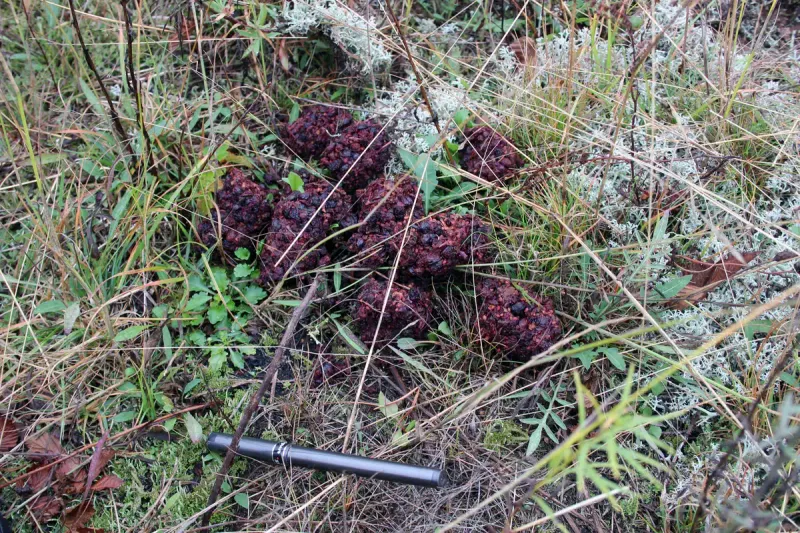
Coyotes are not picky eaters, and their droppings prove it. These clever omnivores eat mice, voles, rabbits, squirrels, insects, birds, and plenty of fruit when it is in season.
Because they swallow food with little chewing, the leftovers show up in their scat. You might see gray or brown fur, tiny bone pieces, feathers, or bits of insect shells. In late summer and fall, the scat may be packed with seeds and berry skins instead.
Around the Chesapeake region, coyotes happily snack on wild grapes, blackberries, persimmons, apples, and fallen pears. A pile full of seeds in October often points straight to a nearby fruit tree. Scat after a meat-heavy meal tends to look darker and hairier.
Fun fact: researchers study coyote scat to learn what these animals eat. Many studies show rodents make up a big share of their diet, which is one reason farmers sometimes tolerate them.
Pet dogs rarely leave fur or whole seeds in their waste. So if your mystery pile looks like a tiny furry rope sprinkled with seeds, you can feel fairly confident a wild canine wandered through. Just look with your eyes, not your fingers.
Oval Coyote Tracks In The Mud Tell A Straighter Story
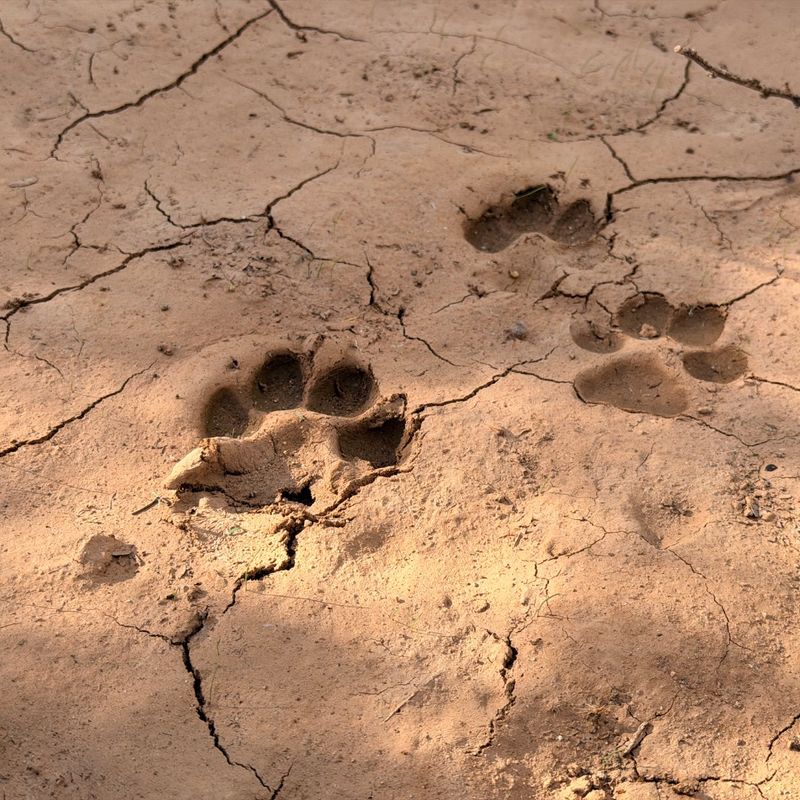
Not going to lie, tracks are my favorite backup clue. After a rainy night, check muddy spots near garden beds, drainage ditches, or the edge of your driveway.
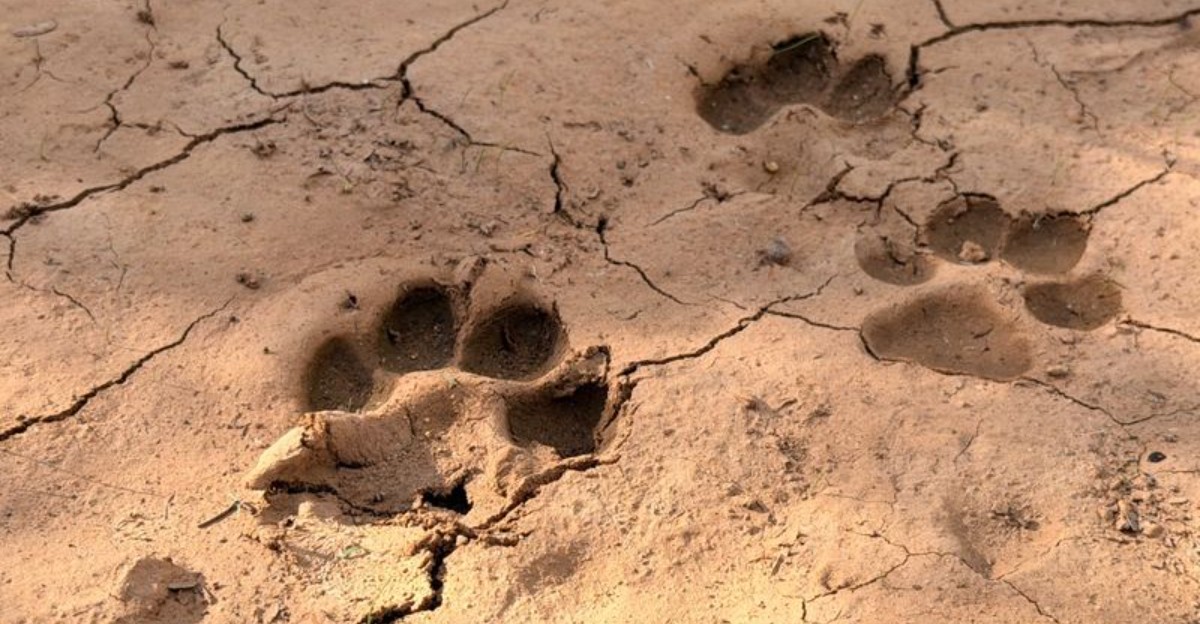
Coyote prints are usually oval and about two and a half inches long. Each shows four toes and often small claw marks. Compared with most dog prints, they look narrower and more compact, and the two outer toes tuck in neatly.
A handy trick is to imagine an X between the toe pads and the heel pad. On coyote tracks, you can often draw that X without crossing any pads. On many dog prints, the lines bump into toes.
The pattern matters even more than one print. Coyotes usually travel in a fairly straight, efficient line, with back feet landing close to where front feet stepped. Dogs tend to zigzag, sniffing around and wandering in loops.
Tracks can fool anyone, and a large fox or a small dog can blur the lines. That is why I trust a combo of clues. Scat on a marking spot plus a straight line of oval prints makes a far stronger case than either sign alone.
Your Dog Sniffing One Fence Post Like Crazy Is A Clue
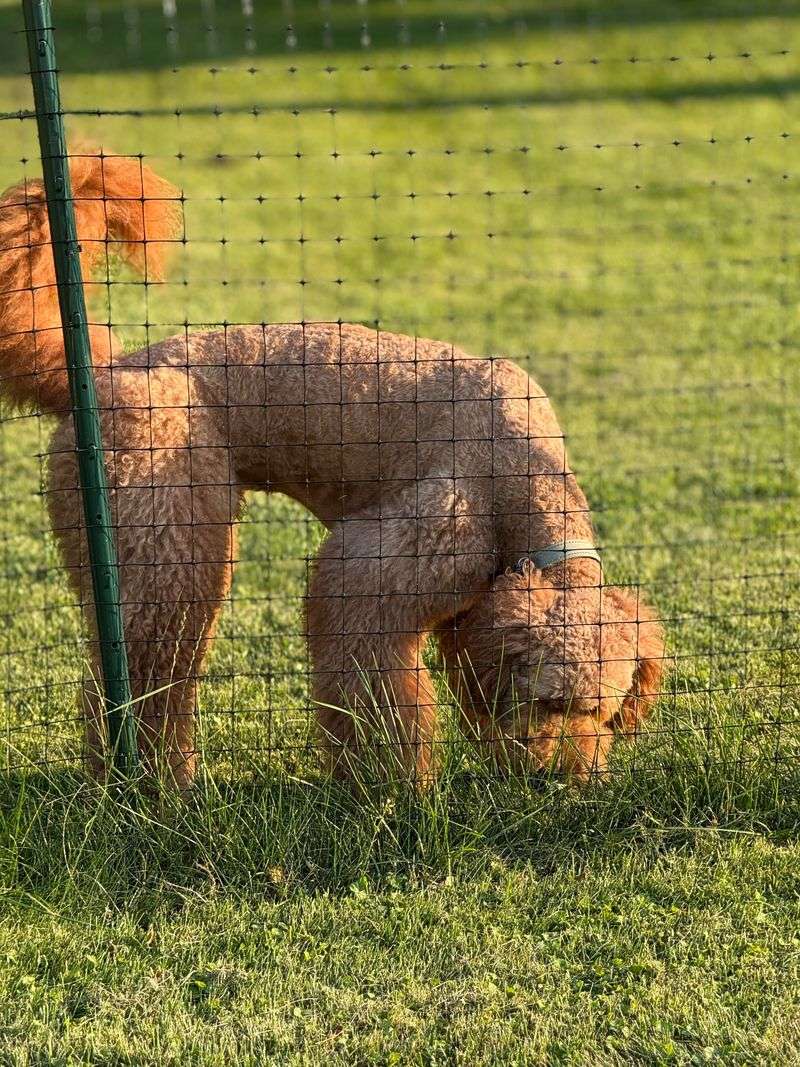
Don’t laugh, but my beagle figured out our visitor before I did. She spent ten straight minutes sniffing one fence post and refused to come inside.
Dogs have noses many thousands of times more sensitive than ours. Coyotes mark their routes with urine and scat, and those scents linger. A pet that suddenly fixates on one spot, rolls in it, or scratches at the ground may be reading a message you cannot smell.
Watch for new patterns. Barking at the same corner of the yard every night, raised hackles near the woods, or nervous pacing at dusk can all hint at nearby wildlife. Of course, foxes, raccoons, and deer can trigger the same reaction, so treat this as a supporting clue.
This sign also comes with a safety reminder. Coyotes may see small dogs and cats as prey or competition, especially during the late winter breeding season and spring pup season.
Keep small pets close, walk dogs on a short leash at dawn and dusk, and supervise them in the yard after dark. Cats are safest indoors. A little extra caution goes a long way toward keeping everyone comfortable.
Fallen Fruit And Open Trash Bins Invite Coyotes Back
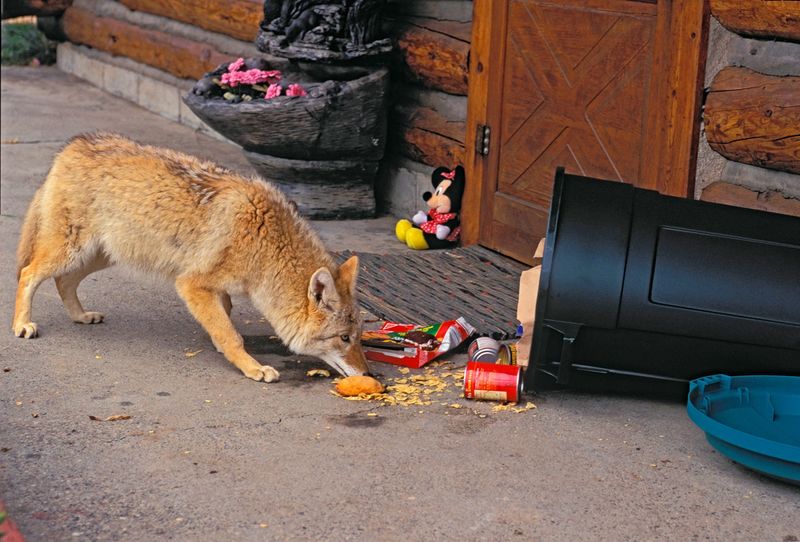
I’ll say this much: coyotes visit for a reason, and that reason is usually food. Make your yard less rewarding, and most will just pass on by.
Start with easy fixes. Pick up fallen fruit and birdseed spills, since both attract coyotes and the rodents they hunt. Store trash in sturdy bins with tight lids, keep compost enclosed, and feed pets indoors.
The Maryland Department of Natural Resources advises against feeding coyotes on purpose. Fed coyotes can lose their natural fear of people, and that leads to bolder behavior. Ask neighbors to follow the same habits, because one messy yard can draw animals to the whole street.
Trim dense brush near the house and close off gaps under decks and sheds where a coyote could rest or raise pups. Motion lights help, too.
If you do see one, make yourself big, clap, shout, or spray a hose. This hazing teaches coyotes to keep their distance. A coyote that seems sick or acts aggressive should be reported to the DNR wildlife hotline. Most of the time, though, that scat on your path just means a quiet neighbor trotted through, and you finally noticed.