That Papery Egg Mass on Your Virginia Shrub Could Be a Praying Mantis Nursery, or an Invasive One
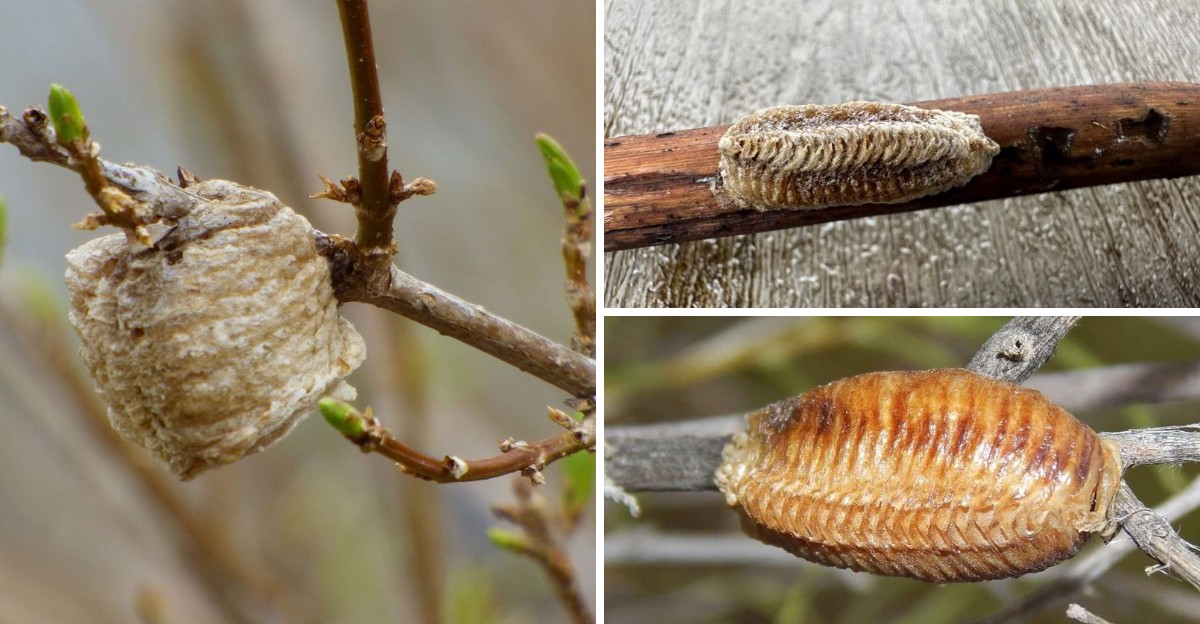
A single foamy lump no bigger than a walnut can hold 200 or more baby predators. I found one glued to my butterfly bush last January, and I stared at it like it owed me rent.
That crusty little package survived ice storms without a wobble. Inside, tiny hunters sit tucked in rows, waiting for warm spring days. Nature built a winter sleeping bag out of hardened froth, and I still find that wild.
Let me be straight with you, though. Not every one of these cases belongs here in Virginia. Some come from insects that traveled across oceans and now crowd out a smaller local cousin.
So which kind is clinging to your shrub right now? The shape, color, and texture give it away once you know the clues. I learned that the hard way, and you can learn it in about five minutes.
That Foamy Lump on the Twig Is Packed With Tiny Hunters
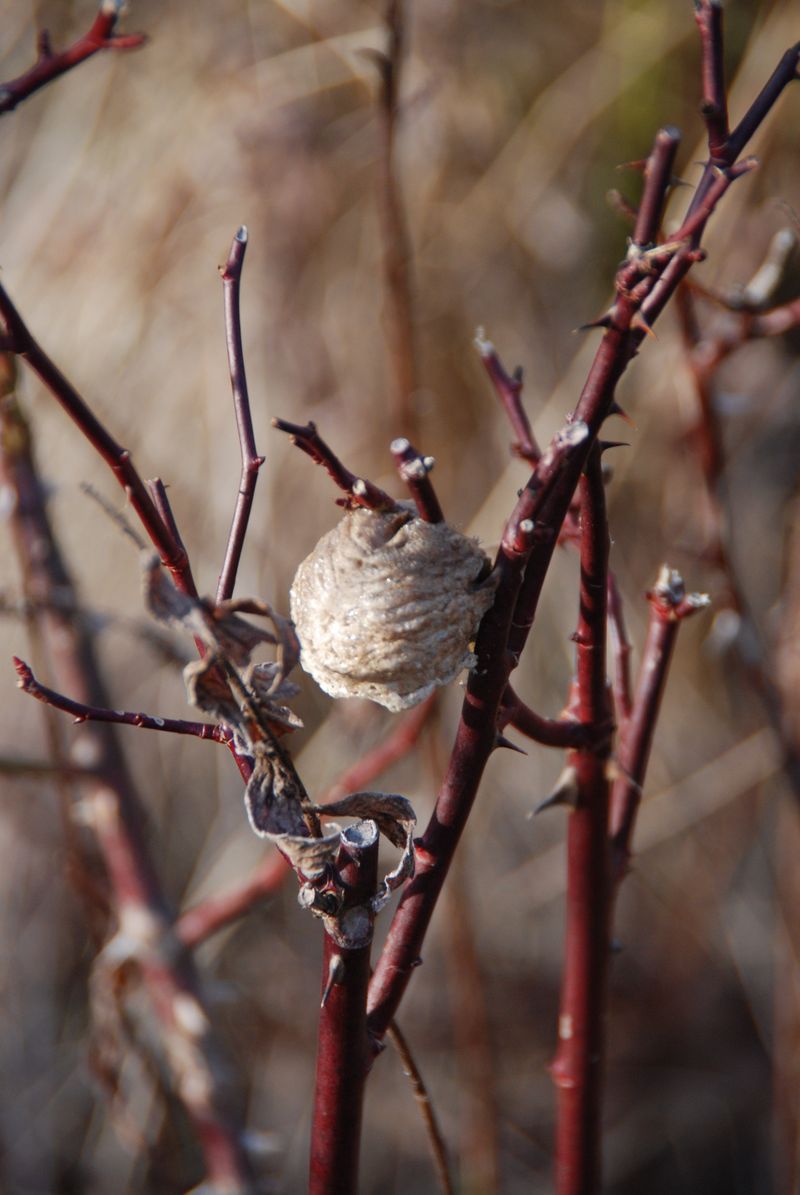
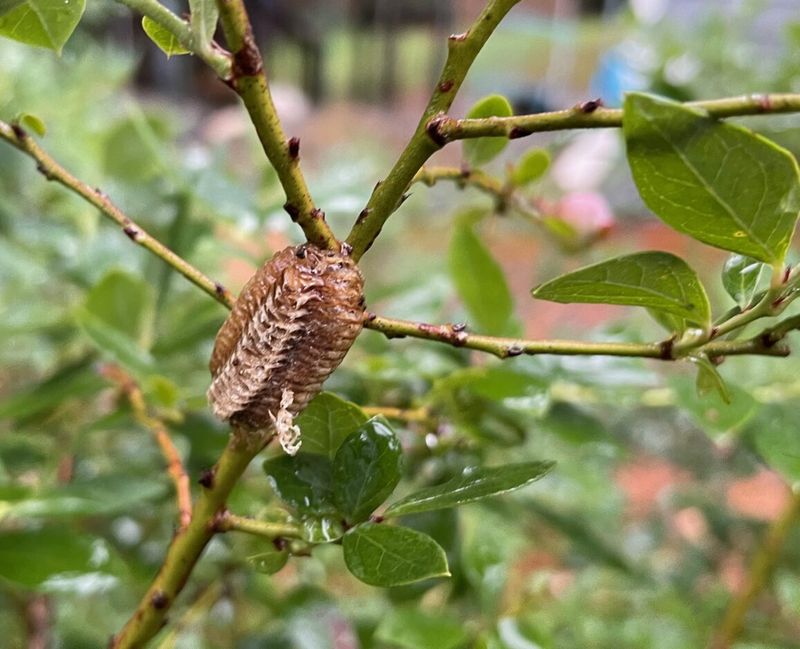
Surprise, it is not a cocoon or a fungus. That papery blob is called an ootheca, and it is a praying mantis egg case built by a mother mantis in late summer or early fall.
She squeezes out a frothy foam and lays her eggs inside it. Within hours, the foam hardens into a tough, insulated shell.
It works a lot like a winter coat, guarding the eggs from cold, rain, and many hungry birds.
One case can hold anywhere from a few dozen to a few hundred eggs, depending on the species. The adult female does not survive the winter, so this little package carries the whole next generation.
Pretty dramatic for something that looks like a dried-up marshmallow, right?
In Virginia, three mantis species show up most often. The Carolina mantis is our native one.
The Chinese mantis and the European mantis came from overseas and are now widespread across the eastern United States.
Each species builds a different style of egg case. That makes your detective job much easier than it sounds.
You do not need a microscope, just a good look at the size, shape, and texture.
Before you snip that twig or toss it on the brush pile, pause and take a closer look. The next few sections will help you figure out exactly who built it.
A Puffy Ping-Pong Ball Case Usually Means Chinese Mantis
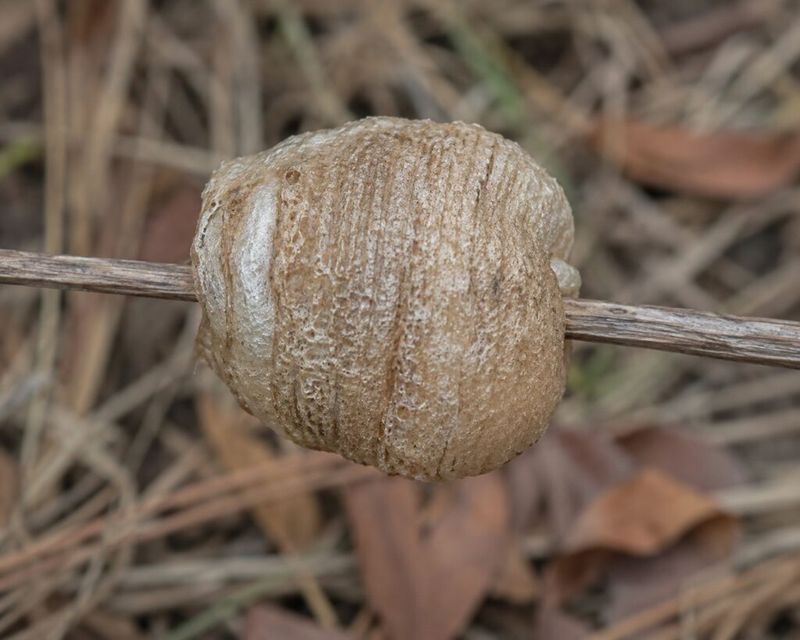
My first find looked exactly like a toasted marshmallow stuck on a stick. Turns out, that description fits the Chinese mantis egg case almost perfectly.
Chinese mantis oothecae are the ones gardeners spot most often. They are round to boxy, puffy, and roughly the size of a ping-pong ball.
The color is a uniform straw or tan brown, and the surface feels rough and foamy, a bit like crumbly Styrofoam.
You will usually see them wrapped around woody stems, shrub branches, or tall plant stalks. They also turn up on fence posts, deck rails, and even house siding.
Since the case often circles the whole twig, it sits there like a lumpy bead on a string.
The Chinese mantis itself is a giant among Virginia insects. Adults can reach four inches or more, with green-and-brown bodies and wings that stretch past the tip of the abdomen.
Fun fact for you. This species was brought into the United States around 1896, near Philadelphia, likely by accident on nursery plants.
It has spread widely ever since, helped along by people who bought egg cases for pest control.
If your find is big, round, and spongy, you are most likely holding a Chinese mantis case. Snap a photo before you decide what to do next.
The Slim Striped Carolina Mantis Case Is the One Worth Keeping
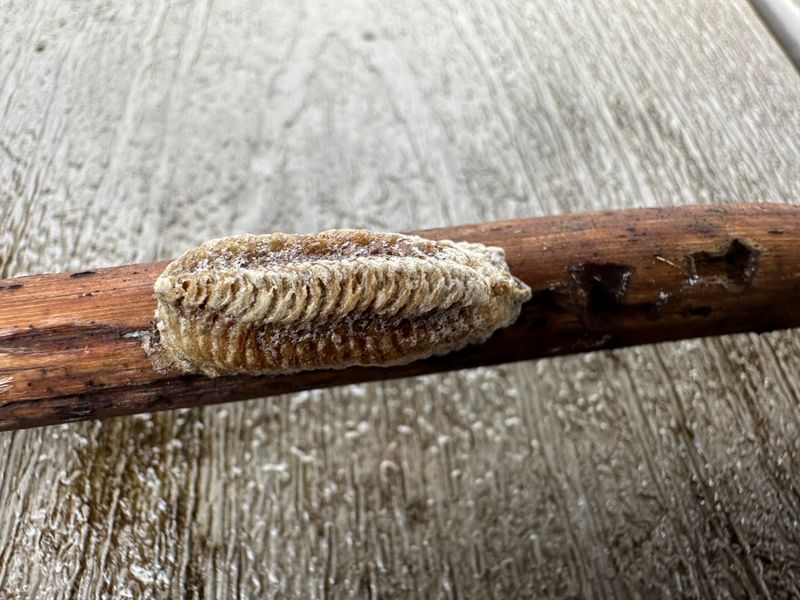
Spotting one of these feels like finding a four-leaf clover. The native Carolina mantis builds a neat, tidy egg case that looks nothing like the puffy Chinese version.
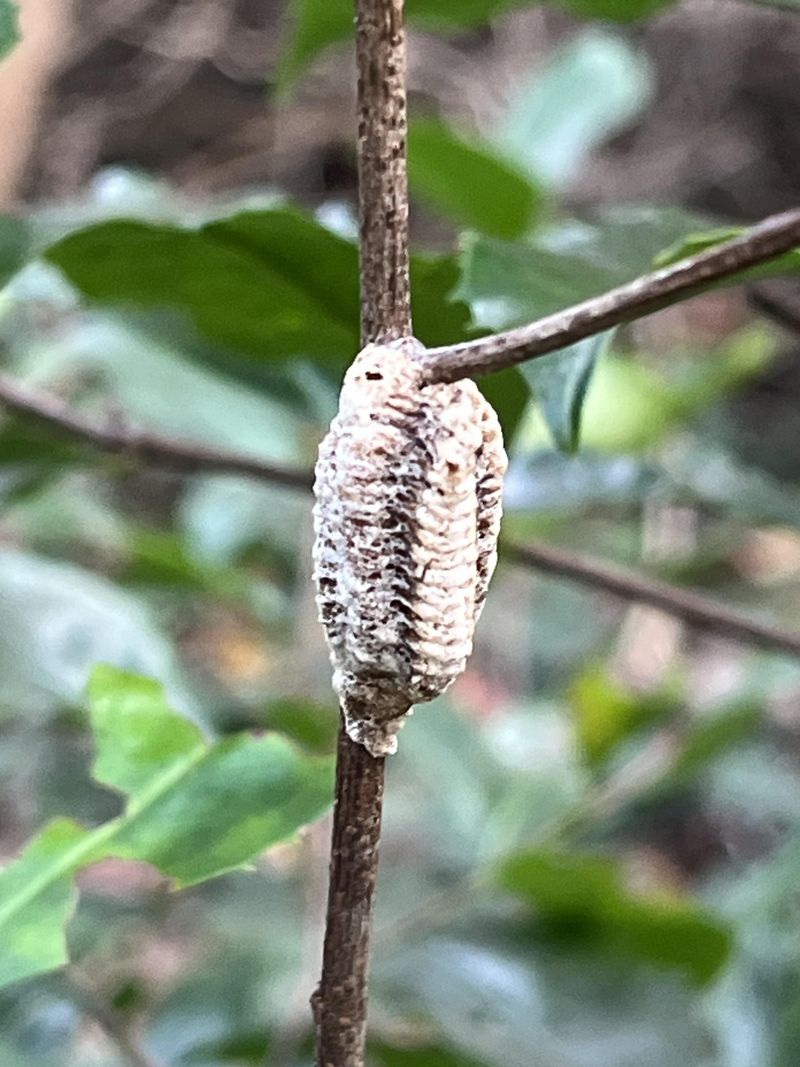
Look for a long, slender shape, often about an inch long or less. The surface is smooth and fairly flat, with bands of lighter and darker brown or gray.
Many have a pale strip running down the middle, almost like a seam on a tiny football.
Some people describe it as teardrop-shaped. It tends to sit flat against a twig, stem, rock, or board rather than wrapping around it.
The adults are smaller too, usually around two to two and a half inches long. Females have short wings that cover only part of the abdomen.
Their colors range from mottled gray to brown to soft green, which helps them blend into bark and leaves.
The Carolina mantis has lived here for a very long time. It fits into local food webs, feeding on many small insects without the oversized appetite of its bigger cousins.
If you find one of these slim, striped cases, my advice is simple. Leave it right where it is.
Prune around that branch, or tuck the clipped twig back into a shrub so the babies can hatch safely in spring.
European Mantis Egg Cases Can Fool Even Careful Gardeners
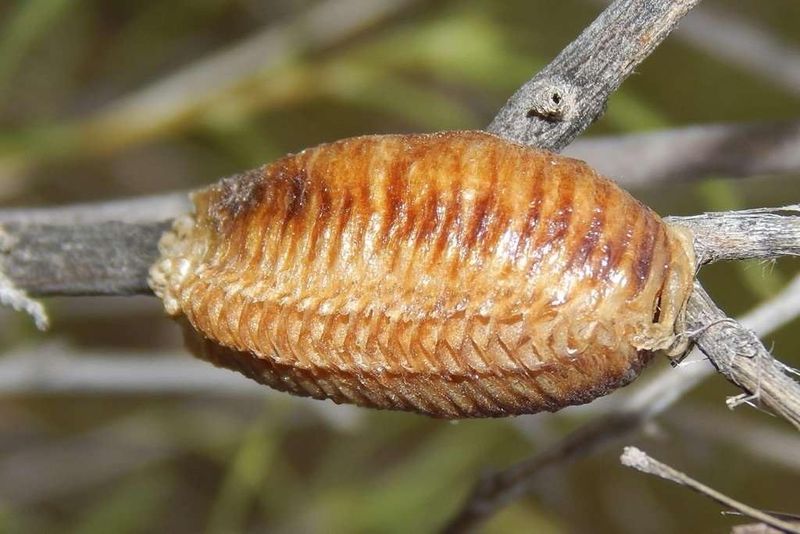
Honestly, this one tripped me up more than once. The European mantis lays an egg case that sits somewhere between the other two in looks.
Like the native Carolina case, it is longer than it is wide. But it is usually a solid pale brown or tan, without those neat stripes.
The surface is a bit rougher and puffier, and it is not as flat or smooth.
These cases often show up lower to the ground. You might find them on stems, under rocks, on fence boards, or tucked against buildings.
The adult European mantis is medium-sized, roughly two to three inches long. It is often bright green or tan.
Here is a neat clue if you see adults in late summer. Look on the inside of the front legs for a black spot with a white center, like a little bullseye.
This species arrived from Europe and was first found in New York in 1899. Like the Chinese mantis, it has been sold for garden pest control for many decades.
When an egg case confuses you, compare three things. Check the shape, look for stripes, and feel how flat it is.
A plain, slightly lumpy, elongated case points toward the European mantis rather than our local one.
Big Invasive Mantises Will Happily Snack on Bees and Butterflies
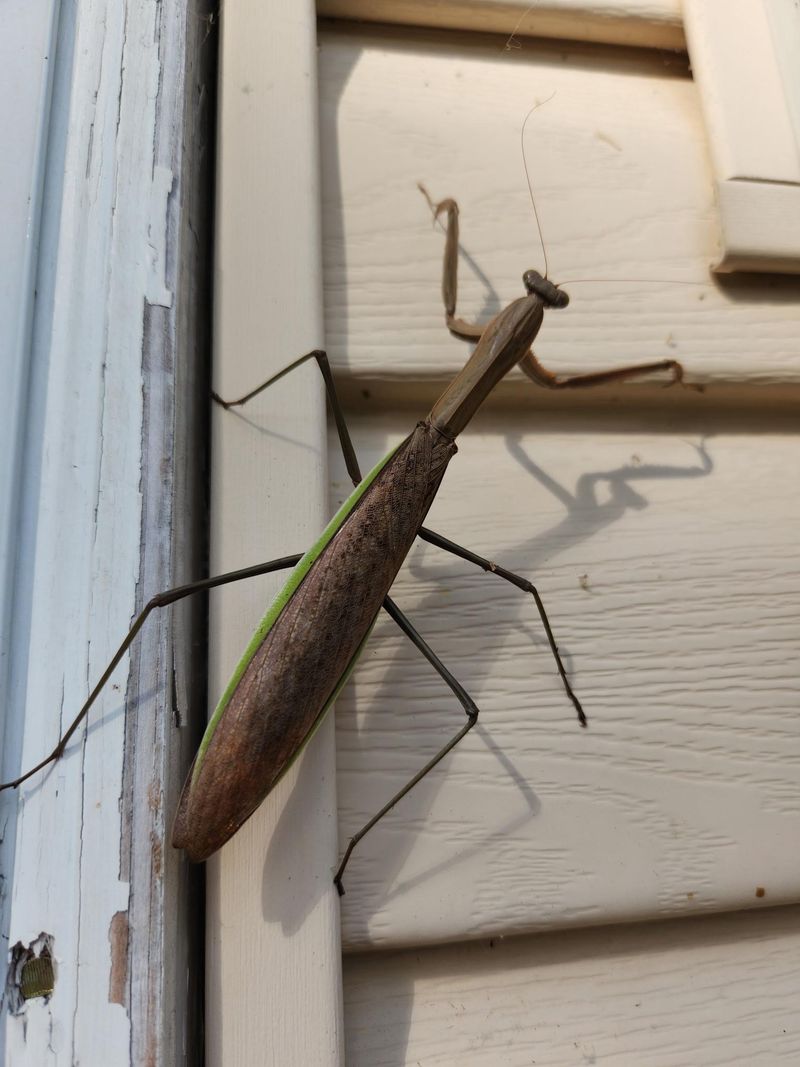
Plenty of us grew up hearing that mantises are a gardener’s best friend. I believed it for years.
The real story is a little messier.
Mantises are generalist predators. They grab whatever moves close enough, and they do not care if it is a pest or a helper.
Aphids are often too small to interest adults, so they tend to target larger insects instead.
That menu often includes honeybees, native bees, butterflies, and moths. Chinese mantises are big enough to tackle even larger prey.
They have been recorded catching hummingbirds at feeders, along with small frogs and lizards.
The larger invasive species also compete with the native Carolina mantis for food. Sometimes they simply eat it.
Researchers are still studying how much harm this causes overall, so the full picture is not settled.
Still, many entomologists and extension educators suggest that gardeners should not purposely add non-native mantises to their yards. Their pest control value is limited, and the risk to pollinators is real.
Here is a practical tip for summer. If you see a giant mantis parked on your hummingbird feeder, gently move it far away with a stick or container.
Watch your pollinator flowers too, since mantises love waiting on blooms for visiting bees.
Bare Winter Branches Make Mantis Egg Cases Easy to Spot
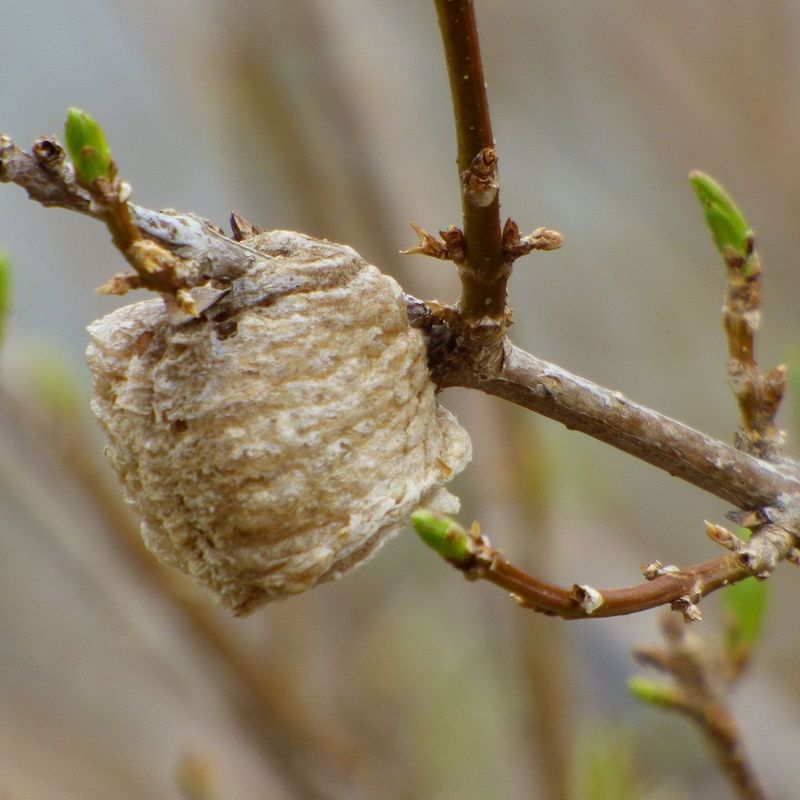
Late fall through early spring is prime egg case season. Once the leaves drop, those tan lumps suddenly stand out like ornaments on a bare tree.
Mantis females lay eggs from late summer into fall. The cases then sit quietly through the cold months.
In Virginia, hatching usually happens in late spring, often May into June, once warm days settle in.
Timing shifts a bit across the state. Coastal and southern areas often warm earlier, while mountain spots in the west may hatch a little later.
Good places to search include shrubs like butterfly bush, roses, hollies, and forsythia. Check tall perennial stalks you left standing for winter, like goldenrod or coneflower.
Fences, deck posts, mailboxes, and siding are popular spots too.
My favorite trick is to look while pruning. Before every cut, scan the branch for anything bumpy or crusty.
I have saved more than one native case this way, and caught a few invasive ones too.
Leaving some stems standing over winter helps more than mantises. Native bees, beneficial insects, and birds all use that cover.
So a messy garden in February is often a busy, healthy one.
Bring your phone on your walks. A quick photo makes identifying cases later much simpler.
What to Do With That Mantis Egg Case Once You Know Who Made It
Okay, decision time. You have checked the shape, color, and texture, and you have a pretty good guess.
For a native Carolina mantis case, leave it alone. If you clipped the twig by accident, tie or wedge it back into a shrub at about the same height.
Keep it outdoors, since bringing it inside can trigger an early hatch in your house. Trust me, hundreds of tiny mantises on the curtains is not a fun morning.
For a Chinese or European mantis case, many extension educators suggest removing it before spring. Snip the twig and drop the case into a bag you seal and put in the trash.
Soaking it in a bucket of soapy water, or freezing it in a sealed bag, works too.
Some backyard chicken keepers simply offer the cases to their hens. The birds seem to enjoy the treat.
Not sure what you found? Please do not guess and remove it.
Take clear photos from a few angles and post them to iNaturalist, or send them to your local Virginia Cooperative Extension office.
Extension Master Gardeners love these questions. They can confirm the species and give advice that fits your county.
Skip the Store-Bought Mantis Egg Cases and Grow Native Plants Instead
One mistake I will not repeat is buying mantis egg cases from a garden catalog. I thought I was helping my vegetables.
Nearly every one sold in the United States is the Chinese mantis.
Those packaged cases add more large invasive predators to your yard. Your bees, butterflies, and local mantises then share space with them.
A better plan is building a garden where native helpers move in on their own. Plant Virginia natives like goldenrod, mountain mint, asters, black-eyed Susans, and native shrubs such as viburnum and spicebush.
These feed pollinators and the small insects that predators eat.
Cut back on broad-spectrum pesticides too. They often hurt beneficial insects more than pests.
Ladybugs, lacewings, ground beetles, and parasitic wasps do a lot of quiet pest control when you let them.
Leave some leaf litter and standing stems over winter. That cover shelters native mantis egg cases, overwintering bees, and plenty of other good bugs.
Finally, share what you learned. Show a neighbor the difference between a puffy invasive case and a slim native one.
Every gardener who can tell them apart gives the little Carolina mantis a better shot at thriving in your yard.