Those Long Wispy Legs On Your Alabama Basement Ceiling Belong To A Surprising Predator
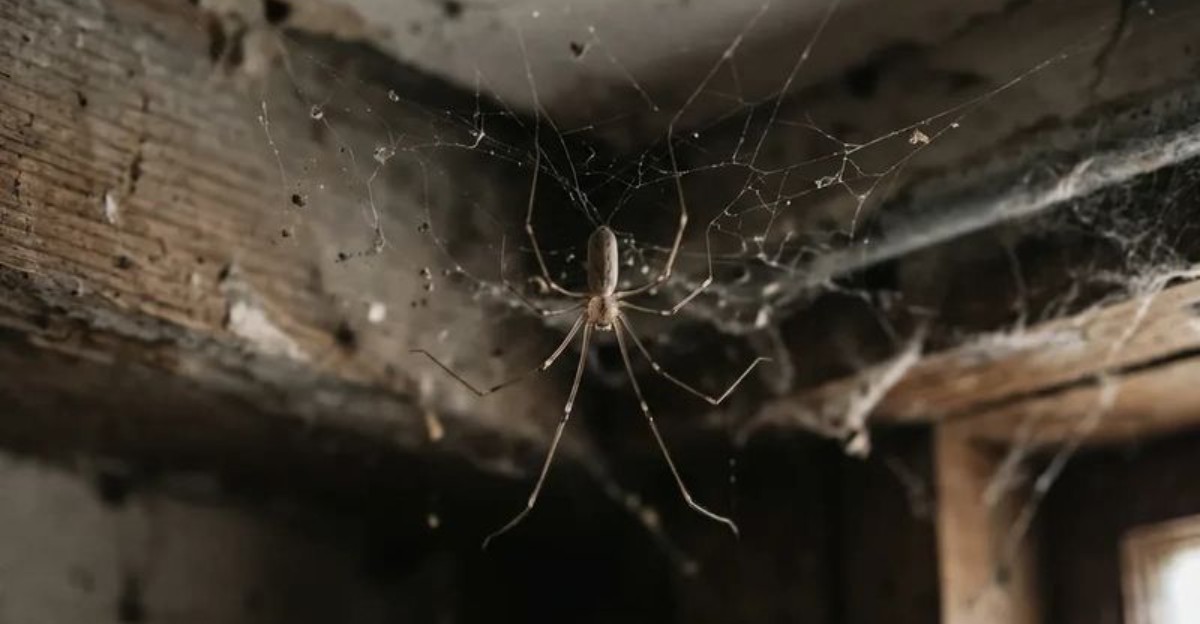
A spider with a body smaller than a grain of rice can wrestle down a much bigger spider and wrap it up like a gift.
I found one doing exactly that in a dim corner of my Alabama basement. The hunter had legs so thin they looked like stray threads. When I leaned closer, it started shaking its whole web in a blurry little dance.
You might notice these tangled, messy webs near your water heater or above the dryer, even here in Alabama, where basements stay damp and warm. They look abandoned, but they rarely are. Somebody is home, and that somebody is hungry.
I used to grab the broom right away. Now I pause and look first, because that fragile-looking creature has a surprising job description.
Next time you spot one, don’t sweep: you’re looking at the quiet predator guarding your laundry room.
That Shaky Spider Hanging Upside Down Is Not What You Expect
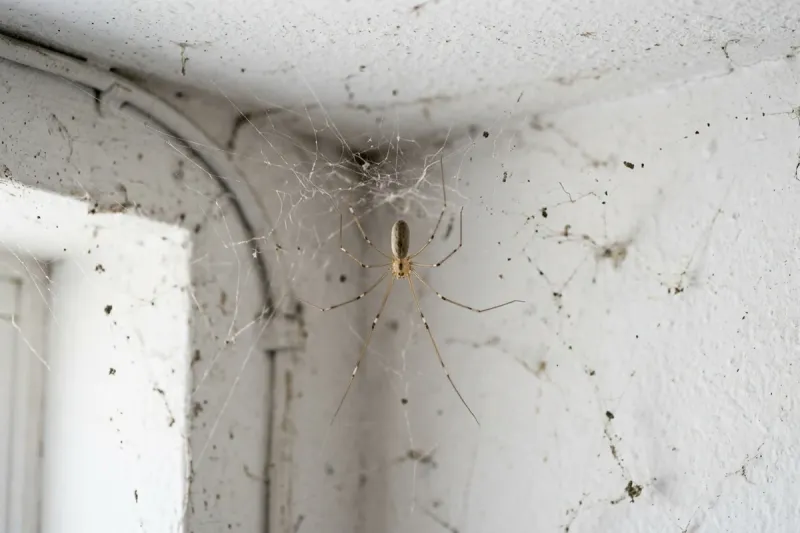
Most folks call it a daddy longlegs and move on. That name is a bit of a mix-up, though. Three very different critters share the nickname.
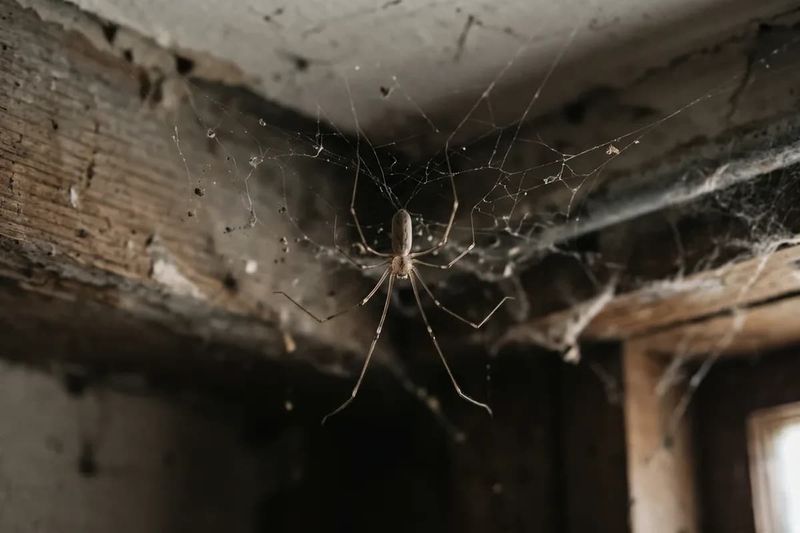
The one dangling from your basement ceiling is a cellar spider, from the family Pholcidae. It is a true spider with eight eyes, silk glands, and venom.
The other daddy longlegs, the harvestman you see outside on fence posts, has one round body section and makes no silk at all.
Crane flies sometimes get the nickname too, but those are flies with wings. So how do you tell which one you have? Look for a web.
Harvestmen wander and never build webs, while cellar spiders hang inside loose, tangled silk. A cellar spider also has a peanut-shaped body split into two parts, with legs several times longer than that body.
The long-bodied cellar spider, Pholcus phalangioides, is a common one in homes across the South. Another frequent guest is the short-bodied Physocyclus or Crossopriza species.
All of them love quiet, humid spaces. Once you know what you are looking at, that wispy shape in the corner starts to look less spooky and a lot more interesting.
Cellar Spiders Hunt Other Spiders, Including Some You Like Even Less
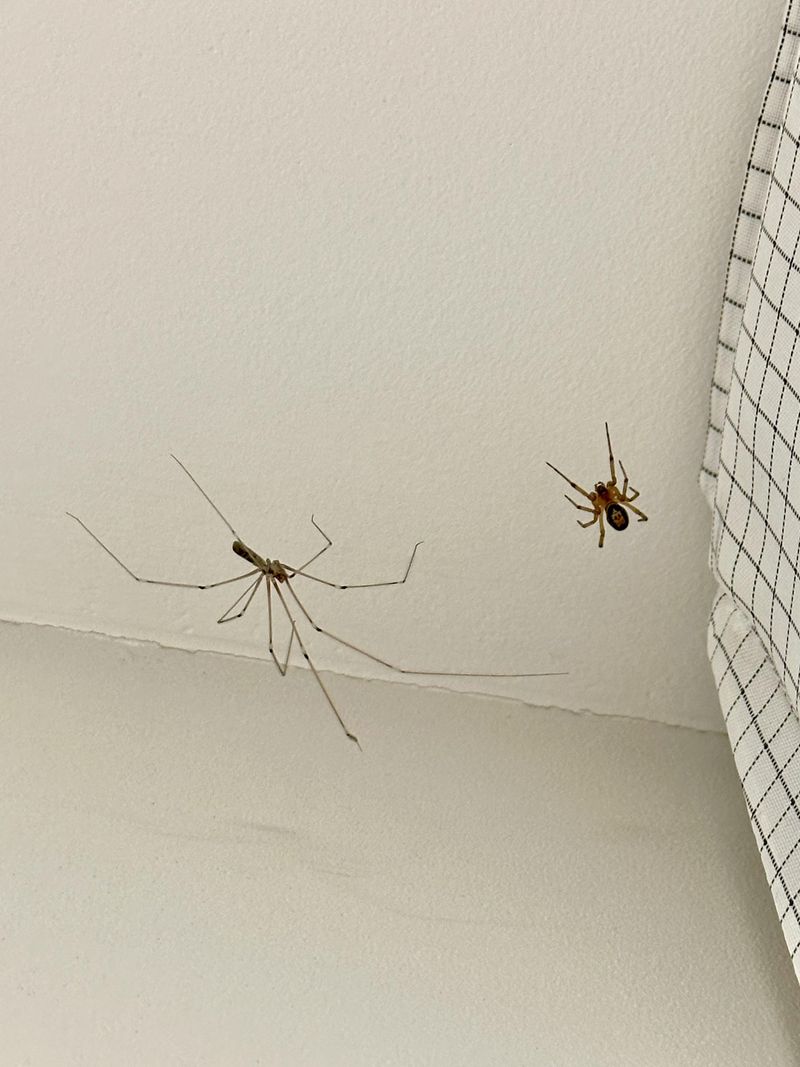
Here comes the surprise. Those skinny-legged spiders regularly eat other spiders, and they are very good at it.
Researchers have documented cellar spiders capturing house spiders, wolf spiders, and even other cellar spiders.
They sometimes invade another spider’s web and pluck the silk to mimic trapped prey. When the owner comes to check, the cellar spider strikes.
Their secret is distance. Those long legs let them toss sticky silk over a victim from a safe reach, wrapping it before it can fight back. Then they deliver a bite and wait.
Do they eat black widows? There are credible reports and observations of cellar spiders taking on widows, but it is not a guaranteed form of pest control. I would not count on them to clear out a widow problem in your shed.
Beyond spiders, they snack on mosquitoes, gnats, moths, flies, and small insects that drift into dark corners. A few quiet cellar spiders can mean fewer bugs bothering you in the laundry room.
That makes them a sort of free cleanup crew. They work night and day without asking for anything but a little peace.
That Famous Venom Myth About Daddy Longlegs Falls Apart
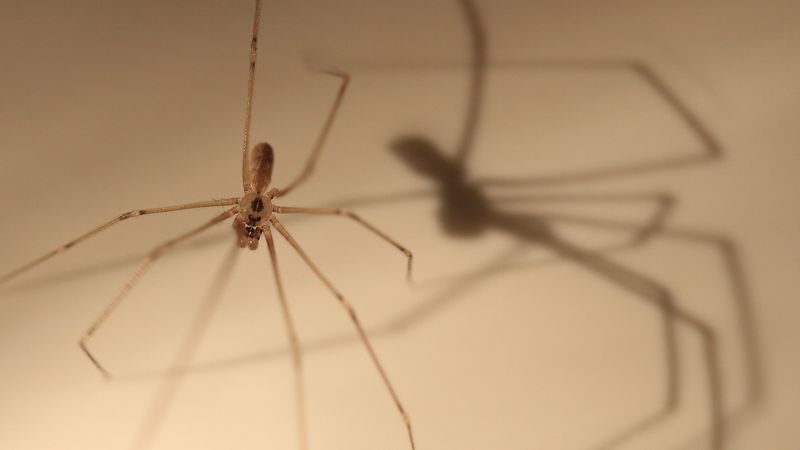
You have probably heard it on the playground. Daddy longlegs supposedly have the strongest venom in the world, but their fangs are too short to bite people.
Fun story, but it does not hold up. No study has shown cellar spider venom to be especially dangerous to humans.
The myth got so popular that the TV show MythBusters tested it in 2004. One host let a cellar spider bite him and reported only a mild, brief sting.
University extension experts, including entomologists across the Southeast, describe these spiders as harmless to people. Their venom works well on tiny insects and other spiders.
It simply is not built for mammals. They also rarely try to bite. A cellar spider would much rather vibrate its web or scurry off than confront a giant human hand.
So if a child asks you about that scary rumor, you can share the real answer. The spider is a skilled hunter of small creatures, not a threat to your family or pets.
Honestly, the truth is a better story anyway. It is a tiny spider that outsmarts bigger spiders, which beats a made-up legend every time.
Watch That Cellar Spider Web Start Spinning Like A Blur
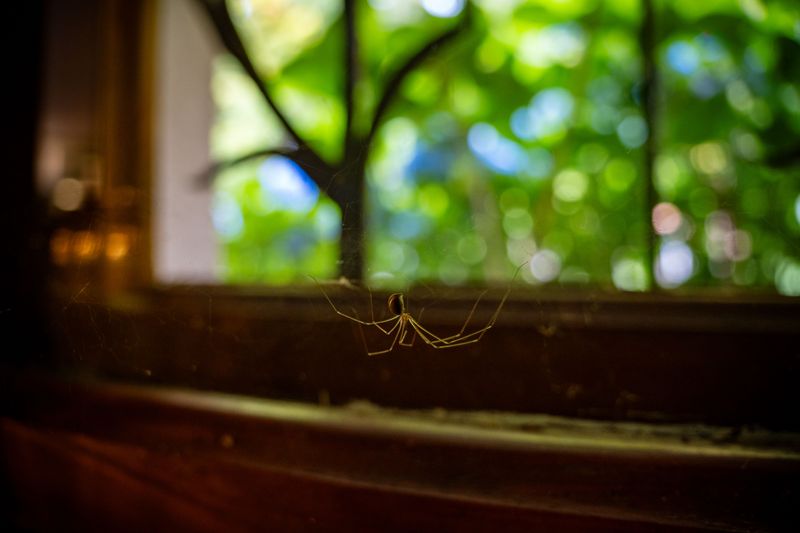
Tap near one gently and watch what happens. The spider may start whirling its body so fast it turns into a fuzzy smudge. Scientists call this whirling or web shaking. It seems to serve as a defense trick.
A predator, like a hungry bird or a hunting spider, has a hard time aiming at something that suddenly looks blurry and hard to pin down.
I tried this once with a pencil tip, keeping my distance. The spider shook for a few seconds, paused, and then shook again when I moved. It was like watching a tiny washing machine on spin cycle.
Some cellar spiders also drop from their web or scoot to a far corner when bothered. Their thin legs let them move with surprising speed.
Their webs look sloppy compared with the neat wheels of garden orb weavers. That messy design is intentional, though. The tangled lines snag crawling and flying prey from many directions at once.
Next time you spot one, skip the swatting and try a gentle observation instead. Kids especially love this little show, and it is a great way to spark curiosity about backyard and household wildlife.
Damp Basements Give These Leggy Spiders Everything They Want
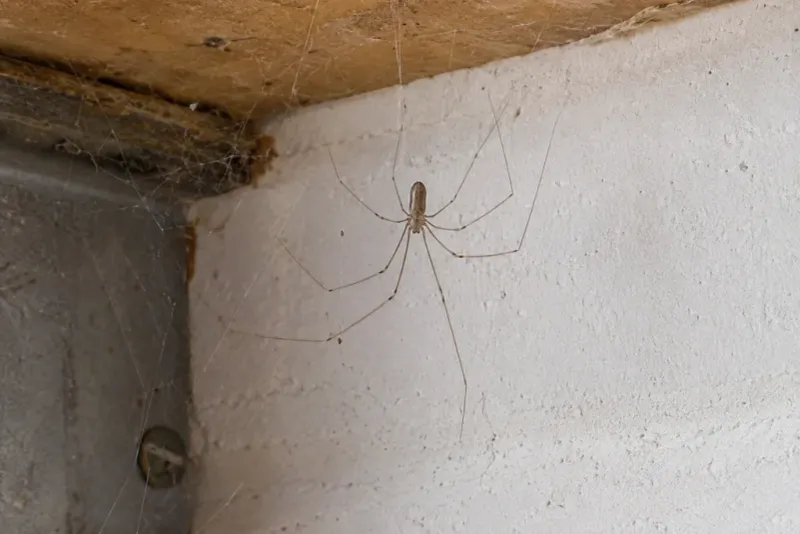
Cellar spiders earned their name honestly. Dark, slightly damp rooms are their favorite hangouts.
The humid climate across much of Alabama makes basements, crawl spaces, garages, and utility rooms especially inviting. Moisture also attracts the small insects and other critters they eat. More bugs mean better hunting, and better hunting means more spiders.
You will often find them near water heaters, sump pumps, laundry machines, and under stairs. They also settle into ceiling corners, window wells, and behind stored boxes that rarely get moved.
If your home sits on a slab without a basement, check closets, bathrooms, and the garage. Many Southern houses host them in porch ceilings too.
A sudden jump in cellar spiders is often a clue about your house. It can hint at extra moisture or a healthy population of insects moving around indoors.
A simple hygrometer from the hardware store can tell you a lot. Many experts suggest keeping indoor humidity roughly between 30 and 50 percent.
A dehumidifier in a damp basement helps both your stored belongings and your spider count. Think of these spiders as tiny messengers. They are telling you where the bugs are.
Mama Cellar Spiders Carry Their Eggs In Their Fangs
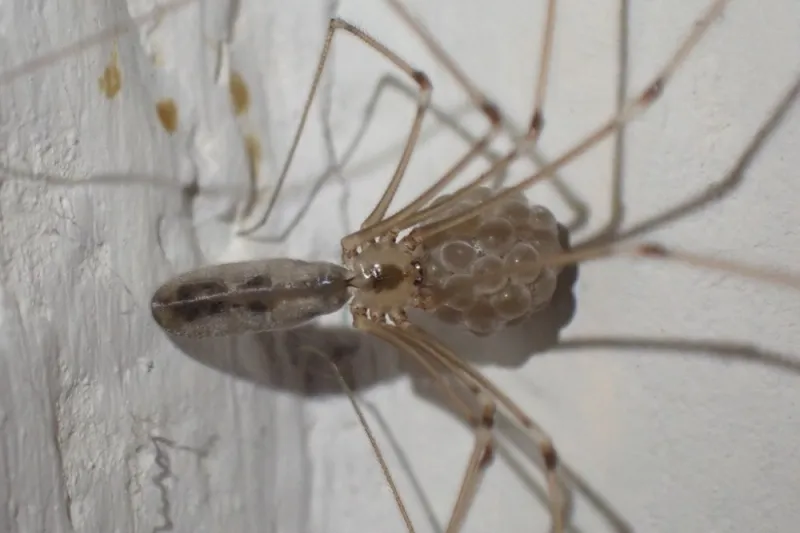
Talk about a devoted parent. A female cellar spider in Alabama holds her eggs in her mouthparts until they are ready to hatch.
She wraps a small batch of eggs in a thin layer of silk, so you can actually see the round eggs through it. Then she grips that bundle in her chelicerae, the jaw-like parts near the front. She carries it around for weeks while still hanging in her web.
After the spiderlings hatch, they stay close for a short time. They look like pale, miniature versions of their mother, all legs and barely any body.
Cellar spiders can live a surprisingly long time for such delicate creatures. Many reach two years or more indoors, and they can breed in any season inside a heated Alabama house.
If you spot a spider holding what looks like a tiny cluster of beads, that is a mom on duty. You can relocate her gently along with the eggs if she is in a bad spot.
I find this one of the sweetest surprises in the bug world. Who knew an Alabama basement corner could hold such careful parenting?
Keep Those Wispy Webs Under Control Without Harsh Sprays
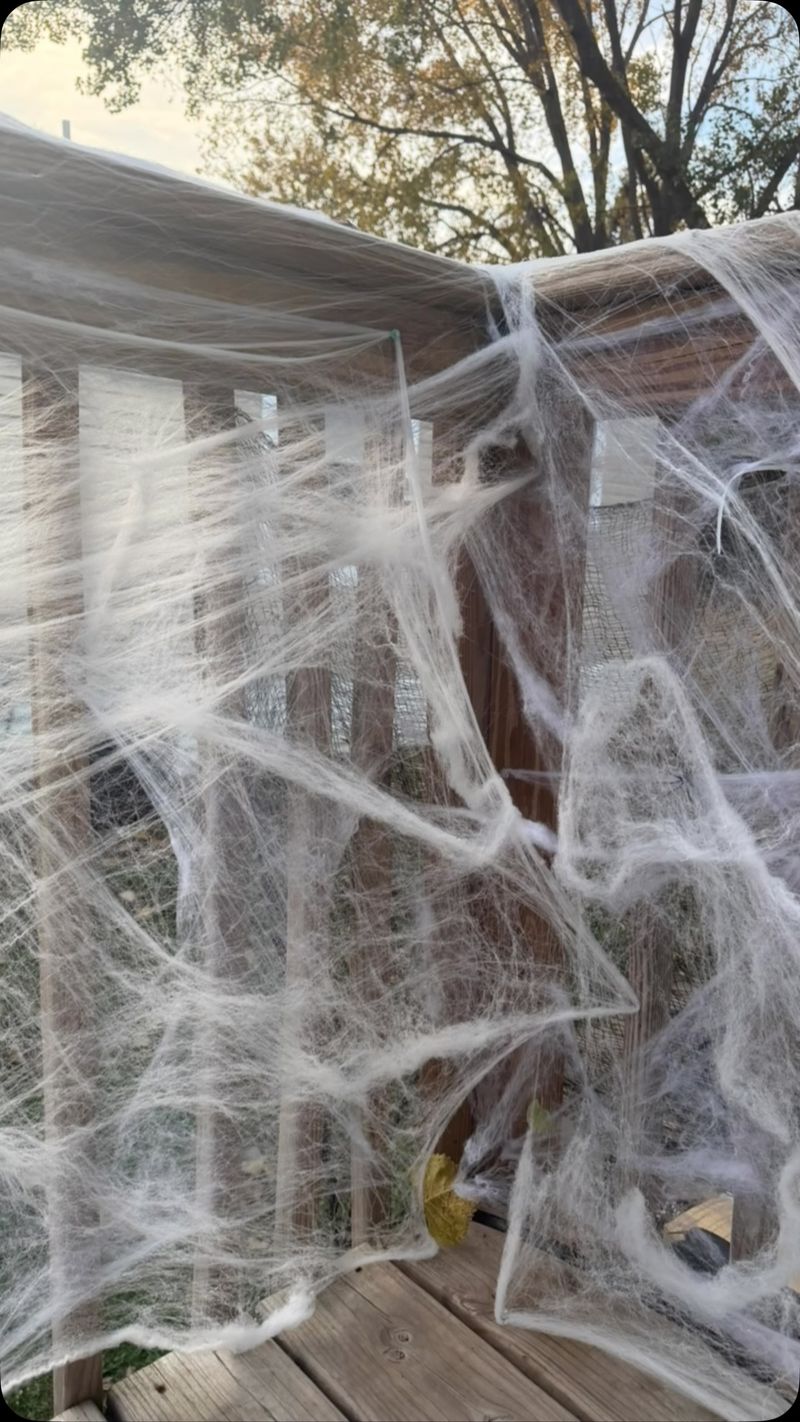
Living with a few cellar spiders is fine. Still, nobody wants dusty cobwebs draped over the holiday decorations.
A vacuum with a long wand is your best friend here. It removes webs, spiders, and egg sacs in one quick pass. Empty the canister or bag outside afterward.
Prefer a gentler approach? Slide a cup over the spider, tuck a piece of paper underneath, and move it to a shed, garage, or woodpile. Cellar spiders do poorly in harsh outdoor weather, so a sheltered spot works best.
Extension services generally say broad pesticide sprays are not very useful against indoor spiders. They also expose your family and pets to chemicals for little benefit. Sticky traps placed along walls can help you monitor what is crawling around.
The real long-term fix is cutting their food supply. Fewer insects indoors means fewer spiders sticking around.
Seal gaps around doors, windows, and pipes with caulk or weatherstripping. Switch outdoor bulbs to yellow or warm LED lights, which attract fewer night-flying bugs.
Declutter boxes and use sealed plastic bins instead of cardboard. A little routine cleaning every few weeks keeps things tidy.
Your Basement Daddy Longlegs Might Deserve A Little Corner Of Its Own
Here is my honest take after years of sharing a house with them. A couple of cellar spiders in an out-of-the-way corner are worth keeping.
They catch mosquitoes, gnats, and moths. They hunt other spiders you may like a lot less. They pose no real danger to people or pets, and they ask for nothing but a quiet spot.
I leave one or two in the basement corners and clear webs from places we use daily. That balance keeps the house clean while letting these helpers do their thing.
Of course, comfort matters too. If spiders make you anxious, relocating them is a kind and reasonable choice. There is no wrong answer here.
What I hope you take away is a new way of looking up. That wispy shape on the ceiling is a skilled, fascinating hunter with an odd dance, a devoted mom instinct, and a quiet job keeping your home’s bug numbers in check.
Next time you spot those long legs in your Alabama basement, give it a second look before reaching for the broom. You might find yourself rooting for the little hunter instead.