A Rarely Seen New Jersey Creature Is Laying Eggs Where There Is No Water Yet
Right now, a striped mother guards eggs in a pond you would call empty. She breeds in fall, while her closest relatives stubbornly hold off until spring.
Across New Jersey, she crawls beneath soggy logs in dry vernal pool basins. There, she lays her eggs and curls her body around them. Then she stands watch for weeks until fall storms flood the hollow.
Water triggers the hatch, and larvae swarm the new pool. Those larvae keep growing under ice while you wait out winter. By spring, they are big enough to eat rival larvae nearby.
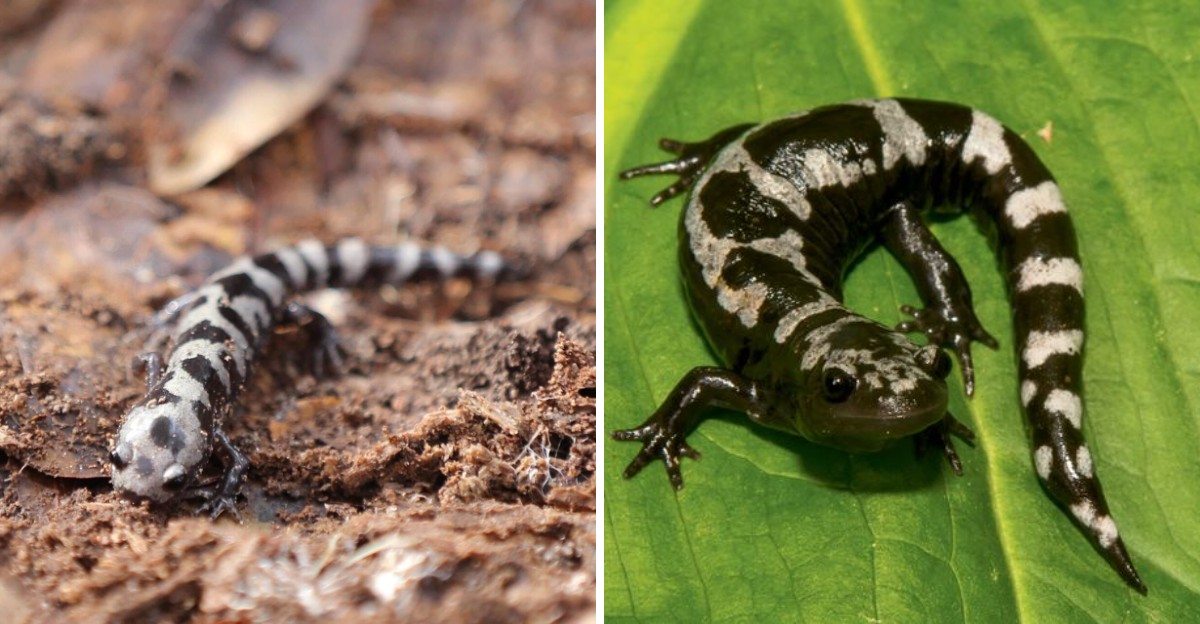
Look closely, and you will see males in white bands, females in silver. Each adult matches a new crayon in length. Yet you could hike New Jersey trails for years without spotting them. Here is how this hidden nursery works, and how you protect it.
A Salamander That Nests In Dry Pool Beds
Forget everything you learned about frogs laying eggs in ponds. The marbled salamander does things backward, and that odd twist is exactly what makes it so special.
Each fall, female marbled salamanders crawl into dry, bowl-shaped dips on the forest floor. Those dips are vernal pools, low spots that fill with rain and snowmelt for part of the year.
By late summer, most vernal pools in New Jersey look like nothing more than muddy leaf piles. A mother tucks her eggs under leaves, logs, or moss inside the basin, often along its edges and slopes.
She usually lays somewhere between 50 and 200 eggs, depending on her size and health. Each egg is small, round, and wrapped in a firm jelly coating.
The plan is clever because these pools dry up before summer gets too hot. That means hungry fish cannot survive there, so the babies skip one of their biggest threats.
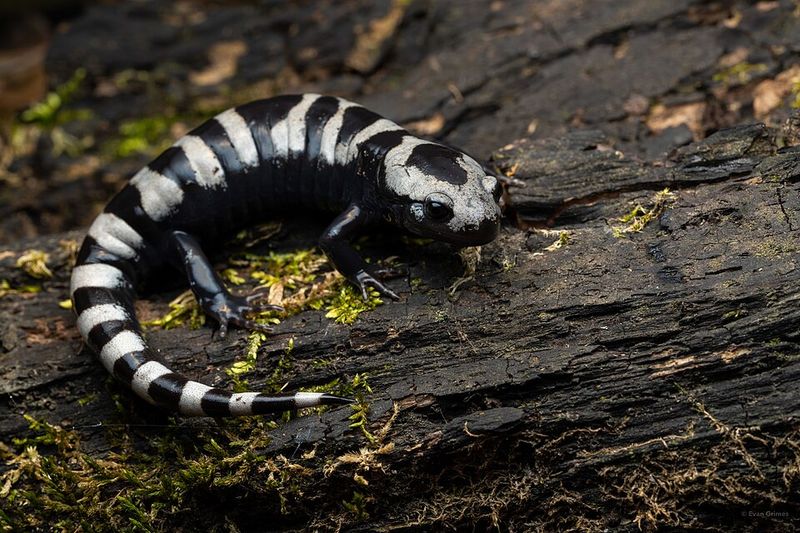
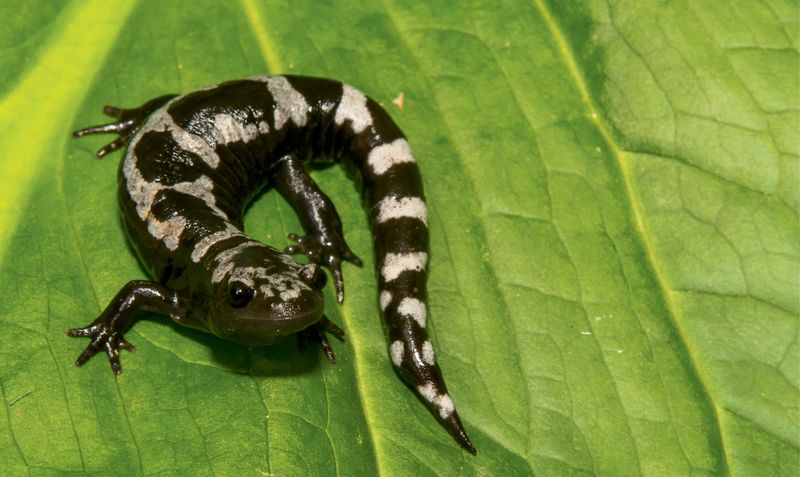
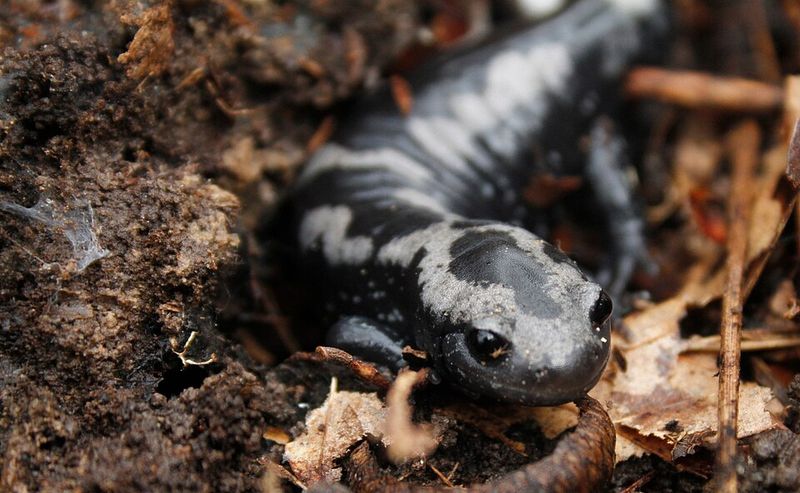
Adults are chunky little animals, usually about three and a half to four inches long from nose to tail. They wear bold black skin with bright bands of white or silver-gray across the back.
Males tend to show whiter stripes, while females sport softer gray markings. Both spend most of the year hidden underground, so spotting one feels like finding buried treasure.
In New Jersey, this salamander is officially listed as a species of special concern. Its unusual nesting habit is one reason scientists monitor many of its breeding pools.
The Autumn Rains That Start The Clock
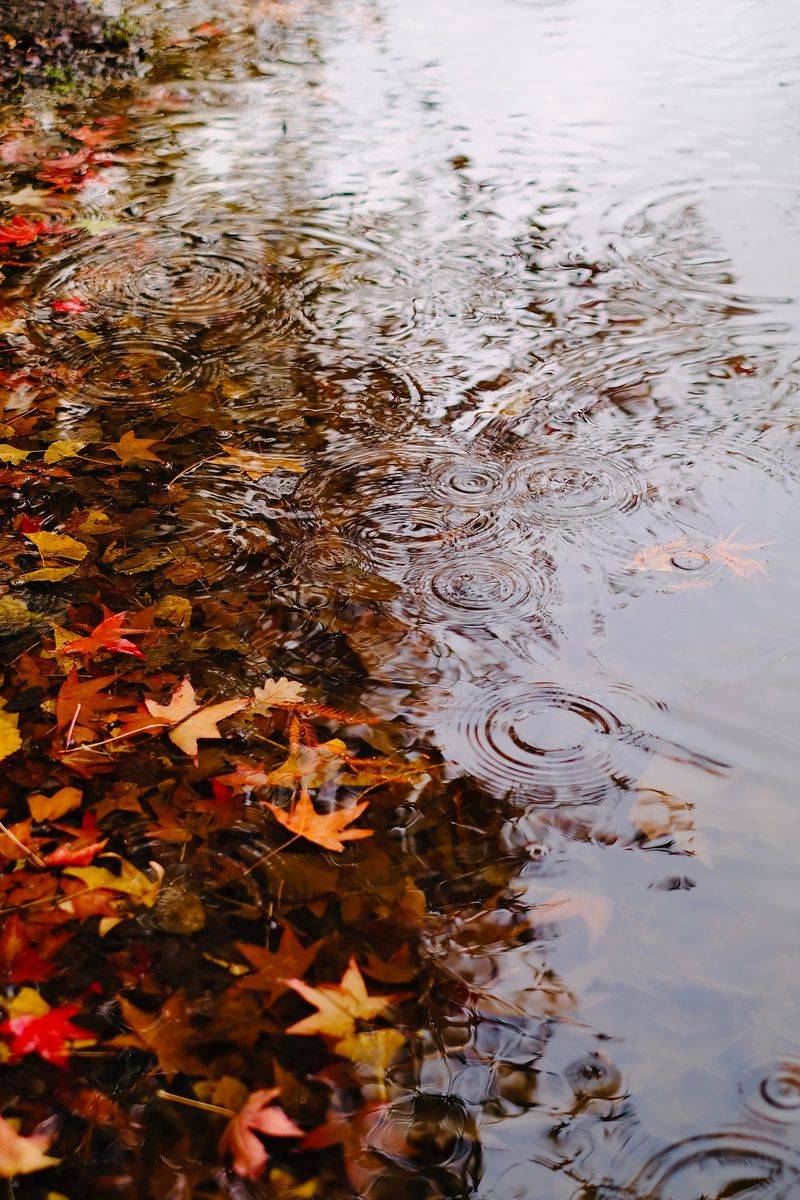
Grab a calendar, because September is prime time for this little amphibian. From early September through October, marbled salamanders across New Jersey begin their quiet autumn migration.
They wait for cool, rainy nights before leaving their underground burrows. Damp ground keeps their thin skin moist as they wander toward the nearest dry pool.
Males usually arrive first and perform a wiggly courtship dance with the females. After mating, each female picks a nest spot and settles in to lay her eggs.
Now comes the waiting game, which can last a few days or several long months. The eggs sit on land until heavy fall rains finally fill the pool with water.
Your New Jersey Garden Changes Every Week. Your Plan Should Too.
Gardening in New Jersey changes quickly throughout the season. Every Friday you’ll receive a simple weekly plan showing exactly what to plant, prune, fertilize, harvest, and protect so you never miss the right timing.
Here is the amazing part: the babies inside can develop and then pause. They stay ready inside their eggs, hatching soon after water rises around them.
If fall stays dry, some eggs even wait until winter rains or melting snow arrive. Scientists call this delayed hatching, and it helps the young survive unpredictable weather.
For nature lovers, this timing offers a rare chance to spot the adults. On a rainy September evening, scan the forest floor near low, leafy spots with a flashlight, but avoid flipping logs inside nesting basins.
If you lift a log away from a nesting basin, move it gently and put it back exactly as you found it. Salamanders breathe partly through their skin, so wet your hands first or skip touching them.
A good rule is to watch, snap a photo, and let them go about their business. Your patience keeps the whole autumn show running smoothly for next year too.
A Mother On Guard Under The Leaves
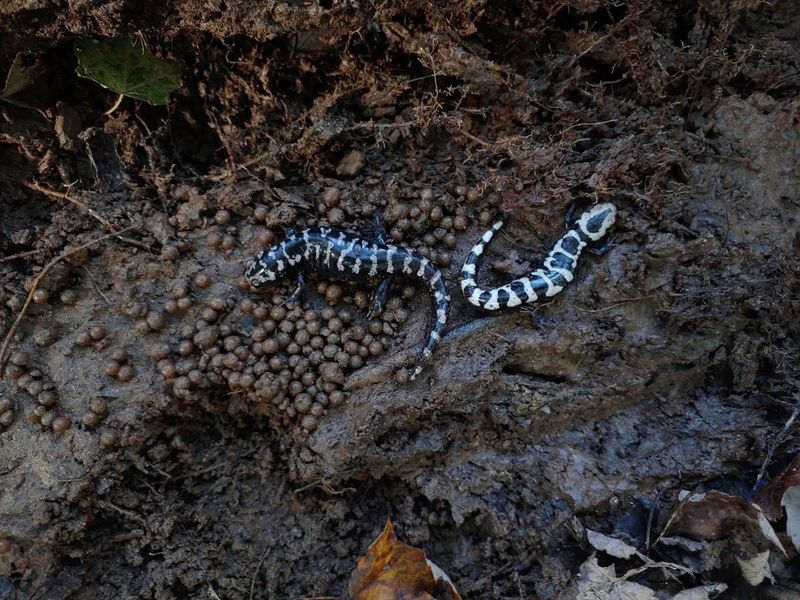
Plenty of amphibian parents lay their eggs and hop away without a second glance. Marbled salamander moms take a very different approach to raising a family.
After laying her clutch, the female curls her body around the eggs like a living blanket. She may stay there for days or even weeks, waiting patiently for the rain.
Her job is to keep the eggs from drying out in the autumn air. Her moist body helps hold in dampness when the soil starts to get crispy.
She also guards against hungry visitors like beetles, worms, and other small predators. Some researchers suspect her skin secretions may help protect the eggs from fungus, though evidence is limited.
Picture a tiny security guard in a black and white uniform, stationed under a rotting log. That image is surprisingly close to the truth in New Jersey woods each fall.
Sometimes a mother leaves before the water comes, especially if the wait drags on. The eggs can still make it, but survival rates are often higher when she stays.
This caring behavior is unusual among the region’s pond-breeding salamanders, which typically leave their eggs behind. It shows that even small, quiet creatures can be devoted parents in their own way.
If you ever lift a log and find a guarding female, lower it slowly and walk away. Disturbing her could cause her to abandon the nest, leaving the eggs unprotected.
Snap a quick photo if you can do it without moving anything. Then share your sighting with local wildlife groups, who love hearing about new nesting spots.
The Big Mistake Of Filling Low Spots
Imagine buying a house and seeing a soggy, muddy dip at the edge of the yard. Some homeowners are tempted to fill it with a truckload of dirt.
Unfortunately, that dip might be a vernal pool, and filling it wipes out a nursery. In September, the pool may look bone-dry, so people assume it serves no purpose.
That dryness is exactly what fools folks into thinking the spot is useless. Hidden under the leaves, a marbled salamander mom could be guarding dozens of eggs.
Other common mistakes include raking every leaf out of wooded low spots. Those leaves hold moisture, hide the eggs, and later feed tiny insects the larvae eat.
Driving ATVs or mountain bikes through dry pools can also crush eggs and pack down soil. Packed soil holds water poorly, which can shorten the time the pool stays wet.
Spraying lawn chemicals or strong fertilizers near these hollows causes trouble too. Rain washes those chemicals into the pool, where sensitive salamander skin soaks them right up.
Even well-meaning folks sometimes move salamanders to a pond they think looks nicer. Ponds usually hold fish, and fish happily gobble up salamander larvae like tiny snacks.
New Jersey’s wetland rules protect some vernal pools, depending on their location and classification. Before filling any low, wet spot, check with the New Jersey Department of Environmental Protection.
The lesson is simple and kind of freeing for busy homeowners. Sometimes the smartest yard work is leaving a muddy, leafy hollow exactly as it is.
Tiny Swimmers Beneath The Winter Ice
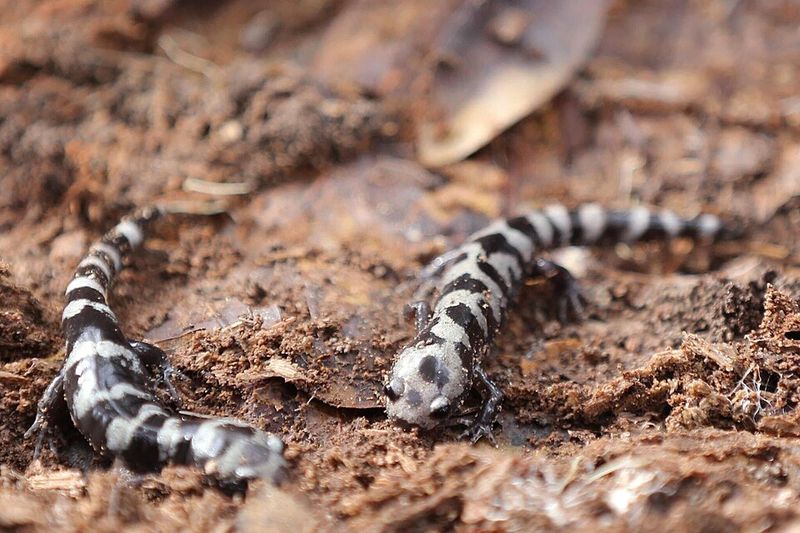
Once rain finally floods the nest, the eggs hatch within hours or days. Out wriggle tiny larvae, each about half an inch long, with feathery gills on their heads.
Those gills look like little pink flags waving in the water. They let the babies breathe underwater, just like a fish uses its gills.
Because they hatch in fall, marbled salamander larvae get a big head start. They spend the whole winter swimming under ice, eating tiny water fleas and insect larvae.
By spring, they are larger than the young of other salamanders that hatch later. That size lets them snack on the larvae of spotted salamanders and even small tadpoles.
Think of them as the big kids on the playground, first in line at lunch. It is a tough world in a vernal pool, and early birth pays off.
Around late May or June, the larvae lose their gills and grow lungs. Their skin darkens, and soon they crawl out onto land as small juvenile salamanders.
Young ones typically need one to two years before they are ready to breed. During that time, they live underground in burrows, under logs, and beneath thick leaf litter.
Adults may live eight to ten years or more, though wild lifespans are hard to measure. Some return to the very same pool where they hatched, year after year.
Scientists sometimes count larvae in spring to see how local populations are doing. More larvae means the pool and surrounding forest are working just the way nature intended.
Protection Plans For New Jersey Woodlands
You do not need a science degree to help. Simple choices around home and on the trail can make a real difference this fall.
Start by leaving leaf litter and fallen logs in wooded parts of your yard. Those messy corners give adults cozy hiding places and keep the ground cool and damp.
Keep a buffer of trees and shrubs around any low spot that floods in spring. Experts suggest protecting a wide ring of forest, since adults roam far from the pool.
On rainy fall nights, drive slowly on roads that pass near wooded wetlands. Salamanders crossing pavement are easy to miss, and a slower speed gives them a chance.
Groups like the Conserve Wildlife Foundation of New Jersey run volunteer programs for amphibians. Volunteers help count animals, record pools, and guide salamanders safely across busy roads each spring.
You can also share possible vernal pool locations with the New Jersey Division of Fish and Wildlife. Documented pools can receive added regulatory attention, which helps future generations of salamanders.
Skip pesticides and harsh chemicals, especially near low, leafy areas of your property. Natural gardening keeps insects around, and insects feed the whole salamander food chain.
Teach younger siblings or friends to look but not touch when exploring the woods. A curious kid today could become tomorrow’s wildlife biologist or park ranger.
Protecting one small, muddy hollow might seem like a tiny act in a big world. For a marbled salamander mom waiting on the rain, it means everything.