Native Plants For Western Pennsylvania That Thrive In Wet, Poorly Draining Soil
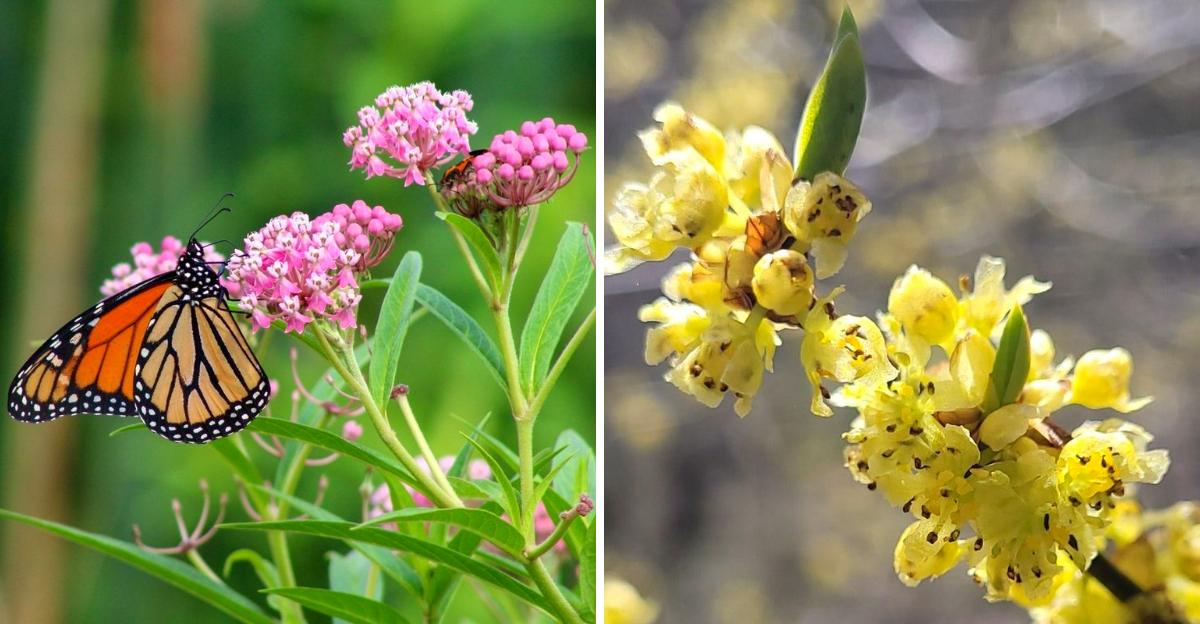
Western Pennsylvania clay has a personality, and that personality is stubborn. Heavy rain comes through, the ground seals up like it has somewhere to be, and suddenly that low corner of the yard is holding water long enough to have its own ecosystem.
If you have lost plants to soggy soil more than once, you are in very good company.
Most gardeners in this part of Pennsylvania have a spot like that, and most of them have also made the mistake of planting something completely wrong for it at least once.
Totally relatable. Here is the reframe though: wet, poorly draining soil is not a lost cause.
It is actually a specific set of conditions that certain native shrubs and perennials are genuinely built for.
The right plants do not just survive those soggy spots. They actually thrive in them.
1. Winterberry Brings Bright Berries To Wet Areas
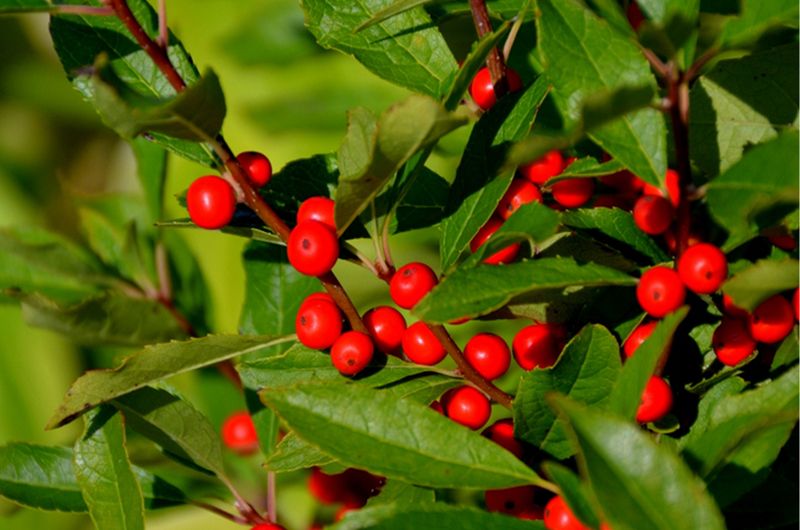
Few sights in a Western Pennsylvania winter garden stop people in their tracks quite like a winterberry shrub loaded with bright red berries.
This native holly, known botanically as Ilex verticillata, is one of the most reliable shrubs you can plant in a low spot that stays wet through much of the year.
Unlike many ornamental shrubs that sulk in soggy ground, winterberry was built for it.
Winterberry naturally grows along stream banks, pond edges, and wet woodland borders across Pennsylvania, so it already knows how to handle slow drainage and heavy clay.
It tends to thrive in full sun to part shade, and the wetter the site, the more it seems at home.
In autumn, after the leaves drop, the branches become covered in clusters of small, vivid berries that persist well into winter.
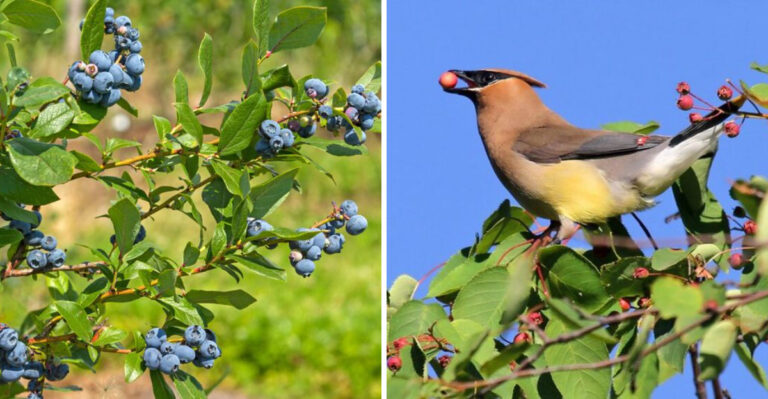
Those berries are not just decorative. Robins, bluebirds, cedar waxwings, and other birds rely on them as a food source during cold months when other options are scarce.
Winterberry typically reaches six to ten feet tall and wide, so it works well as a shrub border or a naturalized planting in a damp corner.
One thing to keep in mind is that you will need at least one male plant nearby to pollinate the female plants and get berry production.
Once established, winterberry asks for very little and gives back a great deal of seasonal interest.
2. Red Osier Dogwood Adds Strong Color Through Winter
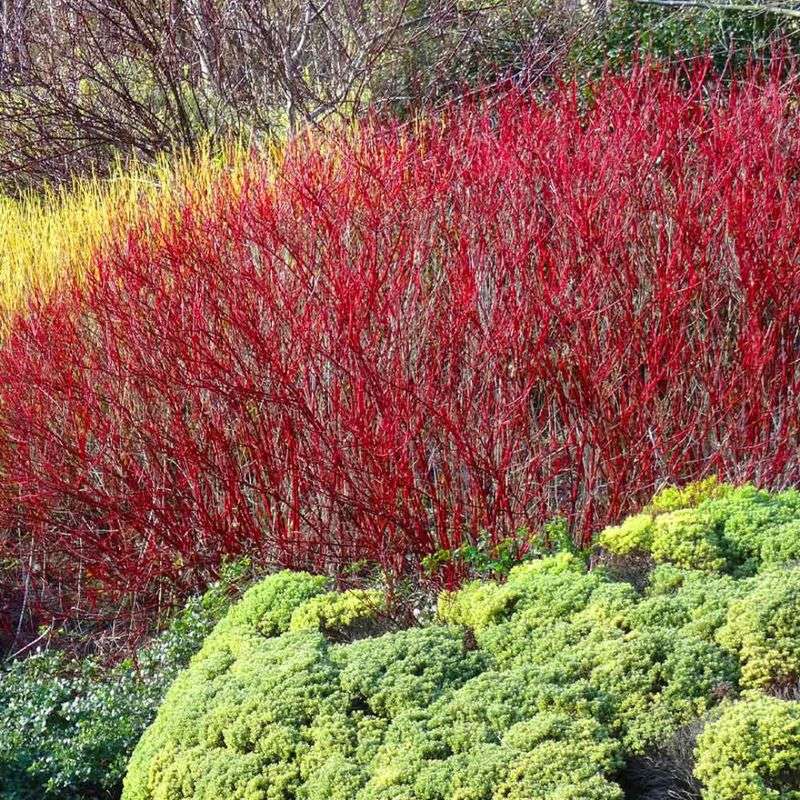
When most shrubs fade into dull brown and gray through a Western Pennsylvania winter, red osier dogwood puts on a show that is hard to ignore.
The stems of this native shrub turn a deep, saturated red once temperatures drop in autumn, and that color holds through the coldest months.
It is one of those plants that makes a soggy, low-lying bed look completely intentional.
Cornus sericea, as it is formally known, is native to moist woodland edges and stream margins across Pennsylvania. It handles wet, poorly draining soil with ease and can even tolerate brief flooding without much trouble.
In spring, clusters of small white flowers appear and attract a range of native bees and other pollinators. Those flowers give way to small white berries in summer that birds find quite appealing.
Your Pennsylvania Garden Changes Every Week. Your Plan Should Too.
Gardening in Pennsylvania changes quickly throughout the season. Every Friday you’ll receive a simple weekly plan showing exactly what to plant, prune, fertilize, harvest, and protect so you never miss the right timing.
Red osier dogwood spreads gradually through root suckers, which means it can fill in a wet area over time and help stabilize soil along slopes or drainage channels.
In a residential garden, occasional pruning keeps it tidy and actually encourages the brightest stem color, since the youngest growth tends to be the most vivid.
It grows well in full sun to part shade, though more sun generally means richer stem color in winter. For Western gardeners looking to add structure and year-round interest to a wet bed, this shrub is a dependable and rewarding choice.
3. Black Chokeberry Brings Multi-Season Interest
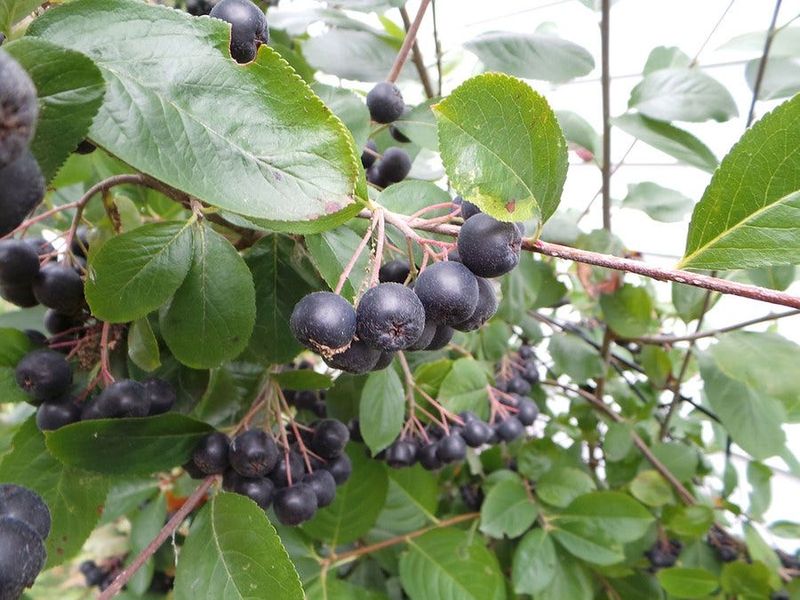
Soggy garden beds do not have to mean sacrificing seasonal variety, and black chokeberry makes that case beautifully. Aronia melanocarpa is a compact native shrub that delivers something worth noticing in nearly every season.
White flower clusters open in spring and attract early pollinators. By late summer, the branches are loaded with small, dark berries.
Then autumn arrives and the foliage shifts into shades of deep red and orange that rival many showier ornamentals.
What makes black chokeberry especially useful for Western Pennsylvania landscapes is its genuine tolerance for wet, heavy soil.
It grows naturally in low-lying areas, boggy edges, and moist thickets across Pennsylvania, so it handles slow drainage and clay-heavy ground without complaint.
It also adapts to drier conditions once established, which makes it flexible for sites that fluctuate between wet and moderately dry depending on the season.
Mature plants typically reach three to five feet tall and can spread gradually through root suckers to form a dense, layered mass that works well as a low screen or a naturalized border planting.
Birds are drawn to the berries in late summer and autumn, and the plant provides good nesting cover as well.
Black chokeberry grows best in full sun to part shade, with fuller sun tending to produce more flowers, heavier berry crops, and stronger fall color. For a wet corner that needs year-round visual interest without a lot of fuss, this native shrub earns its space.
4. Spicebush Adds Beauty To Moist Garden Spaces
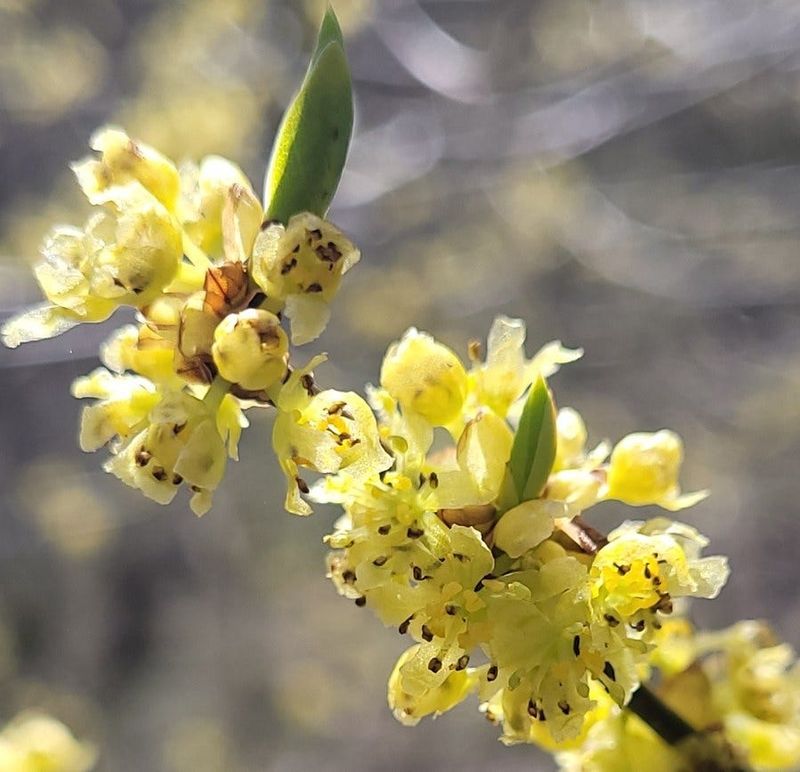
Early spring in Western Pennsylvania can feel like it drags on forever, which is exactly why spicebush deserves more attention in home landscapes.
Lindera benzoin is one of the first native shrubs to bloom each year, pushing out clusters of tiny, fragrant yellow flowers along its bare branches before most other plants have even thought about waking up.
In a wet, shaded corner of the yard, that early color is genuinely welcome.
Spicebush is native to moist woodland understories and stream-side thickets across Pennsylvania, which makes it a natural fit for low spots with slow drainage and heavy soil.
It handles part shade to full shade quite well, making it one of the better options for wet areas that do not receive much direct sunlight.
In autumn, female plants produce small, glossy red berries that ripen just as migratory birds are passing through, and those berries are a high-energy food source that thrushes, vireos, and other species actively seek out.
The foliage turns a warm, clear yellow in fall before dropping, giving the shrub one more moment of seasonal interest before winter sets in.
Spicebush typically grows six to twelve feet tall and works well in naturalized plantings, rain gardens, and shaded low spots near structures or fences.
The leaves and stems carry a pleasant spicy fragrance when brushed or broken, which adds a sensory layer that most ornamental shrubs simply cannot offer. It is an underused native that rewards gardeners who give it a chance.
5. Buttonbush Brings Unusual Blooms And Backyard Life
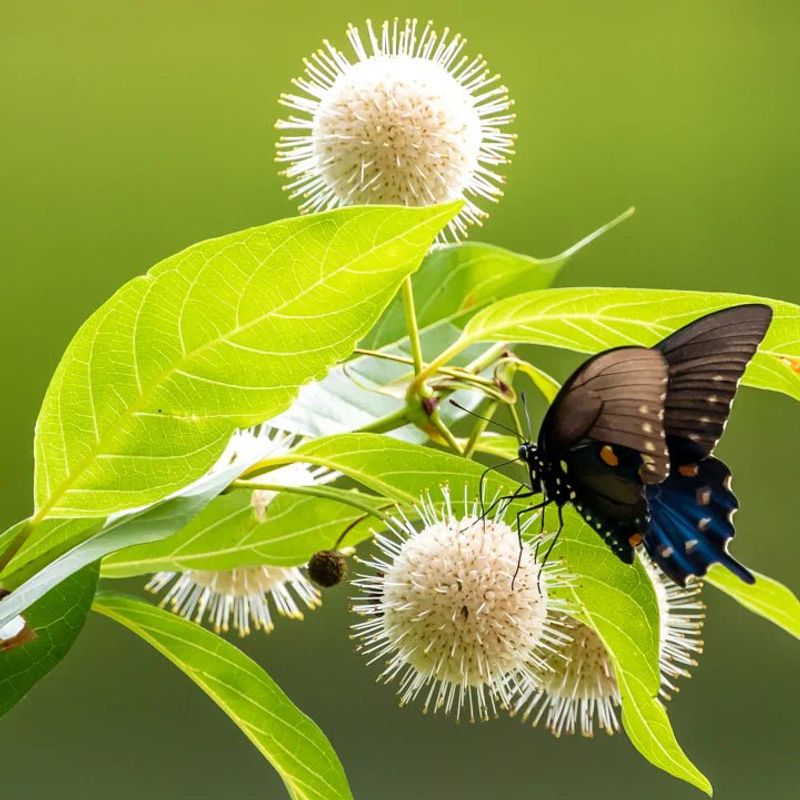
There is nothing quite like the look of buttonbush in full bloom. Cephalanthus occidentalis produces round, spiky white flower heads that look almost otherworldly, earning it nicknames like honeyballs and globe flower.
These blooms appear in midsummer, right when many other native shrubs have finished flowering, which makes buttonbush a useful plant for keeping a wet garden area active through the middle of the season.
Buttonbush is native to swamps, pond margins, and floodplain edges across Pennsylvania, so it is genuinely built for wet conditions.
It can handle standing water for extended periods, which makes it one of the more reliable options for spots that drain very slowly or stay saturated well into summer.
Full sun tends to produce the most vigorous growth and the heaviest flower display, though it will manage in part shade as well.
The blooms are exceptional for pollinators. Bees, butterflies, and hummingbirds are all drawn to the nectar-rich flowers, and the round seed heads that follow provide food for waterfowl and songbirds into autumn and winter.
Buttonbush can grow quite large over time, sometimes reaching six to twelve feet tall and wide, so it works best in spacious low spots, rain garden edges, or naturalized wet borders rather than tight planting beds.
For Western Pennsylvania gardeners dealing with a perpetually soggy area that needs both structure and wildlife value, buttonbush is one of the most capable and visually interesting native shrubs available.
6. White Turtlehead Adds Fresh Color To Wet Soil
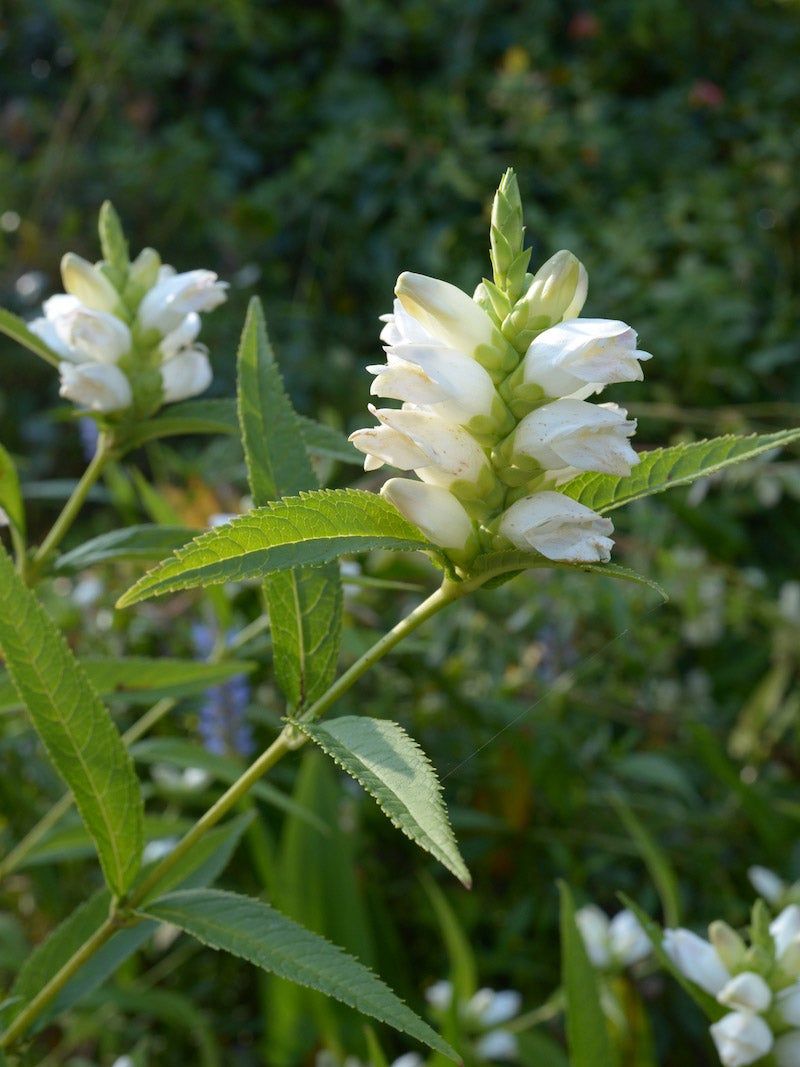
Runoff after a heavy summer storm tends to pool in certain spots, and those low areas can be frustrating to plant. White turtlehead, Chelone glabra, is a native perennial that treats those wet, slow-draining pockets as prime real estate.
The flowers are tubular and slightly puffy, resembling the head of a turtle peeking out from its shell, which gives the plant its memorable common name and a certain quirky charm.
Blooming from late summer into early autumn, white turtlehead fills a gap in the native garden calendar when many perennials are winding down.
It grows naturally along stream banks, wet meadows, and moist woodland edges throughout Pennsylvania, so it is well adapted to the kind of heavy clay and slow-draining soil that shows up in many Western yards.
It prefers part shade to full sun and consistently moist to wet conditions throughout the growing season.
One of the most compelling reasons to include white turtlehead in a wet planting is its relationship with the Baltimore checkerspot butterfly, a striking native butterfly that uses turtlehead as a host plant for its caterpillars.
Adding this plant to a moist garden bed can support that butterfly’s life cycle in a very direct way.
White turtlehead grows two to three feet tall and spreads gradually over time, forming attractive clumps that work well at the edge of rain gardens, along drainage swales, or in any consistently moist border planting.
7. Swamp Milkweed Brings Pollinator Value And Summer Bloom
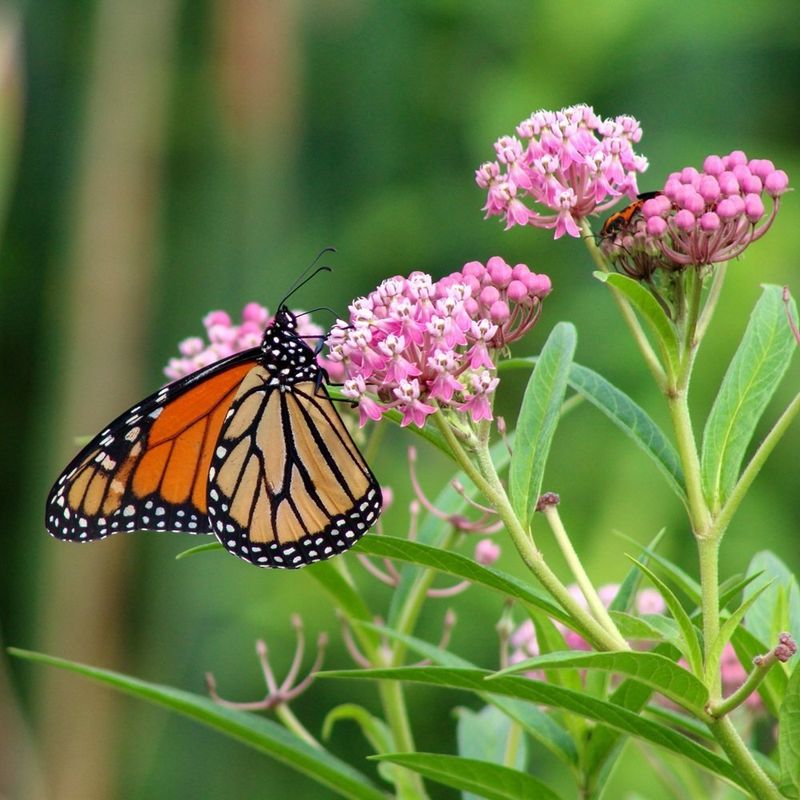
Monarch butterflies passing through Western Pennsylvania during their late-summer migration need reliable milkweed, and swamp milkweed delivers in wet spots where common milkweed may not perform as well.
Asclepias incarnata is a robust native perennial with clusters of rosy-pink flowers that bloom from midsummer into early autumn, drawing monarchs, swallowtails, bumblebees, and a wide range of other pollinators in impressive numbers.
Unlike some milkweeds that prefer dry or sandy soil, swamp milkweed is right at home in wet, heavy ground.
It grows naturally in marshes, wet meadows, and stream-side areas across Pennsylvania, and it handles the kind of slow-draining clay soil that is common in many Western Pennsylvania residential yards.
Full sun tends to produce the best growth and flowering, though it can manage with a few hours of afternoon shade if needed.
Swamp milkweed grows three to four feet tall with upright, sturdy stems that hold up well through summer storms without flopping over. After the flowers fade, long seedpods form and eventually split open to release silky-plumed seeds that drift on the breeze.
Those pods add textural interest to the late-season garden, and the dried stems provide some winter structure before being cut back in early spring.
For anyone trying to support pollinators while also solving a wet-soil problem in a sunny bed, swamp milkweed is one of the most productive and rewarding native perennials you can plant in Pennsylvania.
8. Great Blue Lobelia Adds Rich Blue Color Late In The Season
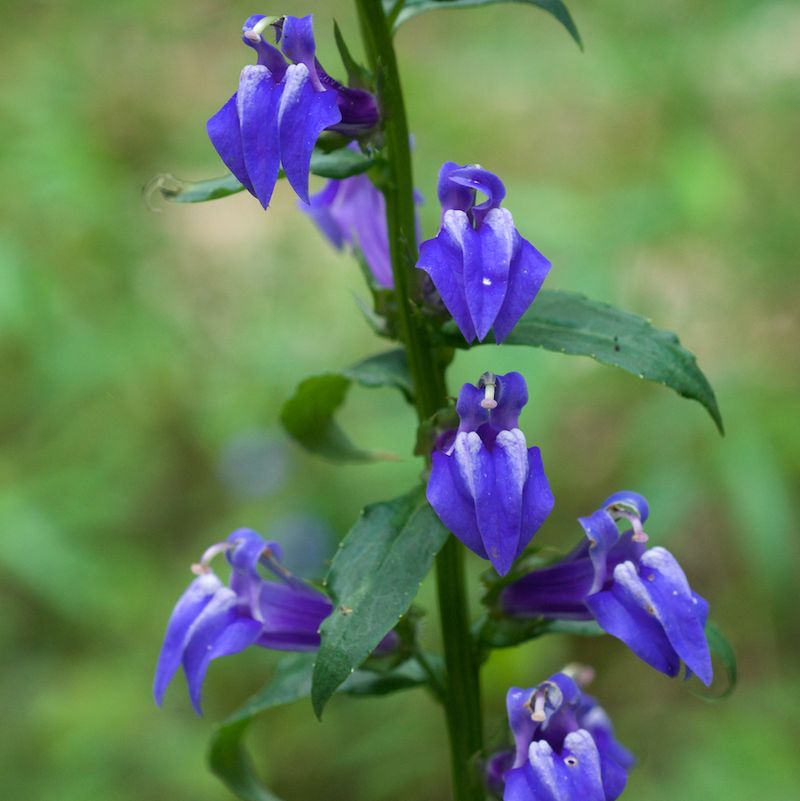
By late summer, blue flowers are genuinely hard to find in most garden beds, which makes great blue lobelia stand out in a way that is almost startling.
Lobelia siphilitica pushes up tall spikes of rich blue to blue-violet flowers from late summer into early autumn, providing color and pollinator activity at a time when many plants are already fading.
In a wet, low-lying bed that tends to look tired by August, this native perennial is a real asset.
Great blue lobelia grows naturally along stream banks, wet meadows, and moist woodland edges throughout Pennsylvania.
It handles wet, poorly draining soil well and actually tends to perform better in consistently moist conditions than in soil that dries out between rains.
Part shade to full sun both work, though some afternoon shade can help the plant hold up better through hot, humid Western Pennsylvania summers.
Hummingbirds are strongly attracted to the tubular flowers, and bumblebees work the blooms steadily as well.
The plant grows two to three feet tall and tends to self-seed modestly in favorable conditions, which means a small planting can gradually expand into a more substantial colony over a few seasons.
Great blue lobelia pairs naturally with swamp milkweed, white turtlehead, and cardinal flower in wet native plantings, creating a layered late-season display that supports wildlife.
It gives a rain garden or moist border a finished, intentional look through the end of the growing season.