Tennessee Yards Are Filling With Strange Green Brain Like Fruit That Locals Swear Repels Spiders
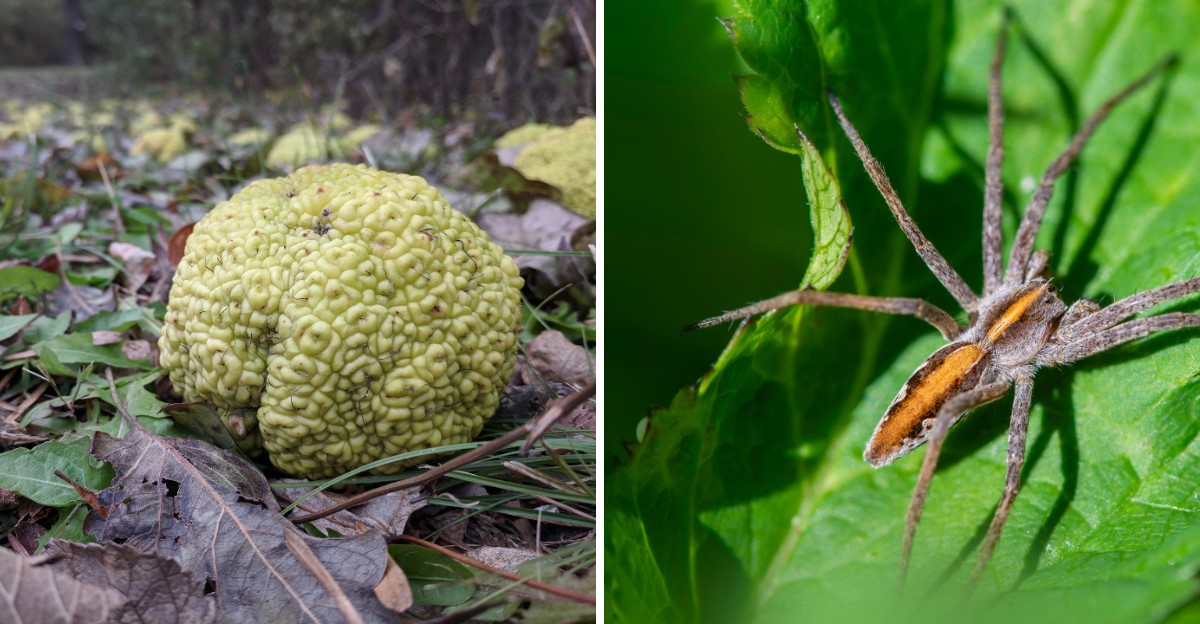
A thud lands in your yard before you even glance outside. Something green and heavy just dropped near your feet.
Tennessee greets you with strange globes each September morning. You bend down and pick one up, curious. Sticky residue coats your fingers within seconds.
Its faint citrus scent surprises you instantly. Neighbors near you in Tennessee have gathered these for generations. They tell you these globes keep spiders and bugs away. Science offers you a sharper story than folklore.
Farmers once showed you how these became living fences. Their wood could arm you with a reliable bow. Wrinkled skin gives you an alien texture. Squirrels near you tear them apart for hidden seeds. Nobody can tell you if the smell repels insects.
Researchers keep testing the claim you have heard. Meanwhile, piles keep growing in your yard across the state. What happens next reshapes the story you thought you knew.
Those Bumpy Green Globes Have A Name
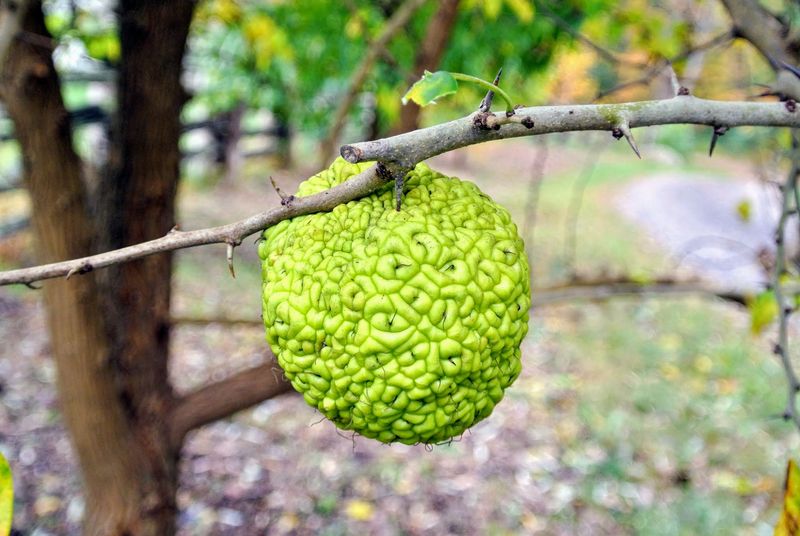
Picture a softball reshaped into deep ridges and knots, then somehow sprouting leaves. That lumpy, chartreuse ball rolling across Tennessee lawns comes from Maclura pomifera, better known as Osage orange or hedge apple.
Despite the nickname, it is not related to oranges at all. The tree sits in the mulberry family, which explains the sticky white sap that oozes out when a fruit gets cracked open.
Each fruit is actually a cluster of many tiny fruits fused together, which is why the surface looks like brain coral or a wrinkled golf ball. Sizes range from a tennis ball to a grapefruit, and a single tree can drop hundreds in a few weeks.
The smell surprises people the first time. Fresh ones give off a faint citrus-cucumber scent, a little like the inside of a fresh melon rind, and that aroma sits at the center of the spider stories.
Trees grow thorny branches, deeply furrowed bark, and glossy leaves that turn buttery yellow in fall. Only female trees carry fruit, so two neighbors can own the same species and have wildly different yard cleanup chores.
Tennessee has plenty of them thanks to farmers who planted long hedgerows in the 1800s before barbed wire spread. Those living fences were pruned into thick barriers that held cattle in place.
Today the leftovers line back roads, creek banks, and older property lines across the state. Once you spot one, you tend to notice them everywhere.
Why Tennessee Yards Fill Up In Early September
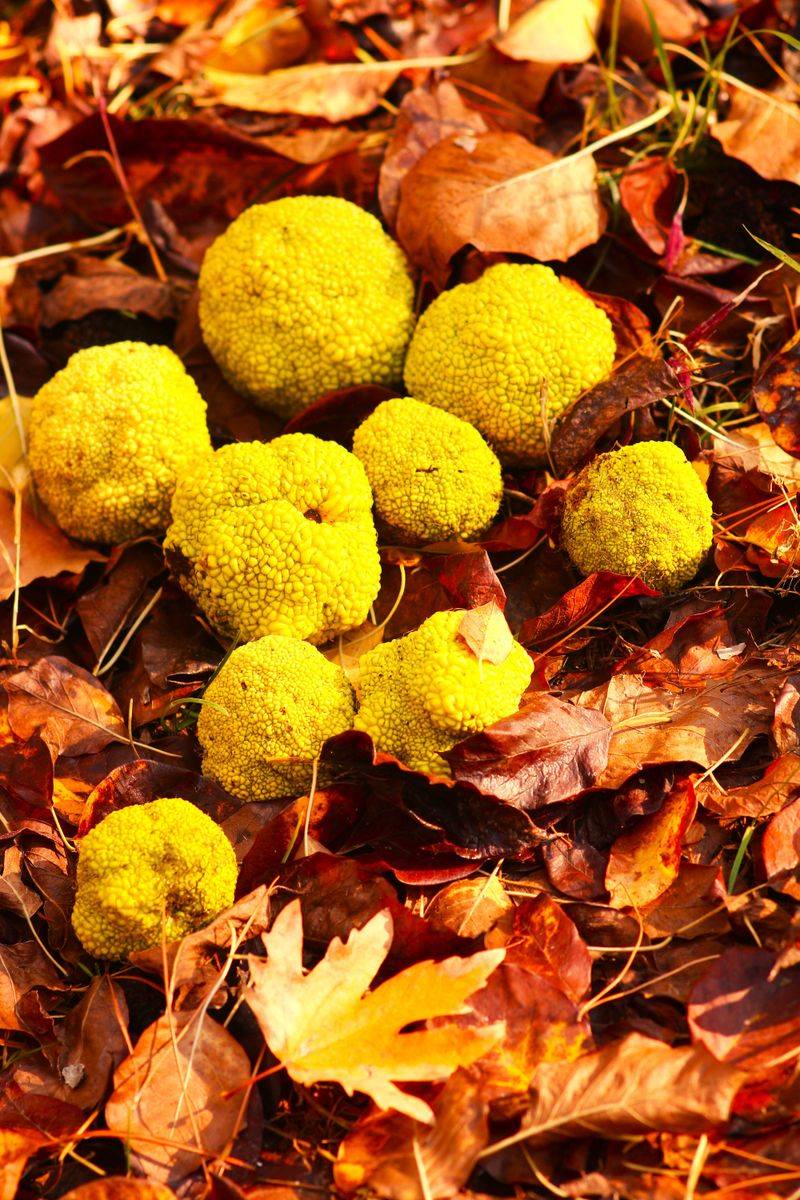
Early September is when the thumping starts. Fruit that swelled quietly all summer ripens from hard green to a softer yellow-green, and gravity takes over.
Warm days, cooler nights, and late-summer storms loosen the stems. A gusty evening can leave a dozen bumpy globes scattered under one tree by morning.
Tennessee’s growing season gives these trees a long runway. Spring bloom happens quietly in April and May, then the fruit spends roughly four months bulking up to softball size.
Drop season usually runs from early September through November across the state, though timing can vary depending on local temperatures and elevation.
Your Tennessee Garden Changes Every Week. Your Plan Should Too.
Gardening in Tennessee changes quickly throughout the season. Every Friday you’ll receive a simple weekly plan showing exactly what to plant, prune, fertilize, harvest, and protect so you never miss the right timing.
Squirrels speed things along by gnawing fruit apart for the seeds inside, and their leftovers hit the grass in shreds. Deer nibble the softened ones later in the season.
Rainfall matters too. A wet August tends to produce heavier, juicier fruit, while a dry stretch leaves smaller, lighter orbs that shrivel faster once they land.
If you have a female tree near a driveway, plan for it now. Park a few feet farther out, since a heavy fruit falling from a tall branch can dent a hood or crack a windshield.
Mowing gets messy during peak drop, so rake or gather first. Blades turn the fruit into sticky confetti that glues grass clippings to your shoes and deck boards.
Neighbors trading buckets of them on porches is a familiar September sight in small Tennessee towns.
The Spider Legend And What Science Found
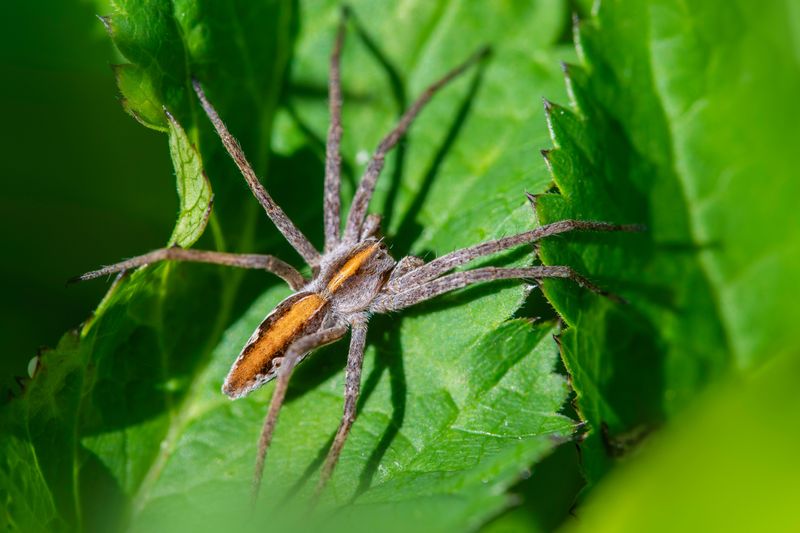
Grandmothers across the South have sworn by the same trick for generations. Tuck a hedge apple in the basement corner, and spiders supposedly pack up and leave.
Some studies have looked into the claim and found something interesting. Compounds in the fruit, including two called elemol and osajin, have shown repellent activity against certain insects in lab settings.
The catch is concentration. Scientists had to extract and purify those chemicals to see clear results, and a whole fruit sitting on a shelf releases only a trace of them into the air.
Entomologists generally rate the sliced or whole fruit as weak protection at best. A hedge apple in the garage is unlikely to clear out an established spider population.
Still, plenty of Tennessee families report fewer eight-legged visitors after setting a few out. Part of that may be timing, since spiders naturally move around in fall as temperatures shift.
There is no harm in trying, and the fruit is free if a tree grows nearby. Think of it as folklore with a pleasant scent rather than a guaranteed shield.
Slicing a fruit in half releases more aroma and more of those compounds, though it also speeds up molding. Wrapping the halves in a shallow dish helps contain the sticky sap.
For real results, pair the experiment with sealing gaps around doors, vacuuming corners, and clearing clutter where webs form. Those steps do the heavy lifting while the green orbs handle the charm.
Smart Placement Tips If You Want To Try It
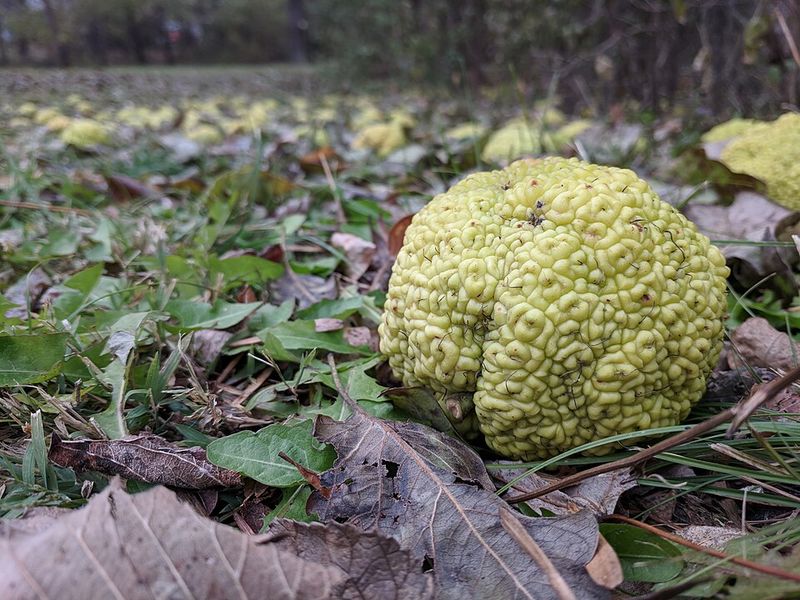
Ready to run your own experiment? Setting hedge apples out takes about ten minutes and a little planning.
Pick firm, bright green fruit without soft brown patches. Those stay fresh for two to three months in a cool basement, while bruised ones turn mushy within weeks.
Place each one on a saucer, a scrap of cardboard, or a paper plate. The sap that seeps out can stain concrete, wood, and carpet, and it is stubborn once it dries.
Basement corners, crawl space entries, under sinks, behind the water heater, and along garage walls are the spots folks favor. Two or three per room is plenty.
Keep them away from areas where pets sniff and chew. The fruit is not considered toxic, but the tough rind and sticky latex can upset a dog’s stomach or cause choking in small animals.
Check your setup once or twice a month. Once a fruit darkens, softens, or grows fuzzy mold, bag it and move it to the compost pile or trash.
Cold slows spoilage, so a refrigerator drawer or an unheated shed can stretch a batch through winter. Freezing works as well, though thawed fruit turns to mush quickly.
Some people cut fruit into wedges and tuck them into mesh bags for closets and cabinets. Smaller pieces smell stronger but need swapping out more often.
Keep a written note of where you placed them. Forgotten hedge apples behind appliances tend to decompose into a sticky residue by spring.
Handling The Sticky Mess Without Ruining Your Day
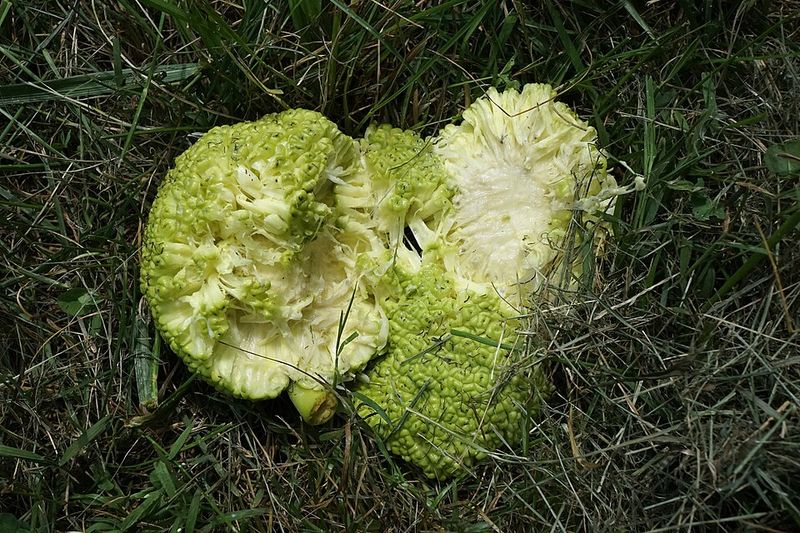
Anyone who has grabbed a hedge apple barehanded remembers the feeling. The milky sap clings to skin, attracts lint, and can leave a rash on sensitive hands.
Gloves solve the problem. Cheap nitrile or garden gloves keep the latex off your fingers, and a rag with a bit of cooking oil lifts leftover residue.
Gathering fruit goes faster with the right tool. A nut gatherer roller, a snow shovel, or a wide leaf rake beats bending over a hundred times.
Watch your footing under a loaded tree. Fallen fruit rolls like a bowling ball on a slope, and the branches carry sharp thorns at eye level.
Composting works if you crush or chop the fruit first. Whole ones break down slowly and can sprout seedlings wherever the pile sits.
Another option is hauling them to a back corner of the property for wildlife. Squirrels tear into them for seeds through the winter months, and the seeds are edible for people too, though picking them out is tedious work.
Keep piles away from walkways and play areas. Softened fruit turns slick and sour-smelling after a week of warm Tennessee afternoons.
Trimming a female tree in late winter reduces the load for next fall. Some homeowners replace problem trees with thornless, fruitless cultivars like White Shield, which keeps the tough wood without the September thumping.
Check with your city about yard waste pickup before bagging a large haul. Rules vary, and hedge apples are heavy enough to strain standard paper bags.
Fence Posts, Bows, And Bodark History
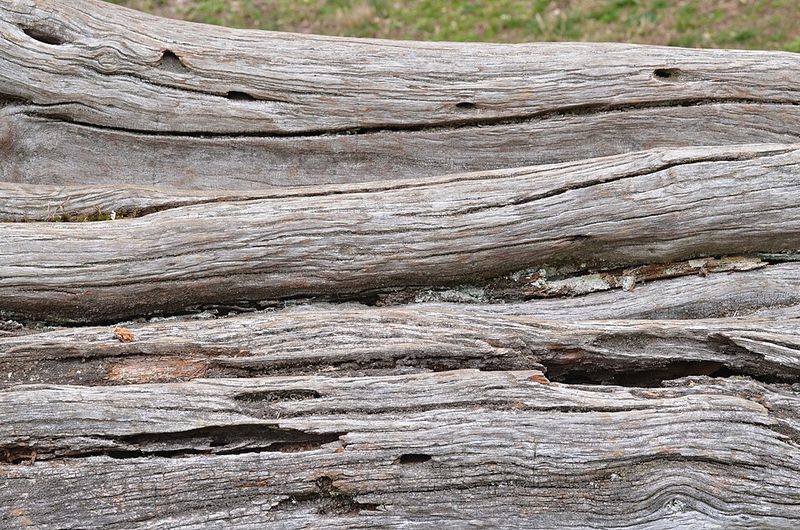
Long before it became a basement spider charm, this tree earned its keep as one of the most durable fence-post woods in America.
Osage orange wood resists rot so well that posts set in the 1880s still stand along some Tennessee farm lines.
The name traces back to the Osage Nation, whose craftsmen prized the springy, golden wood for hunting bows. French trappers called it bois d’arc, meaning bow wood, which later softened into bodark in parts of the South.
Prairie farmers planted millions of seedlings in the mid-1800s to build living fences. Pruned low and thick, the thorny rows held livestock long before wire fencing arrived.
Its wood burns hotter than hickory and throws showers of sparks, so fireplace use calls for a good screen. Woodworkers love the bright yellow grain, which ages into a warm russet brown.
Dye makers once boiled shavings for a yellow-gold color used on cloth. Fence builders, wagon wheel makers, and tool handle shops relied on it for decades.
Scientists think giant Ice Age animals once ate the fruit and spread its seeds. With those animals long extinct, the tree lost its main seed carrier, which is why fruit tends to pile up right under the branches today.
Nurseries still sell the tree for windbreaks on open farmland. Its thorns and dense growth make it a solid barrier where space allows.
That history helps explain why the September mess feels worth the trouble. A modest green fruit rolling across a Tennessee yard carries centuries of practical frontier use inside it.