The Native Texas Alternatives To Boxwood That Birds Actually Use For Cover
Boxwood does one thing in a Texas yard. It sits there and looks tidy. Birds don’t eat from it, nest in it, or find much use for it beyond the occasional perch.
Native Texas shrubs that fill the same structural role tell a completely different story. They provide dense cover that birds actively use for shelter and nesting.
They produce berries, seeds, and insects that feed local bird populations through multiple seasons. And they handle Texas conditions with the resilience that comes from genuine regional adaptation rather than horticultural selection for appearance alone.
Here are the native Texas alternatives to boxwood that birds actually find useful and why each one earns its place in the landscape.
1. Yaupon Holly
Ask any Texas native plant fan for a boxwood swap, and yaupon holly usually comes up first. Its small, glossy leaves look a lot like boxwood. The branches grow thick and close together, so it shears into a neat hedge with ease.
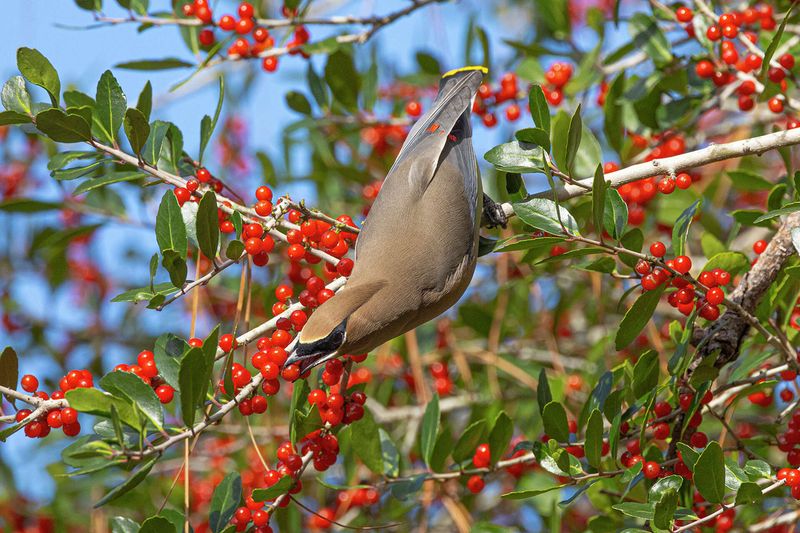
Birds love it for two big reasons. The dense twigs give them a safe place to hide from hawks and cold wind. Female plants also grow bright red berries that hang on well into winter.
Cedar waxwings, robins, and mockingbirds all snack on those berries. A flock of waxwings can strip a big shrub in one afternoon. It is quite a show to watch from a kitchen window.
Here is a catch many people miss. Popular dwarf forms like Nana and Schilling’s are great for low hedges, but they rarely make fruit. They still give cover, but birds will not find much to eat on them.
If you want berries, look for a female plant labeled as fruiting. Nurseries often sell upright or weeping forms that do bear fruit. A male yaupon somewhere nearby helps, though wild ones are common in many areas.
Yaupon is tough as nails once it takes root. It handles sun or shade, clay or sand, and dry spells or soggy spots. Few shrubs forgive so many gardening mistakes.
Fun fact: yaupon is the only native North American plant with caffeine. Native people brewed its leaves into a tea long ago. Today, some small companies sell yaupon tea again.
Trim it lightly in late winter if you want to keep berries. Heavy shearing in fall may cut off the fruit birds count on.
2. Wax Myrtle
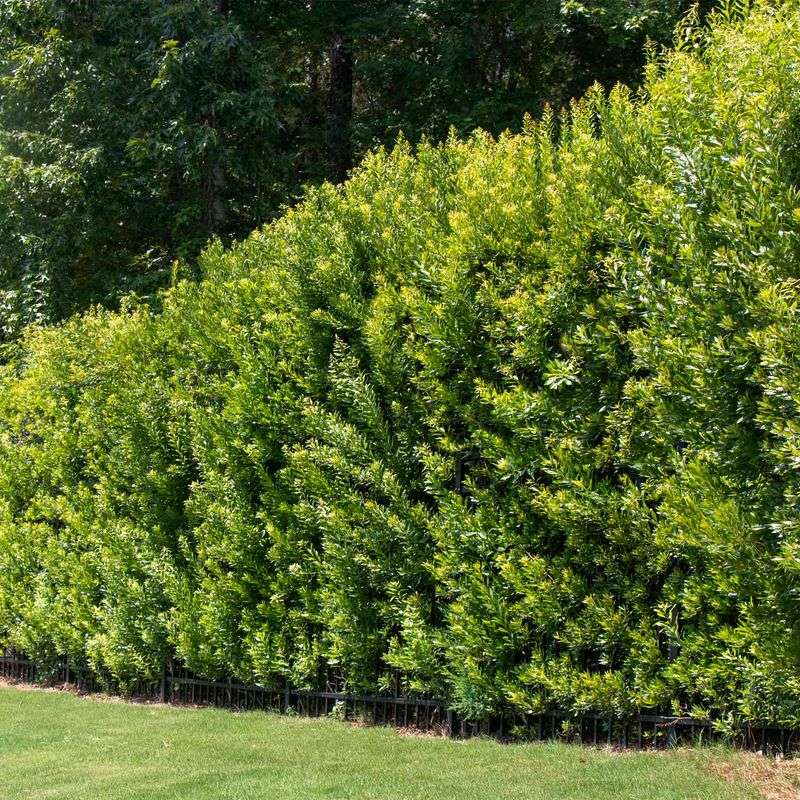
Need a privacy screen by next summer? Wax myrtle might be your answer. It grows fast, sometimes several feet a year, and fills out into a thick green wall.
Crush a leaf between your fingers and take a sniff. You will notice a spicy, fresh smell. Early settlers boiled the waxy berries to make fragrant candles, which is where the name bayberry comes from.
Those same berries are a big deal for birds. Female plants carry clusters of small, blue-gray fruit coated in wax. Yellow-rumped warblers are one of the few birds that can digest that wax well.
Because of this, the warblers often spend whole winters near wax myrtle stands. You may spot dozens flitting through one shrub on a chilly morning. Bluebirds, catbirds, and wrens drop by too.
Your Texas Garden Changes Every Week. Your Plan Should Too.
Gardening in Texas changes quickly throughout the season. Every Friday you’ll receive a simple weekly plan showing exactly what to plant, prune, fertilize, harvest, and protect so you never miss the right timing.
The thick branches also make a cozy winter roost. On windy nights, small birds tuck deep inside to stay warm. The evergreen leaves block the worst of the cold.
Full-size wax myrtle can reach fifteen feet or more. For smaller spaces, try a dwarf form that stays compact. Just remember that you need a female plant for berries.
Wax myrtle thrives in East Texas and along the coast. It likes moist soil but handles some drought once established. It even tolerates salty air near the Gulf.
One tip: it can send up suckers from the roots. Pull or clip them each spring to keep your hedge tidy. Shear it in late winter so new growth fills in quickly.
3. Agarita
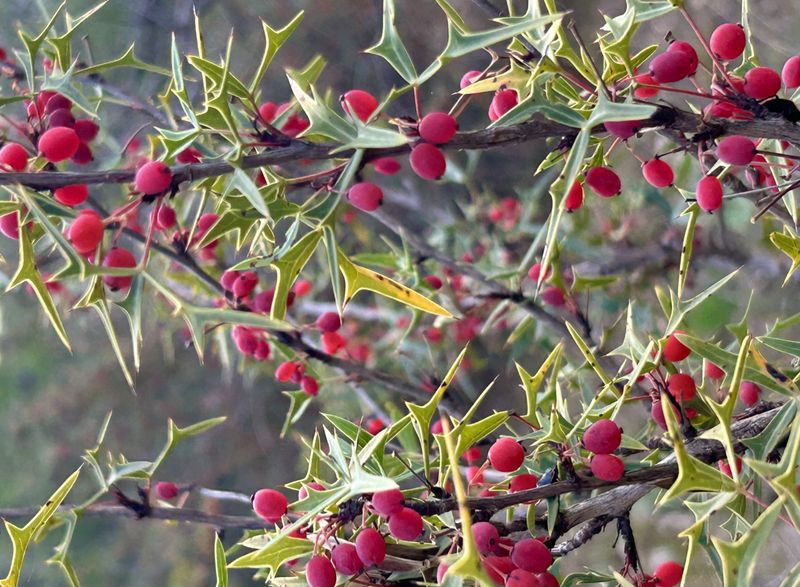
Most shrubs say come on in, but agarita says keep out. Its stiff, blue-green leaves have sharp points on every tip. Each leaf has three parts, and all of them bite.
That prickly armor is exactly why birds adore it. Sparrows, quail, and towhees slip inside where cats and hawks cannot follow. A thick agarita patch works like a fortress with feathers.
Late winter brings a pleasant surprise. Tiny yellow flowers cover the branches and smell sweet, like honey. They are among the first blooms of the year, so early bees love them.
By late spring, small red berries appear. Birds, foxes, and other wildlife eat them. Old-time Texans used to beat the bushes with sticks to collect the fruit for jelly.
Agarita grows wild across the Hill Country and West Texas. It laughs at heat, drought, and poor rocky soil. Once rooted, it rarely needs extra water at all.
Want a living fence along a property line? Plant a row of agarita and let it grow together. Few people or animals will push through it.
A few tips will help you succeed. Plant it in full sun or light shade with good drainage. Wear thick gloves when handling it, trust me on that one.
It grows slowly, so start with the biggest plant you can afford. Skip heavy pruning, since its natural shape gives the best cover. Placing it away from sidewalks will save your guests some scratches.
4. Evergreen Sumac
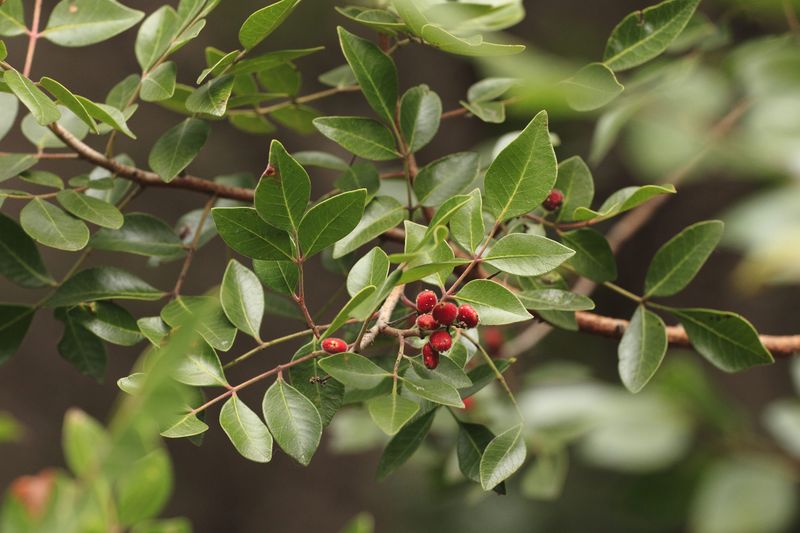
Here is a shrub that shrugs off a hot August like it is nothing. Evergreen sumac grows naturally on rocky hills in Central and West Texas. It has handled heat and drought for thousands of years.
The leaves are shiny and leathery, almost like they were polished. They stay green all year, even through cold snaps. In winter, some leaves blush with red or purple tones.
Left alone, evergreen sumac forms a dense, rounded mound. That shape makes it a natural fit for hedges and screens. You can also prune it into a small multi-trunk tree.
Birds find plenty to like here. The tight branches give cover for nesting and resting. Cardinals, mockingbirds, and thrashers often use it as a safe perch.
Late summer brings clusters of small, fuzzy red fruit. Birds eat them through fall and into winter. The fruit has a tart, lemony taste, and some people once used it for a drink.
Do not worry, this is not poison sumac. Evergreen sumac is safe to touch and grow. It belongs to a friendly branch of the sumac family.
Plant it where it gets full sun or part shade. Good drainage matters more than rich soil. Limestone and caliche are just fine.
Water it regularly during its first summer. After that, it can mostly fend for itself. Avoid wet spots, since soggy roots can cause trouble.
Pollinators like its small spring flowers too. So one shrub helps bees in spring and birds in fall.
5. Carolina Cherry Laurel
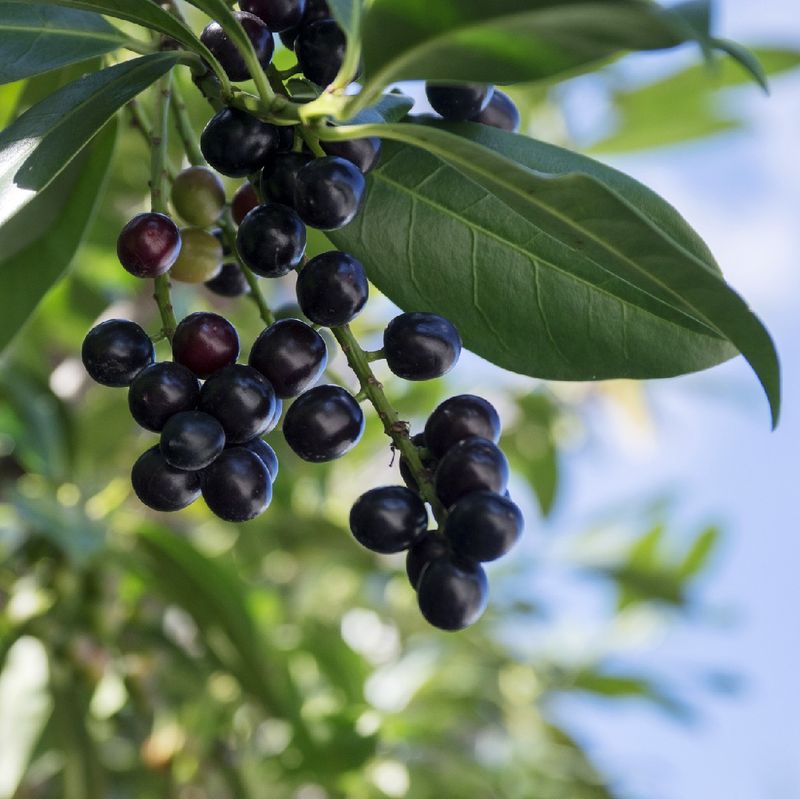
Grandma’s yard in East Texas probably had one of these along the fence. Carolina cherry laurel is a classic Southern evergreen. It grows thick, glossy, and dark green all year long.
People often keep it as a tall hedge, around ten to twenty feet. Left alone, it can become a small tree. Compact varieties stay smaller and fit better in tight yards.
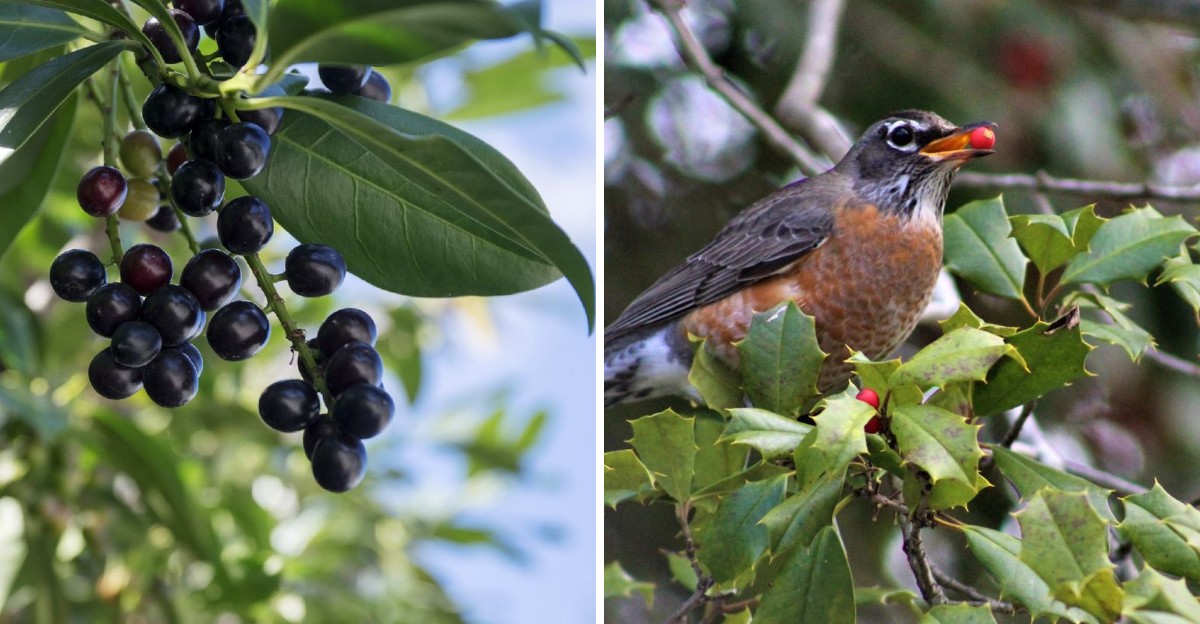
Birds treat the dense leaves like a hotel. Robins, cedar waxwings, and cardinals rest and nest inside. The thick cover keeps them safe from storms and hungry hawks.
In fall and winter, small shiny black fruits appear. Birds gobble them up and spread the seeds around. Small white flowers in early spring also bring in bees.
Now for the serious part. The leaves, stems, and seeds are toxic to people, pets, and livestock. Wilted leaves are especially risky for horses and cattle.
So think carefully before planting. Keep it away from pastures and spots where dogs chew plants. Teach kids not to eat the berries, even though birds do.
Another tip: seedlings pop up where birds drop seeds. Pull them while they are small so the plant does not spread too much. A quick check each spring keeps it under control.
Cherry laurel likes sun or part shade and decent drainage. It grows fairly fast, so you get privacy sooner. Shear it in late winter or early spring for a neat shape.
Fun fact: crushed leaves smell a little like almonds. That scent comes from the same compounds that make them toxic.
6. Texas Sage
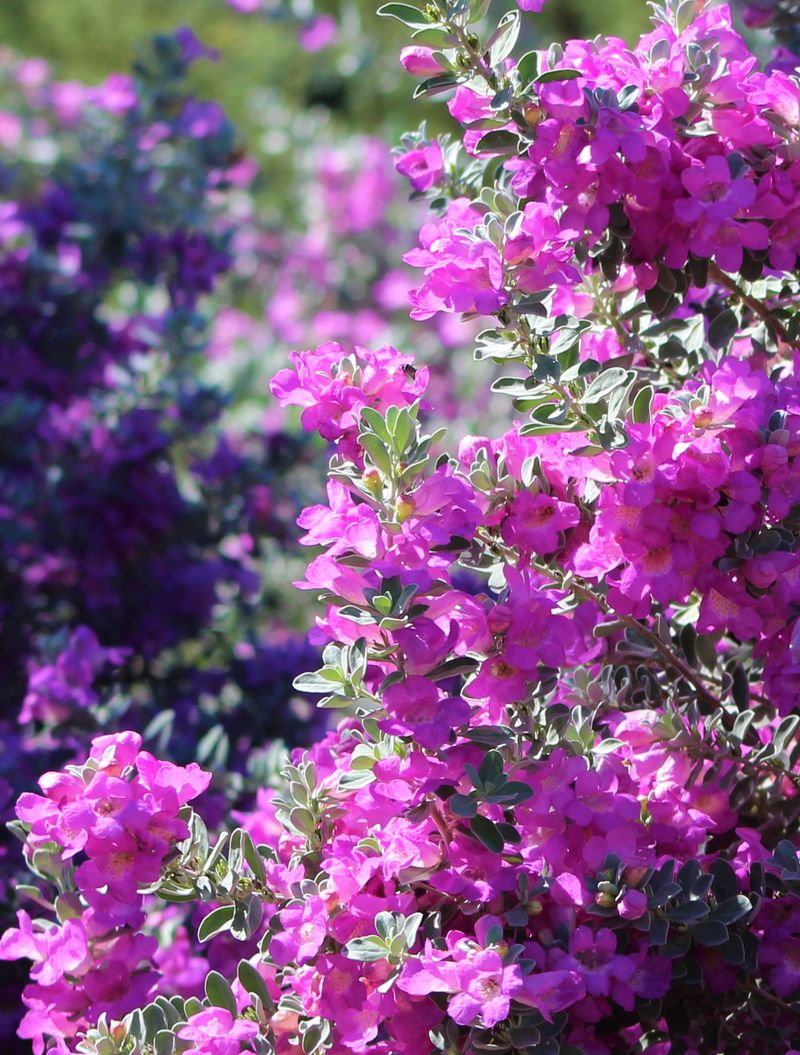
Old-timers in South Texas say Texas sage can predict rain. A few days after a storm, the whole shrub bursts into lavender blooms. That is why some folks call it the barometer bush.
Its other name is cenizo, which means ash-colored in Spanish. The small leaves are soft, fuzzy, and silvery gray. They glow in bright sun and look lovely next to green plants.
Texas sage grows in a naturally dense, twiggy shape. Those tight little branches are perfect for small birds. Wrens, sparrows, and verdins duck inside to rest and hide.
The flowers bring lots of bees and butterflies. Birds then come by to hunt insects among the branches. So the shrub feeds birds in a sneaky, indirect way.
Here is the most useful tip: do not overwater it. Too much water or soggy soil can cause root rot and end its life fast. Many people lose Texas sage by being too kind.
Give it full sun and soil that drains well. Rocky, sandy, or slightly raised beds work great. Skip fertilizer, since it prefers lean ground.
Avoid shearing it into tight boxes. Heavy trimming ruins the natural shape and cuts off blooms. A light trim in late winter keeps it full and healthy.
Compact types like Compacta stay around three to five feet tall. Taller forms can reach six feet or more. Choose based on how much room you have.
For hot, dry yards, few shrubs look this good with so little water. Birds and bees will thank you.
7. American Holly
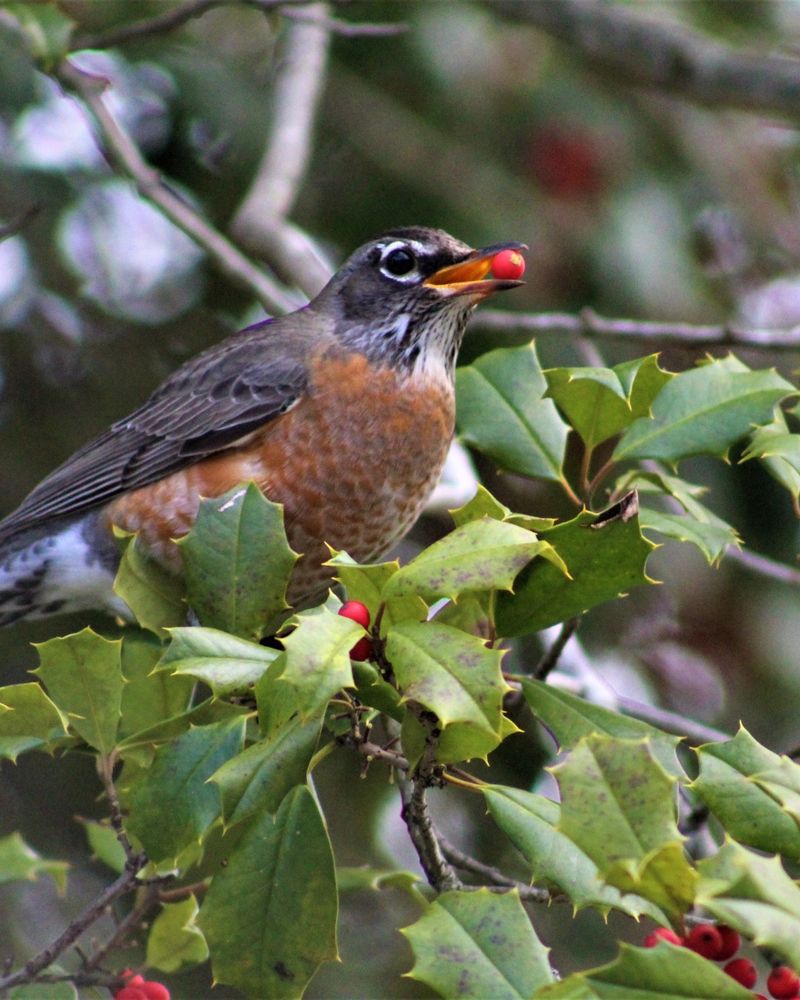
Deck the halls with boughs of holly, as the old song goes. American holly is the plant that brings that tune to life. Its spiny green leaves and red berries are winter classics.
This holly grows wild in the Piney Woods of East Texas. It forms a dense, pyramid shape over time. Mature trees can reach thirty feet or taller, though they grow slowly.
Those prickly leaves are a gift to birds. Predators think twice before reaching inside. That makes the tree a safe place for nesting and roosting.
Cardinals, mockingbirds, and brown thrashers often raise families in American holly. On cold nights, many small birds crowd in for shelter. The evergreen leaves block wind and sleet.
Female trees make bright red berries in fall. The fruit often stays on well into winter. Hungry robins and bluebirds rely on it when other food runs short.
One key detail matters here. You need a male holly nearby for the female to make berries. Ask your nursery to help you choose a matching pair.
American holly likes moist, slightly acidic soil. It grows well in part shade, just like in the forest. In alkaline soils of West Texas, it may struggle.
You can prune young plants into a tall hedge. Many people let it grow naturally as a screen or specimen tree.
Both options give birds great cover. Fun fact: holly wood is nearly white. Craftsmen once used it for piano keys and fine inlays.