The One Place Joro Spiders Prefer To Build Webs Around Georgia Homes
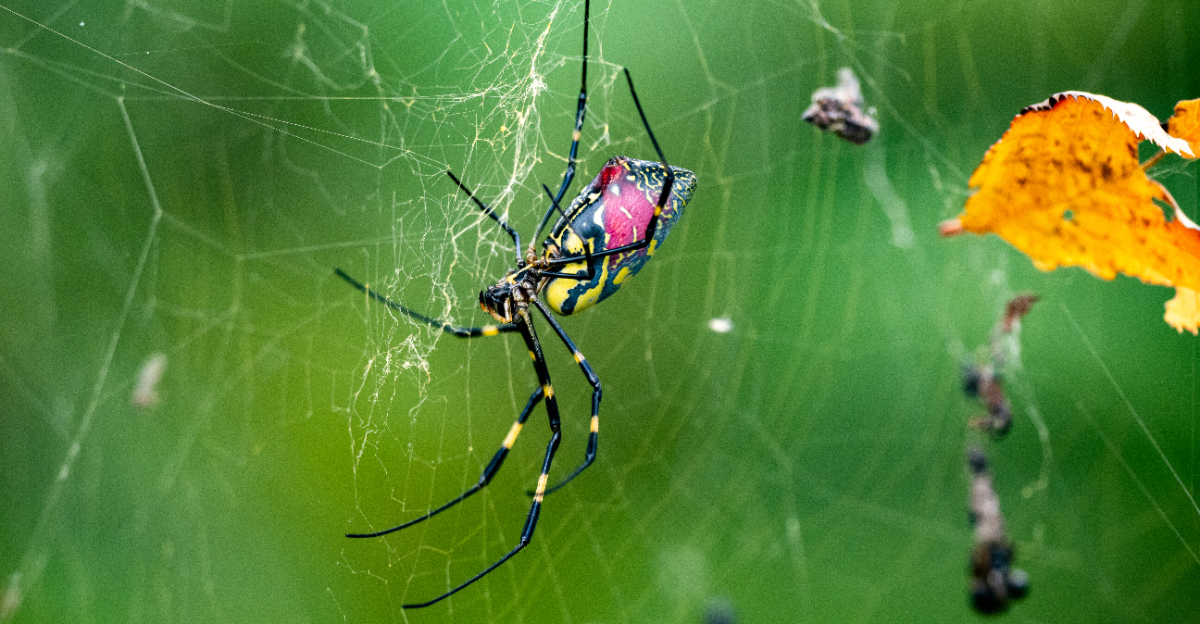
Finding a giant spider web near your home is enough to make anyone stop and look twice. What surprises many people is that Joro spiders are surprisingly consistent about where they choose to build.
If you keep noticing their webs in the same kind of spot, there is a reason for it.
Georgia neighborhoods offer countless places for webs, yet these spiders often return to locations that suit them best. Before you dismiss another web as bad luck, pay closer attention to where it appeared.
The more you notice those patterns, the less surprising future encounters become.
Understanding what attracts Joro spiders can completely change the way you look at your yard the next time fresh webs appear.
1. Porches Create Ideal Web-Building Conditions
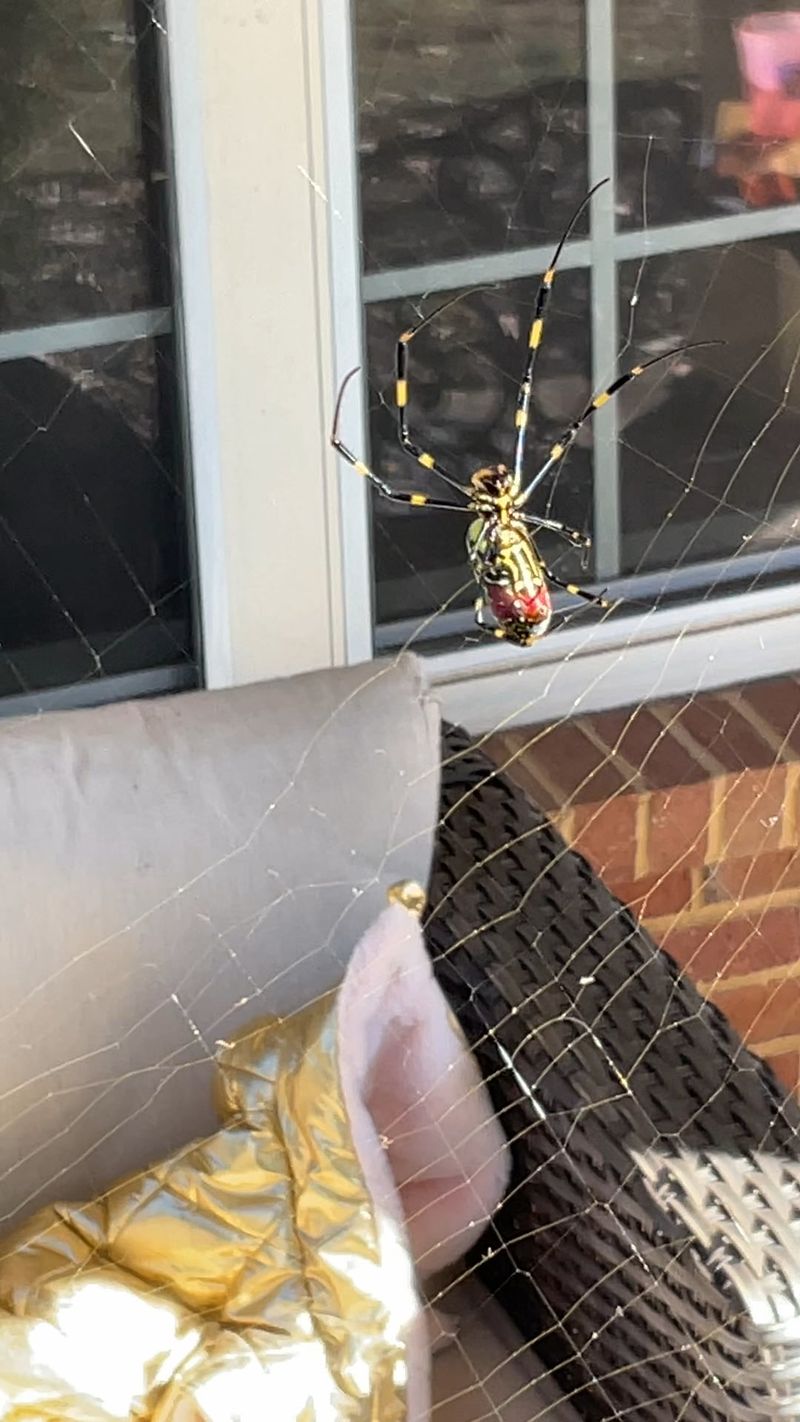
Porches are practically a dream setup for Joro spiders. Shelter, structure, and steady insect traffic make them hard to resist.
A covered porch checks every box a web-building spider could want.
Joro spiders need anchor points to stretch their webs. Porch columns, railings, ceiling beams, and hanging fixtures give them plenty of solid spots to attach silk.
Few other areas around a home offer that kind of ready-made framework.
Warmth matters too. Porches trap heat from the sun and from indoor air leaking through doors.
Spiders are cold-blooded, so warmer spots help them stay active longer into the evening and through cooler nights.
Humidity also plays a role. Covered porches tend to hold moisture better than open yard areas.
Slightly humid air can help spider silk stay flexible and sticky, which makes webs more effective at catching prey.
Bug activity around porches is usually higher than in open lawn areas. Crumbs, pet food, potted plants, and moisture all draw small insects close.
More insects mean more food, and Joro spiders follow the food.
Foot traffic around a porch is also predictable. Spiders seem to take advantage of quieter corners and upper areas where people rarely reach.
2. Open Spaces Make Web Building Easier
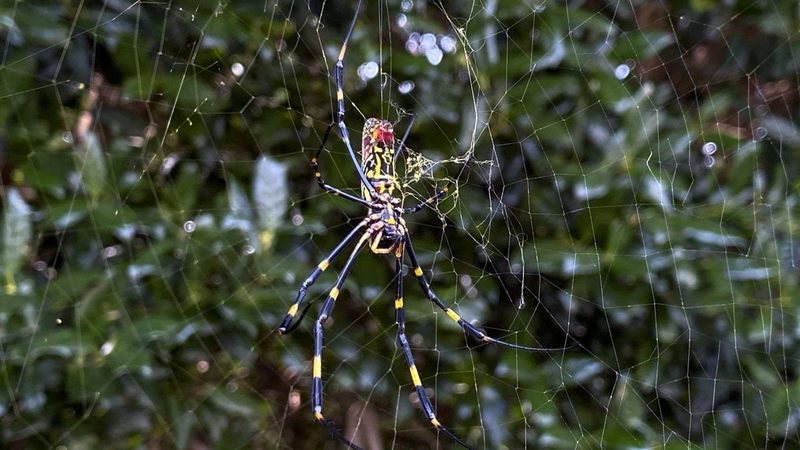
Joro spiders spin some of the largest webs of any spider found in the southeastern United States. Their webs can easily reach three feet across or wider.
Pulling that off requires open, unobstructed space.
Porches offer exactly that. Wide gaps between columns, open stretches along railings, and clear spans between furniture legs give Joro spiders the room they need.
Tight, cluttered spots make web-building harder and less effective.
Web placement is strategic. Joro spiders position their webs where flying insects are likely to pass through.
Open porch spaces often sit right in the path of moths, gnats, and beetles moving toward light sources at night.
Yard shrubs and tree branches can work too, but they shift in the wind and offer less predictable anchor points. A porch frame stays fixed, making it a more reliable structure for a web that needs to hold its shape.
Younger Joro spiders sometimes share web space with larger females, creating layered web clusters.
Open porch areas with multiple anchor points can support several webs at once, which is why some porches end up looking heavily draped in silk.
Your Georgia Garden Changes Every Week. Your Plan Should Too.
Gardening in Georgia changes quickly throughout the season. Every Friday you’ll receive a simple weekly plan showing exactly what to plant, prune, fertilize, harvest, and protect so you never miss the right timing.
Spacing between anchor points also affects web strength. Wider gaps allow for larger, more efficient webs that catch more insects per night.
3. Outdoor Lights Attract Flying Insects
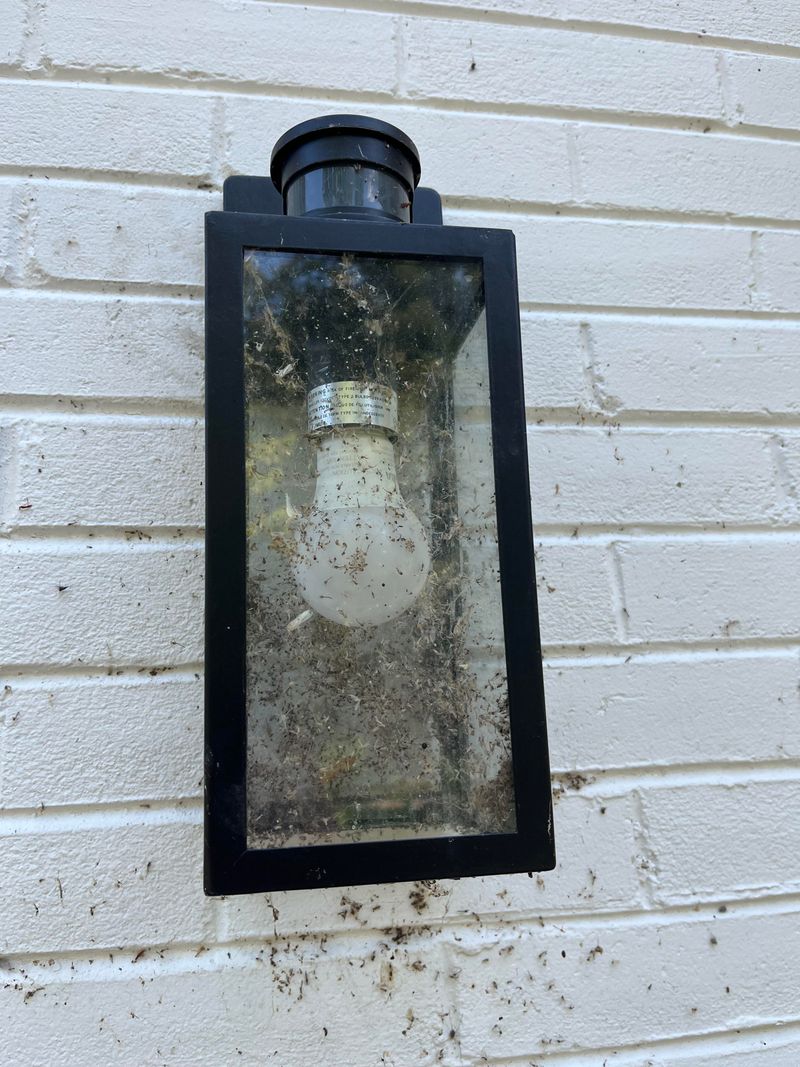
Porch lights are basically a free buffet sign for Joro spiders. Bugs swarm around artificial light at night, and spiders know it.
Positioning a web near a light source is one of the smartest moves a spider can make.
Moths, gnats, crane flies, and small beetles all get drawn toward porch lights after dark. A well-placed web right in that flight path catches insects without the spider having to move at all.
It is a passive but highly effective hunting setup.
Joro spiders are mostly nocturnal hunters. They tend to be most active after sunset, which lines up perfectly with peak insect activity around outdoor lights.
Timing and location work together in their favor.
Warm white bulbs tend to draw more insects than cool blue or LED lights. If your porch uses older incandescent or warm-toned bulbs, expect more bug activity, and potentially more spider webs nearby.
Switching to yellow or insect-deterrent bulbs can reduce the number of insects gathering around your lights.
Spiders often build webs within a foot or two of light fixtures. Check the area just above or beside your porch light if you want to spot a Joro web early.
That zone tends to be their preferred sweet spot.
4. Sturdy Supports Hold Large Webs
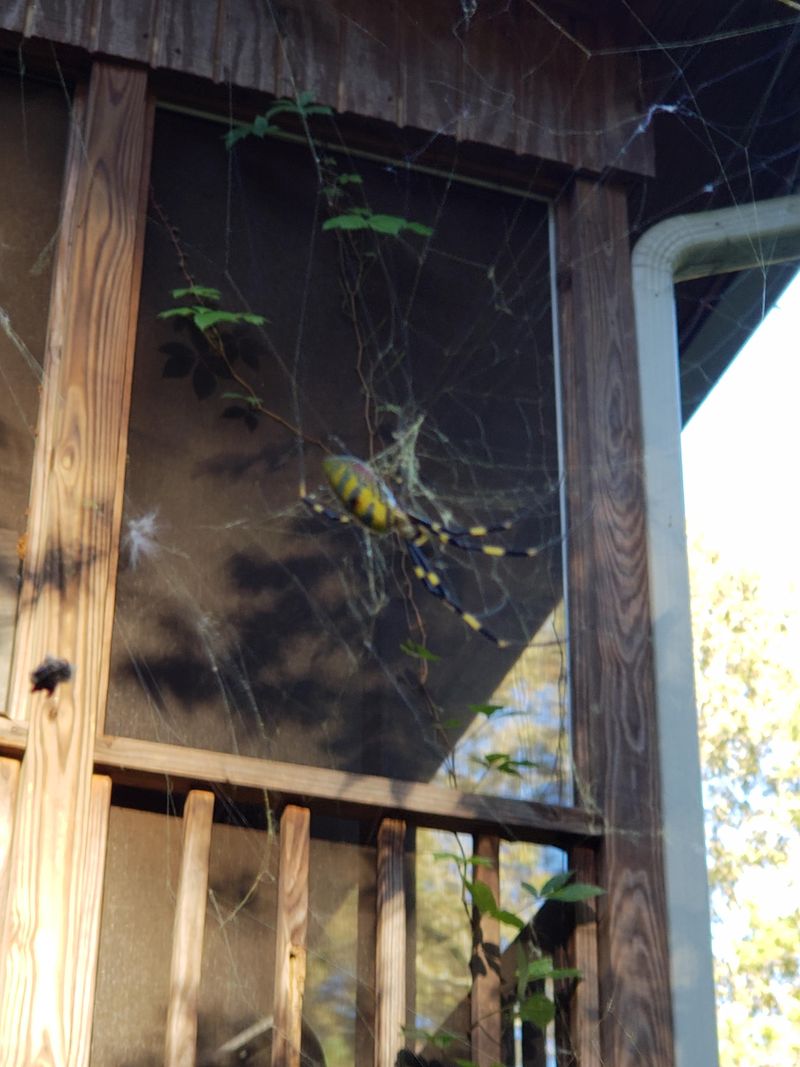
Not every surface can support a Joro spider web. These webs are surprisingly heavy and complex, with multiple layers of silk including a barrier web above the main orb.
That extra structure needs solid anchor points.
Wooden porch columns are thick, stable, and rough enough for silk to grip well. Smooth surfaces like painted metal or vinyl siding do not hold anchor threads as reliably.
Rough wood gives silk something to bond to without slipping.
Porch railings, support beams, and overhead joists create a natural grid of sturdy connection points. Joro spiders take advantage of that grid to build webs that span wide distances without sagging or collapsing.
Fences and garden trellises can work, but they flex in wind and shift over time. A solid porch frame stays rigid, which helps the web maintain its shape and effectiveness night after night.
Older porches with unpainted or weathered wood may be especially attractive. Rough wood texture gives silk threads extra grip, making webs more secure.
Smooth, freshly painted surfaces can reduce how well anchor threads hold on.
Porch furniture also adds to the mix. Chairs, tables, and plant stands create additional anchor points at lower levels.
5. Reduced Wind Helps Webs Stay In Place
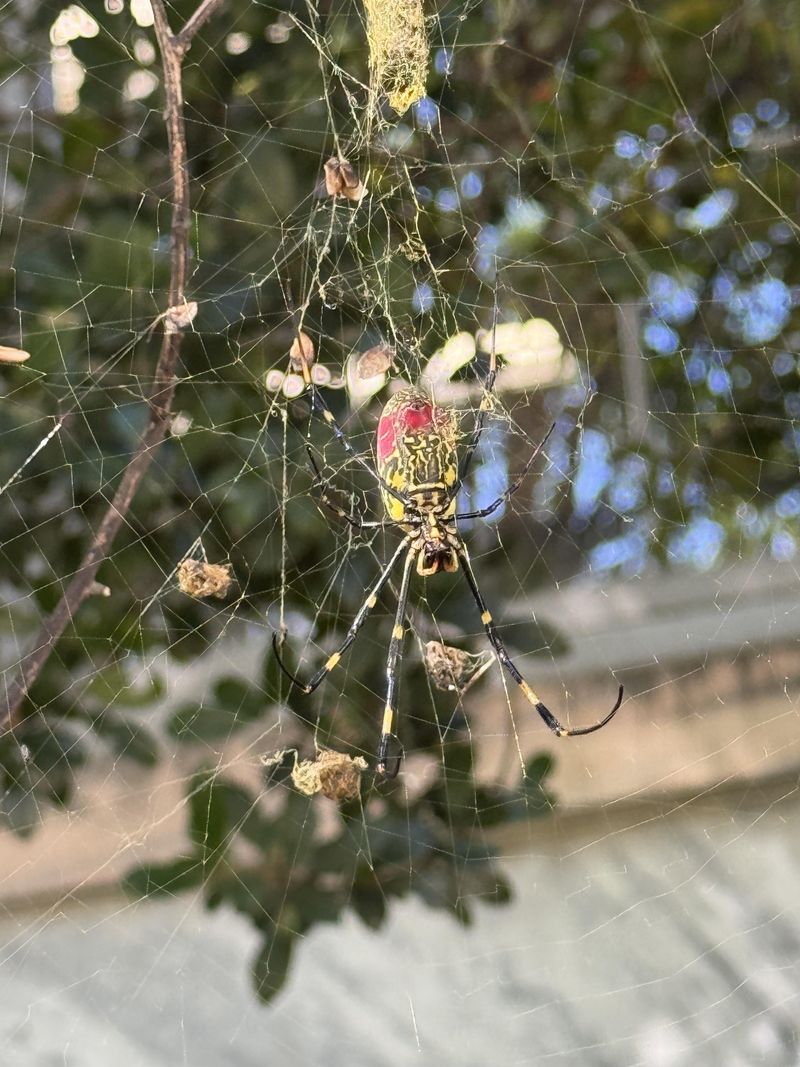
Wind is one of the biggest threats to a spider web. Strong gusts can shred silk threads, collapse the structure, and force a spider to rebuild from scratch.
Covered porches block a lot of that wind exposure.
Porch roofs, walls, and railings act as wind breaks. Air movement inside a covered porch is usually much calmer than in an open yard.
That sheltered environment helps webs stay intact for longer periods.
Joro webs are built to last several days when conditions are right. A web that survives multiple nights catches far more insects than one rebuilt every morning.
Calm porch air gives webs a better chance of staying functional.
Open areas like garden beds or tree lines get hit by wind from multiple directions. Even a light breeze can cause a web to twist or collapse in an exposed spot.
Porches provide walls and overhangs that cut down on that exposure significantly.
Joro spiders do not seem to relocate frequently once they find a good spot. If a porch offers consistent shelter from wind, a spider may stay in the same location for weeks.
Homeowners in Georgia sometimes notice the same spider returning to an identical spot each evening.
Corner spots on porches tend to be the calmest areas. Two walls meeting at a corner block wind from two directions at once.
6. Regular Cleaning Makes Porches Less Inviting
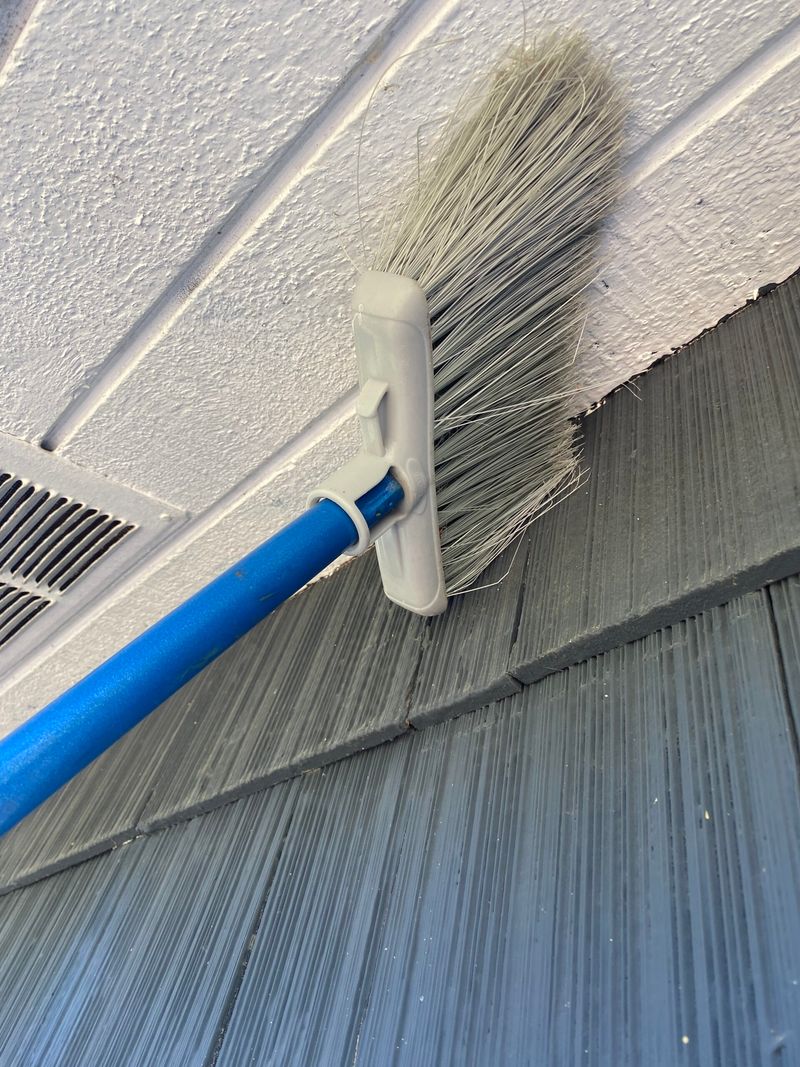
Keeping a porch clean is one of the most practical ways to discourage Joro spiders from settling in. Webs need anchor points, and a clutter-free porch offers fewer places to attach silk threads.
Sweep away webs as soon as you spot them. Use a long-handled broom to reach ceiling corners, beam edges, and the tops of columns.
Getting to webs early prevents them from growing larger and harder to remove.
Clutter is a spider magnet. Stacked boxes, piled firewood, old furniture, and unused planters all create hidden spaces where spiders feel safe.
Clearing those items out reduces the number of sheltered spots available for web-building.
Potted plants near the porch attract small insects. Insects draw spiders.
Moving plants a bit further from the porch entrance can reduce insect activity near the areas where spiders prefer to build.
Washing down porch surfaces with water a few times a month can disrupt silk anchor threads before they become established. Spiders tend to avoid spots where their early anchor threads keep getting removed or damaged.
Consistent upkeep matters more than occasional deep cleans. A quick weekly sweep of corners, ceilings, and railings takes only a few minutes but makes the porch far less hospitable over time.
7. Removing Fresh Webs Discourages Return
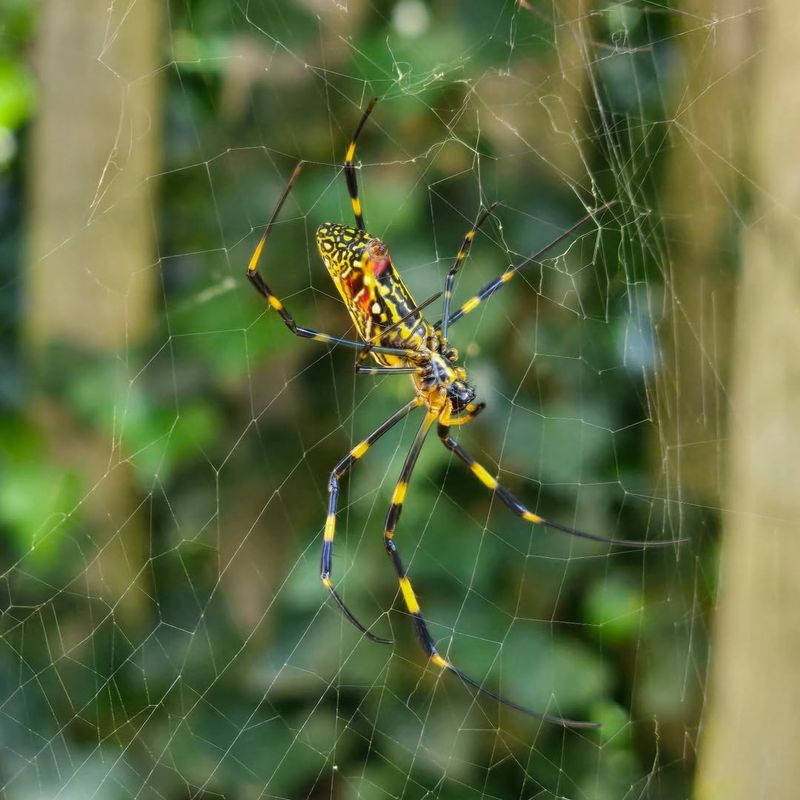
Fresh webs are easier to remove than old ones. Catching them early, before they dry and harden, takes far less effort and leaves fewer sticky residues behind on surfaces.
Joro spiders often rebuild in the same spot after a web is removed. Repeating the removal process consistently can gradually push them toward finding a new location.
Persistence matters more than a single cleanup session.
Use a stick, broom handle, or similar tool to gather and remove the web. Twisting the tool as you pull the web off helps collect the silk without spreading it across the surface.
Work from the outer edges toward the center for the cleanest removal.
Check the same spots every morning if you are dealing with a persistent spider. Joro spiders tend to repair or rebuild webs overnight.
Morning is usually the best time to spot fresh webs before insects get trapped and the structure becomes stickier.
Removing the web does not harm the spider. It simply removes the tool the spider uses to catch food.
Without a functioning web, the spider may move on to a more productive location over time, though results can vary by individual spider and environment.
Pair web removal with reducing light and clutter on your porch for better results. Tackling multiple attractants at once gives you a stronger chance of making the space less appealing.