The Poinsettia Mistake That Ruins The Darkness Trick For Ohio Gardeners
Even a single flick of a closet light can erase weeks of careful work on a holiday plant. Growers have measured it, and the threshold is shockingly low.
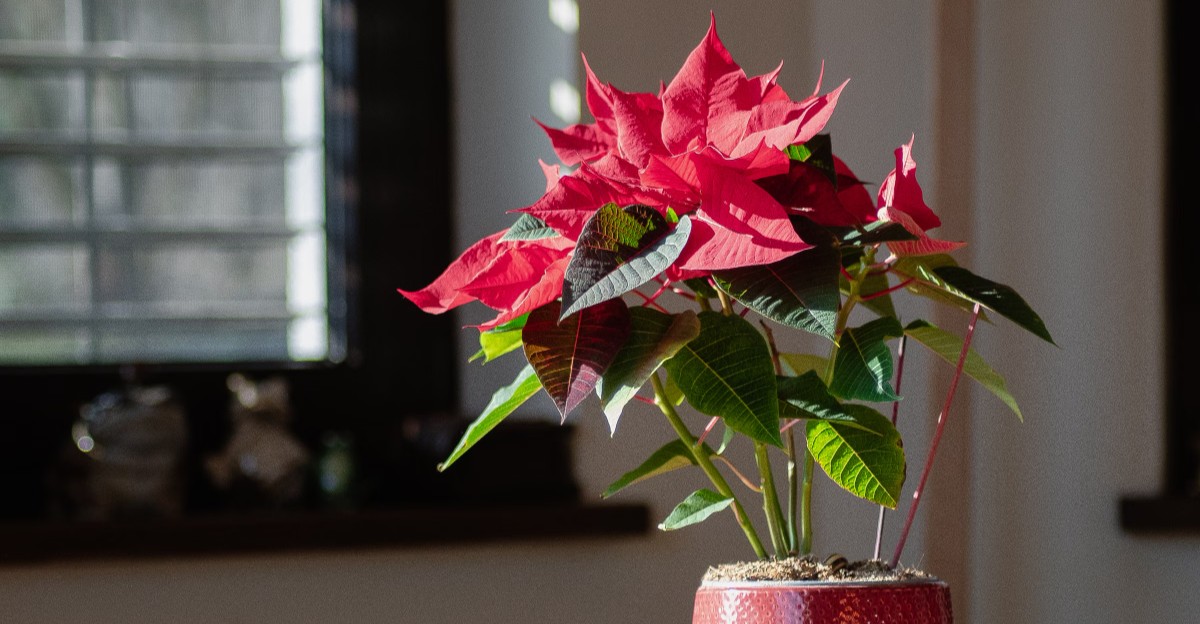
The colorful parts everyone admires are not flowers at all. They are modified leaves called bracts, and they only change color when nights stay long and truly dark.
The tiny yellow buds in the center are the real flowers.
I love a good gardening challenge, and coaxing color back into last year’s holiday plant tops my list. Here in Ohio, October nights are already lengthening, yet our homes glow with lamps, TVs, and porch lights well past sunset.
You need to know how little it takes to throw the whole plan off.
Even the smallest source of light could be interfering with your holiday plant’s color change. Knowing where that glow comes from is the first step toward getting those colorful bracts back before December.
1. A Sneaky Sliver Of Light Is Keeping Your Poinsettia Green
Most failed reblooms come down to one small slip. Someone opens the closet for a coat, a nightlight clicks on, or a streetlamp shines through thin curtains for a few minutes each night.
That brief glow is often enough to stop the color change. Poinsettias are long-night plants, and they track darkness the way you might count down a timer.
A light interruption in the middle of the night resets the count, and the plant reads it as two short nights instead of one long one.
Commercial growers learned this the hard way. Extension research notes that even very dim light, under a couple of foot-candles, can block flowering when it lands on the plant during the dark period.
For comparison, that’s roughly the glow from a nearby lamp in the next room.
I find this oddly fascinating. The plant ignores your careful watering and fertilizing if its nights keep getting broken.
So the mistake is rarely forgetting the darkness trick. It’s believing a room is dark when it isn’t.
Before you blame the plant, sit in its spot at night for a few minutes and let your eyes adjust. Any light you notice, your poinsettia notices too.
2. Fourteen Hours Of True Poinsettia Darkness Is The Real Rule
Here’s the schedule that works for most home growers. Starting around October 1, give your plant about 14 hours of uninterrupted darkness every night, usually from 6 p.m. to 8 a.m.
Keep it going for eight to ten weeks. Purdue and other university extensions recommend this window because it lines up colored bracts with the holidays.
Skipping a few nights or getting lazy on weekends can delay or weaken the color.
Your options are simple. A large cardboard box set over the plant works well, as does a closet nobody uses at night.
Some folks cover the pot with a thick black trash bag, though a box keeps leaves from getting crushed.
Consistency matters more than perfection with timing. Pick hours that fit your routine, like covering it after dinner and uncovering it before work, and stick to them.
Personally, I set a phone reminder for both ends. It sounds silly, but one forgotten morning means a day without the light the plant needs to make energy.
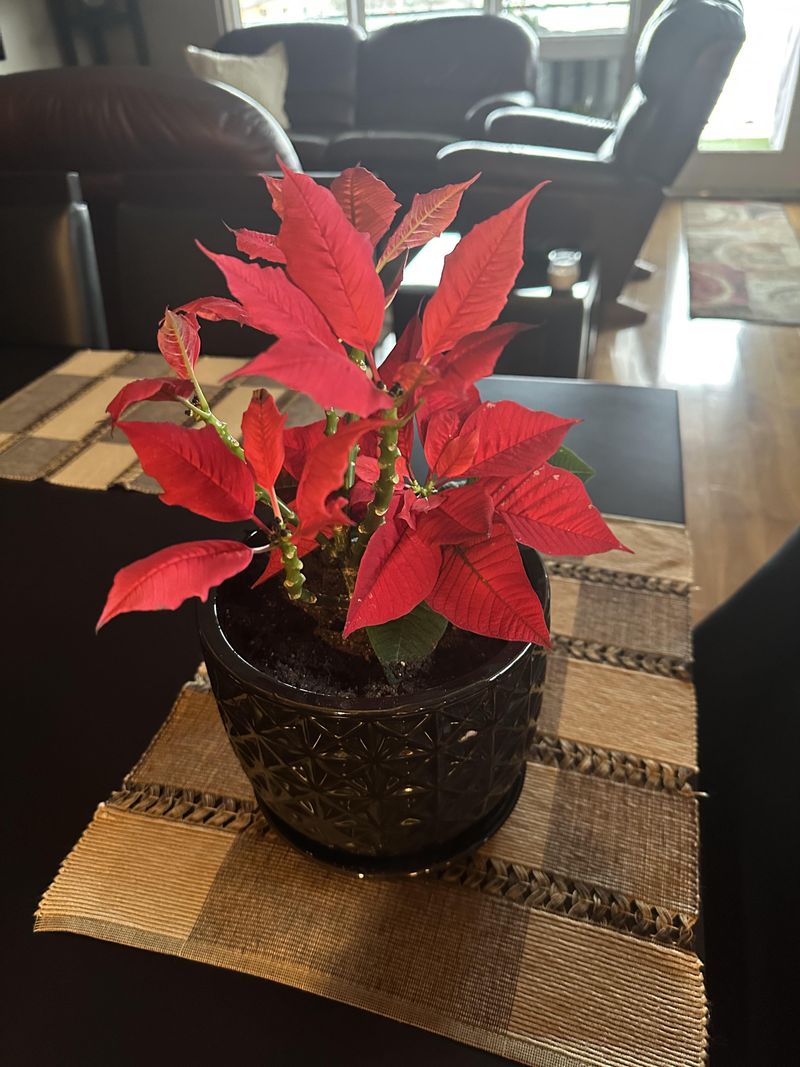
Once you see bracts clearly showing red, pink, or white, usually by early December, you can stop the nightly routine and enjoy your plant in a normal room.
3. Bright Window Days Still Matter For Poinsettia Color
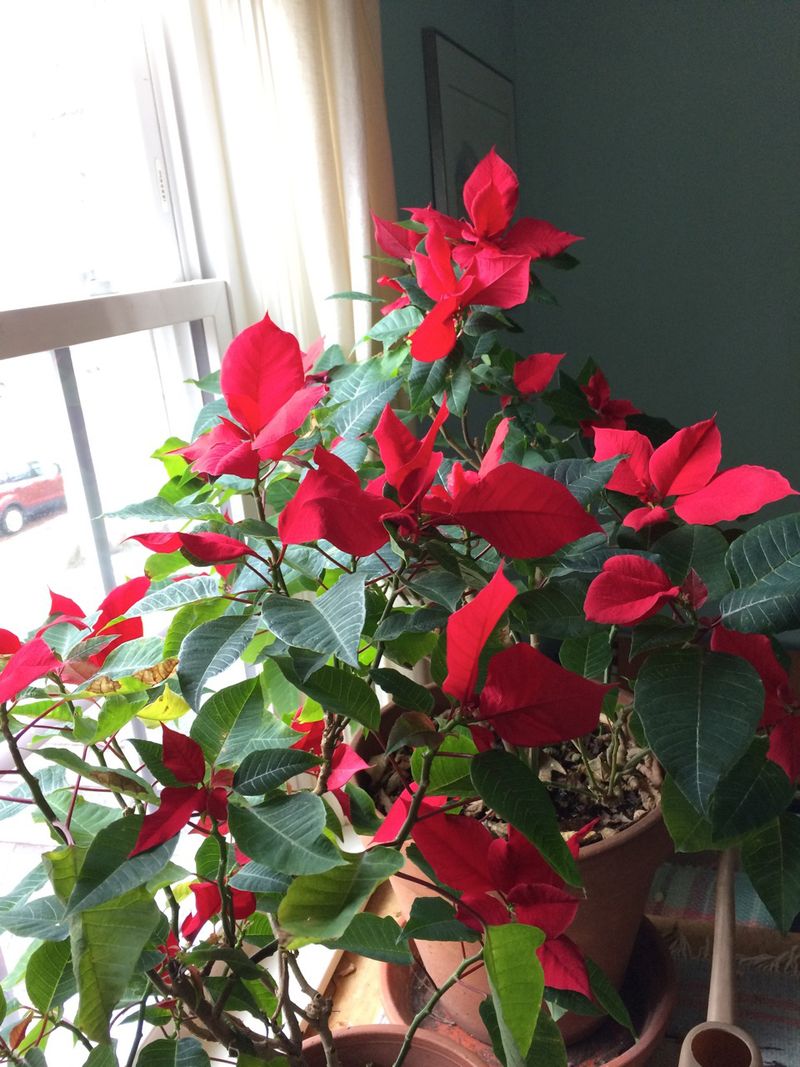
Darkness gets all the attention, yet daylight does half the work. During those dark weeks, your poinsettia still needs six to eight hours of bright light every day.
Bright light gives the plant energy to build healthy bracts. Without it, colors can come in faded, small, or patchy.
A south, east, or west window is usually your best bet in fall, when Ohio days grow shorter and cloudier.
Avoid letting leaves press against cold glass. A few inches of space helps, especially on chilly October and November mornings.
You might wonder if a grow light could help on gray days. It can, but only during daytime hours.
Turn it off well before the darkness period starts, or you’ve recreated the exact problem you’re trying to avoid.
A simple rhythm helps here. Uncover in the morning, move the pot to its bright spot, then tuck it away again in the evening.
I like to think of it as giving the plant a full workday and a full night’s sleep. Shortchange either one, and the holiday show suffers.
When both line up, you’re rewarded with bracts that look like they came straight from a greenhouse.
4. Warm Rooms And Chilly Drafts Can Stall Poinsettia Bracts
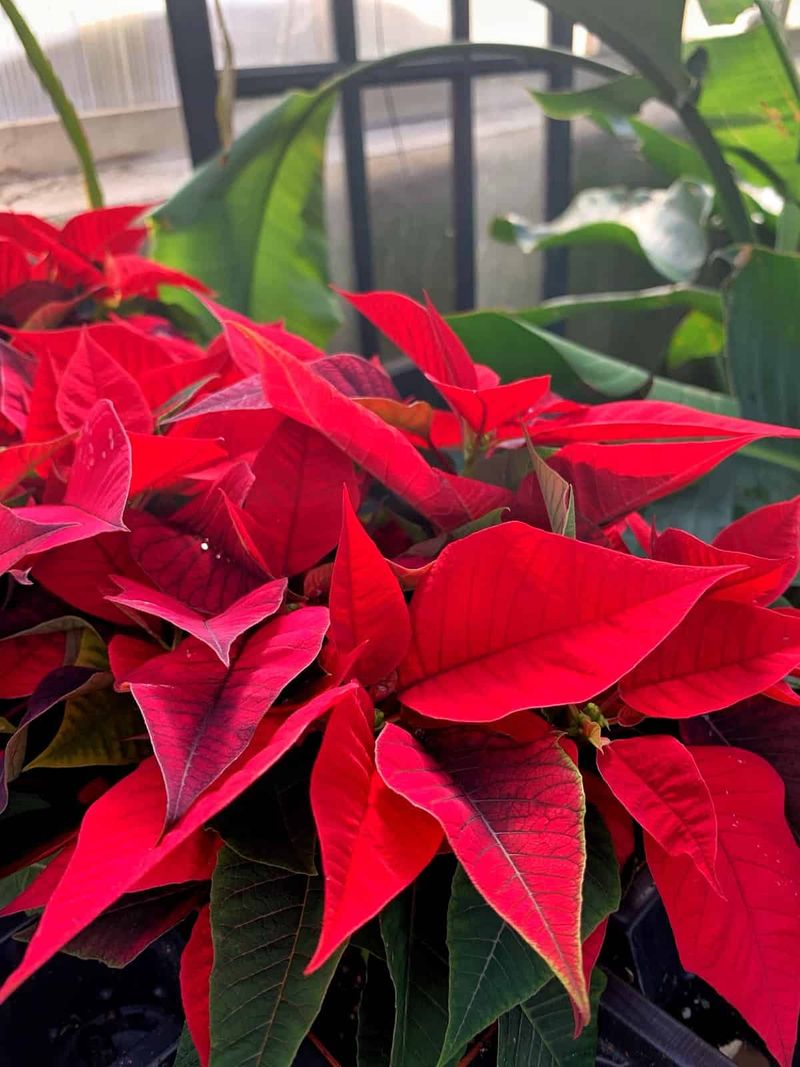
Temperature is the quiet partner in this whole project. Even with perfect darkness, a room that runs too warm can slow color development.
Aim for nighttime temperatures between about 60 and 70 degrees. Warmer nights, especially above 75 degrees, can delay bract coloring.
That’s worth knowing if your plant sits near a furnace vent that kicks on in late October.
Cold causes its own trouble. Poinsettias come from warm parts of Mexico, and temperatures below 50 to 55 degrees can damage leaves and hurt color.
A closet against an outside wall or an unheated porch can drop lower than you’d expect.
Drafts are another surprise. A plant parked near an often-opened door gets blasted with cold air, and sudden swings can trigger leaf drop.
My advice is to grab a cheap indoor thermometer. Set it next to the plant for a few nights and see what really happens after dark.
You may find your chosen closet is chillier, or toastier, than you guessed.
Small moves fix most problems. Shift the pot a few feet from vents, radiators, and windows.
Steady, moderate temperatures help the plant focus its energy on color instead of stress.
5. Soggy Poinsettia Roots Spoil The Show Too
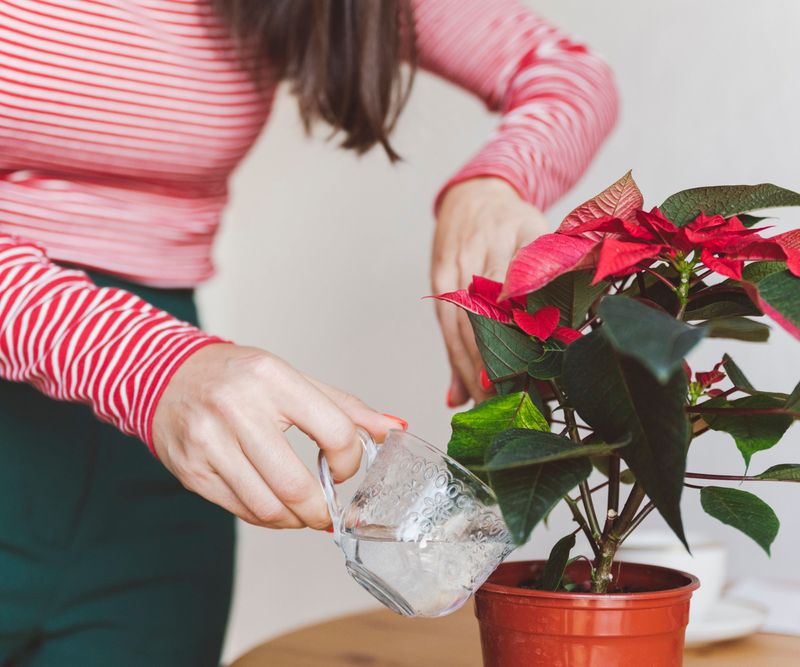
Overwatering trips up more poinsettias than people admit. Roots sitting in wet soil can rot, and the plant responds with yellow leaves that drop off one by one.
The fix is easy. Water thoroughly when the top inch of soil feels dry, then let the extra drain away.
Empty the saucer afterward so the pot isn’t standing in a puddle.
Watch out for decorative foil wrap. It looks pretty, but it traps water at the bottom like a hidden bathtub.
Poke holes in it or remove it when you water.
Underwatering shows up differently. Leaves wilt, curl, and feel dry, and the plant may drop them fast.
Check the soil every few days, since dark-period plants in boxes can dry out without you noticing.
Dry indoor air can also stress poinsettias once Ohio furnaces start running. A pebble tray under the pot or a small humidifier nearby can help keep leaves looking fresh.
I think of watering as a conversation with the plant. Your finger is the translator.
A quick poke in the soil tells you more than any calendar, and it keeps your carefully darkened plant healthy enough to show off its color.
6. Too Much Nitrogen Keeps Poinsettia Leaves Stubbornly Green
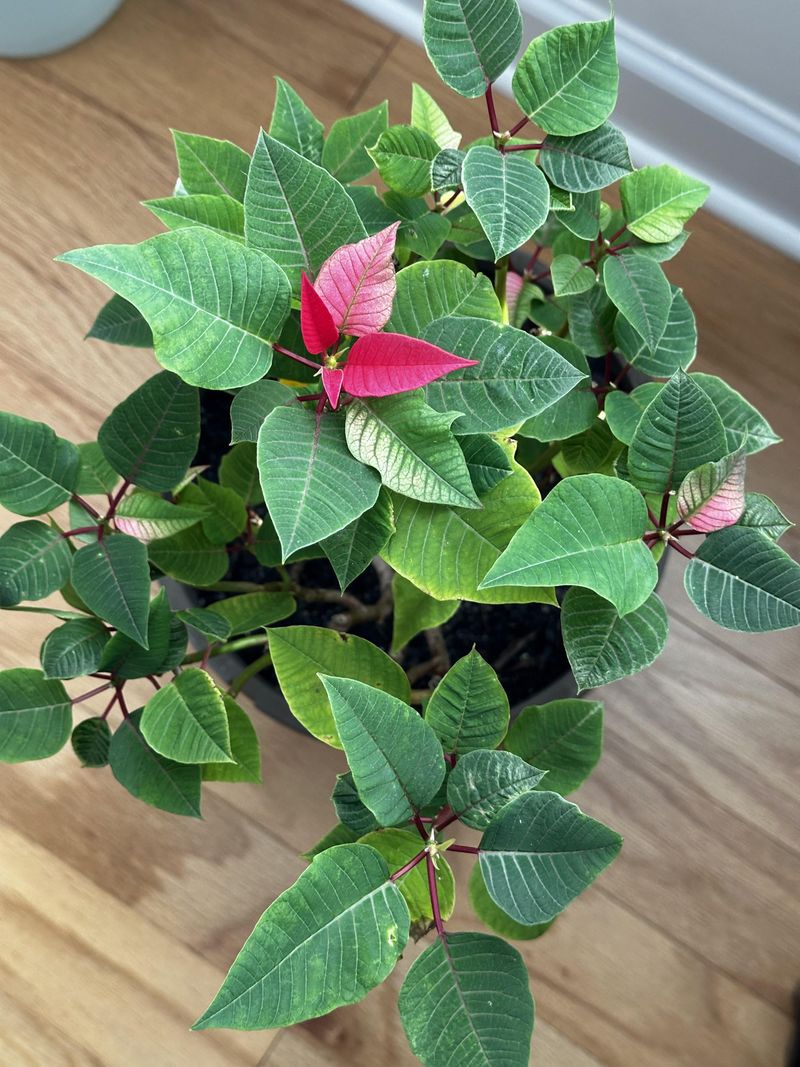
Feeding a poinsettia feels generous, but timing changes everything. Fertilizer helps the plant grow strong through spring and summer, yet heavy feeding at the wrong time can work against you.
During active growth, use a balanced, water-soluble fertilizer about every two weeks. Follow the label rate rather than guessing.
More is not better here.
As fall approaches, ease up on high-nitrogen formulas. Nitrogen pushes leafy green growth, and you want the plant shifting toward bract development instead.
Many growers taper feeding as the darkness period begins.
Watch for clues from the plant itself. Pale lower leaves might mean it’s hungry.
Brown leaf edges or a white crust on the soil can point to too much fertilizer salt building up.
If you see that crust, flush the pot. Water slowly until it pours from the drainage holes, wait a few minutes, and repeat once or twice.
Honestly, this part is easy to overthink. A healthy plant with steady, moderate feeding usually responds well once the nights get long and dark.
Save your energy for guarding those dark hours, since that’s where most reblooming efforts succeed or fail.
7. Summer Pruning And A Patio Vacation Prep Your Poinsettia
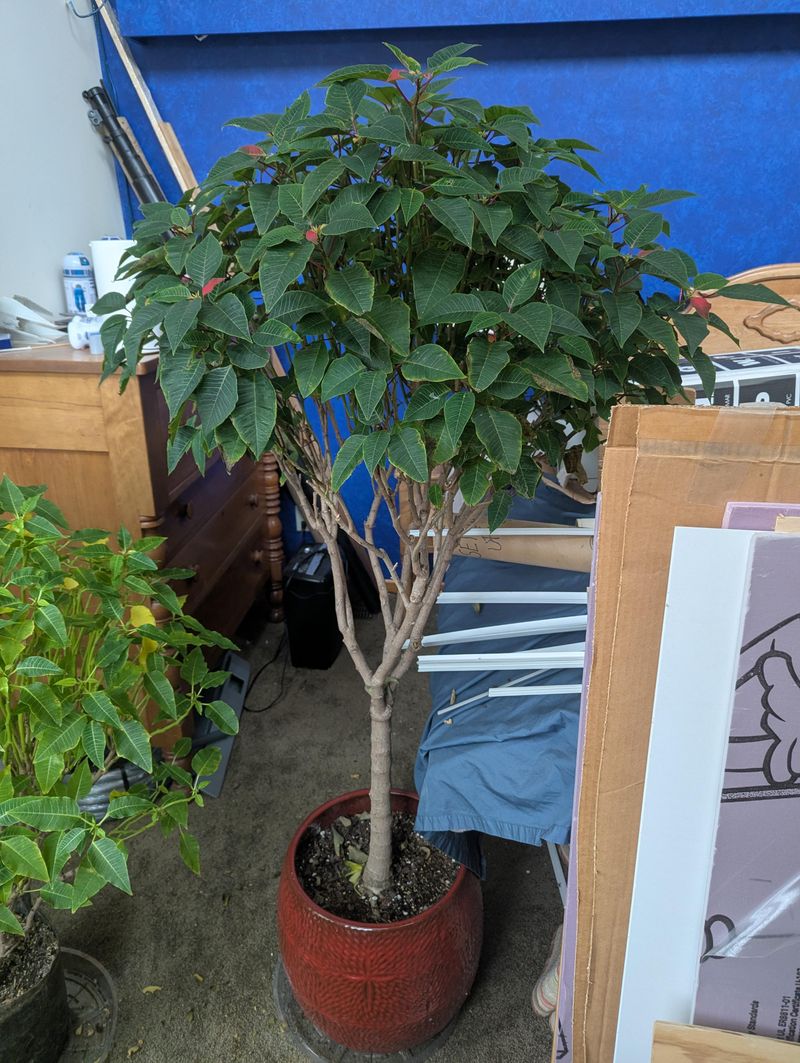
A great December display really starts months earlier. Reblooming is a year-round project, and summer is where the plant builds the stems that will carry next season’s color.
After the holidays, keep the plant in bright light and water as needed. In late winter or early spring, cut stems back to about 6 to 8 inches tall to encourage fresh, bushy growth.
Once frost danger passes, usually mid to late May in most of Ohio, the pot can spend summer outdoors. Pick a spot with morning sun and light afternoon shade.
Northern counties may need to wait a little longer than the southern part of the state.
Pinch the growing tips through summer for a fuller shape. Many extensions suggest the last pinch by around late August, so new shoots have time to mature before darkness treatment.
Bring the plant indoors before nights regularly dip toward 50 to 55 degrees, often in September. Check for hitchhiking insects like whiteflies first.
I love watching a scraggly post-holiday stick turn into a leafy shrub by August. That full, healthy plant is your best foundation for the darkness trick that follows.
8. Your Own Red Poinsettia Bracts Are Worth The Effort
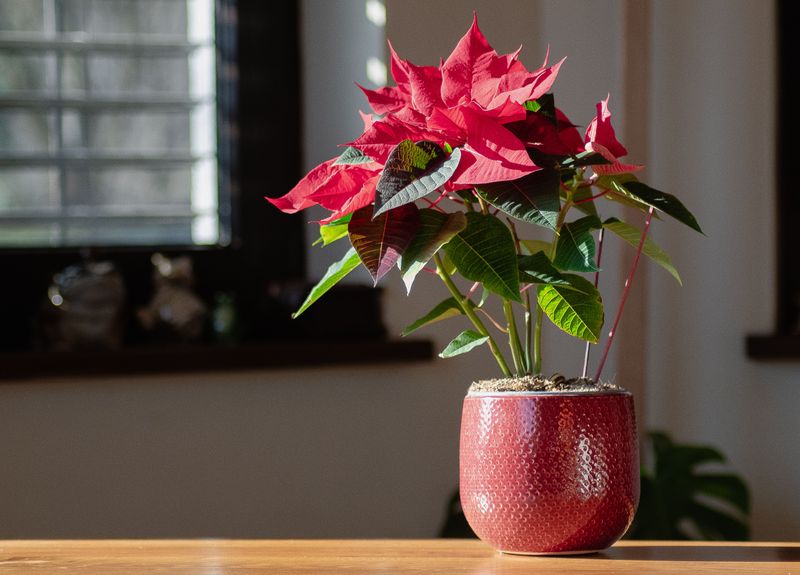
Few holiday moments beat spotting the first blush of red on a plant you kept going all year. It feels like a small, private victory.
Let’s recap the checklist. Guard those 14 dark hours from every lamp, phone screen, and opened door.
Give bright light by day, keep temperatures steady, and water with care.
Set realistic expectations, too. Homegrown plants are often a bit leggier than greenhouse ones, and colors might arrive slightly later.
That’s normal, not failure.
A fun fact for your holiday guests: Poinsettias are named for Joel Roberts Poinsett, the first U.S. minister to Mexico, who brought them north in the 1820s. December 12 is even National Poinsettia Day.
Worried about pets? The ASPCA notes poinsettias are only mildly irritating if chewed, far less of a concern than their reputation suggests.
Still, keeping them out of reach is wise.
If this year’s attempt falls short, take notes. Was there a hallway light, a warm vent, or skipped nights?
Each round teaches you something new.
I believe the real reward is the patience you build along the way. Next December, that glowing plant on your table will carry a story only you can tell.