These Michigan Native Plants Peak In August When The Rest Of The Garden Struggles With Heat
August in Michigan is when a lot of gardens start looking tired. Spring perennials are long finished.
Cool-season crops have bolted. The beds that looked full and vibrant in June develop gaps and a general sense of exhaustion.
A specific group of Michigan natives operates on a completely different schedule, building energy through the hottest part of summer and hitting their peak display right when everything else is fading. They did not struggle through July.
They were preparing for it. Knowing which natives belong in this category changes what August looks like in a Michigan garden entirely.
1. Cup Plant
Few plants command attention the way Cup Plant does in a late summer Michigan garden.
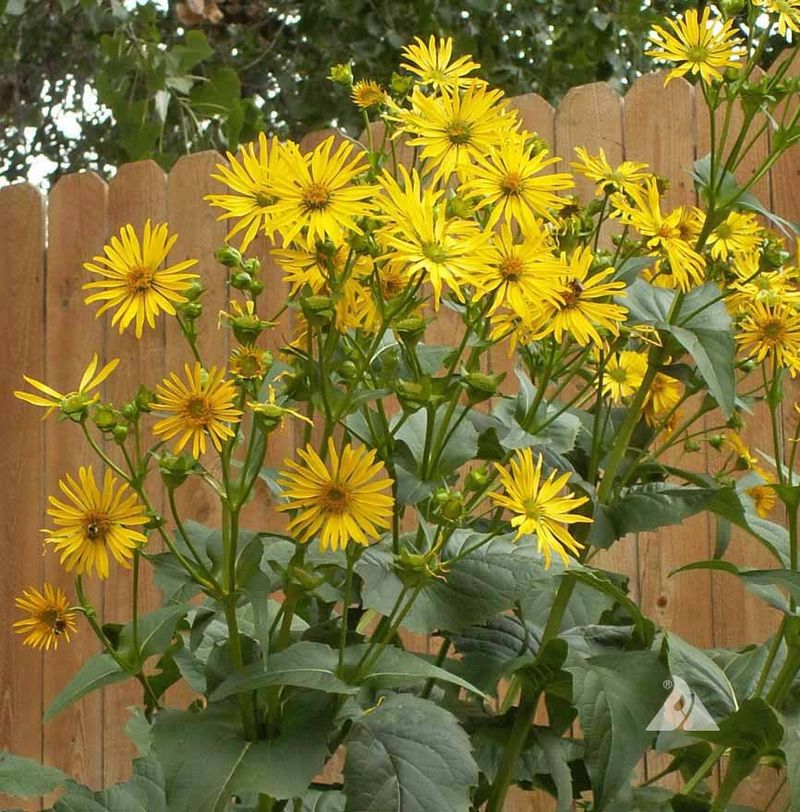
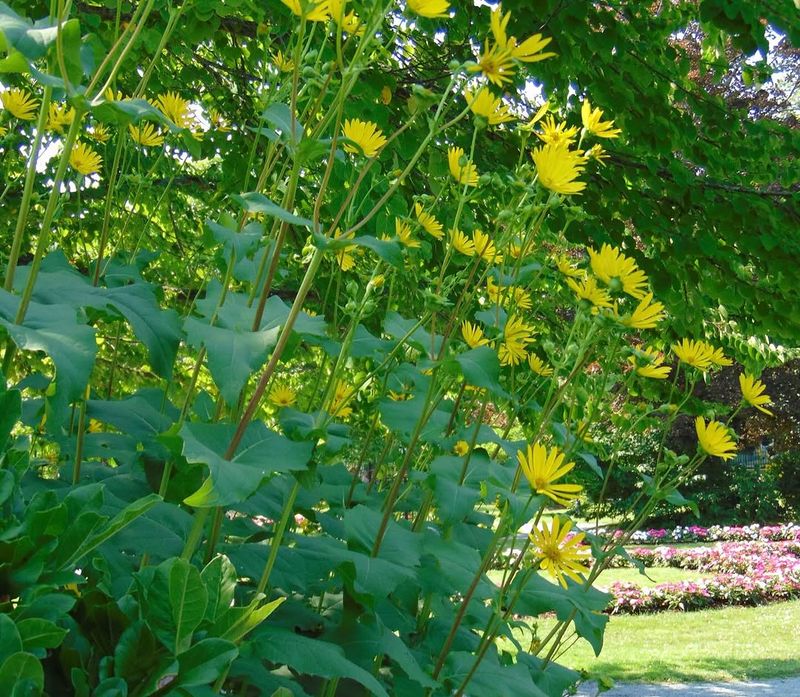
Standing anywhere from five to eight feet tall, it rises above almost everything else in the border and announces itself with clusters of bold, sunny yellow flowers that open throughout August.
The blooms are large, cheerful, and hard to miss from across the yard.
What makes Cup Plant genuinely fascinating is its leaf structure. The paired leaves fuse around the stem to form small cups that collect rainwater after every rain shower.
Birds have been spotted drinking from these little natural cups, and that detail alone makes it a conversation starter for any garden visitor.
Cup Plant thrives in full sun to partial sun and does best in average to moist soil, making it a strong choice for low spots, rain garden edges, or spots near downspouts.
It spreads over time, so give it room to grow and let it fill a naturalized area where its height becomes an asset rather than a problem.
Pollinators absolutely swarm the flowers, especially bees and goldfinches that feed on the seeds later in the season. For a plant that practically runs itself through August, Cup Plant delivers an impressive return for very little effort from the gardener.
2. Common Boneset
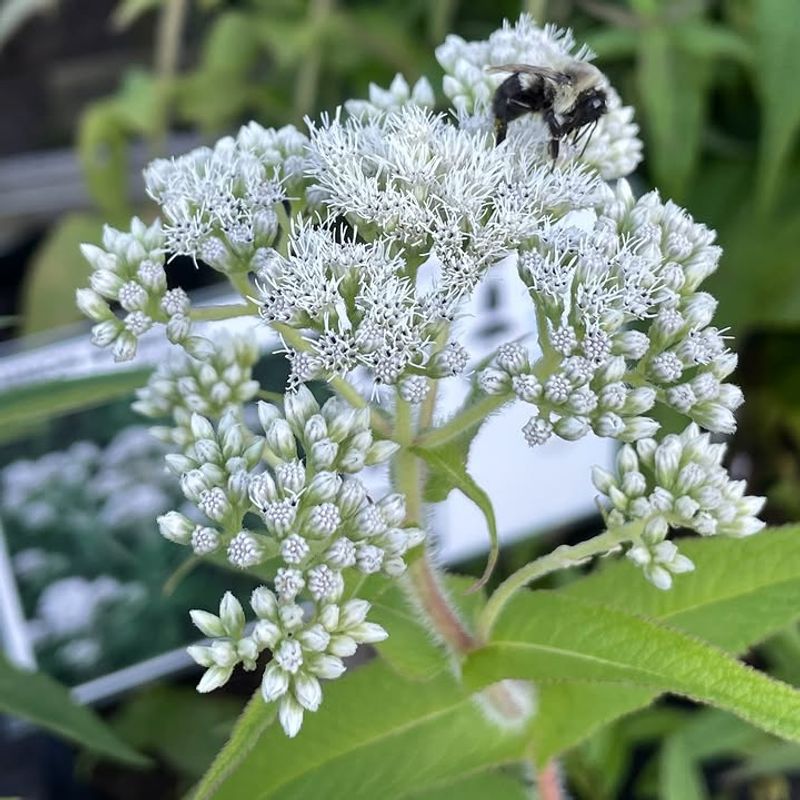
Common Boneset does not try to dazzle you with flashy colors, and that is actually part of its charm.
The flat-topped clusters of tiny white flowers are subtle at first glance, but walk closer and you will find them absolutely covered in butterflies, bees, and other beneficial insects. It earns its place in any serious Michigan native garden.
Blooming from August into early September, Common Boneset peaks right at the end of August when many other plants are already winding down. That late-season timing is exactly what makes it so valuable.
Pollinators need reliable nectar sources deep into the season, and Boneset answers that call consistently year after year.
It grows best in moist to wet soil and handles partial shade better than most August bloomers, which opens up spots along woodland edges, stream banks, and shaded rain garden zones that other plants simply cannot fill.
Heights typically range from two to four feet, making it a mid-border or naturalized edge plant rather than a towering background specimen.
The white flowers also pair beautifully with the purple tones of Ironweed and Rough Blazing Star nearby, creating a natural color contrast that looks intentional even in wilder plantings.
Your Michigan Garden Changes Every Week. Your Plan Should Too.
Gardening in Michigan changes quickly throughout the season. Every Friday you’ll receive a simple weekly plan showing exactly what to plant, prune, fertilize, harvest, and protect so you never miss the right timing.
For gardeners who want ecological function and late-season structure without fussing over the plant, Common Boneset is a reliable, honest performer.
3. Blue Lobelia
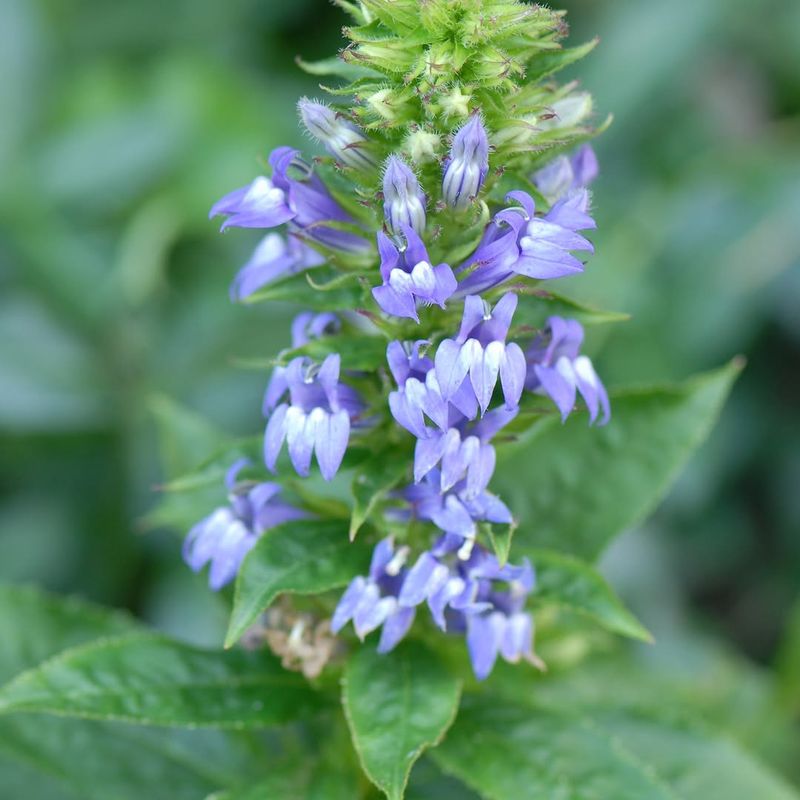
When the rest of the garden fades to yellows and browns, Blue Lobelia shows up with some of the richest color of the entire growing season.
The tall flower spikes are a deep blue to purple that feels almost electric in the late summer light, and they draw bumblebees in numbers that make the plants practically vibrate with activity.
Blue Lobelia blooms throughout August and stretches into early September, giving it a long window of impact right when color is hardest to come by.
It grows best in moist to wet soil, which makes it a natural fit for rain gardens, shoreline plantings, ditch edges, and wet meadow zones that challenge most ornamental plants.
Partial sun suits it well, though it can handle more shade than you might expect.
Heights generally reach two to four feet, and the upright form works nicely at the mid to back section of a moist border.
Planting it in groups of three or more creates a stronger visual punch and gives visiting bees a concentrated foraging patch rather than scattered individual plants.
Blue Lobelia also self-seeds modestly, meaning a small planting can gradually fill in over a few seasons without becoming invasive or unruly.
For any Michigan gardener working with a wet or low-lying spot that seems impossible to plant, Blue Lobelia is a genuinely beautiful solution that earns its space every single August.
4. Missouri Ironweed
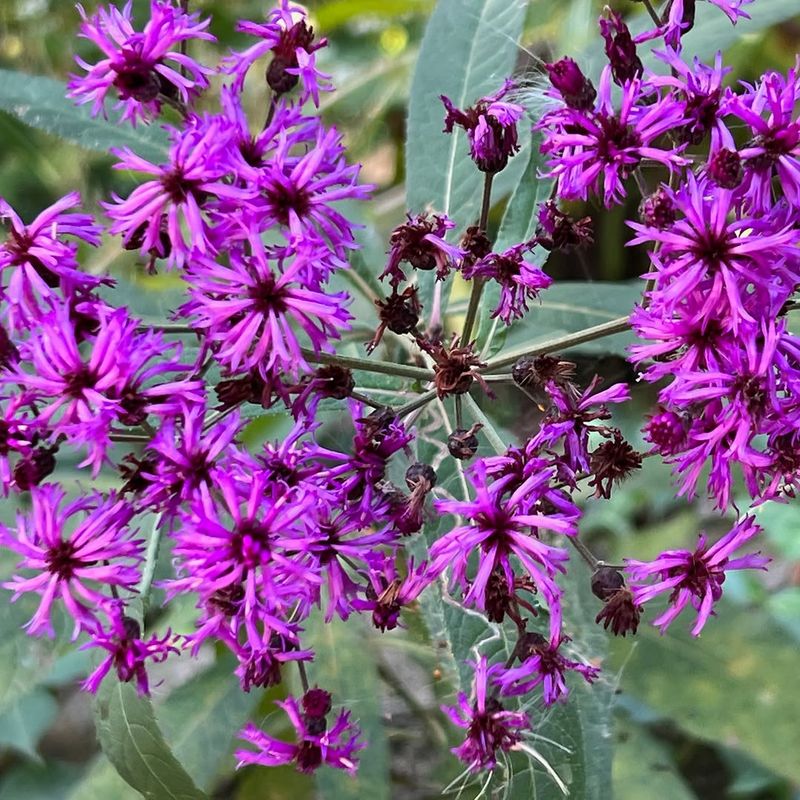
There is nothing quiet about Missouri Ironweed. The flower color is an intense, almost jewel-toned purple that stops people in their tracks, and when it opens in August, it brings a level of drama that few native plants can match at that time of year.
If your late summer garden feels like it needs a focal point, this plant delivers one without any help from you.
Missouri Ironweed typically grows three to six feet tall in Michigan garden conditions, making it a strong back-of-border or naturalized area plant.
It flowers throughout August, which gives it a long run of peak color during the hottest stretch of the season.
Sunny rain gardens, moist low borders, and naturalized wet meadow areas are where it performs best, and it handles heat without flinching once it is established.
Pollinators respond to Ironweed with real enthusiasm. Monarchs, swallowtails, and a wide range of native bees visit the blooms consistently, making it one of the most ecologically active plants you can put in a late summer garden.
The upright stems hold their shape well even in wind, and the plant does not flop or require staking in typical garden conditions.
Pair it with yellow Cup Plant or white Common Boneset nearby to create a bold, natural color combination that looks like it belongs in the Michigan landscape, because it genuinely does.
5. Spotted Joe Pye Weed
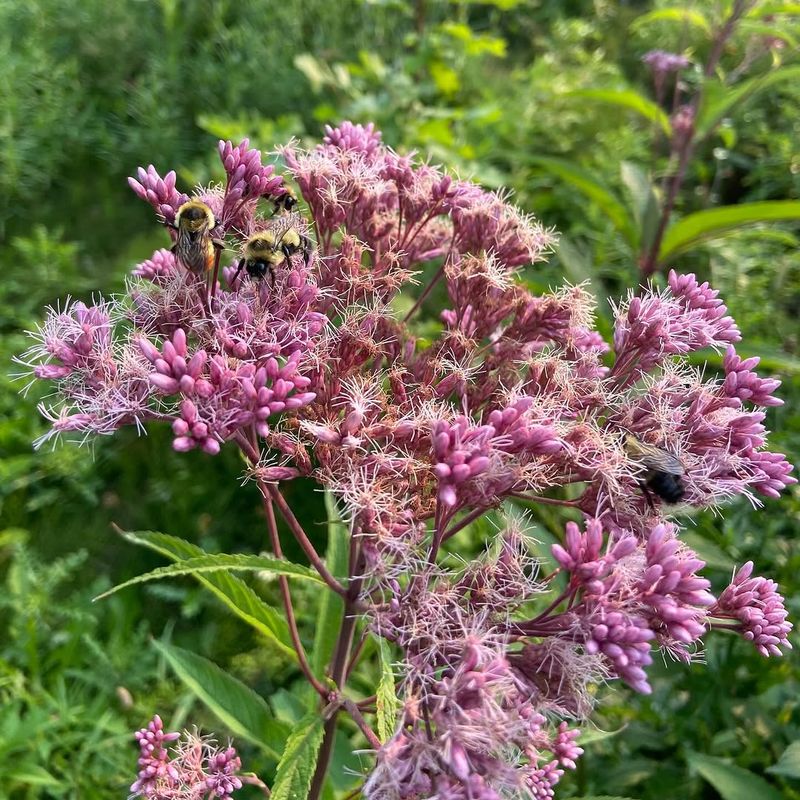
Spotted Joe Pye Weed is the kind of plant that makes a garden feel complete.
The large, domed flower heads in dusty rose to mauve pink sit on top of tall, sturdy stems that can reach six feet or more, giving the garden a bold architectural presence that carries through the heat of late summer without skipping a beat.
It blooms from midsummer into early fall, with peak color landing right in the heart of August in Michigan. Native to the state, it is well adapted to the local climate and soil conditions found across much of the Lower and Upper Peninsula.
Moist, sunny spots are where it thrives, and it performs especially well near shorelines, swales, wet meadow zones, and large pollinator garden beds where there is consistent soil moisture.
The pollinator activity on Joe Pye Weed in August is genuinely remarkable. Monarchs, fritillaries, swallowtails, and dozens of native bee species all visit the blooms, making a mature clump feel like a wildlife hub on a warm August afternoon.
The plant spreads slowly over time and forms attractive clumps that look increasingly natural and intentional as they mature.
For Michigan gardeners who want height, late-season color, and a plant that pulls serious ecological weight, Spotted Joe Pye Weed checks every box and then keeps going straight into September.
6. Swamp Milkweed
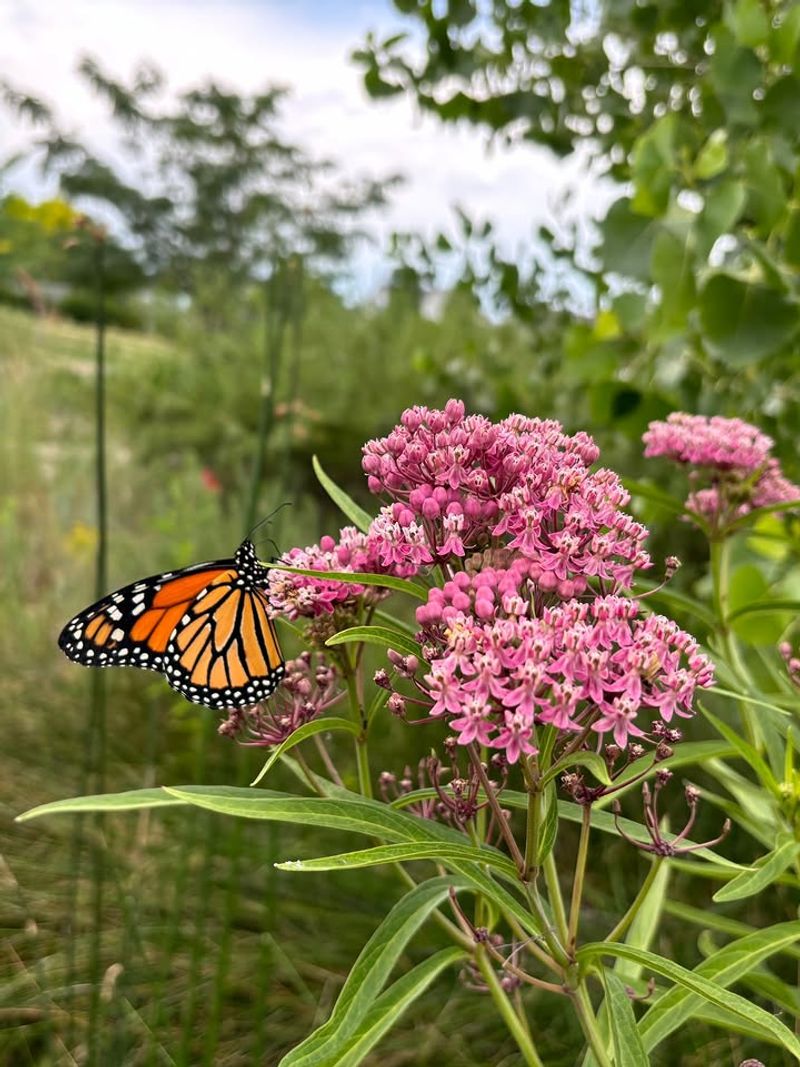
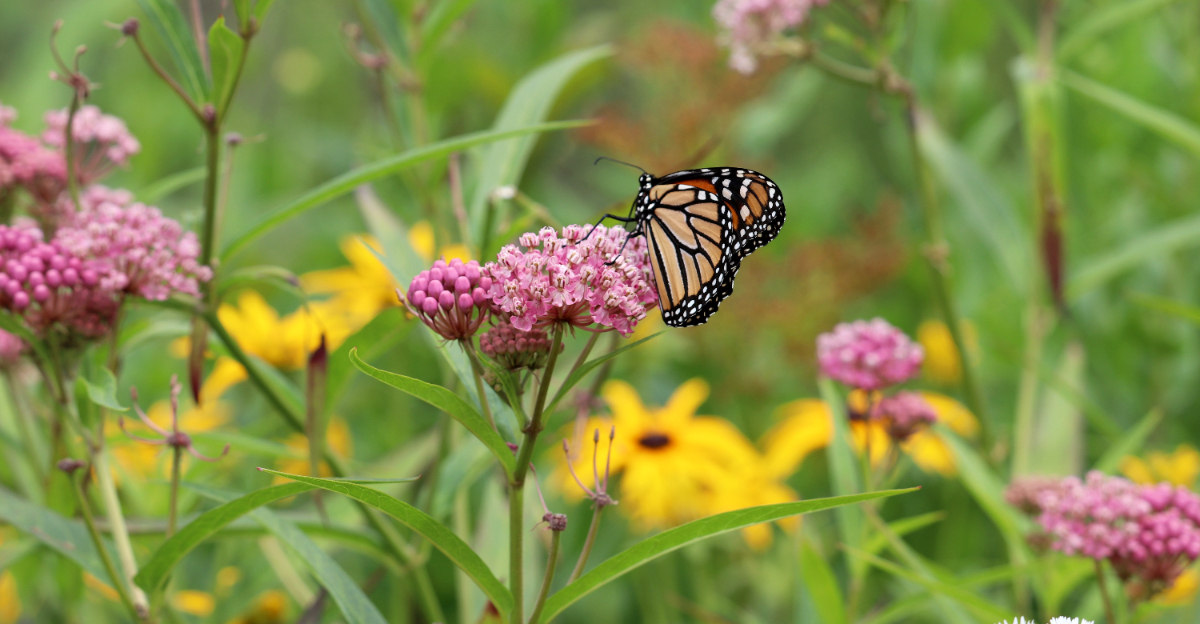
Swamp Milkweed brings something to the August garden that goes beyond looks. The soft pink flower clusters are genuinely pretty on their own, but the real story is what lands on them.
Monarch butterflies seek out milkweed plants for breeding and feeding, and Swamp Milkweed is one of the most reliable native options Michigan gardeners can grow to support that relationship.
It blooms from mid-July into mid-August, so early August is its prime window. Planting it in a spot where you can watch it from a window or patio pays off during that stretch because the activity around the flowers is constant and fascinating.
Moist to wet soil in full sun suits it best, and it fits naturally into rain gardens, damp sunny borders, and low spots near retention areas or downspouts.
Unlike common milkweed, Swamp Milkweed stays in a tidy clump and does not spread aggressively through underground runners, which makes it much easier to manage in a designed garden setting.
Heights typically range from three to four feet, placing it comfortably in the mid to back section of a moist border.
The seed pods that form after blooming add late season texture and interest before winter sets in.
For any Michigan gardener who wants to support monarch habitat while also adding genuine color to a rain garden or damp sunny area, Swamp Milkweed earns its spot every summer.
7. Evening Primrose
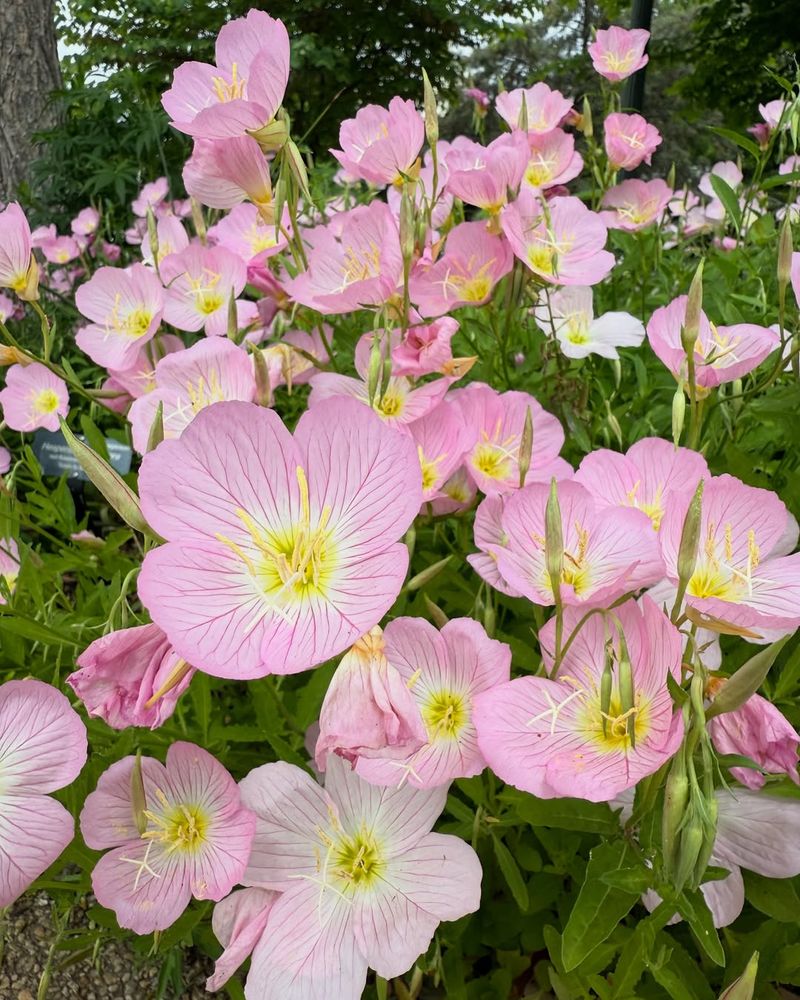
Evening Primrose has a personality all its own. The pale yellow, cup-shaped flowers open in the early evening and stay open through the morning, which means early risers and evening gardeners both get to enjoy them at their best.
That unusual timing gives the plant a quiet, almost magical quality that most summer bloomers simply do not have.
As a native biennial, Evening Primrose spends its first year building a leafy rosette close to the ground, then sends up its tall flowering stalk in its second year. It blooms from late July into mid-August, filling a useful window in the native plant calendar.
The flowers support a range of late summer beneficial insects, including specialist native bees that visit specifically for Evening Primrose pollen, making it more ecologically valuable than its informal appearance suggests.
It fits naturally in meadow edges, informal native beds, and wilder garden corners where a more relaxed, naturalistic look is welcome. Once established, it self-seeds and maintains a presence in the garden without needing replanting each year.
Heights can reach three to five feet, giving it a noticeable vertical presence in an open meadow or along a fence line.
For gardeners who enjoy plants with a story and a slightly unexpected character, Evening Primrose adds a touch of something genuinely interesting to the late summer Michigan garden without demanding much attention in return.
8. Rough Blazing Star
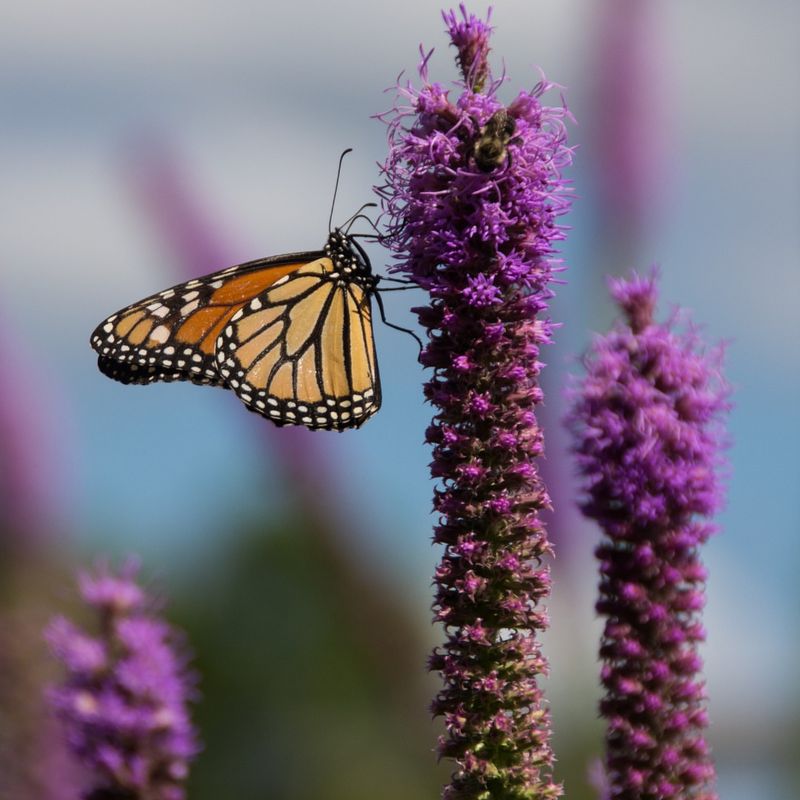
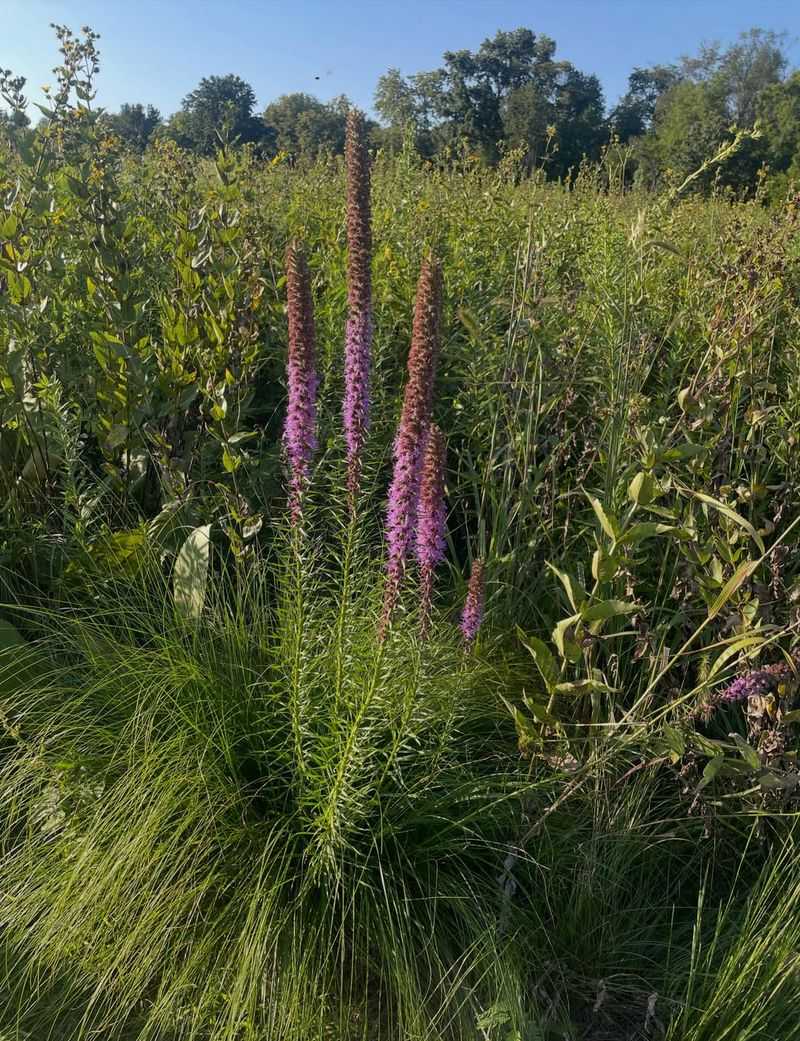
Rough Blazing Star saves some of its best energy for the back half of August. While other plants are wrapping up, this one is just hitting its stride, sending up tall, vivid purple flower spikes that bees seem to find completely irresistible.
On a warm late-August afternoon, a patch of Rough Blazing Star in full bloom can be one of the most active spots in the entire garden.
It blooms in late August into early September, making it one of the later native bloomers on this list.
That timing matters because it bridges the gap between the August peak and the early fall season, keeping the garden visually strong and ecologically active right through the transition.
Bumblebees and migrating monarch butterflies both visit the flowers with notable frequency.
Unlike many of the August natives that prefer moist conditions, Rough Blazing Star actually performs better in dry to average soil and full to partial sun. That makes it a go-to option for leaner, sunnier spots where Cup Plant or Joe Pye Weed would struggle.
Rocky slopes, dry prairie-style plantings, and sunny spots with sandy or well-drained soil are exactly where it looks most at home. Heights typically reach two to four feet, and the upright form works well in the middle or back of a dry border.
For gardeners with challenging dry sunny areas, Rough Blazing Star is the August answer they have been looking for.
9. Why August Native Plants Matter
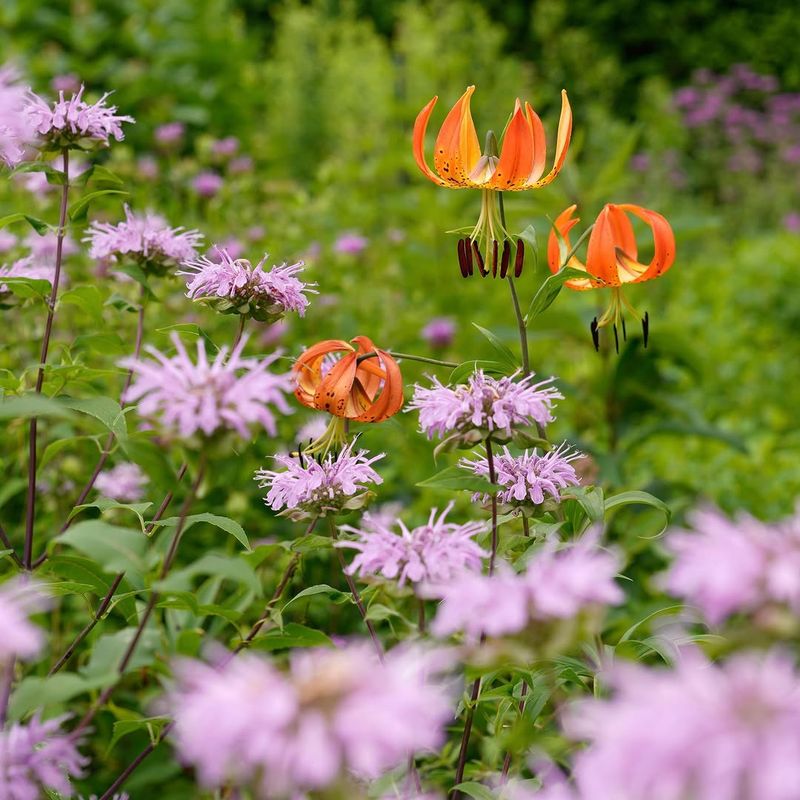
August sits in a tricky spot in the Michigan garden calendar. Spring perennials like peonies and irises finished months ago, and the reliable early summer bloomers have mostly run their course.
What is left in many traditional gardens is a stretch of tired foliage, struggling annuals, and not much happening for the insects and birds that depend on the garden all season long.
That gap is exactly where August-blooming native plants step in and change everything. Pollinators do not stop needing food just because summer is at its hottest.
Bees are still raising young in their nests, monarchs are building energy for their long migration south, and native butterflies are moving through in steady numbers.
A garden without late summer bloom is a garden that fails them right when they need support most.
Beyond the ecological benefit, August natives simply make the garden look alive and purposeful during a stretch when many yards go flat and uninteresting.
Heat, dry spells, and the natural slowdown of spring plants can leave a garden looking neglected even when it is not.
Planting natives that are specifically adapted to peak in August solves that problem at the source rather than patching it with annual replacements.
The result is a garden that earns its keep all the way through the season, not just in the easy spring months when almost anything will bloom.
10. Match The Plant To The Moisture
One of the most common mistakes Michigan gardeners make with native plants is treating them all the same way.
The August bloomers on this list do not all want the same conditions, and planting a moisture-loving species in a dry, breezy spot or a drought-tolerant one in a soggy low area will hold it back no matter how well everything else is done.
Cup Plant, Common Boneset, Blue Lobelia, Spotted Joe Pye Weed, and Swamp Milkweed all prefer moist to wet soil conditions.
These are the plants to reach for when filling rain gardens, low spots, areas near downspouts, or sites along pond edges and stream banks.
They are built for moisture and will reward a consistently damp site with strong growth and heavy bloom.
Rough Blazing Star works from the opposite end of the spectrum, preferring dry to average, well-drained soil in full to partial sun.
Planting it in a wet spot will cause the roots to struggle, while placing it in a lean, sunny, dry border gives it exactly what it needs to thrive.
Evening Primrose and Missouri Ironweed land somewhere in the middle, handling average soil reasonably well as long as they get enough sun.
Reading the site before choosing the plant is what separates a garden that looks strong in August from one that looks like it is barely hanging on through the heat.
11. Use Height To Your Advantage
Height is one of the most powerful design tools in a native garden, and August bloomers in Michigan give you a lot of it to work with.
Cup Plant can reach eight feet, Spotted Joe Pye Weed often hits six feet, and Missouri Ironweed regularly climbs to five or six feet.
Put those plants in the wrong spot and they block everything behind them and overwhelm everything in front.
The smart move is to position these tall natives at the back of borders, along fences, near wet edges, or in naturalized areas where their scale feels natural rather than accidental.
When they grow in the right spot, their height becomes a backdrop that makes shorter plants pop rather than a wall that swallows the rest of the garden.
Along a property edge or behind a rain garden, a row of Joe Pye Weed and Cup Plant looks intentional and polished.
Shorter plants like Blue Lobelia, Swamp Milkweed, and Rough Blazing Star belong in front of those tall background plants so the garden reads as layered and full rather than a jumble of competing heights.
Staggering plant heights from front to back creates depth and makes a border feel much larger than it actually is.
Even a modest garden bed can look professionally designed when the heights are thoughtfully arranged, and with August natives, the structure practically builds itself if you start with the tallest plants at the back.
12. Build An August Garden That Looks Alive
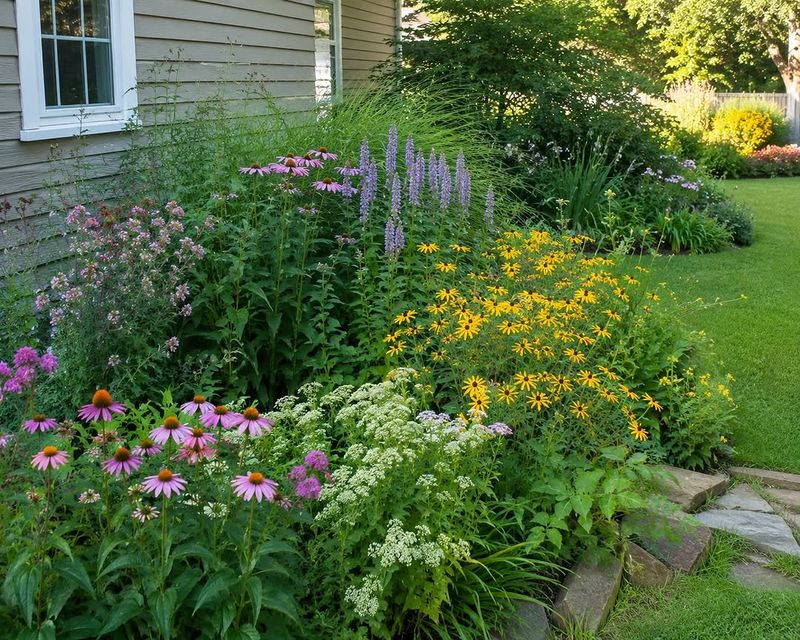
Putting together an August garden that genuinely looks alive is not about planting as many natives as possible. It is about choosing the right mix of colors, heights, and bloom times so the garden feels full and dynamic rather than random.
The plants on this list cover yellow, white, blue, purple, and pink, which gives you a natural color range that works together without clashing.
Start with the bold yellows of Cup Plant at the back, then layer in the mauve pink of Spotted Joe Pye Weed and the vivid purple of Missouri Ironweed for height and drama.
Swamp Milkweed adds softer pink tones in the moist mid-border while Blue Lobelia brings cool blue spikes to rain garden edges and wet spots.
Evening Primrose fills wilder corners with pale yellow, and Rough Blazing Star carries purple into the dry, sunny sections where other plants would fade.
White Common Boneset ties everything together with a neutral that works against every other color in the mix.
The most accurate August planting plan is never one plant for every yard. The right choice is always the native plant matched carefully to the sun exposure, soil moisture level, available space, and the realistic maintenance style of the gardener tending it.
Get those four factors right, and the plants do the rest. August stops being the season your garden struggles and becomes the season it peaks.