These North Carolina Plants Fill Shady Spots Better Than Hostas
Hostas are the default answer for shade in North Carolina, and they earn that status. They are reliable, they come in a range of sizes, and they fill a difficult spot without much fuss.
The problem is that once you have hostas, you tend to keep getting hostas, and a shade garden built entirely around one plant starts to feel repetitive after a few seasons.
North Carolina has plants that handle low light just as well and bring things to a shady bed that hostas simply cannot.
Some bloom more generously. Some offer texture and structure that holds interest through the whole growing season rather than just the summer months.
A few attract pollinators that rarely visit hostas at all. They are worth knowing about whether you are starting fresh or ready to try something different.
1. Christmas Fern
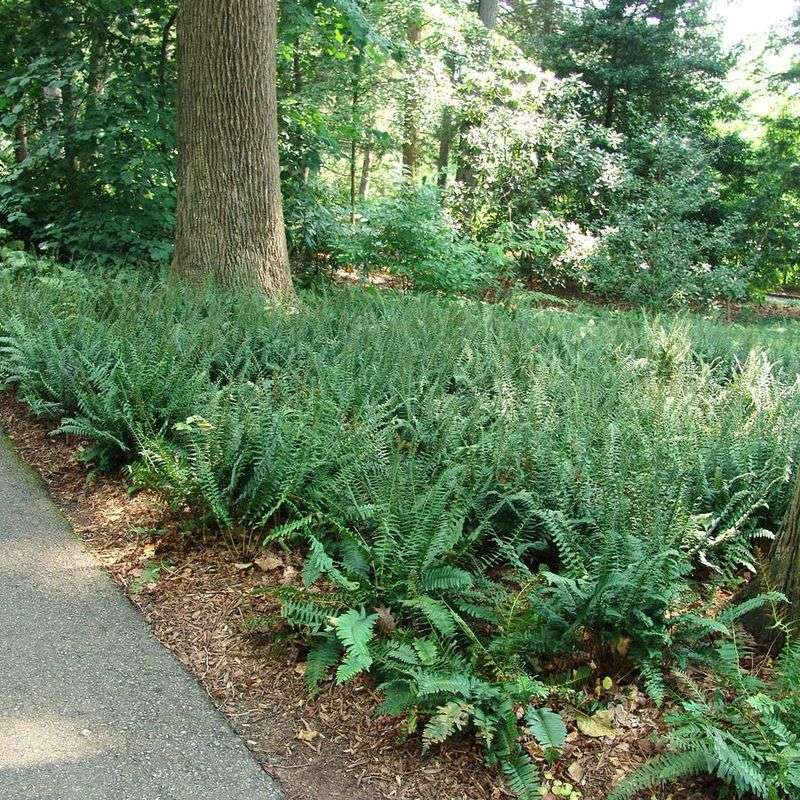
Some plants just refuse to quit, and the Christmas Fern is one of them. Named for staying green straight through the holiday season, this evergreen native fern brings life to shady beds even when everything else has faded.
It’s one of the most reliable plants you can grow in a North Carolina shade garden, and it asks for almost nothing in return.
The deep green, leathery fronds arch gracefully and can reach up to two feet long. They hold their color beautifully through frost and snow, making your garden look alive and intentional all year.
Plant them along wooded slopes, under large trees, or beside pathways where their tidy shape really stands out.
Christmas Ferns thrive in moist, well-drained soil with plenty of organic matter, but they’re surprisingly tolerant once established. They handle dry spells better than most ferns, which is a big plus during our summers.
Wildlife loves them too, as they provide shelter for small creatures near the forest floor. Pair them with wild ginger or foamflower for a layered, naturalistic look.
No fertilizing, no fussing, just consistent beauty that rewards you every single month of the year.
2. Southern Lady Fern
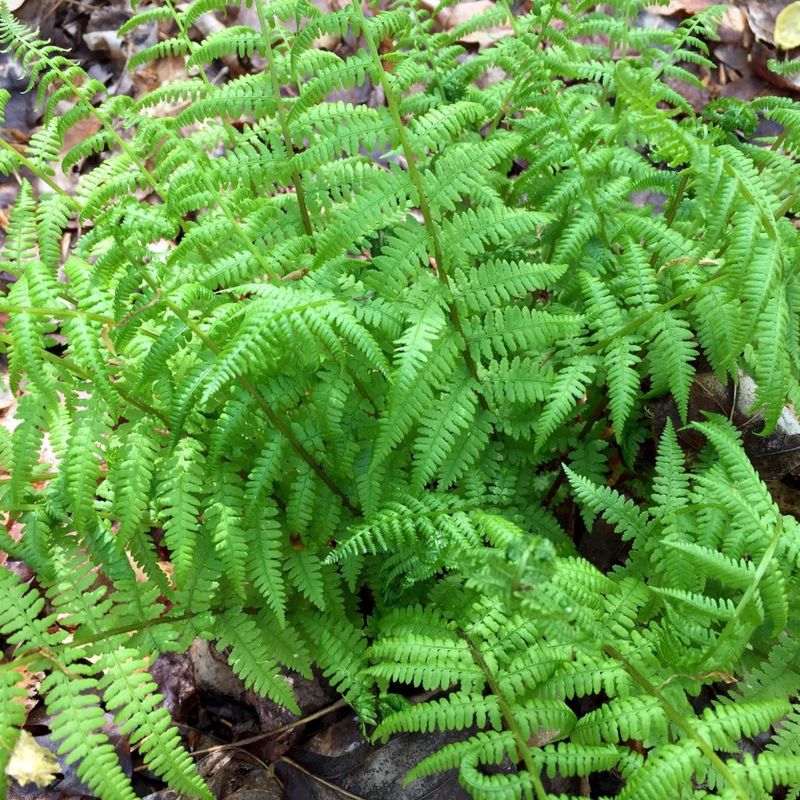
Soft, feathery, and effortlessly elegant, the Southern Lady Fern is the kind of plant that makes a shady corner look like it belongs in a nature magazine.
This native fern grows across much of the Southeast and is perfectly adapted to North Carolina’s warm summers and mild winters.
It’s a cousin of the well-known Japanese painted fern, but this one is all Carolina charm.
The fronds are finely textured and light green, arching outward in a vase-like shape that fills space beautifully without crowding. They can reach two to three feet tall, adding real presence to a shaded border or woodland bed.
Unlike many exotic ferns, the Southern Lady Fern supports local insects and fits naturally into the native ecosystem.
Plant it in consistently moist soil with good drainage and rich organic content. It does best in medium to deep shade but can tolerate a bit of morning sun if the soil stays moist.
During dry summers, a layer of leaf mulch keeps the roots happy and the fronds looking fresh. Combine it with foamflower, creeping phlox, or wild ginger for a lush, layered planting that feels completely at home in a North Carolina woodland garden.
Your North Carolina Garden Changes Every Week. Your Plan Should Too.
Gardening in North Carolina changes quickly throughout the season. Every Friday you’ll receive a simple weekly plan showing exactly what to plant, prune, fertilize, harvest, and protect so you never miss the right timing.
It spreads slowly by rhizomes, gradually filling gaps with graceful green texture.
3. Foamflower
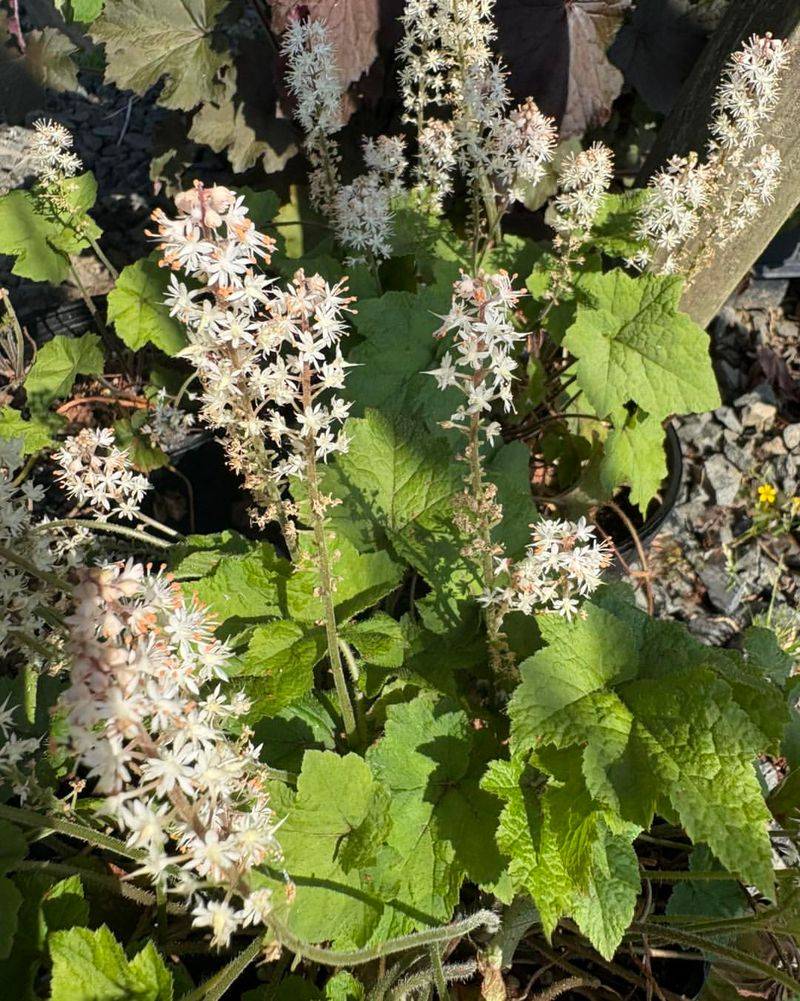
Picture a groundcover that blooms like a cloud in spring and looks good for the rest of the year too. That’s Foamflower in a nutshell.
This native perennial earns its name from the frothy white flower spikes that rise above its foliage every spring, creating a soft, dreamy effect across shaded beds. It’s one of the most charming native plants North Carolina has to offer.
The leaves are maple-shaped with attractive veining, sometimes showing bronze or reddish tones depending on the variety and season. They stay low to the ground, forming a dense mat that suppresses weeds naturally.
In spring, flower stalks shoot up six to twelve inches, covered in tiny white to pale pink blossoms that attract early pollinators when not much else is blooming yet.
Foamflower spreads by stolons, slowly filling in gaps and creating a seamless carpet under trees or along shaded paths. It prefers moist, humus-rich soil and moderate to deep shade, making it ideal for spots beneath oaks or maples.
Once established, it’s quite low-maintenance and fairly drought-tolerant. Pair it with Christmas Fern or wild ginger for a layered, naturalistic look.
This plant brings together beauty, function, and ecological value in one compact, reliable package that keeps giving season after season.
4. Wild Ginger
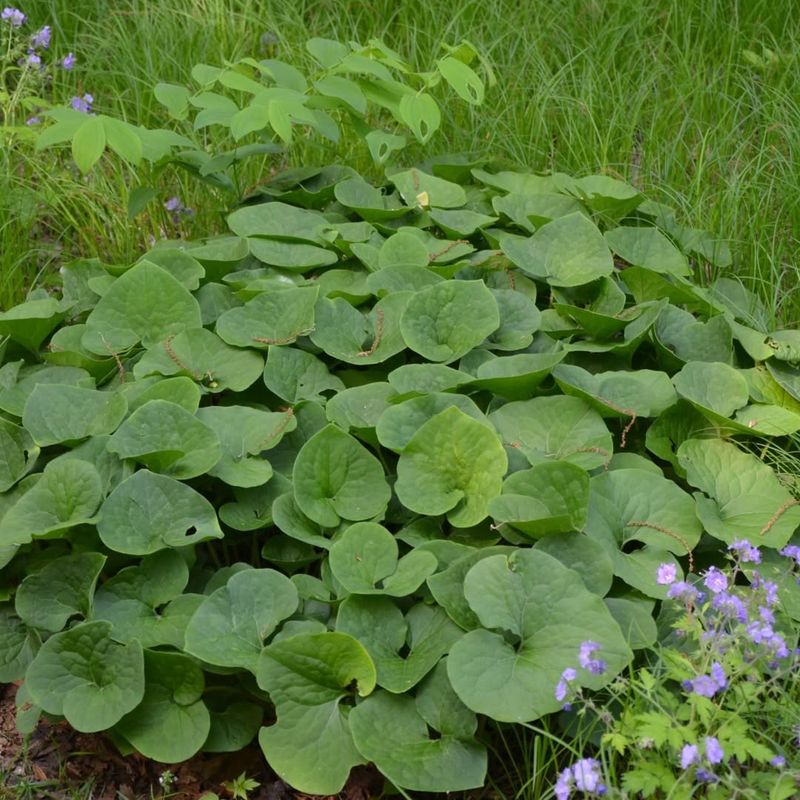
There’s something quietly wonderful about a plant that does its best work close to the ground, out of the spotlight. Wild Ginger is exactly that kind of plant.
With its broad, heart-shaped leaves forming a dense, weed-blocking carpet, it’s one of the most practical and attractive groundcovers you can use in a shaded garden. It won’t dazzle you with flashy blooms, but its steady, lush presence is genuinely satisfying.
The leaves are large, soft, and a rich medium green that stays looking fresh through most of the growing season. In early spring, tiny brownish-red flowers appear right at soil level, almost hidden beneath the foliage.
They’re fascinating up close, even if most people never notice them. The plant spreads gradually by rhizomes, filling in areas under trees where grass refuses to grow.
Wild Ginger thrives in moist, well-drained, humus-rich soil in medium to deep shade. It’s native to eastern North American woodlands, so it’s completely at home under the oaks, hickories, and maples common across North Carolina.
Once established, it handles drought reasonably well and rarely needs attention. Fun fact: the roots have a spicy, ginger-like scent when bruised, though this plant is not related to culinary ginger.
Combine it with foamflower or Christmas Fern for a layered, naturalistic planting that looks effortlessly beautiful year-round.
5. Green And Gold
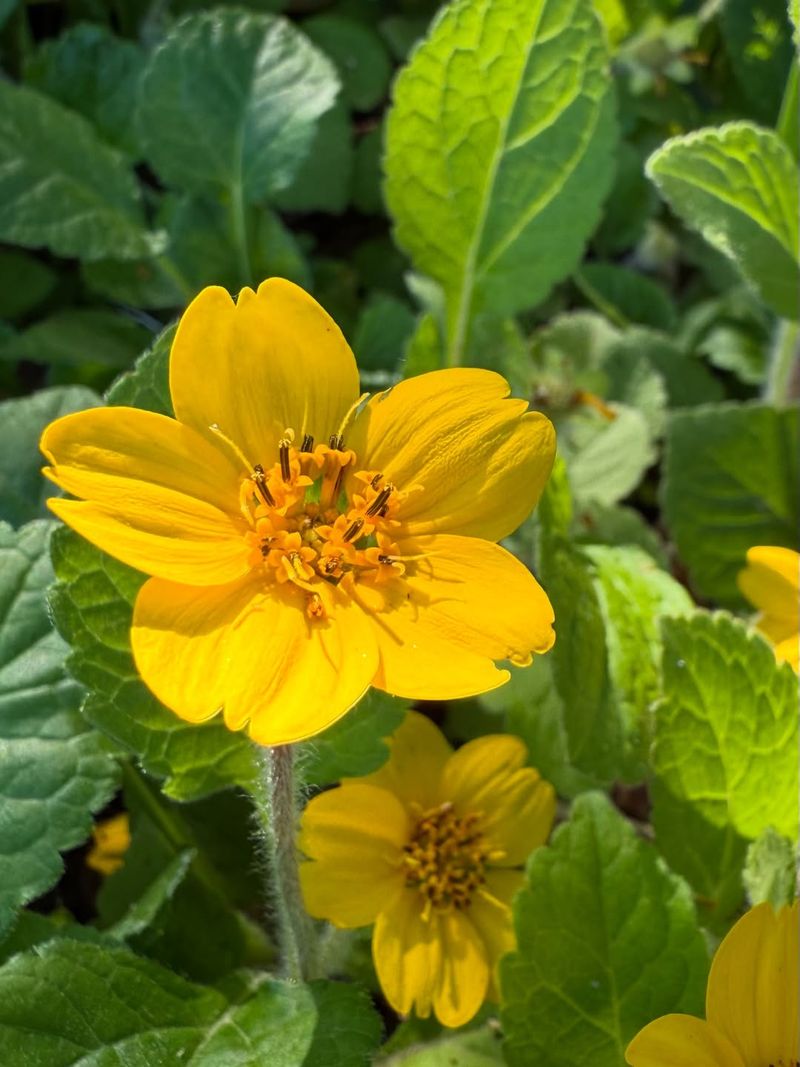
If you want a native groundcover that actually blooms for months on end, Green and Gold is about to become your new favorite plant.
This cheerful little perennial produces bright yellow, star-shaped flowers from early spring well into summer, and sometimes again in fall.
It’s one of the longest-blooming native groundcovers in the Southeast, and North Carolina gardeners absolutely love it for that reason.
The plant stays low, usually under a foot tall, with semi-evergreen foliage that holds up nicely through mild North Carolina winters. The leaves are a fresh, medium green that contrasts beautifully with the golden blooms.
It spreads slowly by stolons, forming a loose mat that fills shaded edges, slopes, and borders without becoming aggressive or invasive.
Green and Gold is adaptable to a range of soil types as long as drainage is decent. It handles both dry shade and moist woodland conditions, making it more versatile than many native alternatives.
Partial to full shade suits it well, though a little dappled morning light encourages more blooms. It’s a great choice for planting along shaded walkways, under flowering shrubs, or at the base of large trees.
Pollinators, especially native bees, are drawn to the flowers during their long bloom season. Plant it alongside creeping phlox or foamflower for a colorful, layered spring display that keeps the garden feeling lively and full of energy.
6. Allegheny Spurge
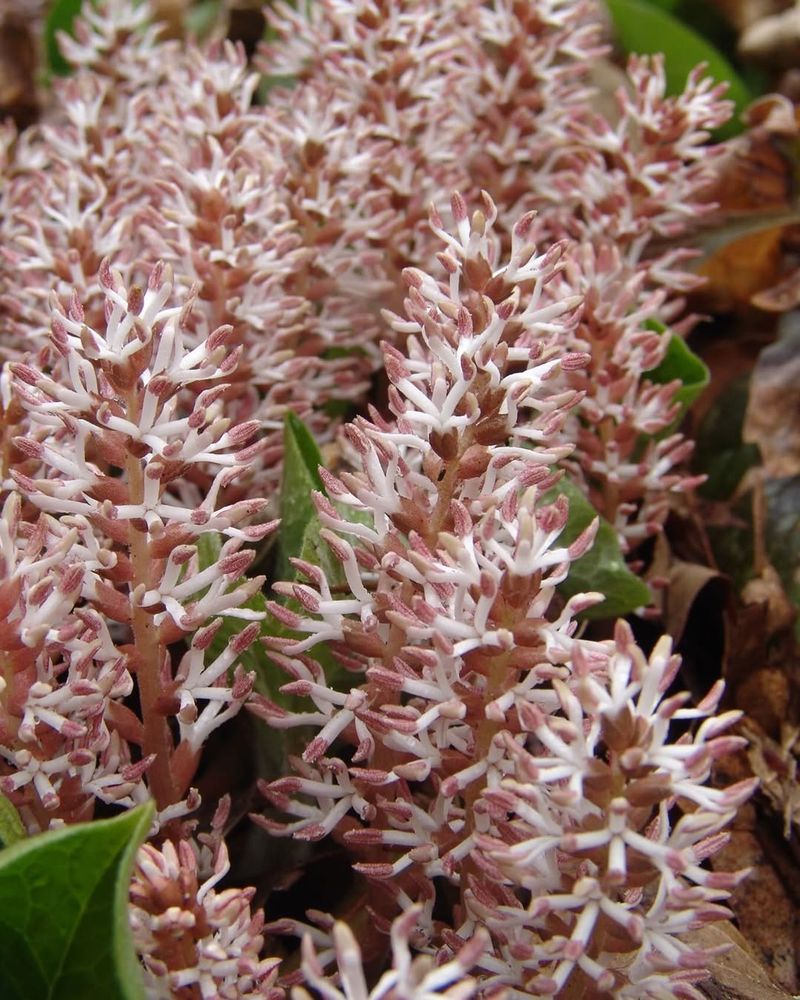
Most gardeners reach for the Japanese Pachysandra without realizing North Carolina has its own native version that’s actually more beautiful and far better for local wildlife.
Allegheny Spurge, or Pachysandra procumbens, is a native groundcover that deserves a spot in every shaded yard in the state.
It offers everything the exotic version does, plus striking mottled foliage and fragrant spring flowers that the Japanese type simply can’t match.
The leaves are large, rounded, and decorated with silvery-gray mottling that gives the plant an almost painted appearance.
In late winter to early spring, fragrant white flower spikes emerge before the foliage fully unfurls, offering an unexpected and lovely late-winter display. The overall effect is sophisticated and natural at the same time.
Allegheny Spurge prefers moist, humus-rich soil in medium to deep shade. It’s semi-evergreen in North Carolina’s climate, meaning the foliage often persists through winter before being replaced by fresh growth in spring.
It spreads slowly, which makes it easy to manage and ideal for foundation beds, shaded borders, or woodland edges. Unlike its invasive Japanese relative, this plant supports native insects and fits naturally into the local ecosystem.
Give it time to establish and it will reward you with a dense, weed-suppressing mat that looks genuinely stunning throughout the year. It pairs beautifully with Christmas Fern and wild ginger.
7. Heartleaf Aster
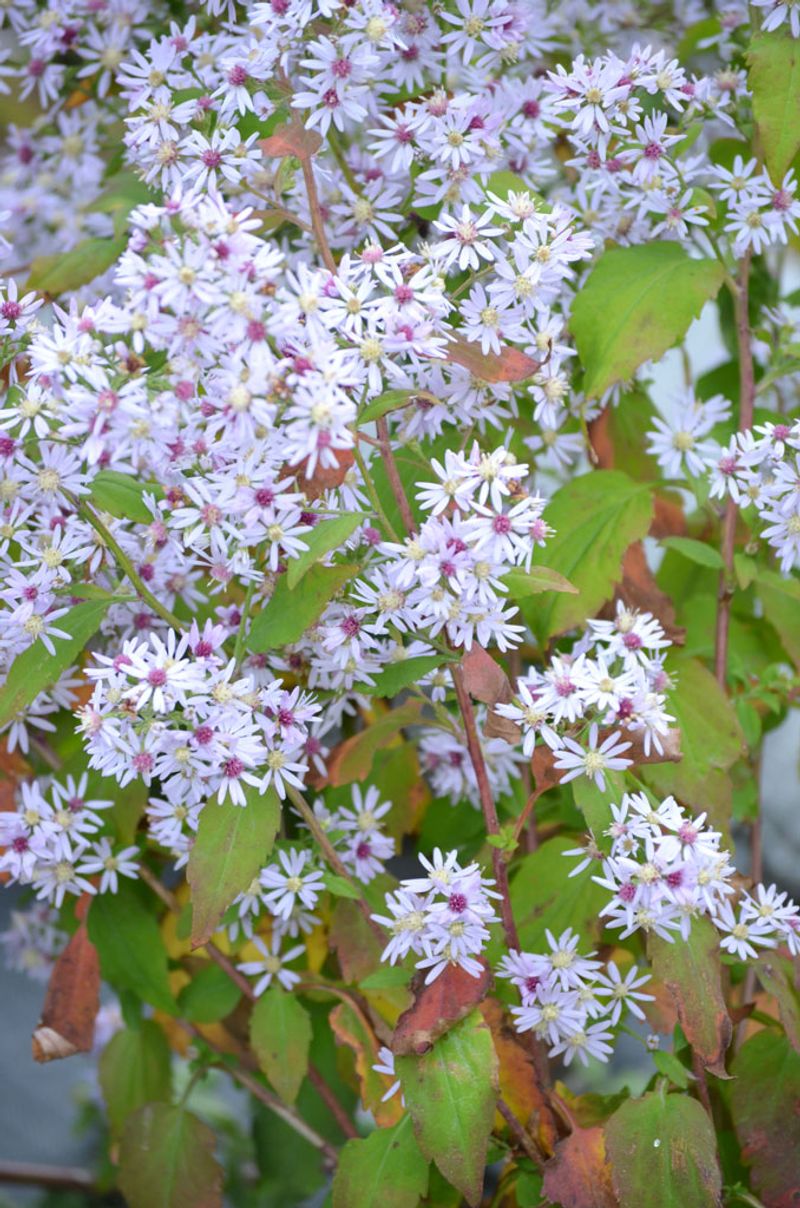
When the rest of the garden is winding down in fall, the Heartleaf Aster is just getting started.
This native perennial explodes into clouds of small blue-lavender flowers in September and October, turning shaded borders into a late-season spectacle that stops people in their tracks.
It’s one of the best fall-blooming natives for partly shaded spots in North Carolina, and pollinators absolutely swarm it.
The plant gets its name from its heart-shaped basal leaves, which are attractive throughout the growing season even before flowering begins. It grows two to four feet tall, creating an airy, billowing effect when in full bloom.
The flower clusters are light and delicate, almost like a lavender mist settling over the garden bed.
Heartleaf Aster thrives in partial shade to full shade and tolerates a range of soil conditions, from average to moderately moist. It’s a tough, adaptable plant that handles the heat and humidity of North Carolina summers without complaint.
Native bees, butterflies, and other pollinators rely heavily on late-blooming asters for critical fall nutrition before winter. Planting this aster is genuinely one of the most impactful things you can do for local pollinators.
It self-seeds moderately, so you may find friendly new plants popping up nearby each year. Pair it with Solomon’s Seal or Blue Wood Sedge for a naturalistic, layered shade planting that offers multi-season interest and ecological value.
8. Blue Wood Sedge
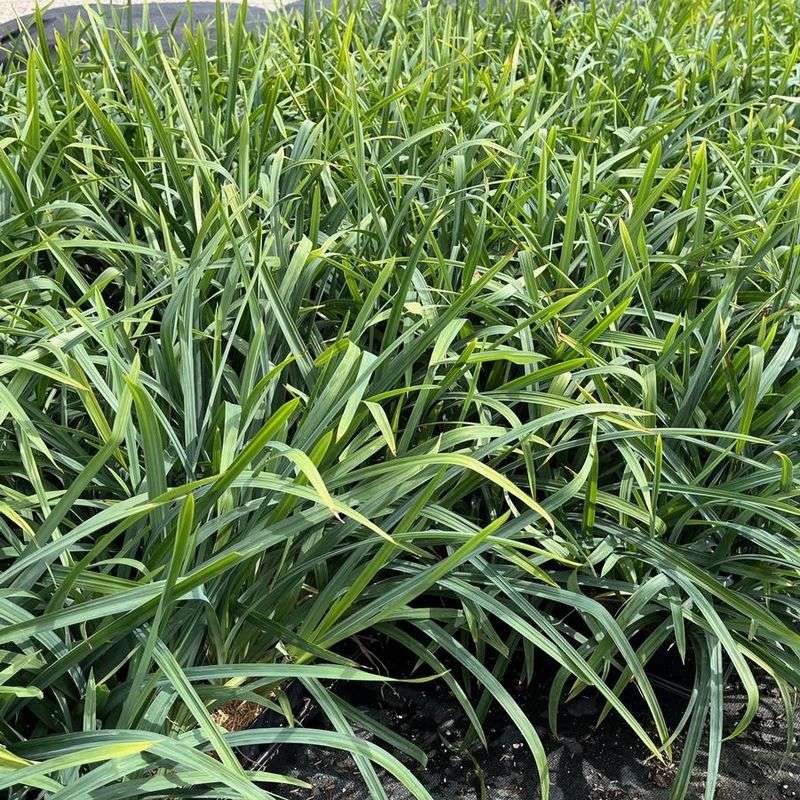
Not everything in a shade garden needs to bloom to be beautiful, and Blue Wood Sedge proves that point perfectly. This native sedge produces soft, arching blades of blue-green foliage that bring a cool, calm texture to shaded beds throughout the year.
It’s the kind of plant that makes everything around it look better, acting as a graceful filler between showier perennials and groundcovers.
Blue Wood Sedge stays relatively low, usually under a foot tall, with a gently weeping form that looks natural and unfussy. The blue-green color is distinct and eye-catching without being loud, giving it a subtle elegance that works in both formal and casual garden styles.
It’s evergreen in most of North Carolina, which means it earns its spot even during the quietest months of the year.
This sedge thrives in moist to average soil in partial to full shade. It tolerates dry shade once established, making it a practical choice for those tricky spots under dense trees where little else survives.
It spreads slowly by seed and clumping, gradually filling in areas without becoming aggressive. Native birds occasionally use the seeds as a food source in late summer.
Blue Wood Sedge pairs beautifully with foamflower, wild ginger, or Christmas Fern, creating a layered, textured planting that feels genuinely woodland-inspired. It’s low-maintenance, long-lived, and endlessly useful in a shade garden setting.
9. Cherokee Sedge
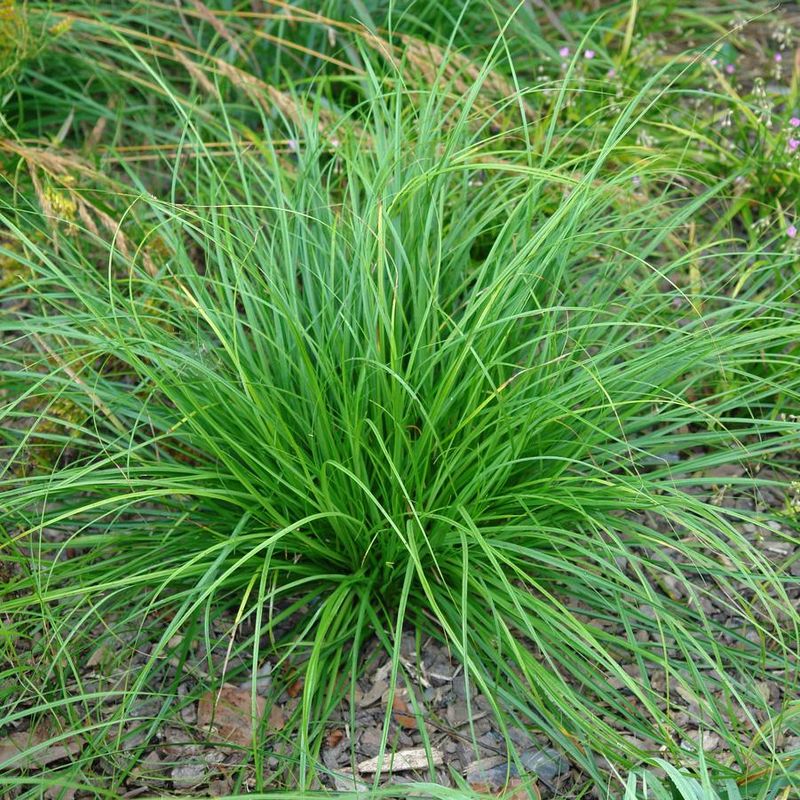
Named for the Cherokee people of the Southern Appalachians, this native sedge carries a sense of place that few plants can match.
Cherokee Sedge is a beautiful, fine-textured groundcover that brings a soft, flowing quality to shaded garden edges and woodland beds across North Carolina.
It’s tough, adaptable, and remarkably good-looking for a plant that asks so little from the gardener.
The foliage is a rich, bright green with a graceful arching habit that creates movement in the garden even on still days. It grows about one to two feet tall and spreads gradually to form a dense, weed-suppressing mat.
The effect is lush and naturalistic, like a piece of the forest floor brought right into your yard.
Cherokee Sedge performs best in partial to full shade with moist to moderately moist soil, though it shows good tolerance for seasonal dry spells once established.
It’s an excellent choice for rain gardens, shaded slopes, or areas near water features where the soil stays consistently moist.
Unlike ornamental grasses that can become invasive, this sedge stays well-behaved and easy to manage. It supports native wildlife by providing nesting material and habitat near the ground.
Combine it with Heartleaf Aster and Solomon’s Seal for a rich, multi-textured shade planting that looks professionally designed. This is a plant that quietly elevates every garden space it enters.
10. Creeping Phlox
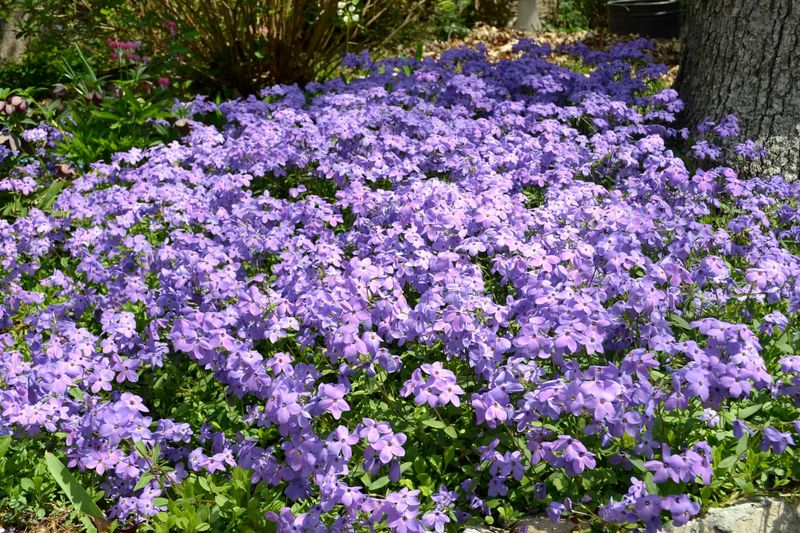
Every spring, Creeping Phlox puts on a show that makes gardeners genuinely excited to go outside. This low-growing native groundcover carpets shaded areas with vivid purple, pink, or white flowers in April and May, creating a display so colorful it almost looks unreal.
Unlike its cousin the moss phlox, this species truly thrives in shade, making it a standout choice for North Carolina’s wooded yards and garden beds.
The plant forms a mat of semi-evergreen foliage that stays attractive even when it’s not in bloom. Stems root as they creep along the ground, slowly filling in bare spots beneath trees and along shaded slopes.
It grows just six to eight inches tall, so it never competes with taller perennials or shrubs nearby.
Creeping Phlox grows best in moist, humus-rich, well-drained soil in partial to full shade. It’s native to the Appalachian region, so it’s perfectly suited to North Carolina’s mountain and piedmont gardens, though it performs well across the state.
After flowering, a light trim encourages dense, tidy growth through the rest of the season. It’s a favorite of early spring butterflies and native bees that need nectar before other flowers open.
Plant it alongside foamflower, wild ginger, or Blue Wood Sedge for a layered woodland planting that delivers maximum color and texture with very little effort on your part.
11. Virginia Bluebells
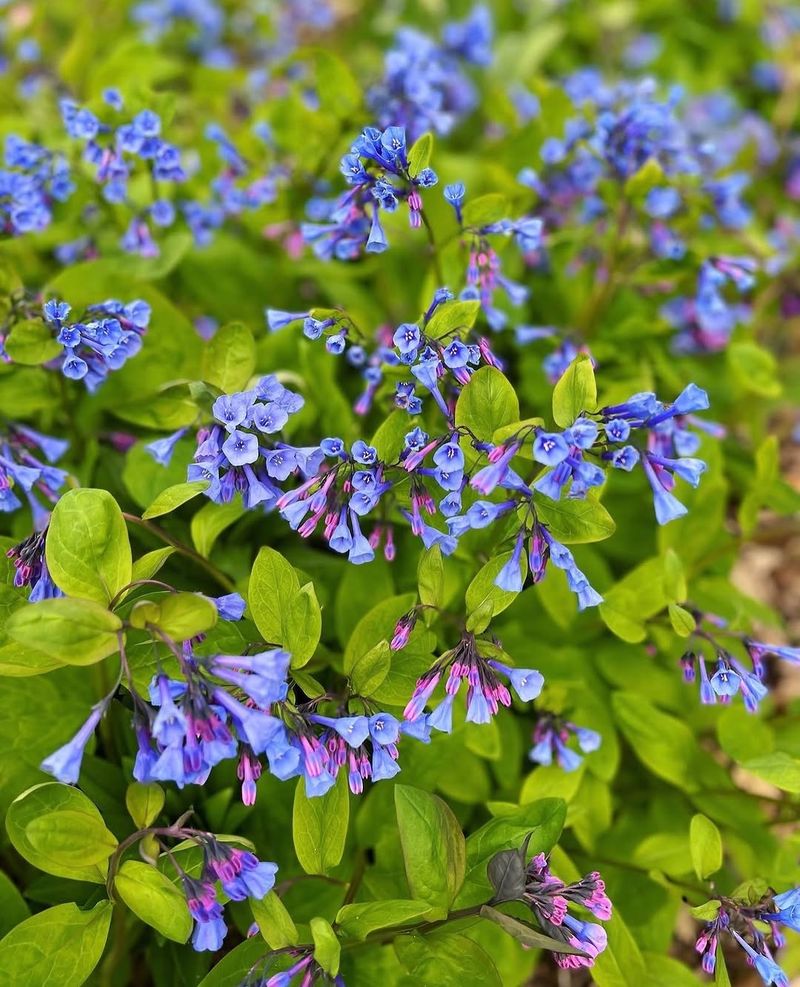
Few spring wildflowers are as breathtaking as Virginia Bluebells in full bloom. Clusters of nodding, sky-blue trumpet-shaped flowers emerge in March and April, transforming shaded garden beds into something that looks straight out of a fairy tale.
The blooms start as pink buds and gradually shift to that iconic soft blue as they open, which is a charming little trick that makes the plant even more interesting to watch up close.
Virginia Bluebells grow about one to two feet tall and spread naturally in moist, rich woodland soil. They’re a spring ephemeral, meaning they go dormant by early summer after blooming and setting seed.
That might sound like a drawback, but it’s actually an opportunity to plan a layered planting where summer perennials fill in the gaps seamlessly as the bluebells fade.
Plant them in partial to full shade with consistently moist, fertile soil for the best results. They naturalize beautifully along stream banks, near water features, or beneath deciduous trees where spring sunlight filters through before the canopy leafs out.
Native bumblebees and long-tongued bees are especially fond of these flowers and visit them frequently during their short bloom window.
Pair Virginia Bluebells with ferns, wild ginger, or Green and Gold to create a layered planting that looks full and lush even after the bluebells go dormant for the season.
12. Solomon’s Seal
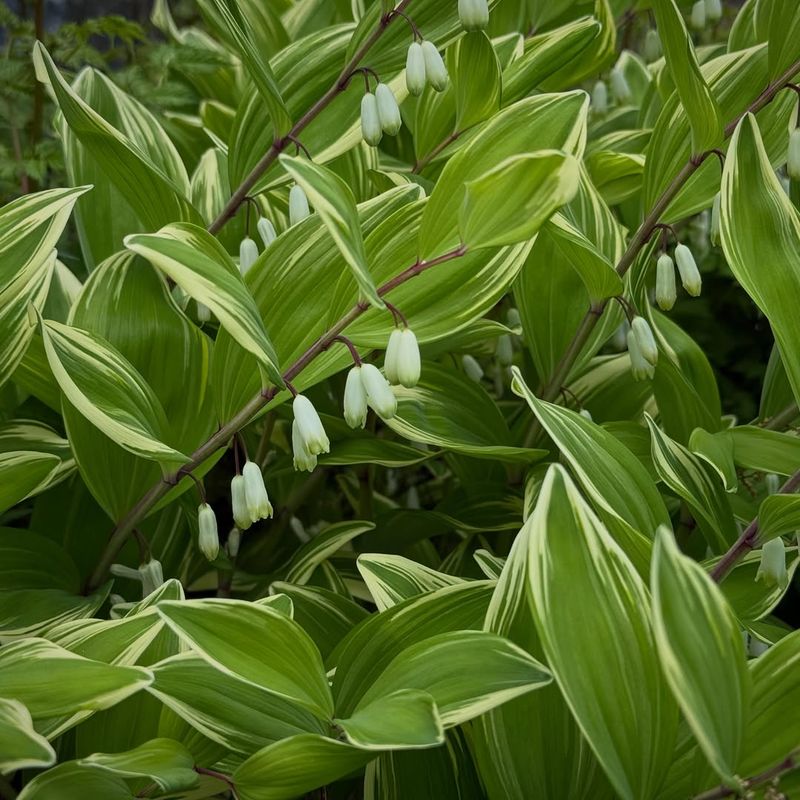
Graceful is the first word that comes to mind when you see Solomon’s Seal growing in a shaded garden.
The arching stems, lined with pairs of oval leaves and strung with small dangling white flowers in spring, have an almost sculptural quality that looks intentional and refined.
It’s one of those plants that makes a shady spot feel genuinely designed rather than just filled in.
Solomon’s Seal grows one to three feet tall depending on conditions, with stems that arch outward in a way that creates beautiful movement and layering in the garden.
The white bell-shaped flowers hang beneath the leaves in spring, followed by blue-black berries in late summer that birds love.
In fall, the foliage turns a warm golden yellow before going dormant, adding one last moment of seasonal interest.
This native perennial thrives in moist to dry shade and adapts well to a variety of soil types, which makes it one of the more versatile plants on this list. It spreads slowly by rhizomes, forming expanding colonies over time without becoming a nuisance.
North Carolina’s woodland gardens are a natural fit for Solomon’s Seal, especially when planted alongside Christmas Fern, Heartleaf Aster, or Wild Ginger.
It’s long-lived, largely pest-free, and brings a timeless, woodland elegance to any shaded space that hostas simply cannot replicate.
13. Wild Geranium
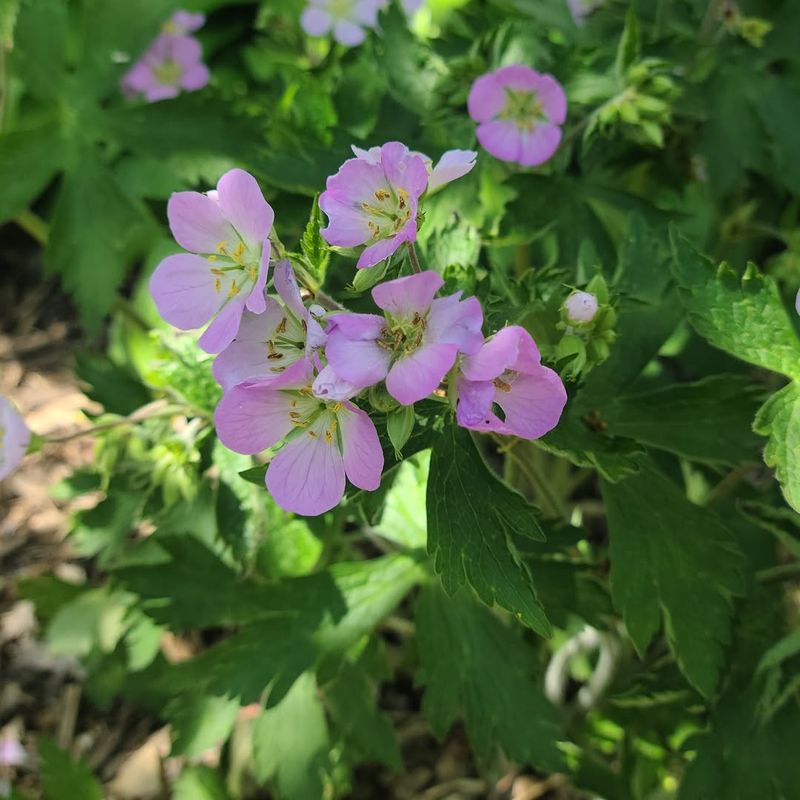
Bold, rosy-lavender flowers blooming in a shaded garden in spring is something most people don’t expect, and that’s exactly what makes Wild Geranium so satisfying to grow.
This native perennial produces clusters of five-petaled flowers in shades of pink, lavender, and soft magenta from April through June, bringing genuine color to spots that most flowering plants ignore.
It’s a spring staple in North Carolina woodland gardens for very good reason.
The foliage is deeply lobed and attractive on its own, forming a mounding clump about one to two feet tall and wide. After blooming, the leaves remain fresh and green through summer before developing warm reddish tones in fall.
The plant self-seeds modestly, so a small planting can gradually expand into a generous colony over several years without becoming overwhelming.
Wild Geranium thrives in partial shade with moist, humus-rich, well-drained soil. It handles dry shade reasonably well once established, giving it a practical edge in spots under dense tree canopies.
Native bees, especially bumblebees, are highly attracted to the flowers and visit them heavily during the spring bloom period.
It pairs beautifully with foamflower, Solomon’s Seal, Woodland Phlox, or Virginia Bluebells for a layered spring planting that bursts with color and life.
Easy to grow, genuinely beautiful, and ecologically valuable, Wild Geranium is one of the best choices any North Carolina shade gardener can make.