These Pennsylvania Wild Plants Are Legally Protected And Cannot Be Picked Or Dug Up
You’re out on a hike, you spot a beautiful wildflower growing along the trail, and your first instinct is to take it home for your garden. It seems harmless enough.
But in Pennsylvania, that innocent decision could actually land you in legal trouble. And most people have absolutely no idea. Pennsylvania takes its native wild plants seriously. And for good reason.
Many of the wild plants growing across the state’s forests, meadows, and wetlands are legally protected.
That means picking them, digging them up, or removing them from their natural habitat is against the law, whether you’re on public land or even in some cases on private property.
We’re talking real fines and real consequences. These aren’t just rare or exotic species either.
Some of them are plants you’ve walked past a hundred times without thinking twice. Common looking wildflowers, ferns, and woodland plants that happen to be on Pennsylvania’s protected list.
Before you reach down to pick that pretty bloom or dig up that interesting plant on your next outdoor adventure, make sure you know what’s actually protected. This list might genuinely surprise you.
1. White Monkshood
Tucked away in cool, shaded mountain hollows, White Monkshood is one of Pennsylvania’s most mysterious and striking wildflowers.
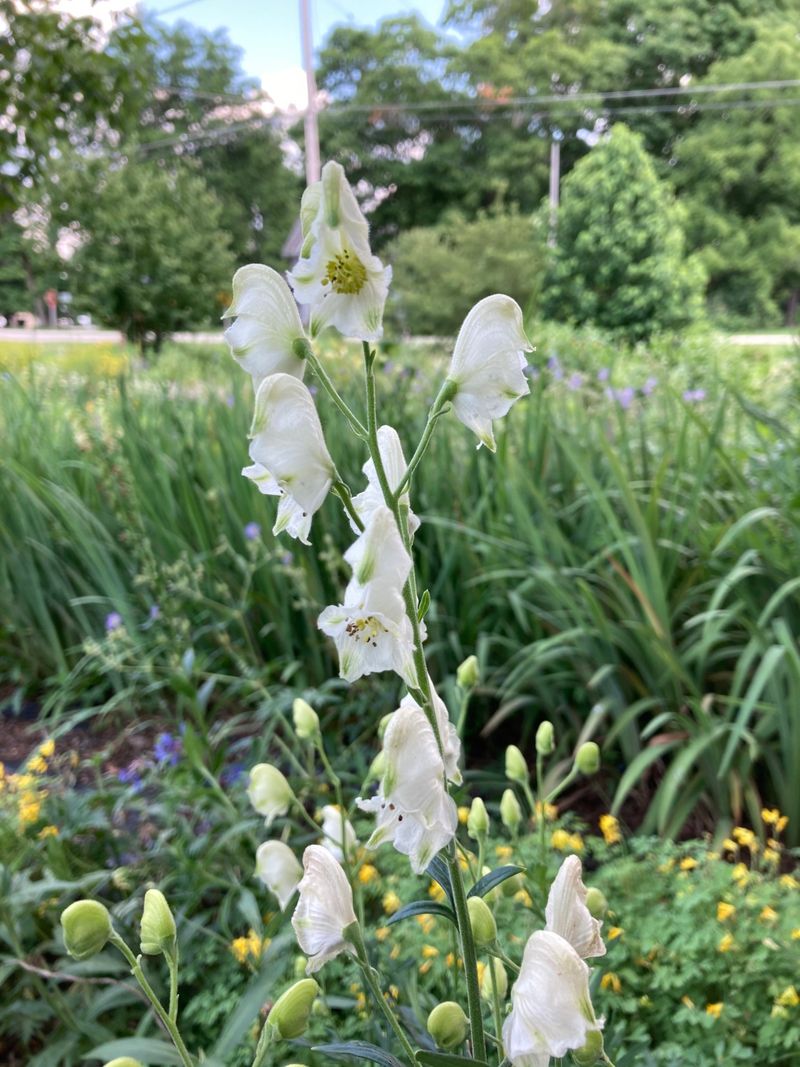
Its creamy white, helmet-shaped blooms are unlike anything else growing in the Pennsylvania forest understory. Most people never get to see it in person, which makes spotting one truly special.
White Monkshood, known scientifically as Aconitum reclinatum, is listed as Pennsylvania Endangered, meaning its population in the state is dangerously low. It tends to grow along stream banks and in rich, moist woodlands, usually at higher elevations.
Because it needs such specific conditions to survive, even small changes to its habitat can wipe out an entire population.
The plant produces its unique flowers in late summer, which sets it apart from many other woodland species that bloom earlier in the season.
Bumblebees are among the few pollinators strong enough to push into its tightly formed blossoms, making their relationship fascinating and important.
Here is something worth knowing: all parts of this plant contain powerful toxins that are harmful to people and animals alike. That alone is a good reason to look but never touch.
Beyond the legal protection, disturbing this plant in any way can have lasting consequences for the local population.
If you ever come across White Monkshood on a hike, the best thing you can do is admire it from a distance and leave it exactly where it is. Photograph it, write about it, and share your excitement with others.
Protecting rare plants like this one starts with awareness, and every person who learns about it becomes part of the solution.
2. Dragon’s-Mouth Orchid
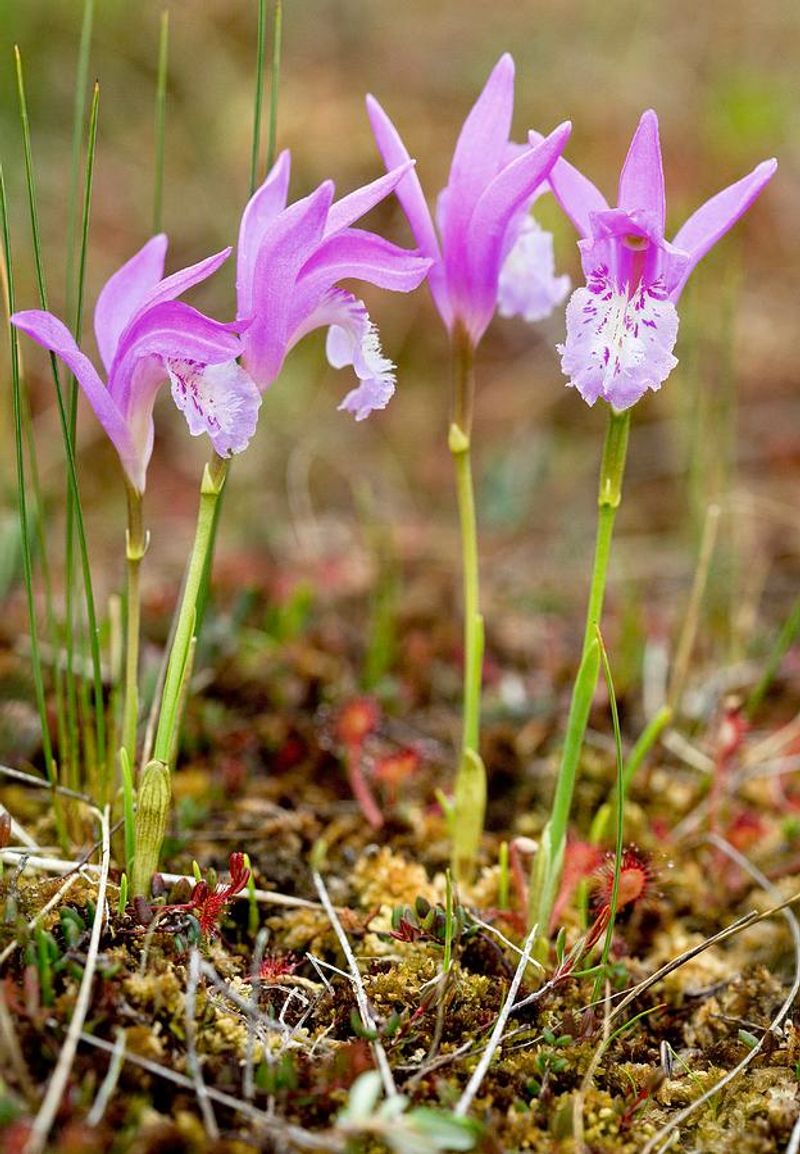
Imagine stumbling across a bright pink flower rising up from a soggy bog, almost like something out of a fantasy story. That is exactly what it feels like to find a Dragon’s-Mouth Orchid in the wild.
Your Pennsylvania Garden Changes Every Week. Your Plan Should Too.
Gardening in Pennsylvania changes quickly throughout the season. Every Friday you’ll receive a simple weekly plan showing exactly what to plant, prune, fertilize, harvest, and protect so you never miss the right timing.
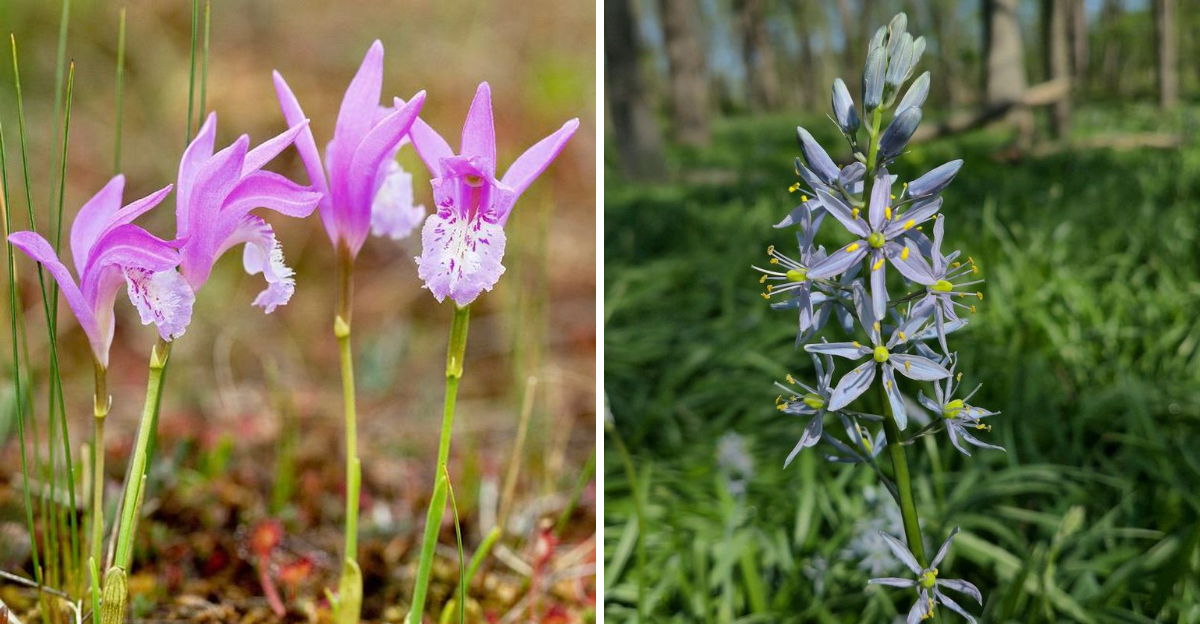
With its bold magenta petals and a colorful, fringed lip that almost looks like a tiny tongue, this plant is one of the most eye-catching orchids in the eastern United States.
Arethusa bulbosa is listed as Pennsylvania Endangered, and for good reason. It grows almost exclusively in sphagnum bogs and fens, which are already rare and shrinking habitats.
Wetland loss, drainage projects, and climate shifts have made it increasingly hard for this orchid to find a suitable home.
The plant blooms in late spring to early summer, producing usually just one flower per stem. That single bloom is its entire reproductive effort for the season, which means every flower really counts.
Pollinators, especially young bumblebee queens, are tricked into visiting the flower without receiving any nectar in return, a clever but risky strategy for a plant that needs every advantage it can get.
Did you know the name Arethusa comes from Greek mythology? Arethusa was a water nymph, which fits perfectly given how much this orchid loves wet, boggy environments. It is a small but meaningful connection between ancient storytelling and modern botany.
Picking or digging up this orchid is illegal under Pennsylvania law, and even well-meaning people who try to transplant it almost always cause its end.
These orchids rely on specific soil fungi to survive, so they simply cannot be moved and replanted successfully. The only safe place for them is exactly where they grow naturally.
3. Wild Hyacinth
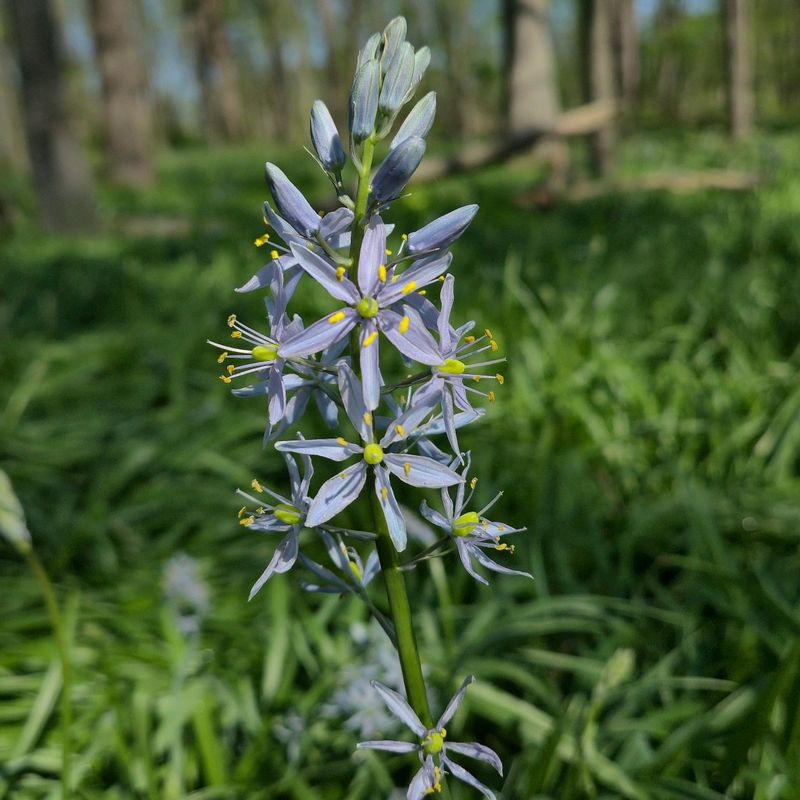
Not many people realize that Pennsylvania has its own native hyacinth growing wild in meadows and open woodlands.
Wild Hyacinth, or Camassia scilloides, produces tall spikes covered in pale blue to white star-shaped flowers that look almost too delicate to be real. When a patch of them blooms in spring, the effect is genuinely breathtaking.
Listed as Pennsylvania Endangered, Wild Hyacinth has become rare across the state due to habitat loss, land development, and the spread of invasive plant species that crowd it out.
It prefers rich, moist soils in areas with partial shade or open sunlight, but those kinds of spaces are increasingly hard to find undisturbed.
One of the most interesting things about this plant is its historical importance to Native American communities. The bulbs of Camassia species were a major food source for many Indigenous peoples across North America, roasted or boiled and eaten as a starchy staple.
In Pennsylvania, the plant never reached the abundance it had further west, making its current endangered status even more significant from a cultural standpoint.
Springtime hikers who come across Wild Hyacinth often mistake it for a garden escapee, not realizing they are looking at a genuinely rare native plant.
That kind of confusion can lead to people picking the flowers or even digging up the bulbs, thinking it is harmless. Under Pennsylvania law, doing either is illegal and can result in fines.
Every bulb left in the ground gives the species a better chance of spreading naturally. Pollinators like bees and butterflies rely on these blooms during the spring season, so protecting Wild Hyacinth helps support the broader ecosystem too.
4. Showy Lady’s-Slipper
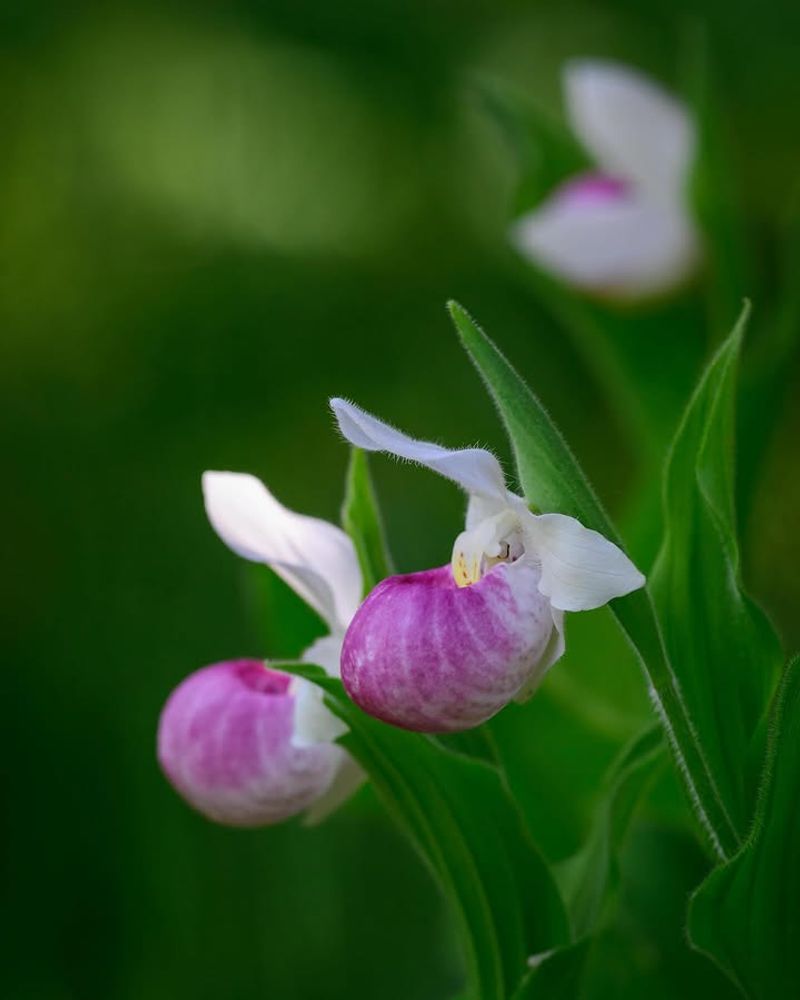
Pennsylvania’s rarest and most regal wildflower might just be the Showy Lady’s-Slipper. Cypripedium reginae is the largest native orchid in North America, and when you see one in full bloom, it is easy to understand why it earned that title.
Its white petals frame a bold pink pouch that looks almost like a tiny slipper, and the whole flower has an elegance that feels completely out of place in a wild forest.
Listed as Pennsylvania Endangered, this orchid grows in wet woods, fens, and boggy areas where the soil is rich and the light filters gently through a tree canopy. Finding it requires patience, a good eye, and usually a fair bit of luck.
Populations are small and scattered, and the plant can take many years to reach blooming size after germinating from seed.
One reason this orchid is so vulnerable is that it grows incredibly slowly. A single plant can take up to sixteen years to produce its first flower.
That means removing even one plant sets back years of natural growth. It also depends on a specific underground fungus to absorb nutrients from the soil, so transplanting it almost never works.
The Showy Lady’s-Slipper blooms in late spring to early summer, and its flowers last only a week or two. Bees are attracted to the bright color and sweet scent but soon discover there is no nectar inside.
They crawl out through a small opening, picking up pollen along the way, which gets carried to the next flower they visit.
Pennsylvania law strictly forbids picking, digging, or disturbing this plant in any way. Treat it like the natural treasure it truly is.
5. Small-Whorled Pogonia
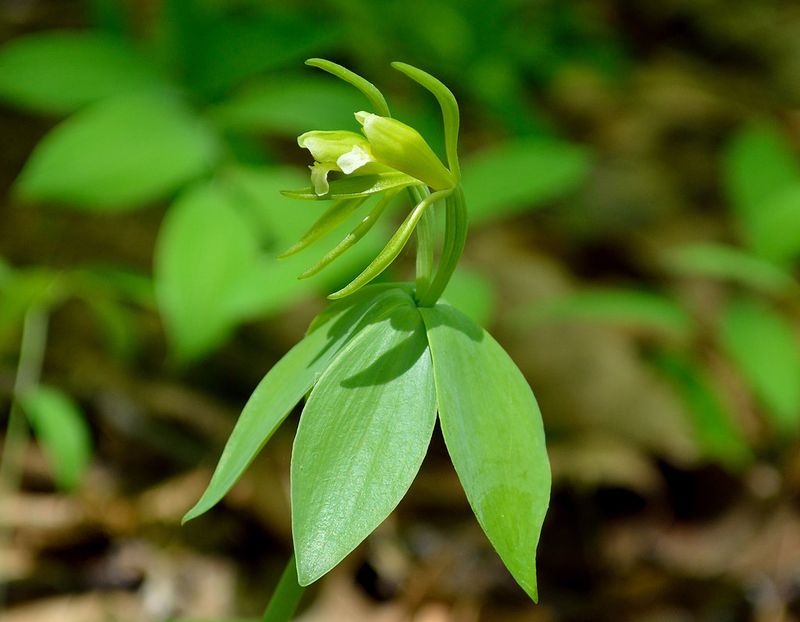
Some plants are rare on a global scale, not just locally, and the Small-Whorled Pogonia is one of them. Isotria medeoloides is considered one of the rarest orchids in the entire eastern United States.
Pennsylvania holds some of the last remaining populations of this plant, making the state’s responsibility to protect it all the more serious.
Listed as Pennsylvania Endangered, this tiny orchid is easy to overlook. It grows in dry to moist hardwood forests, usually under oaks or maples, and stands only a few inches tall.
A single whorl of five or six leaves fans out near the top of the stem, and a small greenish-yellow flower sits above them. It looks almost like a woodland curiosity rather than one of the rarest plants on the continent.
What makes it especially fragile is how infrequently it blooms. Plants can remain dormant underground for years at a time without producing any above-ground growth at all.
Researchers sometimes monitor a known site for several seasons without seeing any plants emerge. When one does bloom, it is a genuinely exciting event for botanists who study it.
Like most orchids, Small-Whorled Pogonia depends on a specific soil fungus to germinate and grow. Without that fungal partner, the seeds simply cannot develop.
This tight biological relationship means the plant cannot just be moved to a new location and expected to survive.
If you spot this orchid while hiking in Pennsylvania, do not touch it, step on it, or try to photograph it by pushing surrounding plants aside.
Even minor disturbance to the soil or leaf litter nearby can harm the underground fungal network the plant depends on. Leave it completely undisturbed and report the sighting to a local conservation group.
6. Blue Monkshood
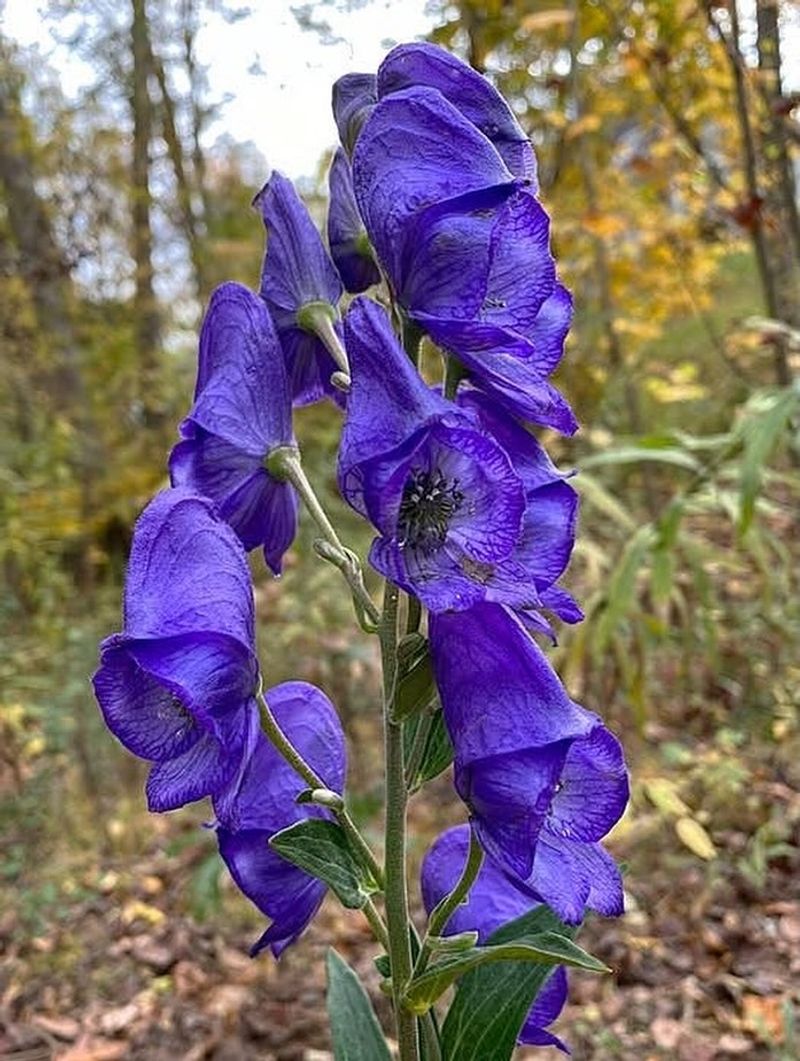
There is something almost dramatic about the Blue Monkshood. Its deep blue-purple, helmet-shaped flowers look like something a medieval apothecary might have grown in a walled garden, not a wildflower clinging to a rocky stream bank in the Appalachian forest.
But that is exactly where you will find Aconitum uncinatum, quietly thriving in one of Pennsylvania’s most rugged landscapes.
Unlike the other plants on this list, Blue Monkshood is listed as Pennsylvania Threatened rather than Endangered. That means it is not quite at the same crisis point, but it is still at serious risk and fully protected under state law.
It grows in moist, shaded areas, particularly along streams and in rich mountain woodlands, mostly in the southwestern and central parts of Pennsylvania.
Blue Monkshood blooms in late summer and early fall, which makes it stand out at a time when most wildflowers have already finished for the season.
Its vivid color draws bumblebees that are large enough to push past the tightly closed hood and reach the nectar inside.
That relationship between plant and pollinator is a reminder of how interconnected wild ecosystems really are.
Just like its white-flowered relative, all parts of Blue Monkshood contain powerful alkaloids that are toxic to people and animals.
Despite that, or maybe because of it, it has a long history in folk medicine and was once used in very small, controlled doses for various purposes. Today, it is best appreciated from a safe distance.
Picking or digging up Blue Monkshood in Pennsylvania carries legal penalties. Its threatened status means every plant matters, and protecting this striking wildflower helps ensure that future generations get to experience the magic of finding it on a fall hike.