This Common Arizona Yard Tree Has Poisonous Berries Most Homeowners Ignore
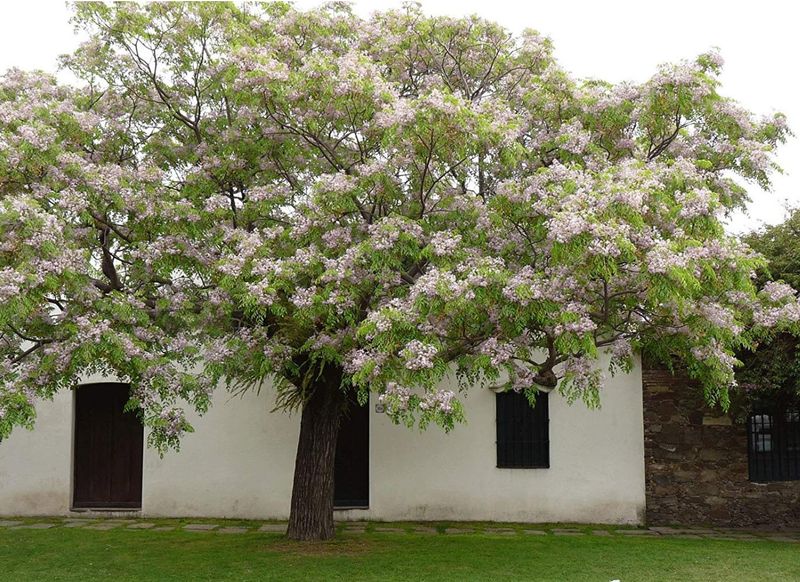
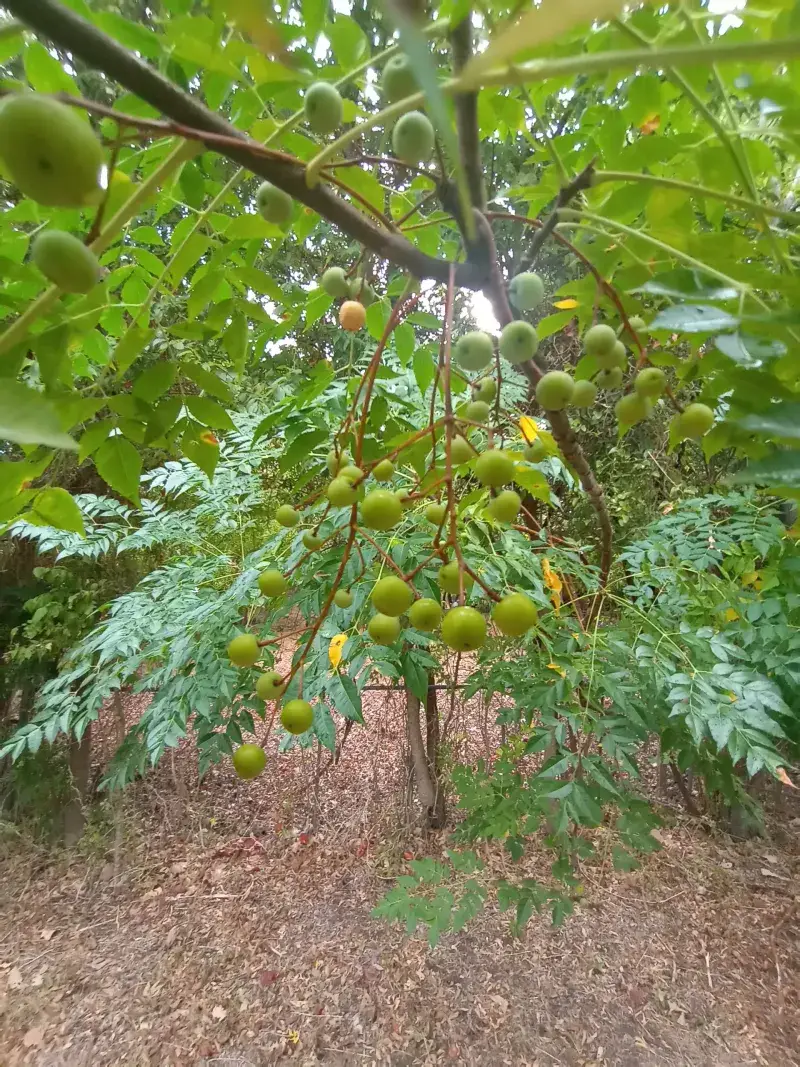
Chinaberry fruit can poison people and pets if eaten, and the tree grows in some Arizona yards. The berries look like small yellow marbles, which makes them easy to overlook.
Knowing the tree helps you keep kids and pets away from the fruit. Here is how to spot it, what to do after a bite, and how to decide what to do with one.
Where Chinaberry Is Found in Arizona
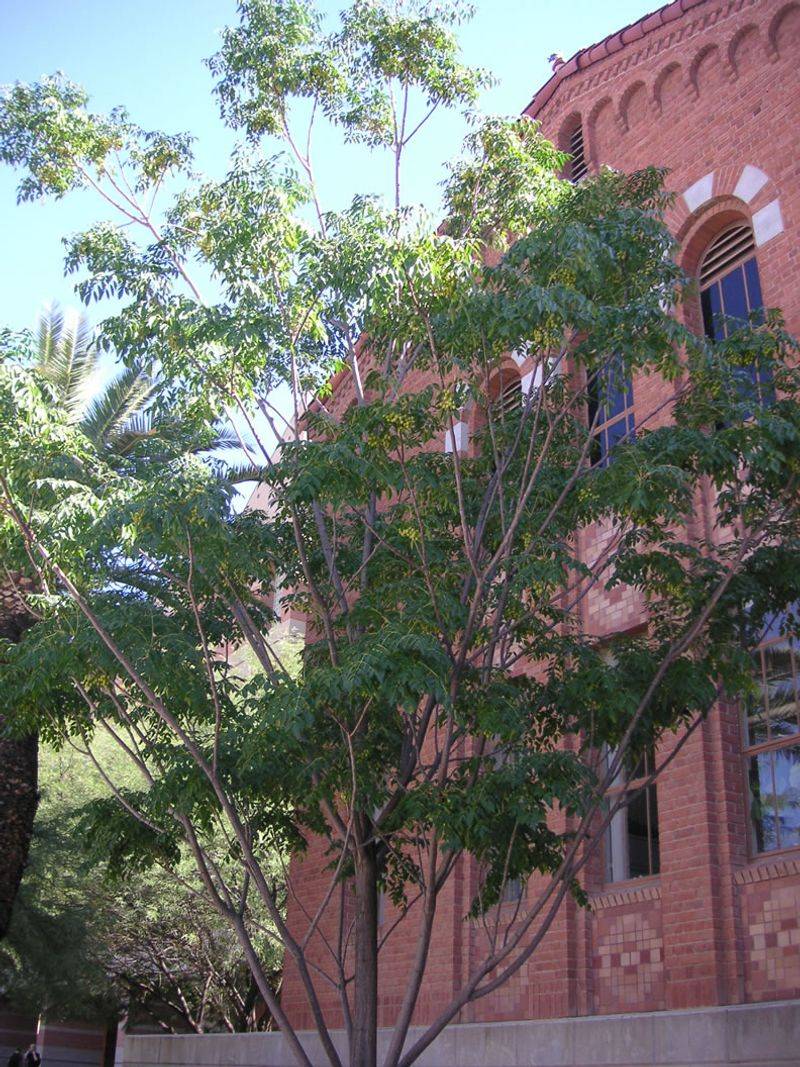
Chinaberry shows up in Arizona’s urban-tree materials. The state’s urban tree guide lists it for the Southwest Desert climate region, which covers low-elevation desert communities.
An Arizona-specific plant risk assessment adds a local picture. It says chinaberry is seen in some older Phoenix and Tucson neighborhoods, where it was planted years ago as a shade tree.
The same assessment says it has escaped cultivation less often here and has not proved a major invader of wild areas.
So these sources show the tree is present in some yards. They do not show it is common across the whole state, and I would not call it that.
One more point trips people up. Arizona’s noxious weed list is a regulatory list, not a full inventory of nonnative plants or ecological concerns.
Chinaberry does not appear on it, but that alone does not make the tree harmless or a good choice for your yard.
How to Recognize the Tree and Its Fruit
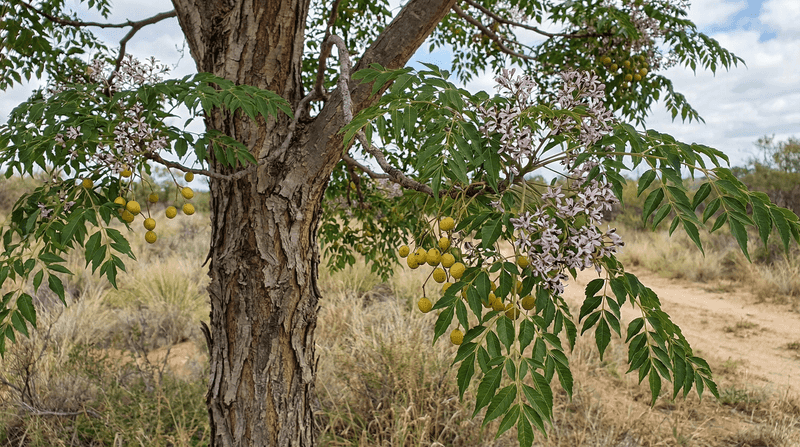
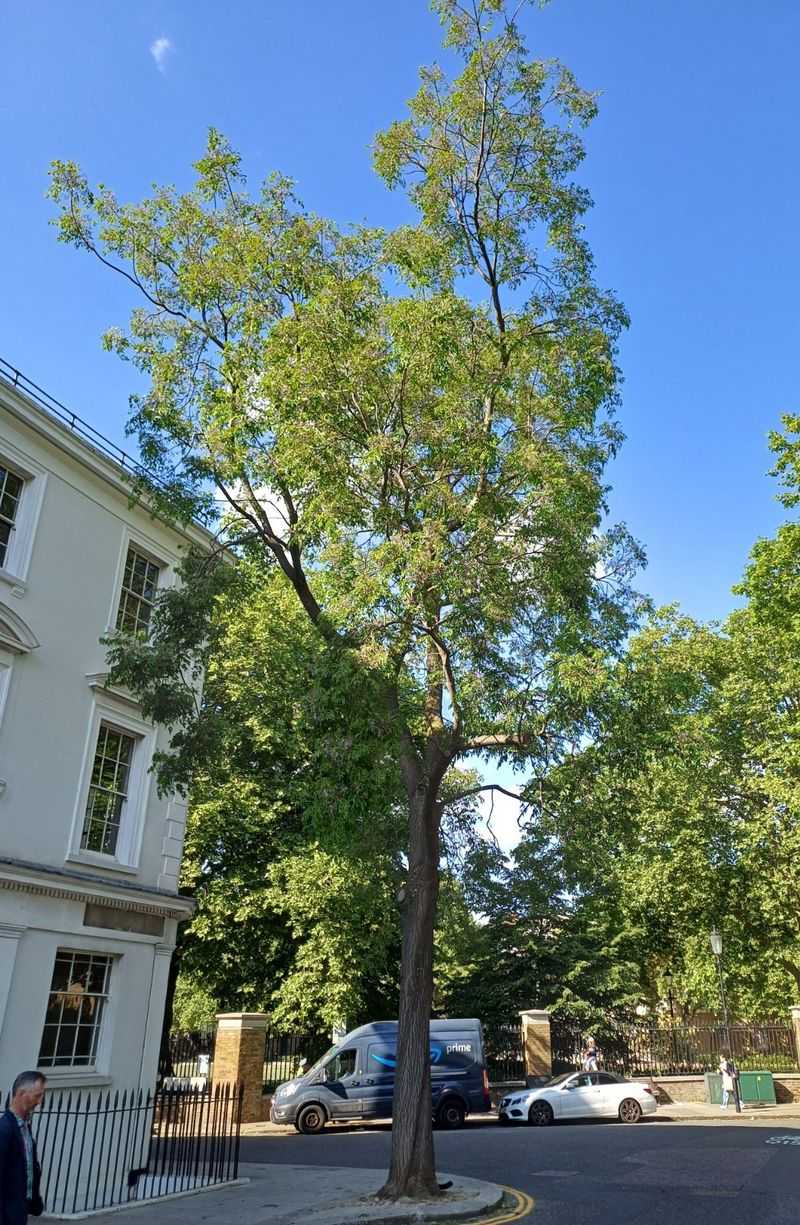
Start with the overall shape. The Arizona tree guide describes a tree that can reach about 50 feet, with a rounded crown and long compound leaves made of many small leaflets.
Then look at the fruit. The tree guide describes marble-sized fruit that turns light yellow.
Arizona’s Poison and Drug Information Center describes the berries as yellow, wrinkled, hard, and about half an inch across.
Timing varies. The fruit may turn yellow in fall and hang on into winter, but not every tree or Arizona location follows the same schedule.
Color and persistence can differ from one tree to the next.
Do not rely on the fruit alone. Check the leaves, the crown, and the overall size too.
If you are unsure, ask a local nursery, an extension office, or a qualified arborist to take a look.
The Poisoning Risk Comes From Eating the Plant
Poison is an ingestion issue here. Poison Control says all parts of the tree can cause poisoning if eaten, and it names the berries as the most toxic part.
Symptoms can start with vomiting and diarrhea. After larger ingestions, more serious effects are possible.
Outcomes differ, so one exposure does not predict another.
Nothing in the sources reviewed shows that standing near the tree or touching intact fruit causes poisoning. The focus belongs on stopping anyone from eating it.
No dependable safe berry count exists, and no reliably serious count has been established either. So skip any guessing game.
Do not taste or prepare any part of the plant, and call for expert advice if someone swallows some.
Most Texas Reports Had No or Minor Effects
For context, a peer-reviewed analysis looked at 990 reports to Texas poison centers from 2000 to 2018. The Texas poison-center study found that 95.2% of cases had no or minor effects.
That wording matters. It means no effects or, at most, minor ones.
It does not mean all of those people had symptoms, and it does not mean most had minor effects.
Gastrointestinal effects showed up in 8.9% of cases, and neurological effects in 2.1%. Most cases involved young children and berries.
Treat these as Texas data, not an Arizona risk estimate. They also cannot predict what will happen after one particular exposure, so call for case-specific guidance anyway.
What to Do After a Suspected Human Ingestion
Stay calm and move in order. First, wipe out the person’s mouth.
Next, have them rinse and spit, following Poison Control’s steps.
Then get case-specific advice promptly. Call Poison Control at 1-800-222-1222, or use the webPOISONCONTROL tool online.
Have the person’s age and weight handy, and a sample or photo of the plant if you have one.
HRSA’s Poison Help guidance likewise says to call promptly after someone eats wild berries.
Skip home remedies and any wait-and-see rule based on how many berries were eaten. The experts on the line can tell you what to do next for that person.
Contact a Veterinarian if a Pet Eats Chinaberry

Pets deserve their own plan. The ASPCA lists chinaberry as toxic to dogs, cats, and horses.
If your pet may have eaten any part of the tree, contact a veterinarian right away. An animal poison-control service can also give advice for your pet’s species and size.
Do not borrow human steps or outcomes for animals. What helps a child may not suit a dog, a cat, or a horse.
Fallen fruit on the ground is easy for curious dogs to reach, so check your yard and rake it up. Bring a sample of the plant to the vet if you can.
Weigh the Yard Risks Before Removing a Tree

Deciding about a tree takes some thought. Some birds and other wildlife eat chinaberry fruit and can spread the seeds, according to a U.S.
Forest Service review, though much of that work comes from outside Arizona.
That does not make the fruit safe for every species. It also does not make the tree a net wildlife benefit here, so I would not plant one for habitat.
The University of Arizona Arboretum keeps a record of the species.
If you remove one, expect trouble. Cut or damaged trees can resprout from stumps or roots, as noted by University of Florida IFAS.
Ask your local extension office or a qualified arborist about removal and control. They can match advice to your yard and to product labels.
A tree you can name is a tree you can manage.