What Arizona Homeowners Need To Know About Wasp Nests This Summer
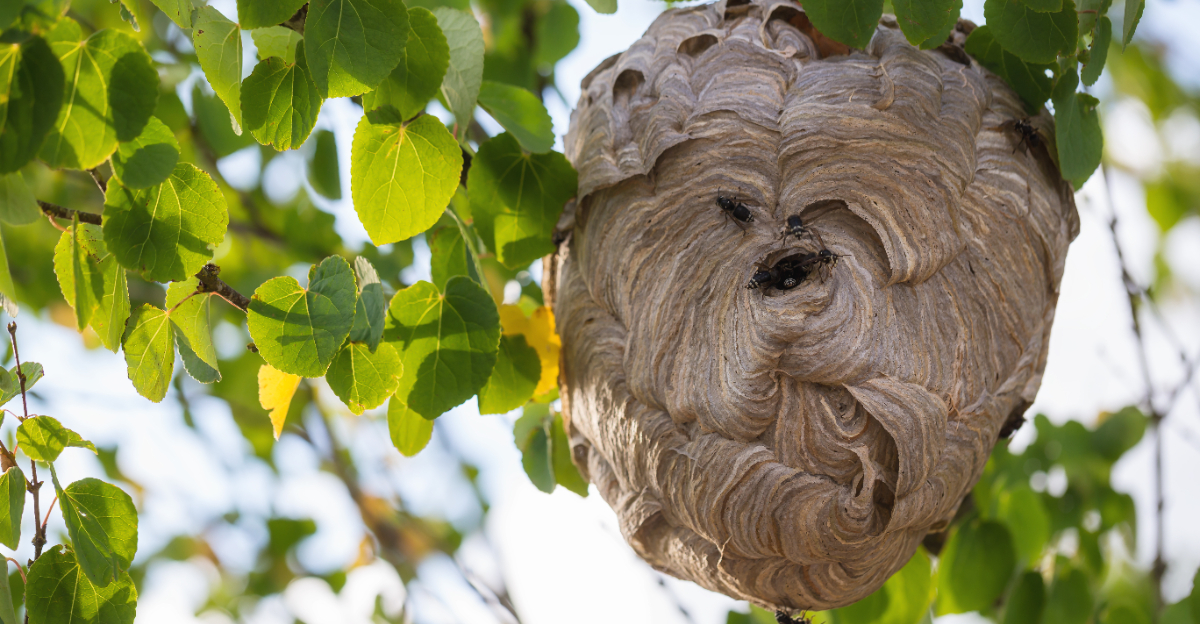
You step onto the patio with a cold drink, ready to enjoy a rare shady moment, and then you spot it: a papery gray nest tucked right under the eave above your back door.
Arizona summers have a way of turning quiet corners into very buzzy neighborhoods.
Between the scorching heat, the outdoor meals, the overflowing trash bins, and the kids playing near the block wall, wasp nests can pop up in spots that matter most to your family.
Many Arizona homeowners make the same mistake when they find a nest: they either panic and reach for a can of spray without knowing what they are dealing with, or they ignore it too long and end up with a colony.
Knowing what kind of nest you are dealing with, where wasps like to build in the desert Southwest, and how to respond calmly and safely can make a real difference this season.
The goal is simple: keep your family comfortable and safe while making smart, responsible choices about the insects sharing your yard.
Here are six things Arizona homeowners need to know about wasp nests this summer.
1. Identify The Wasp First
Before you grab a can of spray or call anyone, take a slow, careful look at what is actually flying around that nest.
Telling a paper wasp from a yellowjacket changes everything about how you respond, and getting it wrong can make a manageable situation much worse.
A calm, steady look from a safe distance is all you need to start.
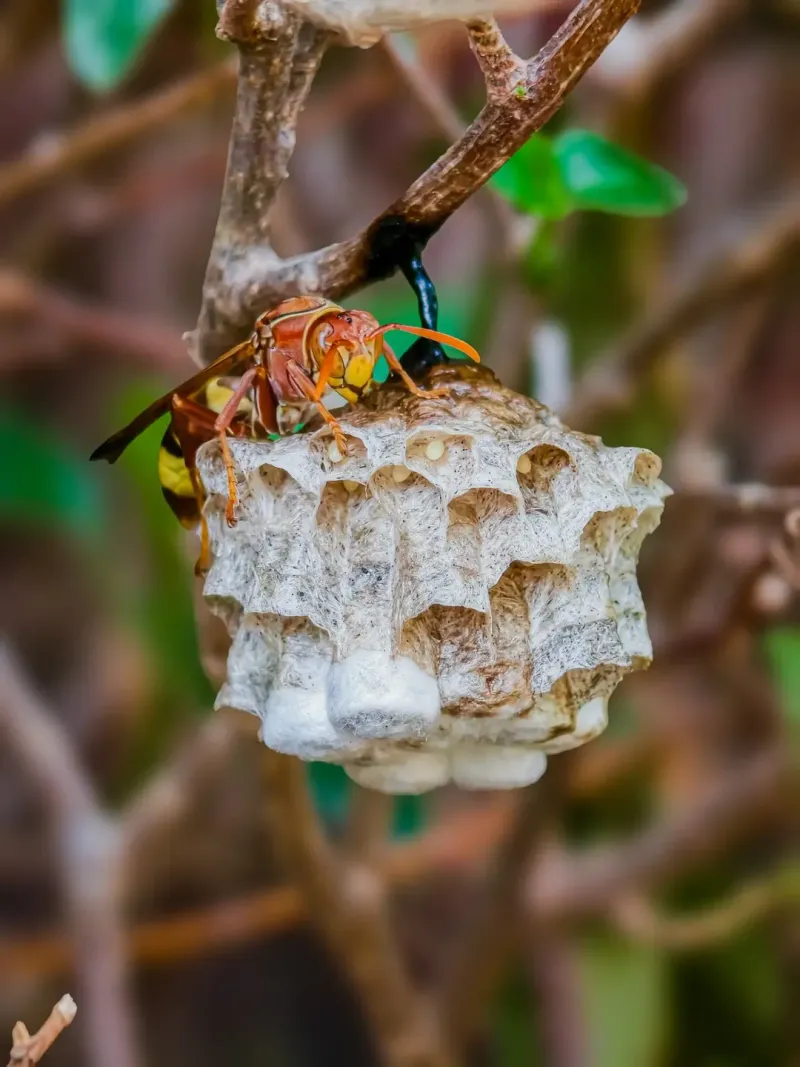
Paper wasps are slender with long, dangling legs and a narrow waist.
Their coloring is usually a mix of reddish-brown and yellow, and they move in a slow, almost lazy way around their open comb nest.
They are generally not aggressive unless their nest is directly threatened, which is good news for most Arizona homeowners who spot them under a patio cover.
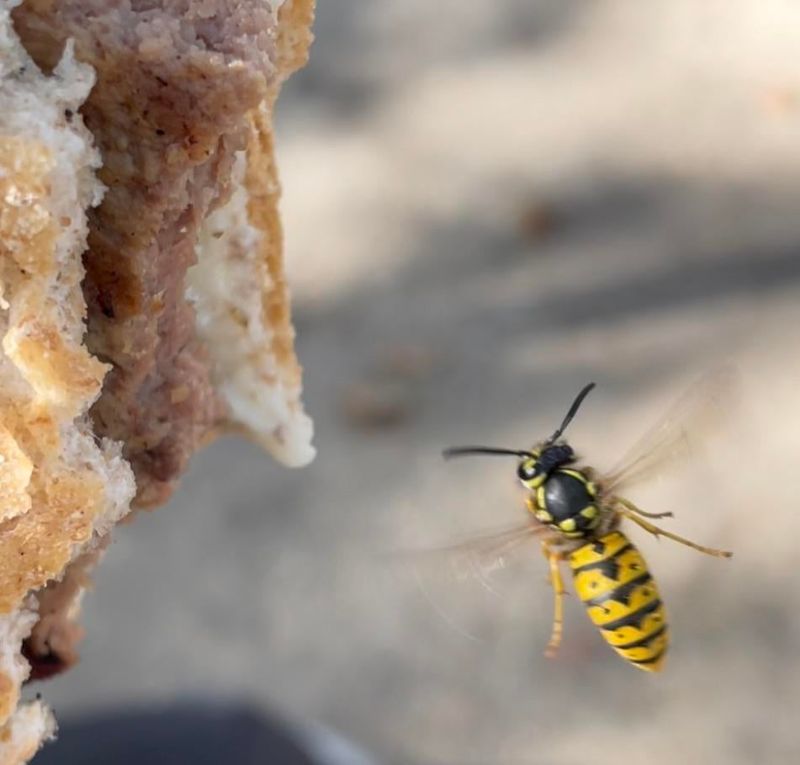
Yellowjackets are stockier, brighter yellow and black, and noticeably more defensive.
They fly in quick, darting patterns and tend to react faster when they sense a threat. The University of Arizona Extension notes that yellowjackets are more likely to sting repeatedly and with less provocation than paper wasps.
Size matters too. Paper wasp nests look like small, open honeycombs made of gray paper.
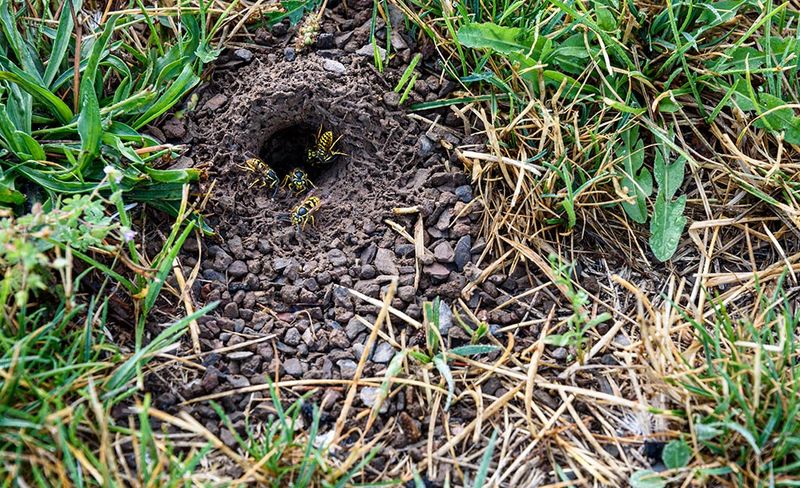
Yellowjacket nests are often hidden inside walls, ground openings, or enclosed spaces, so you may only see the insects flying in and out of a small hole rather than a visible structure.
Knowing which species you have helps you make a smart, safe plan instead of a panicked one.
Identification really is the first step, and it takes less than two minutes when you know what to look for.
A close look from ten feet away with good eyesight or even a phone camera on zoom is usually all it takes to answer the most important question before you do anything else.
2. Paper Nests Hang In Sheltered Spots
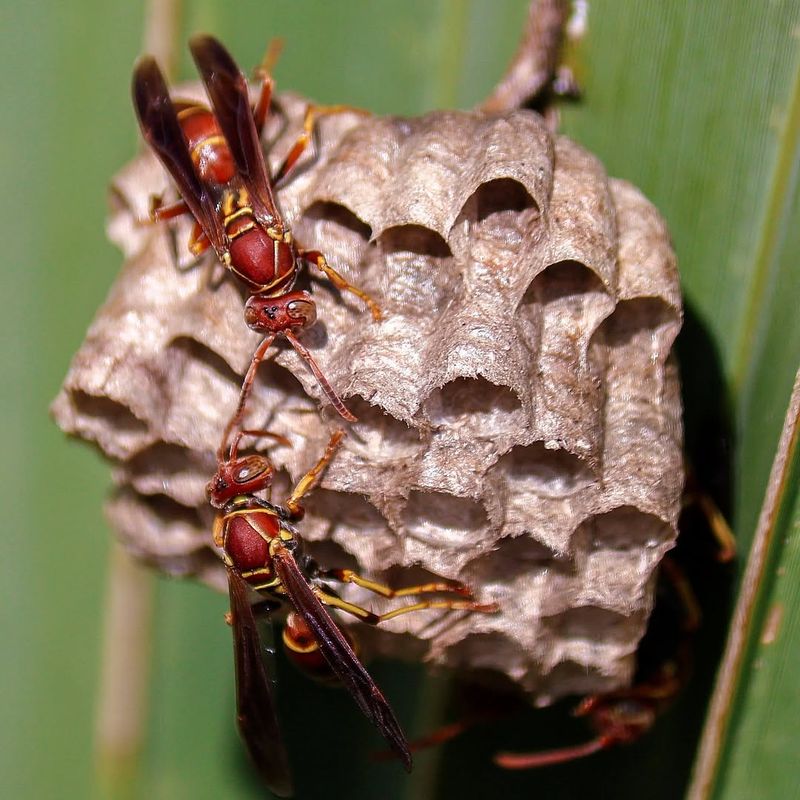
A small paper nest tucked under a porch ceiling or along a roofline is one of the most common sights Arizona homeowners encounter from May through September.
Your Arizona Garden Changes Every Week. Your Plan Should Too.
Gardening in Arizona changes quickly throughout the season. Every Friday you’ll receive a simple weekly plan showing exactly what to plant, prune, fertilize, harvest, and protect so you never miss the right timing.
Paper wasps are drawn to sheltered, shaded surfaces that stay protected from the intense desert sun and monsoon rain.
Eaves, patio covers, porch ceilings, and the undersides of outdoor furniture are all prime real estate for these insects during Arizona’s long warm season.
The nests themselves are made from chewed wood fibers mixed with saliva, which gives them that familiar gray, papery look.
Up close, you can see the open hexagonal cells where the queen lays eggs and workers raise young. Unlike enclosed hives, paper wasp nests have no outer covering, so everything is visible right from the start.
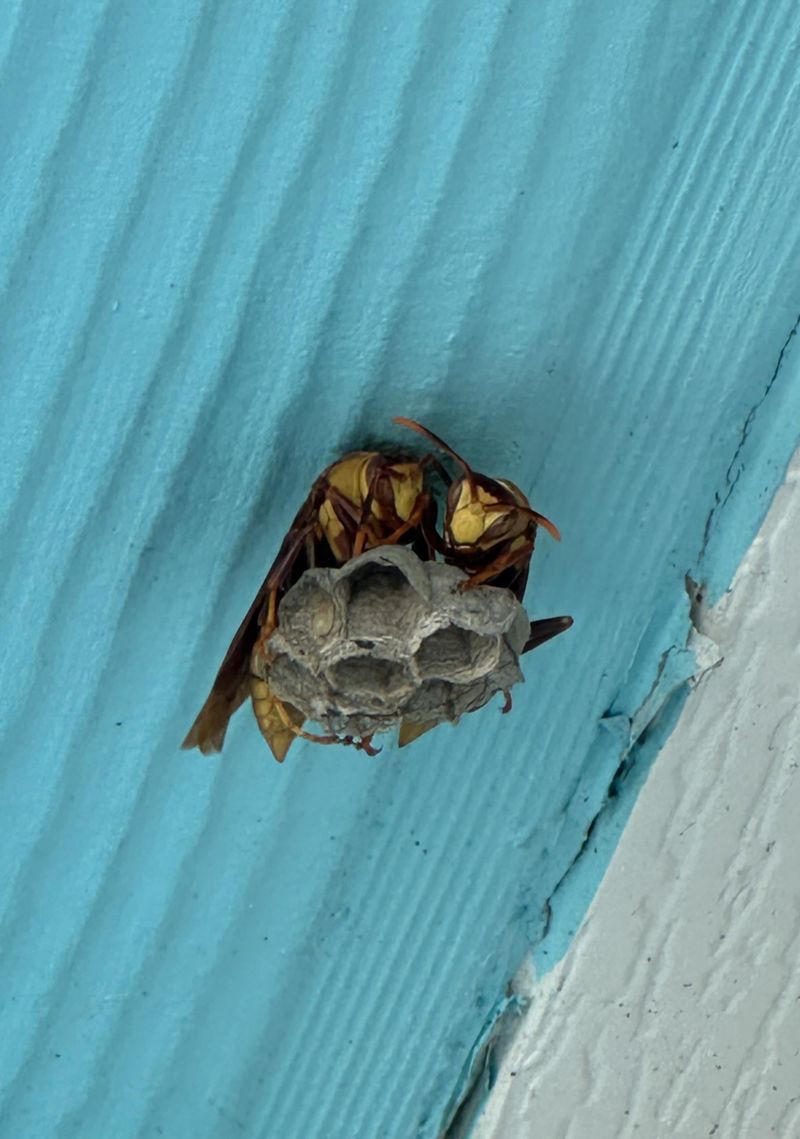
Early in the season, a nest might be no bigger than a golf ball with just a handful of wasps tending it.
By midsummer, a healthy nest can hold dozens of workers and grow to the size of a large orange. Spotting nests early, before they reach full size, gives you more options and more time to decide on a plan.
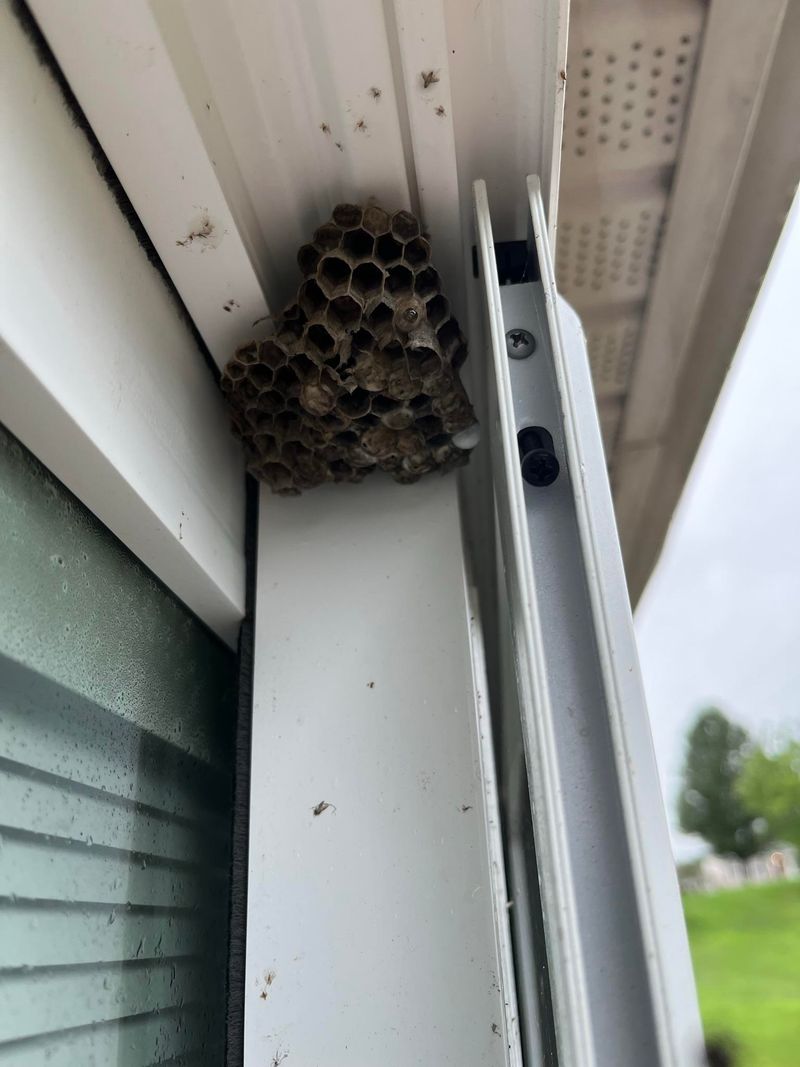
Common locations around Arizona homes include the underside of eaves along block walls, behind outdoor light fixtures, inside open patio umbrella frames, and under the rails of covered balconies.
Yellowjackets choose completely different real estate.
Unlike paper wasps that build visible, open nests in sheltered spots above ground, yellowjackets often set up colonies in places you cannot easily see.
Ground nests are a common choice in Arizona. They may take over an abandoned rodent burrow, a crack in a concrete slab, or a gap in the soil near a foundation.
Wall voids are another hiding spot that Arizona homeowners sometimes discover the hard way.
Yellowjackets can enter through a weep hole, a gap around a pipe, or a crack in stucco and build a nest inside the wall.
You may hear a faint buzzing sound or notice yellowjackets clustered near a specific spot on an exterior wall before you ever see the nest itself.
Checking sheltered spots and eaves every few weeks during the warm season lets you catch new nests while they are still small and easier to manage safely.
3. Yellowjackets May Use Ground Openings
Not every wasp nest needs to come down right away.
A nest tucked in a mesquite tree at the far end of your yard, on a fence panel nobody walks near, or under a rarely used storage shelf is a very different situation from one hanging above your back door.
Distance from people is the key factor when deciding whether a nest needs immediate attention.
Some nests are simply in the wrong place at the wrong time.
A nest positioned directly above a front door, along a walkway kids use every day, near a swing set, or over a patio dining area is a safety concern regardless of how calm the wasps seem.
The combination of regular human activity and a defensive insect colony is a setup worth taking seriously before the problem escalates.
High-traffic nests create repeated close contact between people and wasps.
Every time someone opens the door, carries groceries past the eave, or runs through the yard, the wasps near that nest register movement and potential threat.
Even a paper wasp colony, which is generally mild-mannered, can sting when it feels cornered or startled too many times in one day.
Children and pets are especially worth thinking about here.
Kids move fast, play loudly, and do not always notice a nest above a gate or along a fence rail. Dogs sniffing around the base of a wall or pawing at the ground near a yellowjacket opening can trigger a defensive response quickly.
Paper wasps, on the other hand, play a genuinely useful role in the backyard ecosystem.
They hunt caterpillars, flies, and other soft-bodied insects to feed their larvae, which makes them natural pest managers for gardens and landscaping.
The University of Arizona Extension points out that paper wasps are considered beneficial insects and should be left alone when they are not posing a direct safety concern.
A quiet nest away from foot traffic can often be left until the colony naturally winds down at the end of the season.
In Arizona, wasp colonies typically decline in late fall when temperatures drop and the queen stops laying eggs. Once the colony is gone, the empty nest can be removed easily and without any risk.
Checking a low-risk nest occasionally to make sure it is not growing toward a more active area is a reasonable habit.
If the nest stays small and stays put, there is no urgent reason to act.
4. High Traffic Nests Need Action
A yellowjacket hovering over your burger at a backyard cookout is not just an annoyance.
It is a sign that something nearby is drawing them in, and that something is almost always food or garbage.
Yellowjackets are strongly attracted to proteins and sugars, which means outdoor meals, pet food bowls, fallen fruit, and unsecured trash bins are all open invitations during Arizona summers.
Sealing trash cans with tight-fitting lids makes a noticeable difference.
Garbage that sits in open bins in the sun heats up quickly, and the smell carries far enough to attract wasps from a surprisingly wide area.
Rinsing out cans, bottles, and food wrappers before tossing them in the bin removes the sugary residue that yellowjackets find so appealing.
Outdoor meals are another common draw.
Leaving a soda can unattended for just a few minutes is enough time for a yellowjacket to crawl inside.
Covering drinks, keeping food in sealed containers until serving, and cleaning up spills promptly are simple habits that reduce wasp activity around your patio significantly.
Pet food bowls left outside are easy to overlook but worth addressing.
Wet food and water bowls with food residue can draw wasps in just like an open trash bin. Bringing pet bowls inside after feeding and wiping down outdoor surfaces where food has been served helps break the cycle.
Fallen fruit from citrus trees, figs, and any other fruit-bearing plants in the yard deserves the same daily attention as the trash.
Overripe or rotting fruit on the ground ferments quickly in Arizona heat, and that fermentation smell is one of the strongest wasp attractants available.
Pick up dropped fruit every morning during the hottest months and dispose of it well away from your outdoor living areas.
Reducing the food signal around your yard is one of the most effective long-term ways to make your outdoor space less attractive to wasps all summer long.
It does not eliminate every wasp, but it takes away the reason they had to linger in the first place.
5. Quiet Nests Can Often Wait
Timing is one of the most important factors when treating a wasp nest yourself, and cooler nighttime hours are far safer than the middle of the afternoon.
Wasps are cold-blooded, which means lower temperatures slow them down considerably.
At night, the entire colony is typically inside the nest and much less likely to fly aggressively when disturbed.
For a small, accessible paper wasp nest at a manageable height, a store-bought wasp and hornet aerosol spray can be effective when used correctly.
Always read the product label fully before doing anything. Wear long sleeves, long pants, closed-toe shoes, and eye protection.
Have a clear path to move away from the area quickly if needed, and never trap yourself in a corner or against a wall.
Treat from as far away as the spray stream allows, aim directly at the nest opening, and apply for the time the label recommends.
Do not stand directly underneath the nest. Retreat immediately after treating and wait until the next morning to check whether activity has stopped before approaching the area again.
These general guidelines apply to small, visible, reachable nests only.
Hidden nests inside walls, large colonies, ground nests, or any nest in a hard-to-reach location are not good candidates for a do-it-yourself approach no matter what time of day it is.
The risk of disturbing a large colony in an enclosed space is high, and the results can be serious.
Arizona summer heat also means that even nighttime temperatures can stay warm enough for wasps to remain somewhat active, so move deliberately and avoid using a flashlight that shines directly at the nest, since the light can attract wasps.
A red-lens flashlight or headlamp pointed at the ground while you work is a smarter choice for nighttime nest treatment.
When in doubt, step back and let a professional take it from there.
6. Food And Trash Draw Activity
A large, hidden, or hard-to-reach wasp nest is not a project for a weekend afternoon and a can of spray.
Some situations genuinely call for a licensed pest professional, and recognizing those situations before attempting treatment is one of the smartest things an Arizona homeowner can do.
Knowing your limits is not a weakness. It is just good judgment.
Yellowjacket nests inside wall voids are a clear example.
The colony may be much larger than the small entry hole suggests, and breaking into a wall without the right protective gear and removal plan can trigger a serious defensive response.
Pest professionals have the equipment, the experience, and the appropriate products to handle enclosed nest situations safely and completely, including removing the physical nest structure to prevent future problems from the same void.
Large paper wasp nests on rooflines, high under eaves, or in other elevated spots that require a ladder are also better left to professionals.
Working on a ladder while dealing with an agitated wasp colony is a dangerous combination that has sent many well-meaning Arizona homeowners to urgent care.
A licensed technician can assess the situation, choose the right approach, and handle the nest without putting anyone at unnecessary risk.
People who have known allergies to wasp stings should always call a professional rather than attempting any nest treatment themselves, regardless of the nest size or location.
The same goes for nests near children’s play equipment or any area where a defensive response could affect multiple family members quickly.
A single sting for someone with a severe allergy can become a medical emergency faster than most people realize, and no nest is worth that kind of risk.
Ground nests and wall voids are also genuinely difficult to treat completely without professional-grade equipment.
Partial treatment of a large hidden colony often just relocates the problem rather than solving it, and an agitated colony that has been partially disrupted is more defensive than one left completely alone.
Arizona has many licensed pest management companies familiar with local species and nesting habits.
Getting a professional assessment is often faster and more affordable than homeowners expect, and the peace of mind that comes with knowing the colony has been handled correctly is absolutely worth it.