What North Carolina Gardeners Use Near Wooden Structures To Help Deter Carpenter Bees Naturally
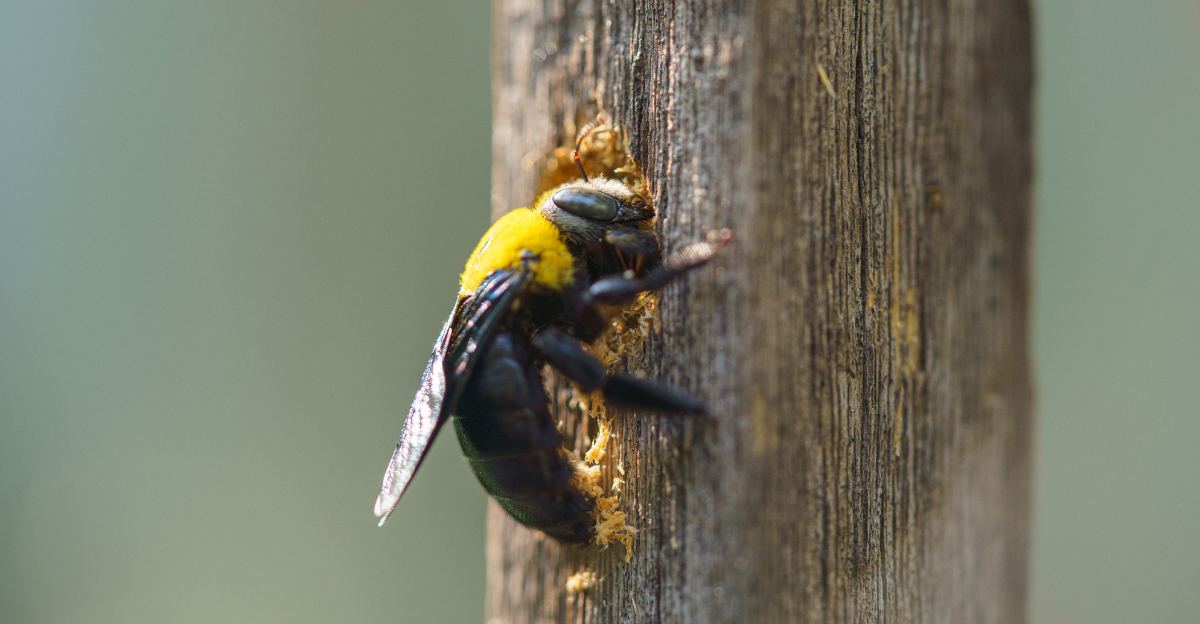
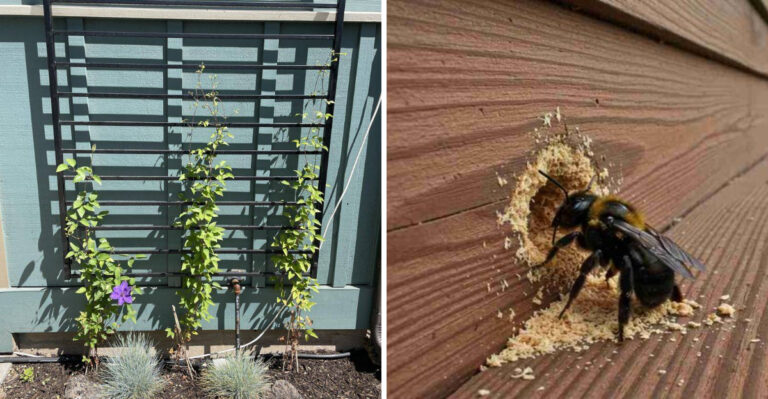
Carpenter bee damage to wooden structures in North Carolina tends to follow a frustrating pattern of getting worse each year rather than staying consistent-
Homeowners who rely solely on filling old holes and repainting surfaces find that the bees return to the same spots with remarkable persistence.
Natural deterrent strategies have gained real traction among North Carolina gardeners who prefer to manage the problem without repeated chemical applications around areas where people, pets, and beneficial insects spend significant time.
Certain plants, materials, and scent-based approaches have proven genuinely effective at reducing carpenter bee interest in vulnerable wooden surfaces when placed and applied correctly.
The key is understanding which specific options work in North Carolina’s climate and how to position them for maximum deterrent effect around the structures that need the most protection.
1. Fresh Exterior Paint On Exposed Wood
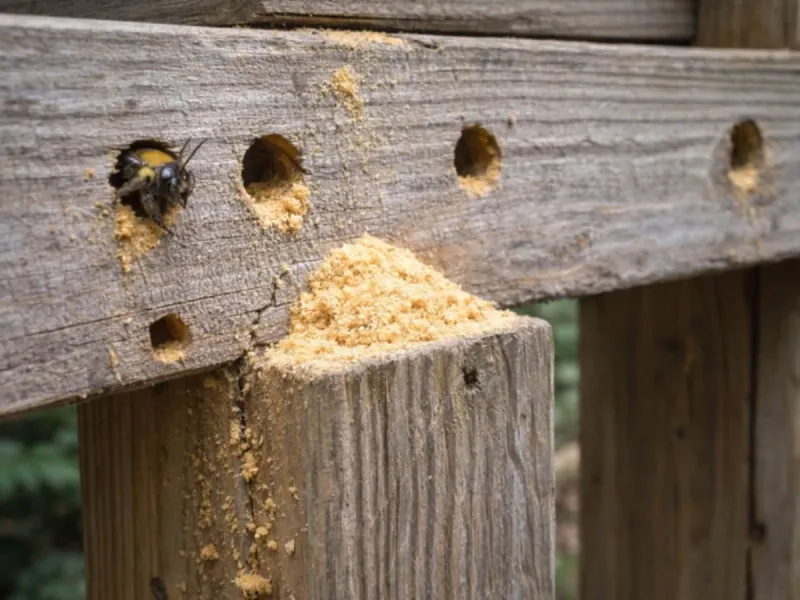
Bare wood is basically an open invitation for carpenter bees. These bees are strongly attracted to untreated, weathered, or soft wood surfaces, and they will return to the same boards year after year if nothing changes.
Painting exposed wood is one of the most reliable steps North Carolina gardeners take to make their structures less appealing.
Porch rails, fascia boards, pergolas, fences, deck trim, eaves, and exposed beams all benefit from a fresh coat of exterior paint. The paint creates a hard, finished surface that carpenter bees find far less interesting than rough or bare wood.
Even a solid-color stain with good coverage can make a real difference compared to leaving wood completely unprotected.
Choosing a quality exterior paint rated for outdoor wood is worth the investment. Thin or worn coverage leaves gaps that bees can still find and target.
Going over those areas with a second coat, especially on horizontal surfaces like porch ceilings and top rails, helps close off vulnerable spots. Repainting every few years keeps the protection strong.
Most NC gardeners who stay consistent with this one step notice far fewer new holes showing up each spring compared to neighbors who skip the maintenance.
2. Clear Varnish On Wood You Want To Keep Natural
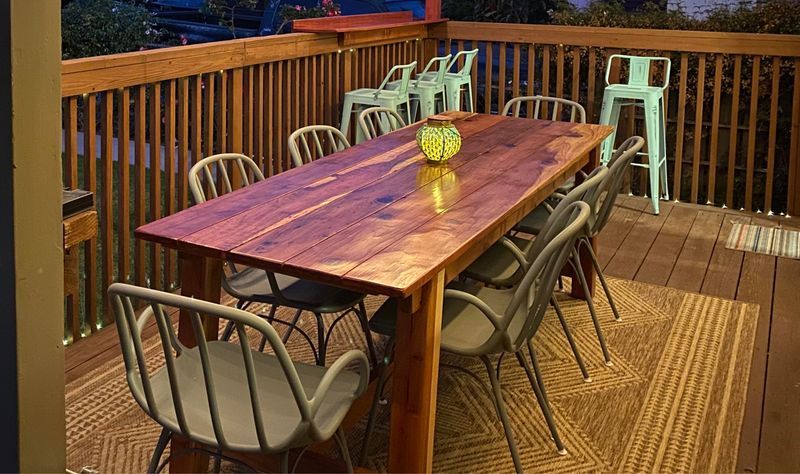
Not every homeowner wants to cover their beautiful wood grain with a solid color. Some porches, pergolas, and fences are built from gorgeous natural wood, and painting over that feels like a shame.
Clear varnish gives those surfaces a protective finish while keeping the natural look fully intact.
NC State guidance recommends painting or varnishing exposed wood surfaces as a primary step in reducing carpenter bee interest.
Varnish works by creating a sealed, glossy layer over the wood that bees find much harder to grip and tunnel into compared to rough, bare surfaces.
It does not change the color or hide the grain, making it a popular choice for cedar pergolas, pine porch ceilings, and decorative trim.
The catch with varnish is that it requires regular upkeep. As seasons pass, the finish can crack, peel, or wear thin, especially on surfaces exposed to direct sun and rain.
Once those worn spots appear, the wood underneath becomes vulnerable again. Checking varnished surfaces each spring and touching up any cracked or peeling areas before carpenter bee season picks up is a smart routine.
Your North Carolina Garden Changes Every Week. Your Plan Should Too.
Gardening in North Carolina changes quickly throughout the season. Every Friday you’ll receive a simple weekly plan showing exactly what to plant, prune, fertilize, harvest, and protect so you never miss the right timing.
Reapplying a full coat every couple of years keeps the protection solid. Varnish paired with good caulking around joints and edges gives wood structures a strong, finished defense that holds up well through North Carolina summers.
3. A Carpenter Bee Trap Near Active Boards
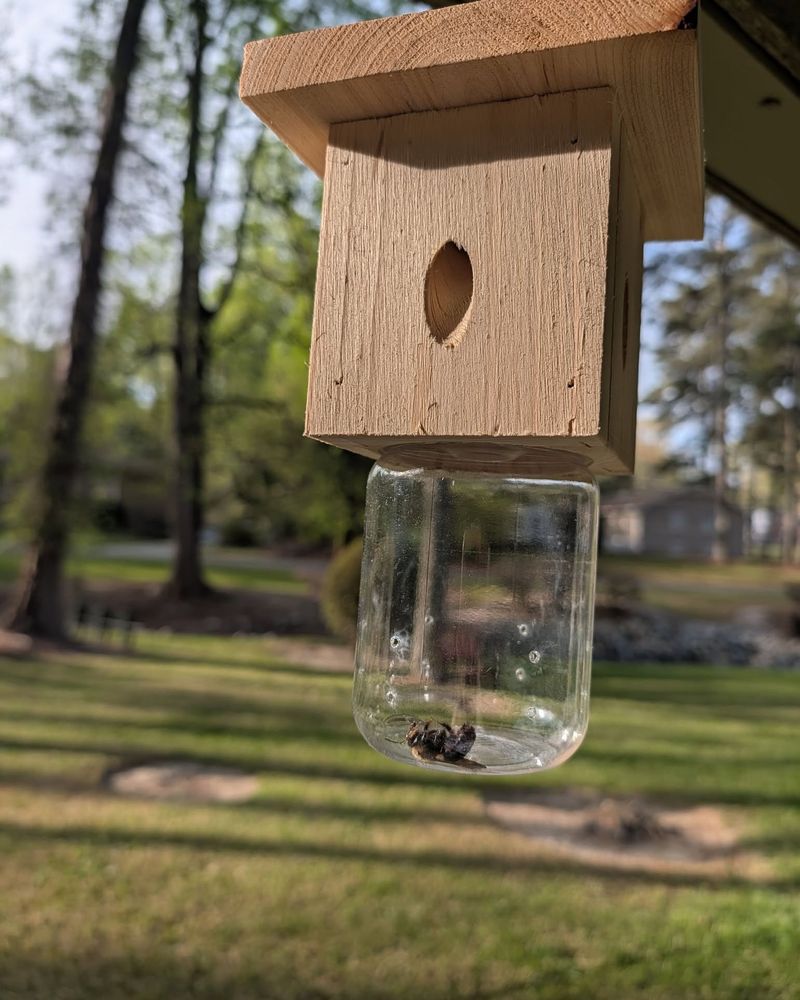
When carpenter bees are already active and tunneling, some North Carolina homeowners add a bee trap near the affected boards as a support measure. These traps are usually made from untreated wood with small entry holes that lead into a collection chamber.
Bees enter looking for a nesting spot and cannot find their way back out.
Placement matters quite a bit with these traps. They work best when hung close to the boards where activity is happening, since the bees are already focused on that area.
At the same time, traps should be kept away from doors, seating areas, narrow walkways, and any spot where people gather regularly. Hanging them near the eaves or under a porch overhang close to the problem area tends to give the best results.
It is worth being clear that traps are a support tool, not the main solution. Wood finishing and repair are far more important for long-term protection.
Traps can help reduce activity while you work on sealing and repainting the structure, but they will not solve the problem on their own. Checking the trap regularly and emptying or replacing it as needed keeps it effective.
Pairing a trap with freshly painted or varnished wood gives you a much stronger approach than using either strategy alone throughout the season.
4. A Stuffed Paper Bag Decoy Near Problem Areas
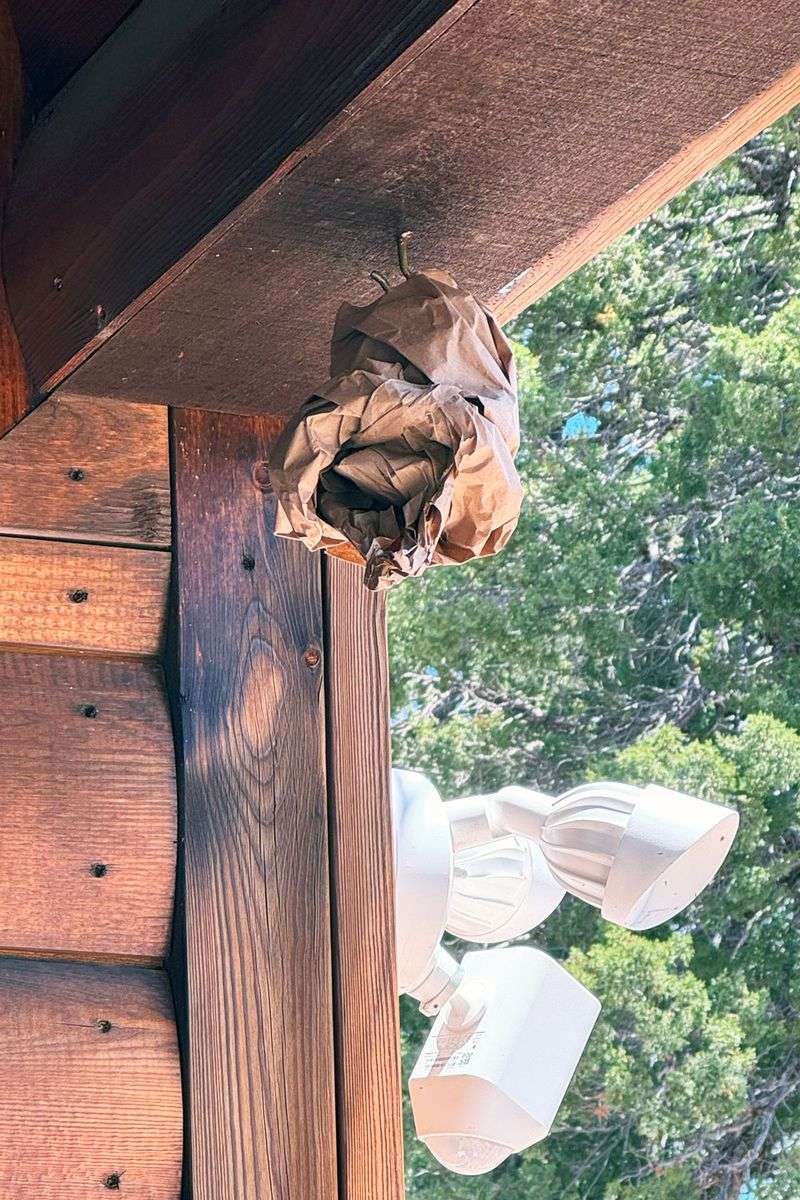
You might have seen a crinkled brown paper bag hanging from someone’s porch and wondered what it was doing there.
Some homeowners stuff a paper bag with newspaper or plastic bags, tie it off, and hang it near areas where carpenter bees have been active.
The idea is that it may resemble another occupied nest site and cause the bees to look elsewhere.
This is a reported homeowner method, not a guaranteed scientific fix. There is no strong research confirming that carpenter bees reliably respond to paper bag decoys the way wasps sometimes do.
That said, some homeowners in North Carolina swear by it as an extra layer of effort, and it costs almost nothing to try. Treating it as a low-effort experiment rather than a primary strategy keeps expectations realistic.
The most important thing to understand is that a paper bag hanging near bare, weathered wood will not replace real wood maintenance. Bees are ultimately drawn to the condition of the wood itself, and no decoy changes that.
If the wood is painted, varnished, and well-maintained, the bag might add a small extra nudge. If the wood is rough and unprotected, bees will likely ignore the bag and tunnel anyway.
Use it alongside proper sealing and finishing, not instead of it, and check regularly to see whether it seems to have any effect in your specific yard.
5. A Smooth Finished Surface Instead Of Bare Softwood
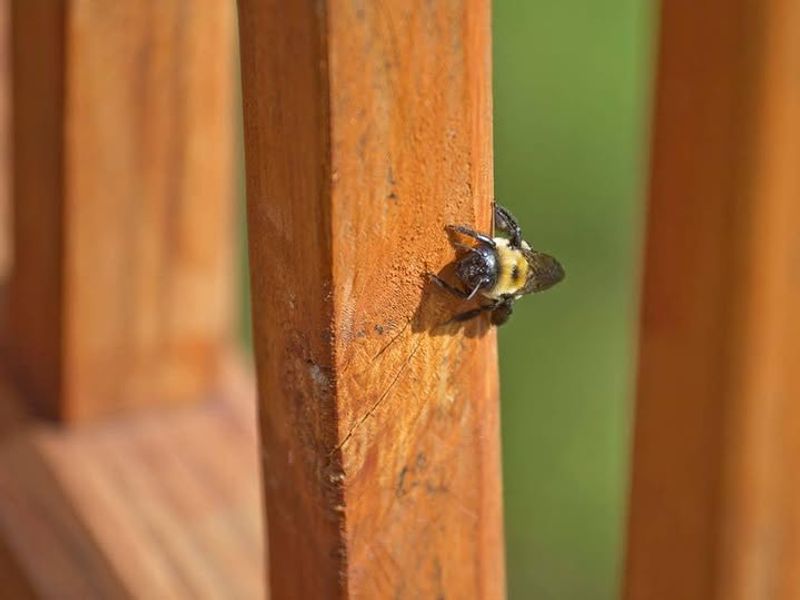
Rough, weathered wood is basically a welcome mat for carpenter bees. Smooth, finished surfaces are a completely different story.
Bees are far less interested in wood that has a sealed, hard coating compared to boards with peeling paint, cracked finish, or exposed grain. The texture and condition of the surface genuinely affects how attractive a structure looks to a searching bee.
Porch ceilings, railings, trim, exposed beams, eaves, fascia boards, and fence caps all benefit from being kept smooth, sealed, and well-maintained.
Any spot where paint has cracked, finish has peeled, or raw wood has become exposed is worth addressing before spring activity picks up.
Those worn patches are exactly where carpenter bees focus their attention first.
Rough edges from old repairs, splintered boards, and corners where paint tends to peel are the most vulnerable spots. Running a hand along porch surfaces each spring and checking for anywhere the finish feels uneven or soft is a simple habit that pays off.
Sanding down rough patches, priming bare wood, and applying a fresh coat of paint or varnish before warm weather arrives keeps the whole structure looking clean and unappealing to bees.
Softwoods like pine and cedar are especially popular with carpenter bees, so making sure those materials are always well-finished is a top priority for North Carolina gardeners who want to protect their outdoor spaces.
6. A Decoy Softwood Piece Far From The Porch
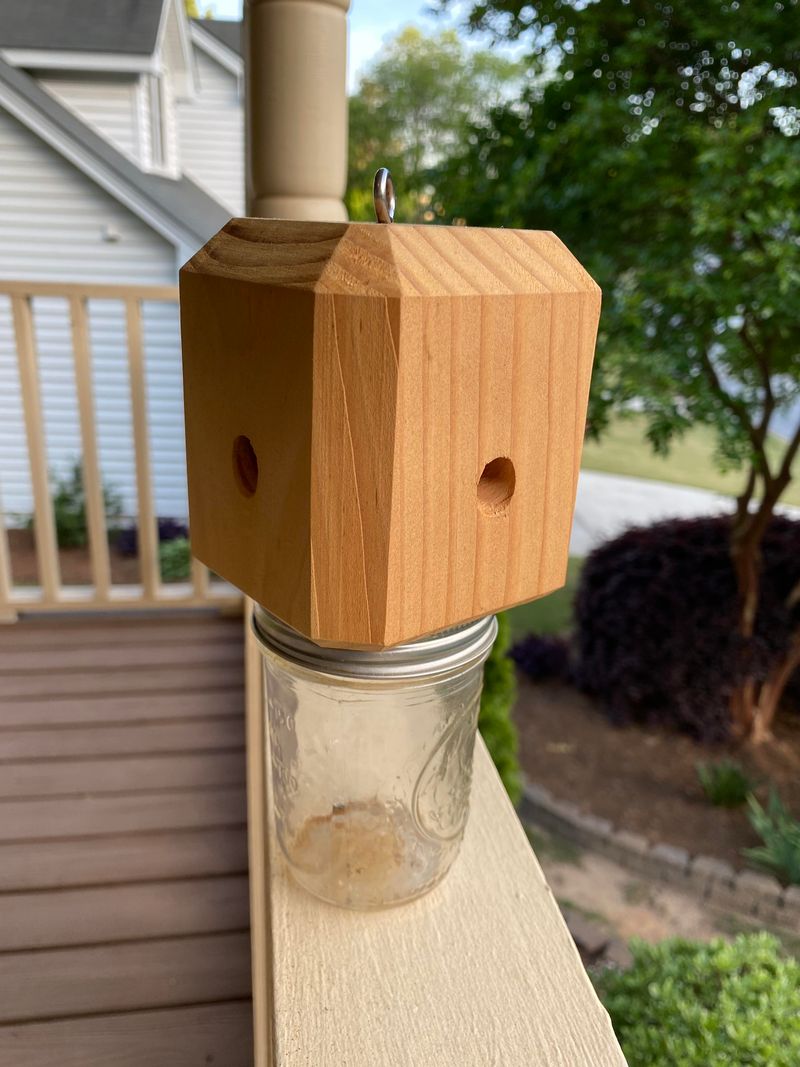
Here is an approach that some gardeners try when they want to work with nature rather than against it.
The idea is to place a piece of untreated softwood, like a rough pine board, far from the main structure so that any curious carpenter bees find something more interesting away from the porch.
The goal is to draw attention toward a sacrificial piece and away from the wood that actually matters.
Placement is everything with this strategy. The decoy piece needs to go well away from the house, not right beside the porch or deck where activity would still be too close for comfort.
A spot near the back fence or at the edge of the property, mounted on a post at a comfortable height, keeps it visible to roaming bees but far from high-traffic areas and the structures you are trying to protect.
It is fair to say upfront that this is not the main research-backed prevention method and results vary widely. Some gardeners find it helpful as part of a broader plan, while others see no clear difference.
Monitoring the decoy board regularly is smart. If it starts drawing heavy activity that spills back toward the house or creates a concentration of bees near where people walk, removing or relocating it is the right call.
Think of it as one optional experiment within a larger, more reliable maintenance plan rather than a standalone fix.
7. Pollinator Flowers Away From Wooden Structures
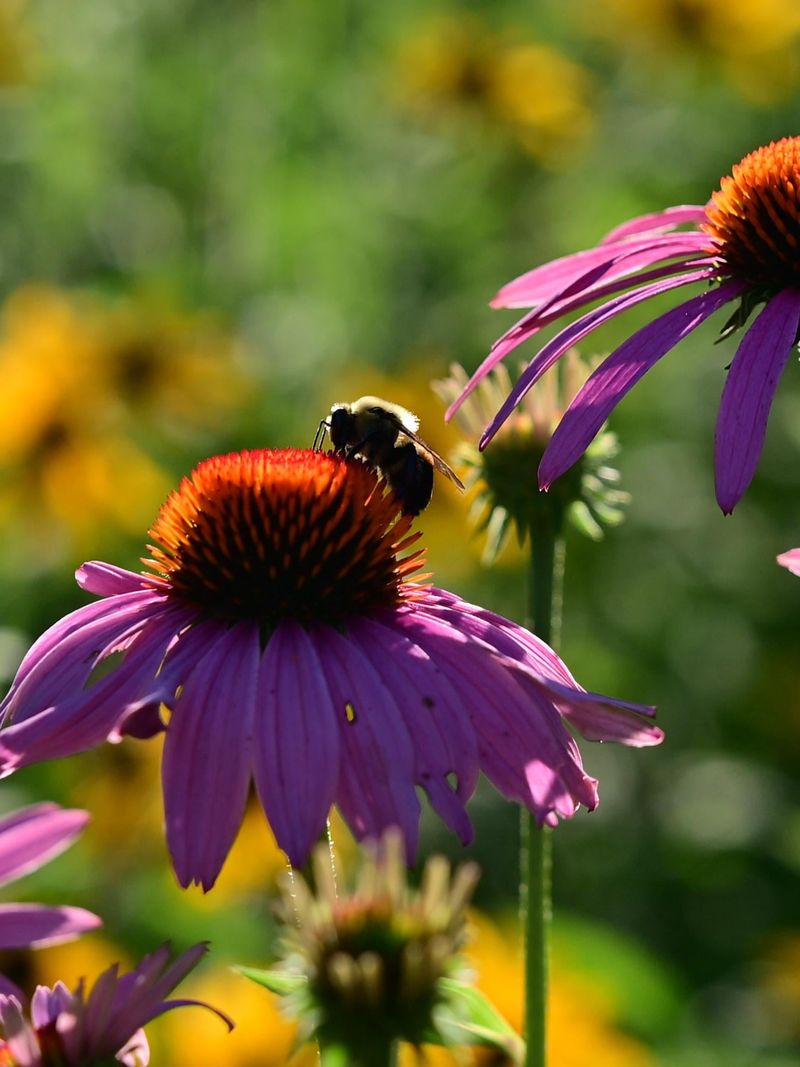
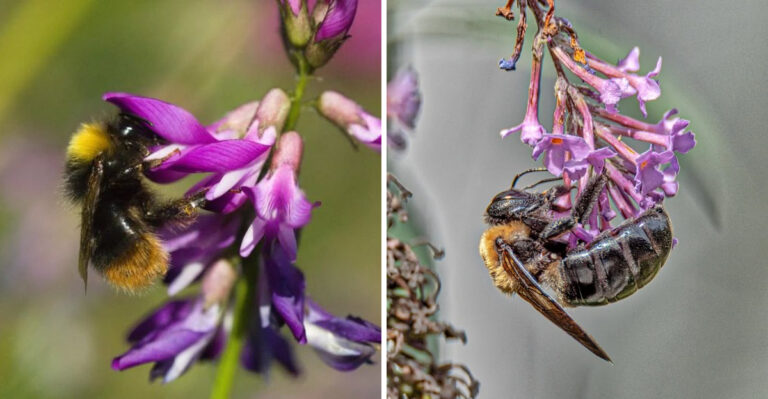
Carpenter bees are actually excellent pollinators, and that is worth remembering before treating every bee sighting as a crisis. These bees visit flowers regularly, buzzing from bloom to bloom and supporting gardens in a real way.
The challenge is simply keeping their nesting habits away from wooden structures, not eliminating them from the yard entirely.
One thoughtful approach many NC gardeners take is planting pollinator-friendly flowers in a sunny border located well away from porches, decks, pergolas, and wooden trim.
Coneflowers, black-eyed Susans, native bee balm, and lavender are all popular choices that draw carpenter bees and other pollinators toward the garden rather than toward the house.
When flowers are blooming and accessible in a far corner of the yard, bees naturally spend more time there.
Flowers alone will not stop a determined carpenter bee from tunneling into bare wood nearby. Tunneling is driven by the condition and availability of suitable wood, not by the presence or absence of nearby blooms.
But pairing a well-planted pollinator border with properly finished wood gives you a yard that supports pollinators while keeping the most active bee traffic away from your vulnerable structures.
It is a strategy that feels good to implement because it benefits the garden ecosystem while also nudging bees toward a more appropriate destination.
North Carolina native plants are especially effective since they are already well-suited to local bee species and seasonal timing.
8. Regular Spring Inspections Around Wood
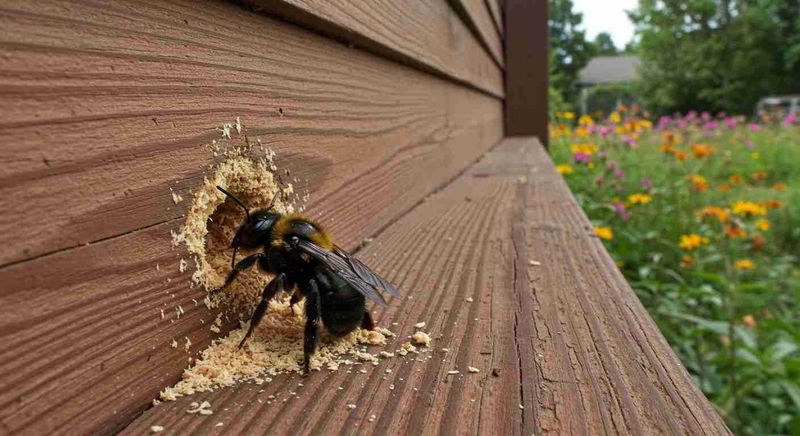
Catching a problem early is always easier than dealing with it after it has spread across multiple boards.
Early spring, before carpenter bee activity gets heavy, is the best time to walk around every wooden structure on the property and look things over carefully.
A little time spent inspecting now can save a lot of repair work later.
The inspection checklist is straightforward. Check under railings, along porch ceilings, across fascia boards, under pergola beams, along eaves, on fence tops, and around deck trim.
Look for perfectly round entry holes about the size of a finger, small piles of sawdust-like material below the wood, soft or spongy spots when you press on a board, cracked or peeling paint, and worn areas where the finish has thinned out.
Any of these signs point to spots that need attention before the season gets going. Old holes from previous seasons are worth noting too, since those are often the first spots bees return to when activity picks back up.
Marking problem areas with painter’s tape during the inspection makes it easy to go back and address each one without forgetting anything.
Bringing a flashlight helps when checking shadowed spots under eaves and porch overhangs.
North Carolina gardeners who make this inspection a regular spring habit tend to stay well ahead of the issue, keeping their structures in much better shape year after year with far less dramatic repair work involved.