What Suddenly Wilting Tomato Plants In The North Carolina Piedmont Are Really Telling You
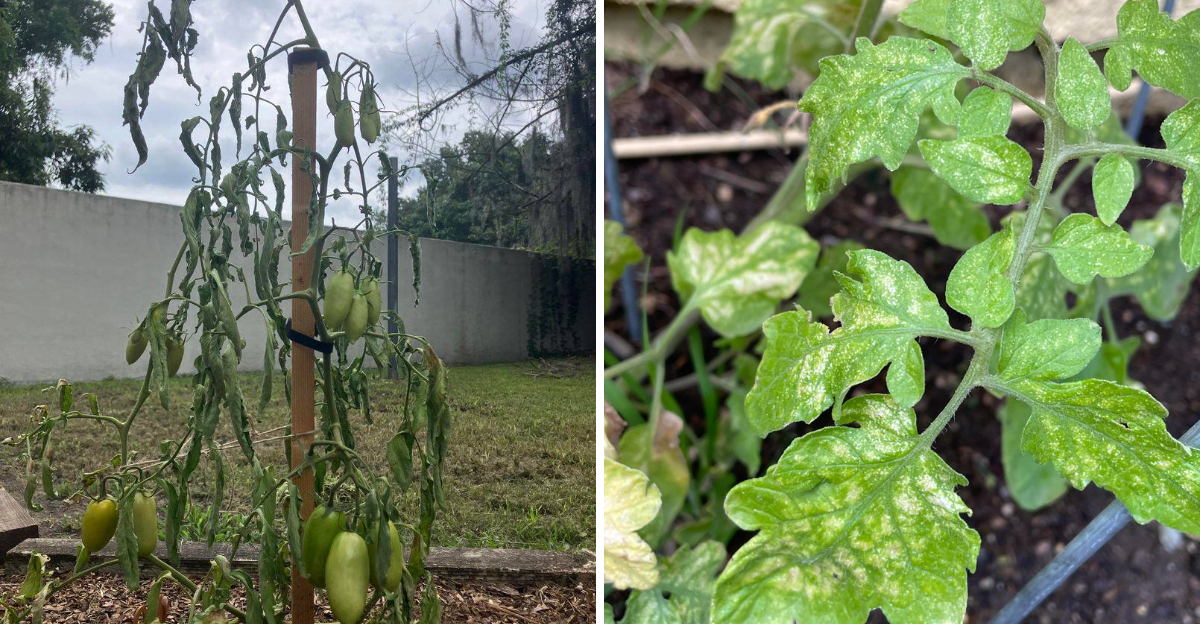
One tomato plant can look perfectly normal at sunset and completely defeated by breakfast.
That kind of collapse gets attention fast.
The leaves may still be green. The soil may feel damp. Every plant beside it can look completely fine, which makes the whole thing feel even stranger.
A wilted tomato is not giving you one answer.
It is giving you a symptom.
In the North Carolina Piedmont, several problems can create that same drooping picture. Warm soil, heavy summer rain, root stress, vascular diseases, and even physical damage can all interrupt the plant’s ability to move water.
So what is the plant actually trying to tell you?
Start with speed, color, and location. Then look inside the stem, around the crown, and finally below the soil.
Those clues can separate a short-lived stress response from a problem that deserves a closer diagnosis.
The plant may look dramatic. The useful evidence is usually much quieter, and it starts with the pattern.
You can spot once you know where to look.
1. Treat Sudden Green Wilt As A Bacterial Wilt Clue
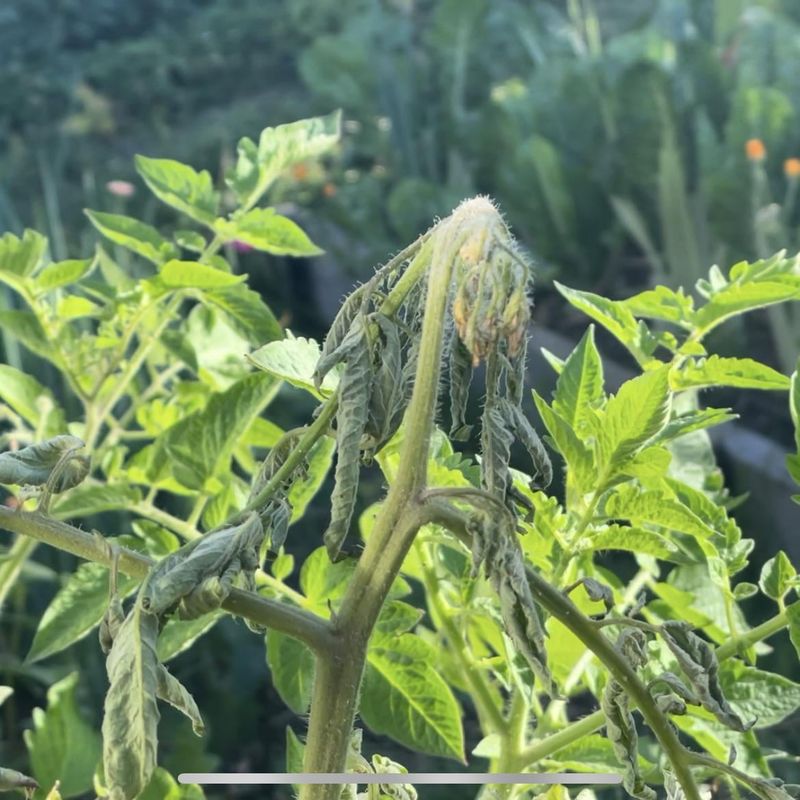
The speed of the collapse can tell you a lot.
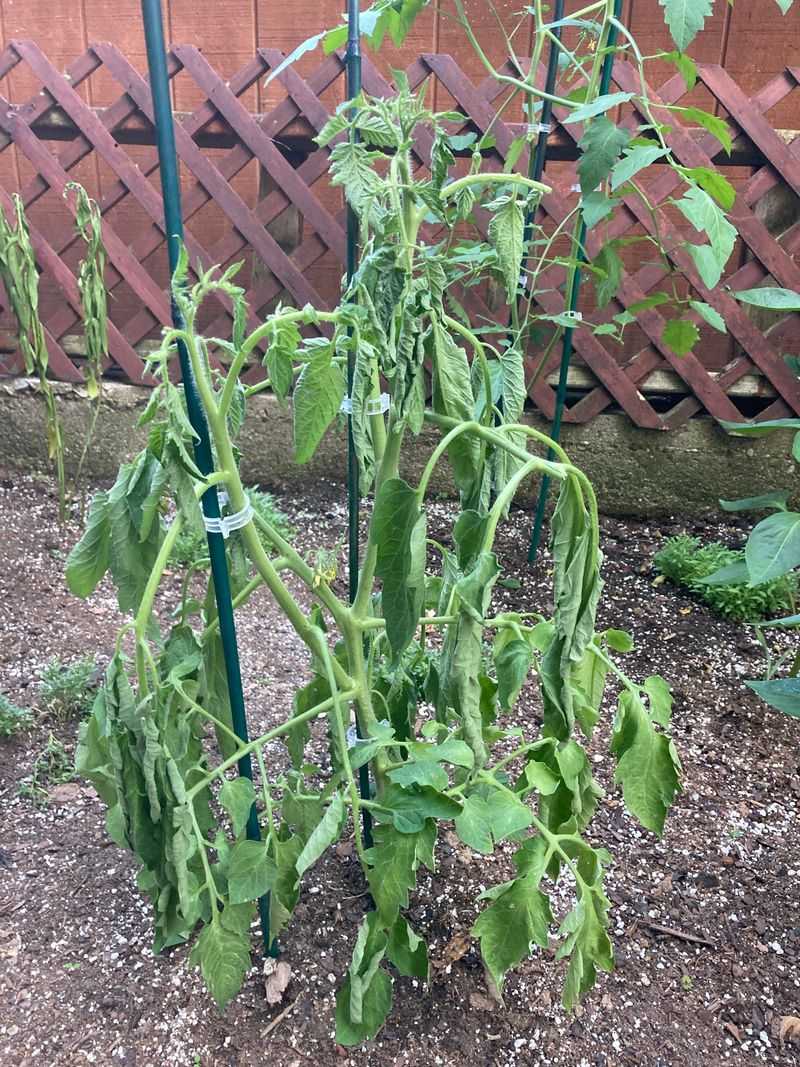
A tomato that looks healthy one evening and hangs limp the next morning, while the leaves still stay mostly green, fits one of the classic patterns linked with bacterial wilt.
The problem starts inside the plant.
Ralstonia solanacearum can enter through roots or wounds and multiply in the water-carrying tissue. As that tissue becomes blocked, moisture can no longer move efficiently from the roots to the leaves.
That is why the soil can feel damp while the plant still looks desperately thirsty.
Cutting the lower stem can offer another clue. Healthy tissue should look pale inside. A suspicious plant may show internal discoloration, and a simple water test can sometimes reveal milky threads from the cut stem.
Place a freshly cut stem section in clear water and watch the cut end. Thin cloudy strands that drift into the glass can support a bacterial wilt suspicion.
Do not treat that test as final proof.
Other problems can produce similar wilt, and a lab diagnosis gives you a much firmer answer before you make decisions about next season’s bed.
Take photos, note how fast the collapse happened, and save a fresh sample.
A tomato that folds overnight is dramatic enough. Your response does not need to be. Gather the clues first, then let the diagnosis catch up.
2. Connect Hot Wet Soil With Higher Risk
A Piedmont thunderstorm can change the root zone faster than the leaves show it.
Heavy summer rain soaks the ground, then warm air and hot soil keep that moisture sitting around roots. Those conditions can favor several soilborne problems, including bacterial wilt.
Clay makes the situation more complicated.
Much of the Piedmont holds water longer than sandy ground. A bed that looks dry on top can stay saturated several inches down, especially after repeated afternoon storms.
That is why drainage deserves attention before the hose does.
Your North Carolina Garden Changes Every Week. Your Plan Should Too.
Gardening in North Carolina changes quickly throughout the season. Every Friday you’ll receive a simple weekly plan showing exactly what to plant, prune, fertilize, harvest, and protect so you never miss the right timing.
Check the soil below the surface after rain. Standing water near the stem or a root zone that stays soggy for days can put tomatoes under extra stress and create better conditions for certain pathogens.
Raised beds can help where drainage stays poor.
A loose mulch layer also reduces soil splash and can soften temperature swings around the roots. Keep it off the stem so the crown stays open to air.
Avoid moving muddy soil from one bed to another on tools or shoes.
Warm, wet conditions can help soilborne organisms travel through splashing water and disturbed ground, especially around injured roots.
Crop rotation can reduce pressure from some problems, though a persistent soilborne pathogen may remain for years.
The weather may feel like the culprit, but rain rarely works alone. It changes the conditions underground, and that is where a perfectly healthy tomato can suddenly find itself in a very bad neighborhood.
3. Blame Blocked Water Movement Inside The Stem
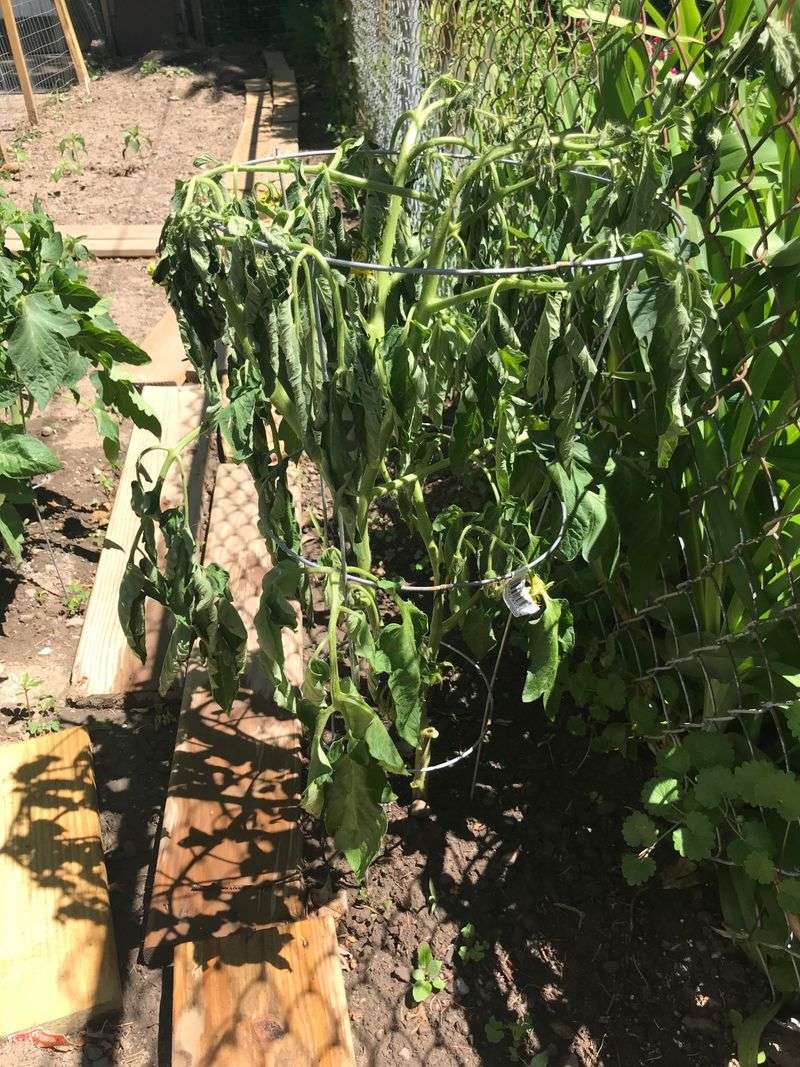
Wet soil does not guarantee that a tomato can use the water around it.
The plant still has to move that moisture from the roots through the stem and into every leaf. That job belongs largely to xylem, the tiny vessels that act like an internal water highway.
Several problems can block the route.
Fusarium and Verticillium can colonize vascular tissue. Bacterial wilt can clog the same system. Physical root or stem damage can interrupt flow too.
That leaves the top of the plant thirsty even when the bed feels moist.
A clean stem cut can reveal useful evidence.
Slice through the lower stem of a badly wilted plant and look at the interior. Healthy tissue usually appears pale green or cream. Tan, brown, or darker streaks can point toward a vascular problem.
Notice where that discoloration appears.
A faint ring near the outer stem tissue can tell a different story from a dark center or streaking that runs mainly along one side.
Take a photo before the cut surface dries.
Then save a section that includes both healthy-looking and affected tissue if you plan to submit a sample for diagnosis.
Do not let one brown line decide the whole case.
Stem color, wilt pattern, leaf yellowing, and root condition work better together.
Your tomato may be standing in moist soil with a traffic jam inside the stem. The water is there. The delivery route is what needs investigating.
4. Compare One Sided Wilt With Fusarium
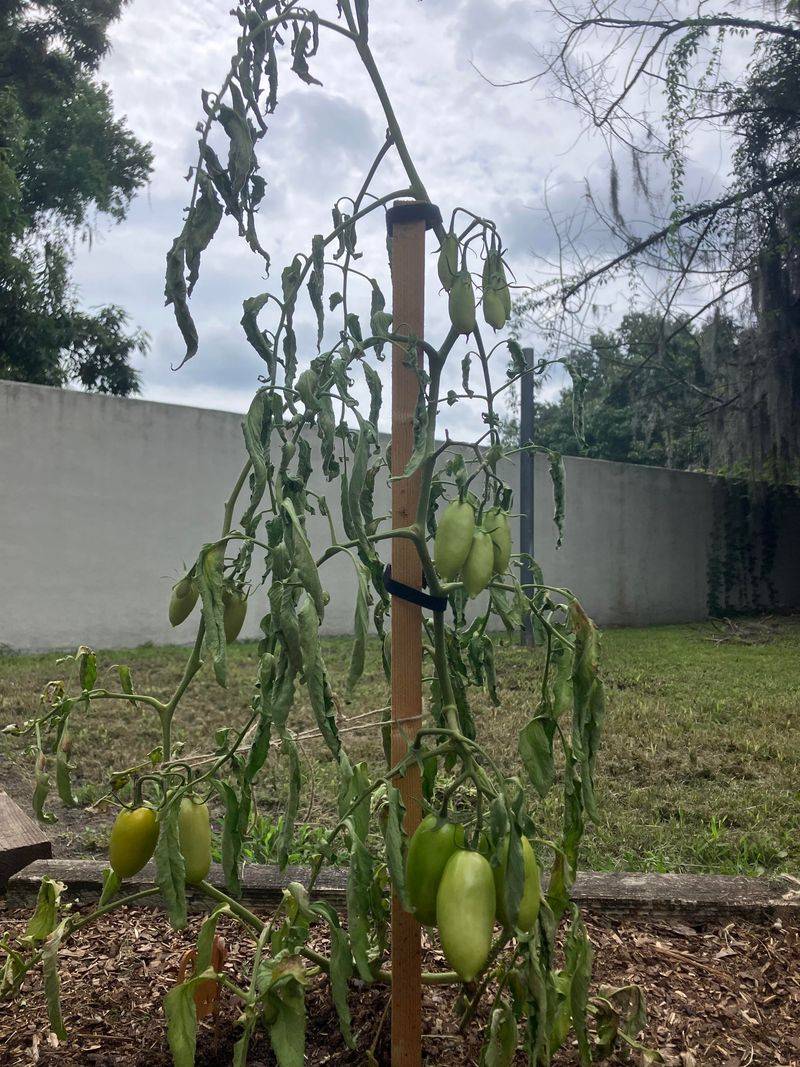
A plant that seems to wilt by halves gives you a more specific clue.
Fusarium wilt often starts unevenly. One side of the tomato may droop or yellow while the other side still looks green and upright.
The lower leaves usually show the first change.
Yellowing can move upward as the problem advances, and the affected side may look weaker long before the entire plant shows obvious decline.
Check the lower stem next.
A lengthwise cut can reveal tan or brown streaking in the vascular tissue. That internal discoloration, combined with one-sided wilt and lower-leaf yellowing, can support a Fusarium suspicion.
Bacterial wilt often behaves differently.
It tends to cause a faster, more uniform collapse while foliage may stay green early in the process. That contrast is useful, but field symptoms can overlap enough that a confirmed diagnosis still matters.
Fusarium can persist in soil for a long time.
That makes resistant tomato varieties especially useful in beds with a known history of the disease. Seed packets and plant tags often carry an “F” in their disease-resistance codes.
Rotation alone may not solve the problem quickly because the pathogen can remain in the soil for years.
Use the pattern to guide the next step instead of guessing from wilt alone.
One side of the plant going yellow while the other still stands tall may look oddly selective. In this case, that unevenness is exactly the clue worth writing down.
5. Watch Lower Leaf Yellowing With Verticillium
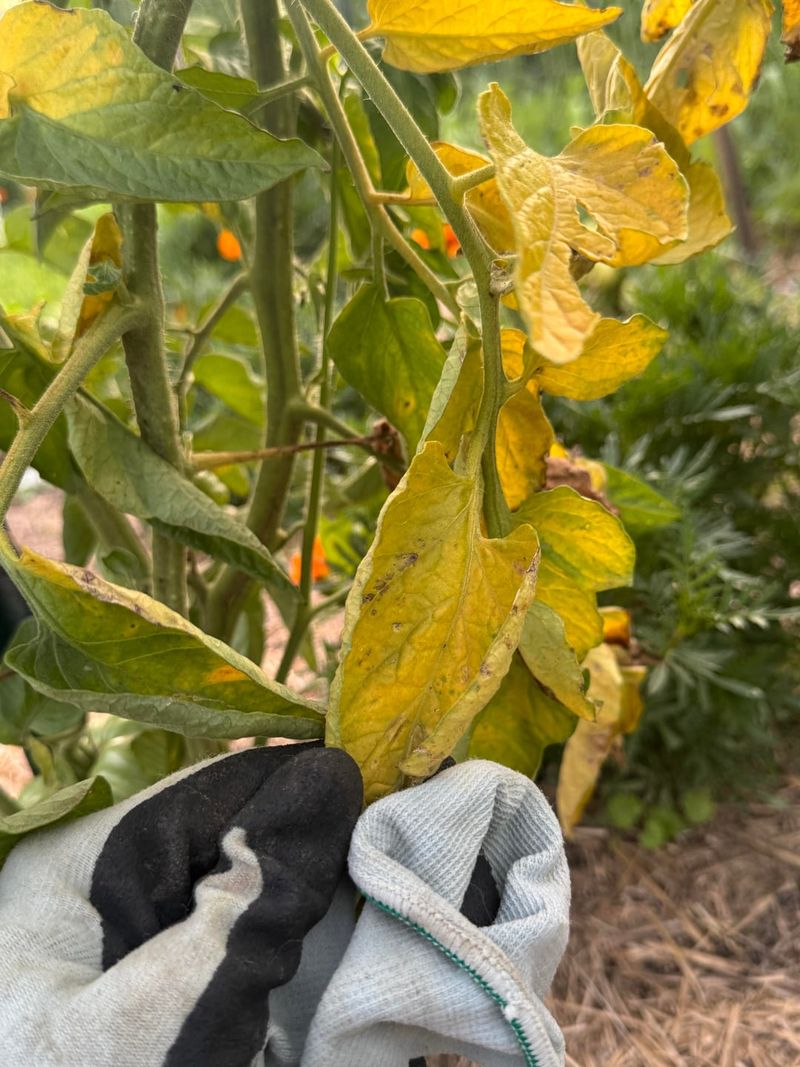
Not every wilt problem announces itself with an overnight collapse.
Verticillium tends to move more slowly. Lower leaves may fade first, sometimes with yellow areas that form a wedge or V shape near the margins.
That slow start can look ordinary.
Older tomato leaves naturally age, and nutrient trouble can also begin low on the plant. The difference becomes clearer when yellowing keeps climbing and midday wilt starts to join the picture.
Some affected plants perk up again overnight.
That temporary recovery can make the problem look like nothing more than afternoon heat. Repeated wilt, steady lower-leaf decline, and vascular discoloration together deserve a closer look.
Cut the lower stem and inspect the tissue.
Verticillium can leave brown or tan discoloration inside, though the streaking may look lighter than what appears with Fusarium.
The two diseases can overlap enough that a home diagnosis stays uncertain.
Resistant varieties can help in gardens with a known history of Verticillium. Look for a “V” in the disease-resistance codes on tomato labels.
Also keep weeds and old plant debris under control because this pathogen can survive in soil and on several hosts.
A tomato that fades slowly can be easier to ignore than one that collapses in a day.
That is exactly why the lower leaves deserve attention. The quiet problems often leave a trail long before the whole canopy joins in.
6. Check The Crown For Southern Blight Signs
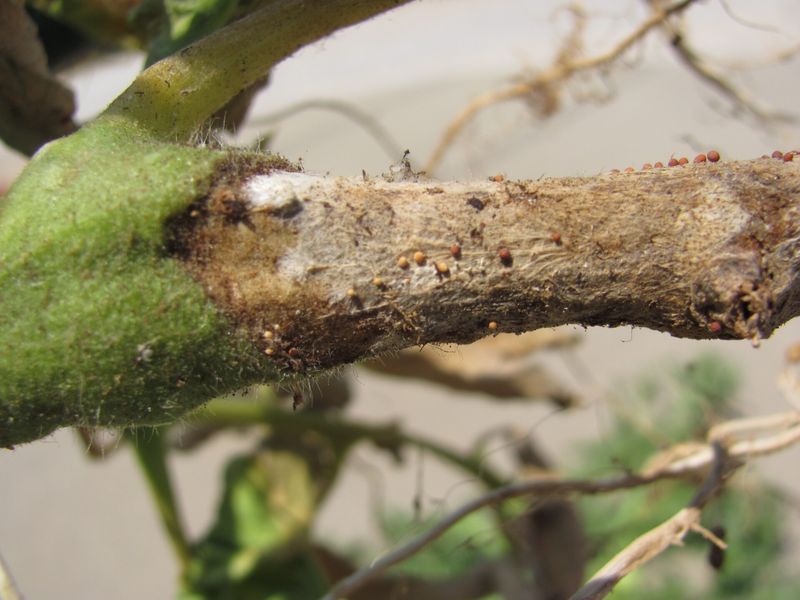
The leaves may be drooping, but the best clue can sit right at soil level.
Southern blight often shows itself around the crown, where the main stem meets the ground. Instead of beginning deep inside the vascular system, this fungal problem can create visible growth on the stem base and nearby soil.
Look for white, cottony material.
Small round structures may appear inside that growth and later turn tan or brown. They can resemble tiny mustard seeds and help the fungus persist in the soil.
Warm, humid Piedmont summers suit this problem especially well.
A dense mulch layer pressed against the stem can make the crown stay wetter, so keep a little open space around the base of each tomato.
Remove badly affected plant material promptly.
Do not leave infected stems or roots scattered in the bed, where more survival structures can remain behind. Bag the material and take it out of the garden.
Sanitation matters more than a frantic spray.
Rotation can help reduce pressure over time, though southern blight has a broad host range and can affect many garden plants.
Improved drainage and a cleaner crown zone also make the bed less inviting.
This disease does not hide its evidence as well as some vascular problems. The plant may wilt above, but the real clue can look like a tiny white carpet at the base.
When the leaves sag, remember to look down before you look for answers somewhere else.
7. Rule Out Root Stress Before Naming The Cause
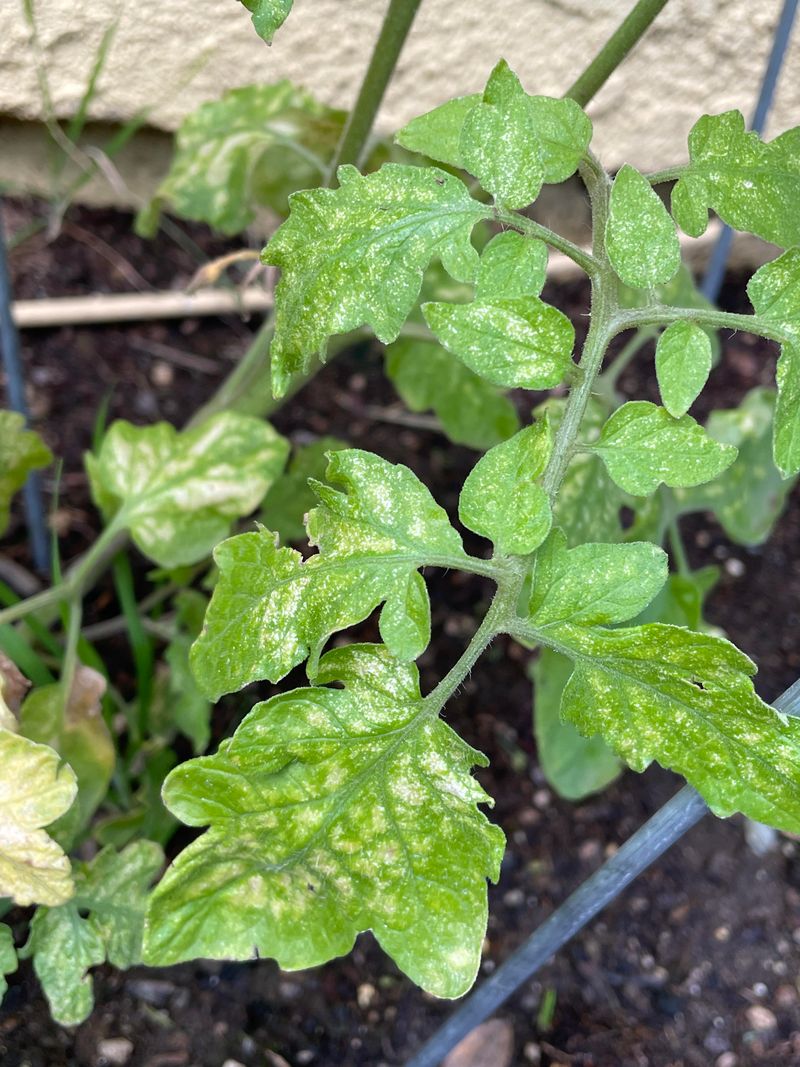
A wilted tomato does not automatically belong in the disease column.
Piedmont soil can create physical problems that look remarkably similar. Heavy rain may leave roots short on oxygen. Compacted clay can restrict growth. A dry root ball around a recent transplant can sit inside otherwise moist soil.
Start with moisture below the surface.
Dig carefully several inches from the stem and feel the soil around the roots. Soggy ground after repeated storms points in a different direction from a dry, hard pocket around the root ball.
Look at the roots only when the plant is already badly affected or removal is likely.
Healthy roots tend to look firm and pale. Soft, darkened roots can suggest prolonged saturation or decay. Swollen knots can point toward root-knot nematodes, another problem that can interfere with water uptake.
Physical damage belongs on the list too.
A deep hoe stroke, digging animal, or damaged transplant root system can interrupt water supply without any pathogen involved.
Check recent garden events before you assign a disease name.
One heavy storm, a missed watering stretch, or recent cultivation can explain more than the leaves alone.
That extra step can save money and prevent unnecessary treatments.
Tomatoes are excellent at making every root problem look like an emergency upstairs. Give the basement a proper inspection before you blame the plumbing, the weather, or an invisible organism.