Why This One Plant Draws Crowds From Across The Neighborhood When It Blooms In Arizona Yards
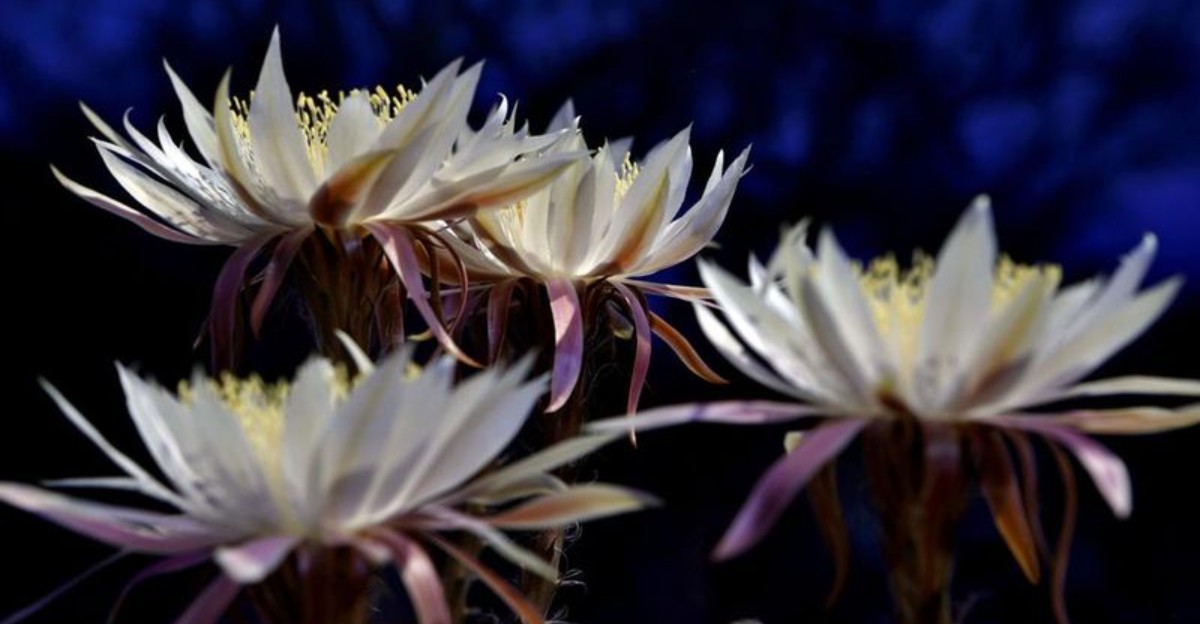
Every summer, a scraggly desert plant that most people walk past without a second glance suddenly erupts into some of the most spectacular flowers in the Sonoran Desert. Arizona’s night-blooming cereus, known to botanists as Peniocereus greggii, opens large white blooms after sunset that fill the air with a sweet fragrance before wilting by morning.
Organized events celebrating this spectacle can pull thousands of visitors, but a single plant in a private yard is more likely to spark neighborhood curiosity than trigger a full-on crowd. Understanding what this plant actually does, and what it realistically cannot promise, helps Arizona homeowners decide whether it belongs in their low-desert landscape.
The overlooked desert plant that becomes a nighttime spectacle
Most of the year, Peniocereus greggii looks like a bundle of forgotten sticks poking up through a mesquite or brittlebush. Its thin, gray-green stems blend so naturally with nearby shrub branches that even attentive gardeners often miss it entirely until something dramatic happens after dark.
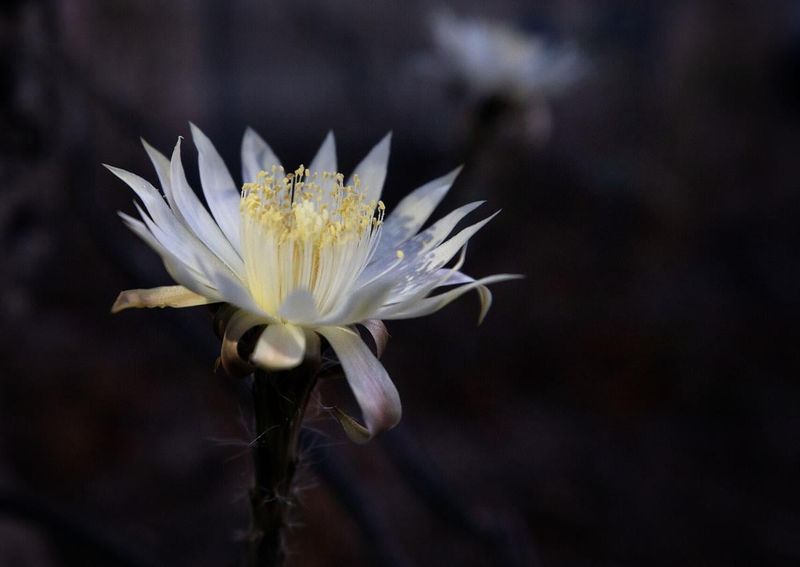
That something is a sudden flush of large, white, powerfully fragrant flowers that appear without warning once the plant reaches its seasonal peak. Arizona-Sonora Desert Museum plant records confirm that the flowers open after sunset and close once morning sun reaches them, leaving the plant looking just as unremarkable as it did the day before.
That contrast between ordinary and extraordinary is exactly what makes the bloom memorable. A neighbor who happens to glance over at the right moment will almost certainly stop and stare.
Whether that turns into a crowd depends on timing, word of mouth, and plain luck, not on any guarantee attached to the plant itself. The real question worth asking is not whether your yard will fill with visitors, but why this brief nighttime display captures attention so reliably when it does appear.
Identify Arizona’s native Queen of the Night
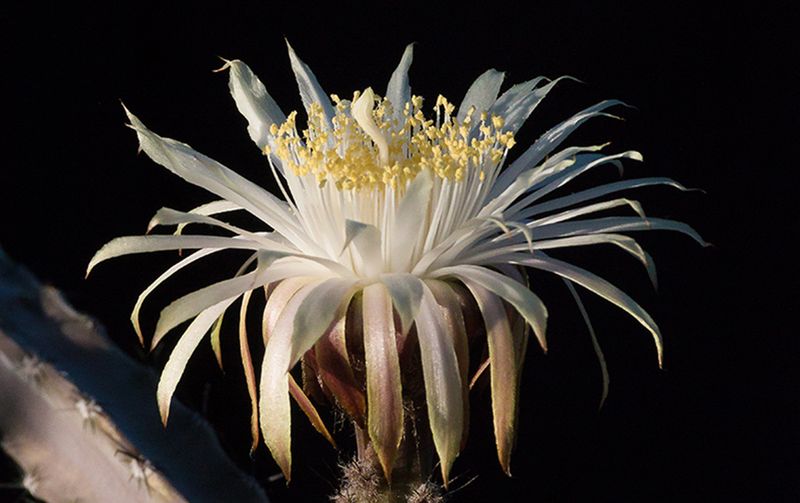
The name “Queen of the Night” gets applied to several completely different plants, which causes real confusion at nurseries and online. Tropical epiphyllums sold at big-box garden centers often carry that same nickname, as do a handful of other night-flowering cacti with no close relationship to Arizona’s native species.
The plant this article covers is Peniocereus greggii, a true Sonoran Desert native with a massive underground tuber that can weigh several pounds. Desert Botanical Garden resources on Queen of the Night make clear that the Arizona native differs significantly from the cultivated tropical types in appearance, cold tolerance, water needs, and bloom behavior.
When comparing nursery offerings or searching for care information, use the scientific name Peniocereus greggii rather than relying on common names alone. A plant sold as “night-blooming cereus” could be native or nonnative, desert-adapted or tropical, and those differences matter enormously for a low-desert Arizona yard.
Getting the name right from the start saves money, water, and frustration down the road.
Why the flower commands attention after dark
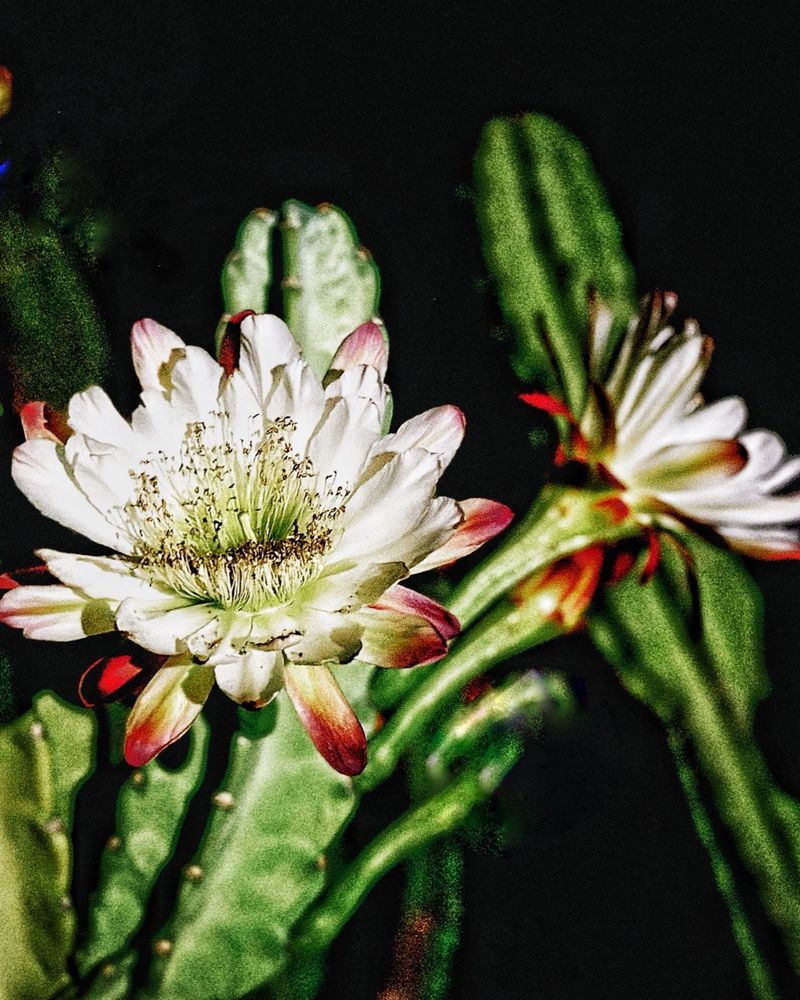
Few flowering events in the low desert hit as many senses at once as a Peniocereus greggii bloom. The flowers are tubular and white, typically reaching about 6 to 8 inches in length, and they release a strong, sweet fragrance that carries surprisingly well through warm night air.
Your Arizona Garden Changes Every Week. Your Plan Should Too.
Gardening in Arizona changes quickly throughout the season. Every Friday you’ll receive a simple weekly plan showing exactly what to plant, prune, fertilize, harvest, and protect so you never miss the right timing.
Hawk moths are important pollinators associated with this plant. Because individual plants are not self-fertile, pollen needs to move between compatible specimens for seed production to occur.
When multiple plants in a local population bloom on the same night, the chances of successful pollen transfer improve considerably. That local synchronization, noted in Peniocereus greggii plant profiles, is part of what makes a concentrated display so striking.
Seeing a hawk moth work a fresh bloom in the dark is genuinely memorable, but wildlife visits are never guaranteed. Pollinator presence depends on what else is growing nearby, whether pesticides have been used in the area, and how healthy the surrounding habitat is.
The flowers and their nocturnal timing create favorable conditions, and whether moths show up on any particular night is something the plant cannot control any more than the gardener can. Planting with that honest expectation leads to more satisfaction than planting with a checklist of promised visitors.
A short bloom season does not mean one guaranteed night
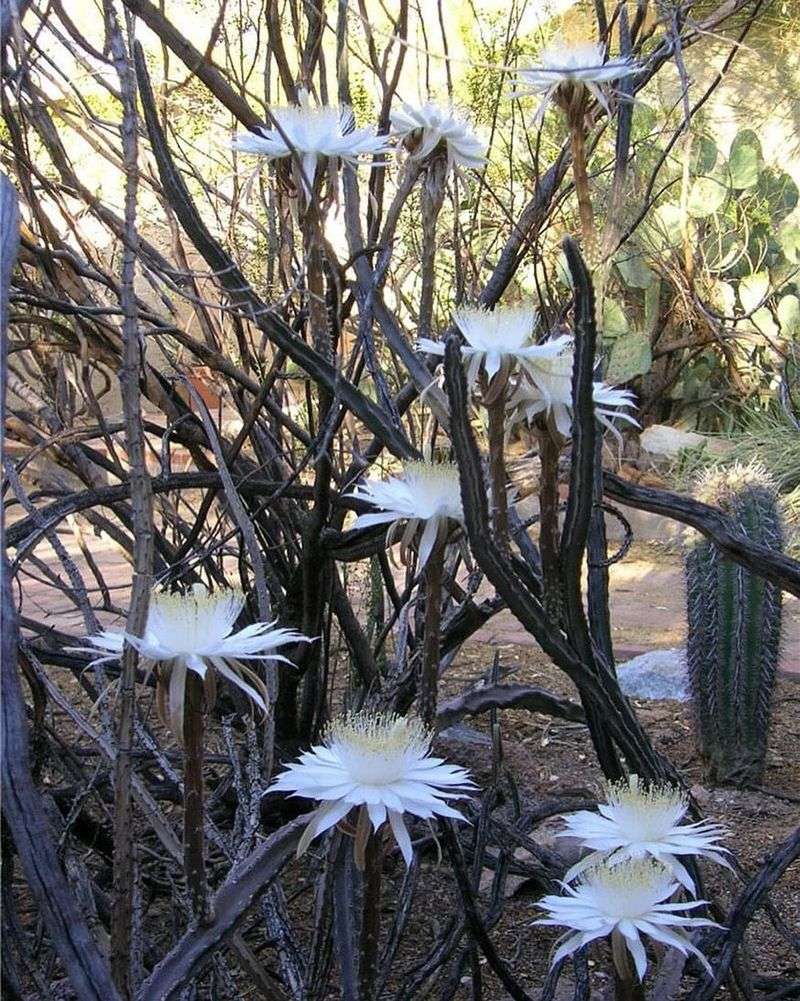
A common misconception holds that the night-blooming cereus blooms exactly once per year, on a single dramatic night shared by every plant in Arizona. The real picture is more nuanced and, in some ways, more interesting.
Late May through early July is the general flowering window for Peniocereus greggii in low-desert Arizona, though elevation, microclimate, and seasonal conditions can shift that range in either direction. Within a single plant, blooming tends to happen in short flushes rather than as one solitary event.
Many flowers in a flush may open together on the same night, with a stray bloom or two appearing the night before or after.
Arizona-Sonora Desert Museum genus records note that plants in a local population often synchronize their flowering, which is quite different from a statewide schedule. A plant in your Tucson backyard and one growing in a Phoenix neighborhood wash may bloom weeks apart.
Treating the season as a roughly six-week window of possibility, rather than a single annual appointment, sets a realistic expectation and makes it easier to actually catch the display when it happens.
What organized bloom nights actually prove
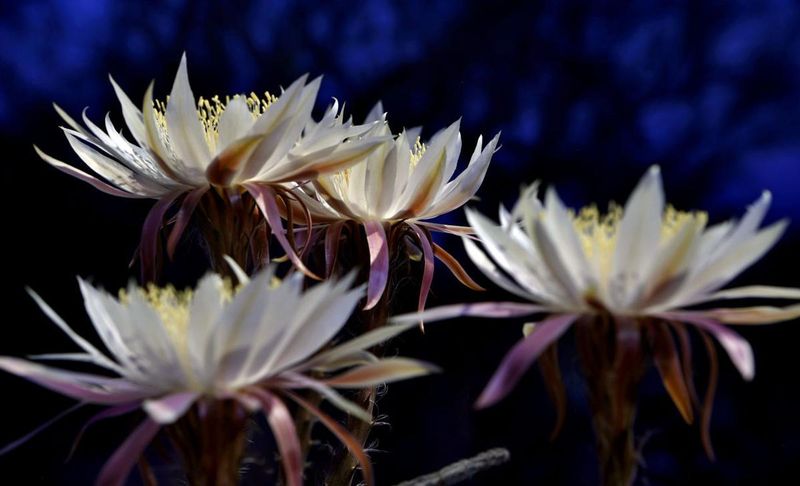
Tohono Chul in Tucson has turned the night-blooming cereus into one of the Sonoran Desert’s most anticipated seasonal events. During its annual Bloom Night, the garden regularly draws between 1,500 and 2,500 visitors who come specifically to see the concentrated collection of Peniocereus greggii plants open together after dark.
Those numbers, reported by Tohono Chul’s Bloom Watch coverage, tell a clear story about what a large, well-tended, publicly accessible display can accomplish. Organized events offer parking, signage, staff, and dozens of plants blooming in one spot, conditions that make it easy for the public to participate.
A single plant in a private yard operates under completely different circumstances. A neighbor who notices the fragrance drifting over the fence, or a friend who gets a text with a photo, might wander over for a look.
That kind of local curiosity is entirely plausible and genuinely rewarding. What the Tohono Chul data does not show is that any Arizona homeowner with one specimen should expect a line of strangers at the gate.
Treating neighborhood interest as a welcome possibility rather than a predictable outcome keeps expectations grounded and makes any actual visitors feel like a bonus.
Give the hidden cactus the microclimate it expects
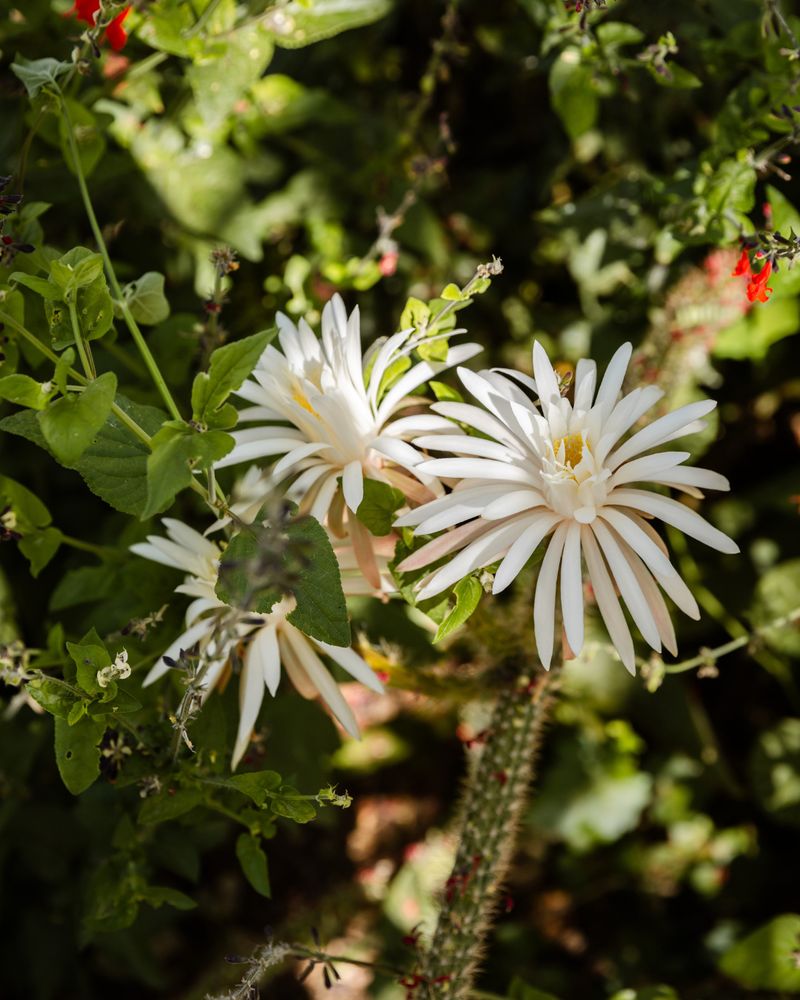
Placing Peniocereus greggii correctly matters more than most gardeners expect from a plant that looks so undemanding. Out in the wild, it typically grows beneath or through shrubs like creosote or triangle-leaf bursage, which provide support for the thin stems, soften direct sun exposure, and give the plant a structure to lean against as it grows.
Replicating that relationship in a cultivated yard means choosing a spot with partial shade or filtered light rather than a wide-open, exposed bed baking in full afternoon sun. The University of Arizona Campus Arboretum recommends a large, deep container for potted specimens because the plant develops a substantial underground tuber that needs room to expand.
In-ground planting works well beneath an established palo verde, desert willow, or similar shrub with open canopy structure.
Drainage is the other non-negotiable. Arizona Cooperative Extension guidance on transplanting cacti recommends well-drained soil and suggests building a raised planting mound where native soil is heavy clay or drains slowly after rain.
Caliche layers common in many Phoenix and Tucson lots can trap water around the roots, so checking what is beneath the surface before digging pays off. Newly planted specimens may need occasional deep watering during the first establishment season, but once settled, the plant is genuinely low-water.
Do not expect a bloom timetable tied to planting date; first flowering depends on the plant’s maturity, health, and how well its microclimate matches its needs.
Start with legal, nursery-grown stock
Wild populations of Peniocereus greggii are not something homeowners should treat as a free source of planting material. Arizona rules restrict the removal, transport, and possession of protected native plants taken from their original growing sites, and those rules apply whether the plant is on public land, a roadside, or private property that is not your own.
Arizona Department of Agriculture native plant rules and the relevant sections of Arizona Revised Statutes make clear that permits, documentation, or both may be required before a protected plant can be legally moved. Penalties for violations can include fines and other consequences that are not worth risking when nursery-grown alternatives are widely available.
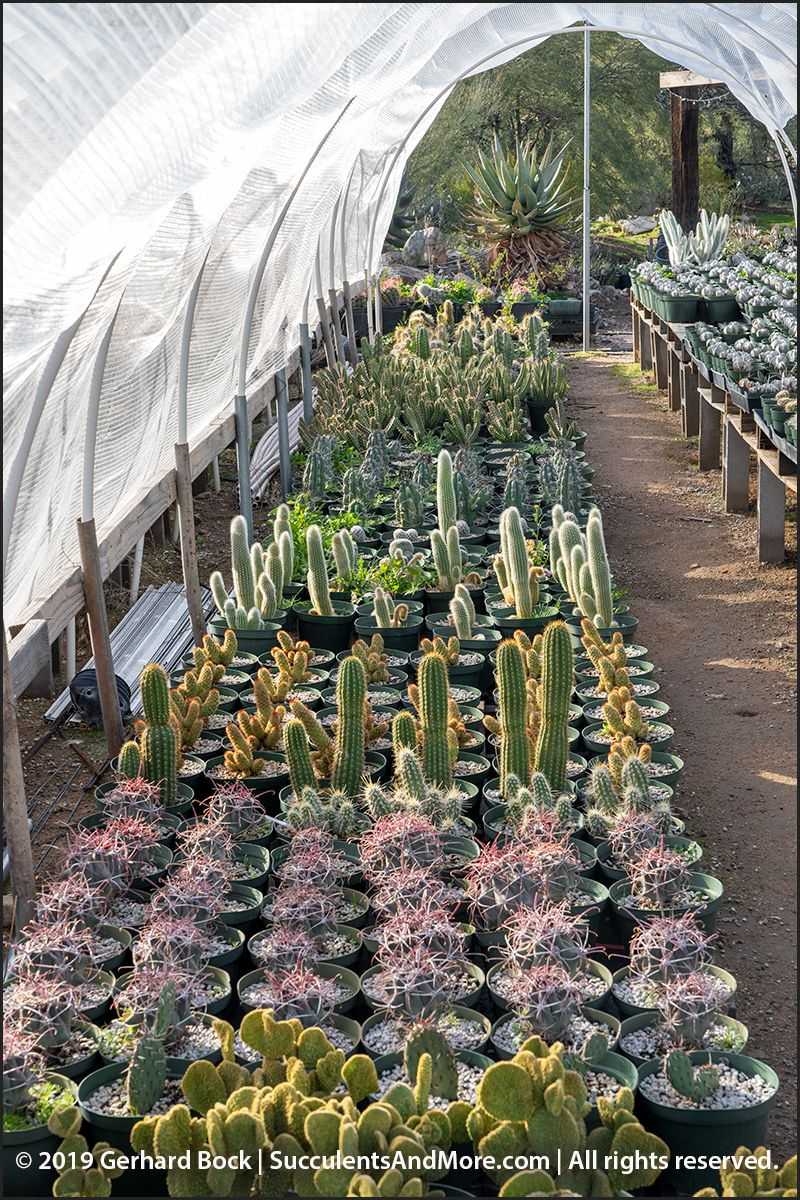
Reputable native plant nurseries in the Phoenix and Tucson areas stock Peniocereus greggii with some regularity, and buying from them protects wild populations while giving you a plant that has already been propagated under controlled conditions. Before acquiring any specimen through informal channels, a cutting from a neighbor’s plant, a tuber offered at a swap, or a roadside find, verify the current requirements with the Arizona Department of Agriculture.
The rules are not complicated once you know where to look, and starting legally means your plant carries no legal complications into your yard along with it.
Expect a memorable bloom, not a guaranteed crowd
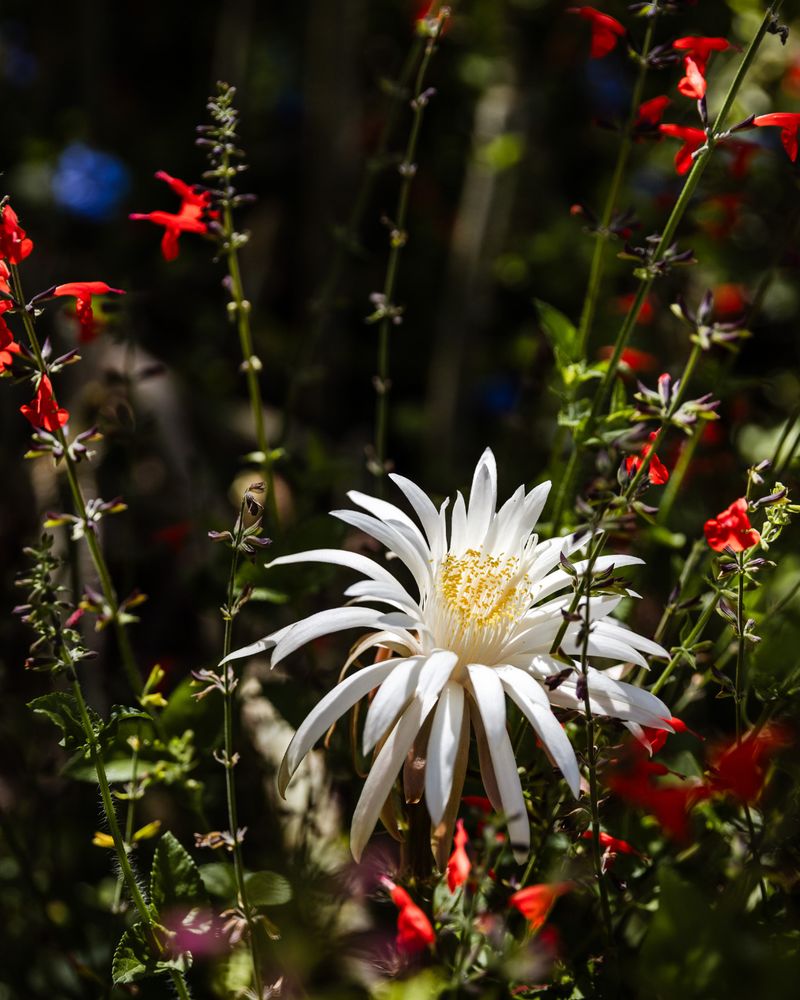
Peniocereus greggii earns its place in a low-desert Arizona yard on honest merits. It is a regionally native, low-water plant that fits naturally into the same ecological community as palo verde trees, creosote, and desert willows.
When it blooms, it creates a brief nighttime moment that is genuinely hard to replicate with any other plant in the low desert.
Bloom timing, wildlife activity, and how much attention the plant draws will vary from yard to yard and season to season. Some years a flush of flowers opens on a night when the whole neighborhood happens to be outside.
Other years the blooms come and go while most people sleep. Both outcomes are normal, and neither one reflects a failure of the plant or the gardener.
The practical path forward is straightforward: give the plant a sheltered microclimate with good drainage and partial shade, acquire it from a reputable nursery, and pay attention during the late May to early July window so you actually catch the flowers when they appear. Any neighborhood curiosity that follows is a genuine reward, not something the plant owes you.
A Sonoran Desert native that blooms in the dark and asks for very little in return is already doing something worth watching.