Why Wisconsin Evergreens Turn Brown on One Side Every Winter and How to Reduce the Risk
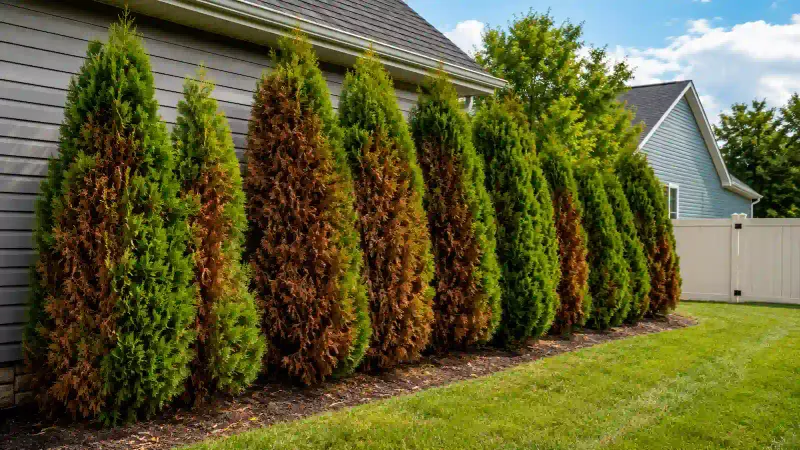
If one side of your arborvitae, juniper, or spruce looks burnt and brown every spring, you are not alone. Across Wisconsin, homeowners notice this pattern on the south, west, or windward side of their evergreens right as snow melts and temperatures climb.
The most common explanation is winter desiccation, sometimes called winter burn, but road salt and several other causes can look nearly identical. Knowing the difference helps you choose the right fix and protect your plants before next winter arrives.
Why one side of a Wisconsin evergreen turns brown
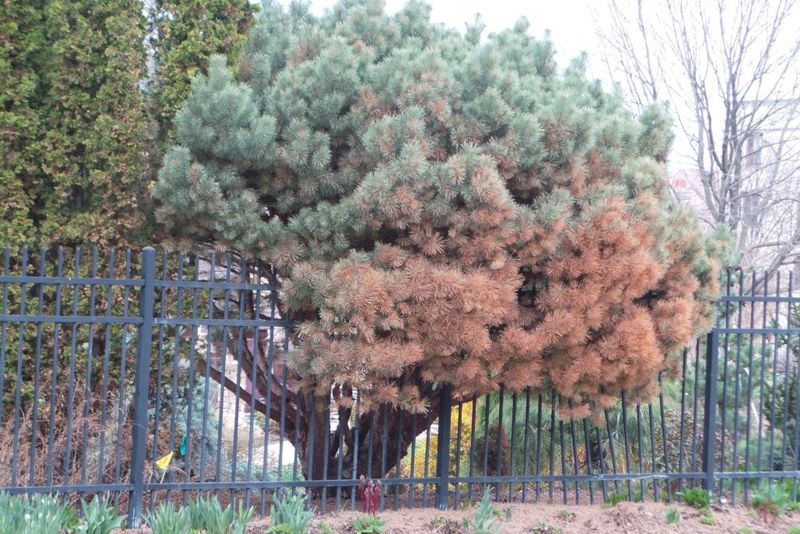
Spotting a wall of brown on one side of an otherwise healthy-looking evergreen is one of the most common calls Wisconsin Extension offices field every spring. The browning almost always appears on the side that faced the most sun, wind, or open exposure through winter, typically the south, southwest, west, or windward face of the plant.
Sheltered foliage on the opposite side often stays green, which is the detail that makes winter burn a reasonable first guess.
That one-sided pattern fits UW-Madison Extension’s description of winter burn, also called winter desiccation. Foliage on exposed Wisconsin evergreens keeps losing water during sunny winter days, windy stretches, and mid-winter thaws, while frozen ground limits how much water the roots can pull up to replace it.
The imbalance dries out foliage from the outside in, and the most exposed needles or leaves go first.
The pattern is suggestive, not a guaranteed diagnosis. Wisconsin winters vary widely in temperature swings, wind speed, snow cover, and thaw frequency, and those variables all influence how much injury any individual plant receives.
Species, age, root establishment, planting location, and the plant’s moisture going into winter also play a role.
Before assuming winter burn, Wisconsin gardeners should also consider road salt, normal seasonal needle drop, drought stress, root problems, disease, insects, and herbicide injury. Each of those can produce browning that looks similar from a distance.
How Wisconsin winter desiccation damages exposed foliage
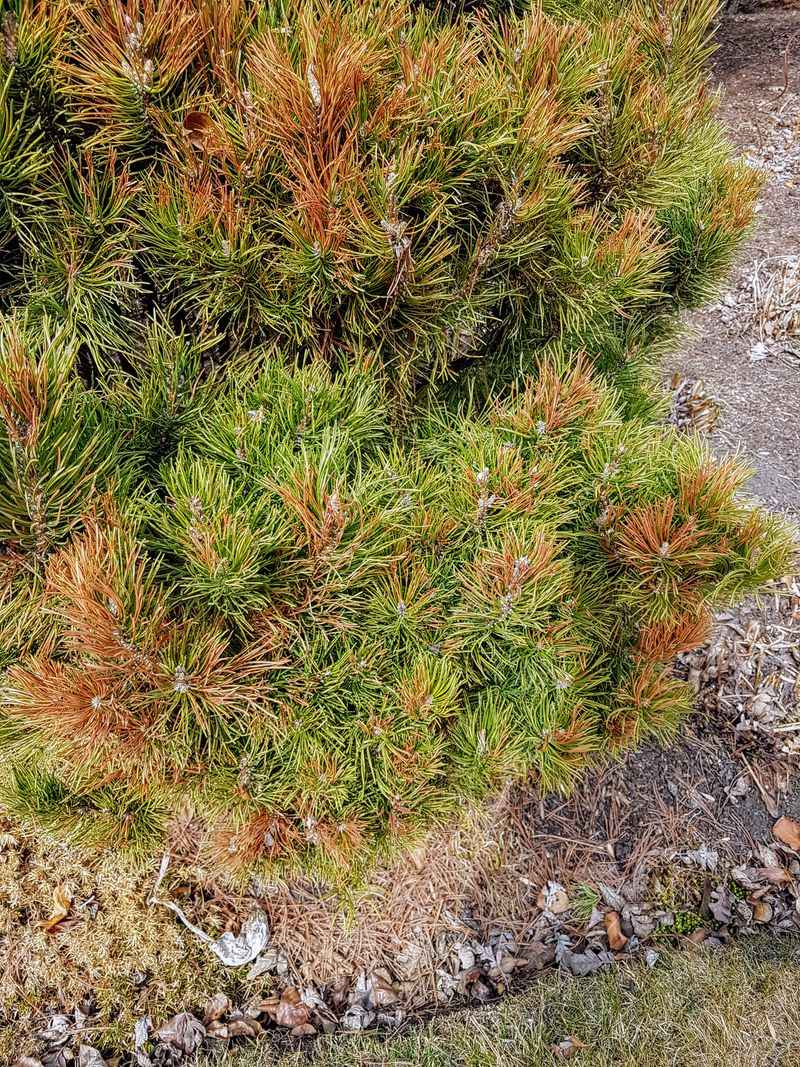
Evergreen foliage never fully shuts down the way deciduous leaves do. Even in January, Wisconsin arborvitae, junipers, yews, boxwoods, spruces, and firs lose small amounts of water through their needles or leaves through a process called transpiration.
Under normal conditions, roots replenish that moisture from the soil. The problem begins when Wisconsin soil freezes solid and roots can no longer move water upward efficiently.
On a sunny, windy winter day, water loss from foliage speeds up while replenishment stays blocked. UW-Madison Horticulture’s winter burn resource explains that this imbalance causes foliage cells to dry out and die, producing the tan or reddish-brown color Wisconsin gardeners notice in late winter and early spring.
The foliage facing south or west gets more direct winter sunlight and more wind, which is why those sides tend to show damage first.
Frozen soil, winter sun, mid-season thaws followed by hard refreezes, fall drought, species sensitivity, and the plant’s overall root establishment all interact in Wisconsin winters. A plant that entered fall already dry and stressed is more vulnerable than one that was well-watered and mulched.
Your Wisconsin Garden Changes Every Week. Your Plan Should Too.
Gardening in Wisconsin changes quickly throughout the season. Every Friday you’ll receive a simple weekly plan showing exactly what to plant, prune, fertilize, harvest, and protect so you never miss the right timing.
Rapid temperature swings add another layer of risk. When Wisconsin temperatures climb above freezing on a February afternoon and then drop sharply overnight, foliage that briefly resumed water loss can suffer additional cold injury before roots have any chance to compensate.
Newly transplanted Wisconsin evergreens face the greatest risk because their root systems have not yet spread far enough to recover water efficiently, making them far more sensitive to these compounding stresses than established plants.
Check Wisconsin road salt and other look-alike causes
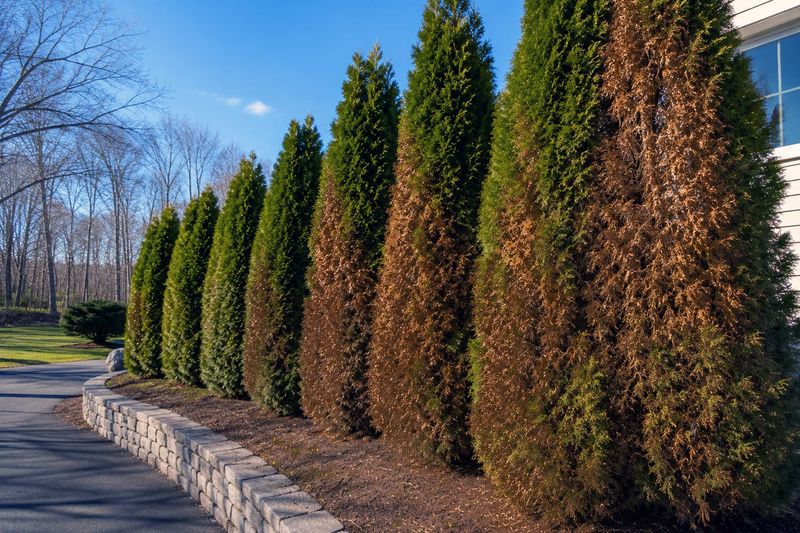
Before labeling any browning as winter burn, Wisconsin gardeners should look carefully at where the damage appears. If the brown side faces a road, driveway, or sidewalk that gets deiced through winter, road salt deserves serious consideration.
UW-Madison’s guide to winter salt injury and salt-tolerant landscape plants explains that salt spray from passing vehicles and salty snowmelt washing toward plant roots can both cause browning that looks nearly identical to winter desiccation from the outside.
Salt injury in Wisconsin tends to concentrate on the side facing traffic or the area where salty meltwater pools and drains. If the brown side of your Wisconsin evergreen happens to face the street and you use heavy salt on the adjacent walk or driveway, that pattern warrants a salt diagnosis rather than an automatic assumption of wind injury.
Normal seasonal needle drop is another Wisconsin look-alike that surprises many homeowners. Evergreens do shed older needles, typically the inner ones closest to the trunk, every one to three years depending on species.
UW-Madison’s seasonal needle drop resource clarifies that this normal process usually shows a distinct green-outer, yellow-to-brown-inner pattern rather than an entire exposed side turning brown. Timing matters too: seasonal drop often occurs in late summer or fall, not primarily in late winter and spring.
Other Wisconsin causes worth ruling out include drought stress that started the previous summer, compacted or poorly drained soil affecting root function, and fungal diseases or insects such as mites, needle miners, or aphids. If Wisconsin symptoms include current-season spots, webbing, random patches unrelated to sun or wind exposure, or browning that appears in summer rather than late winter, those clues point away from winter burn and toward disease, insects, or other site problems that may need professional or Extension diagnosis.
Build Wisconsin winter protection before the ground freezes
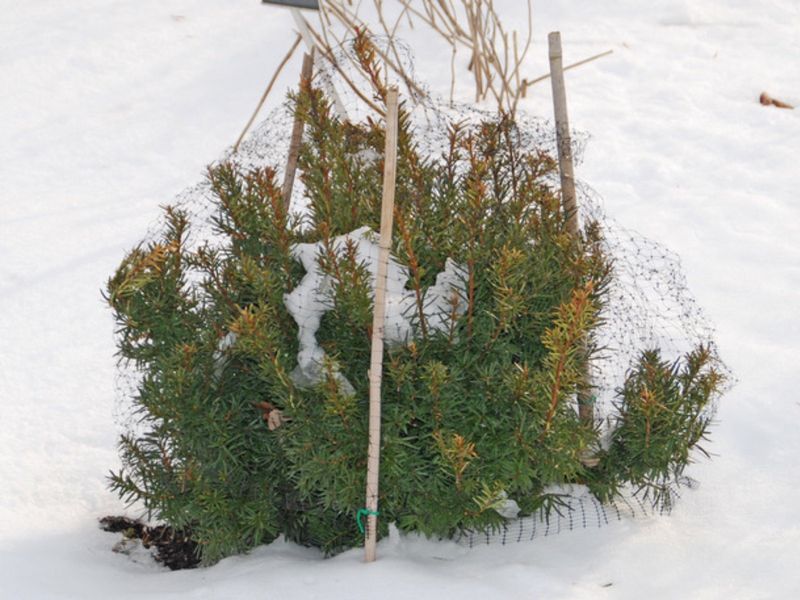
Prevention in Wisconsin starts well before the first hard freeze, and it works best as a layered approach rather than a single action. Keeping evergreens adequately watered through the growing season and into fall is the foundation.
Newly transplanted plants, whose root systems have not yet spread, may need up to 2 inches per week during dry stretches.
Wisconsin Extension advises continuing to water until the soil freezes or significant snow arrives, but soil moisture should be checked before each watering. Saturated soil causes its own problems, including root rot and reduced oxygen to roots.
A single heavy watering right before winter is not a substitute for consistent moisture management throughout fall. Plants that enter Wisconsin’s freeze-up period already stressed by summer drought carry that deficit into winter and tend to show more damage come spring.
Mulch plays a quieter but important role by slowing soil moisture loss and moderating soil temperature swings. UW-Madison’s winter burn article recommends applying a loose mulch layer of about 2 inches on clay soil or up to 4 inches on sandy soil, spreading it out toward the plant’s drip line.
Keep mulch at least 4 inches away from trunks and shrub bases, because mulch piled against bark can encourage rodents, disease, and insect activity. More is not better: a thick, matted layer can trap excess moisture and create problems of its own.
Site selection matters enormously for Wisconsin gardeners planning new plantings. Dane County Extension’s winter burn protection guide recommends choosing east or northeast locations and protected spots such as courtyards or sheltered corners over south- or west-facing open exposures.
Avoiding late-summer or fall pruning and quick-release nitrogen fertilizer also helps, because both can push tender new growth that does not have time to harden before Wisconsin cold arrives.
Build a Wisconsin burlap screen instead of a tight wrap
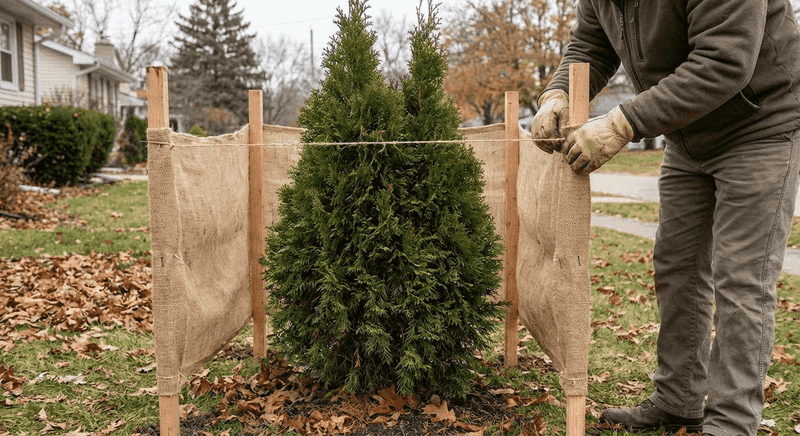
A physical windbreak is one of the most reliable tools Wisconsin gardeners have for reducing sun and wind exposure on vulnerable evergreens. The key word is screen, not wrap.
UW-Madison Extension’s winter burn guidance recommends driving stakes about 4 to 5 feet tall into the ground roughly 2 feet from the plant’s drip line, then attaching burlap, canvas, or snow fencing to the stake framework on the south, west, or windward sides of the plant. That spacing keeps the material off the foliage, allowing air to move while blocking the most damaging sun and wind angles.
Leaving the top of the screen open is not optional. A closed top collects snow, which adds weight and can cause the material to sag down onto branches, bending or breaking them.
Dane County Extension specifically warns against placing burlap over the top for exactly this reason. An open-topped screen still significantly reduces the wind speed and reflected sun that reach exposed Wisconsin foliage, without creating the snow-load hazard that a fully enclosed wrap would.
Tight wrapping around the entire plant is a separate practice and one Wisconsin Extension does not recommend for winter burn prevention. Wrapping burlap snugly against foliage can trap moisture against needles and bark, increase the risk of fungal disease, and collect ice that does more harm than the wind it was meant to block.
The screen approach keeps material at a working distance from the plant while still cutting exposure on the sides that need it most.
University of Minnesota Extension’s winter protection guide reinforces that screens work best when installed before Wisconsin temperatures drop and the ground freezes, making stake placement easier and more secure. Remove the screen promptly in spring once temperatures stabilize and new growth begins.
Leaving protection in place too long can shade foliage during a period when plants need light to recover, and it may interfere with the natural hardening-off process plants need before the following winter. A well-timed removal in Wisconsin is just as important as a well-timed installation.
Treat Wisconsin anti-desiccant sprays as optional tools
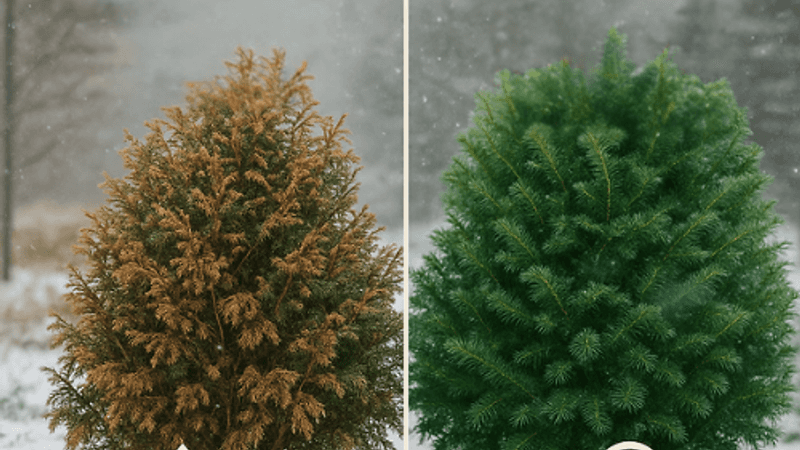
Anti-desiccant and anti-transpirant sprays show up on garden center shelves every fall, marketed as a way to reduce water loss from evergreen foliage through winter. For Wisconsin gardeners, the honest assessment is that these products are optional and secondary, not a reliable primary defense.
UW-Madison Horticulture’s winter burn article and University of Minnesota Extension’s winter protection guidance both characterize these sprays as having limited or no reliable benefit for preventing winter burn.
Dane County Extension notes that anti-desiccant products may flake off too soon in Wisconsin’s freeze-thaw cycles, or persist into the growing season and interfere with normal foliage function. Either failure mode reduces whatever marginal benefit the product might have offered.
Not every product works the same way on every plant species, and Wisconsin gardeners should check labels carefully before applying anything to a specific evergreen.
The picture is not entirely one-sided. Illinois Extension’s guide to getting trees and shrubs ready for winter acknowledges that some anti-transpirants may offer a slight benefit in certain situations.
That qualified allowance differs from endorsement, and it does not change the core Wisconsin guidance: soil moisture management and a physical burlap screen address the underlying causes of winter desiccation far more directly than a spray product can. If a Wisconsin gardener chooses to use an anti-desiccant, following the product label exactly, applying at the right temperature, and reapplying as directed are all necessary steps.
Treat the spray as a possible supplement to solid preparation, not a shortcut around it.
Wait for Wisconsin spring growth before pruning
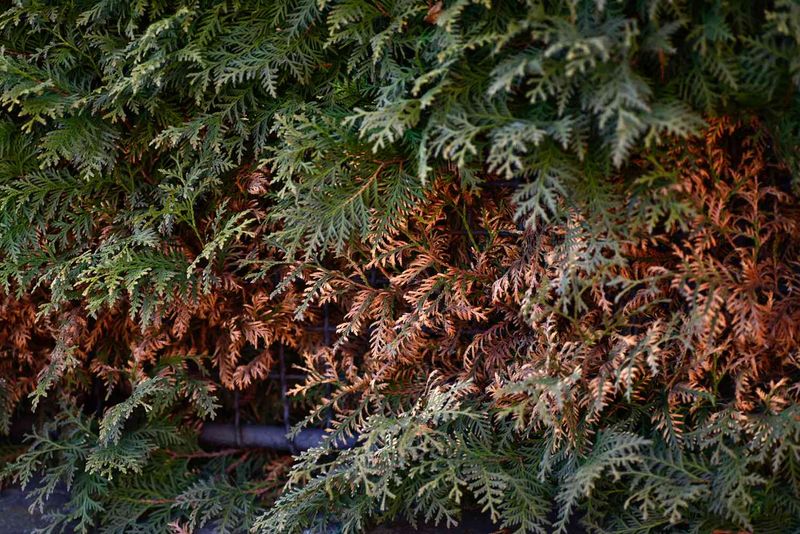
Seeing a large section of brown foliage on a Wisconsin evergreen in March or April can feel urgent, but patience is one of the most useful tools at this stage. Brown needles and leaves generally will not turn green again regardless of what caused the injury.
However, the buds and inner stems beneath that brown foliage may be perfectly alive and capable of pushing new growth once Wisconsin temperatures warm consistently.
UW-Madison Extension advises Wisconsin gardeners to wait until mid-spring, after new growth has become visible, before making major pruning decisions. A scratch test on suspect stems can help: use a fingernail or knife to scrape a small spot of bark.
Green or white tissue underneath suggests the stem is alive. Brown, dry tissue that crumbles suggests it is not.
Working through a damaged plant this way gives a much clearer picture of what can stay and what needs to come off.
Recovery patterns differ by species, and Wisconsin gardeners benefit from knowing what to expect from each type of evergreen in their landscape. Arborvitae, yew, hemlock, and boxwood often produce new growth from surviving buds located farther inside the plant, meaning they can fill back in over a season or two if the damage did not reach deep into the canopy.
University of Minnesota Extension reinforces that a Wisconsin evergreen showing complete browning across the entire plant has lower recovery prospects than one with partial damage. Even so, replacement decisions should wait until after spring budbreak, not be made during winter when it is impossible to assess surviving tissue accurately.
Giving a damaged Wisconsin plant one full spring to show what it can do is almost always the right call before reaching for a shovel.
Use a layered Wisconsin plan to reduce repeat browning
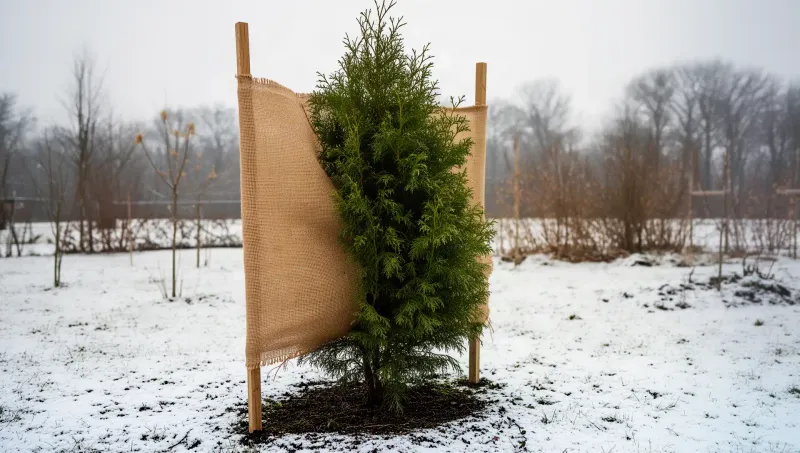
Reducing repeat winter browning on Wisconsin evergreens comes down to stacking several modest actions rather than relying on any single cure. Start by confirming that the exposed-side pattern actually fits winter desiccation and not road salt, which deserves separate attention if the damage faces a salted road or walk.
UW-Madison’s salt injury guide is a useful starting point for that comparison.
Once winter burn seems the most likely explanation, the prevention sequence in Wisconsin runs from fall moisture management through mulch placement, protected siting for any new plantings, and an open-topped burlap screen on the south and west or windward sides of vulnerable plants. UW-Madison’s winter burn article and Dane County Extension’s companion guide both reinforce that no single intervention covers every Wisconsin winter, because injury severity depends on weather, species, plant condition, and exposure.
Anti-desiccant sprays remain an optional add-on for Wisconsin gardeners who want to try them, provided they follow label directions and treat the product as a supplement to, not a replacement for, the physical and moisture-based steps above. After any winter with browning, hold off on major pruning until mid-spring budbreak gives a clear picture of what survived.
The most durable protection a Wisconsin gardener can build is a combination of healthy, well-sited plants going into winter and a screen that takes the edge off the hardest exposure. One good season of preparation often shows up as noticeably less browning the following spring.