This Florida Porch Plant Doesn’t Wilt Even In 95° Heat
Most Florida porch plants make their position on 95 degree heat very clear.
Wilting by noon, dropping leaves by afternoon, a general collapse that turns a carefully arranged container display into something that needs daily intervention just to stay presentable.
One plant skips that performance entirely. It sits on the porch through the worst of Florida summer looking exactly the way it did in April.
No wilting, no drama, no daily rescue operation. The heat that exhausts everything around it is the condition it was built for.
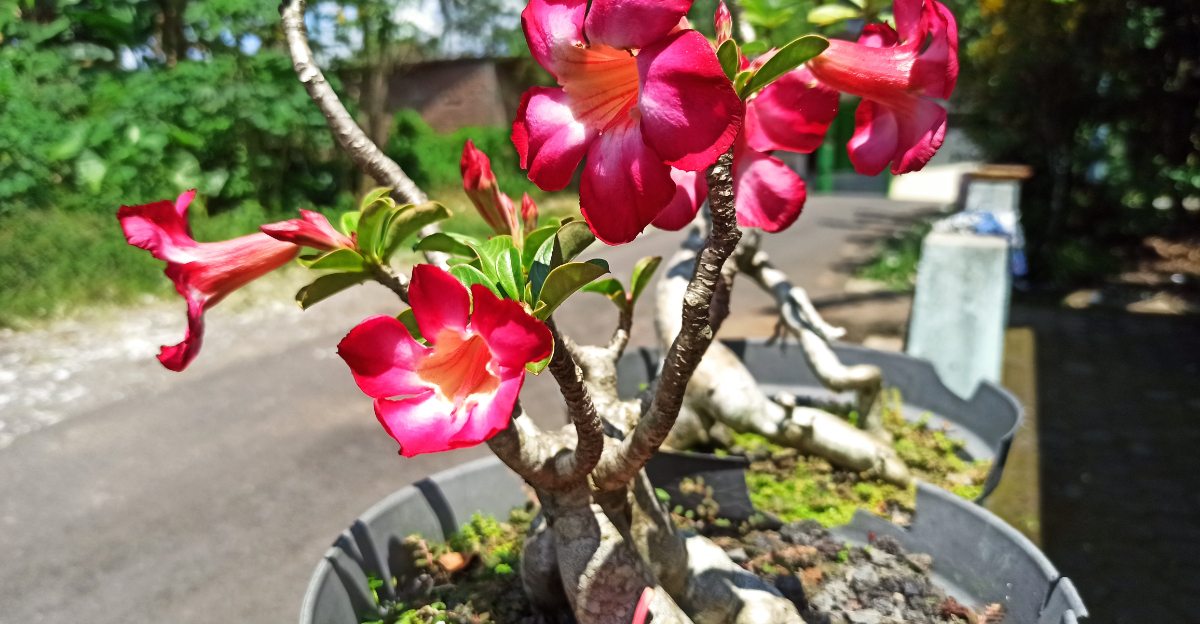
It also blooms. Bold, trumpet-shaped flowers in colors that stop people mid-stride, produced consistently through the stretch of summer that most flowering plants use as a reason to quit.
A porch plant that performs in 95 degree Florida heat without apology is not a compromise. It is the solution to a problem that sends most gardeners back to the garden center every few weeks.
1. Desert Rose Treats Brutal Afternoon Heat Like Blooming Weather
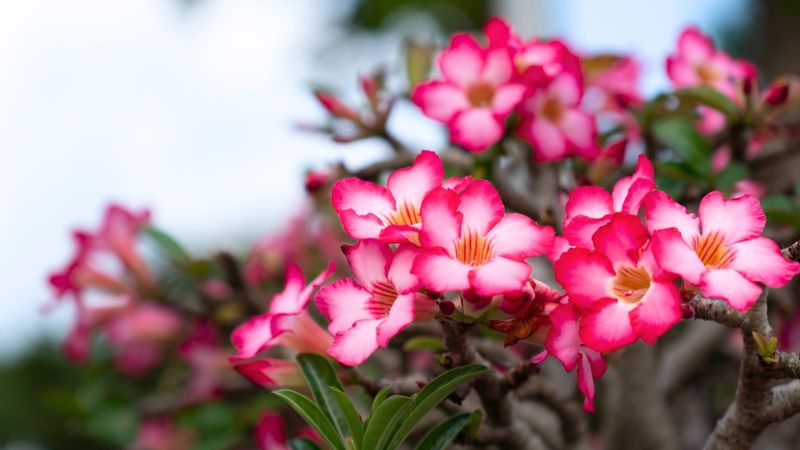
Afternoon heat that sends most container flowers into a drooping slump barely registers as a problem for an established desert rose.
This plant originates from arid and tropical regions of Africa and the Arabian Peninsula, where high temperatures and intense sun are simply normal growing conditions.
Its physiology reflects those origins in several practical ways.
The stems of desert rose are genuinely succulent, meaning they hold moisture internally rather than relying on constant soil water. The thick, swollen base called the caudex stores additional water and carbohydrates, giving the plant a buffer during hot, dry stretches.
An established specimen with a well-developed root system can stay firm and upright when softer bedding plants nearby are already wilting.
Reflected heat from concrete surfaces or light-colored walls can intensify conditions around a porch container. That extra warmth is often tolerable for desert rose, but it is worth watching closely during an extended dry spell.
Even a heat-adapted plant will show stress if the root ball dries out completely for too long.
Different cultivars vary in their tolerance and flower color, so one plant’s behavior is not a guarantee for every variety.
The key takeaway is that heat alone is rarely the limiting factor for desert rose on a warm Florida porch, provided the roots stay healthy and the drainage works correctly.
2. Six Hours Of Bright Light Keeps The Flower Show Going
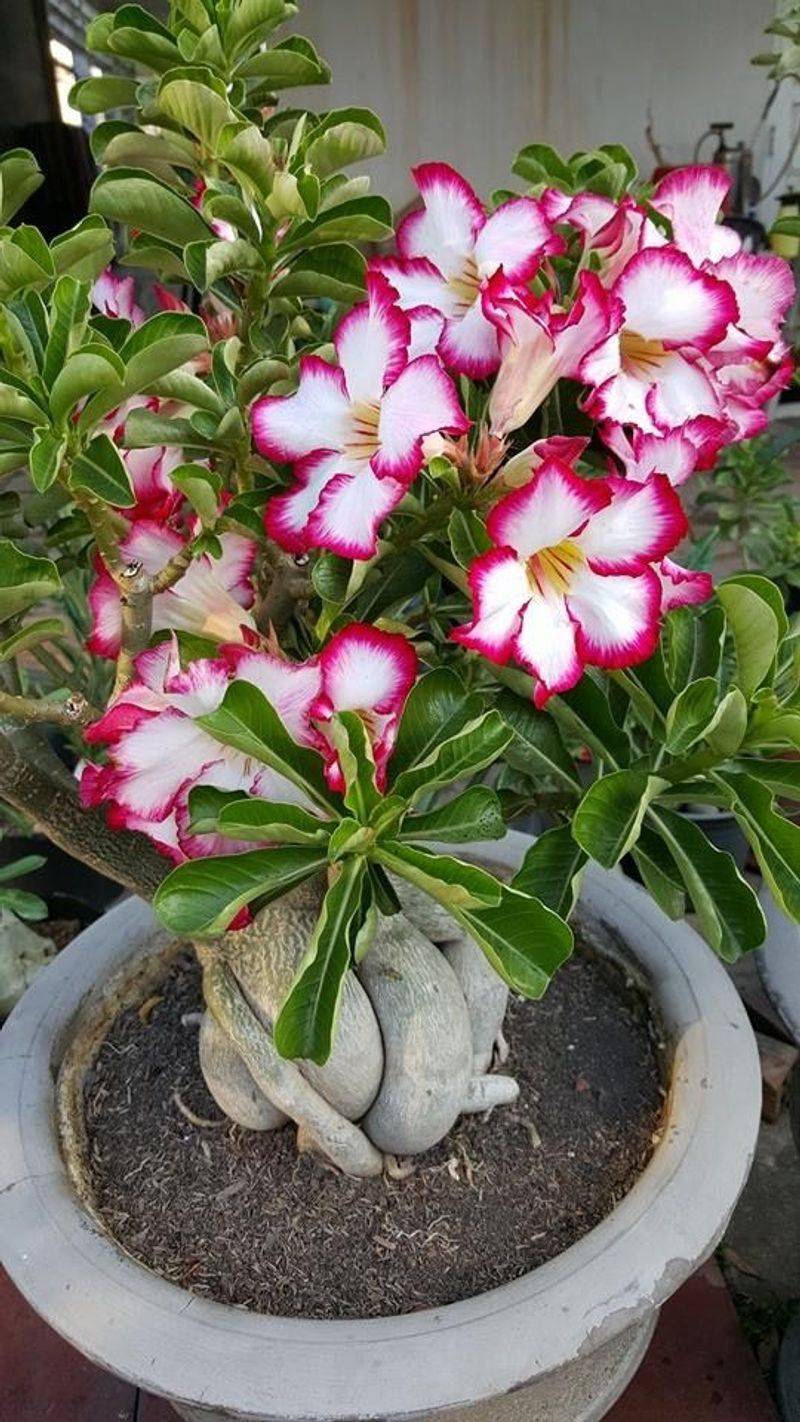
Flower production on desert rose is closely tied to how much bright light the plant receives each day. Florida gardeners who give it a shaded or partially covered porch spot often notice the plant survives but produces far fewer blooms than expected.
Strong, direct light drives the metabolic processes that push flower buds forward.
A porch that catches morning sun from roughly six to ten in the morning and then receives filtered light in the afternoon can still support reasonable blooming.
A porch with heavy roof overhang that blocks most direct rays will keep the plant alive but may leave it looking green and quiet rather than covered in flowers.
Your Florida Garden Changes Every Week. Your Plan Should Too.
Gardening in Florida changes quickly throughout the season. Every Friday you’ll receive a simple weekly plan showing exactly what to plant, prune, fertilize, harvest, and protect so you never miss the right timing.
South-facing or east-facing porch placements tend to deliver the most useful light hours.
Moving a plant that has been growing in lower light directly into intense afternoon sun can cause leaf scorch. Gradual transition over a week or two allows the foliage to adjust without damage.
Start by adding an hour or two of additional direct exposure each day rather than making a sudden shift.
During the brightest summer months, some afternoon shade can actually be welcome. This is especially helpful for younger or recently repotted plants.
Strong morning sun combined with some midday brightness usually produces the most consistent flowering without stressing the plant unnecessarily. Light quality matters just as much as heat tolerance here.
3. A Swollen Caudex Gives This Porch Plant A Different Survival Strategy
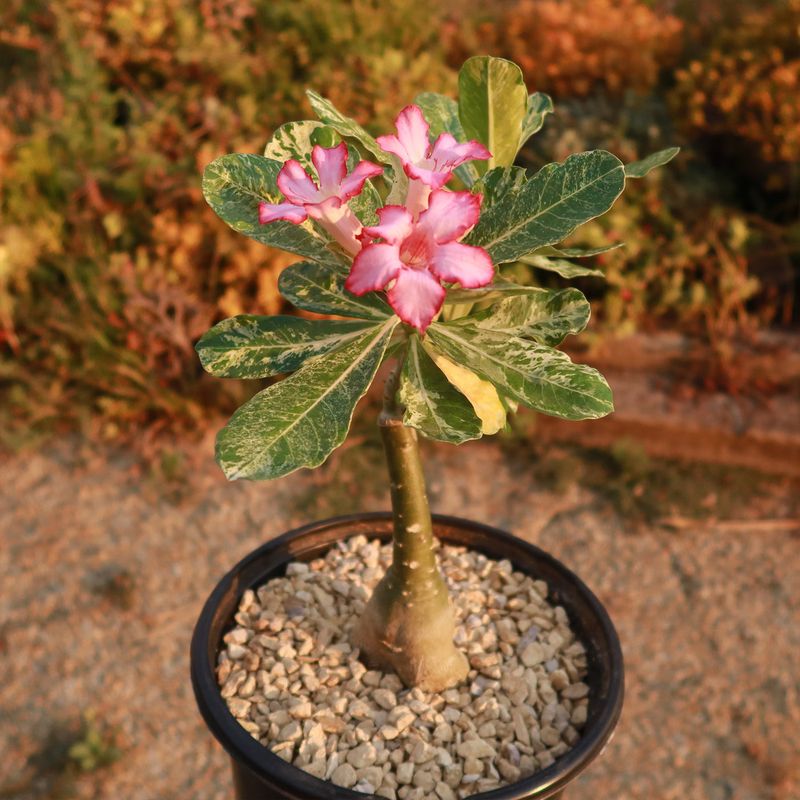
One look at a mature desert rose and you immediately notice something unusual at the base. The caudex, a swollen, often gnarled trunk-like structure, is one of the most recognizable features of this plant and one of the reasons collectors seek it out.
Beyond its visual appeal, the caudex serves a real functional purpose in the plant’s survival toolkit.
Water and energy reserves stored in the caudex help the plant manage periods of low rainfall or temporarily dry soil. This does not mean the plant can go indefinitely without irrigation.
However, missing a watering day or two is far less damaging than it would be for a thirsty annual flower. The reserves give the plant a cushion that most porch plants simply do not have.
Planting depth matters more than many gardeners realize. The caudex should sit at or slightly above the soil surface so it can be seen and monitored.
Burying it deeply encourages rot and hides early warning signs of problems. A stable, well-draining container helps keep the caudex in good condition through the wet summer months.
When handling or pruning desert rose, wear gloves. The plant produces a milky sap that can irritate skin and mucous membranes and is considered toxic if ingested.
Keeping children and pets away during any pruning session is a sensible precaution worth making a habit.
4. Summer Rain Causes More Trouble Than The Temperature Does
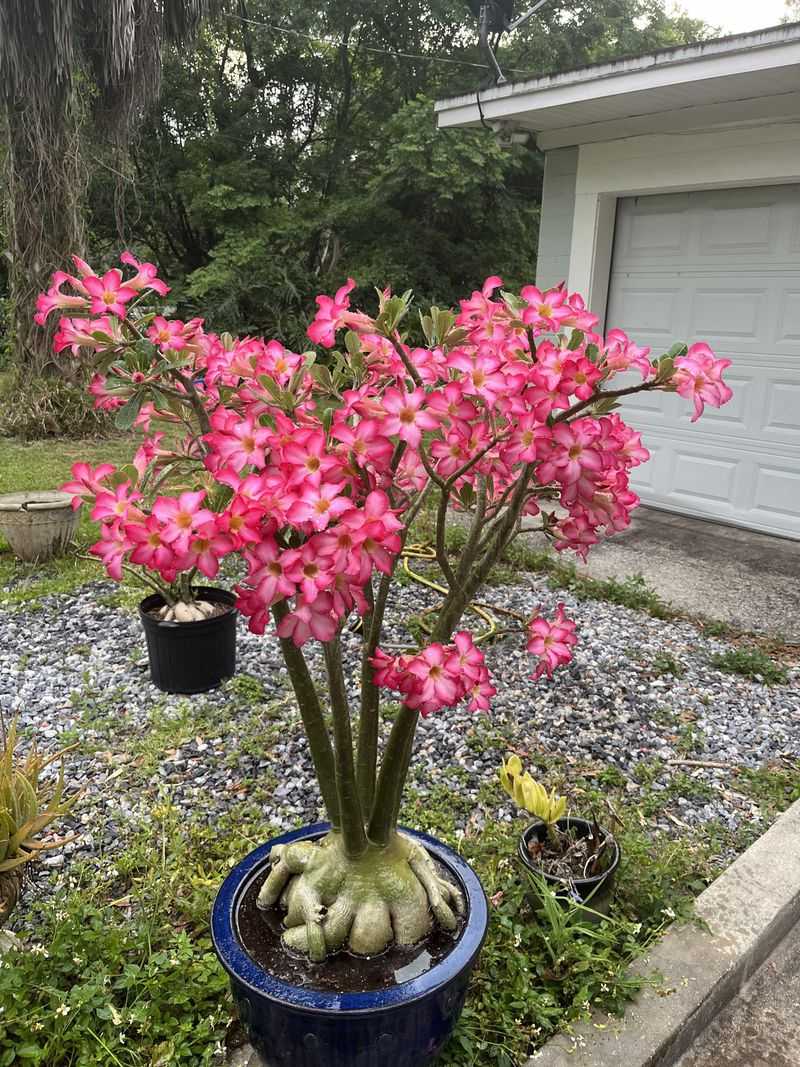
Florida’s rainy season runs roughly from June through September, and during that stretch, afternoon downpours can arrive almost daily. For most garden plants, that moisture is welcome.
Repeated heavy rain can push soil moisture well past what desert rose roots prefer. The problem becomes worse when the container has slow or blocked drainage.
Saucers placed under pots to protect porch floors are a common culprit. After a hard rain, a saucer fills with water and keeps the bottom of the container sitting in moisture for hours or even days.
That prolonged contact with standing water stresses the roots in ways that hot weather alone rarely does. Removing saucers during the rainy season or elevating the pot on feet to allow free drainage makes a real difference.
Roof runoff can send concentrated streams of water directly into a porch container if the pot is positioned near a downspout or roof edge. Repositioning the plant slightly can prevent that kind of unintentional overwatering.
During stretches of daily rain, supplemental irrigation may not be needed at all.
Moving a container under a partially covered area during extended rainy spells is a practical option that container growing makes possible.
Rain itself is not harmful to desert rose, but saturated roots kept wet for long periods create conditions the plant genuinely struggles to handle.
The distinction between brief wet weather and prolonged soggy soil is worth keeping in mind.
5. Fast Drainage Matters More Than Constant Watering
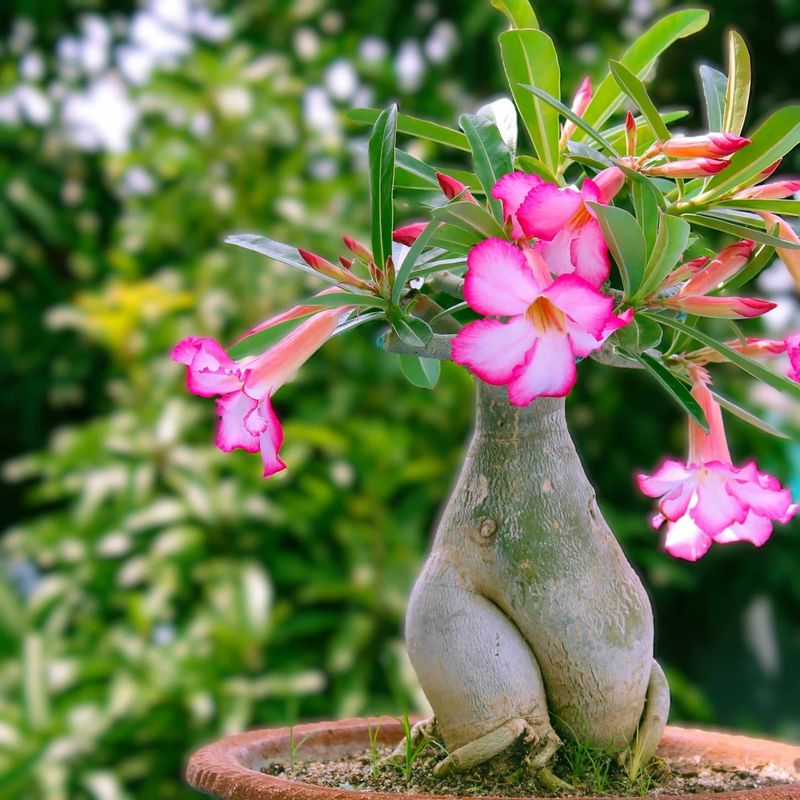
Ask most experienced desert rose growers in Florida what matters most in day-to-day care, and drainage will come up before watering frequency every single time.
The roots of this plant need oxygen as much as they need moisture, and a mix that stays soggy for days after watering limits the oxygen available at the root level.
A rapidly draining potting mix changes everything.
Many growers blend a standard cactus or succulent mix with coarse perlite or pine bark to increase drainage speed. This kind of mix dries out faster, which encourages the gardener to check before watering rather than follow a fixed schedule.
Sticking a finger two inches into the soil and feeling for moisture is a more reliable guide than any calendar-based routine.
Decorative outer pots that conceal a plain nursery container can create a hidden moisture trap. Water drains from the inner pot but collects in the gap between the two containers, keeping the root zone wetter than it appears from the outside.
Using a decorative container with drainage holes, or checking the inner pot directly, prevents this issue.
Newly repotted plants may need closer monitoring for the first few weeks because roots are still establishing contact with fresh mix. An established plant in the same container for a full season develops a more predictable moisture pattern.
Neither situation calls for keeping the mix permanently dry, but both benefit from checking before adding more water.
6. A Container Makes Moisture Easier To Control Through Storm Season
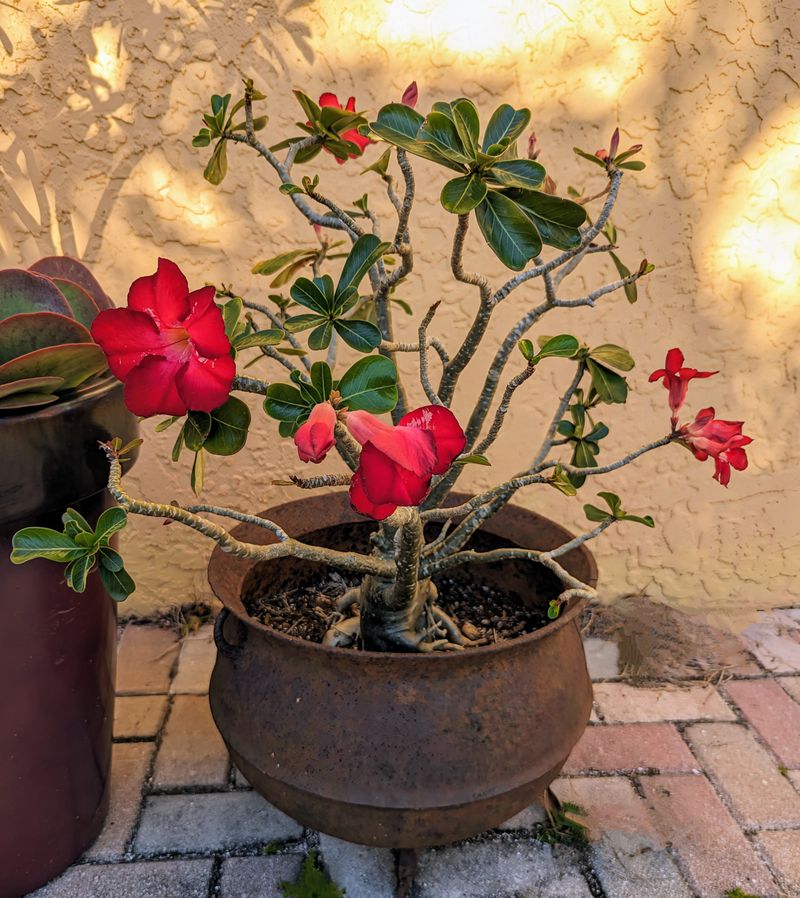
Growing desert rose in a container rather than directly in the ground hands the Florida gardener a level of control that in-ground planting simply cannot match. During storm season, that flexibility becomes especially valuable.
A potted plant can be slid under an overhang, moved to a sheltered corner, or brought inside entirely when conditions turn severe.
Choosing the right pot size helps from the start. A container large enough to hold the root system comfortably without being excessively oversized gives the best results.
An oversized pot filled with a large volume of mix holds more moisture than the roots can use quickly. That can recreate the soggy-root problem that good drainage is supposed to prevent.
Weight, wind exposure, and porch placement all factor into container choice. A heavier ceramic or concrete pot is more stable on a windy porch but harder to move.
A lighter plastic or resin pot is easier to relocate but may tip during gusty afternoon storms. Matching pot weight to how often you plan to move it is a practical consideration.
One of the most useful benefits of container culture shows up in late autumn. As temperatures begin to drop, a potted desert rose can be moved to a protected spot before cold nights cause damage.
In-ground plants lose that option entirely. The ability to respond to changing weather is one of the strongest arguments for keeping desert rose in a container year-round.
7. Scale Can Dull A Plant That Otherwise Handles Heat Beautifully
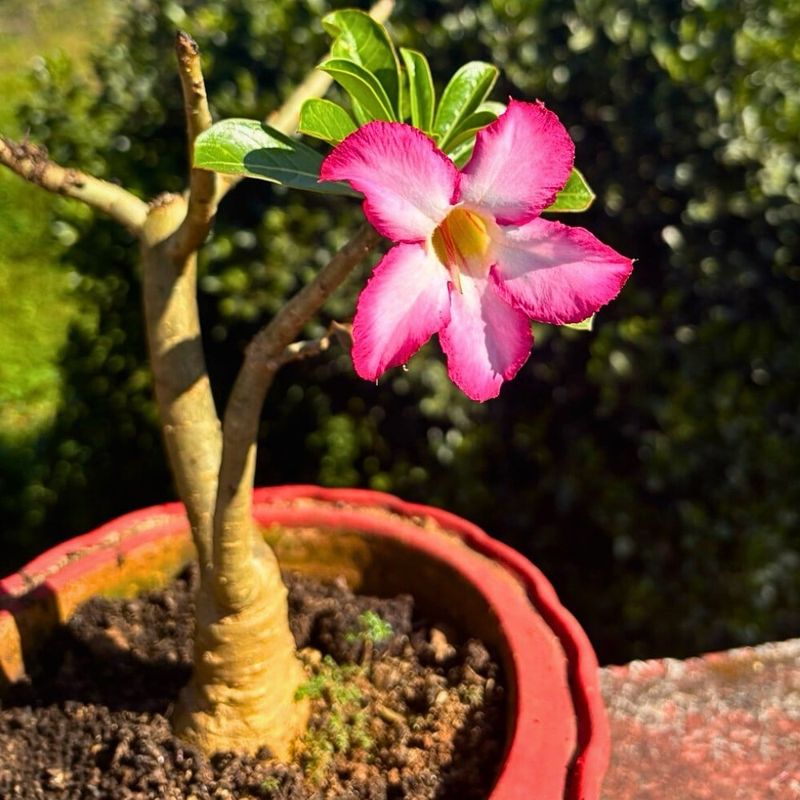
A plant that sails through a blazing summer afternoon can still look dull and stressed if a pest problem goes unnoticed for too long.
Scale insects are among the pests that can affect desert rose, and they are easy to overlook because they do not look like typical bugs at first glance.
They appear as small, flat, or slightly raised bumps clinging to stems and leaf undersides.
Soft scale insects can produce a sticky, sugary substance called honeydew as they feed. That residue sometimes leads to a dark coating called sooty mold on the surfaces below.
Seeing either of those signs is a reason to inspect the stems and undersides of leaves more closely. Do not assume the desert rose simply needs more water or fertilizer.
Not every yellow leaf or spotted stem points to a pest. Heat stress, overwatering, and natural leaf cycling can all cause discoloration.
Confirming what you are actually dealing with before reaching for any treatment saves time and avoids unnecessary chemical exposure. Your local cooperative extension office can help identify pest samples if you are unsure.
When inspecting the plant, wear gloves to avoid contact with the milky sap. Check new growth, stem joints, and the underside of leaves carefully.
Catching scale early, before populations build up, makes management far more straightforward than addressing a heavy infestation. Regular inspection during the growing season is a simple habit that pays off consistently.
8. Cold Nights Become The Real Problem Long After Summer Ends
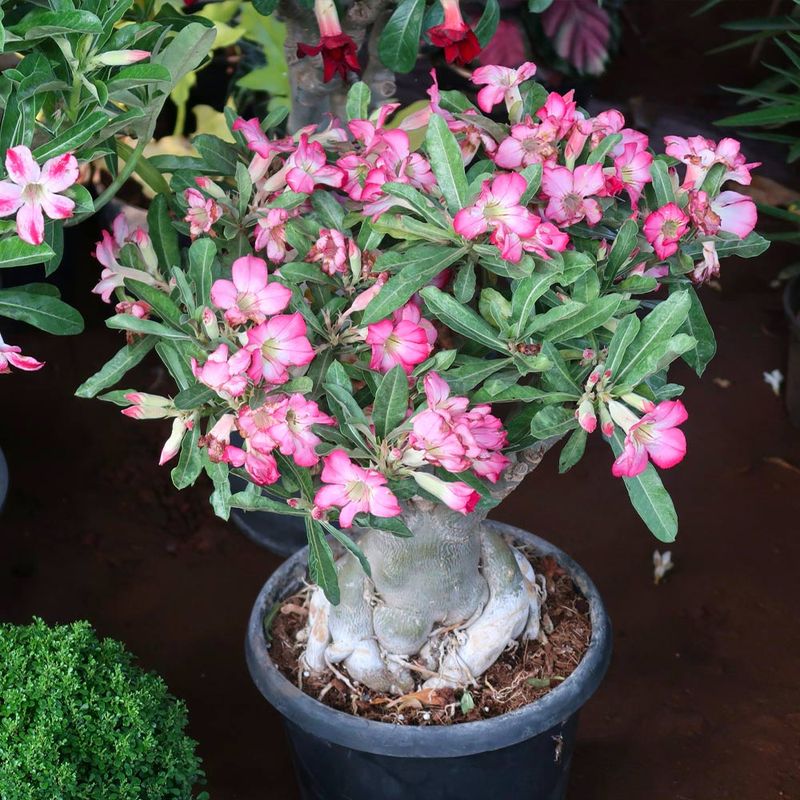
Everything that makes desert rose comfortable in summer heat works against it when temperatures fall.
This plant has almost no tolerance for frost, and even prolonged exposure to temperatures in the low forties can cause significant damage to foliage and tender stems.
The same succulent tissue that stores water so efficiently in warm weather becomes vulnerable when cold settles in.
Growers in South Florida face very different winter conditions than those in North Florida or the Panhandle, where hard freezes occur more regularly. A container grower in Miami may only need to move the plant inside during an unusual cold snap.
Near Tallahassee, a grower may need several weeks of indoor or garage storage each winter. Regional conditions vary enough that no single statewide rule applies.
Moving a container plant to a protected location before a cold front arrives is far easier than managing damage after the fact. An enclosed porch, a garage with a window, or an indoor spot near a bright window can all serve as temporary shelter.
The goal is to keep the plant above temperatures where cold injury becomes likely.
That contrast is what makes desert rose such a compelling choice for warm-climate porch gardening. Summer heat, which defeats so many other container plants, is actually comfortable territory for this one.
Cold requires planning and attention, but the reward is a plant that performs through the hottest months with very little complaint and a great deal of visual impact.